Irritable Bowel Syndrome (IBS) Diagnostics Market Size, Share and Opportunities by 2034

Coverage: Irritable Bowel Syndrome (IBS) Diagnostics Market covers analysis By Diagnosis (Laboratory Tests, Imaging Tests); Indication (Pain and Cramping, Diarrhea, Constipation, Alternating Constipation and Diarrhea), and Geography

  • Report Date : Mar 2026
  • Report Code : TIPRE00016657
  • Category : Life Sciences
  • Status : Upcoming
  • Available Report Formats : pdf-format excel-format
  • No. of Pages : 150

The IBS diagnostics market size is expected to reach US$ 5.41 billion by 2034 from US$ 3.27 billion in 2025. The market is anticipated to register a CAGR of 5.72% during 2026–2034.

Irritable Bowel Syndrome (IBS) Diagnostics Market Analysis

The IBS diagnostics market forecast indicates steady growth, driven by the rising prevalence of gastrointestinal disorders, increasing demand for accurate and non-invasive diagnostic solutions, and advancements in biomarker-based testing. The market expansion is supported by growing awareness among healthcare professionals, integration of digital health platforms, and the development of point-of-care diagnostic kits. Additionally, the adoption of AI-driven diagnostic algorithms, improved laboratory workflows, and personalized diagnostic approaches further boost market growth.

Irritable Bowel Syndrome (IBS) Diagnostics Market Overview

IBS diagnostics encompass a range of tests and procedures aimed at identifying irritable bowel syndrome by excluding other gastrointestinal conditions. Common diagnostic methods include laboratory tests (blood, stool, breath), imaging techniques, and symptom-based assessments aligned with clinical guidelines such as Rome IV criteria. IBS affects approximately 10–16% of the global population, making a timely and accurate diagnosis critical for effective management. Emerging trends include non-invasive biomarker panels, telehealth-enabled diagnostic consultations, and AI-assisted interpretation tools. Growing healthcare infrastructure in emerging markets and increased patient awareness present significant opportunities for market players.

Strategic InsightsIrritable Bowel Syndrome (IBS) Diagnostics Market Drivers and Opportunities

Market Drivers:

  1. High Global Prevalence and Diagnostic Challenges: IBS affects approximately 10–16% of the global population, making it one of the most common functional gastrointestinal disorders. Despite this prevalence, diagnosis remains challenging due to symptom overlap with other GI conditions such as celiac disease and inflammatory bowel disease. This diagnostic ambiguity drives demand for reliable, standardized testing protocols and advanced diagnostic tools that can reduce misdiagnosis and improve patient outcomes.
  2. Advancements in Non-Invasive Testing: Traditional diagnostic approaches often involve invasive procedures like endoscopy, which can be costly and uncomfortable for patients. The emergence of non-invasive alternatives, such as breath tests for small intestinal bacterial overgrowth (SIBO), stool biomarker panels, and blood-based assays, offers faster, safer, and more patient-friendly solutions. These innovations are gaining traction in both primary care and specialty settings, accelerating adoption globally.
  3. Integration of Digital Health and Telemedicine: The rise of telehealth platforms and mobile health applications has transformed patient engagement and diagnostic workflows. Digital tools enable remote symptom tracking, virtual consultations, and even home-based sample collection, reducing barriers to care. This trend is particularly significant in regions with limited access to gastroenterology specialists, as it expands diagnostic reach and improves early detection rates.

Market Opportunities:

  1. AI-Powered Diagnostic Platforms: Artificial intelligence and machine learning are revolutionizing IBS diagnostics by enabling predictive analytics and personalized care pathways. By integrating clinical data, biomarker results, and patient-reported symptoms, AI-driven platforms can assist clinicians in making faster, more accurate diagnoses. Companies investing in these technologies can differentiate themselves through precision diagnostics and improved clinical decision support.
  2. Home-Based and Point-of-Care Kits: The demand for convenient, rapid diagnostic solutions is creating opportunities for portable, easy-to-use kits that allow patients to collect samples at home and receive results digitally. These kits reduce turnaround time, improve patient compliance, and are particularly appealing in markets with growing telehealth adoption. Manufacturers focusing on affordability and accuracy in these kits can capture significant market share.
  3. Gut-Brain Axis Biomarker Research: Emerging research on the gut-brain axis highlights the role of neurochemical and microbial markers in IBS pathophysiology. Developing diagnostic tools that incorporate these biomarkers, such as serotonin levels, bile acids, and microbiome profiles, can enable more comprehensive phenotyping and targeted treatment strategies. This represents a high-value opportunity for companies aiming to lead in precision gastroenterology.
Irritable Bowel Syndrome (IBS) Diagnostics Market Report Segmentation Analysis

By Diagnosis:

  • Laboratory Tests: Laboratory testing forms the foundation of IBS diagnostics and includes blood, stool, and breath tests. Blood tests are primarily used to rule out conditions such as celiac disease or inflammatory bowel disease by checking for markers like C-reactive protein (CRP) and specific antibodies. Stool tests help detect inflammation or infection through biomarkers such as fecal calprotectin and lactoferrin, ensuring IBS is differentiated from other gastrointestinal disorders. Breath tests, on the other hand, are widely used to identify small intestinal bacterial overgrowth (SIBO) and carbohydrate malabsorption, which often mimic IBS symptoms. These non-invasive tests are increasingly preferred for their convenience and accuracy, making them essential in both primary and specialty care settings.
  • Imaging Tests: Imaging techniques are not typically used to confirm IBS, but they play a critical role in ruling out structural abnormalities and other serious conditions. Endoscopy, particularly colonoscopy, is recommended for patients presenting with alarm symptoms such as rectal bleeding or unexplained weight loss, as it helps exclude colorectal cancer and inflammatory bowel disease. Advanced imaging modalities like CT and MRI scans are reserved for complex cases where anatomical issues need to be visualized. While these tests are less common in routine IBS diagnosis, they remain vital for differential diagnosis and ensuring patient safety in cases with atypical presentations.

By Indication:

  • Pain and Cramping: This segment includes patients whose primary IBS symptom is abdominal pain and cramping, often triggered by stress or certain foods. Diagnostics for this group focus on ruling out inflammatory conditions and identifying functional gut disorders through symptom-based criteria and biomarker tests.
  • Diarrhea: IBS-D (diarrhea-predominant IBS) patients experience frequent loose stools and urgency. Diagnostic approaches often involve stool analysis, breath tests for bacterial overgrowth, and exclusion of infections or malabsorption syndromes.
  • Constipation: Infrequent bowel movements and hard stools characterize IBS-C (constipation-predominant IBS). Diagnostics may include blood tests, imaging to rule out structural abnormalities, and evaluation of gut motility markers.
  • Alternating Constipation and Diarrhea: IBS-M (mixed type) patients alternate between diarrhea and constipation, making diagnosis more complex. Comprehensive testing, including biomarker panels and symptom tracking, is essential to differentiate IBS-M from other GI disorders.

By Geography:

  • North America
  • Europe
  • Asia Pacific
  • South & Central America
  • Middle East & Africa 

Market Report Scope

Irritable Bowel Syndrome (IBS) Diagnostics Market Share Analysis by Geography

North America

  • Market Share: Holds the largest share due to advanced healthcare infrastructure and high awareness.
  • Key Drivers:
    • Strong adoption of telehealth and digital diagnostics.
    • Favorable reimbursement policies for diagnostic procedures.
    • High prevalence of IBS and related disorders.
  • Trends: Increasing use of AI-assisted diagnostic tools and home-based test kits.

Europe

  • Market Share: Significant share driven by harmonized clinical guidelines and robust healthcare systems.
  • Key Drivers:
    • Rising awareness campaigns and early diagnosis initiatives.
    • Adoption of non-invasive biomarker panels.
    • Supportive regulatory frameworks for diagnostic innovation.
  • Trends: Centralized laboratory testing and integration of digital workflows.

Asia Pacific

  • Market Share: Fastest-growing region due to expanding healthcare infrastructure and rising disposable incomes.
  • Key Drivers:
    • Growing prevalence of IBS in urban populations.
    • Increased investment in diagnostic technologies.
    • Expansion of telehealth services in rural areas.
  • Trends: Rapid adoption of mobile health platforms and localized diagnostic kit production.

Central & South America

  • Market Share: Emerging region with growing healthcare access.
  • Key Drivers:
    • Expansion of private diagnostic laboratories.
    • Increasing awareness among primary care providers.
    • Partnerships with global diagnostic firms.
  • Trends: Mobile clinics and affordable stool-based diagnostic solutions.

Middle East & Africa

  • Market Share: Developing market with improving healthcare infrastructure.
  • Key Drivers:
    • Rising investment in gastroenterology services.
    • Growing prevalence of IBS in urban centers.
    • Adoption of modern diagnostic technologies in GCC countries.
  • Trends: Public-private collaborations and import of advanced diagnostic kits.
Irritable Bowel Syndrome (IBS) Diagnostics Market Players Density: Understanding Its Impact on Business Dynamics

The IBS diagnostics market is moderately competitive, with global and regional players focusing on innovation and strategic partnerships. Key differentiators include:

  • Advanced biomarker panels and AI-driven diagnostic algorithms.
  • Integration of telehealth and remote testing solutions.
  • Development of cost-effective, home-based diagnostic kits.

Opportunities and Strategic Moves:

  • Collaborations with gastroenterology clinics and diagnostic labs.
  • Expansion into emerging markets with affordable solutions.
  • Investment in research for gut-brain axis biomarkers and personalized diagnostics.
Major Companies Operating in the IBS Diagnostics Market Are:
  1. Commonwealth Diagnostics International
  2. Genova Diagnostics
  3. Gemelli Biotech
  4. Prometheus Laboratories
  5. Inova Diagnostics, Inc.
  6. Biohit Oyj
  7. Aerodiagnostics, LLC.
  8. Metabolic Solutions, Inc.
  9. Sysmex Corporation

Disclaimer: The companies listed above are not ranked in any particular order.

Irritable Bowel Syndrome (IBS) Diagnostics Market News and Recent Developments
  • In July 2024, Biomerica, Inc., a global provider of advanced medical products, announced a major enhancement to its inFoods® IBS system aimed at simplifying and transforming the patient experience in Irritable Bowel Syndrome (IBS) Diagnostics. The inFoods® IBS diagnostic test achieved a significant advancement with the introduction of a new patient self-collection system. This innovative system utilized a simple, minimally invasive finger-stick device that enabled patients to collect their own blood samples at home, eliminating the need to visit healthcare facilities. This enhancement allowed the inFoods® IBS product to be marketed and provided nationally through telehealth and online medical providers, significantly expanding access to millions of IBS sufferers who did not live near a GI physician offering the product. The company believed this could have a significant positive impact on inFoods® IBS revenues by reaching a broader patient population.
  • In January 2025, Amneal Pharmaceuticals announced that the FDA had approved memantine/donepezil extended-release capsules for Alzheimer's treatment and Everolimus tablets for TSC-associated SEGA, while granting tentative approval for rifaximin 550 mg oral tablets indicated for irritable bowel syndrome with diarrhea (IBS-D) in adults. This development marked a significant advancement in Irritable Bowel Syndrome (IBS) Diagnostics and expanded therapeutic options for IBS patients.
Irritable Bowel Syndrome (IBS) Diagnostics Market Report Coverage and Deliverables

The "Irritable Bowel Syndrome (IBS) Diagnostics Market Size and Forecast (2021–2034)" report provides a detailed analysis of the market covering below areas:

  • Irritable Bowel Syndrome (IBS) Diagnostics Market size and forecast at global, regional, and country levels for all the key market segments covered under the scope
  • Irritable Bowel Syndrome (IBS) Diagnostics Market trends, as well as market dynamics such as drivers, restraints, and key opportunities
  • Detailed PEST and SWOT analysis
  • Irritable Bowel Syndrome (IBS) Diagnostics Market analysis covering key market trends, global and regional framework, major players, regulations, and recent market developments
  • Industry landscape and competition analysis covering market concentration, heat map analysis, prominent players, and recent developments in the Irritable Bowel Syndrome (IBS) Diagnostics Market
  • Detailed company profiles
REGIONAL FRAMEWORK
World Geography

Have a question?

Analyst

Mrinal

Mrinal will walk you through a 15-minute call to present the report’s content and answer all queries if you have any.

Analyst   Speak to Analyst
  • Sample PDF showcases the content structure and the nature of the information with qualitative and quantitative analysis.
  • Request discounts available for Start-Ups & Universities
MARKET PLAYERS
  • Sample PDF showcases the content structure and the nature of the information with qualitative and quantitative analysis.
  • Request discounts available for Start-Ups & Universities
Report Coverage
Report Coverage

Revenue forecast, Company Analysis, Industry landscape, Growth factors, and Trends

Segment Covered
Segment Covered

Diagnosis ; Indication , and Geography

Regional Scope
Regional Scope

North America, Europe, Asia Pacific, Middle East & Africa, South & Central America

Country Scope
Country Scope

Argentina, Australia, Brazil, Canada, China, France, Germany, India, Italy, Japan, Mexico, Saudi Arabia, South Africa, South Korea, Spain, United Arab Emirates, United Kingdom, United States

Frequently Asked Questions


Who are the major players in the IBS Diagnostics Market?

Leading companies include Commonwealth Diagnostics International, Genova Diagnostics, Gemelli Biotech, Prometheus Laboratories, Inova Diagnostics, Inc., Biohit Oyj, Aerodiagnostics, LLC., Metabolic Solutions, Inc., and Sysmex Corporation.

Which regions hold the largest and fastest-growing market share?

North America leads the market, while the Asia Pacific is the fastest-growing region due to expanding healthcare infrastructure and rising awareness.

Which technologies are shaping the future of IBS diagnostics?

AI-powered diagnostic platforms, home-based kits, and biomarker-based testing are transforming the market.

What is the projected size of the IBS Diagnostics Market by 2034?

The market is expected to reach US$ 5.41 billion by 2034, growing from US$ 3.27 billion in 2025, at a CAGR of 5.72% during 2026–2034.

What factors are driving the growth of the IBS Diagnostics Market?

Key drivers include high global prevalence of IBS, advancements in non-invasive diagnostics, and integration of telehealth solutions.

Your Key Concerns Addressed - Question & Answer
Can I view a sample of the report before purchasing?

Yes! We provide a free sample of the report, which includes Report Scope (Table of Contents), report structure, and selected insights to help you assess the value of the full report. Please click on the "Download Sample" button or contact us to receive your copy.

Is analyst support included with the purchase?

Absolutely - analyst assistance is part of the package. You can connect with our analyst post-purchase to clarify report insights, methodology or discuss how the findings apply to your business needs.

What are the next steps once I place an order?

Once your order is successfully placed, you will receive a confirmation email along with your invoice.

• For published reports: You'll receive access to the report within 4-6 working hours via a secured email sent to your email.
• For upcoming reports: Your order will be recorded as a pre-booking. Our team will share the estimated release date and keep you informed of any updates. As soon as the report is published, it will be delivered to your registered email.

Can the report be tailored to suit my specific needs?

We offer customization options to align the report with your specific objectives. Whether you need deeper insights into a particular region, industry segment, competitor analysis, or data cut, our research team can tailor the report accordingly. Please share your requirements with us, and we'll be happy to provide a customized proposal or scope.

In what format is the report delivered?

The report is available in either PDF format or as an Excel dataset, depending on the license you choose.

The PDF version provides the full analysis and visuals in a ready-to-read format. The Excel dataset includes all underlying data tables for easy manipulation and further analysis.
Please review the license options at checkout or contact us to confirm which formats are included with your purchase.

How secure is the payment process on your platform?

Our payment process is fully secure and PCI-DSS compliant.

We use trusted and encrypted payment gateways to ensure that all transactions are protected with industry-standard SSL encryption. Your payment details are never stored on our servers and are handled securely by certified third-party processors.
You can make your purchase with confidence, knowing your personal and financial information is safe with us.

Do you provide special pricing for buying multiple reports?

Yes, we do offer special pricing for bulk purchases.
If you're interested in purchasing multiple reports, we're happy to provide a customized bundle offer or volume-based discount tailored to your needs. Please contact our sales team with the list of reports you're considering, and we'll share a personalized quote.

Can I connect with your team to discuss the report before buying?

Yes, absolutely.
Our team is available to help you make an informed decision. Whether you have questions about the report's scope, methodology, customization options, or which license suits you best, we're here to assist. Please reach out to us at sales@theinsightpartners.com, and one of our representatives will get in touch promptly.

Will I get a billing invoice upon purchase?

Yes, a billing invoice will be automatically generated and sent to your registered email upon successful completion of your purchase.
If you need the invoice in a specific format or require additional details (such as company name, GST, or VAT information), feel free to contact us, and we'll be happy to assist.

Is there support available if I can't access my report?

Yes, certainly.
If you encounter any difficulties accessing or receiving your report, our support team is ready to assist you. Simply reach out to us via email or live chat with your order information, and we'll ensure the issue is resolved quickly so you can access your report without interruption.

The Insight Partners performs research in 4 major stages: Data Collection & Secondary Research, Primary Research, Data Analysis and Data Triangulation & Final Review.

  1. Data Collection and Secondary Research:

As a market research and consulting firm operating from a decade, we have published many reports and advised several clients across the globe. First step for any study will start with an assessment of currently available data and insights from existing reports. Further, historical and current market information is collected from Investor Presentations, Annual Reports, SEC Filings, etc., and other information related to company’s performance and market positioning are gathered from Paid Databases (Factiva, Hoovers, and Reuters) and various other publications available in public domain.

Several associations trade associates, technical forums, institutes, societies and organizations are accessed to gain technical as well as market related insights through their publications such as research papers, blogs and press releases related to the studies are referred to get cues about the market. Further, white papers, journals, magazines, and other news articles published in the last 3 years are scrutinized and analyzed to understand the current market trends.

  1. Primary Research:

The primarily interview analysis comprise of data obtained from industry participants interview and answers to survey questions gathered by in-house primary team.

For primary research, interviews are conducted with industry experts/CEOs/Marketing Managers/Sales Managers/VPs/Subject Matter Experts from both demand and supply side to get a 360-degree view of the market. The primary team conducts several interviews based on the complexity of the markets to understand the various market trends and dynamics which makes research more credible and precise.

A typical research interview fulfils the following functions:

  • Provides first-hand information on the market size, market trends, growth trends, competitive landscape, and outlook
  • Validates and strengthens in-house secondary research findings
  • Develops the analysis team’s expertise and market understanding

Primary research involves email interactions and telephone interviews for each market, category, segment, and sub-segment across geographies. The participants who typically take part in such a process include, but are not limited to:

  • Industry participants: VPs, business development managers, market intelligence managers and national sales managers
  • Outside experts: Valuation experts, research analysts and key opinion leaders specializing in the electronics and semiconductor industry.

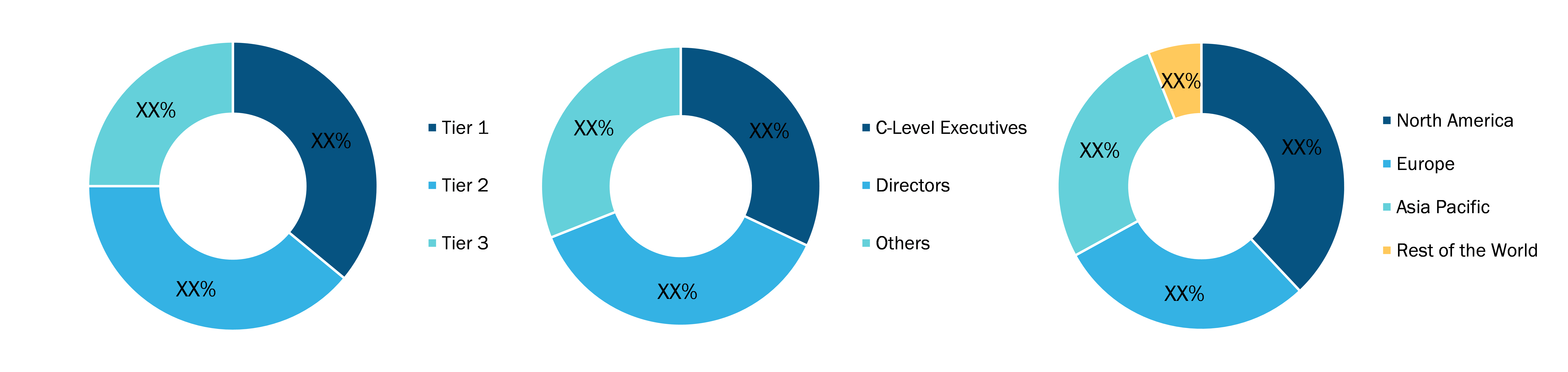
Below is the breakup of our primary respondents by company, designation, and region:
Research Methodology

Once we receive the confirmation from primary research sources or primary respondents, we finalize the base year market estimation and forecast the data as per the macroeconomic and microeconomic factors assessed during data collection.

  1. Data Analysis:

Once data is validated through both secondary as well as primary respondents, we finalize the market estimations by hypothesis formulation and factor analysis at regional and country level.

  • 3.1 Macro-Economic Factor Analysis:

We analyse macroeconomic indicators such the gross domestic product (GDP), increase in the demand for goods and services across industries, technological advancement, regional economic growth, governmental policies, the influence of COVID-19, PEST analysis, and other aspects. This analysis aids in setting benchmarks for various nations/regions and approximating market splits. Additionally, the general trend of the aforementioned components aid in determining the market's development possibilities.

  • 3.2 Country Level Data:

Various factors that are especially aligned to the country are taken into account to determine the market size for a certain area and country, including the presence of vendors, such as headquarters and offices, the country's GDP, demand patterns, and industry growth. To comprehend the market dynamics for the nation, a number of growth variables, inhibitors, application areas, and current market trends are researched. The aforementioned elements aid in determining the country's overall market's growth potential.

  • 3.3 Company Profile:

The “Table of Contents” is formulated by listing and analyzing more than 25 - 30 companies operating in the market ecosystem across geographies. However, we profile only 10 companies as a standard practice in our syndicate reports. These 10 companies comprise leading, emerging, and regional players. Nonetheless, our analysis is not restricted to the 10 listed companies, we also analyze other companies present in the market to develop a holistic view and understand the prevailing trends. The “Company Profiles” section in the report covers key facts, business description, products & services, financial information, SWOT analysis, and key developments. The financial information presented is extracted from the annual reports and official documents of the publicly listed companies. Upon collecting the information for the sections of respective companies, we verify them via various primary sources and then compile the data in respective company profiles. The company level information helps us in deriving the base number as well as in forecasting the market size.

  • 3.4 Developing Base Number:

Aggregation of sales statistics (2020-2022) and macro-economic factor, and other secondary and primary research insights are utilized to arrive at base number and related market shares for 2022. The data gaps are identified in this step and relevant market data is analyzed, collected from paid primary interviews or databases. On finalizing the base year market size, forecasts are developed on the basis of macro-economic, industry and market growth factors and company level analysis.

  1. Data Triangulation and Final Review:

The market findings and base year market size calculations are validated from supply as well as demand side. Demand side validations are based on macro-economic factor analysis and benchmarks for respective regions and countries. In case of supply side validations, revenues of major companies are estimated (in case not available) based on industry benchmark, approximate number of employees, product portfolio, and primary interviews revenues are gathered. Further revenue from target product/service segment is assessed to avoid overshooting of market statistics. In case of heavy deviations between supply and demand side values, all thes steps are repeated to achieve synchronization.

We follow an iterative model, wherein we share our research findings with Subject Matter Experts (SME’s) and Key Opinion Leaders (KOLs) until consensus view of the market is not formulated – this model negates any drastic deviation in the opinions of experts. Only validated and universally acceptable research findings are quoted in our reports.

We have important check points that we use to validate our research findings – which we call – data triangulation, where we validate the information, we generate from secondary sources with primary interviews and then we re-validate with our internal data bases and Subject matter experts. This comprehensive model enables us to deliver high quality, reliable data in shortest possible time.

Your data will never be shared with third parties, however, we may send you information from time to time about our products that may be of interest to you. By submitting your details, you agree to be contacted by us. You may contact us at any time to opt-out.