
Sensor Patch Market Share, Growth & Forecast by 2034
Coverage: by Technology (Amperometric, Conductometric, Potentiometric); Product Type (Temperature Sensor Patch, Blood Glucose Sensor Patch, Blood Pressure/Flow Sensor Patch, Heart Rate Sensor Patch, ECG Sensor PAtch, Others); Wearable Type (Bodywear, Neckwear, Wristwear, Footwear); Application (Medical Therapeutic, Monitoring, Diaginistics); End User (Healthcare, Fitness and Sports, Diagnostic Laboratories, Others) , and Geography (North America, Europe, Asia Pacific, and South and Central America)
- Status : Data Released
- Report Code : TIPRE00011145
- Category : Electronics and Semiconductor
- No. of Pages : 150
- Available Report Formats :


- Last update date : July 10, 2026


2025 Market Size
US$ 6.48 Bn
Base year value
2034 Forecast
US$ 24.51 Bn
Projected by 2034
CAGR 2026-2034
18.10 %
Growth rate
Addressable Market
US$ 146.69 Bn
(2026-2034)
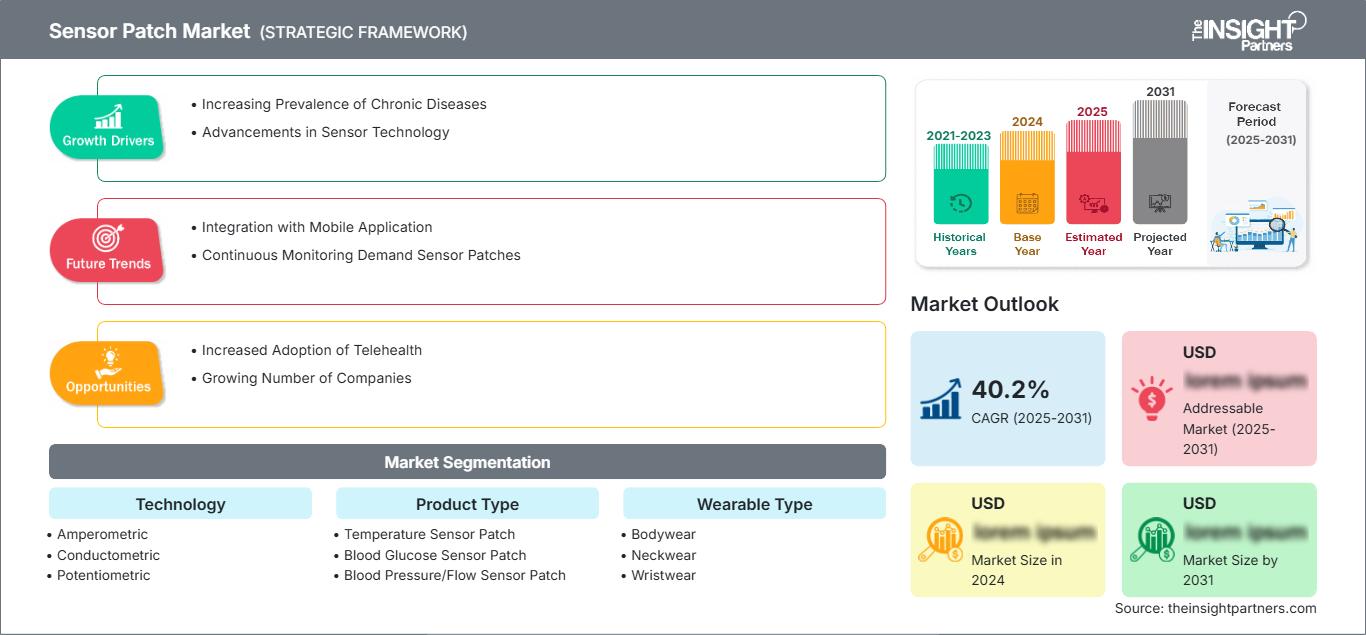
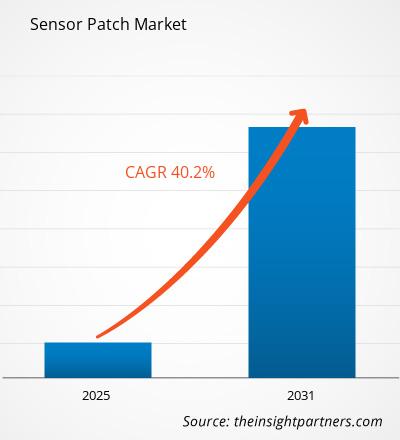
The Sensor Patch Market size is projected to grow from US$ 6.48 Billion in 2025 to US$ 24.51 Billion by 2034; it is expected to record a CAGR of 18.10% from 2026 to 2034. Sensor patches are becoming core components of continuous care pathways, combining flexible electronics, wireless data transfer, and application-specific biosensing for clinical monitoring, diagnostics, and therapeutic support across healthcare and consumer health environments.
North America is expected to expand at a 17.2–18.4% CAGR during 2026–2034, supported by reimbursement-enabled remote physiologic monitoring, high diabetes technology penetration, and established ambulatory cardiac monitoring infrastructure. The region benefits from early adoption of FDA-cleared continuous glucose monitoring and ECG patch systems, while provider networks increasingly use patch-generated data to reduce avoidable hospital visits and support decentralized chronic disease management.
Sensor Patch Market Assessment and Insights
- North America held 41–44% of the Sensor Patch Market share in 2025 and is projected to grow at a 17.2–18.4% CAGR between 2026–2034, driven by remote monitoring reimbursement, diabetes technology uptake, and mature cardiology diagnostics adoption.
- The US represented 78–82% of North America in 2025 and is expected to grow at a 17.4–18.6% CAGR between 2026–2034, supported by large CGM and ECG patch installed bases.
- Europe accounted for 24–27% share in 2025 and is forecast to expand at a 16.1–17.3% CAGR between 2026–2034, led by Germany, the UK, and France in connected monitoring adoption.
- Asia Pacific captured 22–25% share in 2025 and is anticipated to record an 18.8–20.2% CAGR between 2026–2034, with China, Japan, South Korea, and India driving digitally enabled chronic care.
- Largest Segment: Blood Glucose Sensor Patch held 34–38% market share in 2025 and is projected to grow at a 17.8–19.0% CAGR during 2026–2034 due to recurring sensor use.
- High Growth Segment: ECG Sensor Patch held 15–18% market share in 2025 and is projected to grow at a 19.2–20.6% CAGR during 2026–2034 as long-term arrhythmia screening expands.
- Key companies analyzed in detail: Abbott Laboratories, DexCom, Inc., Gentag, Inc., iRhythm Technologies, Inc., Kenzen, Inc., Medtronic plc, Koninklijke Philips N.V., Texas Instruments Incorporated, VitalConnect, Inc., VivaLNK, Inc.
Source: The Insight Partners' analysis based on proprietary research, government publications, company annual reports, investor presentations, industry databases, and expert interviews.
The Sensor Patch Market has moved from being single parameter devices to becoming biosensors that connect in order to make clinical decisions in diabetes, cardiology, temperature monitoring, and physiologic monitoring. There have been changes in the manufacturing process of sensor patches as they have adopted flexible substrates, smaller size of electrodes, low-power wireless chips, and adhesives that do not irritate the skin. This ensures that the patches stay on the skin for longer durations and thus improve patient compliance. Companies are developing sensor patches around cloud analytics and clinicians' dashboard which makes the accuracy of data and its integration with EHR crucial for product commercialization.
The Sensor Patch Market forecast is the emerging regions getting more prominence due to increased investments in screening of chronic diseases. The regulatory frameworks for software-based medical devices, increased telemedicine reimbursements, and consumer adoption of continuous biomarker tracking will increase the scope of the Sensor Patch Market.
Sensor Patch Market Report Scope
| Report Attribute | Details |
|---|---|
| Market size in 2025 | US$ 6.48 Billion |
| Market Size by 2034 | US$ 24.51 Billion |
| Global CAGR (2026 - 2034) | 18.10% |
| Historical Data | 2021-2024 |
| Forecast period | 2026-2034 |
Sensor Patch Market Analysis
Factors affecting demand include the need for remote monitoring of patients' chronic conditions, especially diabetic patients, cardiovascular disease, patients at risk of hypertension, and post-discharge patients. The growth trajectory of the Sensor Patch Market is bolstered by the transition from sporadic data collection to continuous signals.
The eco-system consists of sensor components manufacturers, experts in adhesives, devices manufactures, cloud computing analytics providers, payers, and providers networks. The supply environment is improving due to greater standardization of flexible electronics and semiconductors, although clinical validation, data security, and integration into clinical workflows are significant obstacles for emerging players.
The Sensor Patch Market report highlights competitive environment which is largely dominated firms having biosensing platform and reimbursement-oriented marketing strategy. In terms of glucose monitoring technology, Abbott Laboratories and DexCom, Inc. are prominent, and iRhythm Technologies, Inc. and VitalConnect, Inc. target cardiac and multivital monitoring. Medtronic plc adds strength to the ecosystem network in diabetes and cardiac care.
Connected health technologies, which integrate hardware, analysis, and clinical interpretation of the results rather than individual patches, attract significant investments. Sensing and communication capabilities of devices help Texas Instruments Incorporated minimize device size. As for Kenzen, Inc., Gentag, Inc., Koninklijke Philips N.V., and VivaLNK, Inc., they focus on workplace safety, NFC sensors, remote monitoring, and hospital-to-home care.
● REPORT CUSTOMIZATION
Tailor This Report To Align With Your Specific Business Requirements
This report can be customized to align precisely with your business objectives, scope, and target markets. Customization options include tailored segmentation, geography, competitive analysis, and strategic insights to support informed decision-making.
Customize This Report →WHAT YOU CAN ADJUST
- ● Segmentations
- ● Geography
- ● Competitive Analysis
- ● Language Preferences
Sensor Patch Market: Strategic Insights
Regional Insights
North America Sensor Patch Market
North America accounted for 41–44% of global revenue in 2025 and is projected to grow at a 17.2–18.4% CAGR during 2026–2034. Adoption is fueled by high diagnosis prevalence of diabetes and arrhythmias, advanced ambulatory monitoring pathways, and reimbursement for remote physiological monitoring. Moreover, the region enjoys well-established delivery systems for the devices, clinical expertise in applying patch technology, and high patient acceptance of wearable technology.
The regional market for Sensor Patches has high demand for Blood Glucose, ECG, Temperature, and Multi-Vital sensors used in home care, cardiology practices, and distributed trials. North American share of the Sensor Patch Market is protected by early approvals, strong investment in digital health solutions, and telemedicine applications. Adhesive Biosensors are increasingly used in hospitals to decrease monitoring burden while expanding it outside of the inpatient setting.
U.S. Sensor Patch Market
The US represented 78–82% of North America revenue in 2025 and is expected to grow at a 17.4–18.6% CAGR through 2034. Demand is shaped by widespread continuous glucose monitoring use, cardiology adoption of long-wear ECG patches, and broader acceptance of data-driven outpatient care. Large provider groups increasingly prefer patches that deliver interpretable reports rather than raw sensor streams.
Company presence is significant, with Abbott Laboratories, DexCom, Inc., iRhythm Technologies, Inc., VitalConnect, Inc., and VivaLNK, Inc. serving hospitals, clinics, employers, and homecare programs. Application trends show glucose and ECG patches leading commercial volumes, while temperature and multi-parameter patches are gaining traction in post-acute monitoring, occupational health, and clinical research workflows.
Europe Sensor Patch Market
Europe held 24–27% share in 2025 and is projected to grow at a 16.1–17.3% CAGR during 2026–2034. Remote monitoring has been made possible in the UK through virtual ward models in the NHS using adhesive sensors to monitor patients such as those suffering from heart, lungs diseases, and those recovering from discharge without prolonging their stay in the hospitals.
Germany leads in Europe due to robust medical devices manufacturing industry, digital health reimbursement schemes, and high requirements for cardiometabolic diseases treatment. In particular, the need for validated monitoring equipment among clinicians boosts sales of sensor patches in cardiology, diabetic care, and rehabilitation settings.
France, Italy, and Spain depict slow adoption due to a balance between the need for cost control and upgrading of the chronic disease care systems in the public sector. The Sensor Patch Market trends in these nations focus on home follow-up, senior care, and digital diagnostics.
APAC Sensor Patch Market
APAC accounted for 22–25% share in 2025 and is forecast to grow at an 18.8–20.2% CAGR. China is the leading country, supported by diabetes screening, domestic electronics capacity, and hospital digitization.
Japan and South Korea are adopting ECG, glucose, and temperature patches through aging-care programs and high connected-device familiarity. Local manufacturers also support miniaturized components, batteries, and wireless modules.
India and Australia add growth through telemedicine expansion, private hospital networks, and remote care needs across dispersed populations. Policy emphasis on digital health records improves the long-term Sensor Patch Market analysis for interoperable monitoring.
Middle East & Africa Sensor Patch Market
Middle East and Africa is projected to grow at a 14.8–16.2% CAGR during 2026–2034. Saudi Arabia is the leading country, driven by hospital modernization and national digital health investment.
The UAE supports premium adoption through private healthcare, diabetes management programs, and connected wellness services. Energy-sector employers are also assessing heat stress and fatigue monitoring for field workers.
South Africa and the Rest of MEA remain earlier-stage markets, where affordability, connectivity, and clinical training influence uptake. Infrastructure expansion and telehealth pilots create selective opportunities for diagnostic and monitoring patches.
Segmentation Analysis
Technology
The technology segment in the Sensor Patch Market is projected to grow at a 17.0–18.3% CAGR during 2026–2034. Electrochemical sensing remains central because patches must detect biochemical or electrical changes reliably on skin. Product differentiation increasingly depends on signal stability, miniaturized readout circuits, and materials that reduce irritation during multi-day wear.
- Amperometric platforms are strategically important for glucose and lactate monitoring because they convert biochemical reactions into measurable current signals, supporting recurring demand in metabolic care.
- Conductometric sensing is used where changes in sweat, hydration, or ion concentration can indicate physiologic status, making it relevant for sports, occupational safety, and wellness monitoring.
- Potentiometric sensors support ion-selective and pH-related measurement needs, with demand linked to non-invasive biomarker development and future multi-analyte patch architectures.
Product Type
The product type segment in the Sensor Patch Market is projected to grow at a 17.6–19.0% CAGR during 2026–2034. Demand is led by clinically validated glucose and ECG patches, while temperature, blood pressure or flow, and heart rate patches broaden use cases across hospitals, homecare, fitness, and occupational health. Device selection depends on accuracy, wear duration, and clinical actionability.
- Temperature sensor patches are used for fever surveillance, post-operative observation, and workplace heat monitoring, offering continuous readings where spot checks may miss clinically relevant fluctuations.
- Blood glucose sensor patches hold the strongest commercial position because diabetes management requires frequent measurement, recurring sensor replacement, and integration with mobile apps and insulin delivery ecosystems.
- Blood pressure or flow sensor patches address a difficult monitoring need by targeting continuous vascular insight, but adoption depends on validation against cuff-based standards and clinician confidence.
- Heart rate sensor patches support wellness, rehabilitation, and remote monitoring programs where lightweight, adhesive designs improve compliance compared with chest straps or handheld devices.
- ECG sensor patches are strategically important for arrhythmia detection because extended wear captures intermittent events more effectively than short-duration Holter monitoring.
Wearable Type
The wearable type segment in the Sensor Patch Market is projected to grow at a 16.8–18.2% CAGR during 2026–2034. Placement affects signal quality, user comfort, and target application. Bodywear remains common for ECG and multi-vital monitoring, while wristwear benefits from consumer familiarity. Neckwear and footwear are more specialized but support emergency response and mobility-related sensing.
- Bodywear dominates clinical use because chest, abdomen, and upper-arm placement can improve signal capture for ECG, glucose, temperature, and multi-parameter monitoring.
- Neckwear addresses niche safety and emergency applications where proximity to vascular signals and voice-enabled or alert functions can improve rapid response scenarios.
- Wristwear benefits from consumer acceptance, smartphone pairing, and daily wear habits, making it useful for wellness, heart rate, and hybrid monitoring models.
- Footwear remains specialized for gait, circulation, pressure, and diabetic foot risk monitoring, with adoption concentrated in rehabilitation and preventive care programs.
Application
The application segment in the Sensor Patch Market is projected to grow at an 18.0–19.4% CAGR during 2026–2034. Monitoring leads adoption because continuous data supports earlier intervention and care coordination. Diagnostics are expanding through long-wear ECG and biomarker patches, while therapeutic applications benefit from integration with digital therapeutics, medication adherence, and closed-loop care pathways.
- Medical therapeutic applications are gaining strategic value where sensor feedback supports treatment adjustment, adherence tracking, or integration with connected drug delivery and disease management platforms.
- Monitoring applications generate the broadest recurring demand because clinicians and patients use continuous signals to manage glucose, rhythm, temperature, and vital sign variability.
- Diagnostics applications are expanding as longer wear periods improve detection of intermittent cardiac events, physiologic deterioration, and condition-specific patterns that episodic testing may miss.
Opportunity Snapshot
| Application | Revenue Contribution | Trend Tag | Adoption Stage |
| Medical Therapeutic | Medium | Closed Loop | Scaling |
| Monitoring | High | Remote Care | Mature |
| Diagnostics | Medium | Arrhythmia Capture | Scaling |
Sensor Patch Market Growth Drivers and Impact Analysis
Expansion of Remote Patient Monitoring Reimbursement
The reimbursement model for remote monitoring is shifting the usage of sensor patches from being an elective trial to a mandatory care process flow. Since the healthcare providers will get reimbursement for the implementation, data analysis, and physiological monitoring by the device, then the usage of the sensor will be a requirement rather than just an additional element. Such an arrangement will be clearer for hospitals and medical facilities when procuring sensors especially for the management of diabetes, cardiology cases, and post-discharge monitoring.
Rising Burden of Diabetes and Cardiovascular Conditions
Both diabetes and heart problems demand continual testing, thus becoming ideal sources of demand for sensors. Continuous glucose monitoring allows for better management of glycaemia variability, and prolonged ECG tests increase the chances to detect any arrhythmia. Both diseases are characterized by expensive treatment in hospitals and follow-ups, which leads to the need for preventive instruments. From the viewpoint of the producers, the demand is sustainable because of continuous testing, which means periodic patch replacement and functioning data platform. Thus, there is a structural demand that drives the growth of Sensor Patch size.
Advances in Flexible Electronics and Low-Power Connectivity
Better material composition decreases skin irritation, while reduced electronics sizes help patches acquire better-quality signals without bulky boxes. This development will increase comfort, make the technology more efficient in use, and simplify manufacturing due to the standardization of sensor modules, batteries, and wireless technologies. This change is apparent in the increased range of applications from glucose sensors and ECGs to temperature sensors, hydration monitoring, and even occupational health and safety. The advancement allows Sensor Patch trends to evolve towards multi-parameters systems that would add to clinical benefits from each episode.
Sensor Patch Market Future Trends
Multi-Analyte Patch Platforms
The future platforms will integrate multiple sensors such as glucose, ketones, temperature, hydration, ECG, or activity in one adhesive platform. Multiple analytes capability may lead to reduction in device burden and more context to guide clinical decision making. The competitive advantage will be achieved through the use of validated algorithms that generate alerts from multiple signals and not just separate measurements. With increased payer demands for proof, those able to demonstrate less adverse events, improved compliance, or quicker diagnosis will be provided preferred access.
AI-Assisted Clinical Interpretation
Since sensor patches provide constant streams of data, the clinical value will lie in removing the noise and focusing on what is actionable. Interpretation by AI can detect rhythm disturbances, glucose spikes, fever trends, or physiologic decline more effectively than the manual process. The future of the Sensor Patch Market will thus be centered around reliable software, clear alerts, and workflow integration with clinicians. Companies that prove to be highly sensitive without many false alarms will have an advantage with the health systems. Eventually, interpretation will become as crucial as the sensor patch itself.
Sensor Patch Market Opportunities
Hospital-to-Home Monitoring Programs
Hospitals need efficient ways to keep an eye on their discharged patients without the need for increased inpatient bed space. This can be done by using sensor patches that would transmit vital signs such as body temperature, ECG, heart rate, or multi-vitals to the clinical teams at times when patients become vulnerable in their recovery. This would be most applicable in scenarios where hospitals incur penalties for readmissions, have congested wards, and virtual care programs in place. Value-added features include kits, dashboards, escalation procedures, and integrations with EHRs.
Occupational Health and Heat Stress Monitoring
Industrial organizations working in energy, construction, mining, logistics, and manufacturing sectors have started to focus on worker safety under conditions of heat, fatigue, and difficult operations. Thermometer, hydration, heart rate, and physical exertion patches are some tools which could be used for early detection of any problem. This market differs from the clinical health care market since there will be purchases for safety compliance and operational continuity reasons. Organizations that develop durable, private, and easily deployable patches can tap into enterprise budgets that are not in the clinical realm.
Recent Developments
- May 2026: The Abbott Company (NYSE: ABT), a leading player in the healthcare industry across the globe, made an announcement today regarding its success in obtaining the CE Mark for the world’s first glucose-ketone dual sensor technology for use by people suffering from diabetes. The technology, which is being marketed under the name of Libre Duo and Libre Duo 10 Day, is capable of monitoring the glucose and ketone levels every minute. This is strengthening its continuous monitoring portfolio and supporting future multi-analyte patch adoption in metabolic care.
- April 2026: iRhythm Technologies, Inc. - New information from HRS 2026 highlighted the shortcomings of using the short-term Holter monitoring and further demonstrated the importance of ECG patch monitoring in detecting AF recurrence and significant arrhythmias.
- July 2025: DexCom, Inc. announced the launch of AI-based Smart Food Logging for Stelo and G7 users, enhancing its glucose monitoring capabilities by integrating photo-based meal recognition into them.
Frequently Asked Questions

- Comprehensive Market Sizing and Forecast Analysis
- Detailed Segmentation Analysis
- In-Depth Market Dynamics Assessment
- Regional and Country-Level Insights
- Competitive Landscape and Company Benchmarking
- Strategic Business Intelligence
Recent Reports
Testimonials

The Insight Partners' SCADA System Market report is comprehensive, with valuable insights on current trends and future forecasts. The team was highly professional, responsive, and supportive throughout. We are very satisfied and highly recommend their services.
RAN KEDEM Partner, Reali Technologies LTDs
I requested a report on a very specific software market and the team produced the report in a few days. The information was very relevant and well presented. I then requested some changes and additions to the report. The team was again very responsive and I got the final report in less than a week.
JEAN-HERVE JENN Chairman, Future Analytica
We worked with The Insight Partners for an important market study and forecast. They gave us clear insights into opportunities and risks, which helped shape our plans. Their research was easy to use and based on solid data. It helped us make smart, confident decisions. We highly recommend them.
PIYUSH NAGPAL Sr. Vice President, High Beam Global
The Insight Partners delivered insightful, well-structured market research with strong domain expertise. Their team was professional and responsive throughout. The user-friendly website made accessing industry reports seamless. We highly recommend them for reliable, high-quality research services
YUKIHIKO ADACHI CEO, Deep Blue, LLC.
This is the first time I have purchased a market report from The Insight Partners.While I was unsure at first, I visited their web site and felt more comfortable to take the risk and purchase a market report.I am completely satisfied with the quality of the report and customer service. I had several questions and comments with the initial report, but after a couple of dialogs over email with their analyst I believe I have a report that I can use as input to our strategic planning process.Thank you so much for taking the extra time and making this a positive experience.I will definitely recommend your service to others and you will be my first call when we need further market data.
JOHN SUZUKI President and Chief Executive Officer, Board Director, BK Technologies
I wish to appreciate your support and the professionalism you displayed in the course of attending to my request for information regarding to infectious disease IVD market in Nigeria. I appreciate your patience, your guidance, and the fact that you were willing to offer a discount, which eventually made it possible for us to close a deal. I look forward to engaging The Insight Partners in the future, all thanks to the impression you have created in me as a result of this first encounter.
DR CHIJIOKE ONYIA MANAGING DIRECTOR, PineCrest Healthcare Ltd.Reason to Buy
- Informed Decision-Making
- Understanding Market Dynamics
- Competitive Analysis
- Identifying Emerging Markets
- Customer Insights
- Market Forecasts
- Risk Mitigation
- Boosting Operational Efficiency
- Strategic Planning
- Investment Justification
- Tracking Industry Innovations
- Aligning with Regulatory Trends





 Get Free Sample for