
Soy Protein Market Demand, Share & Growth by 2034
Coverage: By Type (Soy Protein Concentrate, Soy Protein Isolate, Textured Soy Protein, and Soy Flour & Grits), Category (Conventional and Organic), Form (Dry and Liquid), Application (Bakery and Confectionery, Meat Alternatives, Dairy Alternatives, Infant Nutrition, Protein Supplements, Animal Nutrition, and Others), and Geography (North America, Europe, Asia Pacific, Middle East and Africa, and South and Central America)
- Status : Published
- Report Code : TIPRE00042703
- Category : Food and Beverages
- No. of Pages : 289
- Available Report Formats :


- Last update date : February 25, 2026


2025 Market Size
US$ 4.81 Bn
Base year value
2034 Forecast
US$ 8.53 Bn
Projected by 2034
CAGR 2026-2034
6.8 %
Growth rate
Addressable Market
US$ 61.02 Bn
(2026-2034)
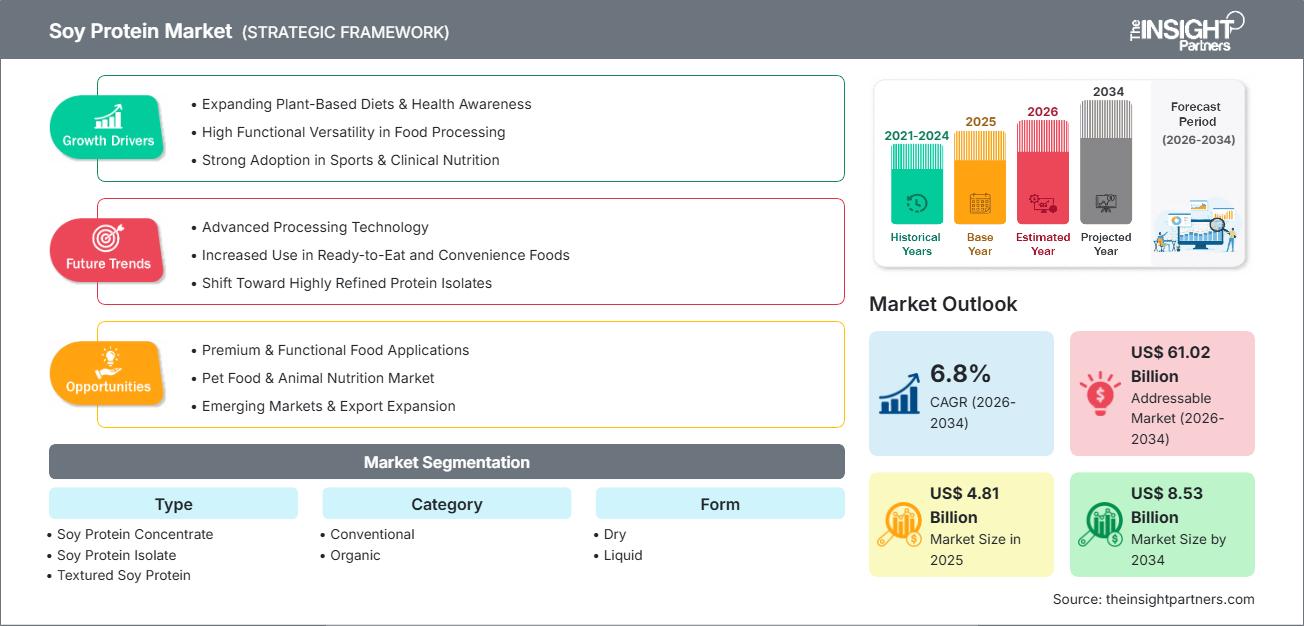
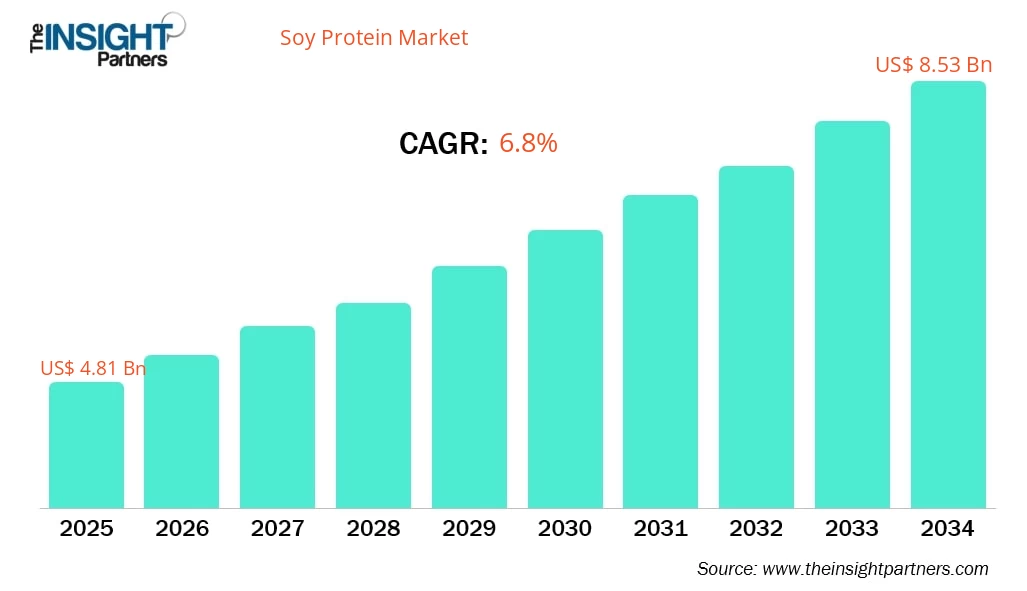
The soy protein market size is projected to reach US$ 8.53 billion by 2034 from US$ 4.81 billion in 2025. The market is expected to register a CAGR of 6.8% from 2026 to 2034.
Soy Protein Market Analysis
Consumers are looking for alternatives to animal protein for health, ethical, and environmental reasons. Soy protein is gaining popularity due to its complete amino acid profile, high digestibility, and cost-effectiveness; this makes it a favored ingredient in food and beverage products, nutrition items, and animal feed. As awareness of cardiovascular disease and obesity is rising, demand for soy protein in functional foods, dietary supplements, and sports nutrition is increasing.
Innovation to improve taste, texture, and solubility helps increase consumer acceptance, especially in meat and dairy alternatives. There is a growing demand for non-GMO, organic, and clean-label soy protein ingredients. This shift is driven by consumer expectations for greater transparency and quality. Manufacturers are exploring new uses for soy protein in confectionery, infant nutrition, and pet food. Sustainability efforts, such as responsible soybean sourcing and reduced carbon footprints, are influencing long-term market strategies.
Soy Protein Market Overview
Soy protein is derived from defatted soybean meal and is usually available as soy protein isolates, concentrates, and textured soy protein. The production process involves cleaning and dehulling soybeans, extracting oil using solvent or mechanical methods, and processing the remaining meal to reach the desired protein concentration and functional properties. Soy protein is valued for its high nutritional quality, as it contains all essential amino acids needed for human health. It provides functional benefits, such as emulsification, water and fat binding, and improving texture. These properties make it suitable for meat alternatives, dairy substitutes, baked goods, beverages, and nutritional supplements. Soy protein is a cost-effective and sustainable protein source. Soybean cultivation has a lower environmental impact compared to animal-based protein production, which supports its use in global markets.
Market Research Highlights
- Europe dominated the market with 35.7% share in 2025.
- Asia Pacific is poised to grow at a CAGR of 7.7% over the forecast period.
- United States market is projected to grow at a CAGR of 7.3% over the forecast period.
- By Type, the Soy Protein Concentrate segment accounted for the largest market share of 40.1% in 2025.
- By Category, the Organic segment is anticipated to witness the fastest growth, registering a CAGR of 7.2% over the forecast period
- By Form, the Dry segment accounted for the largest market share of 85.7% in 2025.
- By Application, the Infant Nutrition segment is anticipated to witness the fastest growth, registering a CAGR of 7.4% over the forecast period
- The report profiles key industry players such as Associated British Foods Plc, Bunge Global SA, SunOpta Inc, Cargill Inc, Archer Daniels Midland Company, International Flavors & Fragrances Inc, The Scoular Co, Farbest-Tallman Foods Corp, American International Foods Inc, Sun Nutrafoods, while also analyzing key developments in novel ideas, disruptive products, and innovative services that could reshape the future market and reveal emerging themes across the industry.
Source: The Insight Partners' analysis based on proprietary research, government publications, company annual reports, investor presentations, industry databases, and expert interviews.
● REPORT CUSTOMIZATION
Tailor This Report To Align With Your Specific Business Requirements
This report can be customized to align precisely with your business objectives, scope, and target markets. Customization options include tailored segmentation, geography, competitive analysis, and strategic insights to support informed decision-making.
Customize This Report →WHAT YOU CAN ADJUST
- ● Segmentations
- ● Geography
- ● Competitive Analysis
- ● Language Preferences
Soy Protein Market: Strategic Insights
-
Get Top Key Market Trends of this report.This FREE sample will include data analysis, ranging from market trends to estimates and forecasts.
Soy Protein Market: Drivers and Opportunities
Market Drivers:
Consumers are becoming more health-conscious and are reducing their intake of animal proteins due to concerns about cholesterol, heart disease, lactose intolerance, and overall wellness. Soy protein is a complete plant protein, as it contains all essential amino acids, making it a viable alternative to animal protein.
Soy protein is affordable and provides functional benefits, including emulsification, water binding, and texture improvement. These features make it suitable for various food and beverage applications. The growing market for plant-based meat and dairy alternatives has led to an increase in the use of soy protein as a key ingredient. Supportive regulations and improved availability of plant-based products through modern retail and food service channels are speeding up adoption.
Market Opportunities:
Rapid urbanization, rising disposable incomes, and greater health awareness in Asia Pacific, South & Central America, and parts of the Middle East & Africa are driving the demand for affordable and nutritious protein sources. Soy protein's versatility allows it to be included in a variety of products, such as fortified foods, beverages, baked goods, infant nutrition, and pet food, beyond its traditional role in meat substitutes.
Improvements in processing technologies are enhancing flavor and functionality. These advancements address past concerns about taste and allergens, making the product more appealing to consumers. The growing focus on sustainable and plant-based nutrition by governments and food manufacturers creates opportunities for manufacturers to increase capacity, innovate products, and strengthen their presence in fast-growing markets.
Soy Protein Market Report Segmentation Analysis
The soy protein market is divided into different segments to give a clearer view of how they work, their growth potential, and the latest trends. Below is the standard segmentation approach used in industry reports:
By Product Type
- Soy Protein Concentrate: This product is high in protein and has functional properties. It is used in bakery items, beverages, and meat alternatives for its ability to emulsify and enhance texture.
- Soy Protein Isolate: This highly purified protein is favored in dietary supplements, protein bars, and sports nutrition products. It offers a complete amino acid profile and excellent solubility.
- Textured Soy Protein: Often used as a meat substitute, it adds structure, chewiness, and protein to plant-based meat and ready-to-eat products.
- Soy Flour & Grits: These ingredients are added to bakery items, snacks, and nutritional formulations to boost protein content, improve texture, and extend shelf life.
By Category
- Conventional: Made from standard soybean varieties, it is used in everyday food and feed applications for affordable protein boosting.
- Organic: Made from certified organic soybeans, it serves health-conscious and clean-label product markets, focusing on sustainability and non-GMO sourcing.
By Form
- Dry: Powdered soy proteins are versatile and stable. They are suitable for bakery goods, beverages, supplements, and industrial food applications.
- Liquid: Liquid soy proteins are easy to use in beverage recipes, dairy alternatives, and ready-to-drink nutritional products. They mix well and dissolve quickly.
By Application
- Bakery and Confectionery: Used to increase protein content, improve texture, and extend shelf life in baked goods, snacks, and desserts.
- Meat Alternatives: Provides structure, chewiness, and protein boost in plant-based meat products and ready-to-eat formulations.
- Dairy Alternatives: Acts as a main protein source in soy milk, yogurts, and other dairy substitute products.
- Infant Nutrition: Added to formula and baby foods to provide essential amino acids and support healthy growth.
- Protein Supplements: Used in powders, bars, and shakes for muscle development, weight management, and sports nutrition.
- Animal Nutrition: Incorporated into feed to provide high-quality protein for livestock, poultry, and aquaculture.
- Others: Includes functional foods, beverages, and specialized applications that need protein enrichment or texturization.
By Geography:
- North America
- Europe
- Asia Pacific
- South and Central America
- Middle East and Africa
Soy Protein Market Report Scope
| Report Attribute | Details |
|---|---|
| Market size in 2025 | US$ 4.81 Billion |
| Market Size by 2034 | US$ 8.53 Billion |
| Global CAGR (2026 - 2034) | 6.8% |
| Historical Data | 2021-2024 |
| Forecast period | 2026-2034 |
| Segments Covered |
By Type
|
| Regions and Countries Covered |
North America
|
| Market leaders and key company profiles |
|
Soy Protein Market Players Density: Understanding Its Impact on Business Dynamics
The Soy Protein Market is growing rapidly, driven by increasing end-user demand due to factors such as evolving consumer preferences, technological advancements, and greater awareness of the product's benefits. As demand rises, businesses are expanding their offerings, innovating to meet consumer needs, and capitalizing on emerging trends, which further fuels market growth.
Soy Protein Market Share Analysis by Geography
Europe dominates the soy protein market. The growing demand for plant-based diets across the region powers this surge. Emerging markets in South and Central America, the Middle East, and Africa have untapped opportunities for soy protein providers to expand.
The growth of the soy protein market varies by region. The focus on clean-label and non-GMO soy protein ingredients continues to grow, positioning soy protein in an evolving consumer landscape. Below is a summary of market share and trends by region:
1. North America
- Market Share: Holds a significant market share
- Key Drivers:
- High consumer adoption of plant-based and flexitarian diets, influenced by health awareness and lifestyle concerns.
- Trends: Rising demand for clean-label and non-GMO soy protein ingredients in meat and dairy alternatives.
2. Europe
- Market Share: Dominates the market, with an annually rising market share
- Key Drivers:
- Increasing vegetarian and vegan population, backed by regulations promoting alternative proteins.
- Trends: Innovation in plant-based food formulations, including fortified bakery items, snacks, and functional foods.
3. Asia Pacific
- Market Share: Holds a significant market share
- Key Drivers:
- Rapid urbanization and growing disposable incomes, along with a traditional acceptance of soy-based foods.
- Trends: Rising adoption of soy protein in infant nutrition, beverages, and sports supplements to meet health-conscious consumer demand.
4. South and Central America
- Market Share: A rapidly expanding market with consistent annual growth in market share
- Key Drivers:
- The expanding food processing industry and increasing demand for affordable plant-based protein sources.
- Trends: Adoption of soy protein in bakery items, snacks, and meat alternatives, supported by improvements in protein processing technology.
5. Middle East and Africa
- Market Share: Small market size expanding at a rapid pace
- Key Drivers:
- Shift in diets toward protein-enriched and functional foods due to greater health awareness.
- Trends: Growth of modern retail and e-commerce platforms, leading to more availability of soy protein products in urban areas.
Soy Protein Market Players Density: Understanding Its Impact on Business Dynamics
High Market Density and Competition
Competition is intense due to the presence of established players such as International Flavors & Fragrances Inc., Cargill Inc., Archer Daniels Midland Company, Bunge Global SA, SunOpta Inc., Farbest-Tallman Foods Corp, and The Scoular Co.
This high level of competition urges companies to stand out by offering:
- Diverse product offering
- Sustainable and ethical sourcing
- Competitive pricing models
- Strong customer support and easy integration
Opportunities and Strategic Moves
- Companies are focusing on research and development activities to distinguish themselves in the market.
- Leading food ingredient companies are expanding their global footprint and capabilities through strategic acquisitions of manufacturers in the sector.
- Key players are expanding their product portfolio with the launch of organic products.
Other companies analyzed during the course of research:
- Sojaprotein
- Wilmar International
- IMCOPA
- Gushen Biological Technology Group
- Henan Fiber Source Biological Engineering
- Benson Hill
- New Protein Global Inc.
- Devansoy Inc
- Northland Organic Foods Corporation
- Puris Proteins LLC
Soy Protein Market: News and Recent Developments
- Bunge Global SA – Mergers and Acquisitions: Bunge Global SA announced an agreement with Solae to acquire virtually all assets related to lecithin, soy protein concentrate production, and the crushing operations of International Flavors and Fragrances, Inc. (IFF). According to Bunge, the agreement, which was announced on August 5, is subject to specific adjustments and closing conditions and is expected to close by the end of 2025.
- Cargill, Inc – Mergers and Acquisitions: In June 2025, Cargill announced the acquisition of the soybean crushing unit, refinery, and oil bottling facility in Barreiras, Bahia, ending a lease contract that had been in place since 1998.
Soy Protein Market Report Coverage and Deliverables
The "Soy Protein Market Size and Forecast (2021–2034)" report provides a detailed analysis of the market covering the following areas:
- Soy Protein Market size and forecast at global, regional, and country levels for all the key segments covered under the scope
- Soy Protein Market trends, as well as dynamics such as drivers, restraints, and opportunities
- Detailed Porter's five forces and SWOT analysis
- Soy Protein Market analysis covering key market trends, global and regional framework, major players, regulations, and recent market developments
- Industry landscape and competition analysis covering market concentration, heat map analysis, prominent players, and recent developments for the soy protein market
- Detailed company profiles
Frequently Asked Questions

- Comprehensive Market Sizing and Forecast Analysis
- Detailed Segmentation Analysis
- In-Depth Market Dynamics Assessment
- Regional and Country-Level Insights
- Competitive Landscape and Company Benchmarking
- Strategic Business Intelligence
Recent Reports
Testimonials

The Insight Partners provided valuable market intelligence that supported our global go-to-market strategy. Their team was professional, responsive, and attentive to our feedback, providing thoughtful analysis and helpful methodological clarifications throughout the project.
Junmo Kim Chief Financial Officer (CFO), Enertech Co., Ltd.
The Insight Partners' SCADA System Market report is comprehensive, with valuable insights on current trends and future forecasts. The team was highly professional, responsive, and supportive throughout. We are very satisfied and highly recommend their services.
RAN KEDEM Partner, Reali Technologies LTDs
I requested a report on a very specific software market and the team produced the report in a few days. The information was very relevant and well presented. I then requested some changes and additions to the report. The team was again very responsive and I got the final report in less than a week.
JEAN-HERVE JENN Chairman, Future Analytica
We worked with The Insight Partners for an important market study and forecast. They gave us clear insights into opportunities and risks, which helped shape our plans. Their research was easy to use and based on solid data. It helped us make smart, confident decisions. We highly recommend them.
PIYUSH NAGPAL Sr. Vice President, High Beam Global
The Insight Partners delivered insightful, well-structured market research with strong domain expertise. Their team was professional and responsive throughout. The user-friendly website made accessing industry reports seamless. We highly recommend them for reliable, high-quality research services
YUKIHIKO ADACHI CEO, Deep Blue, LLC.
This is the first time I have purchased a market report from The Insight Partners.While I was unsure at first, I visited their web site and felt more comfortable to take the risk and purchase a market report.I am completely satisfied with the quality of the report and customer service. I had several questions and comments with the initial report, but after a couple of dialogs over email with their analyst I believe I have a report that I can use as input to our strategic planning process.Thank you so much for taking the extra time and making this a positive experience.I will definitely recommend your service to others and you will be my first call when we need further market data.
JOHN SUZUKI President and Chief Executive Officer, Board Director, BK Technologies
I wish to appreciate your support and the professionalism you displayed in the course of attending to my request for information regarding to infectious disease IVD market in Nigeria. I appreciate your patience, your guidance, and the fact that you were willing to offer a discount, which eventually made it possible for us to close a deal. I look forward to engaging The Insight Partners in the future, all thanks to the impression you have created in me as a result of this first encounter.
DR CHIJIOKE ONYIA MANAGING DIRECTOR, PineCrest Healthcare Ltd.Reason to Buy
- Informed Decision-Making
- Understanding Market Dynamics
- Competitive Analysis
- Identifying Emerging Markets
- Customer Insights
- Market Forecasts
- Risk Mitigation
- Boosting Operational Efficiency
- Strategic Planning
- Investment Justification
- Tracking Industry Innovations
- Aligning with Regulatory Trends





 Get Free Sample for