
Unified Communication (UC) and Business Headsets Market Growth, Trends & Demand by 2034
Coverage: By Product (Earphones, Headphones); Type (Wired, Wireless); Distribution Channel (Online, Offline); End-Use (Contact Center, Business Enterprises.Others), and Geography (North America, Europe, Asia Pacific, and South and Central America)
- Status : Data Released
- Report Code : TIPRE00013813
- Category : Electronics and Semiconductor
- No. of Pages : 150
- Available Report Formats :


- Last update date : October 30, 2026


2025 Market Size
US$ 5.61 Bn
Base year value
2034 Forecast
US$ 18.67 Bn
Projected by 2034
CAGR 2026-2034
14.30 %
Growth rate
Addressable Market
US$ 104.47 Bn
(2026-2034)
The unified communication and business headsets market was valued at US$ 5.61 Billion in 2025 and is projected to reach US$ 18.67 Billion by 2034, registering a 14.30% CAGR from 2026 to 2034. Demand is increasingly shaped by the integration of headsets with unified communications platforms, cloud calling, video meetings, contact-center applications, and AI-enabled speech workflows.
North America remains a high-value market because enterprise communications infrastructure is mature and organizations are replacing conventional desk-phone peripherals with software-certified audio devices. The Unified Communication and Business Headsets Market Size in the region accounted for approximately ~31% of global market revenue in 2025 and is expected to expand at a ~12.9% CAGR through 2034. The regional purchasing model increasingly links headset selection with Microsoft Teams, Zoom, Google Meet, contact-center platforms, endpoint management, security, and employee experience requirements. Certification programs and native device controls are therefore becoming procurement criteria rather than optional product features. The continued rollout of AI-assisted meeting and contact-center functions also increases the importance of microphone quality, background-noise suppression, acoustic isolation, and reliable device interoperability.
Unified Communication (UC) and Business Headsets Market Assessment and Insights
- North America: North America represented ~31% of the global market in 2025 and is projected to grow at a ~12.9% CAGR. Its established enterprise communications infrastructure, high adoption of cloud collaboration, and structured IT procurement make it a major revenue center. The implication is that vendors must compete on certification, fleet management, interoperability, and lifecycle support rather than audio quality alone.
- U.S.: The U.S. represented approximately ~72% of North American demand in 2025 and is expected to register a ~12.5% CAGR. Large deployments across contact centers, technology companies, financial institutions, healthcare organizations, and distributed corporate workforces support recurring replacement and upgrade demand. Integration with Teams, Zoom, cloud contact-center software, and AI-enabled workplace applications remains a central purchasing consideration.
- Europe: Europe accounted for approximately ~27% of global demand in 2025 and is projected to expand at a ~13.6% CAGR. Germany, the UK, and France are particularly relevant because of their enterprise software adoption, established business-services sectors, and emphasis on workplace standards and sustainability. European buyers increasingly evaluate durability, repairability, responsible materials, acoustic performance, and centralized device management alongside communication functionality.
- Asia Pacific: APAC represented approximately ~34% of global demand in 2025 and is forecast to grow at a ~17.1% CAGR, making it the fastest-expanding major regional market. China, Japan, India, and South Korea combine large enterprise workforces with expanding digital collaboration and business-process outsourcing activity. Local manufacturing capabilities and increasing availability of competitively priced certified devices further support adoption.
- Largest Segment: Headphones are expected to remain the largest main segment within the Product dimension, with a ~13.8% CAGR through 2034. Their stronger suitability for open offices, hybrid work, prolonged meetings, and contact-center applications supports broader enterprise deployment and replacement demand.
- High Growth Segment: Wireless is the highest-growth main segment within the Type dimension, with a ~17.4% CAGR. Wireless devices increasingly combine Bluetooth, USB connectivity, multipoint switching, active noise cancellation, and platform-specific call controls, making them suitable for employees who move between computers, smartphones, meeting rooms, and shared workspaces.
- Key companies analyzed in detail: Audio-Technica Ltd.; Bose Corporation; Dell Technologies Inc.; GN Store Nord A/S; HP Development Company, L.P.; Koss Corporation; Logitech International S.A.; Microsoft Corporation; Sennheiser electronic SE & Co. KG; EPOS Group A/S.
Source: The Insight Partners' analysis based on proprietary research, government publications, company annual reports, investor presentations, industry databases, and expert interviews.
The market has evolved from conventional telephone headsets toward intelligent workplace endpoints that connect directly with cloud communication platforms. Unified Communication and Business Headsets Market Share is increasingly influenced by this transition, as earlier enterprise deployments generally emphasized speech clarity, microphone durability, and compatibility with desk phones. Current products increasingly combine adaptive active noise cancellation, AI-assisted microphone processing, Bluetooth and USB connectivity, programmable controls, multipoint switching, and centralized firmware management. This transition reflects a change in the buyer from an individual employee selecting an accessory to an IT or procurement organization managing a standardized endpoint fleet.
Product architecture is also becoming more differentiated by work environment. The Unified Communication and Business Headsets Market indicates that contact-center users require dependable voice pickup, acoustic isolation, lightweight construction, and compatibility with large-scale agent-management systems. Open-office employees prioritize noise suppression and listening comfort, while hybrid workers value portability and seamless switching among devices. Frontline workers introduce another requirement: durable, rapidly deployable equipment that can operate across retail, logistics, hospitality, and other mobile environments.
Recent platform developments reinforce this shift in the Unified Communication and Business Headsets Market Report. Microsoft Teams continues to support certified headsets with integrated call controls, while Zoom maintains certified headset categories covering both wired and wireless business devices. At the product level, vendors are increasingly incorporating AI-based microphone processing and adaptive ANC rather than treating noise control as a premium-only feature.
Through 2034, the Unified Communication and Business Headsets Market is likely to move toward more software-defined headset fleets. Native Bluetooth, cloud-based configuration, silent firmware updates, device telemetry, replaceable components, and centralized inventory management can reduce IT support requirements while extending useful equipment life. Organizations operating large distributed workforces will increasingly seek a common management layer covering different headset form factors.
Commercialization is also broadening beyond traditional offices. Contact centers, healthcare administration, education, retail, financial services, professional services, and field operations can use headsets as standardized communication endpoints. Emerging Asian markets should benefit from expanding business-process outsourcing, cloud telephony, and digital workplace infrastructure, while mature markets will be driven more by replacement, hybrid-work optimization, and migration to AI-enabled communication platforms.
Unified Communication (UC) and Business Headsets Market Report Scope
| Report Attribute | Details |
|---|---|
| Market size in 2025 | US$ 5.61 Billion |
| Market Size by 2034 | US$ 18.67 Billion |
| Global CAGR (2026 - 2034) | 14.30% |
| Historical Data | 2021-2024 |
| Forecast period | 2026-2034 |
Unified Communication (UC) and Business Headsets Market Analysis
Demand is increasingly generated by the convergence of unified communications, cloud telephony, video collaboration, and contact-center software. Unified Communication and Business Headsets Market Trends are shaped by this transition, as organizations migrating voice workloads from dedicated telephony infrastructure to software platforms increasingly treat headsets as important endpoints within the communications architecture. This creates a chain in which cloud-based usage enhances the amount of users involved, distributed work drives the need for flexible endpoints, and increased emphasis on voice quality drives the value of certified microphones and noise reduction technologies.
It follows that the unified communications headsets growth pattern has something else in its drivers other than the sheer amount of employees. Organizations are adopting unified communication devices in home offices, corporate offices, contact centers, and mobile locations. One person will use multiple communication channels throughout the course of one day, driving the need for multi-point connectivity and uniform audio performance. Compatibility with collaboration platforms is becoming an important criterion in purchasing decisions.
The supply side, meanwhile, is moving towards modular product platforms. Acoustic technology, microphones, wireless technology, management software and accessories can be utilized for multiple designs while the products can be differentiated through comfort, connectivity, battery power and usage environment. This enables the development of a wider portfolio without the need for an entirely new engineering platform for each workforce segment.
Competitive differentiation in the Unified Communication and Business Headsets Market increasingly rests on the combination of hardware and software. Logitech emphasizes business-certified devices and centralized management, while GN Store Nord's Jabra portfolio links professional headsets with broader collaboration and workplace solutions. HP benefits from the Poly communications portfolio and its enterprise endpoint relationships. Sennheiser and EPOS maintain strong positions in professional audio and communication applications, while Bose competes through acoustic engineering and workplace-focused audio products. Audio-Technica and Koss retain relevance where sound quality, reliability, and specialized audio requirements influence purchasing decisions.
Investment priorities in the Unified Communication and Business Headsets Market are consequently moving toward microphone intelligence, acoustic processing, wireless interoperability, device management, sustainability, and ergonomic design. Vendors that can reduce deployment friction while maintaining high-quality voice performance are positioned to gain from enterprise refresh cycles. The competitive environment also favors products that can be certified across several collaboration ecosystems rather than being tied to a single communications platform.
● REPORT CUSTOMIZATION
Tailor This Report To Align With Your Specific Business Requirements
This report can be customized to align precisely with your business objectives, scope, and target markets. Customization options include tailored segmentation, geography, competitive analysis, and strategic insights to support informed decision-making.
Customize This Report →WHAT YOU CAN ADJUST
- ● Segmentations
- ● Geography
- ● Competitive Analysis
- ● Language Preferences
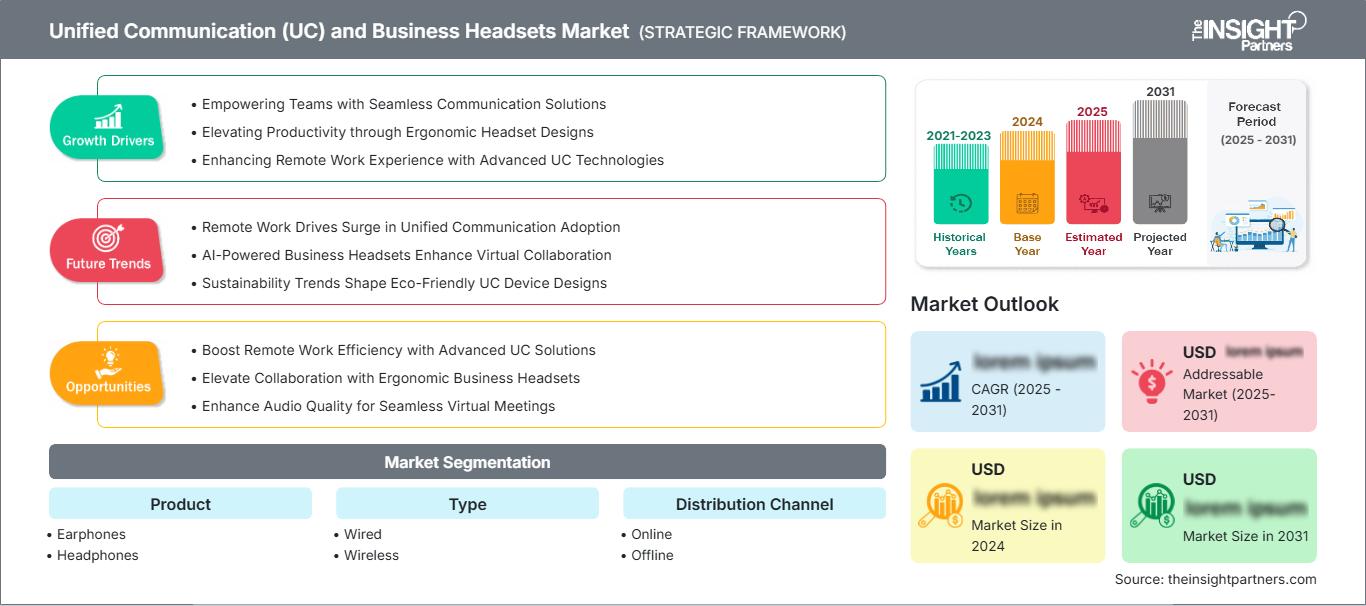
Unified Communication (UC) and Business Headsets Market: Strategic Insights
Regional Insights
North America Unified Communication and Business Headsets
North America represented approximately ~31% of global Unified Communication and Business Headsets Market revenue in 2025 and is expected to expand at a ~12.9% CAGR. This market offers a combination of established Enterprise Software with high penetration of cloud calling, video conferencing, and outsourced contact centers. The United States accounts for most demand from the region, while Canada makes its contribution through financial services, public sector organizations, tech companies, and distributed businesses.
The customers tend to include collaboration with Teams, Zoom, or any other solution in their procurement. That forces vendors to get certification and provide central configuration tools. This market serves as one of the key ones for experimenting with AI-powered communication solutions as organizations start to integrate meeting and contact center audio streams with transcription, summary, assistance, and workflow apps.
U.S. Unified Communication and Business Headsets Market
The U.S. accounted for approximately ~72% of North American Unified Communication and Business Headsets Market demand in 2025 and is projected to grow at a ~12.5% CAGR. Technology, financial services, healthcare, professional services, retail, and contact-center operations form major demand pools. Large employers increasingly standardize headsets across office and remote workers to simplify support and maintain consistent call quality.
The market is differentiated by strong platform certification requirements and sophisticated device-management expectations. Microsoft Teams and Zoom compatibility can influence corporate specifications, while enterprise buyers increasingly evaluate native Bluetooth, ANC, microphone intelligence, security, firmware management, and replaceability. Contact centers remain particularly important because voice remains a core operating channel even as AI automates portions of customer-service workflows.
Europe Unified Communication and Business Headsets Market
Europe represented approximately ~27% of the global Unified Communication and Business Headsets Market in 2025 and is forecast to grow at a ~13.6% CAGR. Germany is a major market because of its industrial base, enterprise technology adoption, and concentration of professional audio expertise. The UK benefits from a large services economy, extensive hybrid working, financial-services activity, and technology adoption. France combines public-sector, enterprise, and contact-center demand with growing cloud collaboration usage.
European procurement places relatively strong emphasis on sustainability and product lifecycle considerations. Vendors increasingly differentiate through recycled materials, repairability, durable construction, replaceable components, energy-conscious packaging, and longer support periods. At the same time, demand for sophisticated microphone processing and ANC is increasing as companies operate flexible workspaces with varied acoustic environments.
APAC Unified Communication and Business Headsets Market
APAC is the fastest-growing major region, representing approximately ~34% of global Unified Communication and Business Headsets Market demand in 2025 and projected to expand at a ~17.1% CAGR. Importance of China derives from its significant technology manufacturing eco-system, while Japan is important because of mature enterprise communications requirements and high demand for reliable and high-quality business audio solutions. India has gained importance due to BPO and technology services, distributed workforce, and increasing digital infrastructure, while South Korea contributes with demands from technology-focused enterprises and advanced communications users.
There is also an important role played by this region in terms of the supply chain. Manufacturing capability for electronics, component ecosystem, and regional distribution network can help in reducing product development and fulfillment timelines. The case of India is particularly true since growing demand for digitally enabled business services and contact centers is helping to boost demand for standardized communication equipment.
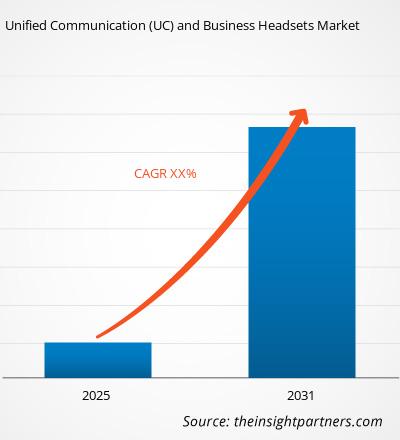
Segmentation Analysis
Product
The Product dimension comprises Earphones and Headphones. Headphones are expected to remain the largest main segment, with a ~13.8% CAGR, because over-ear and on-ear formats provide stronger acoustic isolation and microphone positioning for prolonged professional communication. Their suitability for contact centers, open offices, and hybrid workers supports broad enterprise procurement. Earphones address mobility, discreet use, and employees who alternate between voice communication and other mobile tasks. Future product development will increasingly balance small form factors with professional microphone performance and enterprise manageability.
- Earphones: Primarily support mobile and hybrid workers requiring lightweight, portable communication devices. Adoption is influenced by Bluetooth interoperability, comfort, charging convenience, and increasingly sophisticated voice pickup.
- Headphones: Strongly positioned for office, contact-center, and concentration-intensive applications. Acoustic isolation, ANC, microphone quality, durability, and all-day comfort are central differentiators.
Type
The Type dimension includes Wired and Wireless devices. Wireless is projected to record a ~17.4% CAGR, supported by hybrid work, mobile employees, multipoint connectivity, and the declining tolerance for fixed desk configurations. Wired devices remain important where organizations prioritize low deployment complexity, consistent connectivity, predictable charging requirements, and cost-efficient contact-center fleets.
- Wired: Favored in high-density deployments where reliability, simple USB connectivity, and continuous operation are important. Contact centers and shared workstations remain relevant demand environments.
- Wireless: Benefits from employee mobility, Bluetooth, DECT-based workplace connectivity, multipoint switching, ANC, and improving enterprise certification. Battery management remains a key procurement consideration.
Distribution Channel
The Distribution Channel dimension covers Online and Offline channels and is expected to expand at a ~14.7% CAGR. Enterprise purchasing is increasingly omnichannel, with online procurement supporting standardized replenishment while offline channels remain important for managed deployments, demonstrations, integration, and large-volume contracts. Online channels benefit from rapid product comparison and availability, whereas offline enterprise distributors and value-added resellers provide configuration and support services.
- Online: Supports direct purchasing, rapid replenishment, product comparison, and decentralized procurement for smaller organizations and individual professionals.
- Offline: Remains important for enterprise contracts, channel-managed deployments, integration services, bulk purchasing, and organizations requiring local technical support.
End-Use
The End-Use dimension includes Contact Center, Business Enterprises, and Others. It is projected to expand at a ~15.2% CAGR, reflecting the growing use of professional headsets as standardized endpoints for cloud communications and collaborative work. Contact centers require reliability and speech isolation, while business enterprises place greater emphasis on flexibility, comfort, platform certification, and device management.
- Contact Center: Prioritizes clear speech transmission, acoustic control, long-duration comfort, durability, and compatibility with agent platforms.
- Business Enterprises: Driven by hybrid work, video meetings, cloud telephony, collaboration applications, and standardized IT procurement.
- Others: Includes education, frontline operations, specialized professional environments, and smaller organizational applications where communication mobility or specialized acoustic requirements influence adoption.
Opportunity Snapshot
| End-Use | Revenue Contribution | Trend Tag | Adoption Stage |
|---|---|---|---|
| Contact Center | High | Voice AI | Mature |
| Business Enterprises | High | Hybrid Work | Scaling |
| Others | Medium | Frontline Mobility | Scaling |
Unified Communication (UC) and Business Headsets Market Growth Drivers and Impact Analysis
AI-enabled communication increases microphone and acoustic requirements
AI innovations are transforming the value proposition of the headset from one of a simple audio component to one of an input device for transcription, summarization, agent help, translation, and voice-driven workflows. All of these applications require high-quality speech signals, so the importance of microphone arrays, beam forming, noise reduction, echo canceling, and acoustic shielding increases.
The bottom line is that vendors will be able to differentiate not only based on speaker quality but also based on speech capture and processing performance.
Once AI features become a part of collaboration and contact center software solutions, low-quality audio will make subsequent applications less effective. That is why companies have more reason to standardize on professional-grade devices in particular in open office environments and contact centers.
Hybrid work sustains demand for flexible enterprise endpoints
Employees are becoming more mobile across corporate offices, home offices, co-working spaces, and mobility scenarios. Such operation strategy implies the need for headsets that can seamlessly connect to both computers and smartphones and retain the same control options throughout calls. Wireless solutions receive the most value from such trends, while wired headsets still have their place when connectivity is predictable and setup is straightforward.
Such purchase behavior motivates companies to upgrade their heterogeneous legacy inventories to homogeneous collections. Suppliers who offer a variety of headsets within a single management environment get the most out of it.
Cloud contact centers expand professional headset deployment
The shift to cloud-based contact center infrastructure makes software-compatible audio endpoints more relevant. The agents could work in office environments, at home, or even distributed service centers, leading to the necessity of high voice quality and management of equipment in one place. Another need of the contact center operators is robust equipment that will withstand long daily use.
Such a trend broadens the market potential by going beyond the traditional call center facilities. This requires managed headsets, which could be programmed and managed centrally.
Unified Communication (UC) and Business Headsets Market Future Trends
AI-native headsets will become part of the workplace software stack
AI-powered voice interaction becomes more and more relevant for trends such as unified communication and business headsets. The trend towards headsets includes not only noise-cancelling technologies but also speech enhancement, smart microphone functionality, voice-controlled commands, transcription capabilities, and context-aware communication features.
It means that there will be an increased connection between headset firmware, software running on a computer desktop, cloud services, and security policies. Users will pay attention to whether the device supports upcoming AI workflows without any need to change the whole hardware.
Native Bluetooth will reduce dependence on proprietary receivers
Native Bluetooth is gaining momentum because better enterprise operating systems and collaboration platforms are providing more control of devices. The removal of dedicated dongles can help in simplifying the implementation process, avoiding any loss of accessories, and freeing up USB ports. However, vendors have to ensure that call control functions, firmware support, security, and connection reliability are taken care of.
This will probably lead to a move towards a platform-aware approach towards Bluetooth technology rather than just connecting capability for consumers.
Headset fleets will become more sustainable and serviceable
Today, enterprise buyers are beginning to look at the lifecycle of IT peripherals rather than considering them to be throw-away accessories. Repairable or replaceable ear pads, modularity, recycled plastics, robust batteries, sustainable packaging, and extended software support could lower the cost of ownership while contributing to corporate sustainability goals.
This would mean new ways to compete using lifecycle economics. A headsets that can be repaired, upgraded, or replaced in parts can be of more value to enterprises than an inexpensive one that needs to be replaced in its entirety when even one part is faulty.
Unified Communication (UC) and Business Headsets Market Opportunities
Enterprise AI-ready headset fleets
There is an important market opportunity in providing headset fleets that are standardized to serve specific needs of enterprises using AI-powered collaboration/contact center solutions. Potential buyers of such products are large corporations, business process outsourcing firms, financial enterprises, healthcare firms, and tech firms. The greatest market opportunity lies in North America and Europe because of maturity of enterprise software integration and managed device purchasing.
The unmet need is speech capture in different acoustical environments. Vendors able to combine AI-powered microphones, adaptive ANC, flexible wireless connection, management capability, and platform certification can meet this need. The beneficiaries of this strategy would be those vendors that could sell both hardware and associated management software/lifecycle services.
Localized wireless deployments across APAC
APAC offers whitespace for wireless business headsets as enterprises expand distributed work, digital customer service, and cloud communication infrastructure. India, China, Japan, and South Korea provide distinct combinations of enterprise demand, technology adoption, manufacturing capabilities, and channel reach.
The principal barrier is the need to balance professional performance with procurement economics in price-sensitive deployments. Vendors that localize distribution, provide scalable fleet management, support regional collaboration platforms, and offer durable products across several price tiers can improve adoption. Manufacturing and channel partnerships can further reduce fulfillment complexity and support larger enterprise rollouts.
Frequently Asked Questions

- Comprehensive Market Sizing and Forecast Analysis
- Detailed Segmentation Analysis
- In-Depth Market Dynamics Assessment
- Regional and Country-Level Insights
- Competitive Landscape and Company Benchmarking
- Strategic Business Intelligence
Recent Reports
Testimonials

The Insight Partners provided valuable market intelligence that supported our global go-to-market strategy. Their team was professional, responsive, and attentive to our feedback, providing thoughtful analysis and helpful methodological clarifications throughout the project.
Junmo Kim Chief Financial Officer (CFO), Enertech Co., Ltd.
The Insight Partners' SCADA System Market report is comprehensive, with valuable insights on current trends and future forecasts. The team was highly professional, responsive, and supportive throughout. We are very satisfied and highly recommend their services.
RAN KEDEM Partner, Reali Technologies LTDs
I requested a report on a very specific software market and the team produced the report in a few days. The information was very relevant and well presented. I then requested some changes and additions to the report. The team was again very responsive and I got the final report in less than a week.
JEAN-HERVE JENN Chairman, Future Analytica
We worked with The Insight Partners for an important market study and forecast. They gave us clear insights into opportunities and risks, which helped shape our plans. Their research was easy to use and based on solid data. It helped us make smart, confident decisions. We highly recommend them.
PIYUSH NAGPAL Sr. Vice President, High Beam Global
The Insight Partners delivered insightful, well-structured market research with strong domain expertise. Their team was professional and responsive throughout. The user-friendly website made accessing industry reports seamless. We highly recommend them for reliable, high-quality research services
YUKIHIKO ADACHI CEO, Deep Blue, LLC.
This is the first time I have purchased a market report from The Insight Partners.While I was unsure at first, I visited their web site and felt more comfortable to take the risk and purchase a market report.I am completely satisfied with the quality of the report and customer service. I had several questions and comments with the initial report, but after a couple of dialogs over email with their analyst I believe I have a report that I can use as input to our strategic planning process.Thank you so much for taking the extra time and making this a positive experience.I will definitely recommend your service to others and you will be my first call when we need further market data.
JOHN SUZUKI President and Chief Executive Officer, Board Director, BK Technologies
I wish to appreciate your support and the professionalism you displayed in the course of attending to my request for information regarding to infectious disease IVD market in Nigeria. I appreciate your patience, your guidance, and the fact that you were willing to offer a discount, which eventually made it possible for us to close a deal. I look forward to engaging The Insight Partners in the future, all thanks to the impression you have created in me as a result of this first encounter.
DR CHIJIOKE ONYIA MANAGING DIRECTOR, PineCrest Healthcare Ltd.Reason to Buy
- Informed Decision-Making
- Understanding Market Dynamics
- Competitive Analysis
- Identifying Emerging Markets
- Customer Insights
- Market Forecasts
- Risk Mitigation
- Boosting Operational Efficiency
- Strategic Planning
- Investment Justification
- Tracking Industry Innovations
- Aligning with Regulatory Trends





 Get Free Sample for