
Anoscope Market Demand, Trends & Forecast by 2034
Coverage: By Type (Standard, Disposable); End User (Clinics, Hospitals, Diagnostic Centers) , and Geography (North America, Europe, Asia Pacific, and South and Central America)
- Status : Data Released
- Report Code : TIPRE00017639
- Category : Life Sciences
- No. of Pages : 150
- Available Report Formats :


- Last update date : August 06, 2026


2025 Market Size
US$ 230.59 Mn
Base year value
2034 Forecast
US$ 411.72 Mn
Projected by 2034
CAGR 2026-2034
6.65 %
Growth rate
Addressable Market
US$ 2,903.16 Mn
(2026-2034)
The anoscope market size is valued at US$ 230.59 Million in 2025 and is projected to reach US$ 411.72 Million by 2034, registering a CAGR of 6.65% during 2026–2034. The market is expanding as outpatient anorectal evaluation, hemorrhoid assessment, anal lesion inspection, and lower gastrointestinal triage become more structured across hospitals, clinics, and diagnostic centers.
Anoscopy in North America is driven by a large number of outpatient procedures, stringent infection control guidelines, and increasing awareness of diseases associated with the colon and anus. North America is projected to grow at a CAGR of 6.10–6.80% from 2026–2034 on account of rising usage of disposables and office-based anorectal examinations.
Anoscope Market Assessment and Insights
- North America is estimated to hold 36–39% share in 2025, growing at a CAGR range of 6.10–6.80% during 2026–2034, supported by outpatient colorectal care, disposable instrument preference, and established clinical procurement.
- US accounts for 81–85% of North America in 2025 and is projected to grow at a CAGR range of 6.20–6.90% during 2026–2034, led by physician offices and hospitals.
- Europe holds 26–29% share in 2025, growing at a CAGR range of 5.70–6.40% during 2026–2034, with Germany, the UK, France, Italy, and Spain leading demand.
- Asia Pacific represents 22–25% share in 2025 and is expected to grow at a CAGR range of 7.20–8.00% during 2026–2034, led by China, India, Japan, South Korea, and Australia.
- Largest Segment Standard holds 58–62% market share in 2025, growing at a CAGR range of 5.80–6.40% during 2026–2034, supported by reusable procurement in hospitals.
- High Growth Segment Disposable holds 38–42% market share in 2025, growing at a CAGR range of 7.40–8.30% during 2026–2034, driven by infection prevention and workflow efficiency.
- Key companies analyzed in detail: CooperSurgical, Inc., Sklar Surgical Instruments, OBP Surgical Corporation, Welch Allyn, Inc., HEINE Optotechnik GmbH & Co. KG, Jaken Medical Inc., JedMed Instrument Company, Parburch Medical Developments Ltd., Holtex SAS, Monarch Molding, Inc.
Source: The Insight Partners' analysis based on proprietary research, government publications, company annual reports, investor presentations, industry databases, and expert interviews.
The product category has transitioned from being mere reusable metal tools to being disposable plastic, lighted, and ready-to-use devices for examining. Current production considerations have centered around producing high-quality molded components, easy-to-insert tools, transparent walls, light-enabled devices, and packaging suitable for high-volume clinical rooms. The market for anoscopes will be influenced in the coming years by infection control requirements, efficient room turnovers, and the need for visualizing devices that minimize sterilization challenges.
Geographies which can become emerging over the coming decade are expected to deliver significant unit sales through the expansion of specialty clinics, diagnostics centers, and ambulatory healthcare settings. Investment is focused on disposable products, lighting systems, and distributors' access channels in second-tier cities. There are regulatory tailwinds associated with infection protection, traceability of instruments, and cleaning processes.
Anoscope Market Report Scope
| Report Attribute | Details |
|---|---|
| Market size in 2025 | US$ 230.59 Million |
| Market Size by 2034 | US$ 411.72 Million |
| Global CAGR (2026 - 2034) | 6.65% |
| Historical Data | 2021-2024 |
| Forecast period | 2026-2034 |
Anoscope Market Analysis
The driving factors behind growth in the anoscope market include increased outpatient diagnosis of conditions such as hemorrhoids, fissures, anal lesions, bleeding, pain, and post-procedure follow-ups. The demand arises from colorectal surgeons, gastroenterologists, gynecologists, general practitioners, hospitals, clinics, and diagnostic centers. Colorectal cancer screening, recommended starting from the age of 45 years by screening organizations, raises awareness about lower gastrointestinal problems.
Supply factors are associated with polymers’ availability, finishing process of metal medical instruments, lighting suitability, packaging and distribution. Usage of single use instruments will reduce reprocessing requirements, while conventional reusable medical instruments have value in an environment that features effective sterilization processes. The participants of supply chain are component molders, surgical instruments manufacturers, infection control specialists, group purchasing organizations, distributors, healthcare professionals, and departments of purchasing in medical facilities.
The competitive positioning is affected by ergonomics, lighting, scope of surgical instrument catalogs, price stability and the capability to perform office procedures. According to anoscope market report, CooperSurgical, Inc., OBP Surgical Corporation, Sklar Surgical Instruments, Welch Allyn, Inc., and HEINE Optotechnik GmbH & Co. KG are competing in the area of examination room and doctor’s familiarization.
Specialist suppliers provide category depth through instrument variety, regional distribution and manufacturing of private label. The examples of such companies include Jaken Medical Inc., JedMed Instrument Company, Parburch Medical Developments Ltd., Holtex SAS, and Monarch Molding, Inc. Investment is becoming focused on single use products, light capabilities and effective supply for clinics and diagnostic centers.
● REPORT CUSTOMIZATION
Tailor This Report To Align With Your Specific Business Requirements
This report can be customized to align precisely with your business objectives, scope, and target markets. Customization options include tailored segmentation, geography, competitive analysis, and strategic insights to support informed decision-making.
Customize This Report →WHAT YOU CAN ADJUST
- ● Segmentations
- ● Geography
- ● Competitive Analysis
- ● Language Preferences
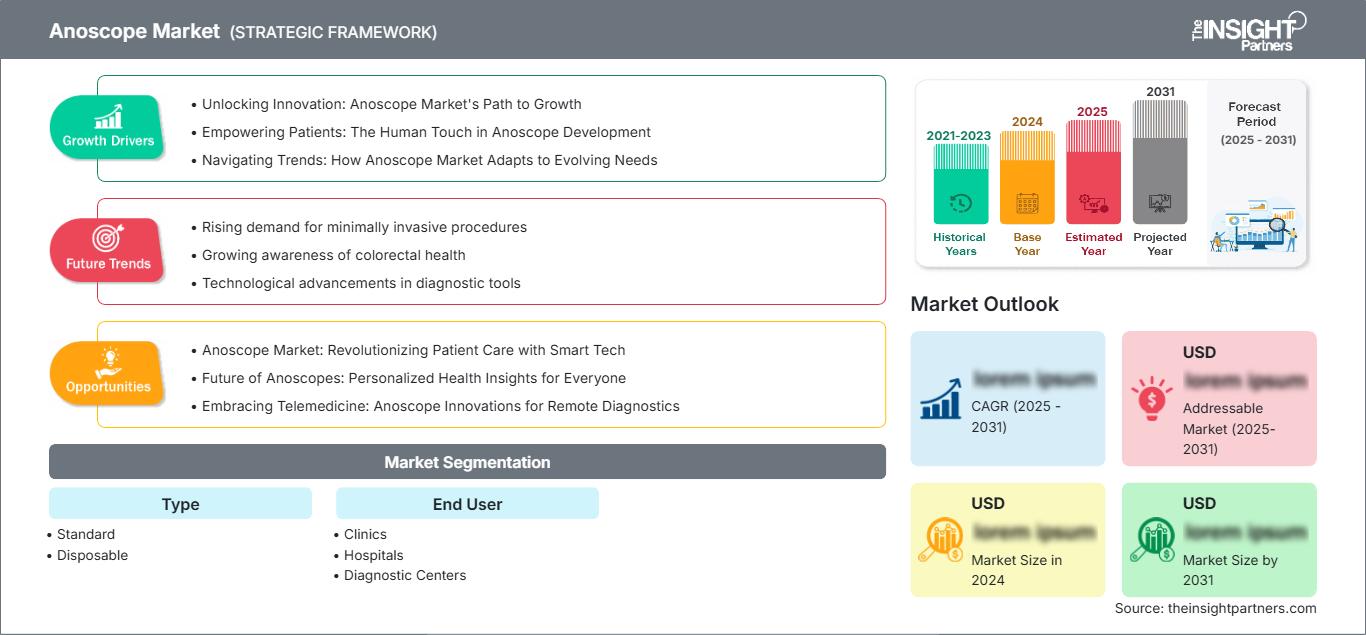
Anoscope Market: Strategic Insights
Regional Insights
North America anoscope market
North America is estimated to hold 36–39% share in 2025 and to grow at a CAGR range of 6.10–6.80% during 2026–2034. The anoscope market share is supported by outpatient colorectal practices, high physician-office utilization, infection prevention scrutiny, and stronger access to disposable examination instruments across hospitals, clinics, and ambulatory diagnostic settings.
Demand is reinforced by colorectal screening awareness, anal cancer risk evaluation, and routine examination of anorectal symptoms. CDC data show about 7 in 10 US adults aged 50 to 75 were up to date with colorectal screening in 2020, supporting broader gastrointestinal patient engagement. Growth remains linked to office workflows, procurement standardization, and preference for devices that reduce reprocessing variability.
U.S. anoscope Market
North America constitutes 81% to 85% of the US market in 2025, and will be expected to grow at a rate of 6.20 to 6.90% during 2026-2034. The demand centers on clinics practicing colorectal surgery, groups of gastroenterologists, women’s health clinics, urgent cares, and hospital outpatient department practices. Disposable instruments are preferred when quick room turnover is critical.
There is widespread coverage of companies including CooperSurgical, Inc., OBP Surgical Corporation, Welch Allyn, Inc., Sklar Surgical Instruments, Jaken Medical Inc., and JedMed Instrument Company. The applications include hemorrhoids grading, fissure examination, lesions in the anal canal, specimen procurement, and post-procedure follow up evaluation of anorectal operations. Infection prevention, illumination, cost per case, and supply are key factors for purchase decisions.
Europe anoscope Market
The European region will have 26-29% share by 2025 and is expected to witness CAGR growth of 5.70-6.40% from 2026 to 2034. The UK has a focus on triaging procedures, private clinics, and the importance of purchasing processes under the National Health Service guidelines. Germany is leading in the regional market due to specialized practitioner practices, hospital out-patient departments, and quality of devices, which promote the need for organized examination.
Other regions such as France, Italy, and Spain provide public hospital chains, colorectal centers, and diagnostic centers that provide anorectal exams. The adoption will be influenced by EU medical device specifications and reprocessing, as well as a preference for suppliers with documented conformity. The disposable versions will be growing as more hospitals want to be certain about infection control measures.
APAC anoscope Market
Asia Pacific represents 22–25% share in 2025 and is forecast to grow at a CAGR range of 7.20–8.00% during 2026–2034. China is the leading country, supported by expanding hospital outpatient departments, private clinics, and growing colorectal disease awareness.
India adds volume through urban diagnostic centers and specialist clinics, while Japan and South Korea emphasize quality instruments and organized outpatient care. Australia contributes through established screening and referral systems. Policy focus on healthcare access, cancer screening, and private provider expansion supports faster regional uptake.
Middle East & Africa anoscope Market
The Middle East & Africa region is projected to grow at a CAGR range of 6.60–7.40% during 2026–2034. Saudi Arabia leads adoption through hospital investment, specialty clinics, and modernization of outpatient surgical services.
The UAE supports premium private hospitals, expatriate care needs, and imported device procurement, while South Africa anchors regional demand through private healthcare networks and colorectal specialists. Rest of MEA adoption remains uneven, but diagnostic infrastructure, medical tourism, and distributor expansion are improving access to basic and disposable examination instruments.
Segmentation Analysis
Type
Type is projected to grow at a CAGR range of 6.30–7.10% during 2026–2034. The anoscope market scope under this segment is defined by the balance between reusable standard instruments and disposable formats. Standard products remain preferred where sterilization is efficient and facilities seek durable inventory, while disposable devices address infection prevention, high-volume clinics, and environments where reprocessing staff or equipment is constrained.
- Standard instruments retain the largest position because hospitals and specialist practices value durability, repeat use, stainless steel construction, and compatibility with established sterilization workflows.
- Disposable instruments are gaining strategic importance as clinics prioritize single-patient use, reduced turnaround time, simplified inventory control, and lower risk of reprocessing inconsistency.
End User
End User is projected to grow at a CAGR range of 6.40–7.20% during 2026–2034. Demand differs by setting, procedure volume, and budget authority. Clinics drive recurring outpatient use, hospitals manage complex and referred cases, and diagnostic centers benefit from screening-linked referrals. Product choice depends on cleanliness protocols, room turnover, illumination needs, and clinician preference.
- Clinics generate frequent use through office-based anorectal examinations, hemorrhoid evaluation, minor procedures, patient follow-up, and referral triage before advanced imaging or endoscopy.
- Hospitals require broader instrument availability because they manage complex patients, inpatient consults, emergency presentations, surgical follow-up, and specialty colorectal outpatient departments.
- Diagnostic Centers support demand where gastrointestinal assessment, referral coordination, and screening-related workups require basic visualization tools before or alongside advanced diagnostic pathways.
Opportunity Snapshot
Market Opportunity Snapshot
| End User | Revenue Contribution | Trend Tag | Adoption Stage |
|---|---|---|---|
| Clinics | High | Office Triage | Mature |
| Hospitals | High | Sterile Workflow | Mature |
| Diagnostic Centers | Medium | Referral Screening | Scaling |
Anoscope Market Growth Drivers and Impact Analysis
Rising outpatient evaluation of anorectal conditions
Outpatient care is the strongest practical driver because many anorectal symptoms can be initially evaluated in clinics, gastrointestinal practices, women’s health offices, and hospital outpatient departments. Hemorrhoids, bleeding, fissures, discomfort, suspected lesions, and post-treatment reviews often require direct visualization before treatment planning or referral. This creates recurring demand for simple, reliable examination instruments. The real-world impact is higher unit use in routine consultation rooms rather than only operating suites. Facilities that standardize anoscope availability can shorten diagnostic pathways, reduce unnecessary escalation, and improve documentation. The driver favors suppliers offering consistent sizing, smooth patient handling, illumination compatibility, and dependable distributor replenishment.
Infection prevention pressure favoring disposable devices
Healthcare facilities are placing stronger emphasis on infection prevention, cleaning validation, and reprocessing accountability. WHO’s infection prevention and control framework continues to prioritize safer care delivery, and PAHO guidance highlights cleaning, disinfection, and sterilization as essential for reducing contamination risk from medical devices. Disposable anoscopes directly address these concerns by eliminating reprocessing steps between patients and reducing workflow uncertainty in high-volume rooms. The market impact is strongest in clinics and diagnostic centers with limited sterilization capacity. Although reusable instruments remain economical in hospitals, single-use products are gaining preference where speed, compliance, and staff efficiency outweigh per-unit cost concerns.
Greater awareness of colorectal and anal disease screening
Screening and early evaluation initiatives increase patient interaction with gastrointestinal care systems. Colorectal screening guidance from public health and cancer organizations recommends regular screening beginning at age 45 for average-risk adults, while anal cancer incidence remains uncommon but clinically relevant among higher-risk populations. This broader awareness contributes to more referrals for lower gastrointestinal symptoms and anal canal inspection. The commercial impact is not limited to cancer detection; it also raises examination volumes for benign but common conditions. Suppliers benefit when physicians have accessible instruments for first-line visualization, patient education, biopsy planning, and follow-up evaluation after treatment.
Anoscope Market Future Trends
Illuminated and workflow-ready examination devices
Illuminated and workflow-ready products will define anoscope market trends as clinicians seek better visualization without complex setup. High-quality lighting, transparent bodies, ergonomic handling, and compatibility with examination-room systems can improve confidence during short outpatient visits. Future devices are likely to combine disposable convenience with integrated or attachable light sources, reducing dependence on room positioning and external lamps. This trend will be important in clinics and diagnostic centers where clinicians perform frequent examinations with limited support staff. Suppliers that design devices for quick preparation, clear inspection, and easy disposal will improve value perceptions beyond basic instrument cost.
Procurement shift toward standardized single-use packs
Healthcare procurement is expected to move toward standardized packs that combine anoscopes with gloves, lubricants, swabs, and supporting accessories for common anorectal examination workflows. Standardization can reduce missing items, shorten room preparation, and improve inventory forecasting. This trend will be most relevant for outpatient clinics, urgent care networks, and diagnostic centers that need predictable throughput. Hospitals may adopt selective single-use packs for emergency departments or immunocompromised patients while retaining reusable instruments elsewhere. Manufacturers with flexible packaging, private-label capability, and distributor relationships can capture this opportunity by aligning products with procedure-specific care pathways.
Anoscope Market Opportunities
Disposable product expansion in clinic networks
Strong anoscope market Forecasts are linked to disposable product expansion in clinic networks where room turnover, infection prevention, and simplified purchasing matter. Manufacturers can create value through multi-size packs, transparent designs, light-compatible options, and pricing models suited to recurring outpatient use. The opportunity is especially relevant in North America, Western Europe, India, China, and the Gulf states, where private clinics and specialist practices are expanding. Suppliers that support training, product samples, and reliable distributor fulfillment can accelerate conversion from reusable inventory. This strategy also reduces dependence on hospital tender cycles and creates recurring volume.
Distributor-led access in emerging diagnostic centers
Emerging diagnostic centers present an actionable opportunity for suppliers that can provide affordable, compliant, and easy-to-stock examination devices. Many centers are adding gastrointestinal assessment services but may lack large sterilization departments. Disposable anoscopes and basic standard instruments can therefore support service expansion with modest capital requirements. Companies should work with regional distributors to offer clinician education, inventory forecasting, and products aligned with local regulatory documentation. The opportunity is commercially practical because diagnostic centers often purchase across multiple examination categories. Suppliers that bundle anoscopes with other primary examination tools can strengthen account penetration and improve reorder consistency.
Recent Developments
- September 2025: Baxter International Inc. launched the Welch Allyn Connex 360 Vital Signs Monitor, its next-generation connected patient monitoring device. Although not an anoscope product, the launch strengthened Welch Allyn’s examination-room technology relevance by emphasizing faster documentation, secure data transfer, and workflow efficiency for hospitals and health systems.
- April 2025: HEINE Optotechnik GmbH & Co. KG introduced the new HEINE X Series, a redesigned generation of handheld diagnostic instruments. The launch reinforced HEINE’s position in primary examination tools, with durability and optical performance remaining highly relevant to clinical environments that also procure visualization accessories and examination instruments.
- August 2024: CooperSurgical, Inc. acquired OBP Surgical Corporation for approximately US$ 100 million, adding single-use cordless surgical retractors and suction devices with integrated LED lighting to its surgical device portfolio. The acquired products generated approximately US$ 14.5 million in trailing twelve-month revenue and strengthened CooperSurgical’s single-use procedural device strategy.
Frequently Asked Questions

- Comprehensive Market Sizing and Forecast Analysis
- Detailed Segmentation Analysis
- In-Depth Market Dynamics Assessment
- Regional and Country-Level Insights
- Competitive Landscape and Company Benchmarking
- Strategic Business Intelligence
Recent Reports
Testimonials

The Insight Partners' SCADA System Market report is comprehensive, with valuable insights on current trends and future forecasts. The team was highly professional, responsive, and supportive throughout. We are very satisfied and highly recommend their services.
RAN KEDEM Partner, Reali Technologies LTDs
I requested a report on a very specific software market and the team produced the report in a few days. The information was very relevant and well presented. I then requested some changes and additions to the report. The team was again very responsive and I got the final report in less than a week.
JEAN-HERVE JENN Chairman, Future Analytica
We worked with The Insight Partners for an important market study and forecast. They gave us clear insights into opportunities and risks, which helped shape our plans. Their research was easy to use and based on solid data. It helped us make smart, confident decisions. We highly recommend them.
PIYUSH NAGPAL Sr. Vice President, High Beam Global
The Insight Partners delivered insightful, well-structured market research with strong domain expertise. Their team was professional and responsive throughout. The user-friendly website made accessing industry reports seamless. We highly recommend them for reliable, high-quality research services
YUKIHIKO ADACHI CEO, Deep Blue, LLC.
This is the first time I have purchased a market report from The Insight Partners.While I was unsure at first, I visited their web site and felt more comfortable to take the risk and purchase a market report.I am completely satisfied with the quality of the report and customer service. I had several questions and comments with the initial report, but after a couple of dialogs over email with their analyst I believe I have a report that I can use as input to our strategic planning process.Thank you so much for taking the extra time and making this a positive experience.I will definitely recommend your service to others and you will be my first call when we need further market data.
JOHN SUZUKI President and Chief Executive Officer, Board Director, BK Technologies
I wish to appreciate your support and the professionalism you displayed in the course of attending to my request for information regarding to infectious disease IVD market in Nigeria. I appreciate your patience, your guidance, and the fact that you were willing to offer a discount, which eventually made it possible for us to close a deal. I look forward to engaging The Insight Partners in the future, all thanks to the impression you have created in me as a result of this first encounter.
DR CHIJIOKE ONYIA MANAGING DIRECTOR, PineCrest Healthcare Ltd.Reason to Buy
- Informed Decision-Making
- Understanding Market Dynamics
- Competitive Analysis
- Identifying Emerging Markets
- Customer Insights
- Market Forecasts
- Risk Mitigation
- Boosting Operational Efficiency
- Strategic Planning
- Investment Justification
- Tracking Industry Innovations
- Aligning with Regulatory Trends





 Get Free Sample for