
Bipolar Coagulator Market Size, Share & Trends by 2034
Coverage: by Product Type (Generators, Instruments, Accessories); Application (Orthopedics, Neurosurgery, Obstetrics/Gynecology Surgery, Urologic Surgery, Ophthalmic Surgery, ENT surgery, Hospitals/Clinics); End-User (Ambulatory Surgical Centers, Specialty Clinics, Specialty Clinics) , and Geography (North America, Europe, Asia Pacific, and South and Central America)
- Status : Data Released
- Report Code : TIPRE00008200
- Category : Life Sciences
- No. of Pages : 150
- Available Report Formats :


- Last update date : November 05, 2026


2025 Market Size
US$ 164.7 Mn
Base year value
2034 Forecast
US$ 333.64 Mn
Projected by 2034
CAGR 2026-2034
8.16 %
Growth rate
Addressable Market
US$ 2,239.44 Mn
(2026-2034)
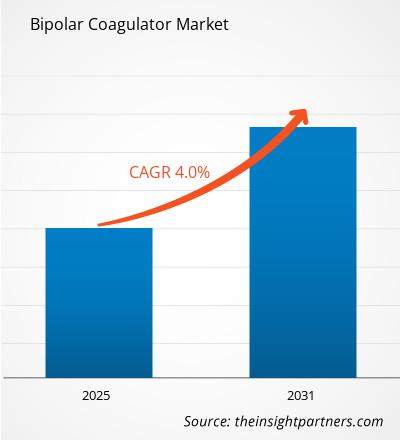
The bipolar coagulator market was valued at US$ 164.7 Million in 2025 and is projected to reach US$ 333.64 Million by 2034, expanding at a CAGR of 8.16% during 2026–2034. Growth is supported by rising surgical volumes, increasing use of minimally invasive techniques, wider adoption of precision hemostasis, and demand for controlled energy delivery that limits thermal effects on surrounding tissue.
Across North America, the bipolar coagulator market size is expected to increase at approximately ~8% CAGR through 2034. The region benefits from a substantial procedural base, advanced hospital infrastructure, and early adoption of feedback-controlled electrosurgical platforms. Replacement of older generators, expansion of outpatient surgery, and demand for compatible reusable and single-use instruments are supporting recurring capital and consumable purchases.
Bipolar Coagulator Market Assessment and Insights
Regional Outlook
- North America: ~39% of the global bipolar coagulator market share in 2025 | ~8% CAGR through 2034. Market position: North America leads through high surgical volumes, established hospital infrastructure, broad minimally invasive surgery adoption, and early procurement of advanced generators, vessel-sealing systems, and specialty bipolar instruments.
- US: ~88% of North American market revenue in 2025 | ~8% CAGR through 2034. Market position: The US anchors regional demand through procedural scale, ambulatory surgery expansion, technology replacement cycles, and extensive use of bipolar coagulation in neurosurgery, orthopedics, urology, gynecology, and ENT.
- Europe: ~30% of the global market in 2025 | ~8% CAGR through 2034. Market position: Europe maintains a mature position through regulated surgical-device manufacturing, developed healthcare systems, and specialty instrument capabilities led by Germany, the UK, France, Italy, and Spain.
- Asia Pacific: ~24% of the global market in 2025 | ~11% CAGR through 2034. Market position: Asia Pacific is the fastest-growing region, supported by hospital investment, surgical-access expansion, local device production, and increasing procedural volumes across China, Japan, South Korea, India, and Australia.
Segment Outlook
- Instruments: ~48% Share in 2025 | ~9% CAGR through 2034. Market position: Instruments lead because each procedure requires application-specific forceps, sealers, scissors, probes, or dissectors, generating recurring demand beyond the installed generator base.
- Ambulatory Surgical Centers: ~27% Share in 2025 | ~11% CAGR through 2034. Market position: Ambulatory surgical centers record stronger growth as suitable orthopedic, urologic, gynecologic, ophthalmic, and ENT procedures move toward lower-cost outpatient environments requiring compact, efficient energy systems.
Competitive Coverage
B. Braun SE, Apyx Medical Corporation, Medtronic plc, XCELLANCE Medical Technologies, Olympus Corporation, KARL STORZ SE & Co. KG, Ethicon, Inc., CONMED Corporation, ATMOS MedizinTechnik GmbH & Co. KG, Boston Scientific Corporation, Smith+Nephew plc
Methodology
The Insight Partners follows Data Collection & Secondary Research, Primary Research, Data Analysis, and Data Triangulation & Final Review to validate market estimates and insights.
Source: The Insight Partners' analysis based on proprietary research, government publications, company annual reports, investor presentations, industry databases, and expert interviews.
Bipolar coagulation devices have changed from simple forceps which were connected to electrosurgery units to complete systems with multiple power options, tissue response feedback, vessel sealing, irrigation, non-stick technology and very advanced tip shapes. In product design, predictability of hemostasis at reduced temperatures and accessibility in tight surgical areas is being stressed more and more. As a result, production is becoming more specialized with reusable capital instruments complemented with disposable attachments, cables, electrodes and handpieces for particular procedures.
Until 2034, the evolution of the market will be driven by the growth of ambulatory surgeries, modernization of hospitals in developing countries, and updating of traditional electrosurgical devices with digital technology. R&D will be aimed at miniaturization of generators, control of temperature, automatic tissue detection, robotic applications, and devices which can be used in confined anatomical locations. The regulatory requirement for electrical safety, insulation performance, cleaning validation, cybersecurity and post-market surveillance will support the companies with lifecycle management and clinical support.
Bipolar Coagulator Market Report Scope
| Report Attribute | Details |
|---|---|
| Market size in 2025 | US$ 164.7 Million |
| Market Size by 2034 | US$ 333.64 Million |
| Global CAGR (2026 - 2034) | 8.16% |
| Historical Data | 2021-2024 |
| Forecast period | 2026-2034 |
Bipolar Coagulator Market Analysis
The growth of bipolar coagulator market is due to the fact that it enables control over hemostasis and limitation of the current and thermal diffusion through the treatment area. This technique is especially useful during surgeries involving proximity to nerves, vessels, sensitive organs or anatomical structures. Demand for bipolar coagulators comes from procedure growth and demand for devices suitable for the specific type of tissues and approach used.
The value chain includes manufacturers of electrical components, generators, instruments, cables and connectors, coatings, sterilization services, distributors, hospitals, clinics and surgical centers. The quality of supply is determined by energy supply accuracy, insulation reliability, tip orientation, ergonomic design, resistance to processing and compatibility between generators, instruments and accessories.
Bipolar coagulation device market analysis shows that there is competition among wide range of electrosurgical product lines as well as specialty applications. The competitors in the market are B. Braun SE, Medtronic plc, Olympus Corporation, Ethicon, Inc., and CONMED Corporation, who offer competition by way of generators, vessel-sealing devices, forceps, and accessories. The other players in the market include KARL STORZ SE & Co. KG, Smith+Nephew plc, Boston Scientific Corporation, Apyx Medical Corporation, XCELLANCE Medical Technologies, and ATMOS MedizinTechnik GmbH & Co. KG.
The focus of investment is shifting towards feedback-controlled energy, hybrid energies, minimized tissue adherence, miniaturization of systems, and ergonomically designed disposable instruments. There is a greater need for differentiation based on the overall procedure system rather than just the generator.
● REPORT CUSTOMIZATION
Tailor This Report To Align With Your Specific Business Requirements
This report can be customized to align precisely with your business objectives, scope, and target markets. Customization options include tailored segmentation, geography, competitive analysis, and strategic insights to support informed decision-making.
Customize This Report →WHAT YOU CAN ADJUST
- ● Segmentations
- ● Geography
- ● Competitive Analysis
- ● Language Preferences
Bipolar Coagulator Market: Strategic Insights

Regional Insights
North America bipolar coagulator market
North America accounted for an estimated ~39% of global revenue in 2025 and is projected to expand at approximately ~8% CAGR through 2034. Demand is fueled by considerable levels of orthopedic, neurosurgical, gynecological, urological, ophthalmic, and ENT surgeries. Hospitals have been buying energy devices that can provide open, laparoscopic, endoscopic, and some robotic surgical operations via matching instruments.
The market share of the bipolar coagulator market is determined due to high levels of penetration, reimbursement, and routine renewal cycles. Purchase committee considers tissue effects, thermal control, availability of instruments, smoke production, reprocessing, service and total cost of procedure. Canada is contributing by means of developed hospital infrastructure and outpatient surgeries, while the US is dominating in the regional market by providing advanced generators, specialized forceps and vessels sealing devices.
U.S. bipolar coagulator market
The US represented approximately ~88% of North American revenue in 2025 and is forecast to register ~8% CAGR through 2034. The range of applications goes from academic medical institutions and community hospitals to ambulatory surgery centers and office-based specialist clinics. The shift in procedures towards outpatient centers results in growing attention to compact generators, ease of installation, safety features and equipment for fast room turnovers.
Medtronic plc, Ethicon, Inc., CONMED Corporation, Olympus Corporation, Boston Scientific Corporation, Smith+Nephew plc, and Apyx Medical Corporation have some exposure to the US surgical energy market. There is growing importance of platform flexibility and economics of consumables along with purchase price. General hospitals need general purpose platforms while outpatient centers can prefer narrow-speciality platforms with easier service and known cost per procedure.
Europe bipolar coagulator market
Europe represented approximately ~30% of global revenue in 2025 and is projected to grow at ~8% CAGR through 2034. This area benefits from well-developed surgical infrastructure, device engineering, regulated sourcing practices, and specialized instrument manufacturing. Germany is the leader among European nations due to its hospital infrastructure, surgical instrument industry, engineering capabilities, and companies like B. Braun SE, KARL STORZ SE & Co. KG, and ATMOS MedizinTechnik GmbH & Co. KG.
The UK is represented through a high volume of surgeries, centralized sourcing, and use of minimally invasive techniques. In France, public and private hospitals and high levels of activity in general and specialized surgeries help to generate demand for surgical instruments. Italy offers widespread practice of surgery and distribution channels of instruments. Spain makes continuous investments in technology and ambulatory services in hospitals.
In Europe, increasing demand exists for surgical instruments with decreased thermal effects, easy-to-handle design, and standardized reprocessing procedures. Hospitals evaluate the possibility to repair, power consumption, reusable device lifespan, and waste from disposable instruments. The regulatory documentation, clinical evaluation, and post-market data provide significant entry barriers for market participants. Companies with regional servicing capabilities and broad range of instruments can have competitive advantage over those which offer single devices.
APAC bipolar coagulator market
Asia Pacific accounted for an estimated ~24% of global revenue in 2025 and is expected to record the fastest CAGR of ~11% through 2034. China is the leading country in Asia Pacific, supported by hospital expansion, increasing surgical capacity, local medical-device manufacturing, and modernization of operating rooms.
Japan contributes advanced surgical practice and domestic electrosurgical expertise, while South Korea supports minimally invasive procedure adoption. India offers expanding hospital capacity and a large addressable patient population. Australia maintains developed specialty-surgery infrastructure. Regional growth will depend on equipment affordability, surgeon training, local distribution, regulatory approvals, and consistent access to instruments and accessories.
Middle East & Africa bipolar coagulator market
The Middle East & Africa market is projected to expand at approximately ~9% CAGR through 2034 from a comparatively smaller installed base. Saudi Arabia is positioned as the leading country in the Middle East & Africa due to hospital investment, specialist-care expansion, and healthcare modernization. The UAE supports demand through advanced private hospitals and medical tourism.
South Africa remains an important regional center for specialist surgery, training, and device distribution. Adoption across the rest of the region will depend on dependable electricity, biomedical engineering support, sterilization infrastructure, procurement funding, and access to replacement accessories. Compact systems with broad specialty compatibility can provide practical value where capital budgets and service networks remain constrained.
Segmentation Analysis
Product Type
The bipolar coagulator market scope includes capital equipment, reusable and disposable surgical instruments, and supporting components required for safe energy delivery. Procurement involves both initial platform selection and recurring accessory expenditure. Compatibility, power control, tissue feedback, ergonomic design, and reprocessing requirements influence purchasing. Instruments are projected to expand at approximately ~9% CAGR through 2034 as specialty procedures require differentiated forceps, sealers, scissors, and probes.
- Generators: Generators convert electrical input into controlled high-frequency surgical energy. Buyers assess power stability, bipolar modes, tissue-response algorithms, safety monitoring, interface simplicity, portability, and compatibility with reusable or disposable instruments.
- Instruments: Instruments apply energy directly to tissue through forceps, sealers, scissors, probes, or dissectors. Tip geometry, jaw pressure, insulation, non-stick performance, access length, and ergonomics determine procedural suitability.
- Accessories: Accessories include cables, footswitches, connectors, electrodes, adapters, irrigation components, and instrument supports. Reliable availability is necessary for procedural continuity and compatibility between capital equipment and surgical handpieces.
Application
Application requirements differ according to anatomy, tissue characteristics, surgical access, acceptable thermal spread, and the consequence of collateral damage. Manufacturers therefore offer specialized tips, shaft lengths, jaw designs, and energy settings. Neurosurgery is projected to register approximately ~10% CAGR through 2034 as precision instrumentation and minimally invasive access increase demand for controlled coagulation near delicate structures.
- Orthopedics: Orthopedic procedures use bipolar energy for hemostasis in soft tissue and bone-adjacent areas. Instruments must provide dependable control while supporting arthroplasty, spine surgery, trauma care, and arthroscopic workflows.
- Neurosurgery: Neurosurgical applications require fine forceps, precise energy delivery, minimal tissue adherence, and controlled thermal behavior. Bayonet designs, irrigation, polished tips, and slender profiles support work in narrow operative fields.
- Obstetrics/Gynecology Surgery: Gynecologic procedures use bipolar coagulation for vessel control, tissue dissection, and removal of reproductive structures. Laparoscopic compatibility, secure sealing, and efficient instrument exchange strongly influence adoption.
- Urologic Surgery: Urologic applications include endoscopic, laparoscopic, robotic, and open procedures. Demand centers on controlled hemostasis within confined anatomy, reliable vessel sealing, and compatibility with specialized visualization systems.
- Ophthalmic Surgery: Ophthalmic procedures require low-power precision and fine tips to manage small vessels near sensitive ocular structures. Compact generators and microsurgical forceps support controlled coagulation with limited collateral effects.
- ENT surgery: ENT specialists use bipolar instruments in nasal, tonsillar, otologic, laryngeal, and head-and-neck procedures. Narrow shafts, angled designs, visibility, and precise tissue effects are important purchasing considerations.
- Others: Other applications include general surgery, plastic surgery, thoracic procedures, dermatology, gastrointestinal hemostasis, and office-based electrosurgery. Requirements vary according to operative access, tissue thickness, and procedure setting.
End-User
End-user demand differs according to procedural complexity, specialty concentration, capital budgets, and sterilization capacity. Hospitals favor versatile platforms, while outpatient facilities prioritize efficient setup and predictable procedure costs. Ambulatory Surgical Centers are projected to grow at approximately ~11% CAGR through 2034 as suitable interventions continue shifting away from inpatient environments.
- Ambulatory Surgical Centers: Ambulatory centers require compact platforms, rapid setup, dependable energy delivery, and manageable consumable costs. Adoption is strongest in high-volume specialties where patients can be discharged without prolonged postoperative monitoring.
- Specialty Clinics: Specialty clinics use bipolar coagulation for focused ophthalmic, ENT, dermatologic, gynecologic, and office-based procedures. Purchasing emphasizes low-power control, simple operation, compact footprints, and application-specific accessories.
- Hospitals: Hospitals remain the primary setting for complex and multidisciplinary surgery. They require broad instrument portfolios, advanced generators, service contracts, staff training, reprocessing support, and compatibility across operating rooms.
Opportunity Snapshot
| End-User | Revenue Contribution | Trend Tag | Adoption Stage |
| Ambulatory Surgical Centers | Medium | Outpatient Surgery | Scaling |
| Specialty Clinics | Medium | Focused Procedures | Scaling |
| Hospitals | High | Platform Upgrades | Mature |
Bipolar Coagulator Market Growth Drivers and Impact Analysis
Expansion of minimally invasive surgical procedures
Minimally invasive surgery needs tools that would deliver energy at specific locations via a small incision, maintain visibility, and minimize heat generation. Bipolar technology enables this by providing energy delivery through two electrodes, which are in close proximity to each other. Laparoscopy, endoscopy, arthroscopy, and certain robotic surgeries thus lead to a need for instruments with long shafts, small jaws, cutting capabilities, and reliable vessel closure capability. The market effect goes beyond generators, as different specialties need unique disposable or reusable tools. Companies with a large product line can thus maximize use of their platforms.
Need for precise hemostasis near delicate anatomy
In neurosurgery, ophthalmic surgery, ENT surgery, urology, and gynecology, there are many instances where very small blood vessels have to be manipulated near delicate areas like nerves, ducts, membranes, etc. The requirement of energy delivery which limits the area affected and avoids sticking, charring, or any other heat conduction is the basis for the demand for smooth forceps, irrigation, non-stick surface, low power settings, and tissue-response generators. The clinical value of such a device lies in its consistent performance during multiple activations under varying conditions of tissue.
Migration of suitable procedures to outpatient settings
The healthcare industry is shifting certain surgical procedures from inpatient hospitals to outpatient ambulatory centers and specialized clinics in order to reduce the cost of delivery and make the operating room available. This demands equipment which should be portable, easy to use, and economical within a specific set of procedures. Bipolar coagulation machines are useful in outpatient procedures related to gynecology, urology, orthopedic surgery, ophthalmology, ENT, dermatology, and many other specialties. It creates an increasing need for simple platform, disposable devices, fast exchange instruments, and service agreements suited for smaller facilities.
Bipolar Coagulator Market Future Trends
Greater use of tissue feedback and automated energy control
Bipolar coagulator market trends increasingly favor generators that monitor tissue impedance or related electrical characteristics and adjust energy delivery during activation. Feedback can help reduce over-treatment, improve consistency, and support secure coagulation across varying tissue thicknesses. Future systems may combine tissue-recognition algorithms with procedural data, instrument identification, and automated endpoint detection. Adoption will depend on demonstrating clinical value without creating unnecessary interface complexity. Suppliers will also need to validate software updates, cybersecurity, and compatibility across instrument generations as generators become more digitally controlled.
Integration of bipolar energy with robotic and hybrid platforms
Bipolar technology is expected to become more closely integrated with robotic instruments and devices combining multiple energy modalities. Robotic compatibility can provide articulated access and controlled jaw movement, while hybrid instruments may enable dissection, coagulation, sealing, and cutting without repeated instrument exchange. This integration can improve workflow efficiency but increases design and regulatory complexity. Manufacturers must coordinate energy algorithms, mechanical pressure, thermal shielding, instrument recognition, and robotic controls. Hospitals will evaluate whether these multifunctional products reduce procedure time enough to justify higher acquisition and disposable costs.
Bipolar Coagulator Market Opportunities
Specialty instruments for narrow surgical fields
The bipolar coagulator market Forecasts indicate an opportunity to develop fine, angled, irrigating, and non-stick instruments for neurosurgery, ENT, ophthalmology, and other procedures involving restricted access. Manufacturers can differentiate through tip geometry, shaft length, insulation, spring tension, thermal conduction, and compatibility with microscopes or endoscopes. Modular instrument families can address surgeon preferences without requiring separate generator platforms. Investment in ergonomic studies, repeated-use testing, and specialty training can strengthen clinical adoption and reduce dependence on generalized forceps designs.
Compact platforms for emerging healthcare systems
Healthcare expansion in Asia Pacific, the Middle East, Africa, and Latin America create demand for reliable bipolar generators that match constrained capital budgets and service environments. Suppliers can develop compact systems with intuitive controls, broad voltage compatibility, self-diagnostics, and reusable instrument options. Regional service training, spare-parts inventory, and distributor education are essential because equipment downtime can prevent surgery. Commercial models combining affordable generators with standardized accessories may improve adoption while supporting recurring revenue. Products must retain safety and performance standards rather than competing solely on acquisition price.
Recent Developments
- September 2026: Medtronic plc received FDA clearance for the LigaSure robotic-assisted surgery Maryland jaw instrument for use with the Hugo robotic system. The milestone extends advanced bipolar vessel-sealing capabilities into robotic workflows and supports controlled grasping, dissection, and vessel management during minimally invasive procedures.
- October 2025: Olympus Corporation launched THUNDERBEAT II in Europe, with additional geographic introductions subject to regulatory approvals. The instrument combines advanced bipolar and ultrasonic energy modes, incorporates a refined jaw with thermal-shielding features, and is designed to support hemostatic dissection and vessel sealing in open and laparoscopic surgery.
- August 2024: Olympus Corporation expanded its POWERSEAL family with straight-jaw double-action and curved-jaw single-action designs. The advanced bipolar instruments were introduced across several regulated markets and provide alternative jaw geometries and shaft lengths for sealing, grasping, and dissection during laparoscopic or open procedures.
Frequently Asked Questions

- Comprehensive Market Sizing and Forecast Analysis
- Detailed Segmentation Analysis
- In-Depth Market Dynamics Assessment
- Regional and Country-Level Insights
- Competitive Landscape and Company Benchmarking
- Strategic Business Intelligence
Recent Reports
Testimonials

The Insight Partners provided valuable market intelligence that supported our global go-to-market strategy. Their team was professional, responsive, and attentive to our feedback, providing thoughtful analysis and helpful methodological clarifications throughout the project.
Junmo Kim Chief Financial Officer (CFO), Enertech Co., Ltd.
The Insight Partners' SCADA System Market report is comprehensive, with valuable insights on current trends and future forecasts. The team was highly professional, responsive, and supportive throughout. We are very satisfied and highly recommend their services.
RAN KEDEM Partner, Reali Technologies LTDs
I requested a report on a very specific software market and the team produced the report in a few days. The information was very relevant and well presented. I then requested some changes and additions to the report. The team was again very responsive and I got the final report in less than a week.
JEAN-HERVE JENN Chairman, Future Analytica
We worked with The Insight Partners for an important market study and forecast. They gave us clear insights into opportunities and risks, which helped shape our plans. Their research was easy to use and based on solid data. It helped us make smart, confident decisions. We highly recommend them.
PIYUSH NAGPAL Sr. Vice President, High Beam Global
The Insight Partners delivered insightful, well-structured market research with strong domain expertise. Their team was professional and responsive throughout. The user-friendly website made accessing industry reports seamless. We highly recommend them for reliable, high-quality research services
YUKIHIKO ADACHI CEO, Deep Blue, LLC.
This is the first time I have purchased a market report from The Insight Partners.While I was unsure at first, I visited their web site and felt more comfortable to take the risk and purchase a market report.I am completely satisfied with the quality of the report and customer service. I had several questions and comments with the initial report, but after a couple of dialogs over email with their analyst I believe I have a report that I can use as input to our strategic planning process.Thank you so much for taking the extra time and making this a positive experience.I will definitely recommend your service to others and you will be my first call when we need further market data.
JOHN SUZUKI President and Chief Executive Officer, Board Director, BK Technologies
I wish to appreciate your support and the professionalism you displayed in the course of attending to my request for information regarding to infectious disease IVD market in Nigeria. I appreciate your patience, your guidance, and the fact that you were willing to offer a discount, which eventually made it possible for us to close a deal. I look forward to engaging The Insight Partners in the future, all thanks to the impression you have created in me as a result of this first encounter.
DR CHIJIOKE ONYIA MANAGING DIRECTOR, PineCrest Healthcare Ltd.Reason to Buy
- Informed Decision-Making
- Understanding Market Dynamics
- Competitive Analysis
- Identifying Emerging Markets
- Customer Insights
- Market Forecasts
- Risk Mitigation
- Boosting Operational Efficiency
- Strategic Planning
- Investment Justification
- Tracking Industry Innovations
- Aligning with Regulatory Trends





 Get Free Sample for