Building Energy Management Systems Market Growth, Trends & Forecast by 2034
Building Energy Management Systems Market Size and Forecast (2021 - 2034), Global and Regional Share, Trend, and Growth Opportunity Analysis Report Coverage: By Component (Hardware, Software, and Services), End Use Industry (Energy and Utilities, Manufacturing, Telecom and IT, Residential and Commercial, and Others), and Geography (North America, Europe, Asia Pacific, Middle East and Africa, and South America)
Historic Data: 2021-2024 | Base Year: 2025 | Forecast Period: 2026-2034- Report Date : Feb 2026
- Report Code : TIPRE00009346
- Category : Energy and Power
- Status : Published
- Available Report Formats :


- No. of Pages : 293

The building energy management systems market size is projected to reach US$ 14.89 billion in 2025 and is expected to reach US$ 48.16 billion by 2034, with an estimated CAGR of 14.2% during 2026–2034.
Building Energy Management Systems Market Analysis
The demand for building energy management systems (BEMS) is increasing with the rising energy prices, with strict regulatory requirements for efficiency, corporate decarbonization efforts, smart building adoption, and net-zero building objectives. Other factors contributing to the growth are AI-based optimization, the integration of renewable energy, the development of resilient operations, and the transition from traditional monitoring techniques to IoT-based, based real, time analytics.
Building Energy Management Systems Market Overview
Building energy management systems are a combination of software and hardware through which energy usage is tracked, analyzed, and optimized for manufacturing facilities, plants, and heavy industries, among others. Through the use of sensor technology, IoT devices, AI algorithms, and data analytics, real-time insights are offered, thus allowing automated lighting, HVAC, motor, compressor, and process control while facilitating energy standard compliance.
Customize This Report To Suit Your Requirement
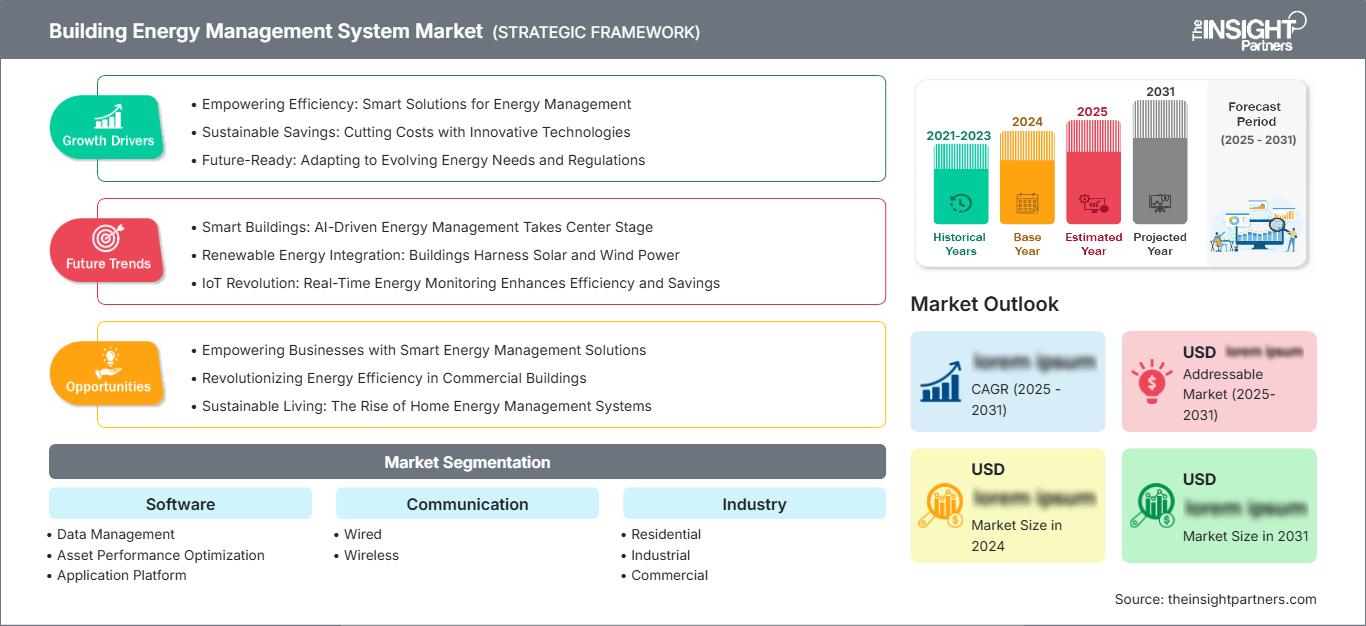
Get FREE CUSTOMIZATIONBuilding Energy Management Systems Market: Strategic Insights
-
Get Top Key Market Trends of this report.This FREE sample will include data analysis, ranging from market trends to estimates and forecasts.
Building Energy Management Systems Market Drivers and Opportunities
Market Drivers:
- Regulatory Compliance and Carbon Reduction Targets: Commercial and public buildings are subject to the global regulatory tightening of the EU Energy Performance of Buildings Directive, U.S. ENERGY STAR policies, and LEED certifications, which have led to a surge in BEMS for automated compliance reporting and emissions tracking in offices, hospitals, and retail spaces.
- Escalating Energy Costs and Volatility: Increasing electricity tariffs, the volatility of natural gas prices, and peak demand charges are putting building operators' budgets under pressure. BEMS utilizes predictive HVAC algorithms, lighting controls, and occupancy-based adjustments to reduce utility bills by 15, 30% through dynamic load management.
- Industry 4.0 and Digital Transformation: The transformation of buildings into smart buildings integrates BEMS with BMS, BACnet protocols, and tenant apps for complete monitoring. Automation identifies the inefficiencies of zoning, ventilation, and plug loads, thus driving the market growth by way of seamless connectivity.
Market Opportunities:
- Renewable Energy and Microgrid Integration: On-site solar, storage, and EV chargers are becoming more and more common in urban buildings. A BEMS balances intermittent renewables with grid power; thus, it can enable net metering, demand response participation, and revenues from energy arbitrage in commercial complexes.
- Retrofit Demand in Aging Infrastructure: Millions of buildings constructed before 2000 need to be upgraded to improve efficiency. Retrofitting a BEMS with wireless sensors and cloud dashboards brings less disruption, and these days, quick ROI is achieved through fault detection and continuous commissioning in the hospitality and education sectors.
- AI-Driven Predictive Maintenance: Advanced BEMS leverage machine learning for equipment health monitoring, anomaly alerts, and prescriptive actions. This creates value in high-rise offices and data centers by extending asset life, preventing outages, and supporting ESG disclosures.
Building Energy Management Systems Market Report Segmentation Analysis
The building energy management systems market is divided into different segments to give a clearer view of how it functions, its growth potential, and the latest trends. Below is the standard segmentation approach used in industry reports:
By Component:
- Hardware: Hardware of building energy management systems largely includes sensors, smart meters, sub-meters, gateways, and field instruments that are used in data acquisition and analysis of various parameters like energy, power, temperature, pressure, and equipment performances in real, time.
- Software: In building energy management systems, the software mainly refers to solutions such as data analytics platforms, AI optimization engines, various types of visual interfaces, as well as control algorithms that interpret the data from the hardware devices to provide insights, recognize anomalous patterns, make decisions, and carry out automated actions.
- Services: Services related to building energy management systems include various activities such as problem identification and conceptualization, system integration, implementation, training, providing help, and routine maintenance.
By End-Use Industry:
- Energy and Utilities
- Manufacturing
- Telecom and IT
- Residential and Commercial
- Others
By Geography:
- North America
- Europe
- Asia Pacific
- South America
- Middle East & Africa
Building Energy Management Systems Market Report Scope
| Report Attribute | Details |
|---|---|
| Market size in 2025 | US$ 14.89 Billion |
| Market Size by 2034 | US$ 48.15 Billion |
| Global CAGR (2026 - 2034) | 14.2% |
| Historical Data | 2021-2024 |
| Forecast period | 2026-2034 |
| Segments Covered |
By Component
|
| Regions and Countries Covered |
North America
|
| Market leaders and key company profiles |
|
Building Energy Management Systems Market Players Density: Understanding Its Impact on Business Dynamics
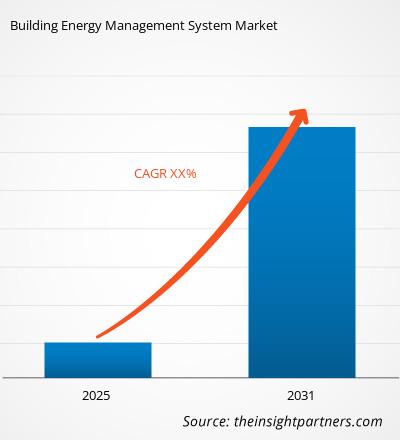
The Building Energy Management Systems Market is growing rapidly, driven by increasing end-user demand due to factors such as evolving consumer preferences, technological advancements, and greater awareness of the product's benefits. As demand rises, businesses are expanding their offerings, innovating to meet consumer needs, and capitalizing on emerging trends, which further fuels market growth.
Building Energy Management Systems Market Share Analysis by Geography
North America experiences the highest demand for building energy management systems, as it holds the biggest market share of roughly 35–39%. This is because of the region's advanced digital infrastructure, strict energy efficiency regulations, and the extensive use of smart grids and IoT in commercial centers such as the US and Canada. On the other hand, Europe and Asia Pacific are sizable growth markets, where the need is driven by decarbonization policies, building automation, and fast electrification in Germany, China, and India, among other countries.
Below is a summary of market share and trends by region:
1. North America
- Market Share: The region accounts for the largest share of the market at ~35–40%. Major demand is in commercial offices, healthcare facilities, retail centers, hospitality, and data centers.
- Key Drivers:
- Strict ENERGY STAR and Title 24 regulations.
- Smart building initiatives optimize HVAC and lighting.
- Trends: A growing trend of combining AI analytics with edge computing to enable real-time optimization.
2. Europe
- Market Share: The region is a mature market with a stable share mostly coming from commercial real estate and public infrastructure.
- Key Drivers:
- EU EPBD enforces strict energy performance standards.
- The energy efficiency directive mandates building retrofits.
- Trends: Cloud-based BEMS for carbon reporting and compliance are gaining traction.
3. Asia Pacific
- Market Share: The fastest developing market, mainly led by China, India, Japan, and South Korea’s booming urban developments.
- Key Drivers:
- Rapid urbanization drives efficient smart buildings.
- Commercial construction boom escalates demand.
- Trends: Huge push for IoT sensors and hybrid renewable-grid systems.
4. Middle East and Africa
- Market Share: Emerging market mainly led by GCC countries (Saudi Arabia, UAE), Egypt, and South Africa. Demand relates to luxury hospitality, malls, and mega-projects.
- Key Drivers:
- Vision 2030 initiatives promote green buildings.
- Urban diversification policies boost adoption.
- Trends: Predictive analytics for cooling in energy-intensive skyscrapers and hotels.
5. South America
- Market Share: Developing market led by Brazil, with Chile, Argentina, and Colombia contributing to growth. Demand from offices, retail, and logistics hubs.
- Key Drivers:
- Commercial sector expansion accelerates retrofits.
- Grid stability upgrades support urban properties.
- Trends: Emphasis on wireless retrofit solutions and solar-integrated microgrids.
Building Energy Management Systems Market Players Density: Understanding Its Impact on Business Dynamics
High Market Density and Competition
Competition is strong due to the presence of established players such as ABB, Schneider Electric SE, General Electric Company, Honeywell International Inc., and Siemens Energy. Regional and niche players are also adding to the competitive landscape across different regions.
This high level of competition urges companies to stand out by offering systems with:
- Superior Real-Time Optimization
- Energy and Decarbonization, Focused Platforms
- Flexible, Scalable Deployment Models
Opportunities and Strategic Moves
- Switching to AI-powered analytics platforms, IoT sensor networks, and digital twin simulations improves predictive energy optimization, fault detection, and process automation.
- By quickly rolling out renewable integration modules, emissions dashboards, and blockchain, verified carbon tracking firms comply with global ESG mandates such as ISO 50001.
- Extending through joint ventures, cloud SaaS subscriptions, or retrofit service centers in Asia Pacific, the GCC countries, and Latin America.
Major companies analyzed during the course of research:
- ABB Ltd
- General Electric Co
- Mitsubishi Electric Corp
- Schneider Electric SE
- Johnson Controls International Plc
- Honeywell International Inc.
- Siemens Energy
- IBM Corp
- Emerson Electric Co
- Eaton Corp Plc
Other companies analyzed during the course of research:
- Mitsubishi Electric Corporation
- Hitachi
- Rockwell
- Yokogawa Electric
- Delta Electronics
- Pansonic
- Wipro
- LG Electronics
Building Energy Management Systems Market News and Recent Developments
- Johnson Controls Releases Update for Industry-Leading Building Automation System: In September 2024, Johnson Controls, the global leader for smart, healthy, and sustainable buildings, launched a highly anticipated update to the company’s industry-leading Building Automation System, Metasys, which serves the needs of commercial, industrial, and institutional buildings, regardless of industry. The new iteration, Metasys 14.0, is designed to elevate a commercial building’s overall performance and sustainability while enhancing occupant comfort, health, and safety.
- Schneider Electric partners with Noida International Airport for Building and Energy Management Solutions: In October 2024, Schneider Electric, a leader in the digital transformation of energy management and next-gen automation, formed a strategic partnership with Noida International Airport to introduce building and energy management solutions. Through this collaboration, Schneider Electric will roll out complete building management solutions, comprising Electrical SCADA and Advanced Distribution Management System, aimed at significantly boosting the airport's operational efficiency and sustainability.
Building Energy Management Systems Market Report Coverage and Deliverables
The "Building Energy Management Systems Market Size and Forecast (2021–2034)" report provides a detailed analysis of the market covering below areas:
- Building energy management systems market size and forecast at global, regional, and country levels for all the key market segments covered under the scope
- Building energy management systems market trends, as well as market dynamics such as drivers, restraints, and key opportunities
- Detailed PEST and SWOT analysis
- Building energy management systems market analysis covering key market trends, global and regional framework, major players, regulations, and recent market developments
- Industry landscape and competition analysis covering market concentration, heat map analysis, prominent players, and recent developments for the building energy management systems market
- Detailed company profiles
Frequently Asked Questions

- Historical Analysis (2 Years), Base Year, Forecast (7 Years) with CAGR
- PEST and SWOT Analysis
- Market Size Value / Volume - Global, Regional, Country
- Industry and Competitive Landscape
- Excel Dataset
Recent Reports
Testimonials

The Insight Partners' SCADA System Market report is comprehensive, with valuable insights on current trends and future forecasts. The team was highly professional, responsive, and supportive throughout. We are very satisfied and highly recommend their services.
RAN KEDEM Partner, Reali Technologies LTDs
I requested a report on a very specific software market and the team produced the report in a few days. The information was very relevant and well presented. I then requested some changes and additions to the report. The team was again very responsive and I got the final report in less than a week.
JEAN-HERVE JENN Chairman, Future Analytica
We worked with The Insight Partners for an important market study and forecast. They gave us clear insights into opportunities and risks, which helped shape our plans. Their research was easy to use and based on solid data. It helped us make smart, confident decisions. We highly recommend them.
PIYUSH NAGPAL Sr. Vice President, High Beam Global
The Insight Partners delivered insightful, well-structured market research with strong domain expertise. Their team was professional and responsive throughout. The user-friendly website made accessing industry reports seamless. We highly recommend them for reliable, high-quality research services
YUKIHIKO ADACHI CEO, Deep Blue, LLC.
This is the first time I have purchased a market report from The Insight Partners.While I was unsure at first, I visited their web site and felt more comfortable to take the risk and purchase a market report.I am completely satisfied with the quality of the report and customer service. I had several questions and comments with the initial report, but after a couple of dialogs over email with their analyst I believe I have a report that I can use as input to our strategic planning process.Thank you so much for taking the extra time and making this a positive experience.I will definitely recommend your service to others and you will be my first call when we need further market data.
JOHN SUZUKI President and Chief Executive Officer, Board Director, BK Technologies
I wish to appreciate your support and the professionalism you displayed in the course of attending to my request for information regarding to infectious disease IVD market in Nigeria. I appreciate your patience, your guidance, and the fact that you were willing to offer a discount, which eventually made it possible for us to close a deal. I look forward to engaging The Insight Partners in the future, all thanks to the impression you have created in me as a result of this first encounter.
DR CHIJIOKE ONYIA MANAGING DIRECTOR, PineCrest Healthcare Ltd.Reason to Buy
- Informed Decision-Making
- Understanding Market Dynamics
- Competitive Analysis
- Identifying Emerging Markets
- Customer Insights
- Market Forecasts
- Risk Mitigation
- Boosting Operational Efficiency
- Strategic Planning
- Investment Justification
- Tracking Industry Innovations
- Aligning with Regulatory Trends




 Get Free Sample For