
Pharmaceutical Packaging Market Size, Trends & Demand by 2034
Coverage: By Product Type (Plastic Bottle, Parenteral Container, Specialty Bags, Blister Packaging, Closures, Labels, Others); Material (Plastics and Polymers, Paper and Paperboard, Aluminum Foil, Glass, Others), and Geography (North America, Europe, Asia Pacific, and South and Central America)
- Status : Data Released
- Report Code : TIPRE00004208
- Category : Chemicals and Materials
- No. of Pages : 150
- Available Report Formats :


- Last update date : July 13, 2026


2025 Market Size
US$ 136.93 Bn
Base year value
2034 Forecast
US$ 286.19 Bn
Projected by 2034
CAGR 2026-2034
8.5 %
Growth rate
Addressable Market
US$ 1,894.44 Bn
(2026-2034)
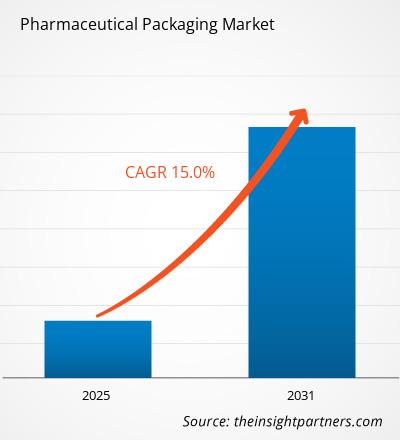
The Pharmaceutical Packaging market was valued at US$ 136.93 billion in 2025 and is projected to reach US$ 286.19 billion by 2034, advancing at a CAGR of 8.5% during the forecast period (2026–2034). Increasing demand for product integrity, regulatory compliance, patient safety, and drug delivery technologies is transforming the packaging needs in the pharmaceutical market.
North America is still a significant contributor to the Pharmaceutical Packaging Market and is expected to grow at a projected CAGR of 7.8% from 2022 to 2034. The growth in this region is fueled by growing biologics usage, demand for prefilled delivery systems, and strict regulations related to the quality of pharmaceutical packaging.
Pharmaceutical Packaging Market Assessment and Insights
- North America: North America accounted for 28–32% market share in 2025 and is projected to expand at a CAGR of 7%–9% during 2026–2034. Growth is driven by increasing biologics production, regulatory-driven packaging upgrades, and rising demand for advanced pharmaceutical packaging solutions.
- U.S.: The U.S. represented 70–75% of the North American market in 2025 and is anticipated to register a CAGR of 7%–9% during 2026–2034, supported by strong biologics manufacturing, stringent regulatory requirements, and growing adoption of high-performance pharmaceutical packaging formats.
- Europe: Europe held 25–30% market share in 2025 and is expected to grow at a CAGR of 6%–8% during 2026–2034. Germany, the United Kingdom, and France remain the leading regional markets, supported by strong pharmaceutical manufacturing capabilities and established healthcare packaging infrastructure.
- Asia Pacific: Asia Pacific accounted for 30–35% market share in 2025 and is forecast to expand at a CAGR of 8%–10% during 2026–2034. China, Japan, and India drive regional growth through expanding pharmaceutical manufacturing capacity and increasing demand for modern drug packaging solutions.
- Largest Segment – Plastic Material: The Plastic Material segment represented the largest market segment and is expected to grow at a CAGR of 8%–10% during 2026–2034, driven by demand for lightweight, durable, and cost-efficient pharmaceutical packaging solutions.
- High Growth Segment – Blisters: The Blisters segment is projected to register the fastest growth with a CAGR of 9%–11% during 2026–2034, supported by increasing demand for unit-dose packaging formats and enhanced medication safety requirements.
- Key companies analyzed in detail: Becton, Dickinson and Company; Amcor plc; Lonza Group AG; AptarGroup, Inc.; Gerresheimer AG; West Pharmaceutical Services, Inc.; SCHOTT AG; Silgan Holdings Inc.; Berry Global Inc.; and SGD Pharma
Source: The Insight Partners' analysis based on proprietary research, government publications, company annual reports, investor presentations, industry databases, and expert interviews.
The Pharmaceutical Packaging Market has moved beyond its basic purpose of product protection. The manufacturing companies have come to realize that packaging is an integral part of the entire process. With the development of biologicals and personalized medicines, there is a growing need for engineering the packaging system so that the drug remains stable all through the distribution and storage process.
The market outlook seems positive owing to the continuous investments made by pharmaceutical companies in novel treatments that require unique packaging methods. The demand for barrier films, tamper-resistant packaging, smart packaging, and environmentally friendly packaging will see an upsurge. Industry players are ramping up their production capabilities and establishing strong collaborations in order to meet pharmaceutical needs in line with stricter regulations.
Pharmaceutical Packaging Market Report Scope
| Report Attribute | Details |
|---|---|
| Market size in 2025 | US$ 136.93 Billion |
| Market Size by 2034 | US$ 286.19 Billion |
| Global CAGR (2026 - 2034) | 8.5% |
| Historical Data | 2021-2024 |
| Forecast period | 2026-2034 |
Pharmaceutical Packaging Market Analysis
An increase in the volume of pharmaceuticals production, an increase in chronic illnesses, and growing healthcare costs are some of the factors which will continue to drive the growth of the Pharmaceutical Packaging Market size. Packaging plays a very important role in making sure that the products are effective and that the drugs are protected from any kind of contamination.
The ecosystem of the market includes raw material suppliers, packaging converters, component makers, pharmaceutical firms, contract manufacturing companies, and distribution channels. The focus of innovation is being increasingly focused on materials science, barriers, counterfeiting, and digital tracking solutions.
Competitive activities involve consistent investment in technology, manufacturing capacity growth, and product differentiation. The examples of such companies include BD, Amcor Limited, AptarGroup, Inc., Gerresheimer AG, SCHOTT AG, Berry Global Inc., West Pharmaceutical Services, Inc., and SGD Pharma who have developed their portfolio via innovation and collaboration.
The investment process has been shifted toward sustainability, ready to use packaging, prefillable solutions, and containment solutions for high-end products. The players operating within the Pharmaceutical Packaging Market pay attention to specialized segments where there is high profitability and high barriers to enter due to regulations.
● REPORT CUSTOMIZATION
Tailor This Report To Align With Your Specific Business Requirements
This report can be customized to align precisely with your business objectives, scope, and target markets. Customization options include tailored segmentation, geography, competitive analysis, and strategic insights to support informed decision-making.
Customize This Report →WHAT YOU CAN ADJUST
- ● Segmentations
- ● Geography
- ● Competitive Analysis
- ● Language Preferences
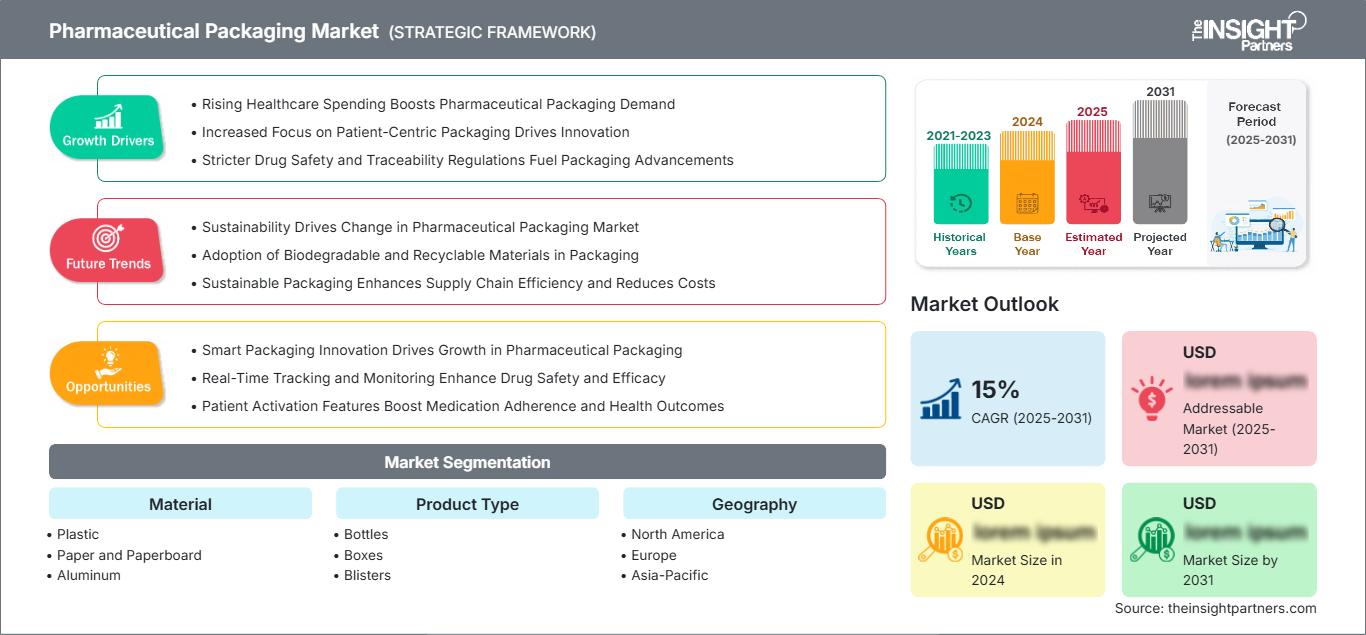
Pharmaceutical Packaging Market: Strategic Insights
Regional Insights
North America Pharmaceutical packaging market
North America is expected to maintain leadership in the Pharmaceutical Packaging Market with an estimated CAGR of approximately 7.8% through 2034. The region benefits from a mature pharmaceutical industry, extensive biologics manufacturing capabilities, and stringent regulatory standards governing packaging performance and safety. Strong adoption of serialization technologies further supports market expansion.
Pharmaceutical companies across the United States and Canada continue investing in advanced drug delivery systems and specialty medicines that require sophisticated packaging solutions. Demand for prefilled syringes, pharmaceutical glass packaging, and tamper-evident formats remains robust. Sustainability initiatives are also encouraging manufacturers to develop recyclable and lower-impact packaging materials without compromising product protection.
U.S. Pharmaceutical packaging market
The U.S. accounts for approximately 75–80% of North America's Pharmaceutical Packaging Market and is projected to grow at a CAGR near 7.9% through 2034. The country's leadership position is supported by a strong pharmaceutical manufacturing base, extensive biologics development activities, and widespread adoption of advanced packaging technologies.
Major industry participants maintain substantial manufacturing, R&D, and distribution operations throughout the United States. Growing utilization of injectable therapies, specialty drugs, and personalized medicines is increasing demand for high-performance packaging solutions. Digital traceability, anti-counterfeiting measures, and patient-centric packaging formats are becoming increasingly important across pharmaceutical supply chains.
Europe Pharmaceutical packaging market
Europe represents approximately 25–30% of the global Pharmaceutical Packaging Market share and is expected to grow at a CAGR of around 7.6%. Strong pharmaceutical manufacturing capabilities, strict quality regulations, and increasing adoption of sustainable packaging solutions support regional development. Germany remains the leading national market.
The region is witnessing growing investments in recyclable materials, pharmaceutical glass packaging, and advanced containment systems for biologics. Regulatory emphasis on patient safety and environmental sustainability continues influencing packaging innovation and procurement decisions across pharmaceutical companies.
The presence of established pharmaceutical and packaging manufacturers creates a highly sophisticated market environment. Continued modernization of production facilities and increased demand for injectable therapies are expected to support long-term growth.
United Kingdom: The UK market benefits from strong pharmaceutical research activities and increasing biologics production. Packaging manufacturers are investing in serialization technologies, smart labeling systems, and sustainable material innovations to meet evolving regulatory and commercial requirements.
Germany: Germany leads the European Pharmaceutical Packaging market due to its extensive pharmaceutical manufacturing infrastructure and strong presence of packaging technology providers. Demand for high-quality glass containers, closures, and specialty packaging formats remains particularly strong.
France, Italy, and Spain: These countries are experiencing steady growth driven by pharmaceutical production expansion, healthcare modernization, and increasing demand for compliant packaging solutions. Sustainability initiatives and supply chain resilience programs are also influencing purchasing decisions.
APAC Pharmaceutical packaging market
Asia-Pacific is projected to be the fastest-growing regional market, expanding at a CAGR of approximately 10.2% through 2034. The region currently accounts for around 28–32% of global market demand. China remains the largest contributor due to its extensive pharmaceutical manufacturing ecosystem and growing domestic healthcare consumption.
Rapid industrialization, increasing healthcare access, and government initiatives supporting pharmaceutical production are stimulating packaging demand. Manufacturers are expanding local capacity to serve both domestic and export-oriented pharmaceutical industries.
China, India, Japan, South Korea, and Australia are investing in pharmaceutical innovation, biologics manufacturing, and regulatory modernization. These developments are increasing demand for high-quality packaging solutions that comply with international standards while supporting regional production growth.
Middle East & Africa Pharmaceutical packaging market
The Middle East & Africa Pharmaceutical Packaging Market is anticipated to grow at a CAGR of approximately 8.1% through 2034. Saudi Arabia represents the leading market, supported by pharmaceutical localization initiatives and healthcare sector expansion programs.
Growing investments in healthcare infrastructure, pharmaceutical manufacturing, and regional supply chain development are creating favorable conditions for packaging suppliers. Governments are encouraging domestic production to reduce import dependency and improve healthcare resilience.
The UAE and South Africa continue attracting investment in pharmaceutical production facilities and distribution networks. Rising healthcare demand, population growth, and industrial diversification efforts are expected to support sustained packaging requirements across the broader region.
Segmentation Analysis
Material
- Plastic: Plastic remains the dominant material category due to versatility, lightweight properties, cost efficiency, and compatibility with bottles, closures, and advanced drug delivery systems used across multiple pharmaceutical applications.
- Paper and Paperboard: Demand is increasing as pharmaceutical companies pursue sustainability objectives, improve recyclability, and reduce environmental impact while maintaining packaging functionality for secondary pharmaceutical packaging applications.
- Aluminum: Aluminum provides excellent barrier protection against moisture, oxygen, and light exposure, making it highly suitable for blister packaging and applications requiring extended product shelf life.
- Glass: Glass remains critical for injectable drugs, biologics, vaccines, and specialty medicines because of its chemical inertness, superior protection characteristics, and regulatory acceptance across global pharmaceutical markets.
Product Type
- Bottles: Bottles continue to support large-scale pharmaceutical distribution for tablets, capsules, and liquid formulations, offering cost-effective storage, transportation, and dispensing advantages across healthcare settings.
- Boxes: Boxes play a significant role in secondary packaging by enhancing product protection, regulatory labeling, branding, and supply chain management while supporting serialization and traceability requirements.
- Blisters: Blister packaging is widely adopted due to unit-dose convenience, tamper evidence, medication adherence benefits, and strong barrier protection against environmental exposure.
- Caps and Closures: Advanced caps and closures enhance product security, child resistance, tamper evidence, and compatibility with specialized pharmaceutical containers and delivery systems.
- Labels: Labels increasingly incorporate serialization, authentication, tracking, and patient information functions, supporting regulatory compliance and anti-counterfeiting initiatives across pharmaceutical supply chains.
- Tubes: Tubes are commonly utilized for topical formulations, creams, gels, and ointments requiring controlled dispensing, convenience, and protection from contamination.
Opportunity Snapshot
| Product Type | Revenue Contribution | Trend Tag | Adoption Stage |
| Bottles | High | Oral Drugs | Mature |
| Boxes | Medium | Serialization | Mature |
| Blisters | High | Unit Dose | Mature |
| Caps and Closures | Medium | Safety Design | Scaling |
| Labels | Medium | Traceability | Scaling |
| Tubes | Low | Topicals | Mature |
Pharmaceutical Packaging Market Growth Drivers and Impact Analysis
Expansion of Biologics and Injectable Drug Manufacturing
The rapid growth of biologics, vaccines, biosimilars, and specialty injectable therapies is significantly influencing packaging requirements across the pharmaceutical industry. These products often require highly specialized containment systems capable of maintaining stability, sterility, and efficacy throughout distribution and storage. As pharmaceutical pipelines increasingly shift toward biologics and advanced therapies, demand for high-quality glass containers, prefilled syringes, cartridges, and advanced closures continues to rise.
This transition has encouraged packaging manufacturers to invest in precision manufacturing technologies and high-value containment solutions. The impact extends throughout the supply chain, supporting innovation in materials, production processes, and quality assurance systems. Companies capable of delivering packaging solutions for complex therapies are securing stronger Pharmaceutical Packaging market forecast and benefiting from higher-value contracts.
Increasing Regulatory Emphasis on Drug Safety and Traceability
Regulatory authorities worldwide are strengthening requirements related to pharmaceutical safety, serialization, and supply chain transparency. Packaging now serves as a critical tool for preventing counterfeiting, improving traceability, and protecting patients from compromised products. These requirements are driving adoption of advanced labeling systems, tamper-evident features, authentication technologies, and digital tracking capabilities.
The resulting investments are transforming pharmaceutical packaging from a passive protective function into an active component of healthcare delivery. Manufacturers are implementing technologies that support compliance while improving operational efficiency. The growing importance of serialization and digital identification systems is creating long-term opportunities for packaging companies offering integrated compliance solutions.
Rising Demand for Patient-Centric Packaging Solutions
There is increasing emphasis from healthcare professionals and drug manufacturers on improving compliance and the overall experience of patients. Design innovations aimed at facilitating ease of use, improving convenience, and minimizing the risk of medication error have become very strategic considerations. Such a trend is more apparent in chronic disease treatment and self-medication regimens.
Patient-centered packaging promotes innovation in dispenser technology, label design, and ergonomic considerations. Usability improvements will not only improve treatment outcomes but also support brand differentiation for pharmaceutical manufacturers. As healthcare systems prioritize adherence and home-based care models, demand for intelligent and user-friendly packaging solutions is expected to expand significantly.
Pharmaceutical Packaging Market Future Trends
Integration of Smart and Connected Packaging Technologies
Smart packaging technologies are becoming increasingly relevant as pharmaceutical companies seek greater visibility throughout product lifecycles. Digital features such as RFID tags, QR codes, temperature monitoring indicators, and connected adherence solutions are improving supply chain transparency and patient engagement. These technologies provide real-time data and support more efficient inventory management.
Further development will be towards integration with healthcare ecosystems and digital health solutions. The connected packaging could assist with monitoring adherence to medication, authentication of medications, and personalizing patient care. As digital healthcare grows around the world, the technology in the packaging could provide a significant advantage in the pharmaceutical packaging industry.
Sustainability-Centered Packaging Innovation
Environmental concerns are influencing approaches to the selection of materials and packaging designs for products in the pharmaceutical industry. Companies have become more proactive in terms of incorporating environmentally friendly materials into their packages, reducing the weight of their packaging, sourcing renewable raw materials, and adopting circular economy concepts.
Innovations in the future are likely to be concentrated on finding a balance between environmental performance and safety requirements for the products. Pharmaceutical companies able to produce environmentally friendly packaging while ensuring compliance with regulations and protecting their products from damage are likely to enjoy a competitive advantage.
Pharmaceutical Packaging Market Opportunities
Growing Pharmaceutical Manufacturing Capacity in Emerging Economies
Emerging Pharmaceutical Packaging market trends indicate that emerging economies are becoming increasingly important pharmaceutical production hubs due to favorable manufacturing costs, supportive government policies, and expanding healthcare demand.. This trend creates significant opportunities for packaging suppliers capable of establishing local manufacturing footprints and meeting international quality standards.
Companies and industry participants can achieve this through various collaborative arrangements such as partnerships, new capacity developments, or on-site manufacturing. Localization close to the centers of pharmaceutical production enables rapid response times, efficient supply chains, and sustained customer relationships. This trend represents a significant opportunity within the Asia-Pacific region and some parts of the Middle East, regions experiencing ever-increasing pharmaceutical investment.
Expansion of High-Value Drug Delivery and Containment Solutions
The increasing complexity of pharmaceutical therapies is generating demand for specialized packaging formats with higher performance requirements. Prefilled syringes, cartridges, advanced closures, and ready-to-use containment systems represent attractive growth opportunities due to their technical sophistication and higher margins.
Firms pursuing these opportunities gain from high barriers to entry and demand, growing in the pharmaceutical industry, while focused, innovative manufacturers may be able to win sustained contracts with prime global pharmaceutical companies thanks to their deep regulatory, product, and production competencies. And the robust outlook for growth in biologics and specialty drugs adds conviction to the attractiveness of this investment space.
Recent Developments
- August, 2025: SCHOTT, a global pioneer in specialty glass, announced the addition of syringe and cartridge glass tubing to its existing state-of-the-art manufacturing capabilities in Jambusar, Gujarat. This also marks a significant milestone in India's glass primary pharmaceutical packaging landscape and reinforces SCHOTT's commitment to the 'Make in India' initiative. This strategic action positions the company as Asia's largest producer of syringe and cartridge glass tubing.
- November, 2025: Zydus Lifesciences Ltd., a global innovation-driven life sciences company, and SIG, a leading packaging solutions provider, entered into an agreement to pioneer packaging of liquid cough and cold medication in single-serve spouted pouches featuring the tethered spout solution SIG StrawCap 30 Linked and the SIG Motion Servo 3.2 filling technology. This launch marks a significant advancement in pharmaceutical packaging, delivering precisely dosed medicine, improved hygiene, and reduced product waste.
- October, 2024: Bayer launched a first-of-its-kind in the healthcare industry, polyethylene terephthalate (PET) blister packaging on its renowned brand, Aleve. Realized in partnership with pharma packaging specialist Liveo Research, this innovative solution reduces the carbon footprint of this packaging by 38% and marks a stride in environmental stewardship by eliminating the use of polyvinyl chloride (PVC). Blister packaging, widely used in over-the-counter products, has long posed a challenge for environmental sustainability due to its multilayer composition of plastic and aluminum, which makes it hard to sort and recycle.
Frequently Asked Questions

- Comprehensive Market Sizing and Forecast Analysis
- Detailed Segmentation Analysis
- In-Depth Market Dynamics Assessment
- Regional and Country-Level Insights
- Competitive Landscape and Company Benchmarking
- Strategic Business Intelligence
Recent Reports
Testimonials

The Insight Partners' SCADA System Market report is comprehensive, with valuable insights on current trends and future forecasts. The team was highly professional, responsive, and supportive throughout. We are very satisfied and highly recommend their services.
RAN KEDEM Partner, Reali Technologies LTDs
I requested a report on a very specific software market and the team produced the report in a few days. The information was very relevant and well presented. I then requested some changes and additions to the report. The team was again very responsive and I got the final report in less than a week.
JEAN-HERVE JENN Chairman, Future Analytica
We worked with The Insight Partners for an important market study and forecast. They gave us clear insights into opportunities and risks, which helped shape our plans. Their research was easy to use and based on solid data. It helped us make smart, confident decisions. We highly recommend them.
PIYUSH NAGPAL Sr. Vice President, High Beam Global
The Insight Partners delivered insightful, well-structured market research with strong domain expertise. Their team was professional and responsive throughout. The user-friendly website made accessing industry reports seamless. We highly recommend them for reliable, high-quality research services
YUKIHIKO ADACHI CEO, Deep Blue, LLC.
This is the first time I have purchased a market report from The Insight Partners.While I was unsure at first, I visited their web site and felt more comfortable to take the risk and purchase a market report.I am completely satisfied with the quality of the report and customer service. I had several questions and comments with the initial report, but after a couple of dialogs over email with their analyst I believe I have a report that I can use as input to our strategic planning process.Thank you so much for taking the extra time and making this a positive experience.I will definitely recommend your service to others and you will be my first call when we need further market data.
JOHN SUZUKI President and Chief Executive Officer, Board Director, BK Technologies
I wish to appreciate your support and the professionalism you displayed in the course of attending to my request for information regarding to infectious disease IVD market in Nigeria. I appreciate your patience, your guidance, and the fact that you were willing to offer a discount, which eventually made it possible for us to close a deal. I look forward to engaging The Insight Partners in the future, all thanks to the impression you have created in me as a result of this first encounter.
DR CHIJIOKE ONYIA MANAGING DIRECTOR, PineCrest Healthcare Ltd.Reason to Buy
- Informed Decision-Making
- Understanding Market Dynamics
- Competitive Analysis
- Identifying Emerging Markets
- Customer Insights
- Market Forecasts
- Risk Mitigation
- Boosting Operational Efficiency
- Strategic Planning
- Investment Justification
- Tracking Industry Innovations
- Aligning with Regulatory Trends





 Get Free Sample for