
Smart Airport Market Dynamics and Trends by 2028
Published Report - Smart Airport Market Forecast to 2028 - COVID-19 Impact and Global Analysis by Component (Hardware and Software) and Application (Terminal Side, Airside, and Land Side)
- Status : Published
- Report Code : TIPAR00002061
- Category : Aerospace and Defense
- No. of Pages : 146
- Available Report Formats :


- Last update date : July 06, 2023


2022 Market Size
US$ 26.07 Bn
Base year value
2028 Forecast
US$ 66.76 Bn
Projected by 2028
CAGR 2023-2028
17.0 %
Growth rate
Addressable Market
US$ 280.83 Bn
(2023-2028)
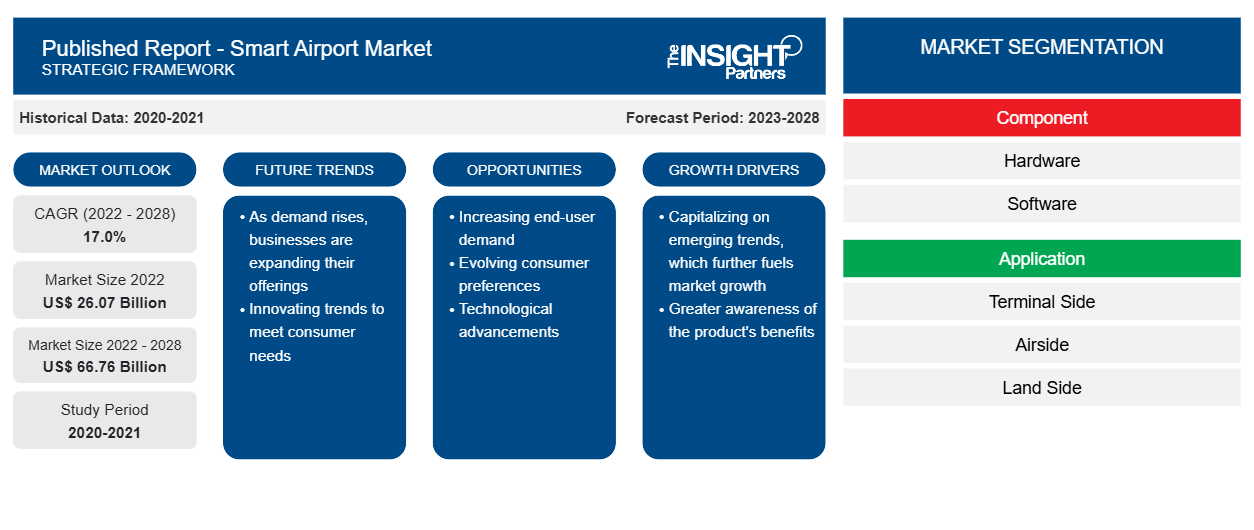
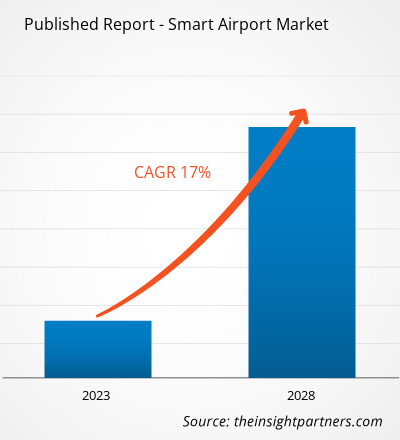
[Research Report] The smart airport market size is expected to grow from US$ 26.073 billion in 2022 to US$ 66.763 billion by 2028; it is expected to grow at a CAGR of 17.0% from 2022 to 2028.
Analyst Perspective:
The smart airport market has experienced significant growth and innovation in recent years, revolutionizing how airports operate and enhancing the overall passenger experience. Smart airports integrate advanced technologies and intelligent systems to optimize various processes, such as passenger flow management, security, baggage handling, and airport operations. One of the key drivers behind the smart airport market is the increasing passenger demand for seamless and efficient travel experiences. Smart airports utilize various technologies, including the Internet of Things (IoT), artificial intelligence (AI), big data analytics, biometrics, and automation, to create a connected and intelligent ecosystem within the airport premises. Passenger flow management is a crucial aspect of smart airports. By leveraging IoT and AI technologies, airports can monitor and manage passenger movement in real time, reducing congestion and improving overall efficiency. This includes features like automated check-in kiosks, self-service baggage drop-off, biometric authentication for boarding, and real-time flight information updates. Security is another key focus area in smart airports. Advanced surveillance systems, facial recognition technology, and biometric authentication enhance security, making the screening process more efficient and less intrusive for passengers. Also, smart airports use data analytics to detect potential security threats and predict patterns, enhancing proactive security measures. Efficient baggage handling is vital for a seamless travel experience. Smart airports deploy automated baggage handling systems that use RFID tags and sensors to track and route bags accurately, reducing the risk of mishandling or loss. Passengers can also receive real-time updates on their luggage through mobile apps or self-service kiosks. Furthermore, smart airports improve operational efficiency by leveraging data analytics and AI algorithms to optimize resource allocation, streamline maintenance processes, and enhance energy management systems. These technologies enable airports to monitor and manage various operations more effectively, such as parking, facility management, and air traffic control.
The global smart airport market is anticipated to grow in the coming years. Increasing air passenger traffic, rising adoption of smart technologies by airports worldwide, and the need to enhance operational efficiency and passenger experience are the primary factors driving this growth. As the market evolves, airports will continue to invest in innovative solutions to create smarter, safer, and more convenient travel hubs for passengers.
Market Overview:
Passengers can access real-time data analytics and self-service options at smart airports thanks to automated and linked technology like the Internet of Things (IoT), GPS, and sensors. They make it possible for smart devices to obtain information quickly, facilitating accurate planning, execution, and other digital tasks. Their demand is rising worldwide because they provide cutting-edge services, including automated security gates, unmanned immigration systems, real-time CCTV security monitoring, and RFID/NFC-based luggage tracking.
● REPORT CUSTOMIZATION
Tailor This Report To Align With Your Specific Business Requirements
This report can be customized to align precisely with your business objectives, scope, and target markets. Customization options include tailored segmentation, geography, competitive analysis, and strategic insights to support informed decision-making.
Customize This Report →WHAT YOU CAN ADJUST
- ● Segmentations
- ● Geography
- ● Competitive Analysis
- ● Language Preferences
Published Report - Smart Airport Market: Strategic Insights
-
Get Top Key Market Trends of this report.This FREE sample will include data analysis, ranging from market trends to estimates and forecasts.
Market Driver:
Enhanced Passenger Experience to Drive Growth of Smart Airport Market
The focus on enhancing the passenger experience is a significant driver for the growth of the smart airport market. Airports increasingly recognize the importance of providing passengers with a seamless and enjoyable journey from when they arrive at the airport until they reach their destination. By implementing smart airport technologies, airports can offer various services and features that enhance the overall passenger experience. For example, self-service check-in kiosks enable passengers to check in quickly and easily, avoiding long queues at traditional check-in counters. This self-service option gives passengers more control over their travel process, saving them time and reducing stress. Biometric authentication is another technology that improves the passenger experience. With biometrics, such as facial recognition or fingerprint scanning, passengers can pass through security checkpoints or board aircraft without needing physical boarding passes or multiple document checks. This streamlined process reduces waiting times and enhances security simultaneously. Real-time flight updates are crucial for keeping passengers informed and reducing uncertainty during their journey. Smart airports provide real-time updates on flight statuses, gate changes, and baggage collection, accessed through digital displays, mobile apps, or interactive kiosks. Passengers can stay informed and adjust their plans accordingly, improving their overall travel experience.
Additionally, smart airports leverage mobile apps and digital platforms to offer personalized services and information to passengers. These apps provide features like wayfinding assistance, retail and dining recommendations, and access to airport amenities. By tailoring information and services based on passenger preferences and needs, smart airports create a more personalized and engaging experience for travelers.
Segmental Analysis:
Based on application, the smart airport market is segmented into terminal side, airside, and land side. The terminal side segment held the largest share of the smart airport market in 2020 and is anticipated to register the highest CAGR in the market during the forecast period. The terminal side segment is the dominant player in the smart airport market, holding the largest market share. This segment focuses on improving passenger experiences through streamlined check-in processes, enhanced security screening, efficient baggage handling, and personalized amenities and services. By implementing smart technologies in this segment, airports can optimize operations, enhance security measures, and provide a seamless and enjoyable travel experience. The terminal side segment's market dominance is driven by its crucial role in shaping the overall passenger journey and satisfaction.
Regional Analysis:
The Asia Pacific smart airport market was valued at US$ 10.334 billion in 2022 and is projected to reach US$ 29.478 billion by 2028; it is expected to grow at a CAGR of 19.1% during the forecast period. The Asia Pacific region has appeared as the dominant market in the smart airport industry, showcasing significant market share and growth. Several factors contribute to the region's leadership position. The region benefits from rapid economic growth and increasing air travel. Countries like China, India, and Southeast Asian nations are witnessing a surge in domestic and international air travel, driving the demand for smart airport solutions. As airports strive to handle the growing passenger volumes, they invest heavily in smart technologies to improve operational efficiency and passenger experience. Government support plays a vital role in the region's dominance. Governments in the Asia Pacific are actively supporting initiatives to develop advanced airport infrastructure and technologies. Collaborations between governments, airport authorities, and technology providers are fostering the implementation of smart solutions to enhance security, optimize operations, and provide seamless passenger experiences. Technological advancements and innovation capabilities are key contributors to the region's dominance. Countries like Japan, South Korea, China, and Singapore are at the forefront of adopting cutting-edge technologies. They have been pioneers in implementing smart airport solutions, leveraging biometric authentication, artificial intelligence, IoT, and data analytics to create efficient and intelligent airport ecosystems. The region's large population base and thriving tourism industry also play a significant role. Increasing middle-class populations and rising disposable incomes have led to a surge in air travel demand. To cater to these growing passenger needs, airports in the Asia Pacific are investing in smart airport technologies to provide seamless and enjoyable travel experiences. Furthermore, the Asia Pacific region's diverse range of airports, from major international hubs to smaller regional airports, provides ample opportunities to implement smart airport technologies across different scales and operational requirements.
Key Player Analysis:
The smart airport market analysis consists of the players such as Honeywell International Inc; Cisco Systems Inc; Huawei Technologies Co., Ltd; Indra Sistemas SA; Amadeus IT Group SA; SITA; Collins Aerospace; Daifuku Co. Ltd.; Thales Group; and T-Systems International GmbH. Among the players in the smart airport Honeywell International Inc and Thales Group are the top two players owing to the diversified product portfolio offered.
Recent Developments:
Inorganic and organic strategies such as mergers and acquisitions are highly adopted by companies in the smart airport market. A few recent key market developments are listed below:
- In June 2022, SITA announced its partnership with Alstef Group to launch Swift Drop, a new self-bag drop solution. This is expected to significantly reduce passengers' time to check bags at the airports. Mexico City's brand-new Felipe Ángeles International Airport opened in late March and has become the first airport globally to install 20 Swift Drop units.
- In 2021, the Spanish IT solution provider Amadeus IT Group announced that it had installed touchless bag drop technology at Heathrow Airport (LHR) in the UK for trials.
Published Report - Smart Airport Market Report Scope
| Report Attribute | Details |
|---|---|
| Market size in 2022 | US$ 26.07 Billion |
| Market Size by 2028 | US$ 66.76 Billion |
| Global CAGR (2022 - 2028) | 17.0% |
| Historical Data | 2020-2021 |
| Forecast period | 2023-2028 |
| Segments Covered |
By Component
|
| Regions and Countries Covered |
North America
|
| Market leaders and key company profiles |
|
Published Report - Smart Airport Market Players Density: Understanding Its Impact on Business Dynamics
The Published Report - Smart Airport Market is growing rapidly, driven by increasing end-user demand due to factors such as evolving consumer preferences, technological advancements, and greater awareness of the product's benefits. As demand rises, businesses are expanding their offerings, innovating to meet consumer needs, and capitalizing on emerging trends, which further fuels market growth.
Frequently Asked Questions
2. Focus of Vendors on Customer-Centric Offerings

- Comprehensive Market Sizing and Forecast Analysis
- Detailed Segmentation Analysis
- In-Depth Market Dynamics Assessment
- Regional and Country-Level Insights
- Competitive Landscape and Company Benchmarking
- Strategic Business Intelligence
Recent Reports
Testimonials

The Insight Partners' SCADA System Market report is comprehensive, with valuable insights on current trends and future forecasts. The team was highly professional, responsive, and supportive throughout. We are very satisfied and highly recommend their services.
RAN KEDEM Partner, Reali Technologies LTDs
I requested a report on a very specific software market and the team produced the report in a few days. The information was very relevant and well presented. I then requested some changes and additions to the report. The team was again very responsive and I got the final report in less than a week.
JEAN-HERVE JENN Chairman, Future Analytica
We worked with The Insight Partners for an important market study and forecast. They gave us clear insights into opportunities and risks, which helped shape our plans. Their research was easy to use and based on solid data. It helped us make smart, confident decisions. We highly recommend them.
PIYUSH NAGPAL Sr. Vice President, High Beam Global
The Insight Partners delivered insightful, well-structured market research with strong domain expertise. Their team was professional and responsive throughout. The user-friendly website made accessing industry reports seamless. We highly recommend them for reliable, high-quality research services
YUKIHIKO ADACHI CEO, Deep Blue, LLC.
This is the first time I have purchased a market report from The Insight Partners.While I was unsure at first, I visited their web site and felt more comfortable to take the risk and purchase a market report.I am completely satisfied with the quality of the report and customer service. I had several questions and comments with the initial report, but after a couple of dialogs over email with their analyst I believe I have a report that I can use as input to our strategic planning process.Thank you so much for taking the extra time and making this a positive experience.I will definitely recommend your service to others and you will be my first call when we need further market data.
JOHN SUZUKI President and Chief Executive Officer, Board Director, BK Technologies
I wish to appreciate your support and the professionalism you displayed in the course of attending to my request for information regarding to infectious disease IVD market in Nigeria. I appreciate your patience, your guidance, and the fact that you were willing to offer a discount, which eventually made it possible for us to close a deal. I look forward to engaging The Insight Partners in the future, all thanks to the impression you have created in me as a result of this first encounter.
DR CHIJIOKE ONYIA MANAGING DIRECTOR, PineCrest Healthcare Ltd.Reason to Buy
- Informed Decision-Making
- Understanding Market Dynamics
- Competitive Analysis
- Identifying Emerging Markets
- Customer Insights
- Market Forecasts
- Risk Mitigation
- Boosting Operational Efficiency
- Strategic Planning
- Investment Justification
- Tracking Industry Innovations
- Aligning with Regulatory Trends





 Get Free Sample for