
Cardiology Electrodes Market Demand, Share & Growth by 2034
Cardiology Electrodes Market Size and Forecasts (2021 - 2034), Global and Regional Share, Trends, and Growth Opportunity Analysis Report Coverage : by Product Type (ECG Electrodes, EKG Electrodes, Stress Test Electrodes, Holter Monitoring Electrodes); Application (Cardiac Monitoring, Cardiovascular Diagnosis, Electrocardiography, Stress Testing); End-User (Hospitals, Clinics, Ambulatory Surgical Centers, Home Healthcare); and Geography (North America, Europe, Asia Pacific, and South and Central America)
- Status : Data Released
- Report Code : TIPRE00040647
- Category : Life Sciences
- No. of Pages : 150
- Available Report Formats :


- Last update date : September 08, 2026


2025 Market Size
US$ 1.30 Bn
Base year value
2034 Forecast
US$ 2.29 Bn
Projected by 2034
CAGR 2026-2034
6.46 %
Growth rate
Addressable Market
US$ 16.21 Bn
(2026-2034)
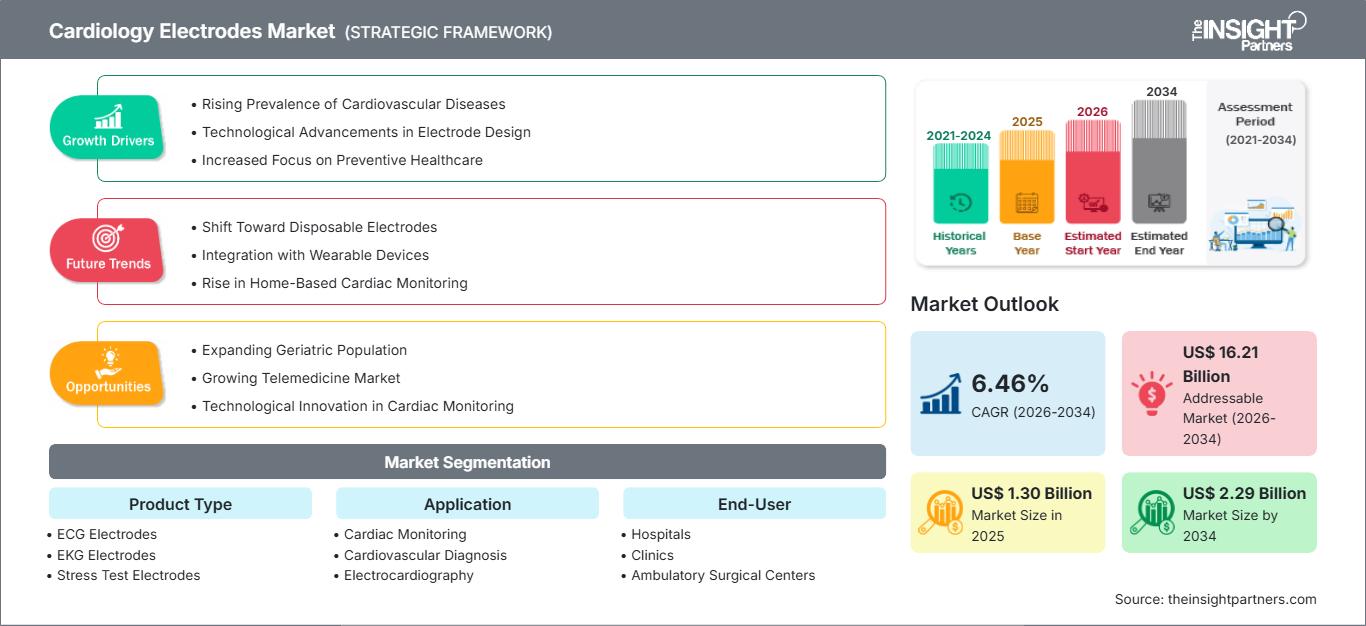
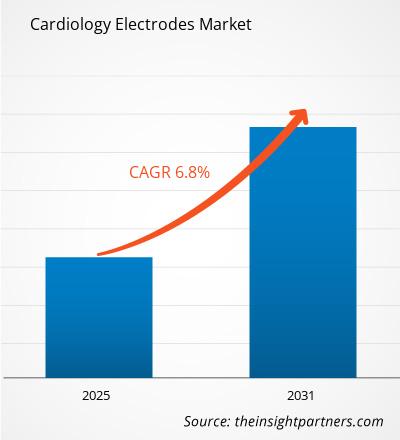
The Cardiology Electrodes Market was valued at US$ 1.30 Billion in 2025 and is projected to reach US$ 2.29 Billion by 2034, registering a CAGR of 6.46% during 2026–2034. Rising utilization of electrocardiography, continuous cardiac surveillance, stress testing, and ambulatory monitoring is sustaining demand for reliable signal-acquisition interfaces across hospitals, clinics, ambulatory surgical centers, and increasingly connected home healthcare environments.
Within North America, the Cardiology Electrodes Market size is expected to expand at a 5.9–6.5% CAGR during 2026–2034. The region benefits from established cardiac diagnostic infrastructure, high procedural volumes, and expanding reimbursement pathways for outpatient monitoring. Heart disease caused 683,491 US deaths in 2024, reinforcing the clinical need for early diagnosis and longitudinal surveillance, while integration of wearable telemetry is extending electrode consumption beyond acute-care settings.
Cardiology Electrodes Market Assessment and Insights
- North America: The region accounted for a 36–40% share in 2025 and is forecast to grow at a 5.9–6.5% CAGR during 2026–2034, supported by hospital telemetry modernization and established reimbursement for ambulatory diagnostics.
- US: The country represented 79–83% of North American revenue in 2025 and is projected to expand at a 6.0–6.6% CAGR during 2026–2034.
- Europe: Europe held a 27–31% share in 2025 and is expected to record a 5.7–6.3% CAGR during 2026–2034, led by Germany, the UK, France, Italy, and Spain.
- Asia Pacific: Asia Pacific captured a 22–26% share in 2025 and is anticipated to grow at a 7.4–8.0% CAGR during 2026–2034, with China, Japan, India, and South Korea leading adoption.
- Largest Segment: ECG Electrodes represented a 38–42% market share in 2025 and are projected to expand at a 6.1–6.7% CAGR during 2026–2034.
- High Growth Segment: Home Healthcare accounted for a 10–14% market share in 2025 and is forecast to register a 7.8–8.4% CAGR during 2026–2034.
- Key companies analyzed in detail: Medtronic plc, GE HealthCare Technologies Inc., Koninklijke Philips N.V., 3M Company, Nihon Kohden Corporation, Boston Scientific Corporation, BIOTRONIK SE & Co. KG, Shenzhen Mindray Bio-Medical Electronics Co., Ltd., Compumedics Limited, ZOLL Medical Corporation, Edwards Lifesciences Corporation, Getinge AB, Atrion Corporation, Abbott Laboratories, MedWaves, Inc., Becton, Dickinson and Company, ABIOMED, Inc., and AngioDynamics, Inc.
Source: The Insight Partners' analysis based on proprietary research, government publications, company annual reports, investor presentations, industry databases, and expert interviews.
Electrode technology has progressed from simple wet-gel contact electrodes to application-specific products utilizing advanced hydrogels, breathable substrate, radiolucent substrate, and longer wear adhesives. Production is thus increasingly reliant on coating, biocompatibility evaluation, conductive material quality control, and converting precision. Single-patient packaging and standardization of connectors in the Cardiology Electrodes Market will help health systems lower cross-contamination risk, simplify inventory management, and maintain consistent signal transmission during bedside, telemetry, Holter, and stress-testing protocols.
Future innovations will focus on the developing healthcare systems in Asia, regional production, and electrode products that are suitable for use with wireless recorders. Government spending in diagnostics and telehealth deployment, alongside biocompatibility regulations, will drive the suppliers to develop localized validation and distribution infrastructures. Growth will be contingent upon optimizing extended wear time without compromising skin tolerability among elderly, pediatric, and repeat-monitoring patient populations.
Cardiology Electrodes Market Report Scope
| Report Attribute | Details |
|---|---|
| Market size in 2025 | US$ 1.30 Billion |
| Market Size by 2034 | US$ 2.29 Billion |
| Global CAGR (2026 - 2034) | 6.46% |
| Historical Data | 2021-2024 |
| Forecast period | 2026-2034 |
Cardiology Electrodes Market Analysis
Growth in Cardiology Electrodes Market is attributed to the repeating nature of heart tests and the broadening of the clinical utility of continuous monitoring. The World Health Organization estimated that cardiovascular diseases accounted for 19.8 million deaths in 2022, which equates to around 32% of all global deaths. These statistics ensure the continuous use of resting ECG, emergency telemetry, Holter test, and stress test.
The value chain consists of silver and silver-chloride providers, hydrogel manufacturers, adhesives experts, converters, sterilizers, devices makers, distributors, and buyers of the medical sector. Supply effectiveness depends on conductive reliability, shelf life, skin tolerability, and packaging safety. Procurement specialists assess not the unit price but the whole workflow cost, including replacement frequency, number of false alarms, nursing effort, trace accuracy, and waste from premature removal of electrodes.
The Cardiology Electrodes Market analysis suggests a competition environment of monitoring-platforms leaders, diversified cardiovascular equipment makers, and consumables producers. GE HealthCare Technologies Inc., Koninklijke Philips N.V., Nihon Kohden Corporation, and Shenzhen Mindray Bio-Medical Electronics Co., Ltd. compete with the help of integrated ECG systems. Medtronic plc, Boston Scientific Corporation, Abbott Laboratories, BIOTRONIK SE & Co. KG, and ZOLL Medical Corporation participate via their cardiac monitoring and intervention offerings.
Ventures are made in adhesive technologies, low-artifact detection of the signal, wearables compatibility, and software-linked diagnosis pathways. Koninklijke Philips N.V. has expanded the scope of its ECG analytics and telemetry capabilities, while 3M-branded Red Dot disposable electrodes are represented by the Solventum company. Competitive positioning will increasingly be determined by proven wear time, connector standardization, procurement expertise, and capability to work in the acute, ambulatory, and home environments.
● REPORT CUSTOMIZATION
Tailor This Report To Align With Your Specific Business Requirements
This report can be customized to align precisely with your business objectives, scope, and target markets. Customization options include tailored segmentation, geography, competitive analysis, and strategic insights to support informed decision-making.
Customize This Report →WHAT YOU CAN ADJUST
- ● Segmentations
- ● Geography
- ● Competitive Analysis
- ● Language Preferences
Cardiology Electrodes Market: Strategic Insights
Regional Insights
North America Cardiology Electrodes Market
North America held a 36–40% Cardiology Electrodes Market share in 2025 and is projected to register a 5.9–6.5% CAGR during 2026–2034. Frequent usage of emergency ECG, in-patient telemetry, Holter monitoring, and stress tests generates ongoing need. In addition, hospitals are also consolidating electrode stock to simplify matters and provide continuity during patient transfer.
The acceptance of these technologies is further driven by the availability of electrophysiology networks, remote patient monitoring reimbursement, and cardiac technology vendors. Canada is building on connected health and community care solutions, whereas Mexico presents opportunities through private hospitals and advanced diagnostics. Future regional buyers will focus more on long wear, mobile telemetry capabilities, and infrequent replacement of electrodes in monitoring solutions.
U.S. Cardiology Electrodes Market
The US represented 79–83% of North American revenue in 2025 and is forecast to grow at a 6.0–6.6% CAGR during 2026–2034. The size of the country is indicative of the presence of robust hospital network, cardiology, diagnostic services, and home monitoring system. The reason why surveillance continues to be crucial is that the heart disease was the number one cause of death across the nation in 2024.
Among the players which operate in the market, it is necessary to name GE HealthCare Technologies Inc., Koninklijke Philips N.V., Medtronic plc, Abbott Laboratories, Boston Scientific Corporation, and ZOLL Medical Corporation. In terms of application, the trend moves towards the diagnosis of rhythm in the outpatient setting, telemetry after discharge from hospital, and artificial intelligence ECG interpretation.
Europe Cardiology Electrodes Market
Europe accounted for a 27–31% share in 2025 and is expected to register a 5.7–6.3% CAGR through 2034. Germany excels via its hospital base, diagnostic structure, medical device manufacturing capability, and the use of ambulatory rhythm monitoring. The UK is building on its community diagnostics and telemedicine capability, allowing for the emergence of extended wear and self-applied electrodes.
France profits from cardiology pathway structure and large hospital purchases. Italy and Spain offer chances due to their aging population, health care system development, and outpatient diagnostics usage. Biocompatibility certification, wastage minimization, and adherence to medical device guidelines play a bigger role in European procurement decisions. Companies providing trace quality along with lower material use can profit from this situation.
APAC Cardiology Electrodes Market
Asia Pacific captured a 22–26% share in 2025 and is projected to grow at a 7.4–8.0% CAGR through 2034. China leads regional revenue through hospital scale and local manufacturing, while Japan supports premium diagnostic adoption. India is expanding portable ECG access, and South Korea and Australia are advancing connected monitoring.
Policy support for digital health, local device production, and primary-care diagnostics is widening access. Regional suppliers are scaling cost-efficient consumables, while multinational companies are adapting adhesive performance, packaging, and distribution to humid climates and decentralized care environments.
Middle East & Africa Cardiology Electrodes Market
The Middle East and Africa market is forecast to expand at a 6.3–6.9% CAGR during 2026–2034. Saudi Arabia leads through hospital construction, specialist cardiac centers, and health-system digitization. The UAE is investing in connected care, while South Africa supports demand through established private and tertiary hospitals.
Across the Rest of MEA, adoption is linked to electricity reliability, equipment availability, trained personnel, and consumable distribution. Portable ECG platforms, resilient packaging, and electrodes suited to high-temperature storage conditions can address infrastructure constraints and extend cardiac diagnostics into secondary-care facilities.
Segmentation Analysis
Product Type
The Product Type segment is projected to register a 6.2–6.8% CAGR during 2026–2034. The Cardiology Electrodes Market scope covers short diagnostic recordings, exercise testing, and prolonged rhythm surveillance. Product selection depends on adhesion duration, signal stability, patient mobility, perspiration, imaging compatibility, and skin condition. Demand is moving toward differentiated electrodes rather than interchangeable general-purpose formats.
- ECG Electrodes: ECG electrodes hold the leading position because resting electrocardiography, emergency assessment, inpatient monitoring, and preoperative screening generate high-volume recurring consumption across hospitals, clinics, and ambulatory facilities.
- EKG Electrodes: EKG electrodes serve equivalent electrocardiographic workflows under alternative clinical terminology, retaining strategic importance through broad compatibility with established recorders, lead systems, and routine diagnostic protocols.
- Stress Test Electrodes: Stress test electrodes address high-motion and perspiration-intensive procedures, requiring stronger adhesion, dependable conductivity, and artifact control to support interpretable waveforms during progressively demanding exercise protocols.
- Holter Monitoring Electrodes: Holter monitoring electrodes support prolonged ambulatory recordings and require sustained skin contact, patient comfort, and signal stability, making them central to arrhythmia investigation and episodic symptom correlation.
Application
The Application segment is forecast to grow at a 6.3–6.9% CAGR during 2026–2034. Adoption reflects the movement from single diagnostic encounters toward continuous and episodic surveillance. Healthcare providers require electrodes matched to recording duration and clinical acuity, while digital interpretation and centralized monitoring increase the value of consistent signal acquisition across care settings.
- Cardiac Monitoring: Cardiac monitoring represents recurring electrode demand across intensive care, general wards, telemetry units, emergency departments, and post-discharge programs where uninterrupted waveforms support escalation and intervention decisions.
- Cardiovascular Diagnosis: Cardiovascular diagnosis uses electrodes to identify rhythm disturbances, conduction abnormalities, ischemic patterns, and other cardiac findings, supporting triage, treatment planning, and referral to specialist investigations.
- Electrocardiography: Electrocardiography remains a foundational application because its accessibility, noninvasive nature, and rapid acquisition support routine screening, acute assessment, perioperative evaluation, and longitudinal comparison across patient populations.
- Stress Testing: Stress testing requires electrodes capable of maintaining contact during movement and perspiration, making application-specific adhesion and noise reduction essential for evaluating exertional symptoms and suspected ischemia.
End-User
The End-User segment is expected to register a 6.5–7.1% CAGR during 2026–2034. Hospitals remain the principal procurement channel, although outpatient and home-based models are changing consumption patterns. Buyers increasingly evaluate electrode usability, staff application time, patient instructions, packaging efficiency, and compatibility with portable or wearable recorders.
- Hospitals: Hospitals generate the largest demand through emergency care, operating rooms, intensive care, telemetry, general wards, cardiology laboratories, and inpatient stress testing, supporting centralized high-volume purchasing.
- Clinics: Clinics emphasize convenient diagnostic electrode formats for scheduled ECG examinations, cardiovascular consultations, chronic-disease reviews, and pre-referral screening, with procurement shaped by affordability and recorder compatibility.
- Ambulatory Surgical Centers: Ambulatory surgical centers require dependable electrodes for preoperative assessment, procedural monitoring, and recovery surveillance, favoring single-use products that support infection-control protocols and rapid patient turnover.
- Home Healthcare: Home healthcare is the fastest-growing end-user category as remote rhythm assessment and post-discharge monitoring expand, creating demand for comfortable, easily applied, extended-wear electrodes supported by clear patient instructions.
Opportunity Snapshot
| End-User | Revenue Contribution | Trend Tag | Adoption Stage |
| Hospitals | High | Telemetry Standardization | Mature |
| Clinics | Medium | Portable Diagnostics | Scaling |
| Ambulatory Surgical Centers | Medium | Perioperative Monitoring | Scaling |
| Home Healthcare | Medium | Extended Wear | Emerging |
Cardiology Electrodes Market Growth Drivers and Impact Analysis
Rising cardiovascular disease burden expands recurring testing
Cardiovascular diseases caused an estimated 19.8 million deaths globally in 2022, with more than three quarters of related deaths occurring in low- and middle-income countries. The need for such increases the needs for ECG tests, heart assessments, heart rhythm monitors, and follow-ups. As the systems advance the need for early detection, the need for electrodes becomes greater through installation and regular replacements. Unlike machines, the electrodes require replacement with every single test done. The effect on business is greatest for manufacturers that can provide products which can perform reliably in resting ECG, telemetry, Holter, and stress tests.
Expansion of ambulatory and remote cardiac monitoring
The advent of remote monitoring is leading to the evolution of the electrodes into wearable components that are no longer clinical consumables with a short life cycle. Electrodes used for ambulatory monitoring must sustain their conductivity in movement, in sleeping, sweating, and routine activities, while minimizing irritation and detachment before schedule. Philips provides solutions to monitor patients up to 30 days post discharge as well, representing just one example of the general shift towards remote surveillance. The need arises for substrates with breathability, stable hydrogels, flexible leads and convenient applications. Suppliers can leverage extra value in electrodes validated for specific recorders, easy-to-use kits, and assistance for the professionals on how long to wear the device.
Hospital focus on signal quality and workflow efficiency
Challenges include alarm burden, frequent replacement of electrodes, patient transports, and inconsistent product selection in various departments. Philips indicated that telemetry environments may produce up to 350 alarms per patient per day, illustrating the significance of reliable signal capture and alarm management within this field. The use of appropriate electrodes, skin preparation, and proper connection prevents artifacts, which are responsible for non-actionable alarms or nurses’ involvement. For this reason, hospitals are moving toward product families depending on patient types, wearing time, and procedure type. Companies that prove their performance in terms of adhesion, traceability, ease of removal, and less complex inventory have the opportunity to compete based on added value instead of pricing.
Cardiology Electrodes Market Future Trends
Dry, reusable, and skin-conformal electrode development
Cardiology Electrodes Market trends will become more aligned with studies on dry conductive materials, flexible designs, and absence of gel layer. Traditional hydrogels tend to dry out when used for long periods of time, and adhesives might irritate sensitive skin by multiple applications. There is a need to ensure reliable contact via mechanical compatibility, breathable material, microstructure, or conductive polymers. A study carried out using a 2025 research system utilized reusable 3D-printed dry electrodes with a soft chest belt and AI-based arrhythmia diagnosis to show future directions of development.
Integration of electrode data with AI-enabled ECG ecosystems
The Cardiology Electrodes Market Forecasts indicate that while electrodes will continue to be mechanically simple devices, their importance will increase as electrocardiogram data drives artificial intelligence and longitudinal analyses. In July 2025, Philips released an ECG AI Marketplace which embeds third-party algorithms in the ECG technology infrastructure to help assess heart issues at an earlier stage. This is because the accuracy of inputs becomes critical due to the negative impact of motion artefacts, poor skin preparation, and intermittent contact on the algorithms' functioning. Consequently, the future procurement specifications could connect the use of consumables with recorder validation, quality of signals, and automated lead verification.
Cardiology Electrodes Market Opportunities
Localized manufacturing for high-growth Asian markets
Asia Pacific offers an investment opportunity for localized coating, converting, packaging, and quality-control capacity. Infrastructure for Cardiology is spreading through China, India, Southeast Asia, and secondary cities, but the purchasing criteria depend on climate, pricing, channel, and installed base of equipment. Manufacturing locally will lower the shipping time and lessen any risks related to foreign exchange and supply of imported materials. The investor should concentrate on standardization of conductive materials, moisture resistance packaging, automatic testing, and collaboration with local ECG equipment distributors. The product range should include resting ECG, stress test, and prolonged ECG monitoring. Clinical validation will be crucial for ensuring adhesion performance among diverse demographics.
Application-specific kits for decentralized cardiac care
The area of home care and outpatient monitoring offers chances for kits containing all electrodes and not just bulk purchases intended for institutions. This way, manufacturers could include pre-configured electrodes, skin preparation substances, directions for replacement, placement information, and return packaging within a certain monitoring period. Kits will minimize mistakes made by patients, allow monitoring service companies to predict demand, and ease replenishment. Business approaches need to focus on diagnostic firms working remotely, cardiology practices, pharmacies, and discharge management systems. Compatibility deals with companies offering recorders may facilitate entry into the market and save qualification time. Business models could include procedure-based supply deals or continuous deliveries, increasing visibility of consumables suppliers compared to distributor-based approach.
Recent Developments
- September 2025: Koninklijke Philips N.V. introduced a smart telemetry platform led by the Telemetry Monitor 5500, providing continuous enterprise-wide cardiac connectivity beyond the bedside. The platform combines wearable monitoring, touchscreen workflows, alarm-management capabilities, retrospective insights, and mobile coordination, supporting hospitals seeking scalable telemetry and continued patient mobility.
- September 2025: Nihon Kohden Corporation launched the cardiolife TEC-1000 series of bedside monitors. The release expanded its patient-monitoring portfolio for emergency and clinical environments, strengthening the company’s ability to connect cardiac signal acquisition, monitoring hardware, and associated accessories within integrated care workflows.
- March 2025: GE HealthCare Technologies Inc. announced US cardiology innovations at the American College of Cardiology Annual Scientific Session, including the launch of Flyrcado and AI-supported workflow technologies. The portfolio expansion reinforced the company’s strategy of integrating diagnostic information across the cardiology pathway and supporting more data-driven clinical decisions.
Frequently Asked Questions

- Comprehensive Market Sizing and Forecast Analysis
- Detailed Segmentation Analysis
- In-Depth Market Dynamics Assessment
- Regional and Country-Level Insights
- Competitive Landscape and Company Benchmarking
- Strategic Business Intelligence
Recent Reports
Testimonials

The Insight Partners' SCADA System Market report is comprehensive, with valuable insights on current trends and future forecasts. The team was highly professional, responsive, and supportive throughout. We are very satisfied and highly recommend their services.
RAN KEDEM Partner, Reali Technologies LTDs
I requested a report on a very specific software market and the team produced the report in a few days. The information was very relevant and well presented. I then requested some changes and additions to the report. The team was again very responsive and I got the final report in less than a week.
JEAN-HERVE JENN Chairman, Future Analytica
We worked with The Insight Partners for an important market study and forecast. They gave us clear insights into opportunities and risks, which helped shape our plans. Their research was easy to use and based on solid data. It helped us make smart, confident decisions. We highly recommend them.
PIYUSH NAGPAL Sr. Vice President, High Beam Global
The Insight Partners delivered insightful, well-structured market research with strong domain expertise. Their team was professional and responsive throughout. The user-friendly website made accessing industry reports seamless. We highly recommend them for reliable, high-quality research services
YUKIHIKO ADACHI CEO, Deep Blue, LLC.
This is the first time I have purchased a market report from The Insight Partners.While I was unsure at first, I visited their web site and felt more comfortable to take the risk and purchase a market report.I am completely satisfied with the quality of the report and customer service. I had several questions and comments with the initial report, but after a couple of dialogs over email with their analyst I believe I have a report that I can use as input to our strategic planning process.Thank you so much for taking the extra time and making this a positive experience.I will definitely recommend your service to others and you will be my first call when we need further market data.
JOHN SUZUKI President and Chief Executive Officer, Board Director, BK Technologies
I wish to appreciate your support and the professionalism you displayed in the course of attending to my request for information regarding to infectious disease IVD market in Nigeria. I appreciate your patience, your guidance, and the fact that you were willing to offer a discount, which eventually made it possible for us to close a deal. I look forward to engaging The Insight Partners in the future, all thanks to the impression you have created in me as a result of this first encounter.
DR CHIJIOKE ONYIA MANAGING DIRECTOR, PineCrest Healthcare Ltd.Reason to Buy
- Informed Decision-Making
- Understanding Market Dynamics
- Competitive Analysis
- Identifying Emerging Markets
- Customer Insights
- Market Forecasts
- Risk Mitigation
- Boosting Operational Efficiency
- Strategic Planning
- Investment Justification
- Tracking Industry Innovations
- Aligning with Regulatory Trends





 Get Free Sample for