
Dental Tourism Market Demand, Trends & Forecast by 2034
Dental Tourism Market Size and Forecasts (2021 - 2034), Global and Regional Share, Trends, and Growth Opportunity Analysis Report Coverage : by Service (Dental Implants, Orthodontics); Provider (Hospitals, Dental Clinics); and Geography (North America, Europe, Asia Pacific, and South and Central America)
- Status : Data Released
- Report Code : TIPRE00040663
- Category : Life Sciences
- No. of Pages : 150
- Available Report Formats :


- Last update date : September 08, 2026


2025 Market Size
US$ 9.46 Bn
Base year value
2034 Forecast
US$ 36.98 Bn
Projected by 2034
CAGR 2026-2034
16.36 %
Growth rate
Addressable Market
US$ 195.83 Bn
(2026-2034)
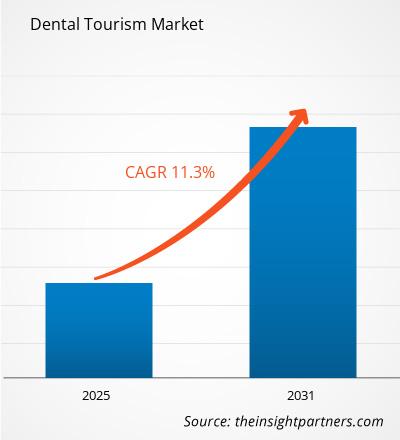
The Dental Tourism Market was valued at US$ 9.46 Billion in 2025 and is projected to reach US$ 36.98 Billion by 2034, registering a CAGR of 16.36% during 2026–2034. Expansion is supported by cross-border demand for lower-cost dental procedures, improving clinical capabilities in destination countries, and greater availability of organized travel and treatment coordination. The market increasingly connects dental providers with international patients seeking implants, orthodontics, restorative procedures, and bundled care.
North America Dental Tourism Market Size is positioned as an important source region, with modeled growth of 11.5–14.0% CAGR between 2026 and 2034. Structural drivers include high out-of-pocket dental expenditure, insurance exclusions for selected procedures, and growing consumer awareness of international treatment options. Patients increasingly compare treatment costs, credentials, waiting periods, and travel convenience before selecting overseas providers, strengthening organized referral and patient-coordination channels.
Dental Tourism Market Assessment and Insights
- North America: North America represented a modeled 25–29% share in 2025, supported by high dental expenditure and cross-border price differentials. The regional market is projected to grow at a 12.0–14.0% CAGR between 2026–2034 as patients increasingly evaluate overseas treatment options.
- US: The US accounted for 80–84% of North American demand in 2025. Growth is modeled at 12.2–14.2% CAGR between 2026–2034, driven by treatment affordability gaps and consumer comparison platforms.
- Europe: Europe held a modeled 24–28% share in 2025 and is projected to expand at 14.5–17.0% CAGR between 2026–2034. The UK, Germany, France, Italy, and Spain remain important source markets because treatment costs and waiting periods influence outbound decisions.
- Asia Pacific: Asia Pacific captured a modeled 30–34% share in 2025 and is expected to record 17.0–19.5% CAGR between 2026–2034. India, Thailand, Vietnam, South Korea, and Malaysia benefit from expanding private healthcare capacity, international connectivity, and destination-focused dental services.
- Largest Segment: Dental implants represented a modeled 52–56% market share in 2025, with a 17.0–19.0% CAGR between 2026–2034, reflecting high procedure values and bundled treatment economics.
- High Growth Segment: Dental clinics held a modeled 63–67% market share in 2025 and are projected to grow at 17.0–19.0% CAGR between 2026–2034 through specialized, patient-focused international care.
- Key companies analyzed in detail: Franco-Vietnamese Hospital, Apollo Hospitals Enterprise Limited, Fortis Healthcare Limited, Clove Dental, Medlife Group, Raffles Medical Group Ltd, Oris Dental Centre, Dubai Dental Hospital, Imperial Dental Specialist Center, Liberty Dental Clinic, Thantakit International Dental Center, and ARC Dental Clinic.
Source: The Insight Partners' analysis based on proprietary research, government publications, company annual reports, investor presentations, industry databases, and expert interviews.
These include digital consultations, 3D imaging, computer aided design/computer aided manufacturing process, guided implant planning, and standardized sterilization in dentistry. It is common practice that dentists coordinate the diagnosis before arrival, schedule the treatments while traveling, and provide remote consultations after travel for patients. The production process has evolved with integration of lab collaboration, digital impressions, milling, and procurement.
The new destination sites in Southeast Asia, South Asia, Middle East, and Eastern Europe are expected to receive investments in international dental facilities over the forecast period. Regulations on qualifications of practitioners, infection prevention, documentation, and informed treatment consent will be advantageous to well-organized facilities. Infrastructure for tourism, direct air connections, medical visas, multi-language coordination, and hospitality collaborations will be a growing factor of destination competitiveness.
Dental Tourism Market Report Scope
| Report Attribute | Details |
|---|---|
| Market size in 2025 | US$ 9.46 Billion |
| Market Size by 2034 | US$ 36.98 Billion |
| Global CAGR (2026 - 2034) | 16.36% |
| Historical Data | 2021-2024 |
| Forecast period | 2026-2034 |
Dental Tourism Market Analysis
Dental Tourism Market Growth of Dental Tourism is related to an increase in the gap between the cost of dental treatment at home and that in the destination country. Patients prefer to choose those places where they can save on procedures, enjoy good dental care quality, reduced waiting times and convenient travel. The market ecosystem consists of clinics, hospitals, labs, facilitators, insurers, airlines, hotels, payment operators and after-care facilities. Coordinators for international patients are increasingly playing the role of the connecting link between the above market actors.
The supply side is becoming more professional, as the providers are bundling diagnosis, treatment, accommodation services, airport transfer and after-care services. The competition between destination clinics lies in the availability of specialists, accreditation, digital dentistry, clear pricing and multilingual service. The concentration of supply in this area is still high in traditional destinations, while secondary destinations are creating capacities through private capital and recruitment of specialists.
The competitive positioning in the Dental Tourism Market Report is fragmented since the choice of service provider depends not only on the size of its brand but also on such factors as destination reputation, procedure specialization, clinical expertise, clear pricing, and coordination of services. The key players in the market such as Apollo Hospitals Enterprise Limited and Fortis Healthcare Limited possess the advantage of having hospital facilities and a well-established infrastructure to serve foreign patients, whereas Clove Dental focuses on high-density network and standardization of dental procedures.
The specialist service providers including Thantakit International Dental Center, Dubai Dental Hospital, Imperial Dental Specialist Center, Oris Dental Centre, Liberty Dental Clinic, and ARC Dental Clinic compete by using their destination expertise and specialization in certain procedures. In addition to these players, there are Franco-Vietnamese Hospital and Medlife Group that have hospital-based expertise, as well as increasing investments into digital diagnostics, implantology, orthodontics, international patient desks, and travel coordination.
● REPORT CUSTOMIZATION
Tailor This Report To Align With Your Specific Business Requirements
This report can be customized to align precisely with your business objectives, scope, and target markets. Customization options include tailored segmentation, geography, competitive analysis, and strategic insights to support informed decision-making.
Customize This Report →WHAT YOU CAN ADJUST
- ● Segmentations
- ● Geography
- ● Competitive Analysis
- ● Language Preferences
Dental Tourism Market: Strategic Insights

Regional Insights
North America Dental Tourism Market
North America is modeled as accounting for 25–29% of the Dental Tourism Market Share in 2025, with a 12.0–14.0% CAGR from 2019 to 2034. This is a market of departure, rather than arrival, owing to high levels of expenditure on dentistry, relatively large self-pay population, and gaps in insurance coverage for implant procedures, aesthetic dentistry, and orthodontics. Patients from the US form the largest share of departure from the region, while Canada provides extra demand driven by the costs of care and long wait times at home. Increasingly, choice of the destination takes into account the length of the flight, qualifications of the dentists, cost of the procedure and follow up.
The key destination for the US patient flow in North America is Mexico due to geographical proximity and availability of follow up visits. The Caribbean and other destinations in Latin America benefit from connectivity and established medical tourism channels. Providers working with the North American patient population increasingly rely on remote consultations, use of digital patient record management, bilingual staff and guarantees of treatment results.
U.S. Dental Tourism Market
US patients constitute 80–84% of outbound North American demand in 2025, equating to 20–24% of global outbound demand according to the regional structure used in the modeling. Growth rates are forecast at 12.2–14.2% CAGR up to 2034. Large dental spend, limited insurance coverage of certain treatments, and the ease of information on prices promote the comparison of domestic and international treatments. Treatment procedures like implants, cosmetic dentistry, and complex restorative surgeries can be especially good choices for international travel due to potential cost reduction that can cover expenses on traveling.
Healthcare providers more actively engage U.S. patients via virtual consultation, estimate of the treatment procedure, multi-language management, and itinerary planning. Mexico is the most popular nearby destination, while Costa Rica, Colombia, Turkey, Thailand, and India fight for higher-value cases. Health service companies with international patient desks and comprehensive digital documentation have an advantage since patients prefer to have the treatment plan prepared before the trip.
Europe Dental Tourism Market
Europe had an estimated market share of 24-28% in 2025 and is expected to grow at a CAGR of 14.5-17.0% through 2034. The UK provides one of the major patient markets, while Germany, France, Italy, and Spain offer considerable demand as outbound destinations. Differences in cost, wait times, and availability of cross-border movement ensure that patient mobility will continue.
The UK benefits from the existing market awareness of foreign dental tourism and good air links to Turkey and Southern Europe. There is demand for elective and restorative care in Germany, while there is growing consideration of destination countries providing clear packages in France and Italy. In Spain, there are both outbound and inbound patients due to the presence of the required dental facilities and tourism infrastructure. Turkey is the biggest regional destination in terms of patient visibility, thanks to the specialized medical facilities, tourism infrastructure, and geographical accessibility.
APAC Dental Tourism Market
APAC accounted for 30-34% of the global demand in 2025 and is projected to record 17.0-19.5% CAGR to 2034. India is one of the top destination countries, while Thailand, Vietnam, South Korea, Malaysia, China, Japan, and Australia form part of the regional flows. Increasing private dental capacity and expansion of international airports enhance the accessibility.
China and India offer large numbers of patients, while Japan and South Korea offer advanced dental capabilities. Thailand and Vietnam are benefited by the development of tourism infrastructure, low prices, and international patient services. India offers specialist availability, English-language services, hospital infrastructure, and low costs. Medical value travel programs of government, private investment, digital dentistry, and health care accreditation are driving APAC to be a prominent destination and source market.
Middle East & Africa Dental Tourism Market
MEA market is forecast to experience CAGR growth of 13.5–16.0% between now and 2034. Saudi Arabia and the UAE are considered top regional hubs, while South Africa represents specialist capacity. Dubai will be favored by international accessibility, private sector healthcare investments, and tourism infrastructure, which will facilitate provision of high-quality dental services and international patient coordination.
The healthcare revolution in Saudi Arabia is driving private sector healthcare capacity and specialist services. UAE will benefit from the combination of airport and hotel infrastructure, private healthcare investments, and healthcare infrastructure, as well as international patient programs, while South Africa caters to regional demand from other countries. Markets of RoMEA are smaller, but they can benefit from increased air connectivity and private sector healthcare investments.
Segmentation Analysis
Service
The Service segment is expected to expand at a 17.0–19.0% CAGR between 2026–2034. Dental implants command substantial value because procedures often involve diagnosis, surgery, restoration, and follow-up, creating opportunities for bundled international treatment. Orthodontics benefits from increasing demand for aesthetic correction and digitally planned aligner treatment. Dental Tourism Market scope therefore increasingly extends beyond single procedures toward coordinated treatment journeys.
- Dental Implants: High-value implant procedures support international travel when patients seek substantial savings, specialist expertise, advanced imaging, and consolidated treatment scheduling. Destination clinics increasingly combine surgical and restorative stages within coordinated packages.
- Orthodontics: Orthodontic tourism is supported by aesthetic demand, clear-aligner adoption, and digitally planned treatment. Patients can initiate care abroad while using remote monitoring and local providers for selected follow-up requirements.
Provider
The Provider segment in the Dental Tourism Market is projected to register a 16.5–18.5% CAGR between 2026–2034. Dental clinics are positioned for faster expansion because they can specialize in high-demand procedures and maintain lower operating complexity than multispecialty hospitals. Hospitals remain important for complex cases requiring multidisciplinary support, anesthesia, advanced diagnostics, or management of patients with significant medical comorbidities.
- Hospitals: Hospitals provide multidisciplinary infrastructure, advanced diagnostics, surgical support, and international patient departments. Their role is strongest where dental treatment intersects with complex medical requirements or requires broader perioperative capabilities.
- Dental Clinics: Dental clinics represent the principal specialized delivery channel, offering focused implantology, orthodontics, cosmetic dentistry, and restorative services. Their flexible scheduling and lower overhead support international treatment packages and destination-specific specialization.
Opportunity Snapshot
| Provider | Revenue Contribution (High/Medium/Low) | Trend Tag | Adoption Stage |
|---|---|---|---|
| Hospitals | Medium | Complex Care | Scaling |
| Dental Clinics | High | Implant Tourism | Mature |
Dental Tourism Market Growth Drivers and Impact Analysis
Rising Out-of-Pocket Dental Expenditure
High patient-paid dental expenditure in developed economies creates a persistent economic incentive for cross-border treatment. Procedures such as implants, crowns, full-mouth rehabilitation, and cosmetic restoration can involve substantial cumulative costs, making international alternatives financially relevant even after travel expenses. The impact is strongest among patients without comprehensive dental insurance or where elective procedures receive limited reimbursement. Providers that publish treatment estimates and coordinate accommodation can convert price sensitivity into planned medical travel. Destination countries consequently compete not only on lower clinical charges but also on the total episode cost, including travel, lodging, diagnostics, and aftercare. This dynamic encourages standardized packages, digital pre-consultation, and partnerships with travel facilitators, increasing the commercial attractiveness of organized cross-border dental services.
Expansion of International Patient Coordination Infrastructure
International patient coordination is becoming a core operating capability rather than an ancillary service. Providers increasingly employ dedicated coordinators who manage medical records, treatment estimates, visa documentation, appointments, transportation, interpreters, and follow-up communication. This infrastructure reduces uncertainty for patients who cannot physically inspect a clinic before travel. It also improves provider utilization by allowing clinics to schedule procedures before patients arrive. Hospitals and dental chains can use centralized coordination to aggregate international demand across multiple locations and specialists. The resulting operational model creates stronger links between healthcare providers, hotels, airlines, payment platforms, and destination agencies. As coordination becomes standardized, smaller specialist clinics may gain access to international patients without building every supporting function internally.
Digital Dentistry Reducing Treatment Uncertainty
Digital dentistry is reducing the uncertainty associated with receiving treatment away from home. Three-dimensional imaging, intraoral scanning, digital smile design, CAD/CAM workflows, and computer-guided implant planning enable providers to prepare treatment plans before patient arrival. Remote consultations can also identify unsuitable cases earlier, reducing cancellations and unexpected treatment extensions. For international patients, predictable treatment duration is commercially important because travel arrangements are often fixed. Digital records allow clinicians to exchange information with referring dentists and support continuity after patients return home. The resulting improvement in planning quality can increase confidence in destination care while enabling providers to handle more complex procedures within limited travel windows. Investment in digital workflows therefore strengthens both clinical efficiency and international patient conversion.
Dental Tourism Market Future Trends
Integrated Digital-to-Travel Treatment Journeys
Dental Tourism Market trends are moving toward digitally integrated treatment journeys that begin before a patient chooses a destination. Future platforms are likely to combine symptom assessment, secure record transfer, three-dimensional imaging, virtual specialist consultations, treatment estimates, travel scheduling, and appointment confirmation within one workflow. Artificial intelligence may assist with case triage and documentation, while digital treatment simulations can improve patient understanding before travel. Destination providers could increasingly use predictive scheduling to coordinate laboratory production, surgery, restoration, and accommodation around a single itinerary. After treatment, remote monitoring may connect the destination dentist with a patient's local provider. This model can reduce administrative friction and make complex international treatment more manageable, particularly for patients traveling from distant source markets.
Premium Destination Clusters Around Specialist Dentistry
Destination competition is likely to evolve from country-level positioning toward specialist clusters built around recognizable dental capabilities. Cities may increasingly specialize in implantology, orthodontics, cosmetic rehabilitation, or multidisciplinary oral surgery, supported by laboratories, specialist training, hospitality, and international patient coordinators. This clustering can improve referral density and laboratory economics while strengthening destination branding. Premium providers may emphasize clinical documentation, transparent outcomes, internationally trained specialists, and structured aftercare rather than competing solely on low prices. Over time, patients could select destinations according to procedure complexity and specialist reputation instead of broad country comparisons. This shift would favor cities able to combine dental expertise with reliable airports, hotels, digital connectivity, and responsive post-treatment support.
Dental Tourism Market Opportunities
Cross-Border Dental Partnerships and Referral Networks
Dental Tourism Market Forecasts indicate an opportunity to build formal referral partnerships between destination clinics and dentists in high-cost source markets. Local dentists can identify suitable patients, provide pre-travel records, and resume selected maintenance care after treatment, while destination specialists manage procedures requiring advanced expertise. Such partnerships can improve trust because patients retain a relationship with a familiar local professional. Investors can support referral platforms, secure record-transfer systems, treatment verification services, and standardized clinical documentation. The strongest models are likely to focus on high-value procedures where treatment savings justify travel and coordination costs. Partnerships may also create recurring referral volumes, reducing reliance on consumer advertising and improving patient acquisition efficiency for destination providers.
Specialized Financing for International Dental Procedures
A second opportunity lies in financing products designed specifically for international dental treatment. Patients may face a timing mismatch because procedures require upfront payment while travel and accommodation create additional costs. Specialized financing could bundle treatment, travel, lodging, and selected aftercare into transparent monthly payment structures. Providers and financial institutions can reduce risk through verified treatment plans, staged disbursements, and documented clinical milestones. Such models could broaden access to implant and orthodontic packages among middle-income patients who cannot fund the full episode immediately. Technology-enabled underwriting may further support cross-border transactions by incorporating verified provider information, payment history, and treatment documentation. The opportunity is particularly relevant where conventional dental insurance excludes elective or major restorative procedures.
Recent Developments
- February 2026: Raffles Medical Group Ltd 2025 annual report confirms continued operation of Raffles Dental Surgery within the group and describes a broader regional healthcare platform spanning Singapore and international markets. The group also reported dental services supporting Japanese patients across multiple Asian locations, reinforcing its integrated approach to cross-border healthcare delivery.
- December 2025: Fortis Healthcare Limited hosted an International Cultural Healthcare Fair in Gurugram with participation from 11 countries and more than 200 participants. The initiative highlighted the provider's international-patient orientation and cross-border engagement, complementing its established infrastructure for medical travel, language support, visa assistance, accommodation, and coordinated patient services.
- 2025: Clove Dental expanded its network and currently reports more than 730 clinics across India, alongside more than 1,700 dentists and substantial implant and orthodontic activity. Its operating model emphasizes standardized treatment, digital dentistry, specialist availability, and structured safety protocols, supporting the development of scalable dental-care infrastructure relevant to international and domestic patients.
Frequently Asked Questions

- Comprehensive Market Sizing and Forecast Analysis
- Detailed Segmentation Analysis
- In-Depth Market Dynamics Assessment
- Regional and Country-Level Insights
- Competitive Landscape and Company Benchmarking
- Strategic Business Intelligence
Recent Reports
Testimonials

The Insight Partners' SCADA System Market report is comprehensive, with valuable insights on current trends and future forecasts. The team was highly professional, responsive, and supportive throughout. We are very satisfied and highly recommend their services.
RAN KEDEM Partner, Reali Technologies LTDs
I requested a report on a very specific software market and the team produced the report in a few days. The information was very relevant and well presented. I then requested some changes and additions to the report. The team was again very responsive and I got the final report in less than a week.
JEAN-HERVE JENN Chairman, Future Analytica
We worked with The Insight Partners for an important market study and forecast. They gave us clear insights into opportunities and risks, which helped shape our plans. Their research was easy to use and based on solid data. It helped us make smart, confident decisions. We highly recommend them.
PIYUSH NAGPAL Sr. Vice President, High Beam Global
The Insight Partners delivered insightful, well-structured market research with strong domain expertise. Their team was professional and responsive throughout. The user-friendly website made accessing industry reports seamless. We highly recommend them for reliable, high-quality research services
YUKIHIKO ADACHI CEO, Deep Blue, LLC.
This is the first time I have purchased a market report from The Insight Partners.While I was unsure at first, I visited their web site and felt more comfortable to take the risk and purchase a market report.I am completely satisfied with the quality of the report and customer service. I had several questions and comments with the initial report, but after a couple of dialogs over email with their analyst I believe I have a report that I can use as input to our strategic planning process.Thank you so much for taking the extra time and making this a positive experience.I will definitely recommend your service to others and you will be my first call when we need further market data.
JOHN SUZUKI President and Chief Executive Officer, Board Director, BK Technologies
I wish to appreciate your support and the professionalism you displayed in the course of attending to my request for information regarding to infectious disease IVD market in Nigeria. I appreciate your patience, your guidance, and the fact that you were willing to offer a discount, which eventually made it possible for us to close a deal. I look forward to engaging The Insight Partners in the future, all thanks to the impression you have created in me as a result of this first encounter.
DR CHIJIOKE ONYIA MANAGING DIRECTOR, PineCrest Healthcare Ltd.Reason to Buy
- Informed Decision-Making
- Understanding Market Dynamics
- Competitive Analysis
- Identifying Emerging Markets
- Customer Insights
- Market Forecasts
- Risk Mitigation
- Boosting Operational Efficiency
- Strategic Planning
- Investment Justification
- Tracking Industry Innovations
- Aligning with Regulatory Trends





 Get Free Sample for