Wearable Sleep Trackers Market Opportunities, Forecast, and Size till 2031
Wearable Sleep Trackers Market Size and Forecasts (2021 - 2031), Global and Regional Share, Trends, and Growth Opportunity Analysis Report Coverage : by Product Type (Wrist Bands, Head Bands); Application (Insomnia, Sleep Apnea); Distribution Channel (Offline, Online); and Geography (North America, Europe, Asia Pacific, and South and Central America)
Historic Data: 2021-2023 | Base Year: 2024 | Forecast Period: 2025-2031- Report Date : Apr 2026
- Report Code : TIPRE00040063
- Category : Life Sciences
- Status : Upcoming
- Available Report Formats :


- No. of Pages : 150

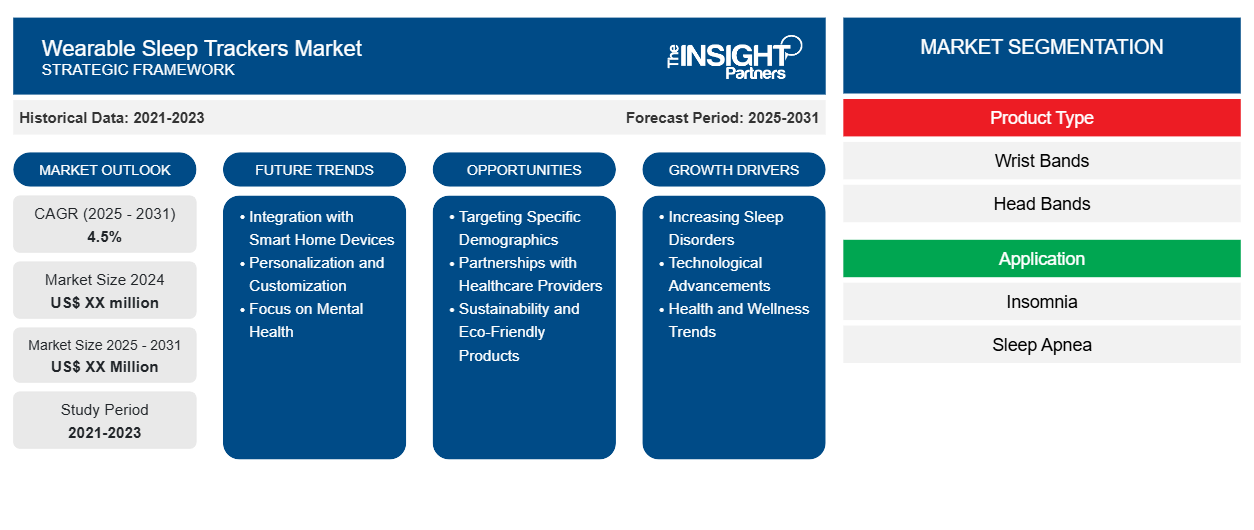
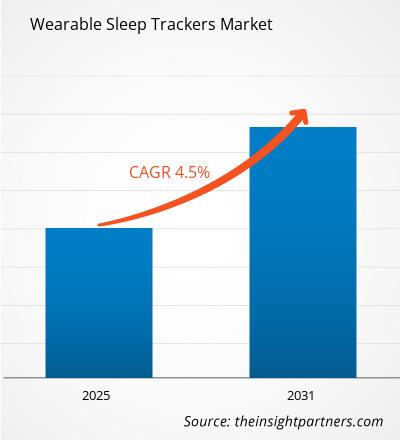
The Wearable Sleep Trackers Market is expected to register a CAGR of 4.5% from 2025 to 2031, with a market size expanding from US$ XX million in 2024 to US$ XX Million by 2031.
The report presents an analysis based on Product Type (Wrist Bands, Head Bands, Others) and based on application (Insomnia, Sleep Apnea, Others). The report further provides analysis based on end user (hospitals, ambulatory surgical centers (ASCs), clinics and physician offices). The global analysis is further broken-down at regional level and major countries. The market size and forecast at global, regional, and country levels for all the key market segments are covered under the scope. The report offers the value in USD for the above analysis and segments. The report provides key statistics on the market status of the key market players and offers market trends and opportunities.
Purpose of the Report
The report Wearable Sleep Trackers Market by The Insight Partners aims to describe the present landscape and future growth, top driving factors, challenges, and opportunities. This will provide insights to various business stakeholders, such as:
- Technology Providers/Manufacturers: To understand the evolving market dynamics and know the potential growth opportunities, enabling them to make informed strategic decisions.
- Investors: To conduct a comprehensive trend analysis regarding the market growth rate, market financial projections, and opportunities that exist across the value chain.
- Regulatory bodies: To regulate policies and police activities in the market with the aim of minimizing abuse, preserving investor trust and confidence, and upholding the integrity and stability of the market.
Wearable Sleep Trackers Market Segmentation
Product Type
- Wrist Bands
- Head Bands
Application
- Insomnia
- Sleep Apnea
Distribution Channel
- Offline
- Online
Customize This Report To Suit Your Requirement
Get FREE CUSTOMIZATIONWearable Sleep Trackers Market: Strategic Insights
-
Get Top Key Market Trends of this report.This FREE sample will include data analysis, ranging from market trends to estimates and forecasts.
Wearable Sleep Trackers Market Growth Drivers
- Increasing Sleep Disorders: The rise in sleep disorders, such as insomnia and sleep apnea, is a significant driver for the wearable sleep trackers market. As awareness of the importance of sleep for overall health grows, more individuals are seeking solutions to monitor and improve their sleep quality. Wearable devices provide real-time data and insights, enabling users to identify patterns and make informed lifestyle changes. This growing demand for effective sleep management tools is propelling market growth.
- Technological Advancements: Rapid advancements in technology, including sensors, artificial intelligence, and data analytics, are driving the wearable sleep trackers market. Modern devices offer enhanced accuracy in tracking sleep patterns, heart rate, and other vital signs. The integration of mobile applications allows users to access personalized insights and recommendations, making sleep tracking more user-friendly and engaging. As technology continues to evolve, consumers are increasingly attracted to innovative features, boosting the adoption of wearable sleep trackers.
- Health and Wellness Trends: The growing focus on health and wellness is a key driver for the wearable sleep trackers market. Consumers are becoming more health-conscious and are actively seeking ways to improve their overall well-being. Sleep is recognized as a critical component of health, leading to increased interest in sleep tracking devices. Wearable sleep trackers not only help users monitor their sleep but also promote healthier sleep habits, aligning with the broader trend of holistic health management.
Wearable Sleep Trackers Market Future Trends
- Integration with Smart Home Devices: A notable trend in the wearable sleep trackers market is the integration of these devices with smart home technology. Consumers are increasingly looking for seamless connectivity between their sleep trackers and other smart devices, such as smart lights, thermostats, and sleep aids. This integration allows for a more comprehensive sleep environment, where users can automate settings based on their sleep patterns. As smart home technology continues to grow, this trend is expected to enhance user experience and drive market growth.
- Personalization and Customization: Personalization is becoming a significant trend in the wearable sleep trackers market. Consumers are seeking devices that offer tailored insights and recommendations based on their unique sleep patterns and preferences. Manufacturers are responding by developing advanced algorithms and machine learning capabilities that analyze individual data to provide customized feedback. This trend not only enhances user engagement but also improves the effectiveness of sleep tracking, making it a more appealing option for consumers looking to optimize their sleep quality.
- Focus on Mental Health: The increasing awareness of the connection between sleep and mental health is shaping the wearable sleep trackers market. Consumers are recognizing that quality sleep is essential for mental well-being, leading to a surge in demand for devices that monitor sleep quality and provide insights into stress and relaxation. Manufacturers are incorporating features that promote mindfulness and relaxation techniques, such as guided breathing exercises and meditation. This trend highlights the growing importance of holistic health solutions that address both physical and mental wellness.
Wearable Sleep Trackers Market Opportunities
- Targeting Specific Demographics: There is a unique opportunity to target specific demographics, such as seniors or shift workers, who may have distinct sleep challenges. By developing tailored wearable sleep trackers that address the unique needs of these groups, companies can capture a niche market. For instance, devices designed for seniors could include features like fall detection and emergency alerts, while those for shift workers could focus on optimizing sleep during irregular hours. This targeted approach can enhance user satisfaction and loyalty.
- Partnerships with Healthcare Providers: Collaborating with healthcare providers presents a unique opportunity for wearable sleep tracker manufacturers. By partnering with sleep clinics, mental health professionals, and wellness programs, companies can promote their devices as part of a comprehensive sleep management solution. These partnerships can enhance credibility and provide users with access to professional guidance, increasing the perceived value of the trackers. Additionally, data collected from these devices can be valuable for research and clinical studies, further expanding market potential.
- Sustainability and Eco-Friendly Products: As consumers become more environmentally conscious, there is an opportunity for wearable sleep tracker manufacturers to develop sustainable and eco-friendly products. By using recyclable materials, reducing energy consumption, and implementing sustainable manufacturing practices, companies can appeal to eco-conscious consumers. This trend not only aligns with global sustainability goals but also differentiates brands in a competitive market. Offering eco-friendly options can enhance brand loyalty and attract a growing segment of environmentally aware consumers.
Wearable Sleep Trackers Market Report Scope
| Report Attribute | Details |
|---|---|
| Market size in 2024 | US$ XX million |
| Market Size by 2031 | US$ XX Million |
| Global CAGR (2025 - 2031) | 4.5% |
| Historical Data | 2021-2023 |
| Forecast period | 2025-2031 |
| Segments Covered |
By Product Type
|
| Regions and Countries Covered |
North America
|
| Market leaders and key company profiles |
|
Wearable Sleep Trackers Market Players Density: Understanding Its Impact on Business Dynamics
The Wearable Sleep Trackers Market is growing rapidly, driven by increasing end-user demand due to factors such as evolving consumer preferences, technological advancements, and greater awareness of the product's benefits. As demand rises, businesses are expanding their offerings, innovating to meet consumer needs, and capitalizing on emerging trends, which further fuels market growth.
Key Selling Points
- Comprehensive Coverage: The report comprehensively covers the analysis of products, services, types, and end users of the Wearable Sleep Trackers Market, providing a holistic landscape.
- Expert Analysis: The report is compiled based on the in-depth understanding of industry experts and analysts.
- Up-to-date Information: The report assures business relevance due to its coverage of recent information and data trends.
- Customization Options: This report can be customized to cater to specific client requirements and suit the business strategies aptly.
The research report on the Wearable Sleep Trackers Market can, therefore, help spearhead the trail of decoding and understanding the industry scenario and growth prospects. Although there can be a few valid concerns, the overall benefits of this report tend to outweigh the disadvantages.
Frequently Asked Questions

- Historical Analysis (2 Years), Base Year, Forecast (7 Years) with CAGR
- PEST and SWOT Analysis
- Market Size Value / Volume - Global, Regional, Country
- Industry and Competitive Landscape
- Excel Dataset
Recent Reports
Testimonials

The Insight Partners' SCADA System Market report is comprehensive, with valuable insights on current trends and future forecasts. The team was highly professional, responsive, and supportive throughout. We are very satisfied and highly recommend their services.
RAN KEDEM Partner, Reali Technologies LTDs
I requested a report on a very specific software market and the team produced the report in a few days. The information was very relevant and well presented. I then requested some changes and additions to the report. The team was again very responsive and I got the final report in less than a week.
JEAN-HERVE JENN Chairman, Future Analytica
We worked with The Insight Partners for an important market study and forecast. They gave us clear insights into opportunities and risks, which helped shape our plans. Their research was easy to use and based on solid data. It helped us make smart, confident decisions. We highly recommend them.
PIYUSH NAGPAL Sr. Vice President, High Beam Global
The Insight Partners delivered insightful, well-structured market research with strong domain expertise. Their team was professional and responsive throughout. The user-friendly website made accessing industry reports seamless. We highly recommend them for reliable, high-quality research services
YUKIHIKO ADACHI CEO, Deep Blue, LLC.
This is the first time I have purchased a market report from The Insight Partners.While I was unsure at first, I visited their web site and felt more comfortable to take the risk and purchase a market report.I am completely satisfied with the quality of the report and customer service. I had several questions and comments with the initial report, but after a couple of dialogs over email with their analyst I believe I have a report that I can use as input to our strategic planning process.Thank you so much for taking the extra time and making this a positive experience.I will definitely recommend your service to others and you will be my first call when we need further market data.
JOHN SUZUKI President and Chief Executive Officer, Board Director, BK Technologies
I wish to appreciate your support and the professionalism you displayed in the course of attending to my request for information regarding to infectious disease IVD market in Nigeria. I appreciate your patience, your guidance, and the fact that you were willing to offer a discount, which eventually made it possible for us to close a deal. I look forward to engaging The Insight Partners in the future, all thanks to the impression you have created in me as a result of this first encounter.
DR CHIJIOKE ONYIA MANAGING DIRECTOR, PineCrest Healthcare Ltd.Reason to Buy
- Informed Decision-Making
- Understanding Market Dynamics
- Competitive Analysis
- Identifying Emerging Markets
- Customer Insights
- Market Forecasts
- Risk Mitigation
- Boosting Operational Efficiency
- Strategic Planning
- Investment Justification
- Tracking Industry Innovations
- Aligning with Regulatory Trends




 Get Free Sample For