
Mercato degli ingredienti proteici per alimentazione animale: dimensioni, quota e previsioni 2034
Dimensioni e previsioni del mercato degli ingredienti proteici per mangimi animali (2021-2034), quota di mercato globale e regionale, tendenze e analisi delle opportunità di crescita. Copertura del rapporto: per prodotto (farina di semi oleosi, farina di pesce, altri); bestiame (pollame, suini, bovini, acquacoltura, alimenti per animali domestici, equini, altri) e area geografica (Nord America, Europa, Asia Pacifico e Sud e Centro America).
- Stato : Dati rilasciati
- Codice del report : TIPRE00024396
- Categoria : Cibo e bevande
- Numero di pagine : 150
- Formati di report disponibili :


- Data dell'ultimo aggiornamento : August 26, 2026


Dimensioni del mercato nel 2025
98,38 miliardi di dollari USA
Valore dell'anno base
Previsioni per il 2034
144,84 miliardi di dollari USA
Previsione entro il 2034
CAGR 2026-2034
4,39 %
Tasso di crescita
Mercato di riferimento
1.104,37 miliardi di dollari USA
(2026-2034)
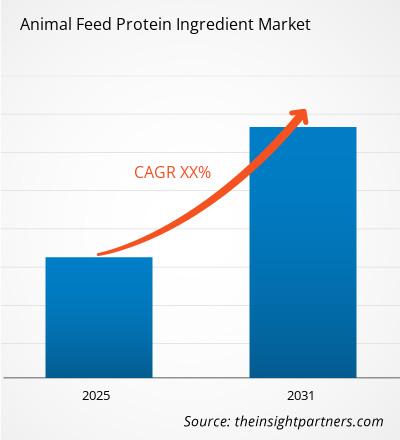
Il mercato degli ingredienti proteici per mangimi animali valeva 98,38 miliardi di dollari nel 2025 e si prevede che raggiungerà i 144,84 miliardi di dollari entro il 2034 , con un tasso di crescita annuo composto (CAGR) del 4,39% nel periodo 2026-2034 . Il mercato è trainato dalla crescente domanda di diete ad alto contenuto proteico per il bestiame, dalle crescenti esigenze di efficienza nella produzione animale commerciale e dal più ampio utilizzo di ingredienti per mangimi nutrizionalmente ottimizzati in diverse applicazioni per pollame, suini, bovini, acquacoltura, alimenti per animali domestici ed equini. L'aumento del consumo globale di carne e l'ottimizzazione della conversione alimentare continuano a sostenere la crescita del settore.
In tutto il Nord America, la continua modernizzazione dei sistemi di produzione zootecnica e la crescente adozione di pratiche di nutrizione di precisione stanno sostenendo la domanda a lungo termine. Le dimensioni del mercato degli ingredienti proteici per mangimi animali nella regione beneficiano di una solida infrastruttura per la produzione di mangimi, di programmi genetici avanzati e di investimenti in espansione nell'acquacoltura. Gli operatori del settore si stanno concentrando sempre più su proteine alternative, efficienza alimentare e obiettivi di sostenibilità, supportando un CAGR regionale stimato tra il 3,8% e il 4,4% per tutto il periodo di previsione.
Analisi e approfondimenti sul mercato degli ingredienti proteici per mangimi animali.
- Nord America : grazie a reti di produzione di mangimi all'avanguardia e a un'elevata produttività del bestiame, la regione ha rappresentato una quota di mercato del 30-34% nel 2025 e si prevede che crescerà a un tasso annuo composto (CAGR) compreso tra il 3,8% e il 4,4% nel periodo 2026-2034 .
- USA : Gli allevamenti intensivi di pollame e bovini continuano a trainare la domanda di ingredienti proteici. Il Paese rappresentava il 72-76% del Nord America nel 2025 e si prevede che crescerà a un tasso annuo composto (CAGR) compreso tra il 3,9% e il 4,5% nel periodo 2026-2034 .
- Europa : Germania, Francia, Spagna, Regno Unito e Paesi Bassi rimangono i principali produttori di mangimi. L'Europa deteneva una quota di mercato compresa tra il 24% e il 28% nel 2025 e si prevede che crescerà a un tasso annuo composto (CAGR) tra il 3,5% e il 4,1% nel periodo 2026-2034 .
- Asia-Pacifico : Cina, India, Giappone, Australia e Corea del Sud sono i principali centri di consumo. La regione rappresentava una quota di mercato del 34-38% nel 2025 e si prevede che registrerà un tasso di crescita annuo composto (CAGR) compreso tra il 5,0% e il 5,8% nel periodo 2026-2034 .
- Largest Segment: Poultry dominated demand with a market share of 34–38% in 2025 and is projected to expand at a CAGR between 4.3–4.9% during 2026–2034.
- High Growth Segment: Aquaculture represented 12–16% market share in 2025 and is forecast to record a CAGR between 5.8–6.6% during 2026–2034.
- Key companies analyzed in detail: Archer Daniels Midland Company, Alltech, BRF S.A., Calysta, Inc., Cargill, Incorporated, DSM-Firmenich AG, Evershining Ingredient Co., Ltd., Hamlet Protein A/S, Nutraferma, Inc., Tyson Foods, Inc.
Source: The Insight Partners' analysis based on proprietary research, government publications, company annual reports, investor presentations, industry databases, and expert interviews.
Feed production systems are progressively becoming more advanced in terms of nutrient formulation that will ensure better animal productivity at minimal loss of feed. The use of improvements in the amino acid balancing process, enzyme usage, and protein level optimization has led to higher efficiency in ingredient utilization. Intensified animal production is increasing the need for conventional as well as novel protein sources for livestock.
The future development of the industry will be impacted by advancements in fermentation-based proteins, the digital feed chain, and sustainability-oriented procurement methods. Developing countries are continually building capacity in livestock production, which opens up chances for feed ingredient manufacturers. Support from regulatory authorities for efficient nutrient utilization and increasing emphasis on animal health will aid in this process.
Animal Feed Protein Ingredient Market Report Scope
| Report Attribute | Details |
|---|---|
| Market size in 2025 | US$ 98.38 Billion |
| Market Size by 2034 | US$ 144.84 Billion |
| Global CAGR (2026 - 2034) | 4.39% |
| Historical Data | 2021-2024 |
| Forecast period | 2026-2034 |
Animal Feed Protein Ingredient Market Analysis
The animal feed protein ingredient market growth is supported by increasing global demand for animal protein products and ongoing improvements in feed formulation practices. Ingredients containing protein still play an important role in ensuring muscle growth, reproductive success, and efficient feed utilization. Increasing amounts of commercial poultry production, aquaculture production, and pet nutrition expenditure have led to the sustained demand.
Changes in supply persist with farmers having to juggle between using conventional options like oilseed meal and fishmeal and new sustainable products. The volatility in the market of agricultural commodities has motivated farmers to source ingredients from various suppliers, and their efforts toward processing efficiency ensure a consistent supply. Farmers are increasingly using traceability mechanisms in their operations.
The competitive environment remains characterized by strategic partnerships, vertical integration, and portfolio diversification. The animal feed protein ingredient market analysis indicates that established participants such as Archer Daniels Midland Company, Cargill, Incorporated, DSM-Firmenich AG, and Alltech maintain strong positions through extensive manufacturing and distribution capabilities. Meanwhile, specialized firms including Calysta, Inc. and Hamlet Protein A/S focus on differentiated nutritional solutions targeting premium applications.
Industry investment increasingly targets alternative proteins, advanced fermentation systems, and enhanced digestibility technologies. BRF S.A. and Tyson Foods, Inc. continue strengthening feed efficiency programs within integrated production networks, while ingredient innovators pursue novel microbial and plant-based protein platforms. These initiatives support long-term competitiveness through improved sustainability performance and reduced dependence on conventional raw-material sources.
● REPORT CUSTOMIZATION
Tailor This Report To Align With Your Specific Business Requirements
This report can be customized to align precisely with your business objectives, scope, and target markets. Customization options include tailored segmentation, geography, competitive analysis, and strategic insights to support informed decision-making.
Customize This Report →WHAT YOU CAN ADJUST
- ● Segmentations
- ● Geography
- ● Competitive Analysis
- ● Language Preferences
Animal Feed Protein Ingredient Market:
Personalizza questo rapporto in base alle tue esigenze
Potrai personalizzare gratuitamente qualsiasi rapporto, comprese parti di questo rapporto, o analisi a livello di paese, pacchetto dati Excel, oltre a usufruire di grandi offerte e sconti per start-up e università
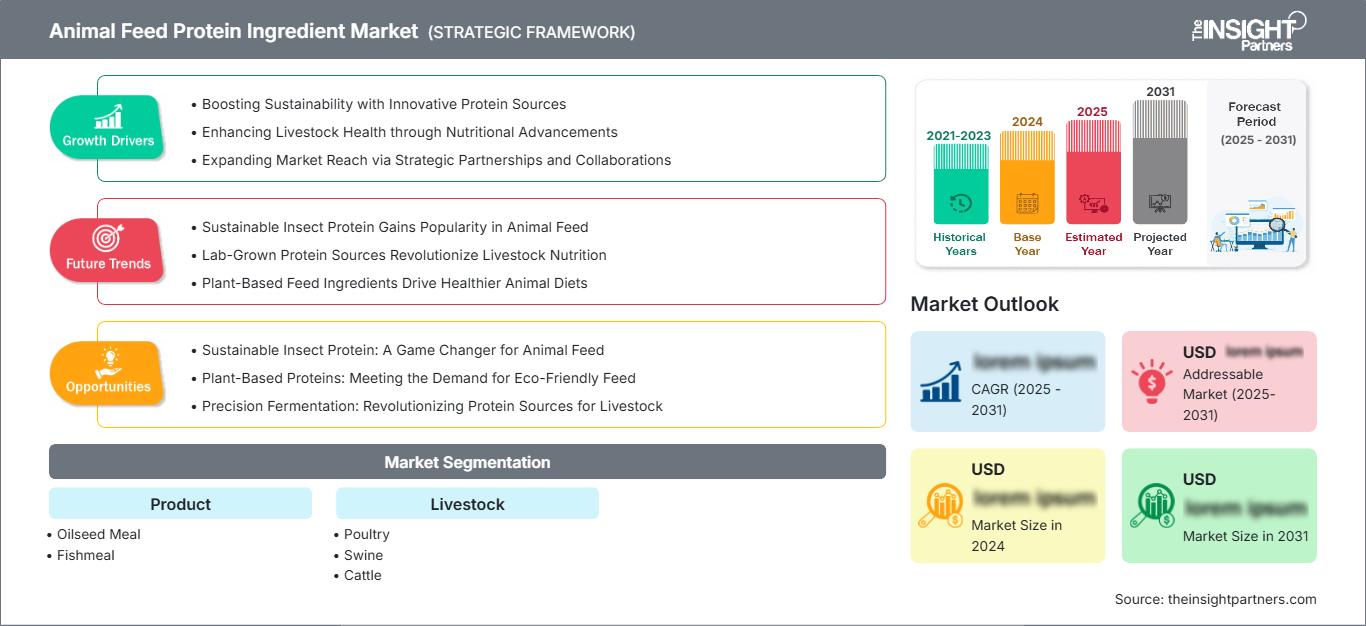
Mercato degli ingredienti proteici per mangimi animali: Approfondimenti strategici
-
Ottieni le principali tendenze chiave del mercato di questo rapporto.Questo campione GRATUITO includerà l'analisi dei dati, che vanno dalle tendenze di mercato alle stime e alle previsioni.
Regional Insights
North America Animal Feed Protein Ingredient Market
North America accounted for 30–34% of global revenue in 2025 and is projected to record a CAGR of 3.8–4.4% through 2034. High livestock productivity, established feed manufacturing infrastructure, and widespread implementation of performance-oriented feeding strategies support regional demand. Poultry, cattle, and pet nutrition applications remain significant consumers of protein-rich feed formulations.
The region also represents the leading animal feed protein ingredient market share contributor outside the Asia Pacific. Strong adoption of precision feeding technologies and continuous investments in ingredient innovation support expansion. Sustainability initiatives promoting efficient nutrient utilization and reduced environmental impact are expected to strengthen demand for advanced protein ingredients across commercial production systems.
U.S. Animal Feed Protein Ingredient Market
The United States represented 72–76% of North American demand in 2025 and is forecast to expand at a CAGR of 3.9–4.5% through the study period. Large-scale poultry, cattle, and swine operations create substantial consumption of protein ingredients. Extensive feed processing capacity and advanced agricultural infrastructure continue to support stable market development.
Major industry participants maintain extensive manufacturing and distribution networks throughout the country. Growing adoption of nutrient optimization programs, traceability technologies, and animal health-focused formulations is supporting premium ingredient demand. Expansion of aquaculture production and sustained pet food spending further strengthen long-term growth prospects within the national market.
Europe Animal Feed Protein Ingredient Market
Europe accounted for 24–28% of global revenue in 2025 and is expected to expand at a CAGR of 3.5–4.1% during the forecast period. Reasons why Germany still remains the leading country include the large-scale presence of the feed milling industry and the development of the livestock farming system in that particular region. Quality control measures and sustainability practices promote the use of value-added protein ingredients.
Demand is created in the UK by commercial chicken and pet food manufacturing, while in Germany, this is done with the help of feed processing capabilities and agricultural value chains. The French, Italian, and Spanish countries together form the major share with their poultry, cattle, and swine industries.
APAC Animal Feed Protein Ingredient Market
Asia Pacific represented 34–38% of global revenue in 2025 and is forecast to achieve a CAGR of 5.0–5.8% through 2034. China leads regional consumption, supported by large-scale livestock production and ongoing modernization of feed operations.
India, Japan, South Korea, and Australia contribute by expanding commercial farming activities and increasing focus on animal productivity. Government support for food security, rising protein consumption, and investment in aquaculture capacity strengthen regional demand for specialized feed protein ingredients.
Middle East & Africa Animal Feed Protein Ingredient Market
The market in the Middle East and Africa is projected to grow at a CAGR of 4.2–4.8% through 2034. Saudi Arabia and the UAE benefit from investment in food security initiatives and the modernization of livestock production systems.
South Africa remains a significant market due to its established agricultural infrastructure and commercial feed manufacturing capacity. Expanding poultry production and growing interest in efficient feed utilization continue to support regional demand despite climatic and supply-chain challenges.
Segmentation Analysis
Product
Product segments remain fundamental to feed formulation strategies, balancing nutritional performance, availability, and cost efficiency. The segment is projected to expand at a CAGR of 4.1–4.7% during 2026–2034. The animal feed protein ingredient market scope continues to broaden as manufacturers pursue higher digestibility, improved amino acid profiles, and diversified sourcing strategies to address sustainability and supply-security objectives.
- Oilseed Meal: Widely used across poultry, swine, and cattle nutrition programs due to favorable protein content, established supply chains, and cost competitiveness. Continuous optimization of processing technologies supports broader commercialization and nutritional consistency.
- Fishmeal: Maintains strategic importance in aquaculture and specialized livestock diets owing to its nutritional density and amino acid profile. Demand remains linked to premium feed applications and performance-focused production systems.
Livestock
Livestock applications account for the majority of industry demand and are forecast to witness a CAGR of 4.4–5.0% during 2026–2034. Expanding global animal protein consumption, increasing focus on feed efficiency, and commercial farming intensification continue to support the adoption of protein-rich nutritional ingredients across multiple production systems.
- Poultry: The leading consumer category benefits from short production cycles, efficient feed conversion, and strong global meat demand. Producers increasingly prioritize nutritional optimization to improve productivity and profitability.
- Swine: Demand is supported by herd productivity goals and emphasis on balanced nutrition. Protein ingredients remain essential for growth performance, reproductive health, and feed utilization efficiency.
- Cattle: Utilization is driven by dairy and beef production requirements. Producers continue adopting nutritional programs designed to improve weight gain, milk yield, and overall herd performance.
- Aquaculture: Rapid expansion of farmed seafood production supports increasing demand for specialized proteins. Feed formulations emphasize growth efficiency, sustainability, and disease resilience within aquatic farming systems.
- Pet Food: Premiumization trends continue encouraging the use of high-quality protein ingredients. Manufacturers focus on digestibility, health benefits, and product differentiation in mature and emerging markets.
- Equine: Nutritionally balanced feeding programs support steady demand. Performance, health maintenance, and specialized dietary requirements remain central purchasing considerations for equine nutrition stakeholders.
Opportunity Snapshot
|
Segment Name |
Revenue Contribution |
Trend Tag |
Adoption Stage |
|
Poultry |
High |
Feed Efficiency |
Mature |
|
Swine |
Medium |
Gut Health |
Mature |
|
Cattle |
High |
Yield Optimization |
Mature |
|
Aquaculture |
High |
Sustainable Feed |
Scaling |
|
Pet Food |
Medium |
Premium Nutrition |
Scaling |
|
Equine |
Low |
Performance Diets |
Mature |
Animal Feed Protein Ingredient Market Growth Drivers and Impact Analysis
Expansion of Global Livestock Production
The continued growth in the consumption of meat, dairy, eggs, and aquaculture necessitates an ever-growing demand for optimized nutritional feed ingredients. The commercial feed sector needs constant protein levels in order to ensure productivity, feed efficiency, and good health outcomes for animals. Developing nations are establishing more factory farms to meet local demands for foodstuffs, while developed nations emphasize efficiencies in production. These changes mean that there will be greater demand for protein from oilseed meals, fish meal, and protein concentrate. In addition, there are also changing trends towards precision nutrition that depend on the quality of the ingredient used.
Advancements in Precision Animal Nutrition
Combining nutritional science with digital farm management systems is contributing to the increased accuracy in feed formulation. More farmers are analyzing protein digestibility, amino acids, and nutrient uptake as a way of enhancing profit and reducing wastage. There is new feed management software that opens up avenues for incorporating high-quality protein feeds that will add value to the productivity of the animals. With new technologies, the process of analyzing ingredient inclusion rates and achieving consistency is easier and more effective. In the wake of increased regulations concerning environmental implications, efficient use of feed becomes critical for commercial farms.
Rising Adoption of Sustainable Protein Sources
The environmental issues are now affecting the procurement practices of the feed industry. Companies are looking out for options that can minimize the usage of resources but do not adversely impact the nutrition of the feed. Fermentation-based protein, microorganism products, and next-generation proteins are gaining traction due to their sustainable nature. Investments are being made in all such technologies that are capable of providing reliable protein and have less reliance on conventional resources. The sustainability-driven procurement practices of feed companies will help these commercialization processes as well. In the long run, the adoption of such proteins will create business opportunities for the companies.
Animal Feed Protein Ingredient Market Future Trends
Commercialization of Alternative Protein Platforms
The animal feed protein ingredient market trends increasingly indicate a transition toward commercially scalable alternative proteins. Improvements in fermentation technologies, single-cell protein, and bio-technologically derived products are anticipated to create more options for supply. This will help in cutting down reliance on the traditional sources of agriculture while promoting consistency in nutrients. The industry players will be quick to embrace collaborations, pilots, and investments in manufacturing in order to promote commercialization. With improved cost-effectiveness, alternative protein technology is likely to become widely accepted.
Data-Driven Feed Formulation Strategies
Digitization is anticipated to bring changes to the process of feed formulation using predictive analysis, tracking of ingredients, and measuring of performance metrics. The increasing demand for such tools from the feed producers is due to their desire to optimize nutritional results and minimize expenses. Integration of data collected from farms and its use in making decisions about choosing the right ingredients is expected to boost productivity. Increased transparency in all processes can build stronger customer trust and compliance capability.
Animal Feed Protein Ingredient Market Opportunities
Investment Expansion Across Aquaculture Nutrition
L'acquacoltura rimane uno dei settori di crescita più interessanti nei mercati globali dei mangimi. L'aumento del consumo di prodotti ittici, la limitata disponibilità di pescato selvatico e le priorità di sostenibilità continuano a sostenere l'espansione del settore. Gli investitori stanno indirizzando i capitali verso tecnologie per mangimi in grado di migliorare le prestazioni biologiche e ridurre l'impatto ambientale. Le previsioni per il mercato degli ingredienti proteici per mangimi animali indicano un forte potenziale per i fornitori che offrono formulazioni ad alte prestazioni specifiche per le specie acquatiche. Le aziende che instaurano partnership strategiche con operatori dell'acquacoltura e distributori regionali possono rafforzare il proprio posizionamento competitivo a lungo termine. L'innovazione di prodotto incentrata sulla digeribilità, l'efficienza di crescita e la sostenibilità può ulteriormente migliorare la penetrazione nei sistemi di produzione acquicola in rapida espansione.
Diversificazione della produzione e dell'offerta a livello locale
Gli investimenti nella produzione regionale offriranno nuove opportunità ai fornitori di ingredienti per mangimi che desiderano costruire catene di approvvigionamento più resilienti. La produzione locale potrebbe comportare una riduzione dei costi di trasporto, una maggiore capacità di risposta alle esigenze dei clienti e il rispetto degli standard normativi. I mercati agricoli in crescita in molte parti del mondo necessitano di un approvvigionamento stabile di ingredienti per mangimi a causa della modernizzazione del settore zootecnico. Le aziende che investono in impianti di trasformazione e nell'approvvigionamento di ingredienti in regioni ad alta crescita potrebbero trarre vantaggio da questa situazione.
Domande frequenti

- Analisi completa delle dimensioni e delle previsioni di mercato
- Analisi dettagliata della segmentazione
- Valutazione approfondita delle dinamiche di mercato
- Approfondimenti a livello regionale e nazionale
- Analisi del panorama competitivo e benchmarking aziendale
- Business intelligence strategica
Testimonianze

Il report di mercato sui sistemi SCADA di Insight Partners è completo, con preziosi spunti sulle tendenze attuali e sulle previsioni future. Il team si è dimostrato altamente professionale, reattivo e disponibile in ogni fase del progetto. Siamo molto soddisfatti e consigliamo vivamente i loro servizi.
RAN KEDEM Partner, Reali Technologies LTDs
Ho richiesto un report su un mercato software molto specifico e il team lo ha prodotto in pochi giorni. Le informazioni erano molto pertinenti e ben presentate. Ho quindi richiesto alcune modifiche e aggiunte al report. Il team è stato ancora una volta molto reattivo e ho ricevuto il report finale in meno di una settimana.
JEAN-HERVE JENN Presidente, Future Analytica
Abbiamo collaborato con The Insight Partners per un importante studio di mercato e una previsione. Ci hanno fornito informazioni chiare su opportunità e rischi, che ci hanno aiutato a definire i nostri piani. La loro ricerca è stata facile da usare e basata su dati solidi. Ci ha aiutato a prendere decisioni intelligenti e consapevoli. Li consigliamo vivamente.
PIYUSH NAGPAL Vicepresidente senior, Abbaglianti globali
Insight Partners ha fornito ricerche di mercato approfondite e ben strutturate, con una solida competenza nel settore. Il loro team si è dimostrato professionale e reattivo in ogni fase. Il sito web intuitivo ha reso l'accesso ai report di settore semplice e immediato. Li consigliamo vivamente per servizi di ricerca affidabili e di alta qualità.
YUKIHIKO ADACHI Amministratore delegato, Deep Blue, LLC.
Questa è la prima volta che acquisto un report di mercato da The Insight Partners. Sebbene inizialmente fossi indeciso, ho visitato il loro sito web e mi sono sentito più a mio agio nell'acquistare un report di mercato. Sono completamente soddisfatto della qualità del report e del servizio clienti. Avevo diverse domande e commenti sul report iniziale, ma dopo un paio di conversazioni via email con il loro analista credo di avere un report che posso utilizzare come input per il nostro processo di pianificazione strategica. Grazie mille per aver dedicato del tempo extra e aver reso questa esperienza positiva. Consiglierò sicuramente il vostro servizio ad altri e sarete la mia prima persona a cui rivolgermi quando avremo bisogno di ulteriori dati di mercato.
GIOVANNI SUZUKI Presidente e Amministratore Delegato, Consigliere di Amministrazione, Tecnologie BK
Desidero esprimere la mia gratitudine per il supporto e la professionalità dimostrati nel rispondere alla mia richiesta di informazioni sul mercato dei dispositivi medici in vitro per malattie infettive in Nigeria. Apprezzo la vostra pazienza, la vostra guida e la vostra disponibilità a offrirmi uno sconto, che alla fine ci ha permesso di concludere l'affare. Non vedo l'ora di collaborare con The Insight Partners in futuro, grazie anche all'impressione che mi avete lasciato dopo questo primo incontro.
Dott. Chijioke AMMINISTRATORE DELEGATO DI ONYIA, PineCrest Healthcare Ltd.Motivo dell'acquisto
- Processo decisionale informato
- Comprensione delle dinamiche di mercato
- Analisi competitiva
- Analisi dei clienti
- Previsioni di mercato
- Mitigazione del rischio
- Pianificazione strategica
- Giustificazione degli investimenti
- Identificazione dei mercati emergenti
- Miglioramento delle strategie di marketing
- Aumento dell'efficienza operativa
- Allineamento alle tendenze normative




















 Ottieni un campione gratuito per -