
Animal Feed Protein Ingredient Market Growth, Trends & Demand by 2034
Coverage: By Product (Oilseed Meal, Fishmeal, Others); Livestock (Poultry, Swine, Cattle, Aquaculture, Pet Food, Equine, Others) , and Geography (North America, Europe, Asia Pacific, and South and Central America)
- Status : Data Released
- Report Code : TIPRE00024396
- Category : Food and Beverages
- No. of Pages : 150
- Available Report Formats :


- Last update date : August 26, 2026


2025 Market Size
US$ 98.38 Bn
Base year value
2034 Forecast
US$ 144.84 Bn
Projected by 2034
CAGR 2026-2034
4.39 %
Growth rate
Addressable Market
US$ 1,104.37 Bn
(2026-2034)
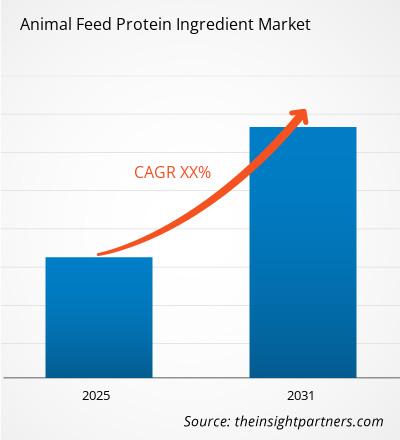
The animal feed protein ingredient market was valued at US$ 98.38 Billion in 2025 and is projected to reach US$ 144.84 Billion by 2034, expanding at a CAGR of 4.39% during 2026–2034. The market is shaped by growing demand for high-protein livestock diets, increasing efficiency requirements in commercial animal production, and wider use of nutritionally optimized feed ingredients across poultry, swine, cattle, aquaculture, pet food, and equine applications. Expanding global meat consumption and feed conversion optimization continue to support industry expansion.
Across North America, sustained modernization of livestock production systems and increasing adoption of precision nutrition practices are supporting long-term demand. The animal feed protein ingredient market size in the region benefits from strong feed manufacturing infrastructure, advanced genetics programs, and expanding aquaculture investment. Industry participants are increasingly focused on alternative proteins, feed efficiency, and sustainability targets, supporting an estimated regional CAGR of 3.8–4.4% through the forecast period.
Animal Feed Protein Ingredient Market Assessment and Insights
- North America: Supported by advanced feed production networks and high livestock productivity, the region accounted for 30–34% Share in 2025 and is expected to grow at a CAGR between 3.8–4.4% during 2026–2034.
- US: Large-scale poultry and cattle operations continue driving protein ingredient demand. The country represented 72–76% of North America in 2025 and is projected to expand at a CAGR between 3.9–4.5% during 2026–2034.
- Europe: Germany, France, Spain, the UK, and the Netherlands remain major feed producers. Europe held 24–28% Share in 2025 and is anticipated to grow at a CAGR between 3.5–4.1% during 2026–2034.
- Asia Pacific: China, India, Japan, Australia, and South Korea are key consumption centers. The region accounted for 34–38% Share in 2025 and is expected to register a CAGR between 5.0–5.8% during 2026–2034.
- Largest Segment: Poultry dominated demand with a market share of 34–38% in 2025 and is projected to expand at a CAGR between 4.3–4.9% during 2026–2034.
- High Growth Segment: Aquaculture represented 12–16% market share in 2025 and is forecast to record a CAGR between 5.8–6.6% during 2026–2034.
- Key companies analyzed in detail: Archer Daniels Midland Company, Alltech, BRF S.A., Calysta, Inc., Cargill, Incorporated, DSM-Firmenich AG, Evershining Ingredient Co., Ltd., Hamlet Protein A/S, Nutraferma, Inc., Tyson Foods, Inc.
Source: The Insight Partners' analysis based on proprietary research, government publications, company annual reports, investor presentations, industry databases, and expert interviews.
Feed production systems are progressively becoming more advanced in terms of nutrient formulation that will ensure better animal productivity at minimal loss of feed. The use of improvements in the amino acid balancing process, enzyme usage, and protein level optimization has led to higher efficiency in ingredient utilization. Intensified animal production is increasing the need for conventional as well as novel protein sources for livestock.
The future development of the industry will be impacted by advancements in fermentation-based proteins, the digital feed chain, and sustainability-oriented procurement methods. Developing countries are continually building capacity in livestock production, which opens up chances for feed ingredient manufacturers. Support from regulatory authorities for efficient nutrient utilization and increasing emphasis on animal health will aid in this process.
Animal Feed Protein Ingredient Market Report Scope
| Report Attribute | Details |
|---|---|
| Market size in 2025 | US$ 98.38 Billion |
| Market Size by 2034 | US$ 144.84 Billion |
| Global CAGR (2026 - 2034) | 4.39% |
| Historical Data | 2021-2024 |
| Forecast period | 2026-2034 |
Animal Feed Protein Ingredient Market Analysis
The animal feed protein ingredient market growth is supported by increasing global demand for animal protein products and ongoing improvements in feed formulation practices. Ingredients containing protein still play an important role in ensuring muscle growth, reproductive success, and efficient feed utilization. Increasing amounts of commercial poultry production, aquaculture production, and pet nutrition expenditure have led to the sustained demand.
Changes in supply persist with farmers having to juggle between using conventional options like oilseed meal and fishmeal and new sustainable products. The volatility in the market of agricultural commodities has motivated farmers to source ingredients from various suppliers, and their efforts toward processing efficiency ensure a consistent supply. Farmers are increasingly using traceability mechanisms in their operations.
The competitive environment remains characterized by strategic partnerships, vertical integration, and portfolio diversification. The animal feed protein ingredient market analysis indicates that established participants such as Archer Daniels Midland Company, Cargill, Incorporated, DSM-Firmenich AG, and Alltech maintain strong positions through extensive manufacturing and distribution capabilities. Meanwhile, specialized firms including Calysta, Inc. and Hamlet Protein A/S focus on differentiated nutritional solutions targeting premium applications.
Industry investment increasingly targets alternative proteins, advanced fermentation systems, and enhanced digestibility technologies. BRF S.A. and Tyson Foods, Inc. continue strengthening feed efficiency programs within integrated production networks, while ingredient innovators pursue novel microbial and plant-based protein platforms. These initiatives support long-term competitiveness through improved sustainability performance and reduced dependence on conventional raw-material sources.
● REPORT CUSTOMIZATION
Tailor This Report To Align With Your Specific Business Requirements
This report can be customized to align precisely with your business objectives, scope, and target markets. Customization options include tailored segmentation, geography, competitive analysis, and strategic insights to support informed decision-making.
Customize This Report →WHAT YOU CAN ADJUST
- ● Segmentations
- ● Geography
- ● Competitive Analysis
- ● Language Preferences
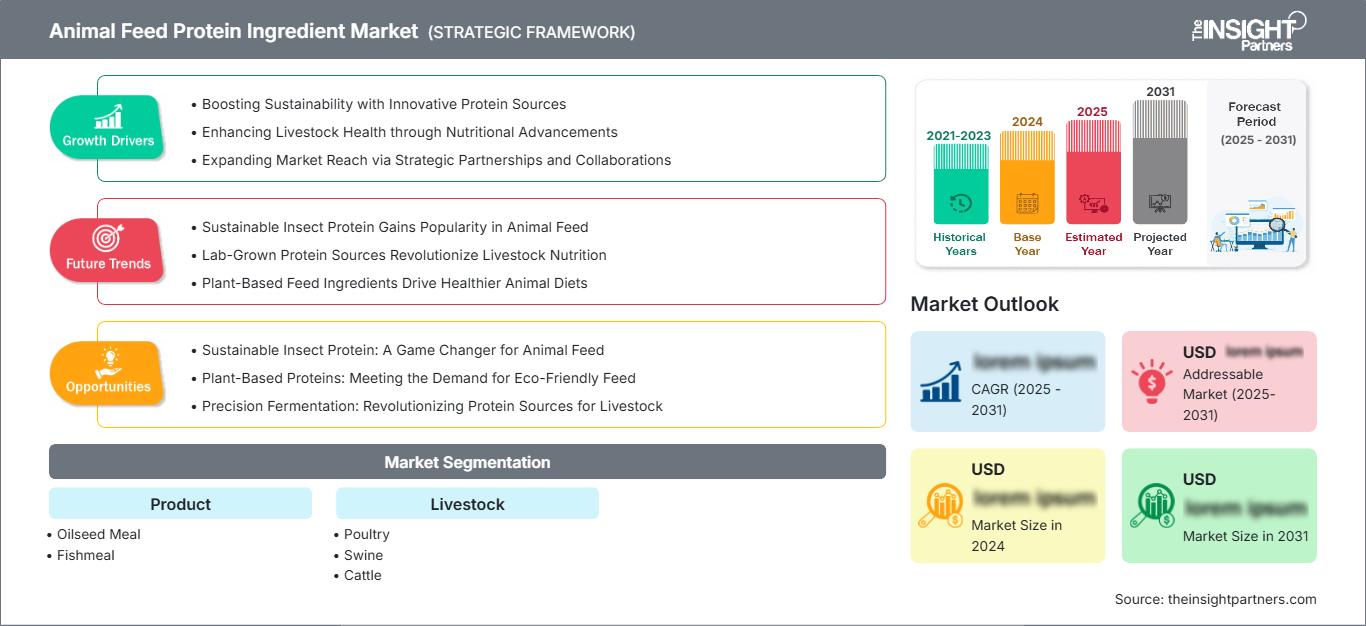
Animal Feed Protein Ingredient Market: Strategic Insights
Regional Insights
North America Animal Feed Protein Ingredient Market
North America accounted for 30–34% of global revenue in 2025 and is projected to record a CAGR of 3.8–4.4% through 2034. High livestock productivity, established feed manufacturing infrastructure, and widespread implementation of performance-oriented feeding strategies support regional demand. Poultry, cattle, and pet nutrition applications remain significant consumers of protein-rich feed formulations.
The region also represents the leading animal feed protein ingredient market share contributor outside the Asia Pacific. Strong adoption of precision feeding technologies and continuous investments in ingredient innovation support expansion. Sustainability initiatives promoting efficient nutrient utilization and reduced environmental impact are expected to strengthen demand for advanced protein ingredients across commercial production systems.
U.S. Animal Feed Protein Ingredient Market
The United States represented 72–76% of North American demand in 2025 and is forecast to expand at a CAGR of 3.9–4.5% through the study period. Large-scale poultry, cattle, and swine operations create substantial consumption of protein ingredients. Extensive feed processing capacity and advanced agricultural infrastructure continue to support stable market development.
Major industry participants maintain extensive manufacturing and distribution networks throughout the country. Growing adoption of nutrient optimization programs, traceability technologies, and animal health-focused formulations is supporting premium ingredient demand. Expansion of aquaculture production and sustained pet food spending further strengthen long-term growth prospects within the national market.
Europe Animal Feed Protein Ingredient Market
Europe accounted for 24–28% of global revenue in 2025 and is expected to expand at a CAGR of 3.5–4.1% during the forecast period. Reasons why Germany still remains the leading country include the large-scale presence of the feed milling industry and the development of the livestock farming system in that particular region. Quality control measures and sustainability practices promote the use of value-added protein ingredients.
Demand is created in the UK by commercial chicken and pet food manufacturing, while in Germany, this is done with the help of feed processing capabilities and agricultural value chains. The French, Italian, and Spanish countries together form the major share with their poultry, cattle, and swine industries.
APAC Animal Feed Protein Ingredient Market
Asia Pacific represented 34–38% of global revenue in 2025 and is forecast to achieve a CAGR of 5.0–5.8% through 2034. China leads regional consumption, supported by large-scale livestock production and ongoing modernization of feed operations.
India, Japan, South Korea, and Australia contribute by expanding commercial farming activities and increasing focus on animal productivity. Government support for food security, rising protein consumption, and investment in aquaculture capacity strengthen regional demand for specialized feed protein ingredients.
Middle East & Africa Animal Feed Protein Ingredient Market
The market in the Middle East and Africa is projected to grow at a CAGR of 4.2–4.8% through 2034. Saudi Arabia and the UAE benefit from investment in food security initiatives and the modernization of livestock production systems.
South Africa remains a significant market due to its established agricultural infrastructure and commercial feed manufacturing capacity. Expanding poultry production and growing interest in efficient feed utilization continue to support regional demand despite climatic and supply-chain challenges.
Segmentation Analysis
Product
Product segments remain fundamental to feed formulation strategies, balancing nutritional performance, availability, and cost efficiency. The segment is projected to expand at a CAGR of 4.1–4.7% during 2026–2034. The animal feed protein ingredient market scope continues to broaden as manufacturers pursue higher digestibility, improved amino acid profiles, and diversified sourcing strategies to address sustainability and supply-security objectives.
- Oilseed Meal: Widely used across poultry, swine, and cattle nutrition programs due to favorable protein content, established supply chains, and cost competitiveness. Continuous optimization of processing technologies supports broader commercialization and nutritional consistency.
- Fishmeal: Maintains strategic importance in aquaculture and specialized livestock diets owing to its nutritional density and amino acid profile. Demand remains linked to premium feed applications and performance-focused production systems.
Livestock
Livestock applications account for the majority of industry demand and are forecast to witness a CAGR of 4.4–5.0% during 2026–2034. Expanding global animal protein consumption, increasing focus on feed efficiency, and commercial farming intensification continue to support the adoption of protein-rich nutritional ingredients across multiple production systems.
- Poultry: The leading consumer category benefits from short production cycles, efficient feed conversion, and strong global meat demand. Producers increasingly prioritize nutritional optimization to improve productivity and profitability.
- Swine: Demand is supported by herd productivity goals and emphasis on balanced nutrition. Protein ingredients remain essential for growth performance, reproductive health, and feed utilization efficiency.
- Cattle: Utilization is driven by dairy and beef production requirements. Producers continue adopting nutritional programs designed to improve weight gain, milk yield, and overall herd performance.
- Aquaculture: Rapid expansion of farmed seafood production supports increasing demand for specialized proteins. Feed formulations emphasize growth efficiency, sustainability, and disease resilience within aquatic farming systems.
- Pet Food: Premiumization trends continue encouraging the use of high-quality protein ingredients. Manufacturers focus on digestibility, health benefits, and product differentiation in mature and emerging markets.
- Equine: Nutritionally balanced feeding programs support steady demand. Performance, health maintenance, and specialized dietary requirements remain central purchasing considerations for equine nutrition stakeholders.
Opportunity Snapshot
| Segment Name | Revenue Contribution | Trend Tag | Adoption Stage |
| Poultry | High | Feed Efficiency | Mature |
| Swine | Medium | Gut Health | Mature |
| Cattle | High | Yield Optimization | Mature |
| Aquaculture | High | Sustainable Feed | Scaling |
| Pet Food | Medium | Premium Nutrition | Scaling |
| Equine | Low | Performance Diets | Mature |
Animal Feed Protein Ingredient Market Growth Drivers and Impact Analysis
Expansion of Global Livestock Production
The continued growth in the consumption of meat, dairy, eggs, and aquaculture necessitates an ever-growing demand for optimized nutritional feed ingredients. The commercial feed sector needs constant protein levels in order to ensure productivity, feed efficiency, and good health outcomes for animals. Developing nations are establishing more factory farms to meet local demands for foodstuffs, while developed nations emphasize efficiencies in production. These changes mean that there will be greater demand for protein from oilseed meals, fish meal, and protein concentrate. In addition, there are also changing trends towards precision nutrition that depend on the quality of the ingredient used.
Advancements in Precision Animal Nutrition
Combining nutritional science with digital farm management systems is contributing to the increased accuracy in feed formulation. More farmers are analyzing protein digestibility, amino acids, and nutrient uptake as a way of enhancing profit and reducing wastage. There is new feed management software that opens up avenues for incorporating high-quality protein feeds that will add value to the productivity of the animals. With new technologies, the process of analyzing ingredient inclusion rates and achieving consistency is easier and more effective. In the wake of increased regulations concerning environmental implications, efficient use of feed becomes critical for commercial farms.
Rising Adoption of Sustainable Protein Sources
The environmental issues are now affecting the procurement practices of the feed industry. Companies are looking out for options that can minimize the usage of resources but do not adversely impact the nutrition of the feed. Fermentation-based protein, microorganism products, and next-generation proteins are gaining traction due to their sustainable nature. Investments are being made in all such technologies that are capable of providing reliable protein and have less reliance on conventional resources. The sustainability-driven procurement practices of feed companies will help these commercialization processes as well. In the long run, the adoption of such proteins will create business opportunities for the companies.
Animal Feed Protein Ingredient Market Future Trends
Commercialization of Alternative Protein Platforms
The animal feed protein ingredient market trends increasingly indicate a transition toward commercially scalable alternative proteins. Improvements in fermentation technologies, single-cell protein, and bio-technologically derived products are anticipated to create more options for supply. This will help in cutting down reliance on the traditional sources of agriculture while promoting consistency in nutrients. The industry players will be quick to embrace collaborations, pilots, and investments in manufacturing in order to promote commercialization. With improved cost-effectiveness, alternative protein technology is likely to become widely accepted.
Data-Driven Feed Formulation Strategies
Digitization is anticipated to bring changes to the process of feed formulation using predictive analysis, tracking of ingredients, and measuring of performance metrics. The increasing demand for such tools from the feed producers is due to their desire to optimize nutritional results and minimize expenses. Integration of data collected from farms and its use in making decisions about choosing the right ingredients is expected to boost productivity. Increased transparency in all processes can build stronger customer trust and compliance capability.
Animal Feed Protein Ingredient Market Opportunities
Investment Expansion Across Aquaculture Nutrition
Aquaculture remains one of the most attractive growth areas within global feed markets. Rising seafood consumption, limited wild-catch availability, and sustainability priorities continue supporting industry expansion. Investors are directing capital toward feed technologies capable of improving biological performance and reducing environmental impact. The animal feed protein ingredient market Forecasts indicate strong potential for suppliers offering high-performance formulations tailored to aquatic species. Companies that establish strategic partnerships with aquaculture operators and regional distributors may strengthen long-term competitive positioning. Product innovation focused on digestibility, growth efficiency, and sustainability can further enhance penetration across rapidly expanding aquaculture production systems.
Localized Production and Supply Diversification
Investments in regional manufacturing will offer new chances for feed ingredient suppliers who would like to build more resilient supply chains. Reduced costs of transportation, better responsiveness to customers' needs, and the ability to meet regulatory standards could result from the localized manufacture of products. Growing agricultural markets in many parts of the world need a stable supply of feed ingredients due to the modernization of their livestock sector. Firms investing in processing plants and ingredient sourcing in high-growth regions could benefit from that situation.
Frequently Asked Questions

- Comprehensive Market Sizing and Forecast Analysis
- Detailed Segmentation Analysis
- In-Depth Market Dynamics Assessment
- Regional and Country-Level Insights
- Competitive Landscape and Company Benchmarking
- Strategic Business Intelligence
Recent Reports
Testimonials

The Insight Partners provided valuable market intelligence that supported our global go-to-market strategy. Their team was professional, responsive, and attentive to our feedback, providing thoughtful analysis and helpful methodological clarifications throughout the project.
Junmo Kim Chief Financial Officer (CFO), Enertech Co., Ltd.
The Insight Partners' SCADA System Market report is comprehensive, with valuable insights on current trends and future forecasts. The team was highly professional, responsive, and supportive throughout. We are very satisfied and highly recommend their services.
RAN KEDEM Partner, Reali Technologies LTDs
I requested a report on a very specific software market and the team produced the report in a few days. The information was very relevant and well presented. I then requested some changes and additions to the report. The team was again very responsive and I got the final report in less than a week.
JEAN-HERVE JENN Chairman, Future Analytica
We worked with The Insight Partners for an important market study and forecast. They gave us clear insights into opportunities and risks, which helped shape our plans. Their research was easy to use and based on solid data. It helped us make smart, confident decisions. We highly recommend them.
PIYUSH NAGPAL Sr. Vice President, High Beam Global
The Insight Partners delivered insightful, well-structured market research with strong domain expertise. Their team was professional and responsive throughout. The user-friendly website made accessing industry reports seamless. We highly recommend them for reliable, high-quality research services
YUKIHIKO ADACHI CEO, Deep Blue, LLC.
This is the first time I have purchased a market report from The Insight Partners.While I was unsure at first, I visited their web site and felt more comfortable to take the risk and purchase a market report.I am completely satisfied with the quality of the report and customer service. I had several questions and comments with the initial report, but after a couple of dialogs over email with their analyst I believe I have a report that I can use as input to our strategic planning process.Thank you so much for taking the extra time and making this a positive experience.I will definitely recommend your service to others and you will be my first call when we need further market data.
JOHN SUZUKI President and Chief Executive Officer, Board Director, BK Technologies
I wish to appreciate your support and the professionalism you displayed in the course of attending to my request for information regarding to infectious disease IVD market in Nigeria. I appreciate your patience, your guidance, and the fact that you were willing to offer a discount, which eventually made it possible for us to close a deal. I look forward to engaging The Insight Partners in the future, all thanks to the impression you have created in me as a result of this first encounter.
DR CHIJIOKE ONYIA MANAGING DIRECTOR, PineCrest Healthcare Ltd.Reason to Buy
- Informed Decision-Making
- Understanding Market Dynamics
- Competitive Analysis
- Identifying Emerging Markets
- Customer Insights
- Market Forecasts
- Risk Mitigation
- Boosting Operational Efficiency
- Strategic Planning
- Investment Justification
- Tracking Industry Innovations
- Aligning with Regulatory Trends





 Get Free Sample for