Increasing Health and Nutrition Awareness Bolsters the Europe Canned Seafood Market Demand
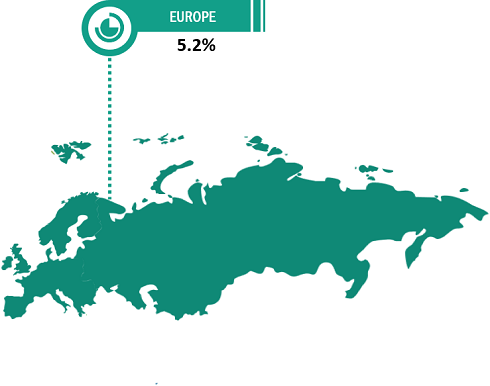
According to our latest study on "Europe Canned Seafood Market Size and Forecast (2021–2034), Regional Growth Opportunity Analysis – by product and distribution channel," the market size is expected to grow from US$ 11.35 billion in 2025 to US$ 17.96 billion by 2034; the Europe Canned Seafood market is estimated to register a CAGR of 5.2% from 2026 to 2034. The report highlights key factors driving the Europe canned seafood market growth and prominent players, with their developments in the market. Apart from the growth drivers, the report covers the Europe canned seafood market forecast and its foreseeable impact during the forecast period.
The Europe canned seafood market growth is driven by the increasing demand for preserved fish and shellfish. These products offer convenience, long shelf life, and good nutritional value for various consumers. These qualities are vital for ensuring food safety, consistent quality, and culinary flexibility in retail, food service, and emergency preparedness sectors. Problems such as spoilage or contamination can lead to health risks, supply chain issues, and damage to brands. Demand rises as urban lifestyles, the tourism sector, and an aging population seek ready-to-eat protein sources. Moreover, sustainable fishing certifications are important in developed economies. Canned seafood will remain a reliable pantry staple. It supports the growth of accessible, low-waste food systems that meet stricter EU traceability rules and goals for a circular economy. This is essential in the competitive European grocery market to tackle long-term food security needs across the region.
Europe Canned Seafood Market Breakdown – by Country
Europe Canned Seafood Market Trends, Demand & Growth by 2034
Download Free SampleEurope Canned Seafood Market Size and Forecast (2021 - 2034), Regional Share, Trend, and Growth Opportunity Analysis Report Coverage: By Product (Tuna, Salmon, Sardines, Mackerel, Shrimps and Prawns, Clams, Crabs, Lobsters, and Others), and By Distribution Channel (Supermarket and Hypermarkets, Convenience Stores, Online Retail, and Others), and Country
The Europe canned seafood market analysis has been performed by considering the following segments: product and distribution channel. By product, the Europe canned seafood market is segmented into tuna, salmon, sardines, mackerel, shrimps and prawns, clams, crabs, lobsters, and others. The tuna segment accounted for the largest Europe canned seafood market share in 2025. The established process of canning slows down the handling of skipjack and yellowfin, which means that the loins will always be available in frozen form, the production run will be large, and the quality will be at a good standard. It is a proven protein source with consistent cooking cycles, consistent retort, and predictable yield of meat, which is applicable to high turnover, local label, and brand retailing. It has shown efficiency in processing that minimizes variability in flakes, facilitates automated packing lines, and is in line with the pre-existing port-side cold storage and pan-European distribution infrastructure that minimizes operational delays and price volatility. The segment is very strong to changes in fishing quota and enables effective rotation of stocks, shelf-life, and inter-border trade. The tuna segment is favored by major European packers as it is the most commercialized and commonly known in the market of Europe canned seafood, especially in oil-packed and brine-packed SKUs with consistent organoleptic quality and sustainable sourcing networks that can be verified.
Europe canned seafood market trends include the usage of pole-and-line and FAD-free sourcing of tuna; the increased need to use high-end and organic preserves in glass and glass packaging, carbon-neutral processing, and circular packaging. One of the most apparent trends of the last few years is the implementation of environmentally friendly and digitally traceable supply chains. The growing regulatory pressure by the Common Fisheries Policy and the consumer advocacy in Western Europe is forcing packers to abandon conventional purse-seining in favor of certified sustainable fisheries and a responsible aquaculture relationship, which can yield the same (or similar) yield and sensory appeal. At the same time, process innovations have facilitated large-scale water savings and energy savings (Resulting in a reduction in carbon footprint of 15–25%) without negatively affecting the efficiency of the retort, nutrient retention, or shelf-life. They are also implementing digital platforms of traceability, tins that are light and easy to recycle, and closed-loop water recycling systems in order to reduce the amount of marine litter and industrial effluent. Through sustainable sourcing of raw materials and low-impact canning design, these developments support the EU Farm to Fork and circular economy agenda and keep down the cost, flavor, and convenience that canned seafood provides, and keep it in its place on retail shelves that are becoming more and more dominated by eco-conscious in-house brands and Gen Z buying standards.
In 2025, Spain controls the majority Europe canned seafood market share, and most of the production was for high-value tuna, mussels, and sardines to retail private labels and food service markets. It has strong oil-packed preserves, high-quality sauces, and a shelf-stable ready meals processing capacity that allows it to achieve consistent exporting performance as well as domestic brand leadership. Further growth in cannery throughput, automated packing lines, and modernized port-side logistical centres in Galicia, Cantabrian coast, and Andalusia have remained a source of regional employment and raw material offtake in that they need predictable flows of catch and highly certified raw material to generate consistent organoleptic qualities, retort stability and uninterrupted fill rates to their expanding clientele in pan-European and transatlantic distribution patterns.
Bolton Group S.p.A., Princes Limited, Frinsa, Petrossian, John West Foods Limited, King Oscar AS, Pinhais & Ca Lda, RAMIREZ, Conservas Ortiz S.A., and FANGST are among the prominent players profiled in the Europe canned seafood market report. These players are focusing on providing high-quality products to fulfill customer demand. They are adopting strategies such as product launches, capacity expansions, partnerships, and collaborations to stay competitive in the Europe canned seafood market.
Based on product, the Europe canned seafood market is segmented into tuna, salmon, sardines, mackerel, shrimps and prawns, clams, crabs, lobsters, and others. By distribution channel, the market is segmented into supermarket and hypermarkets, convenience stores, online retail, and others.
The geographical scope of the Europe canned seafood market report focuses on Germany, France, Italy, Spain, the UK, Poland, Sweden, Norway, Denmark, the Czech Republic, Hungary, Belgium, Romania, Slovakia, Bulgaria, Lithuania, Latvia, Estonia, Slovenia, and the Rest of Europe.
Contact Us
Phone: +1-646-491-9876
Email Id: sales@theinsightpartners.com