
Mechanical Seals Market Size, Trends & Growth by 2034
Coverage: By Type (Cartridge Seals, Balanced and Unbalanced Seals, Pusher and Non-Pusher, Conventional seals, Others); Industry (Metals, Mining, Food and Beverages, Oil and Gas, Energy and Power, Construction and Manufacturing) , and Geography (North America, Europe, Asia Pacific, and South and Central America)
- Status : Data Released
- Report Code : TIPRE00021333
- Category : Manufacturing and Construction
- No. of Pages : 150
- Available Report Formats :


- Last update date : July 20, 2026


2025 Market Size
US$ 5.47 Bn
Base year value
2034 Forecast
US$ 7.76 Bn
Projected by 2034
CAGR 2026-2034
3.97 %
Growth rate
Addressable Market
US$ 60.11 Bn
(2026-2034)
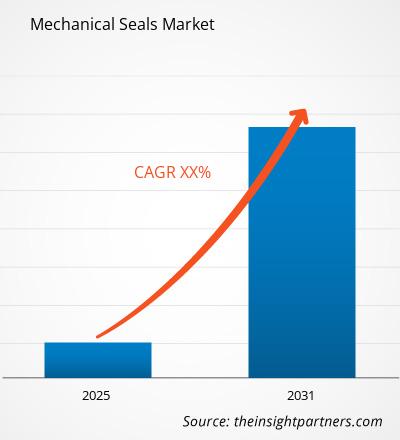
The Mechanical Seals Market size is expected to reach US$ 7.76 Billion by 2034 from US$ 5.47 Billion in 2025. The industry is forecast to witness a CAGR of 3.97% during 2026-2034. Mechanical seals continue to play an important role as seal components in rotating equipment that help manage leakage, equipment efficiency, process safety, and equipment availability in industrial facilities using pumps, compressors, mixers, turbines, and agitators.
In North America, replacement-driven growth and investment in upgrading refining, chemical, water, and power assets will fuel a 3.6-4.1% CAGR until 2034. Market size in the region is driven by the region's increased expenditure on compliance, existing installed base of pumps, and service-oriented industrial production facilities, where US process industries continue to prefer cartridge and balanced mechanical seals.
Mechanical Seals Market Assessment and Insights
- North America accounted for 29–31% share in 2025 and is expected to grow at a 3.6–4.1% CAGR between 2026–2034, supported by aftermarket replacement, refining upgrades, and water infrastructure renewal.
- US represented 78–82% of North America in 2025 and is projected to grow at a 3.7–4.2% CAGR between 2026–2034, led by oil, gas, chemical, and municipal utility demand.
- Europe held 22–24% share in 2025 and is forecast to grow at a 3.2–3.7% CAGR between 2026–2034, with Germany, the UK, France, and Italy leading replacement demand.
- Asia Pacific captured 34–36% share in 2025 and is estimated to grow at a 4.2–4.8% CAGR between 2026–2034, driven by China, India, Japan, and South Korea.
- Largest Segment Cartridge Seals held 38–42% market share in 2025 and is expected to expand at a 3.8–4.3% CAGR between 2026–2034 due to installation efficiency.
- High-Growth Segment Energy and Power held 16–18% market share in 2025 and is expected to grow at a 4.4–5.0% CAGR between 2026–2034.
- Key companies analyzed in detail: A.W. Chesterton Company, AESSEAL plc, EagleBurgmann Germany GmbH & Co. KG, Federal-Mogul LLC, Flex-A-Seal, Inc., Flowserve Corporation, Hutchinson S.A., John Crane, Meccanotecnica Umbra S.p.A., Trelleborg Sealing Solutions.
Source: The Insight Partners' analysis based on proprietary research, government publications, company annual reports, investor presentations, industry databases, and expert interviews.
Mechanical seals have moved away from traditional assemblies to more advanced cartridge, balanced, and engineered seals that ensure minimal installation errors and extended maintenance cycles. The production process is becoming dependent on accuracy in terms of the nature of faces used, elastomers compatible with the faces, and local servicing capability. There is a shift among industrial users towards proactive seal management when leakage control and containment of hazardous fluids affect regulatory and operating costs.
During the forecast period, new manufacturing hubs, refinery projects, power plant renovations, and wastewater developments will contribute to growth beyond established replacements. The push for fugitive emission and plant safety requirements is likely to boost upgrade activities in oil and gas, chemicals, and food processing facilities. Suppliers with engineering capabilities in the region, rapid repair services, and material expertise are well-positioned to gain from service revenues.
Mechanical Seals Market Report Scope
| Report Attribute | Details |
|---|---|
| Market size in 2025 | US$ 5.47 Billion |
| Market Size by 2034 | US$ 7.76 Billion |
| Global CAGR (2026 - 2034) | 3.97% |
| Historical Data | 2021-2024 |
| Forecast period | 2026-2034 |
Mechanical Seals Market Analysis
The demand for the Mechanical Seals Market is driven by the requirement to reduce the loss of the product, prevent damage to bearings, and keep the process safe. Oils and Gas, Food & Beverages, Mining, and Power Plants all use seals since unexpected leakage from pumps can lead to throughput disruption and contamination concerns.
The ecosystem comprises face material suppliers, elastomers suppliers, seal companies, pump original equipment manufacturers, distributors, and service centers. The supply environment is influenced by silicon carbide, carbon graphite, stainless steel, and specialized rubber availability. The firms able to blend standardized cartridge technology with customized engineering will be able to strike a balance between cost competitiveness and high-value-added applications in abrasive slurry, hydrocarbons, hot steam, and sanitation.
Mechanical Seals Market analysis shows a moderately concentrated competitive structure, where global manufacturers compete on reliability, service footprint, and application engineering rather than price alone. John Crane, EagleBurgmann Germany GmbH & Co. KG, Flowserve Corporation, AESSEAL plc, and A.W. Chesterton Company hold strong positions in critical process industries with broad portfolios and repair networks.
The investment effort targets lower-emission seals, dry operation systems, sensor technology for monitoring, and rapid reconditioning. Flex-A-Seal, Inc., Meccanotecnica Umbra S.p.A., Hutchinson S.A., Trelleborg Sealing Solutions, and Federal-Mogul LLC enhance the specialization core through their experience in elastomers, precision components, and custom seals. Strategic positioning will become more and more dependent on uptime support, technical documentation, and local availability.
● REPORT CUSTOMIZATION
Tailor This Report To Align With Your Specific Business Requirements
This report can be customized to align precisely with your business objectives, scope, and target markets. Customization options include tailored segmentation, geography, competitive analysis, and strategic insights to support informed decision-making.
Customize This Report →WHAT YOU CAN ADJUST
- ● Segmentations
- ● Geography
- ● Competitive Analysis
- ● Language Preferences
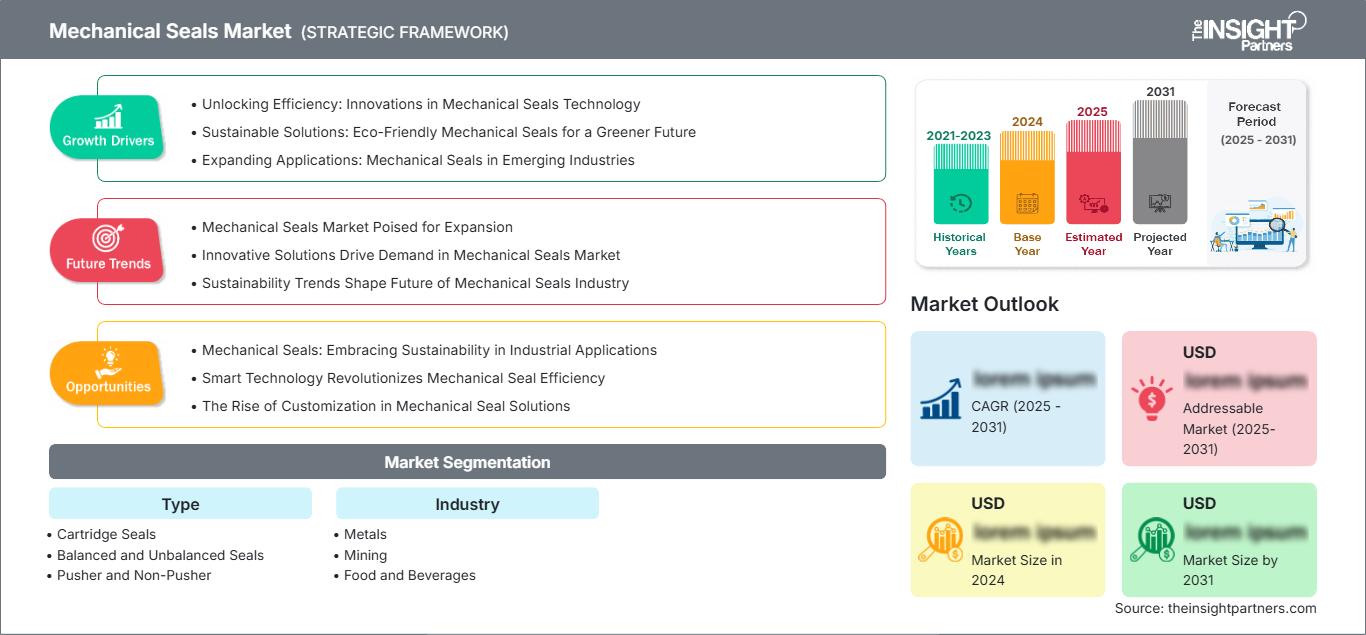
Mechanical Seals Market: Strategic Insights
Regional Insights
North America Mechanical Seals Market
North America represented 29–31% of global demand in 2025 and is projected to grow at a 3.6–4.1% CAGR through 2034. The regional Mechanical Seals Market share is supported by large installed bases in refining, petrochemicals, municipal water, pulp, power, and food processing. Replacement spending remains structurally high because rotating equipment reliability is tied to emission control and productivity. Demand is concentrated in engineered cartridge seals, dual seals, and API-oriented assemblies for hazardous and volatile fluids. Operators are prioritizing service contracts, monitoring, and repair turnaround to reduce downtime. Regional suppliers also benefit from the reshoring of industrial capacity, shale-linked infrastructure maintenance, and continued upgrades in chemical and water assets across the U.S. and Canada.
U.S. Mechanical Seals Market
The U.S. accounted for 78–82% of North American demand in 2025 and is forecast to grow at a 3.7–4.2% CAGR during 2026–2034. Application trends are prominent in refineries, LNG facilities, chemical processing plants, power generation plants, water utility companies, and food processing facilities, where containment and quick maintenance are key requirements. The business has a wide presence as John Crane, A.W. Chesterton Company, Flowserve Corporation, Flex-A-Seal, Inc., and AESSEAL plc have provided support through OEM channels and aftermarket services. U.S. consumers are now more concerned about seal providers’ mean time between repairs, documentation, energy usage, and VOC compliance.
Europe Mechanical Seals Market
Europe held 22–24% share in 2025 and is expected to expand at a 3.2–3.7% CAGR through 2034. Germany leads due to chemical, machinery, food processing, and industrial equipment. The UK maintains demand from energy, water utilities, and specialty manufacturing, where seal upgrades support compliance and operational continuity. France, Italy, and Spain contribute steady replacement demand across food and beverages, pharmaceuticals, construction materials, and wastewater. European buyers emphasize lifecycle cost, low leakage, and compliance with safety and environmental rules. EagleBurgmann Germany GmbH & Co. KG, John Crane, AESSEAL plc, and Trelleborg Sealing Solutions retain strong regional relevance through engineering support and localized service.
APAC Mechanical Seals Market
APAC captured 34–36% share in 2025 and is projected to grow at a 4.2–4.8% CAGR during 2026–2034. China is the leading country, supported by petrochemical, power, mining, and manufacturing scale, while India adds demand from refining, water, food processing, and industrial infrastructure investment. Japan and South Korea support high-specification adoption through chemicals, semiconductors, shipbuilding, and energy equipment, while Australia contributes to mining and water treatment requirements. Policy-backed industrial modernization and wastewater expansion increase demand for corrosion-resistant, balanced, and cartridge seals, especially where operators seek reliability gains in abrasive or continuous-duty operations.
Middle East & Africa Mechanical Seals Market
The Middle East & Africa is expected to expand at a 3.8–4.4% CAGR through 2034, led by Saudi Arabia and the UAE. Demand is anchored in oil, gas, petrochemicals, desalination, district cooling, and power infrastructure, where high-temperature, high-pressure, and corrosion-resistant seals are required. South Africa and the Rest of MEA add mining, water, and construction material applications. Regional buyers emphasize durability under sand, heat, saline water, and intermittent maintenance conditions. Service availability is becoming a differentiator as operators seek shorter turnaround times for pump and compressor seal repairs.
Segmentation Analysis
Type
Type is expected to grow at a 3.8–4.4% CAGR during 2026–2034, reflecting broad migration from conventional packing and component seals toward standardized assemblies with lower installation risk. The market scope across type categories is shaped by operating pressure, shaft speed, fluid chemistry, temperature, maintenance capability, and total lifecycle cost.
- Cartridge Seals dominate because preassembled units reduce installation errors, shorten maintenance windows, and support consistent performance across pumps handling chemicals, hydrocarbons, slurries, water, and food-grade fluids.
- Balanced and Unbalanced Seals serve applications with varied pressure profiles, with balanced designs favored in higher-pressure or volatile services and unbalanced designs retained for simpler, lower-duty equipment.
- Pusher and Non-Pusher designs address different movement and contamination requirements, with non-pusher variants gaining importance in high-temperature, corrosive, crystallizing, or dirty-fluid operations.
- Conventional seals remain relevant in cost-sensitive and standardized equipment, particularly where operating conditions are moderate, maintenance skills are available, and replacement cycles are predictable.
Industry
Industry is projected to grow at a 3.9–4.5% CAGR during 2026–2034, supported by process continuity requirements in heavy and light industries. Demand varies by fluid hazard, abrasion, hygiene, operating temperature, and equipment criticality. Oil and gas remain a major revenue contributor, while energy, food, and manufacturing applications broaden recurring aftermarket opportunities.
- Metals require robust seals for cooling water, lubricants, acids, and high-temperature processing, making wear resistance, thermal stability, and rapid repair capability central to purchasing decisions.
- Mining applications depend on abrasion-resistant seals for slurry pumps and dewatering systems, where particle loading, remote sites, and downtime costs increase demand for rugged engineered configurations.
- Food and Beverages prioritize hygienic, cleanable, and contamination-resistant seals used in pumps, mixers, and filling lines, with material compliance and washdown performance influencing supplier selection.
- Oil and Gas uses advanced seals in upstream, midstream, refining, and petrochemical assets, where leakage control, pressure tolerance, and emissions compliance support premium engineered demand.
- Energy and Power adoption is rising in thermal, nuclear, renewable, and district energy systems, where boiler feed pumps, cooling circuits, and turbines require reliable sealing under continuous operation.
- Construction and Manufacturing create diversified demand through cement, chemicals, machinery, plastics, and industrial utilities, where standardized cartridge seals and service contracts reduce maintenance complexity.
Opportunity Snapshot
| Industry Vertical | Revenue Contribution | Trend Tag | Adoption Stage |
| Metals | Medium | Hot Mills | Mature |
| Mining | Medium | Slurry Duty | Scaling |
| Food and Beverages | Medium | Hygienic Lines | Scaling |
| Oil and Gas | High | Emission Control | Mature |
| Energy and Power | High | Grid Reliability | Scaling |
| Construction and Manufacturing | Medium | Plant Uptime | Mature |
Mechanical Seals Market Growth Drivers and Impact Analysis
Stricter Leakage and Emission Control Requirements
The industrial operators are making improvements to their sealing systems since fugitive emissions, leaks, and escapes of hazardous fluids impact compliance, the safety of employees, and operating permits. The use of dual seals, barrier seal systems, and balanced seal systems is becoming common for refineries, chemical plants, and power plants in order to reduce the risk of leakage. The influence of this trend on the market would be the change in purchasing from cost-oriented replacement purchases to lifecycle purchases, which are influenced by documentation and service.
Industrial Pump Modernization and Aftermarket Replacement
Due to their regular replacement throughout the operating cycle of the pump, mechanical seals have a constant aftermarket business that serves as an alternative source of income, regardless of any changes in the volume of orders for capital equipment. In terms of aging facilities used in the water, oil, and gas, metals, and manufacturing industries, replacement of the seal is necessary for equipment extension without its total replacement. The use of cartridge mechanical seals minimizes the service time, and service centers conduct diagnosis, repair, and inventory services for such parts.
Expansion of Energy, Water, and Process Infrastructure
Energy transition, desalination, wastewater expansion, and process industry capacity additions are increasing the number of pumps, compressors, and mixers requiring reliable sealing. Power plants need seals for boiler feed, cooling, and auxiliary systems, while water and wastewater projects use corrosion-resistant configurations for continuous service. Oil and gas infrastructure also requires high-pressure sealing for pipelines, refining, and LNG-linked equipment. The impact is strongest in APAC and the Middle East, where new capacity combines with the modernization of existing assets to widen the addressable installed base for Mechanical Seals Market participants.
Mechanical Seals Market Future Trends
Sensor-Enabled Seal Monitoring
Mechanical Seals Market trends are moving toward condition monitoring that detects temperature, vibration, pressure, and leakage indicators before failure occurs. Sensor-enabled seals and connected support systems will help operators move from calendar-based maintenance to predictive intervention, reducing unplanned shutdowns in critical equipment. Adoption is likely to begin in refineries, chemical plants, power generation, and high-value food processing lines where downtime costs are substantial. Suppliers that integrate hardware, analytics, and service recommendations can differentiate beyond component sales and build recurring digital service models.
Low-Emission and Dry-Running Seal Designs
It is anticipated that low-emissions and dry-running seals will become more popular as facilities look to increase their environmental compliance and sustainability levels, as well as cut down on fluid usage. Through innovations in face technology, advanced barrier and support system configurations, and high-strength ceramic alloys, seals are now able to perform efficiently even under demanding conditions of volatility, corrosiveness, abrasiveness, and higher speeds without causing excessive wear and emissions. Competitive advantage will in the future be dependent upon the capability to minimize or completely eliminate flush usage, increase service intervals, and achieve steady performance through extreme process conditions, including flashing and phase changes. This will aid in reducing overall costs, increasing equipment availability, and meeting facility efficiencies.
Mechanical Seals Market Opportunities
Service-Led Aftermarket Programs
Mechanical Seals Market Forecasts indicate attractive opportunities in long-term service agreements, repair programs, and reliability audits for installed rotating equipment. Suppliers can target refineries, water utilities, mining sites, and food plants with seal inventory management, failure analysis, and rapid refurbishment. This approach reduces customer downtime while creating predictable recurring revenue for manufacturers. Investment should focus on regional service centers, technician training, digital repair records, and standardized retrofit kits. Companies that combine local responsiveness with engineering depth can protect margins and strengthen customer retention.
High-Specification Seals for Harsh Applications
Extreme service conditions encountered in mining, oil sands, desalination, LNG, petrochemical plants, and power generation with high temperatures create huge opportunities for the development of premium seals suitable for operation under severe conditions. This includes abrasive slurry, chemicals, pressure, temperature fluctuations, and a harsh duty cycle that requires reliability. Malfunction of seals in such conditions can lead to hazards, accidents, unscheduled downtime, and repairs, which force customers to value good performance over price. To benefit from such opportunities, companies should focus on extensive application testing, abrasion-resistant seal geometry, special face material, and an elastomer mixture based on chemical and thermal properties. Developing relations with pump and compressor OEMs, as well as EPC contractors, will provide an additional competitive edge by means of product specification at the design stage of projects. Thus, suppliers capable of showing their reliability in real operating conditions are going to win over competitors providing standard catalog products.
Recent Developments
- March 2026: Flexaseal Engineered Seals and Systems, LLC has acquired Robco of America, a Texas-based mechanical seal company with decades of expertise in specialty mixer applications and comprehensive seal repair. The acquisition expands Flexaseal’s service capacity in the Gulf Coast region and adds specialized capabilities in one of the market’s most demanding application segments.
- January 2026: Flexaseal Engineered Seals and Systems provides mechanical seal assemblies such as Style 85 and VSMS3 that are fully certified to NSF/ANSI 61 standards. These seals ensure that no harmful contaminants leach into the potable water supply.
- September 2025: John Crane has launched Type 8628VL, a next-generation mechanical seal engineered to solve the oil and gas industry's toughest challenges: maintaining sealing integrity in multiphase ethane and ethylene pipelines. Designed to perform under volatile pressure and temperature conditions, the Type 8628VL leverages spiral groove non-contacting technology to deliver exceptional reliability, operational efficiency, and environmental compliance.
Frequently Asked Questions

- Comprehensive Market Sizing and Forecast Analysis
- Detailed Segmentation Analysis
- In-Depth Market Dynamics Assessment
- Regional and Country-Level Insights
- Competitive Landscape and Company Benchmarking
- Strategic Business Intelligence
Recent Reports
Testimonials

The Insight Partners' SCADA System Market report is comprehensive, with valuable insights on current trends and future forecasts. The team was highly professional, responsive, and supportive throughout. We are very satisfied and highly recommend their services.
RAN KEDEM Partner, Reali Technologies LTDs
I requested a report on a very specific software market and the team produced the report in a few days. The information was very relevant and well presented. I then requested some changes and additions to the report. The team was again very responsive and I got the final report in less than a week.
JEAN-HERVE JENN Chairman, Future Analytica
We worked with The Insight Partners for an important market study and forecast. They gave us clear insights into opportunities and risks, which helped shape our plans. Their research was easy to use and based on solid data. It helped us make smart, confident decisions. We highly recommend them.
PIYUSH NAGPAL Sr. Vice President, High Beam Global
The Insight Partners delivered insightful, well-structured market research with strong domain expertise. Their team was professional and responsive throughout. The user-friendly website made accessing industry reports seamless. We highly recommend them for reliable, high-quality research services
YUKIHIKO ADACHI CEO, Deep Blue, LLC.
This is the first time I have purchased a market report from The Insight Partners.While I was unsure at first, I visited their web site and felt more comfortable to take the risk and purchase a market report.I am completely satisfied with the quality of the report and customer service. I had several questions and comments with the initial report, but after a couple of dialogs over email with their analyst I believe I have a report that I can use as input to our strategic planning process.Thank you so much for taking the extra time and making this a positive experience.I will definitely recommend your service to others and you will be my first call when we need further market data.
JOHN SUZUKI President and Chief Executive Officer, Board Director, BK Technologies
I wish to appreciate your support and the professionalism you displayed in the course of attending to my request for information regarding to infectious disease IVD market in Nigeria. I appreciate your patience, your guidance, and the fact that you were willing to offer a discount, which eventually made it possible for us to close a deal. I look forward to engaging The Insight Partners in the future, all thanks to the impression you have created in me as a result of this first encounter.
DR CHIJIOKE ONYIA MANAGING DIRECTOR, PineCrest Healthcare Ltd.Reason to Buy
- Informed Decision-Making
- Understanding Market Dynamics
- Competitive Analysis
- Identifying Emerging Markets
- Customer Insights
- Market Forecasts
- Risk Mitigation
- Boosting Operational Efficiency
- Strategic Planning
- Investment Justification
- Tracking Industry Innovations
- Aligning with Regulatory Trends





 Get Free Sample for