
A2 Milk Market Overview and Growth 2034 by Leading Top Players
Coverage: By Form (Liquid and Powder), Nature (Organic and Conventional), Packaging (Carton and Bottle), Distribution Channel (Supermarkets & Hypermarkets, Convenience Stores, Online Retail, and Others)
- Status : Data Released
- Report Code : TIPRE00004692
- Category : Food and Beverages
- No. of Pages : 150
- Available Report Formats :


- Last update date : August 07, 2026


2025 Market Size
US$ 2.75 Bn
Base year value
2034 Forecast
US$ 10.35 Bn
Projected by 2034
CAGR 2026-2034
15.9 %
Growth rate
Addressable Market
US$ 55.60 Bn
(2026-2034)
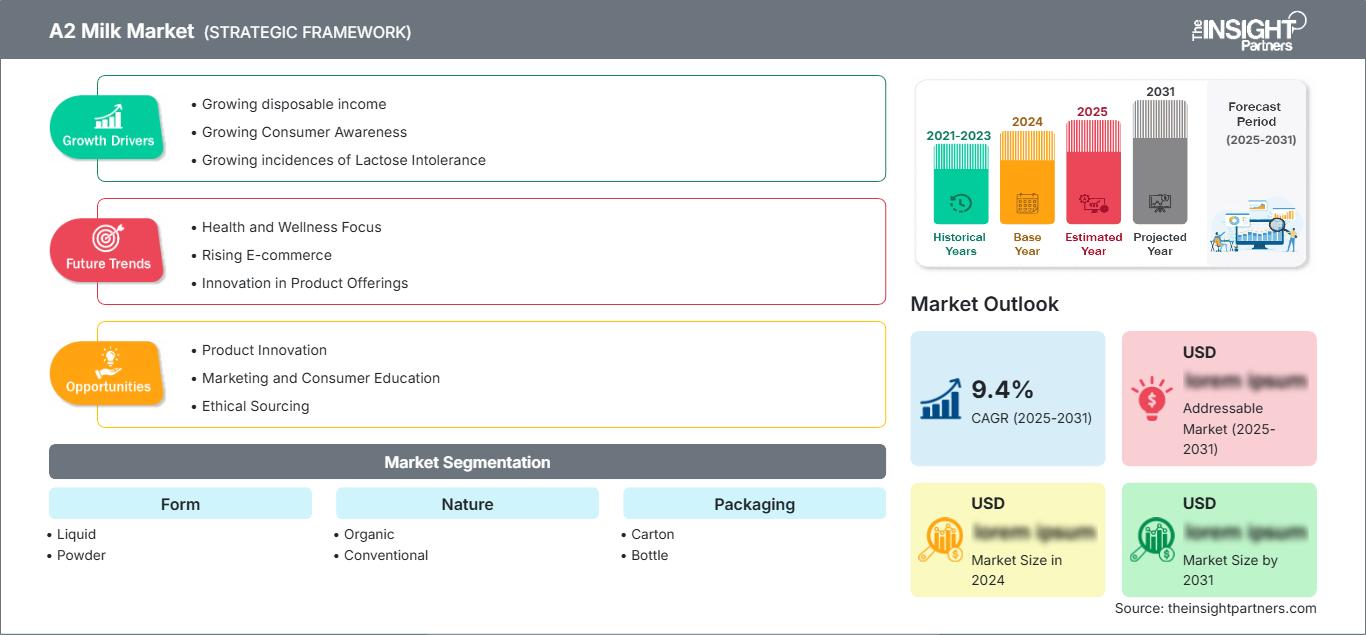
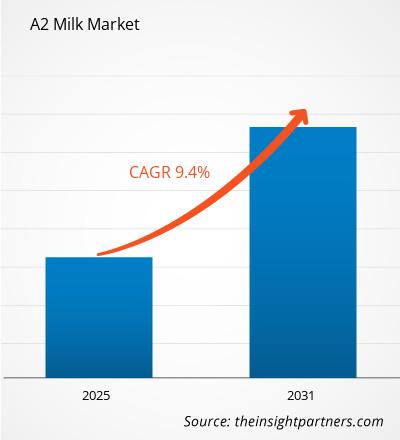
The A2 milk market was valued at US$ 2.75 Billion in 2025 and is projected to reach US$ 10.35 Billion by 2034, registering a CAGR of 15.9% during 2026–2034. Market expansion is supported by growing consumer preference for dairy products containing only A2 beta-casein protein, increasing demand for premium nutrition products, and wider product availability through organized retail channels. Continued innovation in milk, infant nutrition, and specialty dairy products is expected to sustain long-term growth across global markets.
Across North America, the A2 milk market size continues to benefit from premium dairy consumption trends, improving awareness regarding protein-specific dairy products, and rising penetration of specialty grocery formats. The regional market is anticipated to expand at a CAGR of 13.5–15.0% through 2034. Dairy herd genetic testing, expanding omnichannel retail distribution networks, and favorable consumer spending patterns remain fundamental factors supporting demand development.
A2 Milk Market Assessment and Insights
- North America: Share in 2025: 31–35%. CAGR between 2026–2034: 13.5–15.0%. Strong retail penetration, premium dairy consumption patterns, and broad consumer awareness continue supporting long-term market development across the United States and Canada.
- US: Share in 2025: 78–82% of North America. CAGR between 2026–2034: 13.8–15.3%. Expanding distribution through supermarkets, specialty dairy retailers, and e-commerce channels supports sustained category growth.
- Europe: Share in 2025: 24–28%. CAGR between 2026–2034: 14.0–15.5%. The UK, Germany, and France remain leading contributors due to strong premium dairy demand and advanced food retail infrastructure.
- Asia Pacific: Share in 2025: 30–34%. CAGR between 2026–2034: 17.5–19.0%. China, Australia, India, and New Zealand drive growth through expanding premium dairy consumption and increasing awareness of differentiated milk products.
- Largest Segment: Liquid Form. Market share in 2025: 62–66%. CAGR between 2026–2034: 15.0–16.0%. Daily household consumption patterns and extensive retail availability maintain segment leadership.
- High Growth Segment: Organic Nature. Market share in 2025: 28–32%. CAGR between 2026–2034: 18.0–19.5%. Growing demand for clean-label nutrition and sustainably produced dairy products accelerates expansion.
- Key companies analyzed in detail: Baileys Milk, Gujarat Cooperative Milk Marketing Federation Ltd. (Amul), Provilac Dairy Farms Pvt. Ltd., Ripley Farms LLC, Taw River Dairy, The A2 Milk Company Limited, Urban Farms Milk, Vinamilk, Vrindavan Farms, Freedom Foods Group Limited.
Source: The Insight Partners' analysis based on proprietary research, government publications, company annual reports, investor presentations, industry databases, and expert interviews.
Growing adoption of genetic screening technologies within dairy farming has reshaped commercial production patterns. Producers increasingly utilize A2A2 genetic identification programs to verify herd quality and strengthen product traceability. Improvements in refrigerated logistics, dairy processing efficiency, and packaging technologies have supported broader market penetration. These developments have enabled manufacturers to scale production while preserving product differentiation, supporting stronger consumer recognition and premium market positioning across major dairy-producing economies worldwide.
Looking forward, the A2 milk market is expected to witness greater participation from emerging dairy economies across Asia Pacific and selected Middle Eastern markets. Regulatory focus on food traceability, transparent labeling, and product authenticity is likely to strengthen consumer confidence. Higher investment in dairy genetics, production modernization, and premium nutrition categories is anticipated to support sustainable expansion while creating opportunities for both established producers and regional dairy specialists.
A2 Milk Market Report Scope
| Report Attribute | Details |
|---|---|
| Market size in 2025 | US$ 2.75 Billion |
| Market Size by 2034 | US$ 10.35 Billion |
| Global CAGR (2026 - 2034) | 15.9% |
| Historical Data | 2021-2024 |
| Forecast period | 2026-2034 |
A2 Milk Market Analysis
The A2 milk market growth outlook remains favorable due to increasing consumer focus on nutrition, digestive wellness, and product transparency. Products containing only A2 beta-casein protein continue attracting consumers seeking differentiated dairy offerings. Demand has expanded beyond specialty health-conscious populations into mainstream retail environments as awareness improves. Greater availability of certified products across supermarkets, convenience stores, and digital retail channels has further accelerated category adoption.
The market ecosystem encompasses cattle genetics, farm-level certification, milk collection, processing, packaging, distribution, and retail commercialization. Dairy operators continue investing in herd testing initiatives to expand verified A2A2 cattle populations. These measures improve supply reliability and product consistency while helping manufacturers address growing demand. As herd certification becomes more widespread, supply constraints are gradually easing across several major dairy-producing regions.
The A2 milk market analysis indicates a competitive environment centered on product quality, farm traceability, and brand differentiation. The A2 Milk Company Limited maintains notable global visibility through its established product portfolio and international distribution network. Regional players including Vinamilk, Gujarat Cooperative Milk Marketing Federation Ltd., and Provilac Dairy Farms Pvt. Ltd. continue strengthening their market positions through localized production capabilities, strategic partnerships, and expanded retail presence.
Investment activity increasingly targets supply-chain modernization, genetic testing programs, and premium dairy product innovation. Companies such as Ripley Farms LLC, Taw River Dairy, Urban Farms Milk, Vrindavan Farms, and Baileys Milk emphasize farm-to-consumer transparency and product authenticity. Market participants are also investing in e-commerce channels, sustainable packaging initiatives, and organic product development to capture evolving consumer preferences and reinforce long-term competitive positioning.
● REPORT CUSTOMIZATION
Tailor This Report To Align With Your Specific Business Requirements
This report can be customized to align precisely with your business objectives, scope, and target markets. Customization options include tailored segmentation, geography, competitive analysis, and strategic insights to support informed decision-making.
Customize This Report →WHAT YOU CAN ADJUST
- ● Segmentations
- ● Geography
- ● Competitive Analysis
- ● Language Preferences
A2 Milk Market: Strategic Insights
Regional Insights
North America A2 milk market
North America accounted for 31–35% of global A2 milk market share in 2025 and is forecast to expand at a CAGR of 13.5–15.0% between 2026 and 2034. The region benefits from established dairy production systems, advanced cold-chain infrastructure, and broad consumer access through organized retail networks. Premium dairy consumption remains comparatively high, supporting continued demand for specialized milk products differentiated by protein composition and traceability standards.
Consumer awareness regarding premium nutrition attributes has strengthened considerably across the region. Retailers continue expanding shelf space dedicated to specialty dairy products, reflecting increasing customer interest in differentiated nutritional offerings. Producers are simultaneously investing in herd genetics, certification programs, and digital traceability solutions. These developments help support product authenticity and supply reliability while enabling manufacturers to strengthen brand credibility. Continued growth in online grocery purchasing is further improving accessibility and supporting wider market penetration across urban and suburban consumer segments.
U.S. A2 milk Market
The United States represents 78–82% of North American revenue and is projected to record a CAGR of 13.8–15.3% through 2034. The country remains the largest regional consumer market due to strong purchasing power, broad specialty grocery distribution, and increasing adoption of premium dairy products. Greater exposure through national retail chains has improved consumer familiarity with protein-differentiated milk offerings.
Strong commercial presence of The A2 Milk Company Limited and participation from domestic dairy producers continue supporting category development. Product innovation has expanded beyond conventional liquid milk into nutritional beverages and value-added dairy applications. Consumer interest in clean-label products and premium household nutrition remains a significant demand catalyst. The growth of subscription-based grocery services and digital retail platforms has also enhanced product accessibility, helping manufacturers reach consumers outside traditional metropolitan markets while supporting higher purchase frequency.
Europe A2 milk Market
Europe held 24–28% of the global A2 milk market in 2025 and is expected to grow at a CAGR of 14.0–15.5% through 2034. The United Kingdom remains the leading country due to advanced consumer awareness, established retail penetration, and early commercialization of A2 dairy products. Germany follows closely, supported by robust dairy farming infrastructure and increasing interest in premium nutrition categories.
Germany continues benefiting from efficient dairy supply networks and strong demand for differentiated food products. Investments in certified dairy herds and transparent sourcing practices support product credibility and premium positioning. France, Italy, and Spain collectively contribute to regional expansion through growing consumer interest in specialty dairy offerings, premium grocery channels, and nutrition-focused purchasing behavior. Ongoing product diversification and retailer engagement are expected to strengthen category adoption across Western Europe while maintaining favorable long-term growth prospects.
APAC A2 milk Market
Asia Pacific accounted for 30–34% of the global A2 milk market in 2025 and is anticipated to register the fastest expansion, with a CAGR of 17.5–19.0% through 2034. China remains a major demand center due to increasing premium dairy consumption and strong recognition of specialized milk products. Australia plays a critical role as both a consumption market and production hub.
India, Japan, South Korea, and New Zealand are also contributing to market expansion through rising household incomes, greater nutrition awareness, and investment in dairy modernization. Government support for livestock productivity improvements and food quality initiatives further strengthens the regional outlook.
Middle East & Africa A2 milk Market
The Middle East and Africa A2 Milk Market is estimated to grow at a CAGR of 14.5–16.0% through the forecasted period. The factors driving growth include urbanization, the development of premium formats, and increased spending on nutrient-rich foods. Saudi Arabia and the United Arab Emirates continue to be among the key demand regions owing to their high buying power and well-developed retail environment.
South Africa is another important dairy market in the region, driven by well-established distribution channels and growing awareness of value-added dairy products. Investments in logistics and premium grocery retailing can further help in spreading the reach of these products across the region.
Segmentation Analysis
Form
The segment CAGR from 2026 to 2034 is expected to be 15.3-16.3%. Product form remains an important factor in purchase decisions, as consumption varies across household, nutritional, and commercial applications. Suppliers need to take into account freshness, convenience, shelf life, and transportability when adding to their portfolios. Increasing consumer demand for specialized dairy offerings is encouraging suppliers to diversify product formats and strengthen accessibility in both mature and developing markets.
- Liquid – The leading sub-segment due to high household penetration, routine daily consumption, extensive supermarket availability, and strong consumer familiarity with fresh dairy products across urban and rural markets.
- Powder – Maintains strategic importance through infant nutrition, dietary supplementation, export-oriented distribution, and applications requiring longer storage stability and efficient transportation across geographically dispersed consumer markets.
Nature
The Nature segment is expected to post a CAGR of 16.5-18.0% from 2026 to 2034. Consumers' purchase decisions are increasingly influenced by factors such as ingredient transparency, sustainability, and product quality. Producers are developing certifications, traceability systems, and farming methods to enhance their credibility. While both organic and conventional products have been gaining popularity, premium positioning in nutrition is boosting premium products.
- Organic – Gains traction among consumers prioritizing clean-label products, environmental stewardship, and certified production standards. Premium pricing potential and brand differentiation support its strategic relevance.
- Conventional – Retains broad market presence through competitive pricing, larger production capacity, consistent supply availability, and widespread accessibility across organized and traditional retail environments.
Packaging
The Packaging segment is expected to grow with a CAGR of 14.8–15.8% over the evaluation period. Packaging choice directly affects how products are preserved, transported, and handled by consumers. The companies keep launching new packaging options that are sustainable and help retain freshness. As premium dairy offerings proliferate, packaging excellence becomes an important feature for consumer engagement and loyalty.
- Carton – Widely preferred because it enables efficient storage, supports extended shelf life, and aligns effectively with large-scale retail and distribution requirements.
- Bottle – Commonly used in premium dairy categories where product visibility, convenience, freshness perception, and brand presentation contribute to stronger consumer preference and purchasing behavior.
Distribution Channel
The Distribution Channel segment is estimated to achieve a CAGR of 15.5%- 16.5% through 2034. Factors such as the digital revolution, changing consumer behavior, and developments in modern retail infrastructure continue to influence buying patterns. Modern manufacturing companies are using omnichannel approaches that leverage the advantages of traditional retail combined with e-commerce.
- Supermarkets – Account for substantial product visibility and consumer engagement through extensive dairy assortments, promotional activity, and frequent purchasing occasions within organized retail environments.
- Hypermarkets – Support category expansion through large-format retail operations offering broad product selection, competitive pricing, and favorable shelf positioning for premium dairy products.
- Convenience Stores – Important for immediate consumption needs and urban consumers seeking accessible purchasing locations for packaged dairy products within densely populated areas.
- Online Retail – Continues strengthening its role through subscription services, direct-to-consumer sales models, personalized marketing initiatives, and convenient home-delivery capabilities.
Opportunity Snapshot
| Distribution Channel | Revenue Contribution | Trend Tag | Adoption Stage |
| Spermarkets | High | Premium Dairy | Mature |
| Hypermarkets | Medium | Retail Expansion | Mature |
| Convenience Stores | Medium | Urban Access | Scaling |
| Online Retail | High | Direct Delivery | Scaling |
| Others | Low | Specialty Reach | Emerging |
A2 Milk Market Growth Drivers and Impact Analysis
Expansion of certified A2A2 cattle populations
The growing availability of A2A2-genetically certified dairy herds is improving the supply base across the entire value chain. Dairy producers are employing various methods, including herd testing, selective breeding, and animal tracing, to achieve product consistency and reliability. The increasing availability of herds enables producers to source flexibly and reduces supply problems. Such developments also pave the way for wider commercialization through retail outlets and deeper penetration of products into both mature and developing markets. Sourcing certification is becoming a key point of differentiation as consumers grow increasingly aware of their food's origins and quality. As such, businesses that achieve herd certification will see increased brand awareness and consumer trust in their premium dairy products.
Growing consumer focus on specialized dairy nutrition
Consumer demand is increasingly shifting towards nutrition-based foods, which are distinct for their functional properties and high-quality perception. Awareness of protein content, ease of digestion, and dietary individualization has motivated many consumers to try differentiated dairy alternatives. This has helped expand the category from its early-adopters stage to everyday consumers' lives and families. Manufacturers have responded to this by conducting educational programs, innovating, and retailing the products. Increasing disposable income in some emerging markets is also contributing to higher prices for these nutrition-related products. Demand is expected to grow in various dairy categories, including milk, infant nutrition, powdered dairy, and other dairy uses, during the forecast period.
Expansion of omnichannel dairy distribution networks
The rapid development of modern retail formats and e-commerce infrastructure has significantly improved product accessibility. Organized retail chains continue to provide more shelf space for premium nutrition products, thereby promoting consumption and trial. At the same time, online grocery stores provide specialty dairy products not only in urban centers but also in other parts of the world. Subscription services and direct selling methods increase consumer loyalty and purchase frequency. Cold chain logistics, stock control, and retail marketing with data analysis help increase availability while minimizing delivery complications. With the development of omnichannel strategies, manufacturers have more opportunities to reach their consumers, increase brand presence, and enter markets in different ways.
A2 Milk Market Future Trends
Expansion into broader functional nutrition categories
The A2 milk market trends suggest a move towards diversification of a nutritious portfolio over the longer term. Manufacturers are expected to invest more heavily in protein-enriched beverages, children’s nutrition solutions, dairy nutritional supplements, and superior digestive wellness options. Product innovation would revolve around catering to the dietary needs of different age groups without compromising on premiumization. As consumer demand changes, the introduction of functional dairy products with added nutritional value is expected to become one of the significant ways of growth. Increased adoption of a health-centric product development strategy would help boost household reach and build consumer loyalty.
Integration of digital traceability and transparency systems
The industry's further development will likely involve increased adoption of digital surveillance systems across the entire dairy supply chain. Systems allowing for the collection of records at the farm level, the verification of herd genetics, the authentication of products, and increased transparency for consumers will likely be important. Using such systems enables producers to improve the transparency and credibility of their activities. Improved traceability can help meet new regulations governing the safety of food products and their labeling. In today's world, customers value information about product sources, animal treatment, and manufacturing processes. Therefore, companies that adopt advanced verification systems are likely to create their own value propositions. Digital transparency is likely to be a key competitive advantage.
A2 Milk Market Opportunities
Expansion through regional dairy partnerships
The development of alliances among dairy processors, co-operatives, and livestock producers offers significant opportunities for market penetration. Regional sourcing networks will facilitate the acquisition of milk while reducing logistics costs. Dairy markets in Asia, the Middle East, and parts of Africa can be conducive to market entry due to urbanization, shifting dietary trends, and income growth. In the long term, A2 milk market forecasts will show that local production and distribution will be more efficient and aligned with regulatory requirements. An alliance with certified dairy farms will streamline sourcing and enable rapid market penetration. These collaborative approaches also support entry into underserved regions with growing demand for premium nutritional dairy products.
Investment in organic and premium product lines
Organic dairy products represent a significant long-term opportunity for all market participants seeking unique positioning and high-margin income generation. Organic products are increasingly seen by consumers as more transparent, sustainable, and nutritious; hence, there is growing demand for such products in both developed and developing markets. There are opportunities for manufacturers to diversify from conventional milk products into organic nutrition beverages, organic dairy powders, and other functionalities. Investing in sustainable farming practices, sustainable packaging, and traceability can help build consumer trust. As more shelf space is allocated to premium nutrition products, producers that develop unique organic product lines are expected to build brand loyalty and generate higher margins.
Frequently Asked Questions

- Comprehensive Market Sizing and Forecast Analysis
- Detailed Segmentation Analysis
- In-Depth Market Dynamics Assessment
- Regional and Country-Level Insights
- Competitive Landscape and Company Benchmarking
- Strategic Business Intelligence
Recent Reports
Testimonials

The Insight Partners' SCADA System Market report is comprehensive, with valuable insights on current trends and future forecasts. The team was highly professional, responsive, and supportive throughout. We are very satisfied and highly recommend their services.
RAN KEDEM Partner, Reali Technologies LTDs
I requested a report on a very specific software market and the team produced the report in a few days. The information was very relevant and well presented. I then requested some changes and additions to the report. The team was again very responsive and I got the final report in less than a week.
JEAN-HERVE JENN Chairman, Future Analytica
We worked with The Insight Partners for an important market study and forecast. They gave us clear insights into opportunities and risks, which helped shape our plans. Their research was easy to use and based on solid data. It helped us make smart, confident decisions. We highly recommend them.
PIYUSH NAGPAL Sr. Vice President, High Beam Global
The Insight Partners delivered insightful, well-structured market research with strong domain expertise. Their team was professional and responsive throughout. The user-friendly website made accessing industry reports seamless. We highly recommend them for reliable, high-quality research services
YUKIHIKO ADACHI CEO, Deep Blue, LLC.
This is the first time I have purchased a market report from The Insight Partners.While I was unsure at first, I visited their web site and felt more comfortable to take the risk and purchase a market report.I am completely satisfied with the quality of the report and customer service. I had several questions and comments with the initial report, but after a couple of dialogs over email with their analyst I believe I have a report that I can use as input to our strategic planning process.Thank you so much for taking the extra time and making this a positive experience.I will definitely recommend your service to others and you will be my first call when we need further market data.
JOHN SUZUKI President and Chief Executive Officer, Board Director, BK Technologies
I wish to appreciate your support and the professionalism you displayed in the course of attending to my request for information regarding to infectious disease IVD market in Nigeria. I appreciate your patience, your guidance, and the fact that you were willing to offer a discount, which eventually made it possible for us to close a deal. I look forward to engaging The Insight Partners in the future, all thanks to the impression you have created in me as a result of this first encounter.
DR CHIJIOKE ONYIA MANAGING DIRECTOR, PineCrest Healthcare Ltd.Reason to Buy
- Informed Decision-Making
- Understanding Market Dynamics
- Competitive Analysis
- Identifying Emerging Markets
- Customer Insights
- Market Forecasts
- Risk Mitigation
- Boosting Operational Efficiency
- Strategic Planning
- Investment Justification
- Tracking Industry Innovations
- Aligning with Regulatory Trends





 Get Free Sample for