
Aceglutamide for Injection Market Share, Size & Demand by 2034
Coverage: By Type (0.1g, 0.25g); Application (hospital, drug store, other), and Geography (North America, Europe, Asia Pacific, and South and Central America)
- Status : Data Released
- Report Code : TIPRE00015193
- Category : Life Sciences
- No. of Pages : 150
- Available Report Formats :


- Last update date : July 15, 2026


2025 Market Size
US$ 1.42 Bn
Base year value
2034 Forecast
US$ 2.99 Bn
Projected by 2034
CAGR 2026-2034
8.65 %
Growth rate
Addressable Market
US$ 19.80 Bn
(2026-2034)
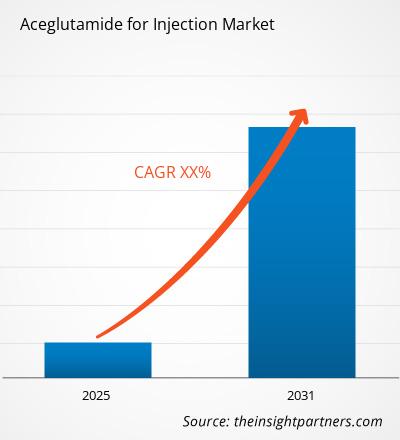
The aceglutamide for injection market size was valued at US$ 1.42 Billion in 2025 and is projected to reach US$ 2.99 Billion by 2034; it is expected to register a CAGR of 8.65% during 2026–2034. Demand is supported by hospital use in neurological recovery, emergency care, and supportive treatment protocols where injectable administration enables rapid clinician-controlled dosing.
Across North America, the aceglutamide for injection market size remains limited but structurally relevant, with an estimated CAGR range of 6.0–6.7% during 2026–2034. Growth is supported by specialized neurological care, imported formulation assessment, and hospital interest in adjunctive neuro-metabolic therapies, although adoption is constrained by regulatory pathways and stronger dependence on approved domestic alternatives.
Aceglutamide for Injection Market Assessment and Insights
- North America held an estimated 7–9% of the aceglutamide for injection market share in 2025 and is expected to grow at a CAGR between 2026–2034 of 6.0–6.7%, supported by niche neurological care pathways and controlled hospital procurement.
- US accounted for 80–83% of North America in 2025 and is projected to grow at a CAGR between 2026–2034 of 6.1–6.8%, led by specialty hospital evaluation and imported supply channels.
- Europe represented 10–12% share in 2025 and is forecast to grow at a CAGR between 2026–2034 of 5.6–6.3%, with Germany, the UK, and France leading through advanced neurology infrastructure.
- Asia Pacific captured 72–75% share in 2025 and is expected to grow at a CAGR between 2026–2034 of 9.2–9.8%, led by China, Japan, India, and South Korea through domestic injectable manufacturing.
- Largest Segment hospital held 86–89% market share in 2025 and is projected to grow at a CAGR range of 8.3–8.9% during 2026–2034 due to physician-supervised administration.
- High Growth Segment 0.25g held 34–38% market share in 2025 and is projected to grow at a CAGR range of 9.1–9.7% during 2026–2034 as higher-dose vial use expands.
- Key companies analyzed in detail: Hainan Weikang Pharmaceutical Co., Ltd., Guangzhou Yipinhong Pharmaceutical Co., Ltd., Harbin Medisan Pharmaceutical Co., Ltd., Beijing Sihuan Kebao Pharmaceutical Co., Ltd., Jilin Wantong Pharmaceutical Group Co., Ltd., Hebei Zhitong Bio Pharmaceutical Co., Ltd., Hunan Wuzhoutong Pharmaceutical Co., Ltd., Zhejiang Cheng Yi Pharmaceutical Co., Ltd., Hainan Poly Pharm Co., Ltd., Shanghai Minbiotech Co., Ltd.
Source: The Insight Partners' analysis based on proprietary research, government publications, company annual reports, investor presentations, industry databases, and expert interviews.
From an era of small-scale hospital supply to a more standardized production process for injectables through lyophilization, aseptic fill, and better documentation of quality, the market has shifted. The aceglutamide for injection market is highly dependent on the hospital-based prescribing practices of China, whereby neurological, neurosurgical and hepatic coma support applications necessitate constant sterile supply. Manufacturing of the drug is contingent on purity of the active substance, vial compatibility, sterility guarantees, cold chain management where appropriate, and adherence to procurement processes.
Future demand will be driven by hospital infrastructure improvement, increase in trauma care provision, and increased neurological rehabilitation capacity in developing nations. Asia Pacific will continue being the dominant production and consumption hub, with other markets growing from a low baseline of adoption. Positive regulatory headwinds in standard manufacturing of injections, pharmacovigilance, and centralized procurement processes will play well for companies with GMP-compliant facilities and consistent participation in tenders.
Aceglutamide for Injection Market Report Scope
| Report Attribute | Details |
|---|---|
| Market size in 2025 | US$ 1.42 Billion |
| Market Size by 2034 | US$ 2.99 Billion |
| Global CAGR (2026 - 2034) | 8.65% |
| Historical Data | 2021-2024 |
| Forecast period | 2026-2034 |
Aceglutamide for Injection Market Analysis
Market growth for aceglutamide for injection can be attributed to increased incidences of neurological trauma, stroke rehabilitation, hepatic encephalopathy treatments, and support during neurosurgical procedures. The WHO has listed neurological diseases as major causes of disability around the world. In addition, increasing aged demographics are leading to increased hospitalizations caused by cerebrovascular and neurodegenerative diseases.
The supply chain entails manufacture of active pharmaceutical ingredients, acquisition of excipients, sterile water systems, procurement of vials and stoppers, lyophilization services, aseptic fill lines, quality control labs, hospital wholesalers, and pharmacy procurement systems. Supply assurance is based on clean room operations, endotoxin control, sterilization validation, and batch release tests. The product is evaluated according to dose strength, reconstitution characteristics, shelf life, hospital listing, and uninterrupted supply history.
Competitive positioning exists among Chinese companies specializing in injectables, while the aceglutamide for injection market analysis suggests that domestic tendering is the main factor behind business success. Hainan Weikang Pharmaceutical Co., Ltd., Guangzhou Yipinhong Pharmaceutical Co., Ltd., Harbin Medisan Pharmaceutical Co., Ltd., and Beijing Sihuan Kebao Pharmaceutical Co., Ltd. are competing based on their connections with hospitals and production capacity.
Strategic focuses are focused on lyophilized injection production, automation of quality control process, implementation of provincial tenders, and compliance with the product lifecycle. Jilin Wantong Pharmaceutical Group Co., Ltd., Hebei Zhitong Bio Pharmaceutical Co., Ltd., Hunan Wuzhoutong Pharmaceutical Co., Ltd., Zhejiang Cheng Yi Pharmaceutical Co., Ltd., Hainan Poly Pharm Co., Ltd., and Shanghai Minbiotech Co., Ltd. provide support for fragmented but active supplies.
● REPORT CUSTOMIZATION
Tailor This Report To Align With Your Specific Business Requirements
This report can be customized to align precisely with your business objectives, scope, and target markets. Customization options include tailored segmentation, geography, competitive analysis, and strategic insights to support informed decision-making.
Customize This Report →WHAT YOU CAN ADJUST
- ● Segmentations
- ● Geography
- ● Competitive Analysis
- ● Language Preferences
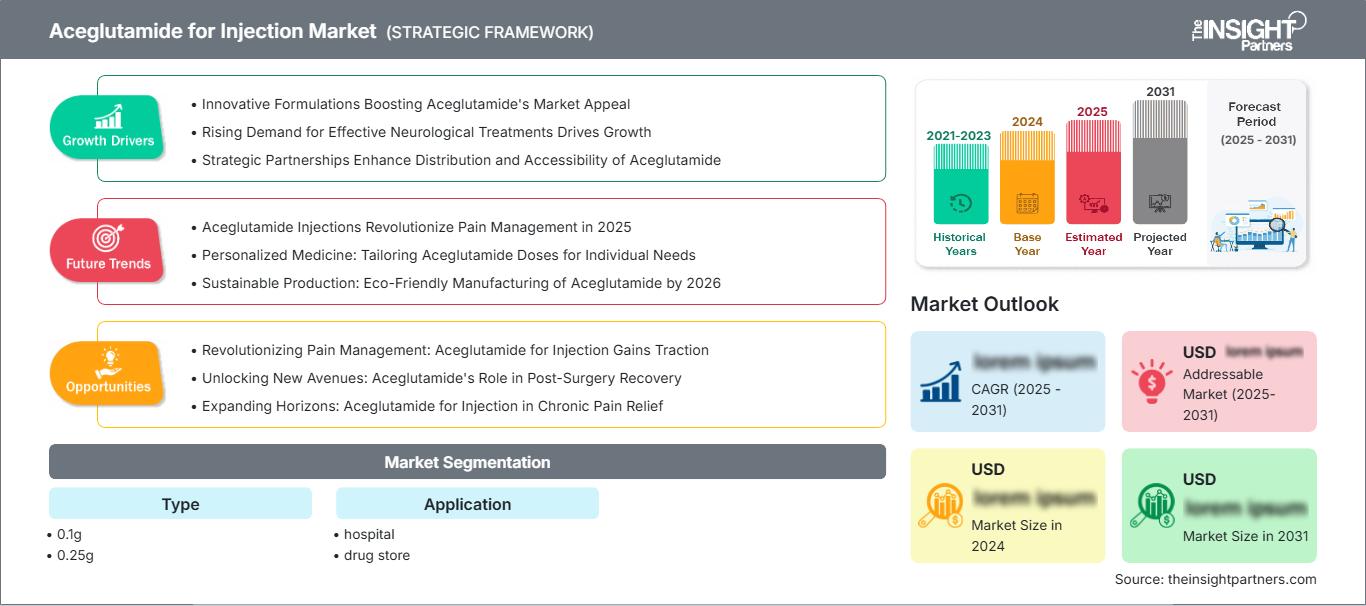
Aceglutamide for Injection Market: Strategic Insights
Regional Insights
North America aceglutamide for injection market
North America accounted for an estimated 7–9% share in 2025 and is expected to grow at a CAGR of 6.0–6.7% during 2026–2034. The region remains a niche market because clinical use depends on regulatory recognition, hospital formulary review, and evidence acceptance. The aceglutamide for injection market share is supported by specialized neurological care demand rather than broad outpatient adoption.
Demand is strongest in environments evaluating neuro-supportive injectable therapies for traumatic brain injury, coma support, hepatic encephalopathy-related care, and post-operative neurological recovery. Procurement teams require strong documentation on sterility, stability, pharmacology, and supplier traceability. Growth will remain moderate because the market must compete with established neurological and critical care protocols.
U.S. aceglutamide for injection market
The U.S. represented 80–83% of North America in 2025 and is projected to grow at a CAGR of 6.1–6.8% during 2026–2034. Demand is limited to specialized assessment, research-linked clinical interest, and importer-led availability rather than mass commercial use. Hospitals usually require clear therapeutic positioning before adding niche injectables to formularies.
Company presence is mainly indirect, through regulatory documentation, cross-border distributors, and specialty supply evaluations. U.S. application trends center on neurological recovery, intensive care, and adjunctive metabolic support where physician oversight is essential. Suppliers seeking access must manage pharmacovigilance, product labeling expectations, and sterile injectable quality standards.
Europe aceglutamide for injection market
Europe held an estimated 10–12% share in 2025 and is expected to expand at a CAGR of 5.6–6.3% during 2026–2034. Germany is the leading country due to advanced neurology services, hospital quality standards, and stronger clinical evaluation capacity. The UK and France remain important markets where formulary scrutiny influences adoption.
The UK market is shaped by evidence-led procurement and conservative adoption of niche hospital injectables. Germany benefits from high-acuity neurology and rehabilitation infrastructure, although reimbursement acceptance remains selective. France shows measured demand where clinicians evaluate neuro-metabolic supportive therapy for specific inpatient cases, particularly in complex post-surgical and neurological recovery pathways.
Italy and Spain contribute smaller but stable demand through public hospital networks and aging populations. Uptake is limited by price review, local clinical guidelines, and preference for established therapeutic alternatives. Across Europe, product suppliers must provide high-quality dossiers, stability data, and responsive medical information to support institutional reviews.
APAC aceglutamide for injection market
APAC represented 72–75% share in 2025 and is forecast to grow at a CAGR of 9.2–9.8% during 2026–2034. China is the leading country by consumption and production, supported by injectable manufacturing capacity and hospital-centered neurological care. Japan, India, and South Korea contribute through specialty import evaluation, local formulation interest, and rehabilitation expansion.
Industrial and policy drivers include GMP upgrades, centralized procurement, hospital infrastructure investment, and domestic pharmaceutical manufacturing incentives. China’s strong sterile injectable base supports scale economics, while India may develop opportunities through hospital access and contract manufacturing. Regional suppliers with quality consistency and tender readiness are best positioned.
Middle East & Africa aceglutamide for injection market
Middle East & Africa is expected to grow at a CAGR of 7.0–7.7% during 2026–2034, led by Saudi Arabia and the UAE. Tertiary hospital expansion, trauma care investment, and neurological specialty development support demand for injectable supportive therapies. South Africa remains the most structured sub-Saharan pharmaceutical market.
Energy-linked fiscal capacity in Gulf countries supports advanced hospital procurement, specialist neurology units, and imported medicine access. Rest of MEA demand is uneven because regulatory approvals, affordability, and distributor coverage vary widely. Suppliers with training support, stable pricing, and reliable documentation can improve penetration.
Segmentation Analysis
Type
Type is expected to grow at a CAGR of 8.4–9.0% during 2026–2034. The aceglutamide for injection market scope by type is shaped by dose strength, hospital protocol, vial utilization, and clinician preference for flexible administration. The 0.1g dose remains important for lower-dose use and titration, while 0.25g products gain traction where higher daily dosing and fewer vials improve workflow.
- 0.1g remains important for dose flexibility, pediatric or lower-intensity use, and hospital protocols that require controlled administration during neurological or metabolic support treatment.
- 0.25g is strategically important where higher-dose administration, fewer vial changes, and improved pharmacy workflow support faster preparation in inpatient and emergency settings.
Application
Application is projected to grow at a CAGR of 8.5–9.2% during 2026–2034. Hospital use dominates because injectable aceglutamide requires clinician supervision, sterile preparation, and monitoring in neurological, emergency, and post-operative care. Drug store demand is smaller, mainly serving prescription fulfillment and follow-up access where regulations permit pharmacy distribution of injectable products.
- hospital represents the core application because inpatient neurological care, coma management, neurosurgical recovery, and emergency medicine require supervised dosing and immediate clinical oversight.
- drug store supports limited prescription-based access, mainly where outpatient continuation, pharmacy distribution, or local reimbursement rules allow controlled availability of injectable formulations.
Opportunity Snapshot
| Segment Name | Revenue Contribution | Trend Tag | Adoption Stage |
| hospital | High | Neuro Care | Mature |
| drug store | Low | Rx Access | Emerging |
Aceglutamide for Injection Market Growth Drivers and Impact Analysis
Rising neurological and critical care burden
Increasing burden of stroke, head trauma, hepatic encephalopathy, comas, and other neuro-surgery complications will increase the need for supportive treatments in hospitals. Aceglutamide is described as neuro-metabolic injection used where healthcare professionals desire to promote metabolism and healing of nerve cells under medical supervision. Practical application of the product occurs mainly in tertiary care hospitals, emergency rooms, and neurology wards where fast application and monitoring are feasible. Demand is boosted by demographics and urban population with trauma cases but dependent on formulary availability and confidence in the drug. This factor mainly drives hospital purchases, rather than retail growth since the decision lies with physicians.
Expansion of sterile injectable manufacturing capacity
As pharmaceutical companies in China and elsewhere in Asia Pacific region improve their lyophilization capacity, fill-finish capacity, and quality control labs, sterile injectable manufacturing capacity increases. Such increase results into improvement of the supply of injectables that need to be kept free from contaminants and have consistently good vials. Market implications include increased bidding opportunities, wider provincial coverage, and reduced instances of shortages. With such improvements as automated inspection of the final product, endotoxin testing, and validated cleanroom operations, the manufacturer becomes better positioned to compete in hospital procurement. Batch consistency will become important since manufacturers will be assessed by the hospitals and distributors based on their reliability.
Centralized procurement improving market discipline
Concentrated purchasing is changing how the pharmaceutical industry buys goods as it integrates price, volume guarantees, compliance, and logistics. In the case of injectables, participation in the tenders could establish the access and capacity of the supplier instantly. There are two sides to this effect when it comes to the aceglutamide subcategory. The chosen suppliers will have guaranteed volumes, while the weaker manufacturers will have to work on their paperwork and logistics. Hospitals will be able to order goods in a more systematic manner. The producers will have to coordinate prices and manufacturing processes.
Aceglutamide for Injection Market Future Trends
Evidence-led reassessment of neuro-supportive injectables
The Aceglutamide for Injection Market trends in relation to the aceglutamide for injection will be characterized by an evidence-based approach to its application in the hospital rather than the habitual use because of the history of prescriptions. The neurologists' and pharmacy departments' task will consist in evaluating the criteria of patient selection, consistency of administration, recording side effects and results achieved in cases of traumatic brain injury, hepatic coma and post-neurosurgical recovery. It means that the relevance of the real-life information, pharmacovigilance and the training of doctors will be increasing. The companies providing such opportunities will have an advantage over those who work just based on their history.
Digital procurement and batch-level traceability
Batch traceability, contract management, and quality documentation will be much more transparent through digital procurement solutions for both the hospitals and regulatory agencies. The manufacturers of injectable drugs must put in place more advanced solutions to manage serialization, tracking of shipments, and temperature control when required. This development is significant for aceglutamide since hospital purchasers have started considering compliance performance and deliveries when making their procurement decisions. Digitalizing of batch records and managing the distributors will help manufacturers avoid risks associated with tenders.
Aceglutamide for Injection Market Opportunities
Hospital formulary support and clinical education
Hospitals represent the most actionable opportunity because physicians, pharmacists, and procurement teams influence adoption together. The aceglutamide for injection market forecast indicate that growth will be strongest where suppliers support formulary review with product stability data, dosing references, adverse-event monitoring, and practical preparation guidance. Companies can develop hospital education programs for neurology, emergency medicine, and pharmacy departments. Success will depend on scientific communication rather than broad promotion. Suppliers that help hospitals standardize use, reduce preparation errors, and maintain uninterrupted supply can strengthen tender outcomes and improve long-term account retention.
Dose-strength optimization for inpatient workflow
Dose-strength optimization offers a focused investment opportunity, especially for 0.25g formulations used in higher-intensity inpatient care. Hospitals can reduce preparation time, vial handling, and pharmacy workload when dose formats align with common treatment protocols. Manufacturers should evaluate pack sizes, labeling clarity, reconstitution performance, and distribution units that match ward-level demand. This opportunity is particularly relevant in China and other hospital-heavy markets where injectable volume is tied to operational efficiency. Companies that combine 0.1g and 0.25g offerings with reliable inventory planning can serve both flexible dosing and higher-throughput inpatient needs.
Recent Developments
- July 2026: Harbin Medisan Pharmaceutical Co., Ltd. reported that three products developed by its wholly owned subsidiary Beijing Harbin Sanlian Technology had received approvals since mid-May, and the company also highlighted more than 100 products at CPHI China 2026 under an API plus formulation integration strategy.
- May 2026: Guangzhou Yipinhong Pharmaceutical Co., Ltd., ApicHope’s investor relations page reported that a wholly owned subsidiary obtained a registration certificate for aminocaproic acid injection, reinforcing the group’s injectable manufacturing and regulatory execution capabilities. The same page listed the 2025 annual report release, supporting visibility into regulated pharmaceutical operations and hospital-channel products.
- August 2025: Hainan Weikang Pharmaceutical Co., Ltd.’s provincial biomedical policy encouraged pharmaceutical enterprises to participate in national volume-based procurement and offered rewards linked to selected varieties, strengthening the policy environment for Hainan-based injectable manufacturers and procurement-facing drug suppliers.
Frequently Asked Questions

- Comprehensive Market Sizing and Forecast Analysis
- Detailed Segmentation Analysis
- In-Depth Market Dynamics Assessment
- Regional and Country-Level Insights
- Competitive Landscape and Company Benchmarking
- Strategic Business Intelligence
Recent Reports
Testimonials

The Insight Partners' SCADA System Market report is comprehensive, with valuable insights on current trends and future forecasts. The team was highly professional, responsive, and supportive throughout. We are very satisfied and highly recommend their services.
RAN KEDEM Partner, Reali Technologies LTDs
I requested a report on a very specific software market and the team produced the report in a few days. The information was very relevant and well presented. I then requested some changes and additions to the report. The team was again very responsive and I got the final report in less than a week.
JEAN-HERVE JENN Chairman, Future Analytica
We worked with The Insight Partners for an important market study and forecast. They gave us clear insights into opportunities and risks, which helped shape our plans. Their research was easy to use and based on solid data. It helped us make smart, confident decisions. We highly recommend them.
PIYUSH NAGPAL Sr. Vice President, High Beam Global
The Insight Partners delivered insightful, well-structured market research with strong domain expertise. Their team was professional and responsive throughout. The user-friendly website made accessing industry reports seamless. We highly recommend them for reliable, high-quality research services
YUKIHIKO ADACHI CEO, Deep Blue, LLC.
This is the first time I have purchased a market report from The Insight Partners.While I was unsure at first, I visited their web site and felt more comfortable to take the risk and purchase a market report.I am completely satisfied with the quality of the report and customer service. I had several questions and comments with the initial report, but after a couple of dialogs over email with their analyst I believe I have a report that I can use as input to our strategic planning process.Thank you so much for taking the extra time and making this a positive experience.I will definitely recommend your service to others and you will be my first call when we need further market data.
JOHN SUZUKI President and Chief Executive Officer, Board Director, BK Technologies
I wish to appreciate your support and the professionalism you displayed in the course of attending to my request for information regarding to infectious disease IVD market in Nigeria. I appreciate your patience, your guidance, and the fact that you were willing to offer a discount, which eventually made it possible for us to close a deal. I look forward to engaging The Insight Partners in the future, all thanks to the impression you have created in me as a result of this first encounter.
DR CHIJIOKE ONYIA MANAGING DIRECTOR, PineCrest Healthcare Ltd.Reason to Buy
- Informed Decision-Making
- Understanding Market Dynamics
- Competitive Analysis
- Identifying Emerging Markets
- Customer Insights
- Market Forecasts
- Risk Mitigation
- Boosting Operational Efficiency
- Strategic Planning
- Investment Justification
- Tracking Industry Innovations
- Aligning with Regulatory Trends





 Get Free Sample for