
Acromegaly and Gigantism Treatment Market Size, Growth & Demand by 2034
Coverage: By Treatment (Surgery, Radiation Therapy, Medication); End User (Hospitals, Specialty Clinics, Others), and Geography (North America, Europe, Asia Pacific, and South and Central America)
- Status : Data Released
- Report Code : TIPRE00015264
- Category : Life Sciences
- No. of Pages : 150
- Available Report Formats :


- Last update date : July 15, 2026


2025 Market Size
US$ 1.33 Bn
Base year value
2034 Forecast
US$ 2.75 Bn
Projected by 2034
CAGR 2026-2034
8.34 %
Growth rate
Addressable Market
US$ 18.25 Bn
(2026-2034)
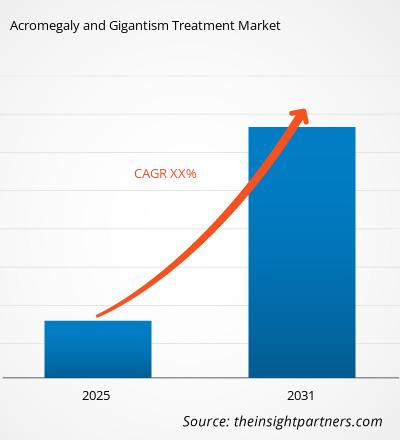
The Acromegaly and Gigantism Treatment Market was valued at US$ 1.33 Billion in 2025 and is projected to reach US$ 2.75 Billion by 2034, expanding at a CAGR of 8.34% during 2026–2034. There is a continued need in the market due to the requirement for surgery, radiotherapy, and drug use for excess secretion of growth hormone and insulin-like growth factor-1 in acromegaly in adults and in children/adolescents suffering from gigantism.
In North America, the acromegaly and gigantism treatment market size will be bolstered by the high incidence rate of pituitary tumors, network of endocrinology specialists, and availability of somatostatin analogs and pills. The region is expected to experience growth of 8.0%–8.4% CAGR between 2026 and 2034 due to earlier biochemical testing and MRI availability.
Acromegaly and Gigantism Treatment Market Assessment and Insights
- North America: Share in 2025 is estimated at 39–41%, with CAGR between 2026–2034 at 8.0–8.4%, supported by pituitary centers, reimbursement for advanced medication, MRI availability, and increased use of long-term biochemical monitoring.
- US: Share in 2025 is estimated at 84–88% of North America, with CAGR between 2026–2034 at 8.1–8.5%, reflecting strong endocrine specialty access and branded therapy uptake.
- Europe: Share in 2025 is estimated at 28–30%, with CAGR between 2026–2034 at 7.2–7.6%; Germany, the UK, France, Italy, and Spain lead through structured specialist care and reimbursement.
- Asia Pacific: Share in 2025 is estimated at 20–22%, with CAGR between 2026–2034 at 9.0–9.4%; China, Japan, India, South Korea, and Australia benefit from diagnostic expansion and tertiary hospital investment.
- Largest Segment: Medication held a market share range of 54–58% in 2025, with CAGR between 2026–2034 at 8.5–8.9%, due to chronic disease control after surgery or when surgery is unsuitable.
- High Growth Segment: Specialty Clinics held a market share range of 34–38% in 2025, with CAGR between 2026–2034 at 9.1–9.5%, supported by endocrine follow-up, dose optimization, and long-term monitoring.
- Key companies analyzed in detail: Pfizer Inc., Novartis AG, Chiasma, Inc., Midatech Pharma plc, Ipsen Pharma SAS, Johnson & Johnson Services, Inc., F. Hoffmann-La Roche Ltd, Takeda Pharmaceutical Company Limited, Crinetics Pharmaceuticals, Inc., Peptron, Inc.
Source: The Insight Partners' analysis based on proprietary research, government publications, company annual reports, investor presentations, industry databases, and expert interviews.
Treatment progress has shifted the acromegaly and gigantism treatment market from surgical to multimodal treatment incorporating transsphenoidal surgery, stereotactic radiotherapy, depot injection, oral treatment with somatostatin receptor drugs, dopamine agonist, and growth hormone receptor antagonist. Manufacturing trends have become more influenced by complicated peptide production, auto-injection technology, cold chain distribution, and specialty pharmacy collaboration. Clinical practices are centered around biochemical normalization, tumor control, symptom load, and comorbidity reduction.
Drivers for future growth will include diagnoses made late enough for there to be substantial untreated prevalence in developing nations. Some positive regulatory trends will include orphan drug programs, endocrine drug approvals, and use of self-reported patient data in trials. Investments will include oral drugs, long-acting injection drugs, specialty clinics, and technology that enables doctors to monitor patients’ IGF-1 levels, growth hormone levels, glucose, and tumors over time.
Acromegaly and Gigantism Treatment Market Report Scope
| Report Attribute | Details |
|---|---|
| Market size in 2025 | US$ 1.33 Billion |
| Market Size by 2034 | US$ 2.75 Billion |
| Global CAGR (2026 - 2034) | 8.34% |
| Historical Data | 2021-2024 |
| Forecast period | 2026-2034 |
Acromegaly and Gigantism Treatment Market Analysis
The need to diagnose rare diseases acts as the main catalyst in the market, as the prevalence of acromegaly is stated to be around 50-70 per million people in the literature of endocrinology, and late diagnosis takes several years. This stimulates acromegaly and gigantism treatment market growth as diagnosis will initiate long-term biochemical tests, imaging, medication increase, and specialists’ visits. The ecosystem comprises endocrinologists, neurosurgeons, radiologists, radiation oncologists, hospital pharmacies, and specialty clinics.
For the supply side, the differentiation of therapies plays an important part in the process. A pituitary neurosurgeon is necessary when dealing with surgery, along with MRI. The decision to use medication is determined by the amount of depot injections, available oral medications, payments, and cold chain. The radiation therapy is important owing to low volume and the presence of residual and recurrent tumors.
The acromegaly and gigantism treatment market analysis shows competition between established endocrine therapy leaders and emerging innovators. Somatostatin analog portfolio is important to Novartis AG and Ipsen Pharma SAS, but Pfizer Inc. continues to be relevant with the help of Growth Hormone Receptor Antagonist. Chiasma, Inc. continues to hold relevance through oral octreotide innovation, while Crinetics Pharmaceuticals, Inc. is redefining expectation through oral SST2 receptor therapy.
Strategic positioning now becomes more dependent on convenience, biochemical control, and persistence, and not only molecule awareness. F. Hoffmann-La Roche Ltd, Takeda Pharmaceutical Company Limited, Johnson & Johnson Services, Inc., Midatech Pharma plc, and Peptron, Inc. are relevant due to wider specialty pharmaceutical, delivery technology, and hospitals' ecosystem. Investment is becoming more favorable towards better adherence and fewer injections in patients not controlled following surgery.
● REPORT CUSTOMIZATION
Tailor This Report To Align With Your Specific Business Requirements
This report can be customized to align precisely with your business objectives, scope, and target markets. Customization options include tailored segmentation, geography, competitive analysis, and strategic insights to support informed decision-making.
Customize This Report →WHAT YOU CAN ADJUST
- ● Segmentations
- ● Geography
- ● Competitive Analysis
- ● Language Preferences
Acromegaly and Gigantism Treatment Market: Strategic Insights
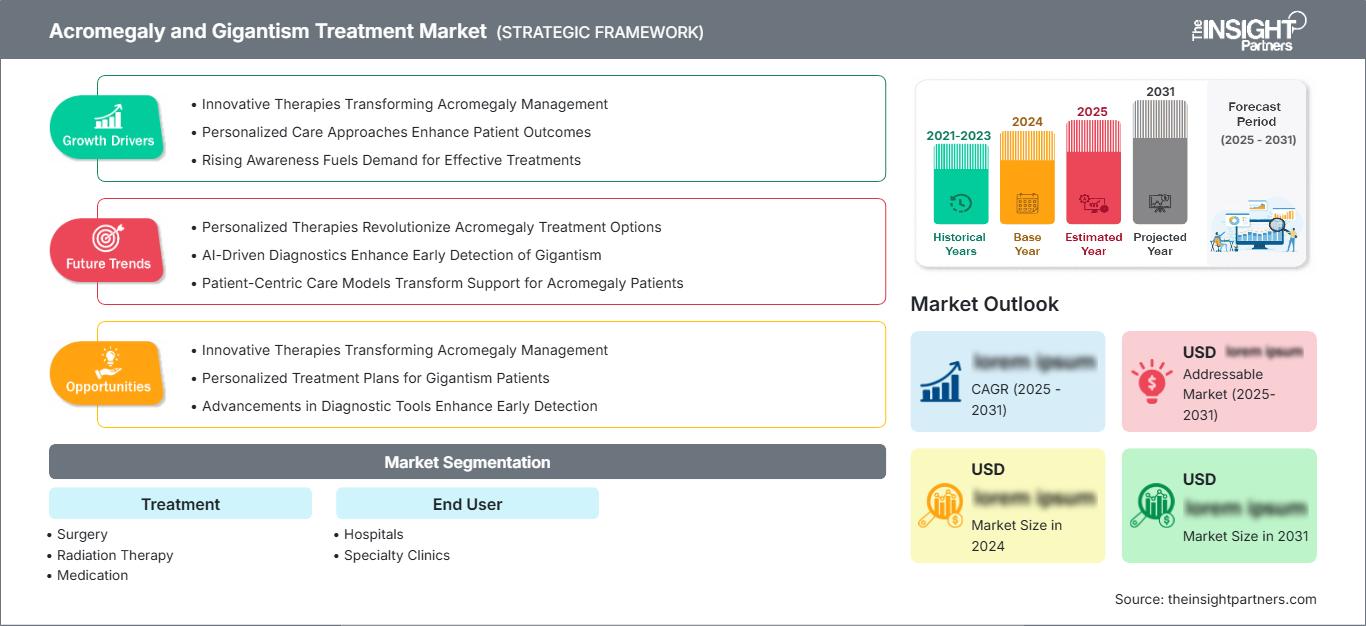
Regional Insights
North America Acromegaly and gigantism treatment market
North America accounted for an estimated 39–41% share in 2025 and is projected to grow at an 8.0–8.4% CAGR during 2026–2034. The region benefits from high MRI availability, endocrine specialty density, and strong use of somatostatin analogs, pegvisomant, and oral therapies for patients not cured by surgery. Earlier biochemical screening increases medication initiation and long-term follow-up.
The acromegaly and gigantism treatment market share in North America is also supported by integrated pituitary centers that combine neurosurgery, endocrinology, radiation oncology, and specialty pharmacy. Patient advocacy, rare-disease education, and payer familiarity with chronic endocrine therapy improve treatment continuity. Canada contributes through specialist referral pathways, although provincial reimbursement timing can influence access to newer formulations.
U.S. Acromegaly and gigantism treatment market
The US accounted for 84-88% of North America in 2025 and is expected to grow at a CAGR of 8.1-8.5% until 2034. The market growth is due to widespread endocrine testing, commercial insurance, academic pituitary programs, and fast adoption of innovations. The usage rate is high owing to the necessity of treatment among patients who do not respond sufficiently to surgery.
Pharmaceutical companies conduct operations in different fields of therapy. Visibility of branded therapies and oral therapies can be seen from companies such as Pfizer Inc., Novartis AG, Ipsen Pharma SAS, Crinetics Pharmaceuticals, Inc., and Chiasma, Inc., whereas specialty pharmacies manage validation and compliance. Trends in application are the prescription of chronic medications, biochemical regulation after surgery, and choice of therapies on the basis of IGF-1 normalization and tumors.
Europe Acromegaly and gigantism treatment market
The market share in Europe was estimated at 28-30% in 2025 and will have a CAGR growth rate of 7.2-7.6% during 2026-2034. The United Kingdom has advantages of the structure of referrals in the National Health Service, pituitary multidisciplinary teams and centralization of high-complexity care. Germany leads due to strong capabilities in endocrinology, imaging and regular access to surgery and drugs.
France, Italy and Spain help through the public reimbursement programs, endocrinology societies and patient pathways in case of pituitary adenoma treatment. Adoption in Europe is controlled and payers take into consideration the biochemical efficacy, safety and economic factors before using new drugs. The market growth is steady because of aging populations, increased diagnoses and follow-up at special clinics.
APAC Acromegaly and gigantism treatment market
APAC accounted for an estimated 20–22% share in 2025 and is forecast to grow at a 9.0–9.4% CAGR during 2026–2034. China leads by patient volume, while Japan has strong specialist access and advanced endocrine diagnostics.
The growth in India, South Korea, and Australia can be seen through tertiary hospitals, specialist clinics, and more MRIs. The industry factors involve involvement in clinical trials, ability to deliver injectables, and bio-pharmaceutical capabilities. Rare disease policy support and insurance should decrease diagnostic delays in major cities.
Middle East & Africa Acromegaly and gigantism treatment market
Middle East & Africa is expected to grow at a 6.9–7.3% CAGR during 2026–2034, led by Saudi Arabia. The UAE, South Africa, and Rest of MEA contribute through tertiary hospitals, imported specialty drugs, and expanding endocrinology services.
Health care investments through energy in the Gulf States facilitate the acquisition of MRIs, neurosurgeons, and international collaboration for treatment. South Africa is still an important referral center within the subregion. Late diagnosis, shortage of pituitary experts, and dependence on imported drugs are challenges that continue to exist, making physician training critical.
Segmentation Analysis
Treatment
The Treatment segment is expected to grow at an 8.3–8.7% CAGR during 2026–2034, reflecting a balanced pathway in which surgery is often first-line, medication provides chronic biochemical control, and radiation therapy supports residual or recurrent disease. The acromegaly and gigantism treatment market scope across this segment depends on tumor size, surgical response, IGF-1 level, comorbidities, age, and access to specialist care.
- Surgery: This sub-segment remains clinically central because transsphenoidal removal can reduce tumor mass, relieve compression, and sometimes achieve remission, especially when performed by experienced pituitary neurosurgeons.
- Radiation Therapy: This sub-segment is important for persistent or recurrent disease when surgery and medication do not achieve durable control, although response can take years and requires monitoring.
- Medication: This sub-segment dominates revenue because many patients need long-term somatostatin analogs, oral therapies, dopamine agonists, or growth hormone receptor antagonists after incomplete surgical control.
End-User
The End User segment is projected to grow at an 8.0–8.4% CAGR during 2026–2034. Hospitals remain essential for diagnosis, pituitary surgery, radiation therapy, MRI, and complex comorbidity workup. Specialty clinics are gaining strategic importance because long-term dose adjustment, biochemical monitoring, injection training, and symptom management require repeated patient engagement beyond the initial hospital episode.
- Hospitals: This sub-segment holds the strongest procedural role because surgery, radiation planning, advanced imaging, inpatient endocrine evaluation, and complex case management are concentrated in tertiary centers.
- Specialty Clinics: This sub-segment is expanding as patients require regular IGF-1 testing, therapy switching, injection support, glucose monitoring, and coordinated management of cardiovascular, metabolic, and sleep-related complications.
Opportunity Snapshot
| Segment Name | Revenue Contribution | Trend Tag | Adoption Stage |
| Hospitals | High | Pituitary Surgery | Mature |
| Specialty Clinics | High | Dose Optimization | Scaling |
Acromegaly and Gigantism Treatment Market Growth Drivers and Impact Analysis
Earlier Diagnosis Through Endocrine Testing and MRI Access
Earlier detection is an important driver of growth because the symptoms like acral enlargement, facial alterations, obstructive sleep apnea, diabetes, hypertension, and arthralgia tend to develop over long periods of time. The use of IGF-1 screening and pituitary MRI leads to quicker diagnosis after recognizing the symptoms. From a practical perspective, this will lead to increased referrals to pituitary centers and greater number of patients who need surgery planning and medication because of failed biochemical treatment. Early diagnosis can help avoid the development of irreversible symptoms, but at the same time, it will expand the scope of treated population by identifying patients prior to the development of morbidities.
Shift Toward Convenient Medication and Lower Treatment Burden
The concept of treatment burden is a critical point for consideration since the long-acting somatostatin analogs have to be injected and the patients need to have tolerance to the injection site and need to schedule visits. The oral administration and self-injected products are the answer to the convenience issue while achieving the aim of keeping IGF-1 and GH under control. The market implications will be better therapy compliance, higher level of specialty pharmacy participation, and closer look at the real world benefits from the payers. Patients who fail to keep up with depot injections will prefer the oral or easier methods of administration.
Expansion of Multidisciplinary Pituitary Centers
Multidisciplinary Pituitary centers enhance care quality by coordinating endocrinologists, neurosurgeons, radiologists, ophthalmologists, radiation oncologists, cardiologists, sleep physicians and specialty pharmacists. This framework enables customized sequencing of treatment options including surgical, medical and radiation treatments. Commercial implications extend to increased overall costs incurred within imaging, surgeries, specialty pharmaceuticals, and follow up tests. Pituitary centers with higher case loads are more receptive to adopting new treatments and being involved in clinical evidence development. Coordination increases coverage of treatment and helps in managing diabetes, cardiomyopathy, hypertension and sleep apnea. For suppliers, pituitary centers present convenient venues for educating, measuring outcomes, service frameworks and specialty products.
Acromegaly and Gigantism Treatment Market Future Trends
Oral and Self-Administered Therapy Models
Future acromegaly and gigantism treatment market trends will increasingly focus on shifting eligible patients from clinic-administered injections toward oral or self-administered options. This transformation will not eliminate depot therapy, but it will create stronger segmentation by patient preference, biochemical response, adherence risk, and payer criteria. Digital reminders, home delivery, and remote biochemical monitoring may support persistence. The trend will also increase competition around patient-reported outcomes, not only laboratory normalization. Companies with oral platforms or convenient injection systems can gain share where they prove durable IGF-1 control, tolerability, and real-world treatment satisfaction.
Greater Use of Biomarker-Guided Therapy Sequencing
Therapeutic selection is anticipated to become increasingly individualized with the consideration of tumor granulation profile, somatostatin receptor profile, imaging profile, glucose level, IGF-1 profile, and previous surgical outcome by clinicians. Sequence therapy based on biomarkers will be useful in determining patients who will respond well to first-generation somatostatin analogs, second-generation therapies, receptor antagonists, or oral SST2 agonists. The trend that is anticipated for the future will make switching easier and prevent prolonged suboptimal treatment. It will make the role of registries and data sets in endocrinology important. For pharmaceutical companies, phenotypic evidence will make their products stand out.
Acromegaly and Gigantism Treatment Market Opportunities
Specialty Clinic Networks for Long-Term Control
There exists the potential for specialty clinics due to the necessity of many years of testing, symptom evaluation, dose modification, and treatment of comorbidities. According to the forecasts of the acromegaly and gigantism treatments market, the opportunity becomes more valuable when the integration of endocrinology evaluation, injections, oral drug use, sleep disorder examination, and cardiometabolic management takes place. Investors may finance integrated treatment approaches that would minimize the number of missed visits and enhance the persistence of the patients. Pharmaceutical firms could be involved in the process by educating the patients and providing assistance programs. The main regions for this potential are North America, Europe, Japan, and Asia Pacific private hospitals.
Emerging-Market Access for Diagnosis and Medication
Emerging markets present an investment opportunity because diagnosis delay remains high and pituitary specialist access is uneven. Health systems can improve market readiness by expanding MRI access, training endocrinologists, securing specialty drug supply, and building referral links between hospitals and clinics. Manufacturers can support country-level registration, cold-chain partnerships, and affordability programs for selected therapies. The opportunity is attractive because untreated patients often present with advanced complications that create high hospital burden. Better access to medication after surgery can improve biochemical control and reduce long-term morbidity. Growth will depend on reimbursement clarity, clinician education, and reliable distribution.
Recent Developments
- January 2026: Camurus AB announced U.S. FDA acceptance of the NDA resubmission for Oclaiz, CAM2029, an octreotide extended-release injection for acromegaly, with a PDUFA target action date of 10 June 2026. The product is designed for once-monthly subcutaneous self-administration using FluidCrystal technology.
- September 2025: Crinetics Pharmaceuticals, Inc. received U.S. FDA approval for PALSONIFY, paltusotine, for adults with acromegaly who had inadequate response to surgery or for whom surgery is not an option. The approval established the first once-daily oral therapy approved by the FDA for treatment of adults with acromegaly.
- July 2025: Camurus AB received European Commission marketing authorization for Oczyesa, octreotide subcutaneous depot, for maintenance treatment in adult patients with acromegaly who responded to and tolerated somatostatin analogs. The company described it as the first approved once-monthly subcutaneous octreotide treatment for acromegaly in the EU.
Frequently Asked Questions

- Comprehensive Market Sizing and Forecast Analysis
- Detailed Segmentation Analysis
- In-Depth Market Dynamics Assessment
- Regional and Country-Level Insights
- Competitive Landscape and Company Benchmarking
- Strategic Business Intelligence
Recent Reports
Testimonials

The Insight Partners provided valuable market intelligence that supported our global go-to-market strategy. Their team was professional, responsive, and attentive to our feedback, providing thoughtful analysis and helpful methodological clarifications throughout the project.
Junmo Kim Chief Financial Officer (CFO), Enertech Co., Ltd.
The Insight Partners' SCADA System Market report is comprehensive, with valuable insights on current trends and future forecasts. The team was highly professional, responsive, and supportive throughout. We are very satisfied and highly recommend their services.
RAN KEDEM Partner, Reali Technologies LTDs
I requested a report on a very specific software market and the team produced the report in a few days. The information was very relevant and well presented. I then requested some changes and additions to the report. The team was again very responsive and I got the final report in less than a week.
JEAN-HERVE JENN Chairman, Future Analytica
We worked with The Insight Partners for an important market study and forecast. They gave us clear insights into opportunities and risks, which helped shape our plans. Their research was easy to use and based on solid data. It helped us make smart, confident decisions. We highly recommend them.
PIYUSH NAGPAL Sr. Vice President, High Beam Global
The Insight Partners delivered insightful, well-structured market research with strong domain expertise. Their team was professional and responsive throughout. The user-friendly website made accessing industry reports seamless. We highly recommend them for reliable, high-quality research services
YUKIHIKO ADACHI CEO, Deep Blue, LLC.
This is the first time I have purchased a market report from The Insight Partners.While I was unsure at first, I visited their web site and felt more comfortable to take the risk and purchase a market report.I am completely satisfied with the quality of the report and customer service. I had several questions and comments with the initial report, but after a couple of dialogs over email with their analyst I believe I have a report that I can use as input to our strategic planning process.Thank you so much for taking the extra time and making this a positive experience.I will definitely recommend your service to others and you will be my first call when we need further market data.
JOHN SUZUKI President and Chief Executive Officer, Board Director, BK Technologies
I wish to appreciate your support and the professionalism you displayed in the course of attending to my request for information regarding to infectious disease IVD market in Nigeria. I appreciate your patience, your guidance, and the fact that you were willing to offer a discount, which eventually made it possible for us to close a deal. I look forward to engaging The Insight Partners in the future, all thanks to the impression you have created in me as a result of this first encounter.
DR CHIJIOKE ONYIA MANAGING DIRECTOR, PineCrest Healthcare Ltd.Reason to Buy
- Informed Decision-Making
- Understanding Market Dynamics
- Competitive Analysis
- Identifying Emerging Markets
- Customer Insights
- Market Forecasts
- Risk Mitigation
- Boosting Operational Efficiency
- Strategic Planning
- Investment Justification
- Tracking Industry Innovations
- Aligning with Regulatory Trends





 Get Free Sample for