
Acute Intermittent Porphyria Market Size, Demand & Growth by 2034
Coverage: By Diagnosis ( Blood Test, Serum Test, Urine Test, DNA Test, Others ); Treatment ( Prophylactic Hematin Infusions, Gonadotropin-Releasing Hormone Analogues, Others ); End-User ( Hospitals, Clinics, Research Centers, Others ), and Geography (North America, Europe, Asia Pacific, and South and Central America)
- Status : Data Released
- Report Code : TIPRE00017672
- Category : Life Sciences
- No. of Pages : 150
- Available Report Formats :


- Last update date : July 30, 2026


2025 Market Size
US$ 5.17 Bn
Base year value
2034 Forecast
US$ 9.12 Bn
Projected by 2034
CAGR 2026-2034
6.51 %
Growth rate
Addressable Market
US$ 64.63 Bn
(2026-2034)
The Acute Intermittent Porphyria Market size is experiencing slow evolution due to developments in diagnostics, targeted therapies, and new management strategies for the rare disease. The market is assessed at $5.17 Billion in 2025 and forecasted to be worth $9.12 Billion in 2034, registering a CAGR of 6.51% between 2026 and 2034. Market expansion is driven by growing awareness of acute hepatic porphyrias, greater genetic testing rate, and continued research on specific therapies.
Increased funding for rare disease infrastructure is driving the North American scenario, because of the already existing diagnostics network, specialized care centers, and the reimbursement policy related to the treatments of orphan diseases. North America will show a CAGR between 6.0–6.7% during 2026 and 2034 due to growing physician recognition of this rare disease, higher usage of molecular diagnostics, and more advanced management strategies.
Acute Intermittent Porphyria Market Assessment and Insights
- North America accounted for an estimated 42–46% Acute Intermittent Porphyria Market share in 2025 and is projected to grow at a 6.0–6.7% CAGR between 2026–2034. Strong rare disease infrastructure, advanced genetic testing capabilities, and specialized treatment centers support regional leadership.
- US represented approximately 84–88% of North American revenue in 2025 and is expected to expand at a 6.1–6.8% CAGR between 2026–2034. Established orphan drug pathways, specialist networks, and advanced diagnostic adoption continue supporting market development.
- Europe held an estimated 27–31% share in 2025 and is forecast to register a 5.7–6.4% CAGR between 2026–2034. Germany, the UK, France, Italy, and Spain remain important markets due to rare disease programs and improved access to targeted therapies.
- Asia Pacific captured approximately 17–21% share in 2025 and is anticipated to grow at a 6.8–7.5% CAGR between 2026–2034. China, Japan, India, South Korea, and Australia are improving rare disease diagnosis through healthcare modernization and genomic medicine initiatives.
- Largest Segment: Treatment represented an estimated 45–50% market share in 2025 and is expected to grow at a 6.3–6.9% CAGR between 2026–2034 due to increasing demand for disease management therapies.
- High Growth Segment: DNA Test diagnosis represented approximately 20–25% market share in 2025 and is projected to expand at a 7.0–7.8% CAGR between 2026–2034 due to increasing adoption of genetic confirmation methods.
- Key companies analyzed in detail: Recordati Rare Diseases Inc., Lundbeck Inc., Alnylam Pharmaceuticals, Inc., Takeda Pharmaceutical Company Limited, Pfizer Inc., Sanofi, Novartis AG, F. Hoffmann-La Roche Ltd., Thermo Fisher Scientific Inc., and Bio-Rad Laboratories, Inc.
Source: The Insight Partners' analysis based on proprietary research, government publications, company annual reports, investor presentations, industry databases, and expert interviews.
In the evolution of the Acute Intermittent Porphyria market, key factors include advances in molecular diagnostics, rare disease screening methods, and a shift in focus towards precision medicine-based techniques. More and more healthcare professionals are using techniques involving the use of genetic diagnosis, biochemical tests, and monitoring techniques to diagnose the diseases. In pharmaceuticals as well, there has been a move from focusing on treating the symptoms of the disorder to actually tackling the underlying pathophysiology of the disease.
The increasing awareness regarding rare disorders, along with support for orphan drugs and specialized healthcare infrastructure, are expected to influence future market developments. The emerging countries are making strides in terms of improving their capacity in the field of genomics as well as medical education in order to be able to diagnose rare diseases.
Acute Intermittent Porphyria Market Report Scope
| Report Attribute | Details |
|---|---|
| Market size in 2025 | US$ 5.17 Billion |
| Market Size by 2034 | US$ 9.12 Billion |
| Global CAGR (2026 - 2034) | 6.51% |
| Historical Data | 2021-2024 |
| Forecast period | 2026-2034 |
Acute Intermittent Porphyria Market Analysis
Factors such as increased awareness about rare metabolic diseases, advancements in diagnostic techniques, and growing adoption of novel treatment methods have been driving the market for Acute Intermittent Porphyria. Defects in the heme biosynthesis pathways lead to the development of acute intermittent porphyria, necessitating biochemical tests and genetic verification along with management strategies. The value chain consists of diagnostics facilities, biotech firms, pharmaceutical producers, healthcare organizations, specialist centers, and research institutes contributing to the enhancement of patient diagnosis and treatment options.
The ecosystems for diagnostic methods and treatments are changing because of the healthcare industry’s focus on early detection and management of rare diseases. The Acute Intermittent Porphyria Market growth has been fuelled by the increased adoption of sophisticated lab techniques like genetic sequencing and molecular analysis that aid in confirming diagnosis and classification of porphyrias. Pharmaceutical value chains are getting adapted according to the requirements of specialized treatments.
The analysis of competitive positioning in the Acute Intermittent Porphyria Market is characterized by greater emphasis on rare disease innovations, targeted drug development, and portfolio building. Recordati Rare Diseases Inc. holds an impressive market position due to its portfolio of rare-disease therapies. Additionally, there is participation from Alnylam Pharmaceuticals, Inc. due to its innovation related to RNA interference therapeutic technologies. Finally, there is Lundbeck Inc., which develops specialty pharmaceuticals in neurology and rare diseases.
There is growing interest in the development of orphan drugs, precision medicine technology platforms, and cooperation of biotech companies and health care organizations. Such players as Takeda Pharmaceutical Company Limited, Sanofi, Novartis AG, F. Hoffmann-La Roche Ltd., Thermo Fisher Scientific Inc., and Bio-Rad Laboratories, Inc. participate in the development of pharmaceuticals, diagnostics, and health care solutions.
● REPORT CUSTOMIZATION
Tailor This Report To Align With Your Specific Business Requirements
This report can be customized to align precisely with your business objectives, scope, and target markets. Customization options include tailored segmentation, geography, competitive analysis, and strategic insights to support informed decision-making.
Customize This Report →WHAT YOU CAN ADJUST
- ● Segmentations
- ● Geography
- ● Competitive Analysis
- ● Language Preferences
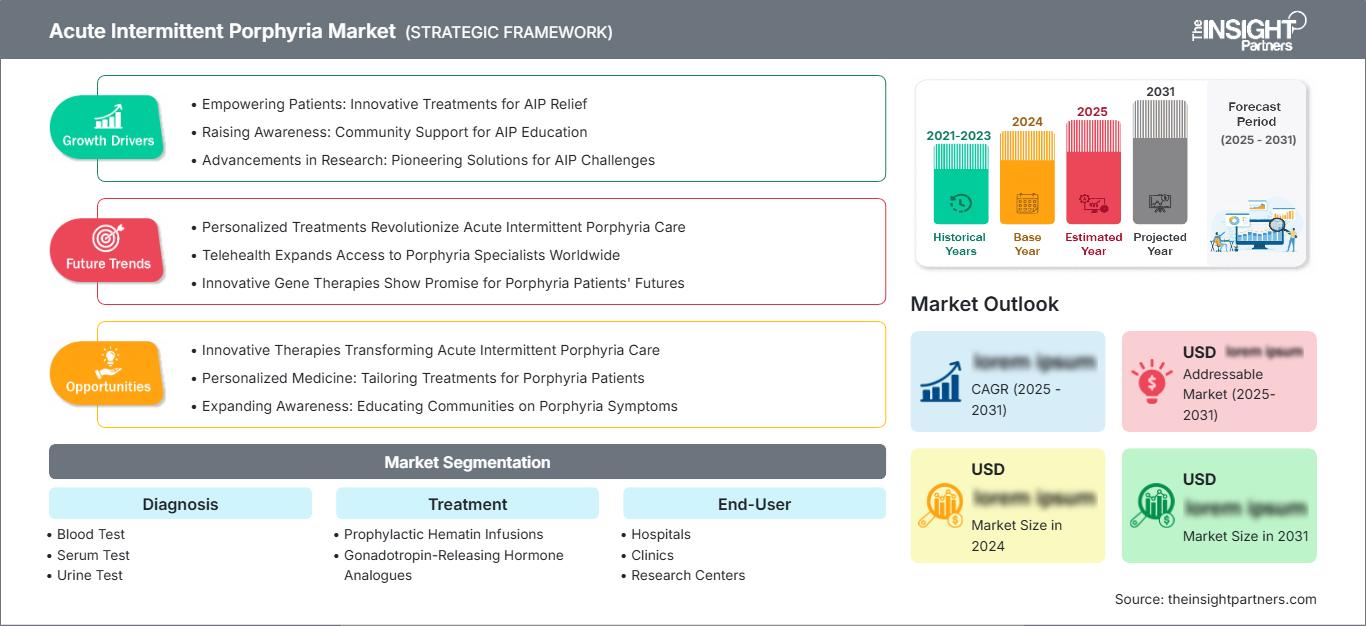
Acute Intermittent Porphyria Market: Strategic Insights
Regional Insights
North America Acute Intermittent Porphyria Market
North America accounted for around 42-46% of the market share in 2025 and is anticipated to grow at a CAGR of 6.0-6.7% through 2034. North America holds a dominant market position owing to its sophisticated rare disease infrastructure, well-established diagnostic facilities, and higher acceptance levels of specialized therapy. The US is the major driver in this market, fueled by orphan drug initiatives, specialized treatment facilities, and increased awareness among healthcare practitioners.
The regional environment includes cooperation among pharmaceutical companies, academic institutions, and rare disease organizations. Enhanced access to genetic testing, biochemical tests, and specialty care services will play an important role in early detection of diseases. Canada is contributing in the market by developing rare disease programs and adopting healthcare improvements. The future demand in the market is highly dependent on identification of patients and further investments in precision medicine and therapies.
U.S. Acute Intermittent Porphyria Market
The U.S. accounted for approximately 84–88% of North American revenue in 2025 and is projected to grow at a 6.1–6.8% CAGR during 2026–2034. The country benefits from a developed biotechnology ecosystem, advanced diagnostic capabilities, and established regulatory pathways for orphan disease therapies. Increasing physician awareness and improved access to specialized healthcare providers are strengthening diagnosis and treatment adoption.
There are several companies, such as Recordati Rare Diseases Inc., Alnylam Pharmaceuticals, Inc., and Lundbeck Inc., which have ongoing operations related to rare disease treatment development and commercialization within the country. With the rise in the application of genetic testing, specialist clinics, and patients' support programs, there has been an enhancement in the disease management pathways. Research institutes and clinical trials have played a crucial role in driving innovation.
Europe Acute Intermittent Porphyria Market
Europe holds a share of about 27-31% in 2025 and is estimated to have a CAGR of 5.7-6.4% up to 2034. Europe has emerged as a major market due to the presence of rare diseases framework, developed healthcare system, and growing use of advanced diagnostic tools. In terms of individual countries in the region, Germany holds the largest position followed by the UK, France, Italy, and Spain due to presence of specialized medical knowledge and facilities.
The UK is working continuously towards better care for rare diseases through a national healthcare program, specialist referrals, and the development of diagnostic processes. Germany has advantages due to advanced clinical research, laboratory facilities, and access to specialized therapy. France, Italy, and Spain are developing their rare-disease programs through collaboration in healthcare and patient identification. Orphan medicines regulations in Europe and precision diagnostics are likely to affect future availability of treatment.
APAC Acute Intermittent Porphyria Market
APAC held around 17-21% of the share in 2025 and expected to gain at a 6.8-7.5% CAGR till 2034. China leads the market owing to expanding healthcare infrastructure, increasing investments in genomics and medicine, and rising awareness of rare diseases. Government initiatives for the use of advanced diagnostics will further increase access to specialized health care.
In Japan, South Korea, India, and Australia, there are increasing efforts to identify rare diseases owing to the use of healthcare technologies and development of clinical research. The growing availability of molecular diagnostics, investments in biotechnology, and healthcare transformation programs will fuel market growth in the region. Pharmaceutical players are looking for collaborations for better treatment availability.
Middle East & Africa Acute Intermittent Porphyria Market
The Middle East & Africa region is expected to expand at a 5.5–6.2% CAGR through 2034. Saudi Arabia, the UAE, and South Africa represent important markets due to healthcare infrastructure development, increasing specialty care investment, and growing awareness of rare metabolic disorders. Saudi Arabia is emerging as a leading market through healthcare transformation initiatives.
The UAE continues its efforts to enhance its capacity for advanced diagnostics and specialized medical care, while South Africa is contributing by developing clinical networks and improving access to health care. Markets in the Rest of MEA region are slowly embracing the approach to rare diseases management as their health care systems continue to evolve. Establishment of specialist hospitals, laboratory development, and growth in precision medicine initiatives are driving regional opportunities.
Segmentation Analysis
Diagnosis
The Diagnosis segment is expected to grow at a 6.7–7.4% CAGR during 2026–2034. The Acute Intermittent Porphyria Market scope continues expanding as healthcare providers emphasize early identification of rare metabolic disorders through biochemical and molecular testing. Increased awareness among clinicians, improved laboratory infrastructure, and adoption of precision diagnostics are strengthening the role of diagnostic solutions in patient management pathways.
- Blood Test: Blood testing remains an important diagnostic approach for identifying biochemical abnormalities associated with porphyria. Its clinical utility supports initial evaluation and monitoring procedures in specialized healthcare settings.
- Serum Test: Serum testing contributes to disease assessment by supporting metabolic analysis and improving diagnostic accuracy. Growing laboratory capabilities are increasing adoption within specialized diagnostic environments.
- Urine Test: Urine testing remains widely utilized for detecting porphyrin-related biomarkers and supporting confirmation of suspected cases. Its established clinical role maintains demand across hospitals and diagnostic centers.
- DNA Test: DNA testing is gaining importance due to increasing emphasis on genetic confirmation, family screening, and precision diagnosis. Molecular approaches support accurate identification of inherited disease patterns.
Treatment
The Treatment segment is projected to expand at a 6.4–7.1% CAGR through 2034. Treatment strategies continue evolving as healthcare systems focus on reducing acute episodes, improving patient outcomes, and addressing underlying disease mechanisms. Increasing adoption of specialized therapies and supportive management approaches is strengthening demand across hospitals and specialty care facilities.
- Prophylactic Hematin Infusions: Prophylactic hematin infusions remain an established treatment approach for reducing recurrence of acute attacks. Their importance continues through specialist-led management of severe disease cases.
- Gonadotropin-Releasing Hormone Analogues: Gonadotropin-releasing hormone analogues support management in selected patient groups where hormonal triggers influence disease activity. Their targeted application contributes to treatment diversification.
End-User
The End-User segment is anticipated to grow at a 6.2–6.9% CAGR between 2026–2034. Healthcare delivery models for rare metabolic disorders depend on specialized facilities capable of diagnosis, treatment administration, and long-term monitoring. Expansion of multidisciplinary care networks is improving accessibility and strengthening adoption across different healthcare environments.
- Hospitals: Hospitals represent a major care setting due to availability of emergency management, specialist consultations, advanced diagnostics, and treatment facilities required for acute disease episodes.
- Clinics: Clinics contribute through outpatient monitoring, follow-up care, and disease management services. Increasing specialist networks are improving patient access to continuous healthcare support.
- Research Centers: Research centers support clinical advancement through disease studies, genetic research, and therapeutic innovation. Their contribution remains important for improving understanding and treatment development.
Opportunity Snapshot
| Segment Name | Revenue Contribution | Trend Tag | Adoption Stage |
|---|---|---|---|
| Hospitals | High | Specialty Care | Mature |
| Clinics | Medium | Patient Monitoring | Scaling |
| Research Centers | Medium | Rare Disease Research | Emerging |
Acute Intermittent Porphyria Market Growth Drivers and Impact Analysis
Increasing Focus on Rare Disease Diagnosis and Awareness
Rising awareness of the occurrence of rare metabolic diseases leads to increased diagnosis and better interventions. Diagnosing acute intermittent porphyria usually entails specific procedures because of its symptoms, which can overlap with those of many other diseases. Physician education and diagnostics therefore become vital to this factor’s development. Health care facilities have been showing increased attention to diagnosis, counseling, and referrals for rare diseases. This effect affects diagnostic labs, hospitals, and drug manufacturers since there will be increased need for proper diagnostics and interventions for such patients. Improved diagnosis helps in recruiting more subjects into clinical trials.
Advancement of Precision Medicine and Genetic Testing Technologies
Advances in molecular diagnostics are playing a key role in the management of rare diseases by enhancing genetic validation and patient classification. Sequencing technologies and laboratory facilities have become highly effective in helping health care professionals to validate inherited genetic mutations and make treatment choices. This trend helps in diagnosing and understanding diseases easily and eliminates delays in identifying diseases. Availability of special testing facilities creates new opportunities for diagnostic companies and health care organizations. Genetic knowledge also assists in research efforts that aim to understand the disease mechanisms and treatment methods.
Expansion of Targeted Rare Disease Therapeutics
The development of targeted therapies is reshaping treatment approaches for patients requiring specialized disease management. Pharmaceutical companies are increasingly investing in therapies designed to address specific biological pathways associated with rare disorders. This shift is encouraging healthcare providers to adopt more advanced treatment strategies beyond conventional symptom management. Growing regulatory support for orphan medicines is also improving incentives for therapeutic innovation. The impact is visible across research organizations, biotechnology companies, and healthcare systems seeking improved outcomes for patients with complex conditions. Continued investment in targeted treatments is expected to strengthen therapeutic options and expand access to specialized care.
Acute Intermittent Porphyria Market Future Trends
Increasing Adoption of Molecular Diagnostics Platforms
Future diagnostic strategies are expected to increasingly rely on molecular testing platforms that provide faster and more precise disease confirmation. The Acute Intermittent Porphyria Market trends are expected to reflect greater integration of genetic analysis into routine rare disease evaluation pathways. Advances in sequencing technologies, improved laboratory automation, and broader availability of testing services may support earlier identification of affected individuals. Healthcare providers are likely to combine biochemical testing with molecular approaches to improve diagnostic confidence. These developments could enhance family screening programs, support personalized management strategies, and improve understanding of inherited disease patterns across different populations.
Growing Role of Digital Rare Disease Management Systems
Digital healthcare solutions are expected to influence future rare disease management by improving patient monitoring, specialist communication, and clinical data collection. Remote consultation platforms, electronic health records, and patient tracking systems may support better coordination between healthcare providers and individuals managing chronic conditions. Integration of digital tools with specialty care networks could improve follow-up processes and treatment adherence. These systems may also contribute to real-world evidence generation by enabling structured collection of patient outcomes. As healthcare organizations continue adopting technology-driven models, digital infrastructure is expected to become increasingly relevant for improving rare disease care delivery.
Acute Intermittent Porphyria Market Opportunities
Expansion of Rare Disease Care Infrastructure in Emerging Markets
Emerging healthcare markets present opportunities as governments and healthcare providers invest in specialized diagnostic capabilities and advanced treatment access. Companies can leverage Acute Intermittent Porphyria Market Forecasts to evaluate opportunities associated with improving rare disease awareness, expanding laboratory networks, and strengthening specialist healthcare services. Strategic collaborations with local hospitals, diagnostic providers, and research institutions may support broader adoption of advanced solutions. Countries improving healthcare infrastructure and genomic medicine capabilities are expected to create new opportunities for market participants. Investment in training programs, patient identification initiatives, and regional partnerships may further improve access to diagnosis and treatment.
Development of Integrated Diagnostic and Therapeutic Solutions
The increasing need for efficient disease management creates opportunities for companies developing integrated solutions that combine diagnostics, treatment support, and patient monitoring. Organizations investing in advanced testing platforms, therapeutic innovation, and coordinated care models may strengthen their competitive positioning. Healthcare systems are seeking approaches that improve diagnosis accuracy while supporting long-term disease management. Partnerships between pharmaceutical companies, diagnostic firms, and research institutions can accelerate innovation and improve patient outcomes. The development of comprehensive rare disease ecosystems may provide opportunities for expanding access, improving clinical efficiency, and supporting sustainable growth across specialized healthcare markets.
Recent Developments
- February 2026: Alnylam Pharmaceuticals, Inc. continued advancing its RNA interference-based therapeutic portfolio for rare diseases, including ongoing efforts supporting long-term access and clinical adoption of givosiran for acute hepatic porphyria management. The company focused on strengthening rare disease treatment pathways through scientific innovation, healthcare collaborations, and lifecycle strategies designed to address unmet needs among patients requiring specialized therapies.
- October 2025: Recordati Rare Diseases Inc. expanded its rare disease business activities by continuing commercialization initiatives for specialty medicines addressing uncommon metabolic disorders. The company maintained focus on improving availability of targeted therapies, strengthening physician engagement, and supporting patient access programs across international markets through specialized healthcare channels and rare disease networks.
- June 2025: Lundbeck Inc. continued investments in neuroscience and rare disease research programs, supporting development approaches aimed at addressing complex disorders with significant unmet medical requirements. The company emphasized scientific research capabilities, strategic collaborations, and portfolio development activities to strengthen its presence across specialized therapeutic areas requiring advanced clinical solutions.
Frequently Asked Questions

- Comprehensive Market Sizing and Forecast Analysis
- Detailed Segmentation Analysis
- In-Depth Market Dynamics Assessment
- Regional and Country-Level Insights
- Competitive Landscape and Company Benchmarking
- Strategic Business Intelligence
Recent Reports
Testimonials

The Insight Partners' SCADA System Market report is comprehensive, with valuable insights on current trends and future forecasts. The team was highly professional, responsive, and supportive throughout. We are very satisfied and highly recommend their services.
RAN KEDEM Partner, Reali Technologies LTDs
I requested a report on a very specific software market and the team produced the report in a few days. The information was very relevant and well presented. I then requested some changes and additions to the report. The team was again very responsive and I got the final report in less than a week.
JEAN-HERVE JENN Chairman, Future Analytica
We worked with The Insight Partners for an important market study and forecast. They gave us clear insights into opportunities and risks, which helped shape our plans. Their research was easy to use and based on solid data. It helped us make smart, confident decisions. We highly recommend them.
PIYUSH NAGPAL Sr. Vice President, High Beam Global
The Insight Partners delivered insightful, well-structured market research with strong domain expertise. Their team was professional and responsive throughout. The user-friendly website made accessing industry reports seamless. We highly recommend them for reliable, high-quality research services
YUKIHIKO ADACHI CEO, Deep Blue, LLC.
This is the first time I have purchased a market report from The Insight Partners.While I was unsure at first, I visited their web site and felt more comfortable to take the risk and purchase a market report.I am completely satisfied with the quality of the report and customer service. I had several questions and comments with the initial report, but after a couple of dialogs over email with their analyst I believe I have a report that I can use as input to our strategic planning process.Thank you so much for taking the extra time and making this a positive experience.I will definitely recommend your service to others and you will be my first call when we need further market data.
JOHN SUZUKI President and Chief Executive Officer, Board Director, BK Technologies
I wish to appreciate your support and the professionalism you displayed in the course of attending to my request for information regarding to infectious disease IVD market in Nigeria. I appreciate your patience, your guidance, and the fact that you were willing to offer a discount, which eventually made it possible for us to close a deal. I look forward to engaging The Insight Partners in the future, all thanks to the impression you have created in me as a result of this first encounter.
DR CHIJIOKE ONYIA MANAGING DIRECTOR, PineCrest Healthcare Ltd.Reason to Buy
- Informed Decision-Making
- Understanding Market Dynamics
- Competitive Analysis
- Identifying Emerging Markets
- Customer Insights
- Market Forecasts
- Risk Mitigation
- Boosting Operational Efficiency
- Strategic Planning
- Investment Justification
- Tracking Industry Innovations
- Aligning with Regulatory Trends





 Get Free Sample for