
Addictions Therapeutics Market Growth and Analysis by 2034
Coverage: By Treatment Type (Opioid Addiction Treatment, Alcohol Addiction treatment, Nicotine Addiction treatment, and Other substance addiction treatment), Drug Type (Nalaxone, Naltrexone, Bupropion, Disulfiram, Nicotine replacement products, Methadone, and Varenicline), Treatment Center (Inpatient treatment center, Residential treatment Center, and Outpatient Treatment Center), Distribution Channel (Hospital Pharmacies, Medical stores, and Others), and Geography
- Status : Data Released
- Report Code : TIPRE00015265
- Category : Life Sciences
- No. of Pages : 150
- Available Report Formats :


- Last update date : July 28, 2026


2025 Market Size
US$ 9.85 Bn
Base year value
2034 Forecast
US$ 18.57 Bn
Projected by 2034
CAGR 2026-2034
7.3 %
Growth rate
Addressable Market
US$ 128.19 Bn
(2026-2034)
The Addictions Therapeutics Market encompasses a broad range of pharmacological interventions designed to manage substance dependence and support recovery pathways. The market was valued at US$ 9.85 Billion in 2025 and is projected to reach US$ 18.57 Billion by 2034, registering a CAGR of 7.3% from 2026–2034.
Increasing awareness of addiction disorders, expanding treatment access, and continued development of medication-assisted therapies are shaping demand patterns.
North America represents a significant regional contributor, supported by established healthcare infrastructure, reimbursement frameworks, and rising adoption of evidence-based addiction management approaches. The Addictions Therapeutics Market size is influenced by increasing opioid dependency treatment requirements, government-led prevention programs, and broader availability of specialized care facilities. The region is expected to expand at an estimated CAGR range of 7.0–8.0% during 2026–2034, supported by clinical innovation and integrated treatment models.
Addictions Therapeutics Market Assessment and Insights
- North America holds a leading position with an estimated share of 38–42% in 2025. The region is projected to grow at a CAGR range of 7.0–8.0% between 2026–2034, supported by opioid treatment demand, advanced healthcare systems, and medication-assisted recovery adoption.
- US accounts for approximately 30–34% share in 2025 and is expected to expand at a CAGR range of 7.2–8.2% during 2026–2034, driven by addiction care initiatives and increasing treatment accessibility.
- Europe contributes an estimated 25–29% share in 2025, growing at a CAGR range of 6.5–7.5% through 2034. Germany, the UK, France, and Italy support regional advancement through structured addiction treatment programs.
- Asia Pacific represents around 18–22% share in 2025 and is anticipated to record a CAGR range of 8.0–9.0% from 2026–2034. China, India, Japan, and South Korea are key markets due to expanding healthcare investment.
- Largest Segment: Treatment Type represents a leading segment with a market share range of 40–45% in 2025 and a CAGR range of 7.0–8.0% from 2026–2034, supported by medication-assisted treatment adoption.
- High Growth Segment: Outpatient Treatment Center segment holds a share range of 25–30% in 2025 and is expected to grow at a CAGR range of 8.0–9.0% due to flexible recovery models.
- Key companies analyzed in detail: Indivior PLC, Pfizer Inc., GSK plc, Bausch Health Companies Inc., Cipla Limited, Orexo AB, Purdue Pharma L.P., Alvogen, Camurus AB, Hikma Pharmaceuticals PLC, Takeda Pharmaceutical Company Limited.
Source: The Insight Partners' analysis based on proprietary research, government publications, company annual reports, investor presentations, industry databases, and expert interviews.
Developments in the areas of formulation technology, integration of digital monitoring, and customized therapies are contributing to the changing dynamics of addiction therapeutics. Pharmaceutical firms are considering extended-release formulations, improved adherence techniques, and a safer safety profile with regard to addressing intricate dependencies. The industry comprises drug companies, clinical trial organizations, therapy facilities, and distribution channels collaborating to improve accessibility to patients. The regulatory requirement for proper management of controlled medications has prompted the pharmaceutical companies to develop better-quality systems.
Further growth of the industry will be guided by development in new healthcare markets, enhanced healthcare policy, and investments in facilities for the treatment of addiction. The regulatory acceptance of evidence-based therapies, along with the realization of addiction as a medical disease, will open up avenues for innovations in pharmaceuticals. Emerging countries are steadily establishing specialized facilities for treating addiction, while healthcare systems adopt an integrated approach involving medications, counseling, and behavior therapy.
Addictions Therapeutics Market Report Scope
| Report Attribute | Details |
|---|---|
| Market size in 2025 | US$ 9.85 Billion |
| Market Size by 2034 | US$ 18.57 Billion |
| Global CAGR (2026 - 2034) | 7.3% |
| Historical Data | 2021-2024 |
| Forecast period | 2026-2034 |
Addictions Therapeutics Market Analysis
Demand for addiction therapeutics continues to increase as healthcare systems address substance use disorders through comprehensive treatment frameworks. The Addictions Therapeutics Market growth is supported by rising opioid dependency concerns, greater acceptance of pharmacological treatment options, and expanded insurance coverage in developed economies. Pharmaceutical companies are strengthening supply chains for essential therapies while healthcare providers are integrating medication-assisted treatment into broader addiction management programs.
The value chain includes active pharmaceutical ingredient suppliers, formulation developers, regulatory authorities, healthcare institutions, and pharmacy networks. Manufacturers are prioritizing production consistency, controlled distribution, and compliance with evolving safety standards. Public health organizations, including the World Health Organization, emphasize improved access to evidence-based interventions, encouraging healthcare systems to expand treatment availability and reduce barriers to recovery services.
Competitive dynamics are shaped by innovation in long-acting formulations, strategic collaborations, and portfolio diversification among established pharmaceutical companies. According to the Addictions Therapeutics Market report, companies such as Indivior PLC, Camurus AB, Orexo AB, and Hikma Pharmaceuticals PLC are strengthening their positions through specialized addiction treatment solutions. Larger pharmaceutical organizations, including Pfizer Inc., GSK plc, and Takeda Pharmaceutical Company Limited, contribute through broader research capabilities and established distribution networks.
The focus of investments in the industry has been on developing therapies with better adherence rates, lower misuse chances, and positive results for patients. There are attempts to create advanced delivery techniques and programs for making therapy available to people in various geographical regions. Positioning requires a good understanding of regulations, the creation of data for clinical research, and working with healthcare professionals. The competition in the industry involves such companies as Bausch Health Companies Inc., Cipla Limited, Alvogen, and Purdue Pharma L.P.
● REPORT CUSTOMIZATION
Tailor This Report To Align With Your Specific Business Requirements
This report can be customized to align precisely with your business objectives, scope, and target markets. Customization options include tailored segmentation, geography, competitive analysis, and strategic insights to support informed decision-making.
Customize This Report →WHAT YOU CAN ADJUST
- ● Segmentations
- ● Geography
- ● Competitive Analysis
- ● Language Preferences
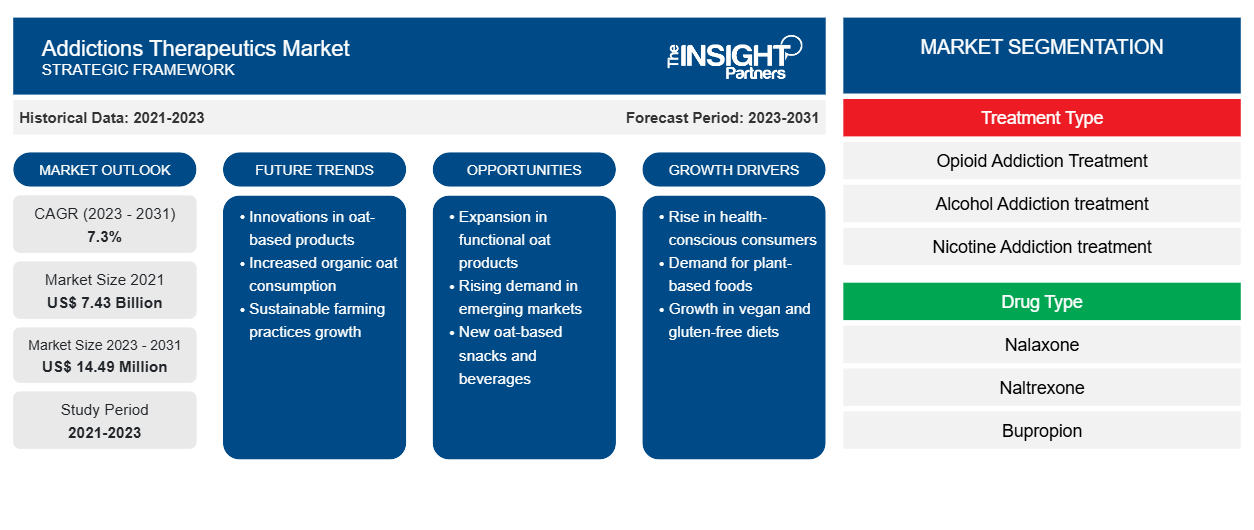
Addictions Therapeutics Market: Strategic Insights
Regional Insights
North America Addictions Therapeutics Market
North America accounted for an estimated 38–42% share of the Addictions Therapeutics Market in 2025 and is projected to expand at a CAGR range of 7.0–8.0% during 2026–2034. Good healthcare infrastructure, opioid treatment facilities, and proper reimbursement channels will keep supporting regional demand. The US continues to be the key player because of its large number of facilities for addiction treatment.
This region enjoys steady investments in medication-assisted therapy and innovative solutions in pharmaceuticals. Government measures for addiction treatment, together with increasing recognition of addiction disorders as diseases, improve treatment availability. The Canadian public healthcare system makes additional contributions through its addiction management services. Proper regulation regarding safe prescriptions and distribution is another important aspect that promotes the market.
U.S. Addictions Therapeutics Market
The US represents approximately 78–82% of North America’s Addictions Therapeutics Market share in 2025 and is expected to grow at a CAGR range of 7.2–8.2% between 2026–2034. High prevalence of opioid dependency, expanding outpatient services, and improved insurance coverage are major demand contributors. Pharmaceutical companies maintain strong presence through established treatment portfolios.
Healthcare providers increasingly adopt integrated addiction care models combining medication, counseling, and behavioral support. Companies including Indivior PLC, Orexo AB, and Camurus AB participate in the development and commercialization of specialized therapies. The increasing role of community-based treatment centers and digital healthcare support platforms is improving patient engagement. Regulatory efforts from agencies such as the FDA continue influencing product approvals, safety monitoring, and treatment accessibility across the country.
Europe Addictions Therapeutics Market
Europe held an estimated 25–29% share of the Addictions Therapeutics Market in 2025 and is anticipated to register a CAGR range of 6.5–7.5% through 2034. The region benefits from structured healthcare systems, government-supported addiction programs, and increasing adoption of evidence-based therapies. Germany represents one of the leading markets due to its developed healthcare infrastructure and organized treatment networks.
The UK continues to expand addiction treatment access through public health initiatives and specialized recovery services, while Germany supports demand through comprehensive clinical programs and pharmaceutical expertise. France, Italy, and Spain are strengthening addiction management frameworks through healthcare reforms and increased awareness. European countries are also emphasizing harm reduction strategies, responsible medication use, and improved treatment integration. Regulatory alignment and research collaboration continue to support regional market advancement.
APAC Addictions Therapeutics Market
Asia Pacific accounted for approximately 18–22% share of the Addictions Therapeutics Market in 2025 and is projected to grow at a CAGR range of 8.0–9.0% from 2026–2034. Some of the main contributing countries are China, Japan, South Korea, India, and Australia, owing to advancements in healthcare and treatment facilities.
Growing government interest in tackling substance abuse, provision of better medical facilities, and healthcare spending are some of the factors that will aid in regional growth. China and India are working towards enhancing their abilities in terms of managing addictions, while Japan and South Korea are concentrating on providing specialized healthcare services.
Middle East & Africa Addictions Therapeutics Market
The Middle East & Africa represents an emerging region within the Addictions Therapeutics Market, supported by healthcare infrastructure development and increasing awareness of addiction-related disorders. These nations include Saudi Arabia, the UAE, and South Africa, with a regional growth rate forecast between 6.0% to 7.0% CAGR for 2026-2034.
Both Saudi Arabia and the UAE are working towards improving the medical industry by adopting innovative approaches in healthcare and establishing specialized treatment centers, whereas South Africa is continuously growing in offering addiction recovery treatments. Other MEA countries are progressively working towards providing better access to healthcare by means of partnerships and public health programs.
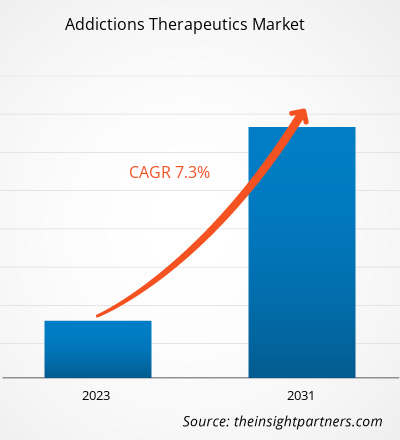
Segmentation Analysis
Treatment Type
The Treatment Type segment is expected to grow at a CAGR range of 7.0–8.0% during 2026–2034. This segment represents the core therapeutic category because treatment approaches directly address different substance dependencies. The Addictions Therapeutics Market scope is expanding as healthcare providers increasingly adopt medication-assisted strategies for opioid, alcohol, nicotine, and other substance-related disorders.
- Opioid Addiction Treatment remains a significant therapeutic category due to increasing demand for medications that support withdrawal management, relapse prevention, and long-term recovery programs. Healthcare systems prioritize evidence-based solutions for opioid dependency.
- Alcohol Addiction Treatment continues gaining attention as awareness of alcohol use disorders increases. Treatment approaches focus on reducing dependency risks through pharmaceutical interventions combined with counseling and behavioral support.
- Nicotine Addiction Treatment benefits from rising smoking cessation initiatives and public health campaigns. Nicotine replacement products and pharmacological alternatives support individuals seeking structured cessation pathways.
- Other substance addiction treatment addresses diverse dependency conditions requiring specialized therapeutic approaches. Growing clinical understanding supports the development of targeted solutions for complex substance use disorders.
Drug Type
The Drug Type segment is projected to register a CAGR range of 7.2–8.2% from 2026–2034. Growth is influenced by continuous pharmaceutical innovation, improved therapeutic formulations, and increasing utilization of approved medications. Different drug categories provide healthcare professionals with options tailored to patient needs, treatment duration, and dependency severity.
- Naloxone plays an important role in emergency overdose management by reversing opioid effects. Its availability through healthcare programs and community initiatives supports wider adoption.
- Naltrexone is used for relapse prevention across selected addiction treatments. Demand is supported by its role in reducing dependency risks and supporting recovery programs.
- Bupropion contributes to nicotine cessation management through established clinical applications. Its use is supported by healthcare providers seeking alternative pharmacological approaches.
- Disulfiram remains relevant in alcohol dependency management through controlled therapeutic applications. Clinical supervision influences its continued use.
- Nicotine replacement products support smoking cessation through accessible delivery formats, including patches, gums, and related alternatives.
- Methadone remains a widely recognized opioid treatment option, supported by structured programs and clinical monitoring systems.
- Varenicline supports nicotine cessation strategies through targeted mechanisms and continues to be evaluated for effective treatment outcomes.
Treatment Center
The Treatment Center segment is projected to expand at a CAGR range of 8.0–9.0% between 2026–2034. Increasing preference for accessible treatment models, rising patient enrollment, and healthcare system expansion are supporting demand across different care settings. The segment reflects changing approaches toward personalized and continuous addiction management.
- Inpatient treatment centers provide structured environments for patients requiring intensive supervision, medical monitoring, and comprehensive recovery programs. These facilities remain important for severe dependency cases.
- Residential treatment Center offers longer-duration recovery support with integrated therapeutic services. Growing emphasis on rehabilitation models supports continued adoption among patients requiring extended care.
- Outpatient Treatment Center is gaining importance due to flexible treatment schedules and improved accessibility. These centers support patients requiring ongoing therapy while maintaining daily activities.
Distribution Channel
The Distribution Channel segment is expected to record a CAGR range of 6.8–7.8% during 2026–2034. Efficient medicine distribution networks, pharmacy accessibility, and healthcare provider partnerships influence the availability of addiction treatment products. Expansion of organized healthcare delivery systems supports improved patient access.
- Hospital Pharmacies remain essential distribution points due to direct integration with clinical treatment pathways. Hospitals ensure controlled medication management and professional oversight.
- Medical stores provide broader accessibility for approved addiction-related therapies. Expansion of pharmacy networks supports convenience and improves availability in urban and developing regions.
Opportunity Snapshot
| Treatment Center | Revenue Contribution | Trend Tag | Adoption Stage |
|---|---|---|---|
| Inpatient Treatment Center | Medium | Intensive Care | Mature |
| Residential Treatment Center | Medium | Recovery Programs | Scaling |
| Outpatient Treatment Center | High | Flexible Care | Scaling |
Addictions Therapeutics Market Growth Drivers and Impact Analysis
Rising prevalence of substance use disorders
The rise of substance dependencies in many parts of the world is generating a need for drug-based solutions. Addiction treatment services have been increasing in healthcare institutions because the use of drugs is considered a medical condition that requires consistent treatment. More people and service providers have gained knowledge about the condition, resulting in improved diagnosis and the number of people seeking treatment for the same. Efforts from public health agencies to prevent addiction and recovery programs are encouraging more use of treatments. This generates demand for medications in pharmaceutical companies, hospitals, and treatment institutions.
Expansion of medication-assisted treatment programs
There is an increase in the utilization of drug addiction treatment programs, and this is causing an increase in the need for specially designed addiction treatments in the healthcare sector. This treatment program involves the use of drugs alongside behavioral and psychological assistance to enhance effectiveness in the treatment process. Hospitals, outpatient centers, and special clinics are enhancing their capabilities to cater to the increasing needs of patients. The use of medicines that have been approved by relevant bodies in addiction treatment programs is making it easier to maintain consistency in this field and to encourage healthcare professionals to use consistent approaches. There are pharmaceutical organizations that are coming up with better drugs.
Improving healthcare infrastructure and treatment accessibility
Healthcare infrastructure investments are ensuring that addiction treatment services become more available in both developed and developing nations. Infrastructure investments include investments in specialized centers, rehabilitation centers, and drug distribution systems, which have ensured that there is easy access to various therapies. Efforts by governments and healthcare agencies are being directed towards minimizing treatment gaps by conducting screening, referrals, and recovery treatment processes. Increased healthcare connectivity will ensure that healthcare providers are able to manage the addiction process and track the progress of their patients successfully. Outpatient treatment services are becoming more accessible due to improvements in community healthcare and the integration of digital healthcare systems. Pharmaceutical firms can exploit these infrastructure improvements in order to increase their distribution networks.
Addictions Therapeutics Market Future Trends
Personalized addiction treatment approaches
Future development of addiction therapies is expected to move toward personalized treatment strategies based on patient-specific characteristics, treatment history, and behavioral factors. Advances in clinical data analysis and healthcare technology may support a more precise selection of therapeutic approaches. The Addictions Therapeutics Market trends are likely to reflect increased integration of patient monitoring systems, digital health platforms, and individualized recovery pathways. Pharmaceutical developers are exploring ways to improve treatment response through optimized formulations and targeted mechanisms. Healthcare providers are expected to combine medication management with personalized counseling frameworks. These approaches could improve adherence, enhance patient engagement, and support more effective long-term recovery outcomes across different addiction categories.
Advanced drug delivery technologies
Innovation in the future would be centered around innovative ways of delivering drugs, which are easier, consistent and effective. Technologies like sustained action, controlled release and more user-friendly delivery methods have become popular with drug developers. Such technologies can help overcome problems associated with compliance and regular administration. Delivery methods that offer sustained therapeutic effect and minimal chances of abuse would be preferred by companies in the future. The increased concern of regulators regarding the safe use of medications would also affect the development of innovations. Sustained delivery platforms can create possibilities to enhance compliance and accessibility in patients who need chronic treatment of addictions.
Addictions Therapeutics Market Opportunities
Expansion into emerging healthcare markets
Emerging economies present significant opportunities as healthcare systems strengthen addiction treatment capabilities and improve access to specialized therapies. The Addictions Therapeutics Market Forecasts indicate that expanding healthcare infrastructure, increasing medical awareness, and government-supported treatment programs can create new avenues for pharmaceutical companies. Investors and manufacturers can explore partnerships with regional healthcare providers, distribution networks, and public health organizations to improve market penetration. Countries across the Asia Pacific, Latin America, and parts of the Middle East are gradually developing treatment frameworks that require reliable therapeutic solutions. Strategic expansion into these markets may support long-term growth while addressing unmet healthcare needs. Companies with adaptable supply chains and regulatory expertise are positioned to participate in these evolving opportunities.
Development of innovative therapeutic formulations
The development of new formulations is one area where innovations have great potential in terms of helping firms differentiate themselves in addiction therapy markets. Innovation efforts in research aimed at increasing efficiency, longevity of therapy effects, and convenience for patients could be beneficial from the perspective of competitiveness. The developers of pharmaceutical drugs could come up with innovative methods of delivery and use different approaches to overcome the drawbacks of current treatments. Growing demand for better solutions could help biotech firms work with other organizations in the healthcare sector. It could be expected that regulatory measures to support evidence-based therapies would continue driving innovation.
Recent Developments
- March 2025: Indivior PLC announced continued expansion of its addiction treatment portfolio through ongoing investment in opioid dependency therapies and global access initiatives. The company focused on strengthening healthcare partnerships and supporting evidence-based treatment approaches across multiple regions. The development reflects continued efforts to improve availability of specialized addiction medicines and enhance recovery support programs.
- January 2025: Camurus AB reported progress in advancing long-acting treatment solutions designed for addiction care applications. The company continued focusing on innovative delivery technologies intended to support treatment adherence and patient convenience. These developments highlight the growing importance of extended-release therapeutic approaches within addiction management and pharmaceutical innovation strategies.
- September 2024: Hikma Pharmaceuticals PLC expanded its focus on specialty pharmaceutical markets by strengthening its portfolio capabilities and healthcare supply initiatives. The company continued supporting access to essential medicines through established manufacturing and distribution networks, contributing to broader availability of healthcare solutions including therapies used in specialized treatment settings.
Frequently Asked Questions

- Comprehensive Market Sizing and Forecast Analysis
- Detailed Segmentation Analysis
- In-Depth Market Dynamics Assessment
- Regional and Country-Level Insights
- Competitive Landscape and Company Benchmarking
- Strategic Business Intelligence
Recent Reports
Testimonials

The Insight Partners provided valuable market intelligence that supported our global go-to-market strategy. Their team was professional, responsive, and attentive to our feedback, providing thoughtful analysis and helpful methodological clarifications throughout the project.
Junmo Kim Chief Financial Officer (CFO), Enertech Co., Ltd.
The Insight Partners' SCADA System Market report is comprehensive, with valuable insights on current trends and future forecasts. The team was highly professional, responsive, and supportive throughout. We are very satisfied and highly recommend their services.
RAN KEDEM Partner, Reali Technologies LTDs
I requested a report on a very specific software market and the team produced the report in a few days. The information was very relevant and well presented. I then requested some changes and additions to the report. The team was again very responsive and I got the final report in less than a week.
JEAN-HERVE JENN Chairman, Future Analytica
We worked with The Insight Partners for an important market study and forecast. They gave us clear insights into opportunities and risks, which helped shape our plans. Their research was easy to use and based on solid data. It helped us make smart, confident decisions. We highly recommend them.
PIYUSH NAGPAL Sr. Vice President, High Beam Global
The Insight Partners delivered insightful, well-structured market research with strong domain expertise. Their team was professional and responsive throughout. The user-friendly website made accessing industry reports seamless. We highly recommend them for reliable, high-quality research services
YUKIHIKO ADACHI CEO, Deep Blue, LLC.
This is the first time I have purchased a market report from The Insight Partners.While I was unsure at first, I visited their web site and felt more comfortable to take the risk and purchase a market report.I am completely satisfied with the quality of the report and customer service. I had several questions and comments with the initial report, but after a couple of dialogs over email with their analyst I believe I have a report that I can use as input to our strategic planning process.Thank you so much for taking the extra time and making this a positive experience.I will definitely recommend your service to others and you will be my first call when we need further market data.
JOHN SUZUKI President and Chief Executive Officer, Board Director, BK Technologies
I wish to appreciate your support and the professionalism you displayed in the course of attending to my request for information regarding to infectious disease IVD market in Nigeria. I appreciate your patience, your guidance, and the fact that you were willing to offer a discount, which eventually made it possible for us to close a deal. I look forward to engaging The Insight Partners in the future, all thanks to the impression you have created in me as a result of this first encounter.
DR CHIJIOKE ONYIA MANAGING DIRECTOR, PineCrest Healthcare Ltd.Reason to Buy
- Informed Decision-Making
- Understanding Market Dynamics
- Competitive Analysis
- Identifying Emerging Markets
- Customer Insights
- Market Forecasts
- Risk Mitigation
- Boosting Operational Efficiency
- Strategic Planning
- Investment Justification
- Tracking Industry Innovations
- Aligning with Regulatory Trends






 Get Free Sample for