
Agricultural Bactericides Market Growth, Share & Trends by 2034
Agricultural Bactericides Market Size and Forecasts (2021 - 2034), Global and Regional Share, Trends, and Growth Opportunity Analysis Report Coverage : by Type (Copper-based, Dithiocarbamate, Amide, Antibiotic); Crop Type (Cereals & Grains, Oilseeds & Pulses, Fruits & Vegetables); Mode of Application (Foliar Spray and Soil Treatment); Form (Liquid, Water Dispersible Granule, Wettable Powder); and Geography (North America, Europe, Asia Pacific, and South and Central America)
- Status : Data Released
- Report Code : TIPRE00040257
- Category : Chemicals and Materials
- No. of Pages : 150
- Available Report Formats :


- Last update date : July 21, 2026


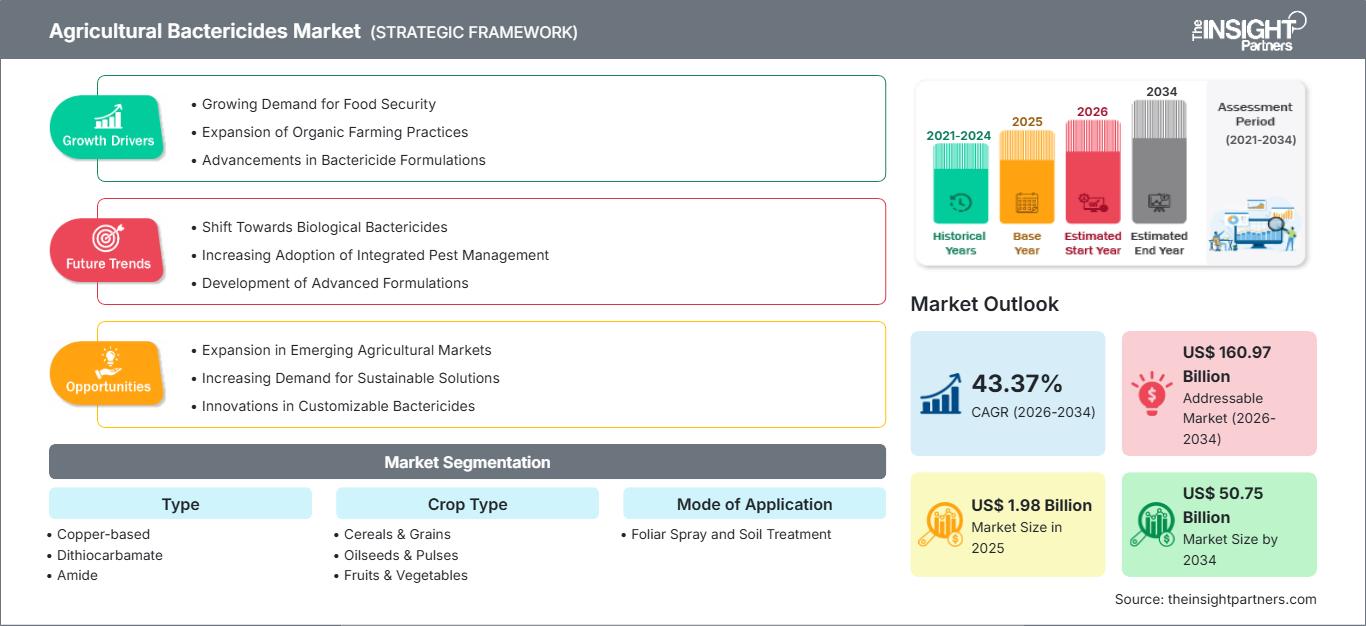
2025 Market Size
US$ 1.98 Bn
Base year value
2034 Forecast
US$ 50.75 Bn
Projected by 2034
CAGR 2026-2034
43.37 %
Growth rate
Addressable Market
US$ 160.97 Bn
(2026-2034)
The agricultural bactericides market was valued at US$ 1.98 Billion in 2025 and is projected to reach US$ 50.75 Billion by 2034, expanding at a CAGR of 43.37% during 2026–2034. Transformation is evident in the market as a consequence of the threat posed by bacterial infections to crop production and food safety in some of the prominent agricultural nations. Increased investments in technologies for crop protection, adoption of disease management strategies, and innovations in the form of bactericides are aiding the expansion in this market within the developed as well as the developing countries of agriculture.
In North America, the market growth is expected to be significant because of factors such as fruit and vegetable farming, precision agriculture, and enhanced pesticide efficiency. The agricultural bactericides market size in the region is supported by continuous product innovation, expansion of biological crop protection portfolios, and strong research activities by leading agrochemical companies. North America is expected to register a CAGR of 40.5–42.5% through 2034, supported by increasing investments in sustainable disease management technologies.
Agricultural Bactericides Market Assessment and Insights
- North America: Accounted for 34–38% share in 2025 and is expected to expand at a CAGR of 40.5–42.5% during 2026–2034. Strong adoption of high-value crop protection solutions, advanced farming practices, and robust research investments continues supporting regional demand.
- U.S.: Represented 81–85% of the North American market in 2025 and is anticipated to grow at a CAGR of 40.0–42.0% through 2034, owing to large commercial farming operations and rapid adoption of precision crop protection technologies.
- Europe: Held 23–27% share in 2025 and is forecast to register a CAGR of 41.0–43.0%. Germany, France, Italy, Spain, and the UK continue investing in sustainable crop protection products and integrated disease management solutions.
- Asia Pacific: Captured 28–32% share in 2025 and is projected to expand at a CAGR of 45.0–47.0%. China, India, Japan, South Korea, and Australia are driving regional demand through agricultural modernization and increasing food production requirements.
- Largest Segment: Type – Copper-based accounted for 36–40% market share in 2025 and is expected to record a CAGR of 41.5–43.5%, supported by broad-spectrum disease control, cost effectiveness, and long-standing adoption across multiple crop categories.
- High Growth Segment: Crop Type – Fruits & Vegetables represented 38–42% market share in 2025 and is anticipated to grow at a CAGR of 45.5–47.5%, driven by increasing bacterial disease incidence in high-value horticultural crops.
- Key companies analyzed in detail: Bayer AG, Ingevity Corporation, Clariant International Ltd, Croda International Plc, UPL Limited, Ashland Inc., BASF SE, Corteva Agriscience, Nouryon Chemicals Holding B.V., Evonik Industries AG.
Source: The Insight Partners' analysis based on proprietary research, government publications, company annual reports, investor presentations, industry databases, and expert interviews.
The agricultural bactericides market has evolved significantly from conventional copper-based disease control products toward advanced formulation technologies capable of delivering greater efficacy with reduced environmental impact. The consistent improvements in formulation chemistry, biological bactericide development, spray application techniques, and integrated crop management methods are contributing towards effective disease management while reducing the resistance problem. The emphasis among manufacturers in the coming times is likely to remain on compatibility with precision farming, increased efficacy, and environmental sustainability of the products to meet the changing regulatory landscape and disease pressure in the agricultural industry.
The future growth potential of the market is anticipated to arise from the rising penetration in Asia Pacific and Latin American regions, growing investments in biological crop protection technologies, and supportive regulatory landscape for sustainable agriculture. The continuous innovations in microbial bactericides, novel formulation technologies, digital agriculture and precision application technologies are going to help the manufacturers in creating product differentiation and providing highly efficient bacterial disease management products.
Agricultural Bactericides Market Report Scope
| Report Attribute | Details |
|---|---|
| Market size in 2025 | US$ 1.98 Billion |
| Market Size by 2034 | US$ 50.75 Billion |
| Global CAGR (2026 - 2034) | 43.37% |
| Historical Data | 2021-2024 |
| Forecast period | 2026-2034 |
Agricultural Bactericides Market Analysis
Increasing bacterial disease outbreaks affecting fruits, vegetables, cereals, and oilseed crops are accelerating the agricultural bactericides market growth worldwide. Expanding commercial agriculture, changing climatic conditions, and rising demand for higher crop productivity are encouraging growers to adopt specialized bactericides that improve disease control while minimizing yield losses. The market value chain continues to strengthen through collaboration among active ingredient manufacturers, formulation companies, distributors, precision agriculture technology providers, and agricultural extension organizations.
The supply mechanism is still changing as producers are now diversifying their material procurement process, embracing biological formulation techniques, and setting up production facilities in various regions. Increased regulation on the use of regular crop protection agents is prompting companies to come up with bactericides that are environmentally friendly. On the other hand, increased integration of disease management practices is leading to increased use of new bactericides.
The competitive landscape within the agricultural bactericides market analysis is characterized by continuous investment in formulation innovation, biological technologies, strategic partnerships, and regional expansion. Companies including Bayer AG, BASF SE, Corteva Agriscience, UPL Limited, and Croda International Plc continue strengthening their crop protection portfolios through research collaborations and product development. Meanwhile, Clariant International Ltd, Evonik Industries AG, Nouryon Chemicals Holding B.V., Ashland Inc., and Ingevity Corporation are expanding specialty formulation technologies that enhance product performance and application efficiency.
Strategic investments increasingly target biological bactericides, sustainable formulation chemistry, precision agriculture compatibility, and digital farming solutions. Manufacturers are also strengthening technical service capabilities to support growers with disease diagnosis, application optimization, and integrated crop protection programs. These initiatives improve customer retention while enabling companies to differentiate themselves through innovation rather than competing primarily on product pricing.
● REPORT CUSTOMIZATION
Tailor This Report To Align With Your Specific Business Requirements
This report can be customized to align precisely with your business objectives, scope, and target markets. Customization options include tailored segmentation, geography, competitive analysis, and strategic insights to support informed decision-making.
Customize This Report →WHAT YOU CAN ADJUST
- ● Segmentations
- ● Geography
- ● Competitive Analysis
- ● Language Preferences
Agricultural Bactericides Market: Strategic Insights
Regional Insights
North America Agricultural Bactericides Market
North America accounted for 34–38% of the agricultural bactericides market share in 2025 and is projected to expand at a CAGR of 40.5–42.5% during 2026–2034. The region benefits from extensive cultivation of fruits, vegetables, cereals, and specialty crops that are highly susceptible to bacterial diseases. Increasing adoption of precision agriculture, widespread mechanization, and strong awareness regarding disease prevention continue to support demand for advanced bactericide formulations. Regulatory agencies are also encouraging sustainable crop protection practices, accelerating innovation in biological and low-residue bactericides.
The presence of leading agrochemical manufacturers, well-established agricultural distribution networks, and continuous investments in research and development further strengthen regional competitiveness. Precision spraying technologies, digital crop monitoring platforms, and integrated disease management programs are improving application efficiency while reducing chemical losses. Increasing climate variability and the emergence of resistant bacterial pathogens continue encouraging growers to adopt next-generation bactericide solutions with broader-spectrum activity and improved environmental compatibility.
U.S. Agricultural Bactericides Market
The United States represented 81–85% of the North American agricultural bactericides market in 2025 and is expected to register a CAGR of 40.0–42.0% through 2034. Commercial production of high-value fruits, vegetables, nuts, and cereals continues driving demand for effective bacterial disease management products. Strong research capabilities, widespread precision farming adoption, and significant investments by leading crop protection companies contribute to continued product innovation across chemical and biological bactericide segments.
Major companies including Bayer AG, BASF SE, Corteva Agriscience, and UPL Limited maintain significant commercial and research operations throughout the country, supporting the continuous introduction of advanced crop protection technologies. Increasing integration of drone spraying, sensor-based disease monitoring, and data-driven crop management platforms is improving application accuracy while enhancing treatment effectiveness. These technological developments continue to reinforce the country's leadership within the regional market.
Europe Agricultural Bactericides Market
Europe captured 23–27% of the global agricultural bactericides market in 2025 and is projected to expand at a CAGR of 41.0–43.0% during the forecast period. Regulatory emphasis on sustainable agriculture and integrated pest management continues to accelerate innovation across both conventional and biological bactericide products. Germany remains the leading regional market owing to its advanced agrochemical industry, while France, Italy, Spain, and the United Kingdom collectively contribute significant demand through diversified agricultural production.
The United Kingdom continues strengthening adoption of precision farming technologies and disease forecasting systems to improve crop protection efficiency across commercial farms. Germany benefits from substantial agricultural research capabilities and strong participation of multinational crop protection manufacturers developing advanced bactericide formulations. France, Italy, and Spain continue experiencing growing demand due to extensive fruit, vegetable, vineyard, and horticultural cultivation, where bacterial diseases significantly affect crop quality and export competitiveness.
APAC Agricultural Bactericides Market
Asia Pacific accounted for 28–32% of the global market in 2025 and is expected to record the fastest regional expansion with a CAGR of 45.0–47.0%. China leads regional consumption, followed by India, Japan, South Korea, and Australia, supported by expanding commercial agriculture and rising food security initiatives.
Government support for agricultural modernization, increasing awareness of crop disease management, expanding horticultural production, and rapid adoption of precision farming technologies continue to strengthen regional demand. Investments in domestic agrochemical manufacturing and biological crop protection products are expected to accelerate market expansion further.
Middle East & Africa Agricultural Bactericides Market
The Middle East & Africa market is anticipated to expand at a CAGR of 42.0–44.0% during 2026–2034. Saudi Arabia, the UAE, South Africa, and other regional economies continue investing in modern agricultural practices to improve domestic food production under challenging climatic conditions.
Growing adoption of greenhouse cultivation, protected agriculture, efficient irrigation systems, and advanced crop protection technologies is increasing bactericide demand across the region. South Africa remains the largest market because of its well-developed commercial agriculture sector. At the same time, Gulf countries continue investing in high-value horticultural production and controlled-environment farming to strengthen food security.
Segmentation Analysis
Type
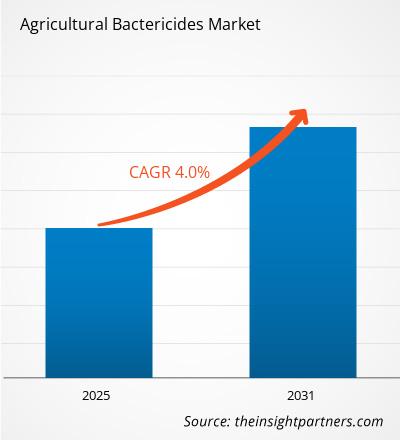
Copper-based, dithiocarbamate, amide, and antibiotic bactericides constitute the primary product categories within the market. The agricultural bactericides market scope continues to expand as manufacturers develop formulations with improved efficacy, enhanced environmental compatibility, and broader crop coverage. The segment is projected to register a CAGR of 42.5–44.5% during 2026–2034, supported by increasing disease pressure, growing commercial farming activities, and continuous innovation in both chemical and biological crop protection technologies.
- Copper-based: Widely adopted due to broad-spectrum antibacterial activity, cost-effectiveness, and extensive regulatory acceptance across fruits, vegetables, cereals, and horticultural crops. Continuous formulation improvements enhance efficacy while reducing phytotoxicity and environmental concerns.
- Dithiocarbamate: These bactericides are extensively utilized for preventive disease management owing to their multisite mode of action and compatibility with integrated crop protection programs. Demand remains steady across commercial farming operations worldwide.
- Amide: Amide-based bactericides are increasingly preferred for targeted disease management because they provide improved systemic activity, enhanced persistence, and compatibility with modern integrated disease management strategies across high-value agricultural crops.
- Antibiotic: Antibiotic bactericides are primarily utilized for controlling severe bacterial infections in specialty crops where precise disease management is essential. Regulatory oversight continues to encourage responsible application while promoting development of alternative biological solutions.
Crop Type
Demand varies considerably across crop categories based on disease susceptibility, cultivation intensity, and economic value. Fruits and vegetables remain the most attractive category because bacterial diseases directly influence crop quality, appearance, and export potential. The segment is anticipated to expand at a CAGR of 44.0–46.0% through 2034, supported by increasing global consumption of fresh produce and rising investments in intensive horticultural production.
- Cereals & Grains: Adoption continues to increase as bacterial diseases affect wheat, rice, maize, and other staple crops. Large cultivation areas and growing emphasis on yield optimization sustain long-term demand for effective bactericide products.
- Oilseeds & Pulses: Disease management is becoming increasingly important as global demand for protein-rich crops expands. Bactericides help improve crop quality, reduce production losses, and support commercial cultivation across major producing countries.
- Fruits & Vegetables: This represents the largest application area because high-value horticultural crops require intensive disease management programs. Frequent bacterial outbreaks and stringent quality requirements continue driving substantial demand for advanced bactericide formulations.
Mode of Application
Application technologies continue evolving with greater emphasis on precision, coverage uniformity, and operational efficiency. Advancements in spraying equipment, digital agriculture, and integrated disease management programs are supporting broader adoption across commercial farming operations. The segment is projected to register a CAGR of 43.5–45.5% during the forecast period.
- Foliar Spray: The dominant application method owing to rapid disease control, extensive compatibility with commercial spraying equipment, and high effectiveness across cereals, horticultural crops, and specialty plantations requiring immediate treatment.
- Soil Treatment: Demand is expanding for soil-borne bacterial disease management, particularly in intensive horticulture and protected cultivation systems where preventive disease control improves overall crop establishment and long-term productivity.
Form
Manufacturers continue introducing diverse formulation types to improve storage stability, handling convenience, application efficiency, and compatibility with precision agriculture equipment. Product innovation remains focused on enhancing dispersion characteristics, shelf life, and field performance under varying climatic conditions. The segment is expected to grow at a CAGR of 43.0–45.0% during 2026–2034.
- Liquid: Liquid formulations dominate commercial usage because they offer convenient mixing, uniform spray coverage, rapid application, and compatibility with modern spraying equipment used across large-scale farming operations.
- Water Dispersible Granule: Increasingly preferred due to improved storage stability, reduced dust generation, accurate dosing, and easier transportation compared with conventional powdered formulations.
- Wettable Powder: These formulations continue to maintain steady adoption where cost-effective disease management and flexible application requirements remain priorities, particularly across traditional agricultural production systems.
Opportunity Snapshot
| Mode of Application | Revenue Contribution | Trend Tag | Adoption Stage |
| Foliar Spray | High | Precision Spraying | Mature |
| Soil Treatment | Medium | Root Protection | Scaling |
Agricultural Bactericides Market Growth Drivers and Impact Analysis
Escalating Incidence of Bacterial Diseases Across High-Value Crops
The increasing prevalence of bacterial diseases in fruits, vegetables, cereals, and oilseed crops is becoming one of the strongest growth catalysts for the agricultural bactericides market. Climatic fluctuations, irregular rainfall, rising humidity, and higher average temperatures are creating favorable conditions for bacterial pathogens to proliferate across agricultural regions. Diseases such as bacterial leaf blight, bacterial spot, fire blight, citrus canker, and bacterial wilt continue causing significant reductions in crop yield and marketable quality. Commercial growers are therefore adopting preventive disease management strategies rather than relying solely on curative treatments. Agricultural bactericides are increasingly integrated with broader crop protection programs to minimize economic losses, improve produce quality, and support year-round agricultural productivity. Continuous monitoring technologies and disease forecasting systems further encourage timely bactericide application, improving treatment effectiveness while reducing unnecessary pesticide usage across commercial farming operations.
Expansion of Commercial Horticulture and High-Value Crop Cultivation
There is rapid growth in the use of modern bactericides due to rapid commercialization of horticulture around the world. Fruits and vegetables have much better economic benefits as compared to staple crops, however, at the same time, they are highly susceptible to diseases caused by bacteria, which impacts the look and productivity of crops and their export ability. Growing demand among consumers for fresh fruits and vegetables, rising greenhouse cultivation, protected cultivation, and export farming are all leading to farmers adopting special plant health management systems. Intensive farming leads to an increase in diseases, which makes the bactericide an important part of the crop protection system. At the same time, governments of various countries are continuing to support horticulture modernization through subsidy schemes, training of farmers, and precision agriculture implementation.
Advancements in Biological Formulations and Sustainable Crop Protection
The agriculture industry is experiencing increased adoption of environmentally friendly ways of crop protection, resulting in great potential in the advancement of new biological bactericides. There are great developments in biological bactericides, naturally occurring antimicrobial agents, microorganisms, and environmentally low-residue chemistries that are compliant with changing regulations. They have become more effective in terms of being used in the integrated pest management system and the organic agriculture industry while taking into consideration issues such as antimicrobial resistance and persistence. There are continuous efforts being made by research organizations and agrochemical companies to create multifunctional formulations that provide better disease management while having lower ecological effects. Biological bactericides will form a significant part of future product development and investments due to increasing government regulation and sustainability in the agricultural sector.
Agricultural Bactericides Market Future Trends
Growing Commercialization of Biological and Microbial Bactericides
The agricultural bactericides market trends indicate a significant shift toward biological crop protection technologies as growers seek sustainable alternatives to conventional chemical products. Increasingly, there is increased research focus on microbial bactericides, botanicals with anti-microbial action, fermentation-derived active ingredients and bio-formulations that are effective in controlling diseases but have a reduced environmental footprint. The coming generations of products are expected to be designed with an emphasis on being compatible with integrated disease management systems, residue mitigation and export-focused agriculture. Increasingly supportive regulation in sustainable farming methods will help promote biological bactericides commercially.
Integration of Precision Agriculture with Disease Management Technologies
The digital revolution in agriculture is forecasted to significantly impact the application of bactericides, thanks to the development of artificial intelligence, remote sensing technology, satellite imagery, unmanned spraying machines, and drones for the detection of diseases. This is made possible by enabling early detection of plant diseases and the optimal time of spray application, saving resources on pesticides and enhancing the efficacy of their application. Manufacturers are progressively working on producing formulations for precise spray application systems, which offer better droplet adhesion, canopy penetration, and coverage uniformity.
Agricultural Bactericides Market Opportunities
Expansion Opportunities in Emerging Agricultural Economies
The agricultural bactericides market Forecasts indicate substantial investment opportunities across Asia Pacific, Latin America, the Middle East, and Africa, where agricultural modernization programs continue accelerating the adoption of advanced crop protection technologies. Growing demands for food along with the increasing use of horticultural crops for exports and an increasing level of awareness about the management of bacteria-based diseases, are creating favorable conditions in the market. Efforts by the government towards increased productivity of agriculture due to mechanization, precision farming, and education of farmers will add to the encouragement of the use of bactericides in the market. Local manufacturing plants and efficient distribution network will ensure increased market penetration in addition to reduced risks in the supply chain.
Development of Next-Generation Multifunctional Bactericide Formulations
The future presents itself through innovations in terms of the creation of multifunctional bactericides, which have the ability not only to offer disease protection but at the same time improve the efficiency and environmental performance during application. The trend in the agricultural bactericides market is towards the use of modern surfactants, formulation agents, biological components, and even technology for controlling release of the actives. Compatibility with precision agriculture machinery and drone applications will be one of the most important factors distinguishing various bactericides from each other. Partnerships of agrochemical producers, biotech firms, and agricultural research institutions can serve as a powerful engine for commercial introduction of novel bactericide products.
Recent Developments
- June 2026: Syngenta Group announced a partnership with Ascribe Bioscience to commercialize biological crop protection technology for Asian farmers. Syngenta entered into a development and supply agreement with Ascribe Bioscience for PHYTALIX, a biological crop protection solution designed to enhance plant resistance against fungal, bacterial, and viral diseases. The technology demonstrated potential for integrated disease management, including applications against bacterial leaf blight in rice, supporting the industry shift toward biological disease control solutions.
- January 2025: Bayer AG announced a distribution agreement for biological crop protection solution to strengthen its sustainable disease management portfolio. Bayer entered into an agreement with Ecospray to distribute Velsinum, a garlic-derived biological crop protection product across Europe, the Middle East, and parts of Africa. The development highlights Bayer’s expansion into biological agricultural solutions, supporting the broader shift toward naturally derived crop protection technologies that complement conventional disease management approaches, including bacterial disease control programs.
Frequently Asked Questions

- Comprehensive Market Sizing and Forecast Analysis
- Detailed Segmentation Analysis
- In-Depth Market Dynamics Assessment
- Regional and Country-Level Insights
- Competitive Landscape and Company Benchmarking
- Strategic Business Intelligence
Recent Reports
Testimonials

The Insight Partners provided valuable market intelligence that supported our global go-to-market strategy. Their team was professional, responsive, and attentive to our feedback, providing thoughtful analysis and helpful methodological clarifications throughout the project.
Junmo Kim Chief Financial Officer (CFO), Enertech Co., Ltd.
The Insight Partners' SCADA System Market report is comprehensive, with valuable insights on current trends and future forecasts. The team was highly professional, responsive, and supportive throughout. We are very satisfied and highly recommend their services.
RAN KEDEM Partner, Reali Technologies LTDs
I requested a report on a very specific software market and the team produced the report in a few days. The information was very relevant and well presented. I then requested some changes and additions to the report. The team was again very responsive and I got the final report in less than a week.
JEAN-HERVE JENN Chairman, Future Analytica
We worked with The Insight Partners for an important market study and forecast. They gave us clear insights into opportunities and risks, which helped shape our plans. Their research was easy to use and based on solid data. It helped us make smart, confident decisions. We highly recommend them.
PIYUSH NAGPAL Sr. Vice President, High Beam Global
The Insight Partners delivered insightful, well-structured market research with strong domain expertise. Their team was professional and responsive throughout. The user-friendly website made accessing industry reports seamless. We highly recommend them for reliable, high-quality research services
YUKIHIKO ADACHI CEO, Deep Blue, LLC.
This is the first time I have purchased a market report from The Insight Partners.While I was unsure at first, I visited their web site and felt more comfortable to take the risk and purchase a market report.I am completely satisfied with the quality of the report and customer service. I had several questions and comments with the initial report, but after a couple of dialogs over email with their analyst I believe I have a report that I can use as input to our strategic planning process.Thank you so much for taking the extra time and making this a positive experience.I will definitely recommend your service to others and you will be my first call when we need further market data.
JOHN SUZUKI President and Chief Executive Officer, Board Director, BK Technologies
I wish to appreciate your support and the professionalism you displayed in the course of attending to my request for information regarding to infectious disease IVD market in Nigeria. I appreciate your patience, your guidance, and the fact that you were willing to offer a discount, which eventually made it possible for us to close a deal. I look forward to engaging The Insight Partners in the future, all thanks to the impression you have created in me as a result of this first encounter.
DR CHIJIOKE ONYIA MANAGING DIRECTOR, PineCrest Healthcare Ltd.Reason to Buy
- Informed Decision-Making
- Understanding Market Dynamics
- Competitive Analysis
- Identifying Emerging Markets
- Customer Insights
- Market Forecasts
- Risk Mitigation
- Boosting Operational Efficiency
- Strategic Planning
- Investment Justification
- Tracking Industry Innovations
- Aligning with Regulatory Trends





 Get Free Sample for