
Agricultural Disinfectants Market Demand, Size & Forecast by 2034
Agricultural Disinfectants Market Size and Forecasts (2021 - 2034), Global and Regional Share, Trends, and Growth Opportunity Analysis Report Coverage : by Type (Hypochlorites & Halogens, Quaternary Ammonium Compounds & Phenols, Oxidizing Agents & Aldehydes); Application Area (Surface, Aerial, Water Sanitizing); End Use (Livestock Farms, Agricultural farms); and Geography (North America, Europe, Asia Pacific, and South and Central America)
- Status : Data Released
- Report Code : TIPRE00040260
- Category : Chemicals and Materials
- No. of Pages : 150
- Available Report Formats :


- Last update date : July 28, 2026


2025 Market Size
US$ 2.63 Bn
Base year value
2034 Forecast
US$ 3.76 Bn
Projected by 2034
CAGR 2026-2034
4.03 %
Growth rate
Addressable Market
US$ 28.99 Bn
(2026-2034)
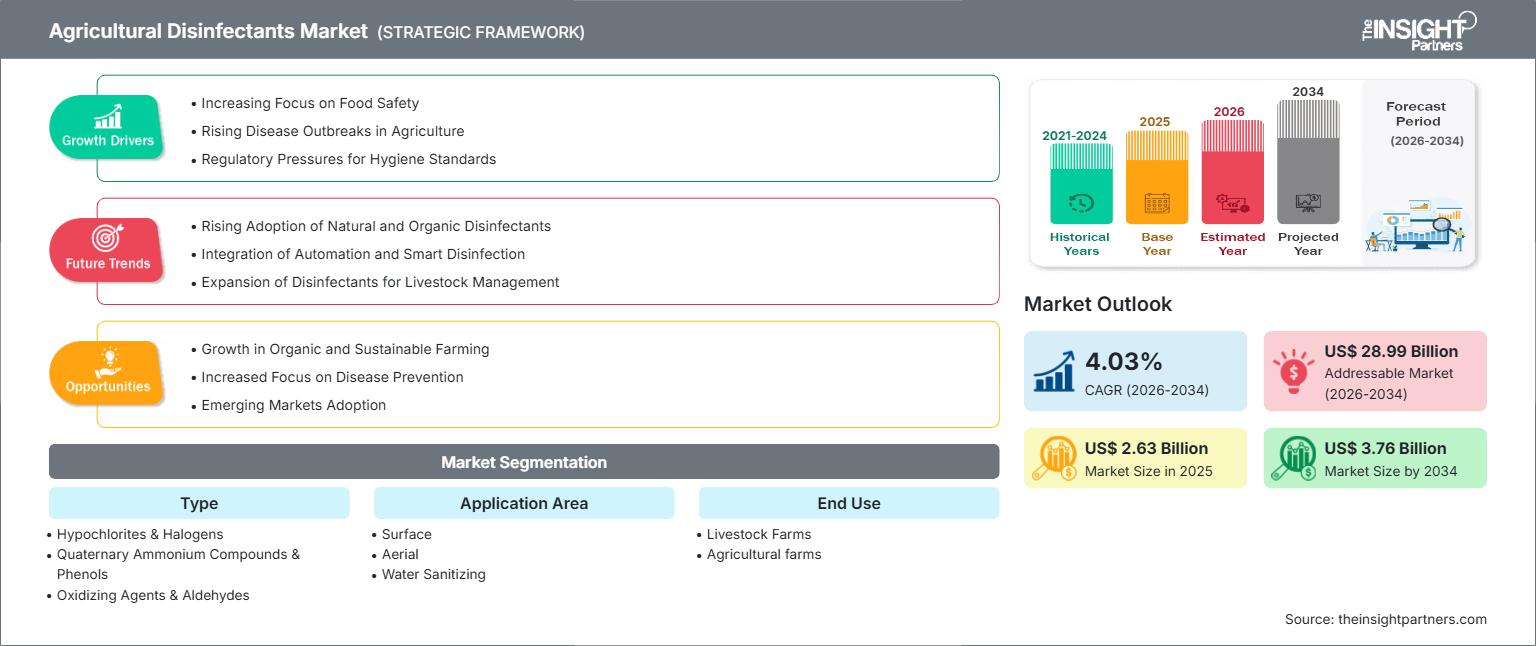
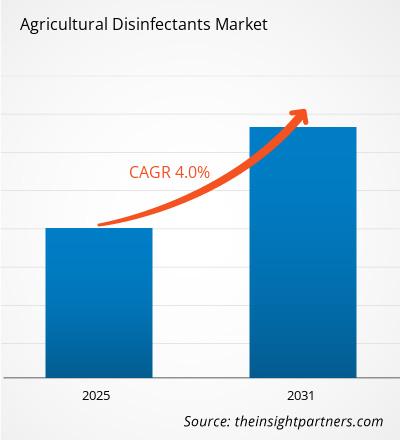
The agricultural disinfectants market was valued at US$ 2.63 billion in 2025 and is projected to reach US$ 3.76 billion by 2034, registering a CAGR of 4.03% during 2026–2034. Market expansion is supported by increasing emphasis on farm biosecurity, stricter disease prevention protocols across livestock production, and growing adoption of sanitation practices to minimize microbial contamination in agricultural environments. Continuous product innovation and regulatory focus on food safety are further strengthening long-term market development.
\Growing investments in modern livestock production and precision farming continue to reinforce North America’s position in the global industry. The agricultural disinfectants market size in the region is supported by expanding commercial poultry and dairy operations, implementation of biosecurity standards, and increasing awareness regarding the prevention of zoonotic disease transmission. Continued adoption of automated cleaning systems and advanced disinfection chemistries is expected to support a regional CAGR of 3.8%–4.4% through the forecast period.
Agricultural Disinfectants Market Assessment and Insights
- North America: North America remained a leading regional market in 2025, accounting for 31%–34% share in 2025, supported by large-scale livestock operations, stringent farm sanitation regulations, and widespread adoption of preventive biosecurity programs. The regional market is anticipated to expand at a CAGR between 3.8%–4.4% during 2026–2034.
- US: The US represented approximately 74%–78% of the North American market in 2025, driven by intensive poultry, swine, and dairy production along with increasing investment in disease prevention technologies. The country is projected to grow at a CAGR between 3.9%–4.5% during 2026–2034.
- Europe: Europe accounted for 26%–29% share in 2025, led by Germany, France, the UK, Italy, and Spain. Strict animal welfare legislation, antimicrobial stewardship programs, and food safety regulations continue to support market expansion at a CAGR between 3.9%–4.5% during 2026–2034.
- Asia Pacific: Asia Pacific represented 27%–30% share in 2025, with China, India, Japan, South Korea, and Australia leading demand due to expanding commercial farming, rising meat consumption, and government-supported livestock health initiatives. The region is expected to register a CAGR between 4.8%–5.4% during 2026–2034.
- Largest Segment: Livestock Farms dominated the market with an estimated 58%–62% market share in 2025, reflecting the critical role of disease prevention in intensive animal production systems. The segment is forecast to expand at a CAGR between 4.2%–4.8% during 2026–2034.
- High Growth Segment: Water Sanitizing emerged as the fastest-growing application, accounting for 23%–27% market share in 2025 while benefiting from increasing focus on pathogen-free drinking water for livestock and irrigation systems. The segment is expected to record a CAGR between 5.0%–5.7% during 2026–2034.
- Key companies analyzed in detail: The Chemours Company, Zoetis Inc., Nufarm Limited, Stepan Company, Dow Inc., Neogen Corporation, FINK TEC GmbH, Quat-Chem Ltd., Thymox Technology, Entaco NV.
Source: The Insight Partners' analysis based on proprietary research, government publications, company annual reports, investor presentations, industry databases, and expert interviews.
The system for producing agriculture has shown improvement with the use of preventive biosecurity due to the rise in consciousness on the occurrence of disease in livestock and crops production. The improvements in disinfectant solutions include the use of oxidizers, quaternary ammonium compounds, hypochlorite stabilizers, and plant-based antimicrobial solutions, which provide pathogen elimination while making operations more efficient. There is an increase in commercial farms implementing regular cleaning and disinfecting programs within their operations to avoid losses during production and to adhere to changing food safety guidelines.
Long-term market opportunities are good because the authorities are improving their disease surveillance systems and farmers are constantly investing in preventive health management programs. The speedy modernization of agriculture in developing countries and rising livestock product exports will definitely boost the demand for advanced sanitizers. The development of sustainable disinfection technology, bio-degradable active ingredients, and monitoring of farm hygiene through digital means will provide further business opportunities.
Agricultural Disinfectants Market Report Scope
| Report Attribute | Details |
|---|---|
| Market size in 2025 | US$ 2.63 Billion |
| Market Size by 2034 | US$ 3.76 Billion |
| Global CAGR (2026 - 2034) | 4.03% |
| Historical Data | 2021-2024 |
| Forecast period | 2026-2034 |
Agricultural Disinfectants Market Analysis
Rising incidences of transboundary animal diseases, increasing commercialization of livestock farming, and stricter food safety requirements continue to support the agricultural disinfectants market growth worldwide. Preventing disease has become an important factor in the operation for producers of poultry, dairy products, and swine who aim at minimizing costs and increasing their productivity. The rising use of biosecurity on farms raises the need for efficient disinfectants that will control bacteria, viruses, and fungi in housing facilities, equipment, transport, and water supply systems.
Market environment ranges from companies producing specialty chemicals and active ingredients to formulation companies, distributors of agricultural products, companies supplying veterinary medicines, and farming businesses. Cooperation between chemical companies, veterinary healthcare companies, and agricultural organizations is helping to enhance product availability and customize disinfection products for various farm environments.
Competitive intensity within the agricultural disinfectants market analysis continues to increase as manufacturers expand product portfolios through innovation, regulatory approvals, and geographic expansion. Leading companies such as The Chemours Company, Dow Inc., Neogen Corporation, Zoetis Inc., Stepan Company, and Nufarm Limited are continuing with research on enhancing the stability of formulations, efficiency of application, and compatibility with modern livestock production practices. Local suppliers like FINK TEC GmbH, Quat-Chem Ltd., Thymox Technology, and Entaco NV are improving competition by catering to the specific needs of agricultural sanitation through customized formulations.
The investment in formulations that are environmentally friendly, formulations with minimal residue, and formulations that can be used in automated spraying and water sanitation systems is increasingly being made by leading players. Collaborations between chemical companies and distributors of agricultural products are improving penetration into emerging markets, and ongoing registration of products in international regulatory frameworks is facilitating their commercialization. It is anticipated that such efforts will help in strengthening the competitive position of players in the future as more attention is paid to sustainable biosecurity and disease management solutions.
● REPORT CUSTOMIZATION
Tailor This Report To Align With Your Specific Business Requirements
This report can be customized to align precisely with your business objectives, scope, and target markets. Customization options include tailored segmentation, geography, competitive analysis, and strategic insights to support informed decision-making.
Customize This Report →WHAT YOU CAN ADJUST
- ● Segmentations
- ● Geography
- ● Competitive Analysis
- ● Language Preferences
Agricultural Disinfectants Market: Strategic Insights
Regional Insights
North America Agricultural Disinfectants Market
North America accounted for 31%–34% of the agricultural disinfectants market share in 2025 and continues to represent one of the most mature regional markets. The region is projected to expand at a CAGR of 3.8%–4.4% during 2026–2034, supported by stringent biosecurity regulations, large-scale livestock production, and continuous investments in farm sanitation. Commercial poultry, dairy, and swine operations increasingly deploy comprehensive cleaning and disinfection protocols to minimize disease transmission and maintain export-quality agricultural products.
The US and Canada continue investing in advanced farm hygiene technologies, automated disinfection equipment, and water treatment systems to improve operational efficiency. Rising concerns over avian influenza, African swine fever preparedness, and antimicrobial resistance have accelerated the adoption of broad-spectrum disinfectants across livestock facilities. Increasing collaboration between veterinary service providers, agricultural producers, and disinfectant manufacturers is further supporting product innovation and strengthening regional demand.
U.S. Agricultural Disinfectants Market
The US represented 74%–78% of the North American market in 2025 and is anticipated to register a CAGR of 3.9%–4.5% during 2026–2034. Large numbers of poultry farms, cattle farms, dairies, and swine farms create consistent demand for disinfectants used in barns, hatcheries, transport, waterlines, and processing plants. Food safety and animal health regulations have continued to motivate farmers to practice sanitation on their premises.
Key players include Neogen Corporation, Zoetis Inc., Dow Inc., Stepan Company, and The Chemours Company, and they operate in different parts of the country using manufacturing facilities, research centers, and agriculture-related distribution channels. Precision livestock farming and biosecurity management have been encouraged in recent years, resulting in higher demand for disinfectants that are more effective, have lower contact times, and are environmentally friendly.
Europe Agricultural Disinfectants Market
Europe held 26%–29% of the global market in 2025 and is forecast to grow at a CAGR of 3.9%–4.5% during 2026–2034. Germany remains the leading country owing to its highly developed livestock industry, strong veterinary infrastructure, and strict compliance with European Union biosecurity regulations. Frequent investments in animal welfare standards and disease control measures foster continuous adoption of sophisticated disinfectant formulations in commercial operations.
The United Kingdom is continuously improving biosecurity at farms in relation to repeated efforts in disease surveillance and the growing importance of hygiene in the poultry and dairy sectors. Investments in the sanitization of water, housing units and transport vehicles will help mitigate risks of diseases during production processes.
France, Italy and Spain generate important regional demand in connection with their significant presence in the poultry, dairy and swine industries. Programs for disease surveillance funded by the government, upgrades of livestock facilities and rising awareness about preventive sanitization promote continuous use of disinfectants. Exportation of products derived from animals that comply with food safety rules will further fuel demand.
APAC Agricultural Disinfectants Market
Asia Pacific accounted for 27%–30% of the global market in 2025 and is projected to record the fastest regional expansion at a CAGR of 4.8%–5.4% during 2026–2034. China leads regional consumption, while India continues recording rapid adoption due to expanding commercial dairy and poultry farming. Japan and South Korea maintain stable demand through technologically advanced livestock operations.
Australia continues emphasizing livestock disease prevention and export-oriented biosecurity measures, while Southeast Asian countries are strengthening farm sanitation following recurring animal disease outbreaks. Government initiatives promoting modern agricultural practices and increasing investments in commercial farming infrastructure continue to support long-term regional expansion.
Middle East & Africa Agricultural Disinfectants Market
The Middle East & Africa market is expected to expand at a CAGR of 4.1%–4.7% during 2026–2034, supported by increasing investments in livestock production, food security initiatives, and modernization of agricultural infrastructure. Saudi Arabia remains the dominant market, attributed to the huge investments made towards poultry and dairy farming, while the UAE continues to invest in innovative sanitation technologies used in commercial agriculture.
An additional important market is South Africa, which has well-developed livestock and expanding veterinary care segments. The Rest of the Middle East & Africa region is showing gradual adoption of disinfection products in agriculture because of the strengthening of biosecurity policies, improvement of water infrastructure, and encouragement of sustainable agriculture.
Segmentation Analysis
Type
The Type segment is expected to expand at a CAGR of 4.0–4.4% during 2026–2034. Product selection varies according to pathogen spectrum, application environment, organic load tolerance, and regulatory compliance. The agricultural disinfectants market scope continues expanding as manufacturers develop formulations with enhanced stability, rapid antimicrobial action, and reduced environmental impact suitable for diverse agricultural applications.
- Hypochlorites & Halogens: Widely used for broad-spectrum microbial control across livestock facilities and agricultural infrastructure due to their cost-effectiveness, rapid action, and established regulatory acceptance in routine sanitation programs.
- Quaternary Ammonium Compounds & Phenols: Preferred for routine surface disinfection because of their long-lasting antimicrobial activity, material compatibility, and effectiveness in maintaining hygiene standards across commercial livestock operations.
- Oxidizing Agents & Aldehydes: Increasingly adopted where high-level disinfection is required against resistant pathogens, particularly during disease outbreaks and intensive biosecurity programs across large commercial farms.
Application Area
The Application Area segment is projected to grow at a CAGR of 4.2–4.7% during 2026–2034. Demand is supported by increasing implementation of comprehensive sanitation protocols covering production facilities, livestock housing, water systems, and equipment. Modern farms increasingly utilize multiple application methods to achieve complete pathogen control and minimize cross-contamination risks.
- Surface: Represents the largest application owing to continuous sanitation of livestock housing, feeding equipment, storage facilities, and transportation infrastructure to reduce microbial contamination.
- Aerial: Utilized through fogging and misting technologies for rapid distribution of disinfectants within enclosed livestock buildings, particularly during disease control programs.
- Water Sanitizing: Experiencing strong adoption as producers increasingly recognize the importance of pathogen-free drinking water for improving livestock health, productivity, and biosecurity performance.
End Use
The End Use segment is expected to register a CAGR of 4.1–4.5% during 2026–2034. Commercial farming operations increasingly implement standardized cleaning and disinfection protocols to comply with food safety regulations while improving animal health and operational efficiency. Growing investment in disease prevention continues to support long-term market expansion.
- Livestock Farms: Account for the greatest demand due to extensive sanitation requirements across poultry, dairy, cattle, and swine production facilities, where disease prevention directly influences productivity and profitability.
- Agricultural Farms: Demand continues increasing through disinfectant use in greenhouses, irrigation systems, equipment sanitation, and crop production facilities to minimize microbial contamination and maintain healthy growing environments.
Opportunity Snapshot
| Application Area | Revenue Contribution | Trend Tag | Adoption Stage |
|---|---|---|---|
| Surface | High | Facility Hygiene | Mature |
| Aerial | Medium | Smart Fogging | Scaling |
| Water Sanitizing | High | Water Biosecurity | Scaling |
Agricultural Disinfectants Market Growth Drivers and Impact Analysis
Rising Livestock Disease Incidence Strengthening Biosecurity Investments
The increasing worries about transboundary diseases are changing the sanitation methods used on commercial farms. With cases of avian flu, African swine fever, and foot-and-mouth disease, among other communicable diseases, the significance of disinfection as one of the essential elements of farm operations has become more prominent. The veterinary officials and agriculture regulators are advocating for the implementation of regular cleaning and disinfection procedures to minimize the spread of pathogens either inside or from farm to farm. Many poultry, dairy, and swine companies are now adopting automated sanitation systems, disinfection chambers, and water treatments to enhance resilience. With the increasing commercial production of livestock to satisfy the growing global protein demands, more disinfectants are bound to be used.
Stringent Food Safety and Animal Welfare Regulations Driving Product Adoption
Regulations on the maintenance of animal health, food safety, and farm biosecurity have been continuously enhanced in all countries around the world. Adherence to hygiene requirements is necessary for producers that target the domestic and export markets, especially those located in Europe and North America. The new regulations involve not only the documentation of sanitization methods but also the validation of disinfection efficiency and regular monitoring of the hygiene practices at farms. It means that it becomes profitable for agricultural companies to substitute regular cleaning products with disinfectants that kill a wide range of microorganisms without harming the environment and employees.
Technological Advancements Improving Disinfection Efficiency Across Farms
Constant advancement in agricultural disinfectant technology is increasing the efficacy and effectiveness of farms' sanitary programs. Companies have started to produce stabilized oxidizers, biodegradable sanitizers, non-corrosive compounds, and highly concentrated products, which reduce production cost while keeping their excellent microbial inhibiting ability. Automated spraying systems, foam applicators, electrostatic sprayers, and computerized foggers are more frequently implemented in modern farms. Such tools not only increase the coverage area of the disinfectant but also make the application process easier, safer, and more productive for farm workers. Also, digital control systems for monitoring the sanitization schedule contribute to the widespread use of advanced agricultural disinfectants.
Agricultural Disinfectants Market Future Trends
Growing Adoption of Sustainable and Biodegradable Disinfectant Formulations
Environmental sustainability is becoming a major consideration in agricultural sanitation strategies. The agricultural disinfectants market trends indicate increasing preference for biodegradable active ingredients, plant-derived antimicrobial compounds, and formulations with reduced environmental persistence. Manufacturers are focusing on products that maintain high antimicrobial efficacy while minimizing toxicity, residue accumulation, and wastewater treatment challenges. Growing regulatory attention toward sustainable agricultural practices is expected to accelerate the commercialization of environmentally compatible disinfectants, creating new opportunities for innovation throughout the forecast period.
Integration of Automated Farm Sanitation Technologies
Automation is expected to transform agricultural hygiene management during the coming decade. Commercial livestock facilities are increasingly adopting robotic cleaning equipment, automated spraying systems, programmable fogging technologies, and IoT-enabled monitoring platforms to improve sanitation consistency. Integration of digital farm management software with disinfection equipment allows operators to optimize chemical consumption, monitor compliance, and reduce operational downtime. These technological developments are anticipated to improve biosecurity performance while lowering long-term operating costs for large-scale agricultural enterprises.
Agricultural Disinfectants Market Opportunities
Expanding Commercial Livestock Farming Across Emerging Economies
Rapid expansion of commercial poultry, dairy, and swine production across Asia Pacific, Latin America, and selected African countries presents significant investment opportunities for manufacturers. The agricultural disinfectants market Forecasts suggest sustained demand from producers modernizing farm infrastructure to improve productivity and comply with evolving food safety regulations. Companies capable of establishing regional manufacturing facilities, localized distribution networks, and technical advisory services will be well-positioned to capitalize on growing demand. Strategic partnerships with veterinary organizations and agricultural cooperatives can further strengthen market penetration while supporting long-term revenue growth.
Development of Premium Multi-Functional Biosecurity Solutions
Future growth opportunities extend beyond conventional disinfectants toward integrated biosecurity platforms combining sanitation products, monitoring technologies, water treatment solutions, and digital compliance tools. Manufacturers investing in research and development can introduce formulations offering broader antimicrobial efficacy, improved material compatibility, and lower environmental impact. Bundled service offerings that include training, disease prevention consulting, and automated application systems are expected to strengthen customer retention. As commercial farming operations increasingly prioritize operational efficiency and disease prevention, suppliers offering comprehensive hygiene solutions are likely to achieve stronger competitive differentiation.
Recent Developments
- July 18, 2025: Neogen Corporation completed the sale of its global Cleaners & Disinfectants business to Kersia Group for US$ 130 million. The transaction enables Neogen to sharpen its focus on food safety diagnostics and animal health while significantly strengthening Kersia's position in agricultural biosecurity and farm disinfection solutions across North America, Europe, and other international markets.
- March 10, 2025: LANXESS AG showcased its comprehensive Biosecurity Solutions portfolio at VIV Asia 2025, highlighting TH4+, Virkon S, Virkon AQUATIC, Glutex GQ1, and DeterKlyn for poultry, swine, livestock, and aquaculture farms. The company also conducted a technical seminar on disease prevention and farm biosecurity, reinforcing its focus on agricultural disinfectant technologies.
Frequently Asked Questions

- Comprehensive Market Sizing and Forecast Analysis
- Detailed Segmentation Analysis
- In-Depth Market Dynamics Assessment
- Regional and Country-Level Insights
- Competitive Landscape and Company Benchmarking
- Strategic Business Intelligence
Recent Reports
Testimonials

The Insight Partners' SCADA System Market report is comprehensive, with valuable insights on current trends and future forecasts. The team was highly professional, responsive, and supportive throughout. We are very satisfied and highly recommend their services.
RAN KEDEM Partner, Reali Technologies LTDs
I requested a report on a very specific software market and the team produced the report in a few days. The information was very relevant and well presented. I then requested some changes and additions to the report. The team was again very responsive and I got the final report in less than a week.
JEAN-HERVE JENN Chairman, Future Analytica
We worked with The Insight Partners for an important market study and forecast. They gave us clear insights into opportunities and risks, which helped shape our plans. Their research was easy to use and based on solid data. It helped us make smart, confident decisions. We highly recommend them.
PIYUSH NAGPAL Sr. Vice President, High Beam Global
The Insight Partners delivered insightful, well-structured market research with strong domain expertise. Their team was professional and responsive throughout. The user-friendly website made accessing industry reports seamless. We highly recommend them for reliable, high-quality research services
YUKIHIKO ADACHI CEO, Deep Blue, LLC.
This is the first time I have purchased a market report from The Insight Partners.While I was unsure at first, I visited their web site and felt more comfortable to take the risk and purchase a market report.I am completely satisfied with the quality of the report and customer service. I had several questions and comments with the initial report, but after a couple of dialogs over email with their analyst I believe I have a report that I can use as input to our strategic planning process.Thank you so much for taking the extra time and making this a positive experience.I will definitely recommend your service to others and you will be my first call when we need further market data.
JOHN SUZUKI President and Chief Executive Officer, Board Director, BK Technologies
I wish to appreciate your support and the professionalism you displayed in the course of attending to my request for information regarding to infectious disease IVD market in Nigeria. I appreciate your patience, your guidance, and the fact that you were willing to offer a discount, which eventually made it possible for us to close a deal. I look forward to engaging The Insight Partners in the future, all thanks to the impression you have created in me as a result of this first encounter.
DR CHIJIOKE ONYIA MANAGING DIRECTOR, PineCrest Healthcare Ltd.Reason to Buy
- Informed Decision-Making
- Understanding Market Dynamics
- Competitive Analysis
- Identifying Emerging Markets
- Customer Insights
- Market Forecasts
- Risk Mitigation
- Boosting Operational Efficiency
- Strategic Planning
- Investment Justification
- Tracking Industry Innovations
- Aligning with Regulatory Trends





 Get Free Sample for