
Alcohol Based Disinfectant Market Size, Trends & Demand by 2034
Coverage: By Type (N-propyl alcohol, Methyl alcohol, Ethyl alcohol, Isopropyl alcohol); Application (Sanitizers, Clinical devices, Clinical surfaces), and Geography (North America, Europe, Asia Pacific, and South and Central America)
- Status : Data Released
- Report Code : TIPRE00014771
- Category : Chemicals and Materials
- No. of Pages : 150
- Available Report Formats :


- Last update date : August 07, 2026


2025 Market Size
US$ 3.45 Bn
Base year value
2034 Forecast
US$ 9.08 Bn
Projected by 2034
CAGR 2026-2034
11.35 %
Growth rate
Addressable Market
US$ 55.22 Bn
(2026-2034)
The Alcohol Based Disinfectant Market is predicted to rise from US$ 3.45 billion in 2025 to US$ 9.08 billion by 2034, registering a CAGR of 11.35% during 2026-2034. Increased focus on infection control in hospitals, labs, commercial buildings, and residences keeps driving the requirement for alcohol-based products. Increased use of high-efficiency surface cleaners and hand sanitizers in addition to strict hygiene standards continues to drive the growth of the market in developed and developing nations.
In North America, health care-associated infection control programs, occupational safety regulations, and investments in health care infrastructure keep boosting product adoption. Alcohol based disinfectant market size in the region is predicted to grow at a CAGR of 10.2–10.8% over the forecast period. Ongoing innovation in quick-acting products, equipment-friendly formulation, and increasing requirements from food processing and pharmaceutical manufacturing units also help drive growth in the region.
Alcohol Based Disinfectant Market Assessment and Insights
- North America: North America accounted for 34–38% share in 2025 and is anticipated to grow at a CAGR of 10.2–10.8% during 2026–2034. Strong healthcare expenditure, strict infection control protocols, and broad commercial adoption continue to support regional market leadership.
- U.S.: The U.S. represented 78–82% of the North American market in 2025 and is projected to register a CAGR of 10.3–10.9% through 2034, supported by healthcare modernization and expanding institutional hygiene standards.
- Europe: Europe captured 27–31% share in 2025 and is forecast to grow at a CAGR of 10.7–11.3%. Germany, the UK, France, Italy, and Spain continue investing in healthcare infrastructure, pharmaceutical manufacturing, and industrial sanitation solutions.
- Asia Pacific: Asia Pacific accounted for 24–28% share in 2025 and is expected to record the highest CAGR of 12.5–13.2% during 2026–2034. China, Japan, India, and South Korea remain key contributors owing to healthcare expansion and rising hygiene awareness.
- Largest Segment: Application – Sanitizers dominated the market with a 46–50% share in 2025 and is projected to grow at a CAGR of 11.0–11.6%, driven by widespread adoption across hospitals, workplaces, educational institutions, and households.
- High Growth Segment: Type – Isopropyl Alcohol is anticipated to witness the fastest expansion with a market share of 34–38% in 2025 and a CAGR of 11.8–12.4%, owing to superior evaporation characteristics and broad-spectrum antimicrobial performance.
- Key companies analyzed in detail: 3M Company, BODE Chemie GmbH, DuPont de Nemours, Inc., Ecolab Inc., Kao Corporation, Reckitt Benckiser Group plc, Vaportek Inc., GOJO Industries, Inc., SC Johnson Professional, STERIS plc.
Source: The Insight Partners' analysis based on proprietary research, government publications, company annual reports, investor presentations, industry databases, and expert interviews.
Increased regulations related to infection control have changed the focus of manufacturers in the alcohol-based disinfectants market. Investment in advanced pharmaceutical-grade manufacturing plants, advanced automated filling lines, sustainability in packaging, and quality control systems is being made by manufacturers to achieve operational efficiency. Innovation in formulation chemistry has made the products more effective in terms of antibacterial properties and reduced residue, enabling the products to meet health care and industrial hygiene standards. Increased use of smart manufacturing technologies and digital quality control systems will help increase production consistency in global supply chains.
Future opportunities will be created in Asia Pacific, Middle East, and Latin America, where governments will be investing to improve their healthcare infrastructures, along with improving their sanitation standards. Pharmaceutical and food processing industries will increase their compliance spending related to hygiene. Increase in demand for eco-friendly formulations, refills, and high-quality healthcare disinfectants will fuel future innovations and expansion of capacities of the products during the forecast period.
Alcohol Based Disinfectant Market Report Scope
| Report Attribute | Details |
|---|---|
| Market size in 2025 | US$ 3.45 Billion |
| Market Size by 2034 | US$ 9.08 Billion |
| Global CAGR (2026 - 2034) | 11.35% |
| Historical Data | 2021-2024 |
| Forecast period | 2026-2034 |
Alcohol Based Disinfectant Market Analysis
Increasing knowledge about infection control in hospitals, businesses, industries, and households is likely to lead to more growth in the use of alcohol-based disinfectants. There is a rise in cases of healthcare-associated infections, sanitation rules, and construction of healthcare facilities, which would result in increased demand for such products. Agencies such as WHO and CDC keep insisting on proper hand washing techniques and surface disinfections, thus promoting usage of alcohol-based products. Increase in spending on health services in developing countries also promotes buying of new disinfecting products in hospitals, diagnostic labs, pharma units, and other healthcare facilities.
Market ecosystem involves raw material providers, alcohol producers, formulators, packagers, distributors, institutional purchasing agencies, and end consumers from the domains of healthcare, food processing, hospitality industries, and others. In terms of active ingredient types, ethyl alcohol, isopropyl alcohol, methyl alcohol, and n-propyl alcohol continue to be the major ones while manufacturers are increasingly adding moisturizers, rapid evaporation technologies, and other compatibility enhancers. The ongoing supply chain optimization process and improvement in the localization capacities have resulted in better availability and procurement opportunities for the products especially after the recent disturbances in the world chemical supply chains.
Competitive Dynamics of the Alcohol Based Disinfectant Market report is defined by the presence of international health care firms, hygienic solutions providers and regional players who try to distinguish themselves according to regulations. Producers such as 3M Company, Ecolab Inc., DuPont de Nemours, Inc., Kao Corporation, Reckitt Benckiser Group plc, STERIS plc, GOJO Industries, Inc. and SC Johnson Professional keep broadening their range through innovations in product formulations, acquisitions, updating their production facilities and expanding geographically. Premium positioning of the products is increasingly related to fast microbicidal effect, skin compatibility, residue-free formula and compatibility with devices.
More investment is being made in the development of automation technologies for production, the development of packaging technology that is environmentally friendly, and creation of newer generations of antimicrobial chemicals. There will also be an increased regional presence in manufacturing facilities for greater robustness of the supply chain as well as adherence to the shifting health care policy guidelines of individual countries. Long-term agreements will be facilitated through cooperation with hospitals, pharmaceutical manufacturers, and food processors, and effective utilization of products will be done through inventory control as well as dispensers. In view of increasing hygienic requirements from the regulatory environment, firms with a focus on innovation and sustainability are likely to establish themselves in the future.
● REPORT CUSTOMIZATION
Tailor This Report To Align With Your Specific Business Requirements
This report can be customized to align precisely with your business objectives, scope, and target markets. Customization options include tailored segmentation, geography, competitive analysis, and strategic insights to support informed decision-making.
Customize This Report →WHAT YOU CAN ADJUST
- ● Segmentations
- ● Geography
- ● Competitive Analysis
- ● Language Preferences
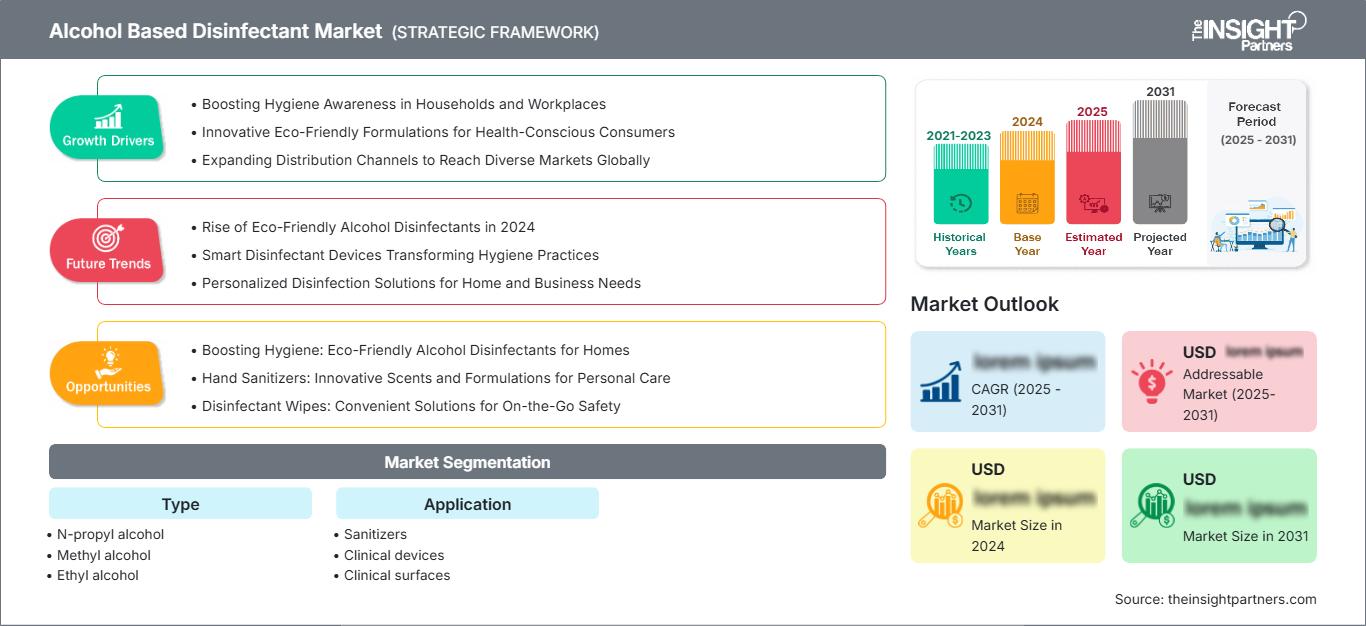
Alcohol Based Disinfectant Market: Strategic Insights
Regional Insights
North America Alcohol Based Disinfectant Market
North America was estimated to hold 34-38% of the market share for alcohol based disinfectants in 2025 and is expected to grow at a CAGR of 10.2–10.8% during 2026-2034. North America offers a favorable healthcare infrastructure, strict infection control measures, and institutional demand in hospitals, clinics, pharmaceuticals, and commercial entities. Rise in usage of alcohol based sanitizers and disinfectants by various workplaces and public institutions will fuel market growth.
Presence of key companies, efficient distribution channels and regulatory actions taken by FDA and EPA in the region make North America more competitive. Investments made in health care modernization, long-term care and emergency planning initiatives boost demand for high efficacy formulations of disinfectants.
U.S. Alcohol Based Disinfectant Market
The U.S. accounted for 78–82% of the North America market in 2025 and is projected to report a CAGR of 10.3–10.9% during 2026–2034. High demands for such products from hospitals, clinics, pharmaceutical manufacturing plants, and commercial structures continue to fuel the market growth. The developed healthcare infrastructure along with significant expenditure in the healthcare sector ensures continuous purchase of alcohol-based disinfectant products in the region.
There are efforts being made by manufacturers to produce fast-acting disinfectants, skin-friendly sanitisers, and equipment-compatible disinfectants. Increasing use of such products in educational institutions, transport hubs, hotels, and food processing plants further aids the domestic demand scenario.
Europe Alcohol Based Disinfectant Market
In 2025, Europe accounted for 27-31% of the global market and is expected to register a CAGR of 10.7-11.3%. Germany is the major regional market due to its robust healthcare infrastructure, pharmaceutical production industry, and stringent hygiene practices. The UK has seen an increase in demand from hospitals and institutions as they strive to prevent infections.
The contribution to the demand by France, Italy, and Spain is high due to hospital modernization, industrial sanitization, and the expansion of health care facilities. The focus of European regulation on safety and effectiveness along with eco-friendliness is driving manufacturers to produce innovative formulations.
APAC Alcohol Based Disinfectant Market
The Asia Pacific held a share of 24–28% in the global market in 2025 and expected to witness the highest growth with a CAGR of 12.5–13.2% in 2026–2034. China, India, Japan, and South Korea will be the major drivers due to increasing healthcare infrastructure, hygiene consciousness, and increasing production activities of the pharmaceuticals industry.
Urbanization, higher spending on healthcare, and government initiatives for public health readiness are contributing to the market growth. Increased usage of alcohol sanitizers in hospitals, schools, offices, and transport sectors will continue to provide huge opportunities for companies.
Middle East & Africa Alcohol Based Disinfectant Market
Middle East & Africa market will witness significant growth in terms of CAGR of 10.9%-11.5% during the forecast period. Major reasons behind the growing demands from Saudi Arabia and UAE include the improvement in healthcare infrastructure, hospitality, and sanitation. South Africa too contributes to the market by increasing healthcare infrastructure and sanitation.
Growing awareness about infection control, healthcare expansion, and governmental sanitation drive is expected to facilitate the growth in the regional market. Growing demand from hospitals, food processing units, and commercial establishments will ensure promising growth opportunities for the future in the region.
Segmentation Analysis
Type
The Type segment is projected to grow at a CAGR of 11.2–11.8% during 2026–2034. Product selection is influenced by antimicrobial efficacy, evaporation rate, application compatibility, and regulatory approval across healthcare and industrial environments. The alcohol based disinfectant market scope continues to expand as manufacturers develop specialized formulations for medical devices, surface disinfection, and hand hygiene applications.
- N-propyl alcohol: Utilized in specialized disinfectant formulations requiring strong antimicrobial performance and compatibility with specific industrial and healthcare applications.
- Methyl alcohol: Primarily used in selected industrial disinfection applications, though its use is more limited in direct healthcare and consumer sanitizing products.
- Ethyl alcohol: Widely adopted in hand sanitizers and healthcare disinfectants due to its broad-spectrum antimicrobial activity and established regulatory acceptance.
- Isopropyl alcohol: Represents the leading product type owing to rapid evaporation, effective surface disinfection, and compatibility with medical equipment and electronic devices.
Application
The Application segment is anticipated to register a CAGR of 11.4–12.0% during the forecast period. Increasing hygiene standards across healthcare facilities, commercial establishments, and public spaces continue to drive demand for alcohol-based disinfectant products. Rising emphasis on infection prevention and regulatory compliance further supports market expansion across multiple end-use environments.
- Sanitizers: Represents the dominant application due to widespread use in healthcare facilities, workplaces, educational institutions, transportation hubs, and households for routine hand hygiene.
- Clinical devices: Demand is supported by the need for effective disinfection of medical equipment, diagnostic instruments, and reusable healthcare devices.
- Clinical surfaces: Adoption continues to increase across hospitals, clinics, laboratories, and healthcare facilities to maintain sterile environments and reduce cross-contamination risks.
Opportunity Snapshot
| Application | Revenue Contribution | Trend Tag | Adoption Stage |
|---|---|---|---|
| Sanitizers | High | Hand Hygiene | Mature |
| Clinical devices | Medium | Medical Safety | Scaling |
| Clinical surfaces | High | Surface Control | Mature |
Alcohol Based Disinfectant Market Growth Drivers and Impact Analysis
Increasing Healthcare-Associated Infection Prevention Measures
Growing focus on reducing healthcare-associated infections is significantly influencing demand for effective disinfection solutions across hospitals, clinics, and diagnostic centers. Healthcare organizations are implementing stricter hygiene protocols, increasing consumption of alcohol-based sanitizers and surface disinfectants. Regulatory frameworks from healthcare authorities are encouraging facilities to maintain higher sanitation standards, particularly in surgical areas and patient care environments. This shift is creating sustained opportunities for manufacturers offering validated formulations with rapid antimicrobial action. The expansion of healthcare infrastructure in emerging economies is further increasing institutional demand, while developed markets continue upgrading infection control practices through advanced dispensing systems and improved product performance requirements.
Expansion of Pharmaceutical and Food Processing Applications
Increasing hygiene requirements within pharmaceutical manufacturing and food processing industries are creating additional demand opportunities for alcohol-based disinfectant products. Pharmaceutical companies require stringent contamination control measures during production, packaging, and laboratory operations, while food processors follow strict sanitation protocols to ensure product safety. Alcohol-based formulations are preferred in these industries due to their rapid action, operational convenience, and compatibility with various surfaces. Growing investments in pharmaceutical production facilities across Asia Pacific and the Middle East are supporting market expansion. Additionally, food safety regulations and increasing exports of processed food products are encouraging manufacturers to adopt reliable disinfection systems across production environments.
Rising Consumer Awareness Toward Personal Hygiene
Increasing consumer awareness regarding personal hygiene and preventive healthcare practices continues to influence demand for alcohol-based sanitizing products. Although institutional applications remain major contributors, household adoption has expanded due to greater awareness of infection prevention and everyday cleanliness. Manufacturers are responding by developing skin-friendly formulations, convenient packaging formats, and products suitable for frequent use. Retail availability through pharmacies, supermarkets, and e-commerce platforms is improving accessibility across emerging markets. The shift toward premium hygiene products, including formulations with moisturizing ingredients and improved user experience, is encouraging product innovation. These consumer-driven trends are expected to support continued market development beyond traditional healthcare applications.
Alcohol Based Disinfectant Market Future Trends
Development of Sustainable and Low-Impact Disinfectant Formulations
Alcohol based disinfectant market trends is expected to focus on sustainable disinfectant formulations that reduce environmental impact while maintaining antimicrobial effectiveness. Manufacturers are increasingly exploring renewable alcohol sources, recyclable packaging solutions, and optimized formulations that minimize chemical waste. Growing sustainability commitments among healthcare providers and industrial users are encouraging suppliers to improve product lifecycle performance. Advanced formulation technologies may enable reduced packaging materials, lower transportation requirements, and improved storage efficiency. As environmental regulations become stricter across major markets, companies investing in sustainable chemistry and responsible manufacturing practices are likely to gain stronger acceptance among institutional buyers and regulatory stakeholders.
Integration of Smart Dispensing and Digital Hygiene Solutions
Digital technologies are expected to reshape hygiene management by enabling smarter dispensing systems and improved usage monitoring. Automated dispensers equipped with sensors can help organizations track consumption patterns, optimize replenishment schedules, and improve compliance with hygiene protocols. Hospitals, airports, commercial buildings, and educational institutions are increasingly evaluating technology-enabled sanitation solutions to improve operational efficiency. Data-driven hygiene management platforms may support better resource allocation and provide insights into usage behavior. As organizations prioritize measurable infection prevention outcomes, integration between disinfectant products and digital monitoring systems is expected to become an important differentiating factor for manufacturers.
Alcohol Based Disinfectant Market Opportunities
Expansion Across Emerging Healthcare Infrastructure
Emerging economies present significant opportunities as governments increase healthcare investments and improve access to medical services. Countries across Asia Pacific, Latin America, and the Middle East are expanding hospitals, diagnostic centers, and pharmaceutical manufacturing capabilities, creating additional demand for reliable disinfection products. Companies can leverage these developments through localized production, regional partnerships, and customized product portfolios designed for specific healthcare requirements. The alcohol based disinfectant market Forecasts indicate continued opportunities from rising healthcare capacity and increasing adoption of standardized infection control practices. Manufacturers focusing on affordability, regulatory compliance, and distribution expansion can strengthen their presence in developing markets.
Innovation in Specialized Industrial Disinfection Applications
Growing demand from pharmaceutical, biotechnology, food processing, and electronics industries creates opportunities for specialized alcohol-based disinfectant solutions. These industries require products designed for specific operational environments, including cleanrooms, sensitive equipment areas, and controlled manufacturing spaces. Manufacturers can capture new opportunities by developing formulations with improved material compatibility, faster drying characteristics, and enhanced safety profiles. Strategic collaborations with industrial users can help companies develop application-specific solutions and strengthen customer relationships. Increasing investments in advanced manufacturing facilities worldwide are expected to create additional demand for high-performance disinfectants tailored to specialized industrial requirements.
Recent Developments
- June 2, 2026: The Clorox Company’s healthcare division launched Clorox Healthcare Quat Alcohol Disinfecting Wipes along with a new sporicidal disinfecting wipe solution to address infection prevention challenges in healthcare facilities. The alcohol-based disinfecting wipes feature a formulation designed with 40% less alcohol than a comparable product while maintaining required surface wetness for a one-minute contact time. The innovation targets hospitals seeking improved disinfection compliance, faster workflows, and effective pathogen control amid increasing infection prevention requirements.
- October 29, 2025: Ecolab Life Sciences introduced Klercide Rapid Sporicide, a new sporicidal disinfectant solution designed for pharmaceutical manufacturing environments. The product addresses microbial control requirements in cleanrooms by improving surface compatibility, reducing residue concerns, and supporting faster production turnaround. The launch highlights increasing demand for advanced alcohol-based and specialty disinfectant formulations across regulated healthcare and life science facilities.
Frequently Asked Questions

- Comprehensive Market Sizing and Forecast Analysis
- Detailed Segmentation Analysis
- In-Depth Market Dynamics Assessment
- Regional and Country-Level Insights
- Competitive Landscape and Company Benchmarking
- Strategic Business Intelligence
Recent Reports
Testimonials

The Insight Partners' SCADA System Market report is comprehensive, with valuable insights on current trends and future forecasts. The team was highly professional, responsive, and supportive throughout. We are very satisfied and highly recommend their services.
RAN KEDEM Partner, Reali Technologies LTDs
I requested a report on a very specific software market and the team produced the report in a few days. The information was very relevant and well presented. I then requested some changes and additions to the report. The team was again very responsive and I got the final report in less than a week.
JEAN-HERVE JENN Chairman, Future Analytica
We worked with The Insight Partners for an important market study and forecast. They gave us clear insights into opportunities and risks, which helped shape our plans. Their research was easy to use and based on solid data. It helped us make smart, confident decisions. We highly recommend them.
PIYUSH NAGPAL Sr. Vice President, High Beam Global
The Insight Partners delivered insightful, well-structured market research with strong domain expertise. Their team was professional and responsive throughout. The user-friendly website made accessing industry reports seamless. We highly recommend them for reliable, high-quality research services
YUKIHIKO ADACHI CEO, Deep Blue, LLC.
This is the first time I have purchased a market report from The Insight Partners.While I was unsure at first, I visited their web site and felt more comfortable to take the risk and purchase a market report.I am completely satisfied with the quality of the report and customer service. I had several questions and comments with the initial report, but after a couple of dialogs over email with their analyst I believe I have a report that I can use as input to our strategic planning process.Thank you so much for taking the extra time and making this a positive experience.I will definitely recommend your service to others and you will be my first call when we need further market data.
JOHN SUZUKI President and Chief Executive Officer, Board Director, BK Technologies
I wish to appreciate your support and the professionalism you displayed in the course of attending to my request for information regarding to infectious disease IVD market in Nigeria. I appreciate your patience, your guidance, and the fact that you were willing to offer a discount, which eventually made it possible for us to close a deal. I look forward to engaging The Insight Partners in the future, all thanks to the impression you have created in me as a result of this first encounter.
DR CHIJIOKE ONYIA MANAGING DIRECTOR, PineCrest Healthcare Ltd.Reason to Buy
- Informed Decision-Making
- Understanding Market Dynamics
- Competitive Analysis
- Identifying Emerging Markets
- Customer Insights
- Market Forecasts
- Risk Mitigation
- Boosting Operational Efficiency
- Strategic Planning
- Investment Justification
- Tracking Industry Innovations
- Aligning with Regulatory Trends





 Get Free Sample for