
Alfentanil Market Demand, Size & Forecast by 2034
Coverage: By Route of administration (Intravenous, Subcutaneous); Application (Perioperative Analgesia, Adjunct to General Anesthesia) , and Geography (North America, Europe, Asia Pacific, and South and Central America)
- Status : Data Released
- Report Code : TIPRE00019565
- Category : Life Sciences
- No. of Pages : 150
- Available Report Formats :


- Last update date : July 10, 2026


2025 Market Size
US$ 334.37 Mn
Base year value
2034 Forecast
US$ 538.71 Mn
Projected by 2034
CAGR 2026-2034
5.44 %
Growth rate
Addressable Market
US$ 3,958.69 Mn
(2026-2034)
The alfentanil market size was projected to be US$ 334.37 million in 2025 and is expected to grow to US$ 538.71 million in 2034, at a CAGR of 5.44% from 2026 to 2034. Growing demand for fast-acting opioid analgesics used in short-duration surgeries, increasing number of surgeries worldwide, and increasing availability of sophisticated anesthesia treatment are anticipated to drive the growth of this market. Improvements in perioperative protocols, sophisticated healthcare infrastructure, and the availability of anesthetics are other factors that will support growth.
According to the alfentanil market report, North America will continue to hold the largest market share and is expected to show a CAGR of 5.2%–5.7% over the forecast period. This growth is attributed to the high incidence of ambulatory and inpatient surgical procedures, advanced anesthesia practice, and the availability of advanced healthcare infrastructure in this region.
Alfentanil Market Assessment and Insights
- North America: North America accounted for 39–43% share in 2025 and is projected to grow at a CAGR of 5.2–5.7% during 2026–2034. High surgical procedure volumes, sophisticated anesthesia infrastructure, and favourable reimbursement policies continue supporting regional market leadership.
- U.S.: The U.S. represented 81–85% of the North American market in 2025 and is expected to register a CAGR of 5.3–5.8% during 2026–2034, driven by advanced perioperative care and widespread utilization of short-acting anesthetic agents.
- Europe: Europe held 27–31% market share in 2025 and is anticipated to expand at a CAGR of 5.0–5.4% during 2026–2034. Germany, the UK, France, and Italy continue leading regional demand through established healthcare systems and increasing surgical interventions.
- Asia Pacific: Asia Pacific captured 20–24% share in 2025 and is forecast to register a CAGR of 6.0–6.5% during 2026–2034. China, Japan, India, and South Korea continue driving regional expansion through healthcare infrastructure development and rising surgical volumes.
- Largest Segment: Route of Administration – Intravenous accounted for 84–88% market share in 2025 and is expected to grow at a CAGR of 5.3–5.7% during 2026–2034, supported by rapid onset of action and extensive use during anesthesia induction.
- High Growth Segment: Application – Perioperative Analgesia represented 58–62% market share in 2025 and is anticipated to register a CAGR of 5.8–6.3% during 2026–2034, driven by increasing minimally invasive surgeries and enhanced recovery protocols.
- Key companies analyzed in detail: Pfizer Inc., Novartis AG, Johnson & Johnson, Janssen Pharmaceutica NV, Angelini Pharma S.p.A., B. Braun Melsungen AG, hameln pharma gmbh, Akorn Operating Company LLC, Algol Pharma Oy, JV Healthcare.
Source: The Insight Partners' analysis based on proprietary research, government publications, company annual reports, investor presentations, industry databases, and expert interviews.
Developments in perioperative medicine, as well as changes in anesthesia practices, have affected the market for alfentanil through a higher preference for short-term opioids with a quick onset and predictable recovery. The focus of healthcare professionals on precise dosage administration, improved patient monitoring, and balanced anesthesia remains intact to improve surgical outcomes. The pharmaceutical companies have improved their capability to manufacture sterile injectables without compromising the quality standards and regulatory requirements for controlled drugs.
The market is expected to be driven by higher healthcare spending, the expansion of surgical facilities in developing countries, and greater acceptance of minimally invasive surgeries, which require faster-acting anesthetics. The investments in hospital infrastructure development, the establishment of ambulatory surgery centers, and advanced anesthesia delivery equipment are expected to drive clinical applications. These trends continue to expand the market scope for alfentanil.
Alfentanil Market Report Scope
| Report Attribute | Details |
|---|---|
| Market size in 2025 | US$ 334.37 Million |
| Market Size by 2034 | US$ 538.71 Million |
| Global CAGR (2026 - 2034) | 5.44% |
| Historical Data | 2021-2024 |
| Forecast period | 2026-2034 |
Alfentanil Market Analysis
There will be an increased demand for alfentanil due to the increasing number of surgeries where rapid pain relief is required for outpatients and inpatients. Increasing use of minimally invasive surgeries, the growing presence of ambulatory surgical centers, and a larger number of trained anesthesiologists will be among the driving factors. Due to its rapid onset and shorter duration of effect, it will be especially suitable for surgeries requiring quick patient recovery. These factors will fuel the growth of the alfentanil market, while the rising number of surgeries will further drive its clinical use.
The market includes players from the active pharmaceutical ingredient manufacturers, sterile injection companies, contract manufacturing companies, hospital procurement companies, distributors, regulatory agencies, and surgical facilities. There will be stringent regulations on manufacturing and controlled substances, which will influence the drug's manufacturing strategy. Quality manufacturing and reliable supply of the drug, along with regulatory oversight, will inform the overall market analysis of the drug.
The competition continues to be among existing pharmaceutical companies with experience in manufacturing injectable anesthetics. Examples of such firms include Pfizer Inc., Johnson & Johnson, Janssen Pharmaceutica NV, Novartis AG, Angelini Pharma S.p.A., hameln pharma gmbh, B. Braun Melsungen AG, Akorn Operating Company LLC, Algol Pharma Oy, and JV Healthcare. Competition among such firms is achieved through their manufacturing capacity, adherence to regulations, and strong connections with hospitals' purchasing networks. Strategic focus on high-quality products, assured supply chains, and geographic expansion is important.
Investments continue to shift towards the modernization of the production process, increases in the firm's production capacity, and regulatory compliance initiatives that ensure uninterrupted supplies of essential injectable anesthetics. Pharmaceutical companies have been making more connections with hospitals and distribution centers, as well as improving their pharmacovigilance and quality assurance systems. Such strategic measures have been improving product availability and the market size.
● REPORT CUSTOMIZATION
Tailor This Report To Align With Your Specific Business Requirements
This report can be customized to align precisely with your business objectives, scope, and target markets. Customization options include tailored segmentation, geography, competitive analysis, and strategic insights to support informed decision-making.
Customize This Report →WHAT YOU CAN ADJUST
- ● Segmentations
- ● Geography
- ● Competitive Analysis
- ● Language Preferences
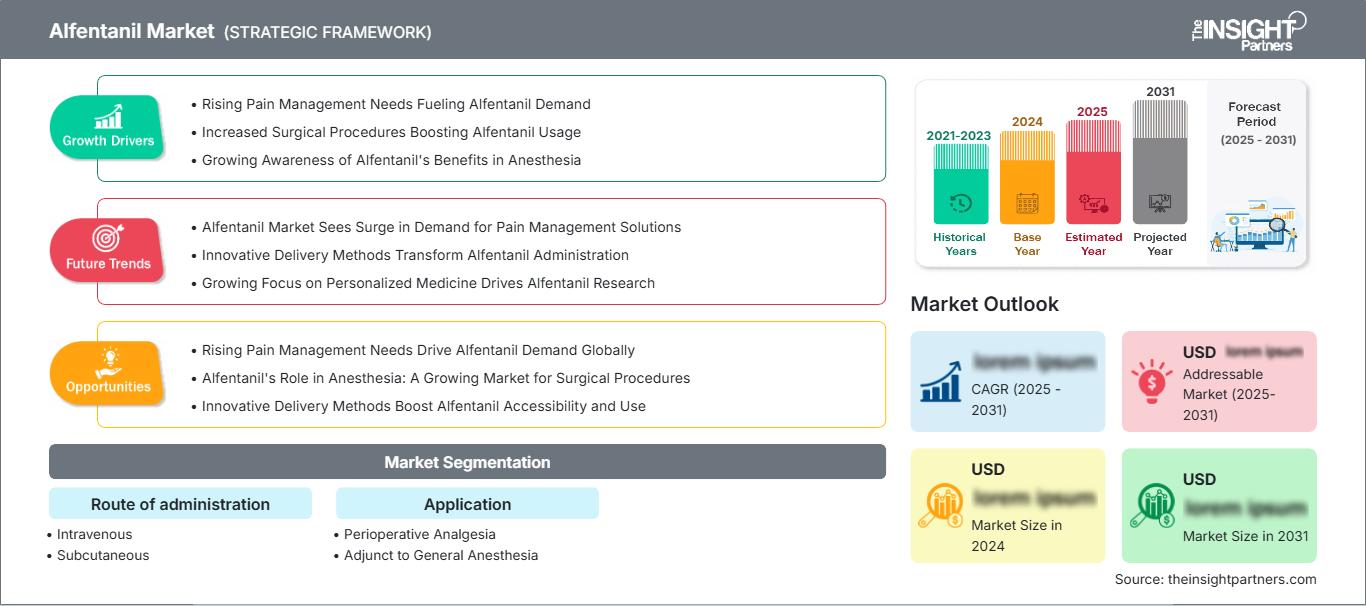
Alfentanil Market: Strategic Insights
Regional Insights
North America Alfentanil Market
North America accounted for 39–43% of the global market in 2025 and is projected to register a CAGR of 5.2–5.7% during 2026–2034. The region benefits from advanced healthcare infrastructure, a high volume of surgeries, and the widespread prevalence of modern anesthesia protocols. A growing number of outpatient surgeries, good reimbursement policies, and continuous investments in perioperative services will continue driving the demand for short-acting opioid analgesics in the region. The use of alfentanil for fast-recovery operations is more prevalent among healthcare professionals, whereas the existing regulatory framework helps ensure its safe delivery and distribution across hospitals and ASCs.
The region is also characterized by the presence of leading pharma players, skilled practitioners in anesthesia, and a developed network of hospitals that purchase drugs. Continuous investments in the the modernization of operating rooms, the development of ambulatory surgical centers, and enhanced recovery after surgery protocols help drive regional growth. Patient safety and perioperative management will help the region maintain its leadership during the forecast period.
U.S. Alfentanil Market
The U.S. represented 81–85% of the North American market in 2025 and is expected to expand at a CAGR of 5.3–5.8% during 2026–2034. Growing numbers of minimally invasive procedures, increasing utilization of ambulatory surgery centers, and continuous modernization of hospital operating rooms continue driving demand. The country's advanced anesthesia practice standards and availability of specialized perioperative care professionals further support the widespread use of fast-acting opioid analgesics across multiple surgical specialties.
Major drug manufacturing firms have extensive commercial operations in the region, making sure that products remain available and compliant with regulatory requirements. Evidence-based anesthetic procedures that prioritize rapid induction, pain management, and reduced recovery time for surgeries have become more common in hospitals. Future investments in technology, facilities, and clinician training should further support demand and the U.S. market position.
Europe Alfentanil Market
Europe accounted for 27–31% of the global market in 2025 and is anticipated to register a CAGR of 5.0–5.4% during 2026–2034. Germany remains the leading regional market due to its advanced hospital infrastructure, high surgical volumes, and strong adoption of modern anesthesia practices. Increasing investment in operating room technologies and expanding access to specialized surgical care continue supporting demand for short-duration opioid analgesics.
The United Kingdom continues to experience steady market growth due to the modernization of surgical procedures, the introduction of day care procedures, and the use of enhanced recovery approaches. The presence of a well-developed public healthcare system, coupled with the implementation of clinical guidelines for perioperative procedures, helps increase the use of injectable anesthesia drugs in public and private hospitals.
France, Italy, and Spain together make a significant contribution to regional growth, owing to increased healthcare spending, more elective surgeries being performed, and improvements in hospital facilities. It is anticipated that continuous improvement in the delivery of surgical care, anesthesia practices, and healthcare professionals will help achieve sustained regional growth.
APAC Alfentanil Market
Asia Pacific held 20–24% of the global market in 2025 and is projected to record a CAGR of 6.0–6.5% during 2026–2034. China leads regional demand through rapid healthcare infrastructure expansion, increasing hospital capacity, and rising surgical procedure volumes.
Japan and South Korea continue to contribute to regional growth through their technologically sophisticated healthcare systems, aging populations that require surgical procedures, and modern anesthesia practices.
India and Australia are experiencing a growing demand for modernization of perioperative healthcare services due to improvements in their health care infrastructure, increased availability of surgery and hospital facilities, and government initiatives.
Middle East & Africa Alfentanil Market
The Middle East & Africa market is expected to expand at a CAGR of 4.6–5.1% during 2026–2034, supported by ongoing healthcare infrastructure development, increasing hospital investments, and growing availability of specialized surgical services. Saudi Arabia remains the leading regional market through sustained healthcare modernization initiatives.
The United Arab Emirates continues strengthening demand through expansion of advanced hospitals, increasing surgical capacity, and growing adoption of international anesthesia standards across both public and private healthcare facilities.
South Africa and the Rest of the Middle East & Africa continue experiencing gradual market expansion through improving healthcare accessibility, investment in operating room infrastructure, and increasing availability of essential injectable anesthetic medicines across regional healthcare systems.
Segmentation Analysis
Route of Administration
The Route of Administration segment is expected to register a CAGR of 5.3–5.8% during 2026–2034, supported by increasing surgical procedures, expanding ambulatory care settings, and continuous adoption of short-acting opioid analgesics in anesthesia practice. Growing emphasis on rapid drug onset, precise dosing, and predictable recovery continues encouraging healthcare providers to utilize injectable administration methods for perioperative pain management and anesthesia induction.
- Intravenous: Intravenous administration dominates clinical use owing to its rapid onset of action, accurate dose titration, and widespread preference during anesthesia induction, procedural sedation, and short-duration surgical interventions requiring immediate analgesic effects.
- Subcutaneous: Subcutaneous administration remains a comparatively smaller segment, serving selected clinical situations where gradual opioid delivery is appropriate. Although less frequently utilized than intravenous administration, it offers flexibility in specific hospital-based pain management protocols.
Application
The Application segment is projected to expand at a CAGR of 5.5–6.0% during 2026–2034, driven by rising surgical volumes, growing demand for balanced anesthesia techniques, and increasing adoption of enhanced recovery after surgery protocols. Expanding utilization of fast-acting opioid analgesics during minimally invasive procedures continues strengthening clinical demand across hospitals and ambulatory surgical centers.
- Perioperative Analgesia: This application represents the largest clinical use for alfentanil due to increasing numbers of elective and emergency surgeries requiring rapid pain control, stable hemodynamic management, and faster postoperative recovery.
- Adjunct to General Anesthesia: Alfentanil continues to serve as an effective adjunct to general anesthesia by improving intraoperative analgesia, reducing anesthetic requirements, and supporting controlled patient recovery during a broad range of surgical procedures.
Opportunity Snapshot
| Segment Name | Revenue Contribution | Trend Tag | Adoption Stage |
| Perioperative Analgesia | High | Enhanced Recovery | Mature |
| Adjunct to General Anesthesia | High | Balanced Anesthesia | Scaling |
Alfentanil Market Growth Drivers and Impact Analysis
Increasing global surgical procedure volumes
The growing number of elective, emergency, cardiovascular, orthopedic, neurological, and minimally invasive surgical procedures continues to drive demand for short-acting opioid analgesics. Expanding healthcare infrastructure and improved access to surgical care across developing economies are increasing utilization of advanced anesthesia protocols that emphasize rapid induction and faster patient recovery. Ambulatory surgical centers are also performing a greater share of procedures requiring precise anesthetic management, further strengthening demand for alfentanil. Continuous investments in operating room modernization, coupled with increasing availability of trained anesthesiologists, are supporting broader clinical adoption. These developments continue strengthening alfentanil market growth, encouraging pharmaceutical manufacturers to improve production efficiency and maintain reliable hospital supply chains.
Growing adoption of enhanced recovery after surgery protocols
Healthcare providers are increasingly implementing Enhanced Recovery After Surgery (ERAS) programs to shorten hospital stays, reduce postoperative complications, and improve patient outcomes. These protocols encourage the use of anesthetic agents with predictable pharmacokinetic profiles that allow rapid awakening and efficient pain management. Alfentanil aligns well with these objectives due to its short duration of action and rapid onset, making it suitable for procedures requiring controlled recovery. Hospitals continue investing in standardized perioperative care pathways that prioritize patient safety, efficient operating room utilization, and reduced healthcare costs. These clinical trends continue supporting broader adoption while expanding the overall alfentanil market scope across advanced surgical healthcare systems.
Expansion of ambulatory surgical centers worldwide
Rapid expansion of ambulatory surgical centers has significantly increased demand for anesthetic agents capable of supporting same-day discharge and efficient postoperative recovery. Improvements in minimally invasive surgical techniques have shifted numerous procedures away from traditional inpatient hospitals toward outpatient settings where rapid recovery is essential. Healthcare provider
Alfentanil Market Future Trends
Integration of precision anesthesia practices
Future anesthesia management is expected to increasingly incorporate precision medicine principles through individualized dosing, real-time physiological monitoring, and digital anesthesia management platforms. Hospitals continue investing in smart infusion systems and advanced monitoring technologies that improve opioid administration accuracy while reducing adverse events. As perioperative medicine becomes increasingly data-driven, anesthesiologists are expected to optimize alfentanil utilization according to patient-specific characteristics, procedure duration, and recovery objectives. Continued integration of artificial intelligence-assisted monitoring and clinical decision support systems is anticipated to enhance treatment consistency while supporting evolving alfentanil market trends across global healthcare systems.
Growing preference for outpatient surgical procedures
Healthcare systems worldwide continue shifting toward outpatient and same-day surgical care to improve efficiency and reduce hospitalization costs. This transition increases demand for anesthetic agents capable of providing rapid induction, predictable recovery, and effective pain control without prolonged postoperative monitoring. Advances in minimally invasive surgery and enhanced perioperative protocols continue supporting this structural shift. The alfentanil market forecast indicates that pharmaceutical manufacturers are expected to strengthen hospital partnerships while maintaining uninterrupted product availability for ambulatory surgical centers. These evolving care delivery models are anticipated to expand clinical utilization and contribute to long-term market development.
Alfentanil Market Opportunities
Expansion across emerging healthcare markets
Emerging economies throughout Asia Pacific, Latin America, and the Middle East continue investing heavily in hospital infrastructure, operating room capacity, and surgical workforce development. Rising healthcare expenditure, improving insurance coverage, and increasing access to advanced surgical procedures are creating favorable conditions for greater adoption of modern anesthesia agents. Manufacturers capable of strengthening regional regulatory approvals, local distribution partnerships, and hospital procurement relationships are expected to improve commercial penetration. Expanding educational initiatives targeting anesthesiologists and perioperative specialists can further accelerate clinical adoption while increasing the alfentanil market share within rapidly developing healthcare markets.
Advancement of sterile injectable manufacturing capabilities
Growing regulatory emphasis on pharmaceutical quality, manufacturing resilience, and supply chain continuity presents significant investment opportunities for injectable drug manufacturers. Companies investing in advanced aseptic production technologies, automated quality control systems, and expanded sterile manufacturing facilities will be better positioned to address increasing global demand for hospital-based anesthetic medicines. Enhanced manufacturing efficiency, stronger compliance with international regulatory standards, and diversified production capacity can improve long-term supply reliability. These strategic investments are expected to strengthen competitive positioning while supporting sustainable expansion of the alfentanil market size over the forecast period.
Recent Developments
- February 2026: Pfizer Inc. reported its full-year 2025 financial results, reaffirming its 2026 guidance while highlighting continued investment in hospital medicines manufacturing, sterile injectable production capabilities, and expansion of its late-stage pharmaceutical pipeline. The company emphasized strengthening operational efficiency and long-term supply resilience for essential hospital products.
- November 2025: Pfizer Inc. announced strong third-quarter 2025 performance and reiterated its commitment to expanding manufacturing capacity, improving commercial execution, and advancing pharmaceutical innovation across its global portfolio. Continued investments in hospital-focused medicines and supply chain optimization support long-term availability of critical injectable therapies.
- May 2024: hameln pharma gmbh continued expanding the availability of its sterile injectable anesthetic portfolio across European healthcare markets through ongoing regulatory compliance initiatives and hospital supply agreements, reinforcing its position as a leading supplier of injectable anesthesia products for perioperative care.
Frequently Asked Questions

- Comprehensive Market Sizing and Forecast Analysis
- Detailed Segmentation Analysis
- In-Depth Market Dynamics Assessment
- Regional and Country-Level Insights
- Competitive Landscape and Company Benchmarking
- Strategic Business Intelligence
Recent Reports
Testimonials

The Insight Partners' SCADA System Market report is comprehensive, with valuable insights on current trends and future forecasts. The team was highly professional, responsive, and supportive throughout. We are very satisfied and highly recommend their services.
RAN KEDEM Partner, Reali Technologies LTDs
I requested a report on a very specific software market and the team produced the report in a few days. The information was very relevant and well presented. I then requested some changes and additions to the report. The team was again very responsive and I got the final report in less than a week.
JEAN-HERVE JENN Chairman, Future Analytica
We worked with The Insight Partners for an important market study and forecast. They gave us clear insights into opportunities and risks, which helped shape our plans. Their research was easy to use and based on solid data. It helped us make smart, confident decisions. We highly recommend them.
PIYUSH NAGPAL Sr. Vice President, High Beam Global
The Insight Partners delivered insightful, well-structured market research with strong domain expertise. Their team was professional and responsive throughout. The user-friendly website made accessing industry reports seamless. We highly recommend them for reliable, high-quality research services
YUKIHIKO ADACHI CEO, Deep Blue, LLC.
This is the first time I have purchased a market report from The Insight Partners.While I was unsure at first, I visited their web site and felt more comfortable to take the risk and purchase a market report.I am completely satisfied with the quality of the report and customer service. I had several questions and comments with the initial report, but after a couple of dialogs over email with their analyst I believe I have a report that I can use as input to our strategic planning process.Thank you so much for taking the extra time and making this a positive experience.I will definitely recommend your service to others and you will be my first call when we need further market data.
JOHN SUZUKI President and Chief Executive Officer, Board Director, BK Technologies
I wish to appreciate your support and the professionalism you displayed in the course of attending to my request for information regarding to infectious disease IVD market in Nigeria. I appreciate your patience, your guidance, and the fact that you were willing to offer a discount, which eventually made it possible for us to close a deal. I look forward to engaging The Insight Partners in the future, all thanks to the impression you have created in me as a result of this first encounter.
DR CHIJIOKE ONYIA MANAGING DIRECTOR, PineCrest Healthcare Ltd.Reason to Buy
- Informed Decision-Making
- Understanding Market Dynamics
- Competitive Analysis
- Identifying Emerging Markets
- Customer Insights
- Market Forecasts
- Risk Mitigation
- Boosting Operational Efficiency
- Strategic Planning
- Investment Justification
- Tracking Industry Innovations
- Aligning with Regulatory Trends





 Get Free Sample for