
Alkaline Proteases Market Expert Analysis by Size and Share 2034
Coverage: by Type (Serine Protease, Metalloprotease); Application (Detergents, Leather Industry, Pharmaceuticals, Protein Hydrolyzates, Meat Tenderizers, Food Products, Waste Processing) , and Geography (North America, Europe, Asia Pacific, and South and Central America)
- Status : Data Released
- Report Code : TIPRE00012828
- Category : Chemicals and Materials
- No. of Pages : 150
- Available Report Formats :


- Last update date : August 07, 2026


2025 Market Size
US$ 2.96 Bn
Base year value
2034 Forecast
US$ 5.41 Bn
Projected by 2034
CAGR 2026-2034
6.93 %
Growth rate
Addressable Market
US$ 37.80 Bn
(2026-2034)
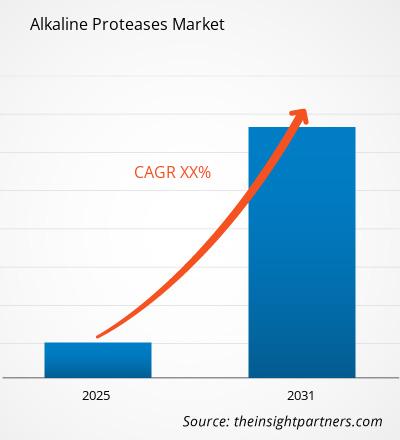
The global Alkaline Proteases market was valued at US$ 2.96 billion in 2025 and is expected to reach US$ 5.41 billion by 2034; it is estimated to record a CAGR of 6.93% during 2026-2034.
Alkaline Proteases Market Assessment and Insights
- North America: Accounted for 31–34% share in 2025 and is anticipated to grow at a CAGR of 6.4–6.9% during 2026–2034. Strong biotechnology infrastructure, high enzyme adoption in detergents, and expanding pharmaceutical manufacturing continue supporting regional demand.
- U.S.: Represented 81–85% of the North American market in 2025 and is projected to register a CAGR of 6.5–7.0% through 2034, supported by biotechnology innovation, large detergent manufacturers, and increasing enzyme utilization in industrial processing.
- Europe: Held 25–28% share in 2025 and is expected to expand at a CAGR of 6.7–7.2% during 2026–2034. Germany, France, Denmark, the Netherlands, and the UK remain major contributors owing to their established enzyme manufacturing and industrial biotechnology sectors.
- Asia Pacific: Accounted for 32–35% share in 2025 and is forecast to record the highest CAGR of 8.1–8.7% during 2026–2034. China, India, Japan, and South Korea continue investing in biotechnology, industrial enzymes, food processing, and detergent manufacturing.
- Largest Segment: Detergents accounted for 40–44% market share in 2025 and is anticipated to grow at a CAGR of 7.0–7.5% during 2026–2034, supported by increasing production of enzyme-based household and industrial cleaning formulations.
- High Growth Segment: Pharmaceuticals represented 11–14% market share in 2025 and is projected to register a CAGR of 8.8–9.3% during 2026–2034, driven by expanding applications in biopharmaceutical manufacturing and therapeutic enzyme formulations.
- Key companies analyzed in detail: AB Enzymes GmbH, Acumedia Manufacturers, Inc., Advanced Enzyme Technologies Limited, DuPont de Nemours, Inc., dsm-firmenich AG, Noor Enzymes, Novonesis A/S, Merck KGaA (Sigma-Aldrich), Specialty Enzymes & Probiotics, Solvay S.A.
Source: The Insight Partners' analysis based on proprietary research, government publications, company annual reports, investor presentations, industry databases, and expert interviews.
Development of microbial strains, advancements in precision fermentation techniques, and purification process of enzymes have changed the enzyme production process in industrial biotechnology. Stable enzymes with higher efficiency and yields along with reduced cost of production are some of the results that have been brought by these innovations. Higher usage of enzymes in detergents, drugs, foods, and leather production processes has enabled the creation of sustainable biochemical alternatives to the chemical processing methods.
Development of the industry will be fueled by biotechnology spending in Asia Pacific, increased demand for sustainable industrial processing processes, and further application in the healthcare and food manufacturing industries. Bio-based manufacturing regulatory environment, along with ongoing innovations in fermentation processes and protein engineering, will provide favorable conditions for enzyme manufacturers to develop special applications.
Alkaline Proteases Market Report Scope
| Report Attribute | Details |
|---|---|
| Market size in 2025 | US$ 2.96 Billion |
| Market Size by 2034 | US$ 5.41 Billion |
| Global CAGR (2026 - 2034) | 6.93% |
| Historical Data | 2021-2024 |
| Forecast period | 2026-2034 |
Alkaline Proteases Market Analysis
The driving forces behind the rise in demand for alkaline proteases include increasing adoption of industrial enzymes as environmentally friendly substitutes for traditional chemicals. Increased number of environmental restrictions, growing demand for phosphate-free detergents, increased processed food manufacturing and increased pharmaceutical R&D are boosting the use of enzymes all over the world. Another factor influencing the growth of the market includes technological advancements in microbial fermentation techniques that improve production efficiencies and decrease costs of manufacturing and develop enzyme formulations for specific industrial uses.
Value chain includes microbial strain selection, fermentation, extraction, formulation and distribution of enzymes to industries such as detergents, food, pharmaceutical, leather and waste treatment. Biotech companies are investing into research and development to improve protein engineering and precision fermentation technologies. There is increased collaboration between enzyme manufacturers and industries using enzymes to commercialize application-specific formulations of enzymes.
The competitive intensity within the alkaline proteases market report keeps on rising with the existing biotech companies concentrating on innovation, production capacity enhancement, and strategic acquisition. Novonesis A/S, dsm-firmenich AG, DuPont de Nemours, Inc., Advanced Enzyme Technologies Limited, and AB Enzymes GmbH have been engaging in more investment towards research and development of enzymes that have enhanced thermal stability, alkaline tolerance, and substrate specificity. Product differentiation now relies more on fermentation capability, formulating skills, regulation adherence, and technical support than just on production volume.
There are investments in state-of-the-art fermentation techniques, environmentally friendly production methods, and innovative enzyme engineering systems. While the newly formed firms are taking up niche ventures in the areas of protein hydrolyzates, pharmaceutical intermediaries, and waste disposal from industries, the existing firms are improving their regional production through collaboration and capacity building.
● REPORT CUSTOMIZATION
Tailor This Report To Align With Your Specific Business Requirements
This report can be customized to align precisely with your business objectives, scope, and target markets. Customization options include tailored segmentation, geography, competitive analysis, and strategic insights to support informed decision-making.
Customize This Report →WHAT YOU CAN ADJUST
- ● Segmentations
- ● Geography
- ● Competitive Analysis
- ● Language Preferences
Alkaline Proteases Market: Strategic Insights

Regional Insights
North America Alkaline Proteases Market
North America accounted for 31–34% of the alkaline proteases market share in 2025 and is projected to register a CAGR of 6.6–7.0% during 2026–2034. Demand is supported by mature detergent manufacturing, advanced biotechnology research, and increasing adoption of enzyme-based industrial processing. Regulatory emphasis on environmentally sustainable manufacturing and reduced chemical discharge continues to encourage enzyme substitution across several industrial sectors.
This area also gains advantage from substantial investment made in pharmaceutical manufacturing and food processing. The continuous innovations in microbial fermentation, together with cooperation between biotechnology firms and industries, will continue to create business opportunities. The increasing demands for high concentration of liquid detergents and cleaning formulations will ensure market growth in the long run.
U.S. Alkaline Proteases Market
The United States represented 74–78% of the North American market in 2025 and is expected to grow at a CAGR of 6.7–7.1% through 2034. Strong domestic biotechnology capabilities, well-established detergent manufacturers, and increasing investments in enzyme engineering continue to support market development. The country also maintains a significant presence of global enzyme producers and research institutions engaged in protein engineering and industrial microbiology.
An increased production of pharmaceuticals, growing production of ingredients for food products, and the utilization of sustainable industrial processing techniques have resulted in increased demand for alkaline proteases. Further research on recombinant enzymes coupled with investments in precision fermentation technology and biomanufacturing is anticipated to enhance the competitiveness of the country during the forecast period.
Europe Alkaline Proteases Market
Europe accounted for 27–30% of the global market in 2025 and is projected to expand at a CAGR of 6.8–7.3% during the forecast period. Germany remains the leading regional market owing to its strong industrial biotechnology ecosystem, extensive detergent manufacturing, and advanced pharmaceutical sector. Continuous investment in enzyme innovation further strengthens regional competitiveness.
While the UK has seen an increase in demand for enzymes in food processing, research in biotechnology, and specialty chemicals, France, Italy, and Spain have been making efforts in using enzymes in detergents, meat, dairy products, and waste treatment. Environmental regulations and increasing use of bio-industrial processes ensure that Europe remains a leader in the world of industrial enzymes.
APAC Alkaline Proteases Market
Asia Pacific represented 28–31% of the global market in 2025 and is expected to record the fastest CAGR of 8.2–8.7% through 2034. China leads regional production owing to its large fermentation industry, while India is rapidly expanding enzyme manufacturing through biotechnology investments.
Enzyme usage is set to grow in Japan, South Korea, and Australia across pharmaceuticals, food processing, and specialty chemicals sectors. Industrial biotechnology backing from government, higher manufacturing capabilities, and detergent usage will drive regional demand through the forecast period.
Middle East & Africa Alkaline Proteases Market
The Middle East & Africa market is projected to expand at a CAGR of 6.3–6.8% during 2026–2034. Saudi Arabia and the UAE are increasing investments in industrial diversification and food processing, while South Africa remains an important consumer of industrial enzymes for detergents and specialty manufacturing.
Rising environmental consciousness, the growing wastewater treatment efforts, and the increasing requirement for environmentally friendly chemicals are contributing towards market growth. The ongoing industrialization and investment in biotechnology will result in future opportunities despite the relatively smaller market size.
Segmentation Analysis
Type
The Type segment is expected to register a CAGR of 7.0–7.5% during 2026–2034. The alkaline proteases market scope continues to expand as manufacturers develop enzyme variants with improved stability, catalytic efficiency, and substrate specificity for diverse industrial applications. Continuous innovation in microbial fermentation and protein engineering supports broader commercialization across detergent, pharmaceutical, food processing, and environmental sectors.
- Serine Protease: The most widely commercialized enzyme category owing to excellent catalytic performance, high alkaline stability, and extensive use in detergents, leather processing, pharmaceuticals, and food manufacturing applications.
- Metalloprotease: Increasingly adopted for specialized industrial processing where enhanced thermal stability and controlled protein hydrolysis improve efficiency in pharmaceutical manufacturing, protein hydrolysates, and waste treatment operations.
Application
The Application segment is projected to record a CAGR of 7.3–7.8% during 2026–2034. Expanding industrial adoption, increasing sustainability initiatives, and growing demand for efficient biocatalysts continue to diversify application areas beyond traditional detergent manufacturing into food technology, pharmaceuticals, environmental management, and specialty industrial processing.
- Detergents: The dominant application owing to superior stain removal performance, compatibility with low-temperature washing, and increasing demand for concentrated, environmentally friendly detergent formulations.
- Leather Industry: Used for eco-friendly dehairing and bating processes, reducing chemical consumption while improving leather quality and processing efficiency.
- Pharmaceuticals: Demand continues to increase due to applications in peptide synthesis, enzyme therapies, and biopharmaceutical manufacturing requiring high-purity enzymatic processing.
- Protein Hydrolyzates: Widely utilized for producing nutritional ingredients, functional proteins, and specialized food formulations with controlled hydrolysis characteristics.
- Meat Tenderizers: Supports improved meat texture through selective protein breakdown while maintaining product quality and processing consistency.
- Food Products: Increasingly incorporated into baking, dairy processing, beverage production, and protein modification applications requiring efficient enzymatic reactions.
- Waste Processing: Growing adoption in industrial effluent treatment and organic waste degradation supports sustainable environmental management and improved resource recovery.
Opportunity Snapshot
| Application | Revenue Contribution | Trend Tag | Adoption Stage |
|---|---|---|---|
| Paints and Coatings | High | Enzyme Formulation | Mature |
| Detergents | High | Cold Wash | Mature |
| Leather Industry | Medium | Eco Tanning | Scaling |
| Pharmaceuticals | Medium | Bioprocessing | Scaling |
| Protein Hydrolyzates | Medium | Functional Protein | Scaling |
| Meat Tenderizers | Low | Clean Label | Emerging |
| Food Products | Medium | Food Enzymes | Scaling |
| Waste Processing | Low | Bio Remediation | Emerging |
Alkaline Proteases Market Growth Drivers and Impact Analysis
Growing Demand for Sustainable and High-Performance Detergent Formulations
Household and industrial detergent manufacturers are increasingly replacing conventional chemical additives with enzyme-based ingredients to improve cleaning efficiency while lowering environmental impact. Alkaline proteases enable effective stain removal at lower washing temperatures, helping reduce energy consumption and extend fabric life. Regulatory initiatives encouraging phosphate-free and biodegradable detergent formulations across North America and Europe are further accelerating adoption. Emerging economies are also witnessing rising consumption of premium laundry products, increasing demand for advanced enzyme formulations. Continuous innovation in enzyme stability and compatibility with liquid detergent systems is expected to strengthen long-term commercial adoption while creating opportunities for manufacturers to develop differentiated, high-performance cleaning solutions.
Expansion of Industrial Biotechnology and Precision Fermentation
Rapid progress in industrial biotechnology is improving the commercial viability of alkaline proteases through enhanced microbial strain development, optimized fermentation processes, and higher production yields. Advances in synthetic biology, recombinant DNA technology, and precision fermentation are enabling manufacturers to produce enzymes with superior activity, thermal stability, and substrate specificity. These developments reduce manufacturing costs while supporting customized formulations for pharmaceutical, food, and industrial applications. Increasing investments in biotechnology infrastructure across Asia Pacific, North America, and Europe are expanding production capacity and encouraging strategic collaborations between enzyme developers, academic institutions, and industrial users, thereby accelerating commercialization across multiple end-use sectors.
Increasing Adoption Across Food Processing and Pharmaceutical Manufacturing
Demand for alkaline proteases continues to diversify beyond detergents as food processors and pharmaceutical manufacturers seek efficient biological catalysts for specialized production processes. In food processing, these enzymes improve protein hydrolysis, baking performance, dairy processing, and meat tenderization while supporting clean-label manufacturing trends. Within pharmaceutical production, alkaline proteases contribute to peptide synthesis, biopharmaceutical processing, and enzyme-based therapeutic development. Growing healthcare investments, rising consumption of functional foods, and increasing demand for biologically derived processing aids are encouraging manufacturers to expand product portfolios designed specifically for high-value industrial and life science applications.
Alkaline Proteases Market Future Trends
AI-Driven Enzyme Engineering and Precision Protein Design
One of the most influential alkaline proteases market trends is the growing application of artificial intelligence, machine learning, and computational protein engineering in enzyme discovery. Advanced digital platforms are accelerating identification of novel enzyme variants with improved catalytic activity, higher alkaline stability, and enhanced substrate specificity. These technologies significantly shorten research timelines while reducing development costs. As AI-assisted protein modeling becomes more sophisticated, manufacturers are expected to commercialize customized enzymes tailored for pharmaceutical production, specialty food processing, industrial biotechnology, and next-generation detergent formulations, creating stronger competitive differentiation across global markets.
Growing Commercialization of Multi-Enzyme Industrial Formulations
Manufacturers are increasingly developing integrated enzyme formulations that combine alkaline proteases with lipases, amylases, cellulases, and other specialty enzymes to improve overall process efficiency. Multi-enzyme solutions provide superior cleaning performance, enhanced food processing capabilities, and more efficient industrial biocatalysis compared with single-enzyme products. Growing demand for multifunctional biological solutions across detergents, leather processing, wastewater treatment, and pharmaceutical manufacturing is expected to accelerate commercialization. Continued innovation in enzyme compatibility, stabilization technologies, and formulation science will further expand adoption across diverse industrial sectors throughout the forecast period.
Alkaline Proteases Market Opportunities
Expanding Biopharmaceutical Manufacturing in Emerging Economies
Rapid growth of biologics manufacturing across Asia Pacific, Latin America, and the Middle East is creating attractive alkaline proteases market Forecasts for enzyme producers. Governments are investing heavily in biotechnology parks, pharmaceutical manufacturing infrastructure, and research capabilities to strengthen domestic healthcare industries. These developments are increasing demand for specialized enzymes used in protein purification, peptide synthesis, cell culture processing, and biopharmaceutical production. Manufacturers capable of supplying high-purity, application-specific enzyme formulations while meeting stringent international regulatory standards are well positioned to establish long-term partnerships and capture expanding opportunities within global life science value chains.
Development of Circular Bioeconomy and Sustainable Waste Valorization
The transition toward circular manufacturing is opening new opportunities for alkaline proteases in industrial waste treatment, agricultural residue utilization, and resource recovery applications. Enzyme-assisted processing enables efficient conversion of protein-rich waste streams into valuable feed ingredients, biofertilizers, and specialty biochemical products while reducing landfill disposal and greenhouse gas emissions. Increasing investments in sustainable manufacturing, bio-based chemicals, and industrial decarbonization are expected to accelerate commercialization of advanced enzymatic processing technologies. Companies that invest in application-specific solutions for waste valorization and environmental biotechnology are likely to benefit from expanding regulatory support and sustainability-driven industrial demand.
Recent Developments
- March 31, 2025: Novonesis expanded its detergent enzyme portfolio by launching a new generation of protease solutions designed to deliver faster and more efficient stain removal across a wide range of washing conditions. The enhanced portfolio improves cleaning performance at lower wash temperatures while supporting reduced energy consumption, reinforcing the growing adoption of advanced alkaline proteases in sustainable detergent formulations.
- May 28, 2024: Biocatalysts Ltd. highlighted the role of specialized protease solutions in collagen peptide production, enabling higher hydrolysis efficiency, improved peptide quality, and optimized processing for nutraceutical and functional food manufacturers. The development reflects the expanding application of industrial proteases in value-added protein ingredient production beyond conventional detergent applications.
Frequently Asked Questions

- Comprehensive Market Sizing and Forecast Analysis
- Detailed Segmentation Analysis
- In-Depth Market Dynamics Assessment
- Regional and Country-Level Insights
- Competitive Landscape and Company Benchmarking
- Strategic Business Intelligence
Recent Reports
Testimonials

The Insight Partners' SCADA System Market report is comprehensive, with valuable insights on current trends and future forecasts. The team was highly professional, responsive, and supportive throughout. We are very satisfied and highly recommend their services.
RAN KEDEM Partner, Reali Technologies LTDs
I requested a report on a very specific software market and the team produced the report in a few days. The information was very relevant and well presented. I then requested some changes and additions to the report. The team was again very responsive and I got the final report in less than a week.
JEAN-HERVE JENN Chairman, Future Analytica
We worked with The Insight Partners for an important market study and forecast. They gave us clear insights into opportunities and risks, which helped shape our plans. Their research was easy to use and based on solid data. It helped us make smart, confident decisions. We highly recommend them.
PIYUSH NAGPAL Sr. Vice President, High Beam Global
The Insight Partners delivered insightful, well-structured market research with strong domain expertise. Their team was professional and responsive throughout. The user-friendly website made accessing industry reports seamless. We highly recommend them for reliable, high-quality research services
YUKIHIKO ADACHI CEO, Deep Blue, LLC.
This is the first time I have purchased a market report from The Insight Partners.While I was unsure at first, I visited their web site and felt more comfortable to take the risk and purchase a market report.I am completely satisfied with the quality of the report and customer service. I had several questions and comments with the initial report, but after a couple of dialogs over email with their analyst I believe I have a report that I can use as input to our strategic planning process.Thank you so much for taking the extra time and making this a positive experience.I will definitely recommend your service to others and you will be my first call when we need further market data.
JOHN SUZUKI President and Chief Executive Officer, Board Director, BK Technologies
I wish to appreciate your support and the professionalism you displayed in the course of attending to my request for information regarding to infectious disease IVD market in Nigeria. I appreciate your patience, your guidance, and the fact that you were willing to offer a discount, which eventually made it possible for us to close a deal. I look forward to engaging The Insight Partners in the future, all thanks to the impression you have created in me as a result of this first encounter.
DR CHIJIOKE ONYIA MANAGING DIRECTOR, PineCrest Healthcare Ltd.Reason to Buy
- Informed Decision-Making
- Understanding Market Dynamics
- Competitive Analysis
- Identifying Emerging Markets
- Customer Insights
- Market Forecasts
- Risk Mitigation
- Boosting Operational Efficiency
- Strategic Planning
- Investment Justification
- Tracking Industry Innovations
- Aligning with Regulatory Trends





 Get Free Sample for