
Allergic Rhinitis Market Share, Size & Demand by 2034
Coverage: By Drug Class (Antihistamines, Intranasal Corticosteroids, Immunotherapies); Route of Administration (Oral, Parental, Intranasal); Form (Solid, Liquid), and Geography (North America, Europe, Asia Pacific, and South and Central America)
- Status : Data Released
- Report Code : TIPRE00004759
- Category : Life Sciences
- No. of Pages : 150
- Available Report Formats :


- Last update date : July 10, 2026


2025 Market Size
US$ 16.41 Bn
Base year value
2034 Forecast
US$ 22.06 Bn
Projected by 2034
CAGR 2026-2034
3.34 %
Growth rate
Addressable Market
US$ 174.68 Bn
(2026-2034)
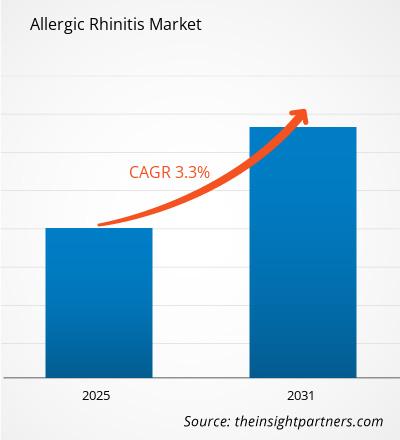
The allergic rhinitis market size stood at US$ 16.41 Billion in 2025 and is set to rise to US$ 22.06 Billion by 2034, registering a CAGR of 3.34% from 2026 to 2034. The rising incidence of allergic rhinitis, both seasonal and perennial, growing exposure to environmental allergens, rapid urbanization, and growing knowledge of early diagnosis of allergies are driving the demand for effective pharmaceutical treatments. Innovations in antihistamines, intranasal corticosteroids, and allergen immunotherapies are helping the market grow further during the forecast period.
North America is predicted to retain its leading position in the market through the forecast period and is expected to grow at a CAGR of 3.2–3.6%. The rising prevalence of respiratory allergies, advanced diagnostic practices, favorable reimbursement structures for prescribed drugs, and increasing use of over-the-counter allergy treatments are driving growth in the regional market.
Allergic Rhinitis Market Assessment and Insights
- North America: North America accounted for 39–43% share in 2025 and is projected to grow at a CAGR of 3.2–3.6% during 2026–2034. Advanced healthcare infrastructure, high allergy diagnosis rates, and widespread availability of prescription and OTC therapies continue supporting regional market leadership.
- U.S.: The U.S. represented 81–85% of the North American market in 2025 and is expected to register a CAGR of 3.3–3.7% during 2026–2034, supported by increasing allergy prevalence, strong pharmaceutical innovation, and broad treatment accessibility.
- Europe: Europe held 28–32% allergic rhinitis market share in 2025 and is anticipated to expand at a CAGR of 3.1–3.5% during 2026–2034. Germany, the UK, and France remain leading contributors owing to mature healthcare systems and increasing adoption of guideline-based allergy management.
- Asia Pacific: Asia Pacific captured 20–24% share in 2025 and is forecast to register a CAGR of 4.1–4.6% during 2026–2034. China, Japan, South Korea, and India continue driving regional demand through expanding healthcare infrastructure, urbanization, and growing allergy awareness.
- Largest Segment: Drug Class – Antihistamines accounted for 46–50% market share in 2025 and are expected to grow at a CAGR of 3.2–3.6% during 2026–2034, supported by broad clinical use and over-the-counter availability.
- High Growth Segment: Drug Class – Immunotherapies represented 17–21% market share in 2025 and are anticipated to register a CAGR of 5.0–5.6% during 2026–2034, driven by increasing demand for long-term disease-modifying treatment approaches.
- Key companies analyzed in detail: Merck & Co., Inc., GSK plc, Sanofi S.A., Cigna Healthcare, Himalaya Wellness Company, Chong Kun Dang Pharmaceutical Corp., Glenmark Pharmaceuticals Limited, Hisamitsu Pharmaceutical Co., Inc., Ampio Pharmaceuticals, Inc., Olainfarm AS.
Source: The Insight Partners' analysis based on proprietary research, government publications, company annual reports, investor presentations, industry databases, and expert interviews.
Recognition of allergic diseases as a crucial global health issue has brought about substantial change in the market through continuous innovation in therapeutics and diagnostics. Modern emphasis is placed on next-generation antihistamines with low side effects, novel intranasal corticosteroids, and specific immunotherapies that provide long-lasting symptom relief. Increased manufacturing capabilities, technological advancements in the delivery of medicines, and drug approvals further ensure the availability of products and respond to patients' new demands for effective, convenient treatment of allergies.
Market development is expected to be positively influenced by rising healthcare costs in developing nations, broader adoption of allergy testing, and increased use of precision medicines. Funding for biopharmaceutical research, healthcare IT, and patient education programs may improve patient compliance with prescribed medications. This leads to continuous expansion of the scope of the allergic rhinitis market and its sustainability despite the moderate growth of the industry.
Allergic Rhinitis Market Report Scope
| Report Attribute | Details |
|---|---|
| Market size in 2025 | US$ 16.41 Billion |
| Market Size by 2034 | US$ 22.06 Billion |
| Global CAGR (2026 - 2034) | 3.34% |
| Historical Data | 2021-2024 |
| Forecast period | 2026-2034 |
Allergic Rhinitis Market Analysis
The rising demand for the treatment of allergic rhinitis is driven by a growing number of people with seasonal allergies, environmental pollution, the effects of climate change on pollen levels, and population growth in cities. The increased patient awareness of the need for diagnosis and treatment is a driving factor in the improvement in healthcare utilization. Timely management is emphasized by healthcare providers, as it helps prevent serious complications of allergic inflammation.
Market players include manufacturers of active pharmaceutical ingredients, formulation specialists, contract manufacturing organizations, pharmaceutical firms, distributors, hospitals, retail pharmacies, online pharmacies, specialty allergy clinics, and healthcare professionals. Robust pharmaceutical value chain operations and increasing investments in the development of new drug formulations will help in improving the availability of products worldwide. Research on new drug targets, sustained-release technologies, and intranasal drug administration continues to support the market growth.
Competition is dominated by leading multinationals such as Merck & Co., Inc., GSK plc, and Sanofi S.A., which focus on innovation, new product development, regulatory approval, and geographic expansion. These companies continue to expand their presence in the allergy segment by leveraging advanced research capabilities and global sales channels. Companies such as Glenmark Pharmaceuticals Limited, Chong Kun Dang Pharmaceutical Corp., Hisamitsu Pharmaceutical Co., Inc., Himalaya Wellness Company, Ampio Pharmaceuticals, Inc., Olainfarm AS, and Cigna Healthcare continue to expand their presence through diversified treatment options and growth in regional markets.
A lot of money is being invested in the research and development of sophisticated immunotherapies, biologicals, management systems, and customized therapies for allergies. Manufacturers are expanding their production facilities and working alongside health care providers to increase the effectiveness of treatment. Such business strategies will contribute to the growth of the allergic rhinitis market through encouraging the adoption of clinically effective treatment options.
● REPORT CUSTOMIZATION
Tailor This Report To Align With Your Specific Business Requirements
This report can be customized to align precisely with your business objectives, scope, and target markets. Customization options include tailored segmentation, geography, competitive analysis, and strategic insights to support informed decision-making.
Customize This Report →WHAT YOU CAN ADJUST
- ● Segmentations
- ● Geography
- ● Competitive Analysis
- ● Language Preferences
Allergic Rhinitis Market: Strategic Insights
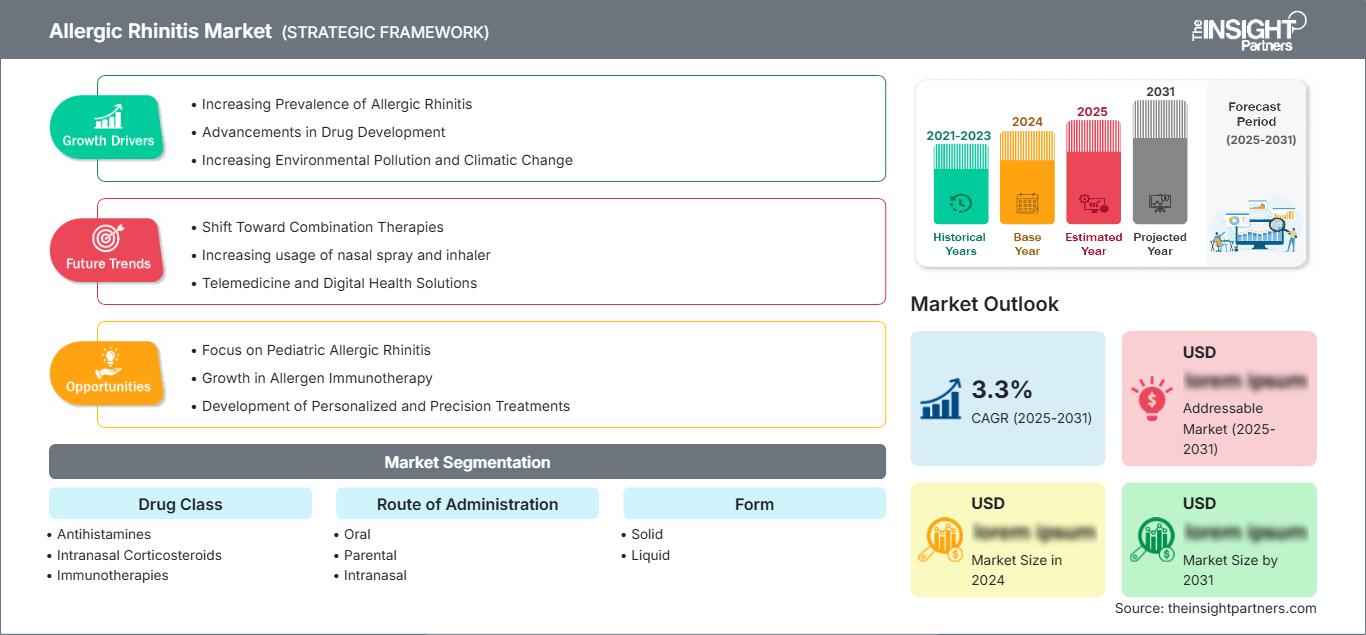
Regional Insights
North America Allergic Rhinitis Market
North America accounted for 39–43% of the global market in 2025 and is projected to expand at a CAGR of 3.2–3.6% during 2026–2034. The region continues to benefit from a high prevalence of seasonal and perennial allergic rhinitis driven by pollen exposure, air pollution, and indoor allergens. Strong diagnostic penetration and frequent physician consultations support early treatment adoption across both pediatric and adult populations, strengthening overall therapeutic demand in the region.
The market is strengthened by strong healthcare facilities, good insurance coverage, and an abundance of allergy-related prescription and OTC drugs. The rapid availability of such products from retail pharmacies and digital health care providers, along with the ongoing development of pharmaceutical products for more effective treatment, helps solidify North America's dominance.
U.S. Allergic Rhinitis Market
The U.S. represented 81–85% of the North American market in 2025 and is expected to grow at a CAGR of 3.3–3.7% during 2026–2034. Rising exposure to environmental allergens, increasing urbanization, and higher diagnosis rates of respiratory allergies continue to drive strong demand for antihistamines, intranasal corticosteroids, and immunotherapy-based treatments. Seasonal allergy peaks significantly contribute to recurring prescription and OTC medication usage.
The country benefits from advanced pharmaceutical innovation, strong retail distribution networks, and high patient awareness regarding allergy management. Leading healthcare providers increasingly recommend combination therapies for improved symptom control. Expansion of telemedicine and e-pharmacy platforms is further improving access to allergy treatments, strengthening overall market penetration and supporting sustained long-term growth.
Europe Allergic Rhinitis Market
Europe held 28–32% of the global market in 2025 and is anticipated to register a CAGR of 3.1–3.5% during 2026–2034. Increasing prevalence of seasonal pollen allergies, particularly across Western and Central Europe, continues to drive consistent demand for antihistamines and intranasal corticosteroids. Strong public healthcare systems and structured allergy management guidelines support standardized treatment adoption across the region.
According to the allergic rhinitis market report, Germany, the United Kingdom, and France remain the leaders in this market owing to accessible healthcare, advanced diagnostic facilities, and the presence of many pharmaceutical companies. Countries like Italy and Spain are playing an important role too, owing to rising levels of environmental allergens and growing knowledge of allergy management in the long run.
Asia Pacific Allergic Rhinitis Market
Asia Pacific captured 20–24% of the global market in 2025 and is projected to grow at a CAGR of 4.1–4.6% during 2026–2034. Rapid urbanization, increasing air pollution levels, and changing lifestyle patterns are significantly contributing to rising allergic rhinitis cases across major economies. Expanding healthcare access and improving diagnostic awareness are accelerating treatment adoption in both urban and semi-urban populations.
China dominates the regional market, owing to its large patient population and rising drug consumption. Both Japan and South Korea have seen considerable uptake of the latest antihistamines and immunotherapy products because of their well-developed healthcare industries. India and Australia have seen increased demand due to the growth of retail pharmacies and greater allergy awareness.
Middle East & Africa Allergic Rhinitis Market
The Middle East & Africa market is projected to grow at a CAGR of 2.6–3.0% during 2026–2034, supported by increasing exposure to dust, sand particles, and environmental pollutants. Growing urban development and climatic conditions in several countries contribute to rising incidence of allergic rhinitis, particularly in urban centers.
Saudi Arabia leads the market due to the growing number of healthcare facilities and increased awareness of respiratory allergies. The United Arab Emirates has been showing steady growth due to high levels of investment in the health care industry and the availability of sophisticated drugs for treating diseases. South Africa and other MEA countries are gradually improving in terms of diagnosis and drug availability.
Segmentation Analysis
Drug Class
The Drug Class segment is projected to grow at a CAGR of 3.3–3.7% during 2026–2034, supported by increasing adoption of antihistamines, intranasal corticosteroids, and immunotherapy solutions for effective allergy management. Continuous pharmaceutical innovation and improved understanding of allergic pathways are driving demand for both symptomatic relief and disease-modifying therapies. Expansion of OTC availability further enhances accessibility across global markets.
- Antihistamines: Remain the most widely used treatment option due to rapid symptom relief, broad OTC availability, and effectiveness in managing mild to moderate allergic rhinitis, particularly during seasonal allergy peaks across urban populations.
- Intranasal Corticosteroids: Provide strong anti-inflammatory effects and are increasingly recommended as first-line therapy for moderate to severe cases, supported by clinical guidelines and improved patient adherence to nasal spray formulations.
- Immunotherapies: Offer long-term disease-modifying benefits by targeting underlying allergic responses, gaining traction among patients seeking reduced dependence on symptomatic medications and sustained allergy control outcomes.
Route of Administration
The Route of Administration segment is expected to register a CAGR of 3.1–3.5% during 2026–2034, driven by increasing preference for intranasal therapies and oral formulations. Improved drug delivery technologies and patient-friendly dosage formats continue enhancing treatment compliance. Growing awareness regarding targeted therapy approaches further supports balanced adoption across multiple administration routes.
- Oral: Widely used due to convenience, strong OTC penetration, and effectiveness in managing mild symptoms, making it the most common initial treatment option for seasonal allergic rhinitis patients.
- Intranasal: Increasingly preferred for targeted symptom relief with faster onset of action, particularly in moderate to severe cases requiring localized anti-inflammatory and antihistamine effects.
- Parenteral: Primarily associated with immunotherapy and advanced clinical settings, used for long-term allergy desensitization in patients with persistent or severe allergic conditions requiring supervised administration.
Form
The Form segment is anticipated to grow at a CAGR of 3.2–3.6% during 2026–2034, supported by rising demand for both solid and liquid formulations. Continuous product innovation focusing on improved absorption, ease of use, and patient compliance is shaping formulation preferences across global markets. Expanding OTC retail availability further strengthens demand across all form categories.
- Solid: Includes tablets and capsules widely used for antihistamines, offering ease of storage, accurate dosing, and high patient compliance in both prescription and OTC segments.
- Liquid: Preferred for paediatric and geriatric populations due to easier administration and faster absorption, particularly in cases requiring flexible dosing and rapid symptom relief.
Opportunity Snapshot
| Segment Name | Revenue Contribution | Trend Tag | Adoption Stage |
| Oral | High | OTC Expansion | Mature |
| Intranasal | High | Targeted Delivery | Scaling |
| Parenteral | Medium | Immunotherapy | Emerging |
| Solid | High | Tablet Uptake | Mature |
| Liquid | Medium | Paediatric Care | Scaling |
Allergic Rhinitis Market Growth Drivers and Impact Analysis
Rising global burden of allergic and respiratory disorders
The increasing prevalence of allergic rhinitis is closely linked to the broader rise in respiratory and immune-mediated disorders worldwide. Expanding urban populations, increased exposure to airborne pollutants, industrial emissions, and seasonal pollen variability are significantly intensifying allergy incidence rates. Public health bodies, including the WHO, continue highlighting the growing burden of non-communicable respiratory conditions as a key healthcare challenge. Improved diagnostic rates and increased awareness among primary care physicians are enabling earlier identification of allergic rhinitis cases. As a result, demand for antihistamines, intranasal corticosteroids, and immunotherapies continues to rise steadily.
Expanding OTC availability and self-medication trends
The easy availability of OTC allergy medicines has led to a major shift in treatment trends in the allergic rhinitis market. There has been an increasing tendency among consumers to opt for self-medication due to the convenience, effectiveness, and faster relief provided by OTC medicines. Pharmacists have become instrumental in recommending antihistamines and nasal spray treatments, especially in urban retail pharmacies. Drug manufacturers have been launching OTC products featuring non-drowsy antihistamines and combination medicines to improve patient adherence. Regulatory support for OTC switch strategies across various geographic locations is also boosting availability.
Advancements in immunotherapy and biologic treatments
The emergence of allergen-specific immunotherapy and biological therapies is changing approaches to disease management in the market. In contrast to traditional therapies that simply manage symptoms, immunotherapy targets the immune response, resulting in relief and the prevention of disease recurrence. The growing scientific evidence supporting subcutaneous and sublingual immunotherapy is encouraging patients with moderate-to-severe or chronic allergies to adopt it. There is a huge investment by pharma companies in biologic research to increase efficacy while reducing side effects. Even though the high cost and treatment period are obstacles, increased physician and patient compliance is helping to spread usage.
Allergic Rhinitis Market Future Trends
Shift toward precision-based allergy management approaches
The allergic rhinitis market forecast indicates a shift toward precision medicine approaches that tailor treatment based on individual allergen profiles, genetic predisposition, and environmental exposure patterns. Advances in diagnostic testing, including component-resolved diagnostics and molecular allergy profiling, are enabling more accurate identification of triggers. This is supporting the development of personalized treatment regimens combining antihistamines, corticosteroids, and immunotherapy. Pharmaceutical companies are increasingly collaborating with diagnostic providers to integrate data-driven allergy management solutions. This shift is expected to improve treatment outcomes, reduce trial-and-error prescribing, and enhance long-term patient adherence, ultimately transforming clinical decision-making in allergy care.
Integration of digital health and tele-allergy services
The use of digital health solutions, especially via telemedicine apps and digital allergy management systems, is becoming a significant allergic rhinitis market trend. Virtual consultation is becoming popular among patients seeking diagnoses, prescription renewals, and symptom tracking to enhance their access to allergy treatment in both urban and rural areas. Apps that track pollen counts, allergens, and medication adherence are gaining popularity among patients with seasonal allergies. Doctors can use these tools to offer tailored treatment suggestions and monitor patient progress.
Allergic Rhinitis Market Opportunities
Expansion in emerging economies with rising allergy prevalence
Countries in the Asia-Pacific, Latin America, and certain areas of the Middle East offer substantial growth potential owing to urbanization, rising pollution, and increased incidence of allergies. The increasing availability of health care facilities and improved access to pharmacies are contributing to increased uptake of allergy medicines. Companies with expertise in producing cost-effective drug formulations and implementing local market strategies are poised to capitalize on existing market gaps. Government policies that aim to enhance the effectiveness of primary health care delivery and respiratory disease management are further contributing to market reach.
Development of next-generation long-acting therapies
The market potential for long-acting, once-daily allergy drugs that improve patient compliance and reduce the risk of symptom relapse is steadily increasing. In the field of innovation, pharmaceutical companies are increasingly shifting towards sustained-release antihistamines, combination nasal spray solutions, and new immunotherapy drugs with a reduced desensitization time. Such drugs would allow for reducing the dosing schedule while increasing effectiveness. Companies that have invested in biological agents and innovative delivery systems can be considered future winners in premium sections of the allergic rhinitis market. The collaboration between biotech firms and pharmaceutical organizations is accelerating the clinical trial process and the commercialization of innovative allergy drugs.
Recent Developments
- March 2026: Sanofi S.A. announced expanded clinical evaluation of next-generation biologic candidates targeting IgE-mediated allergic pathways for chronic allergic rhinitis. The program focuses on improving long-term symptom control and reducing rescue medication dependency in moderate-to-severe patients across North America and Europe. The initiative strengthens Sanofi’s respiratory and immunology pipeline positioning in specialty allergy therapeutics.
- January 2025: GlaxoSmithKline plc (GSK) advanced commercialization efforts for its intranasal corticosteroid and combination allergy therapies across multiple European markets. The company expanded distribution agreements with pharmacy chains to improve OTC and prescription access, particularly during peak pollen seasons. This development reinforces GSK’s leadership in respiratory and allergy care portfolios globally.
- April 2024: Merck & Co., Inc. expanded its immunotherapy research program focusing on allergen-specific desensitization treatments for persistent allergic rhinitis. The company is integrating digital patient monitoring tools into clinical trials to improve adherence tracking and long-term outcome measurement, strengthening its position in precision allergy management solutions.
Frequently Asked Questions

- Comprehensive Market Sizing and Forecast Analysis
- Detailed Segmentation Analysis
- In-Depth Market Dynamics Assessment
- Regional and Country-Level Insights
- Competitive Landscape and Company Benchmarking
- Strategic Business Intelligence
Recent Reports
Testimonials

The Insight Partners' SCADA System Market report is comprehensive, with valuable insights on current trends and future forecasts. The team was highly professional, responsive, and supportive throughout. We are very satisfied and highly recommend their services.
RAN KEDEM Partner, Reali Technologies LTDs
I requested a report on a very specific software market and the team produced the report in a few days. The information was very relevant and well presented. I then requested some changes and additions to the report. The team was again very responsive and I got the final report in less than a week.
JEAN-HERVE JENN Chairman, Future Analytica
We worked with The Insight Partners for an important market study and forecast. They gave us clear insights into opportunities and risks, which helped shape our plans. Their research was easy to use and based on solid data. It helped us make smart, confident decisions. We highly recommend them.
PIYUSH NAGPAL Sr. Vice President, High Beam Global
The Insight Partners delivered insightful, well-structured market research with strong domain expertise. Their team was professional and responsive throughout. The user-friendly website made accessing industry reports seamless. We highly recommend them for reliable, high-quality research services
YUKIHIKO ADACHI CEO, Deep Blue, LLC.
This is the first time I have purchased a market report from The Insight Partners.While I was unsure at first, I visited their web site and felt more comfortable to take the risk and purchase a market report.I am completely satisfied with the quality of the report and customer service. I had several questions and comments with the initial report, but after a couple of dialogs over email with their analyst I believe I have a report that I can use as input to our strategic planning process.Thank you so much for taking the extra time and making this a positive experience.I will definitely recommend your service to others and you will be my first call when we need further market data.
JOHN SUZUKI President and Chief Executive Officer, Board Director, BK Technologies
I wish to appreciate your support and the professionalism you displayed in the course of attending to my request for information regarding to infectious disease IVD market in Nigeria. I appreciate your patience, your guidance, and the fact that you were willing to offer a discount, which eventually made it possible for us to close a deal. I look forward to engaging The Insight Partners in the future, all thanks to the impression you have created in me as a result of this first encounter.
DR CHIJIOKE ONYIA MANAGING DIRECTOR, PineCrest Healthcare Ltd.Reason to Buy
- Informed Decision-Making
- Understanding Market Dynamics
- Competitive Analysis
- Identifying Emerging Markets
- Customer Insights
- Market Forecasts
- Risk Mitigation
- Boosting Operational Efficiency
- Strategic Planning
- Investment Justification
- Tracking Industry Innovations
- Aligning with Regulatory Trends





 Get Free Sample for