
Amino Acid Metabolism Disorder Drug Market Growth, Demand & Size by 2034
Coverage: By Product (Arginine, Folic Acid, Thiamine, Carglumic Acid, Others); Application (Phenylketonuria, Maple Syrup Urine Disease, Argininosuccinic Acidemia, Homocystinuria, Others); End User (Hospitals, Clinics, Others) , and Geography (North America, Europe, Asia Pacific, and South and Central America)
- Status : Data Released
- Report Code : TIPRE00018816
- Category : Life Sciences
- No. of Pages : 150
- Available Report Formats :


- Last update date : July 22, 2026


2025 Market Size
US$ 3.01 Bn
Base year value
2034 Forecast
US$ 3.99 Bn
Projected by 2034
CAGR 2026-2034
3.59 %
Growth rate
Addressable Market
US$ 32.45 Bn
(2026-2034)
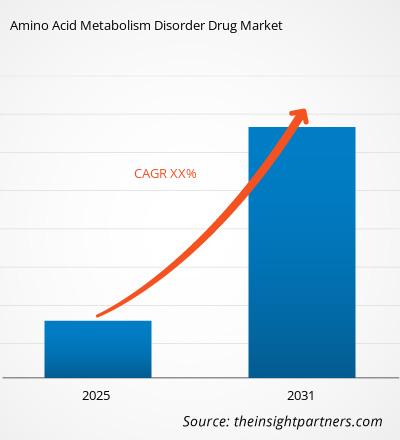
The Amino Acid Metabolism Disorder Drug Market was valued at US$ 3.01 Billion in 2025 and is projected to reach US$ 3.99 Billion by 2034, registering a CAGR of 3.59% from 2026 to 2034. There is constant demand in the market for treatments and complementary treatments used for the diseases related to disorders of inherited amino acid metabolism, which involves the importance of early diagnosis, management of the disease throughout life, and specialty prescriptions.
In North America, the treatment approach based on diagnosis will be responsible for driving the growth of Amino Acid Metabolism Disorder Drug Market size at a CAGR rate between 3.4%-3.8% from 2026 to 2034. This will be possible through newborn screening, metabolic specialty clinics, funding of orphan drugs, and hospital pharmacy involvement.
Amino Acid Metabolism Disorder Drug Market Assessment and Insights
- North America accounted for 38–42% share in 2025 and is projected to grow at a CAGR range of 3.4–3.8% between 2026–2034, supported by newborn screening, orphan-drug reimbursement, and concentration of metabolic specialists.
- US represented 78–82% of North America in 2025 and is expected to grow at a CAGR range of 3.5–3.9% between 2026–2034, driven by commercial rare-disease launches and hospital-based metabolic care.
- Europe held 27–31% share in 2025 and is forecast to expand at a CAGR range of 3.1–3.5% between 2026–2034, led by Germany, the UK, France, Italy, and Spain.
- Asia Pacific captured 18–22% share in 2025 and is expected to grow at a CAGR range of 4.2–4.8% between 2026–2034, led by China, Japan, South Korea, India, and Australia.
- Largest Segment Phenylketonuria held 42–46% market share in 2025, with a CAGR range of 3.8–4.3% between 2026–2034, reflecting sustained treatment adherence and broader therapeutic options.
- High Growth Segment Carglumic Acid held 11–14% market share in 2025, with a CAGR range of 4.6–5.2% between 2026–2034, supported by use in hyperammonemia-related metabolic crises.
- Key companies analyzed in detail: Merck & Co., Inc.; GSK plc; Eli Lilly and Company; Pfizer Inc.; Sanofi; Johnson & Johnson Services, Inc.; Bristol Myers Squibb Company; Recordati Industria Chimica e Farmaceutica S.p.A.; Ajinomoto Co., Inc.; AMINO GmbH.
Source: The Insight Partners' analysis based on proprietary research, government publications, company annual reports, investor presentations, industry databases, and expert interviews.
The clinical approach has moved beyond dietary control alone to an integrated one involving cofactors, nitrogen balancing therapy, amino acid supplementation, and disorder-specific pharmacotherapy. There is increasing pressure to produce drugs in high purity, small batch sizes, and strict quality checks due to the fact that any disruptions in therapy could increase the chances of neurological and metabolic problems. The Amino Acid Metabolism Disorder Drug market is thus driven by the need for specialized manufacturing, hospital pharmacy coordination, and patient monitoring protocols, rather than volume-based prescription needs.
In the forecast period, there will be demand generated by newer health care systems through newborn screening, rare disease programs, and access to biochemical tests. The regulatory landscape is poised to benefit from orphan drug incentives, pediatric investigation and fast track evaluations for treating severe genetic conditions. The investment focus would be on differentiation, compliance and collaboration with metabolic clinics in low diagnosis regions.
Amino Acid Metabolism Disorder Drug Market Report Scope
| Report Attribute | Details |
|---|---|
| Market size in 2025 | US$ 3.01 Billion |
| Market Size by 2034 | US$ 3.99 Billion |
| Global CAGR (2026 - 2034) | 3.59% |
| Historical Data | 2021-2024 |
| Forecast period | 2026-2034 |
Amino Acid Metabolism Disorder Drug Market Analysis
The drivers of demand for the Amino Acid Metabolism Disorder Drug Market are early diagnosis, longer treated patients, and increased acceptance of the role of pharmacological treatment as well as dietary therapy. Hospitals play an important role in this market since most diseases require confirmation, crisis management, and further follow up with multiple specialists, including geneticists, dieticians, neurologists, and pharmacists.
The supply factors include small patient pools, complicated active ingredients, and need for controlled storage of certain drugs. Those organizations that manage to offer uninterrupted supply, documentation assistance, and different dosage forms will be able to secure a more powerful position in the market where prescription continuity highly depends on patient compliance and physician satisfaction.
According to the Amino Acid Metabolism Disorder Drug Market report, the competitive landscape of the industry consists of diversified pharmaceutical companies and specialized manufacturers with rare disease treatment expertise. They include such diversified companies as Merck & Co., Inc., GSK plc, Pfizer Inc., Sanofi, Johnson & Johnson Services, Inc., Eli Lilly and Company, and Bristol Myers Squibb Company. The specialized manufacturers of the industry are Recordati Industria Chimica e Farmaceutica S.p.A., Ajinomoto Co., Inc., and AMINO GmbH.
Strategic positioning is now linked to lifecycle management, data creation for pediatrics, and collaborations with metabolic centers. Funding is directed at formulation enhancements, labeling extensions, and regional commercialization support instead of mass marketing. Good portfolio performance entails the confluence of clinical credibility, data creation, and infrastructure creation to make therapy easier.
● REPORT CUSTOMIZATION
Tailor This Report To Align With Your Specific Business Requirements
This report can be customized to align precisely with your business objectives, scope, and target markets. Customization options include tailored segmentation, geography, competitive analysis, and strategic insights to support informed decision-making.
Customize This Report →WHAT YOU CAN ADJUST
- ● Segmentations
- ● Geography
- ● Competitive Analysis
- ● Language Preferences
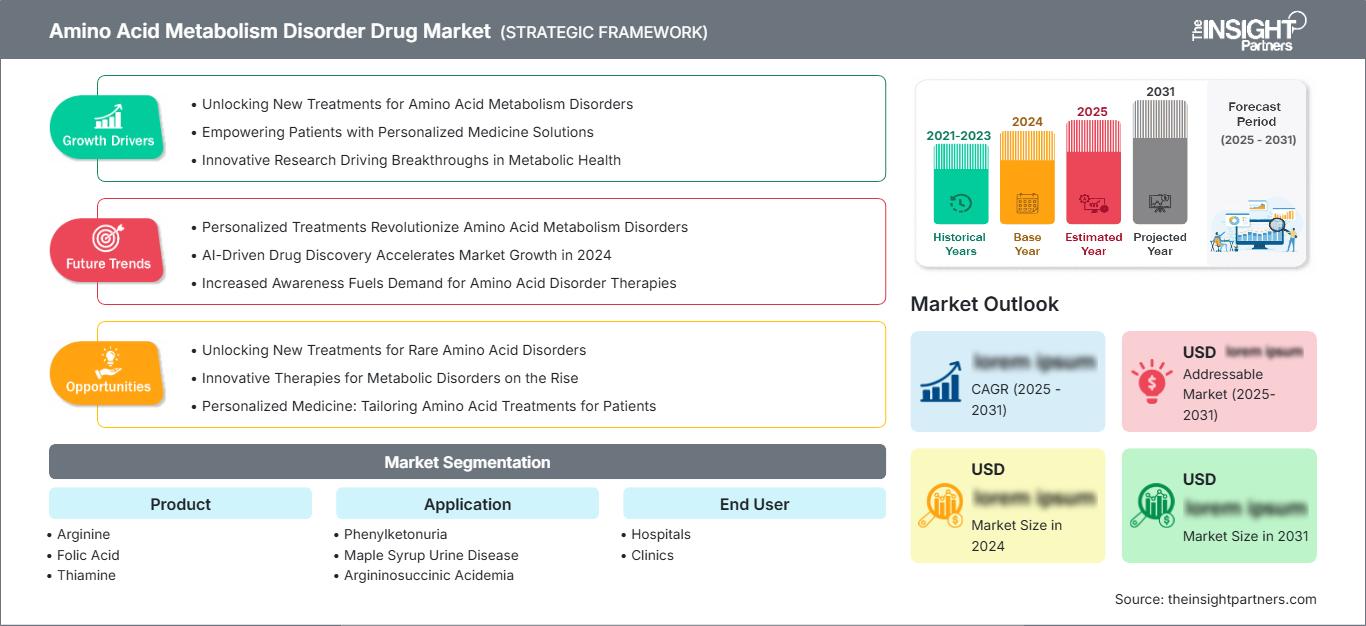
Amino Acid Metabolism Disorder Drug Market: Strategic Insights
Regional Insights
North America Amino Acid Metabolism Disorder Drug Market
North America held 38–42% share in 2025 and is expected to post a CAGR range of 3.4–3.8% during 2026–2034. The Amino Acid Metabolism Disorder Drug Market share in this region is supported by newborn screening panels, metabolic genetics programs, and reimbursement coverage for orphan therapies. Canada also contributes through provincial rare-disease funding and specialized pediatric hospital networks.
The region benefits from rapid uptake of new rare-disease medicines, strong commercial infrastructure, and organized patient advocacy. Hospitals and clinics coordinate diet therapy, pharmacologic treatment, and emergency metabolic protocols, creating stable repeat demand. Growth is also supported by higher testing access and clinician familiarity with phenylketonuria, homocystinuria, argininosuccinic acidemia, and maple syrup urine disease.
U.S. Amino Acid Metabolism Disorder Drug Market
The U.S. accounted for 78–82% of North America in 2025 and is projected to grow at a CAGR range of 3.5–3.9% from 2026 to 2034. Commercial orphan-drug launches, broad newborn screening adoption, and concentration of academic metabolic centers create a favorable treatment environment. Hospitals drive initiation, monitoring, acute care, and genetic counselling for complex amino acid disorders.
Company presence is reinforced by U.S. headquarters, clinical trial networks, specialty pharmacy models, and payer documentation services. Application trends favor phenylketonuria management, acute hyperammonemia protocols, and long-term supplementation for homocystinuria and urea cycle-related disorders. The Amino Acid Metabolism Disorder Drug Market benefits from structured transition programs as pediatric patients move into adult metabolic care.
Europe Amino Acid Metabolism Disorder Drug Market
Europe represented 27–31% share in 2025, with a CAGR range of 3.1–3.5% during 2026–2034. Germany is the leading country because of established rare-disease centers, statutory insurance coverage, and strong metabolic diagnostics. The UK supports demand through centralized specialist pathways, while France benefits from national rare-disease planning and structured newborn screening expansion.
Italy and Spain provide steady growth through regional hospital procurement and increasing recognition of inherited metabolic disorders. Disease registries and European reference networks support clinical standardization, although reimbursement timing varies by country. The market remains more protocol-driven than promotional, with physicians prioritizing evidence, tolerability, and predictable access for lifelong therapy management.
APAC Amino Acid Metabolism Disorder Drug Market
APAC accounted for 18–22% share in 2025 and is expected to register a CAGR range of 4.2–4.8% from 2026 to 2034. China is the leading country by incremental patient identification, while Japan and South Korea benefit from mature diagnostics and reimbursement pathways. India and Australia add demand through expanding genetic testing and pediatric metabolic services.
Industrial and policy drivers include domestic pharmaceutical capacity, rare-disease policy development, and broader neonatal screening investment. The region’s key challenge remains uneven access outside major cities. However, specialty hospitals and public-sector diagnostics are improving referral pathways, creating stronger demand visibility for therapies used in phenylketonuria, maple syrup urine disease, and hyperammonemia-associated disorders.
Middle East & Africa Amino Acid Metabolism Disorder Drug Market
Middle East & Africa is projected to grow at a CAGR range of 3.6–4.1% between 2026 and 2034. Saudi Arabia is the leading country due to tertiary hospital investment, genetic disease programs, and advanced pediatric care capacity. The UAE contributes through specialty clinics and imported innovative therapies, while South Africa supports regional demand through academic referral centers.
Energy-linked public spending in Gulf countries enables hospital infrastructure upgrades and specialized diagnostics. Rest of MEA remains access-constrained because reimbursement, biochemical testing, and specialist availability vary widely. Growth depends on centralized procurement, newborn screening expansion, and improved continuity between pediatric hospitals, genetic laboratories, and long-term outpatient clinics.
Segmentation Analysis
Product
The product segment is expected to grow at a CAGR range of 3.4–3.9% from 2026 to 2034. The Amino Acid Metabolism Disorder Drug Market scope across products is shaped by both acute metabolic correction and long-term supplementation needs. Demand is strongest where products are embedded in clinical protocols, supported by hospital availability, and monitored through biochemical markers that guide dose adjustments.
- Arginine is widely used in selected urea cycle and argininosuccinic acidemia-related management, with demand linked to specialist prescribing, biochemical monitoring, and crisis prevention strategies.
- Folic Acid supports homocystinuria-related treatment pathways where vitamin responsiveness, affordability, and long-term adherence make it strategically important in clinics and hospital outpatient settings.
- Thiamine has relevance in responsive metabolic phenotypes and adjunctive regimens, with demand influenced by genetic confirmation, low treatment cost, and physician-led trial responsiveness.
- Carglumic Acid is strategically important for hyperammonemia management, especially where rapid ammonia reduction, emergency care protocols, and rare-disease reimbursement determine treatment uptake.
Application
The application segment is projected to expand at a CAGR range of 3.7–4.2% during 2026–2034. Disease-based demand varies by prevalence, screening frequency, treatment intensity, and availability of disorder-specific medicines. Phenylketonuria remains the commercial anchor, while urea cycle-associated and amino acid breakdown disorders create specialty demand requiring rapid diagnosis and coordinated acute and chronic care.
- Phenylketonuria represents the largest application because newborn screening identifies patients early, dietary therapy is lifelong, and pharmacologic options are expanding treatment choices for suitable responders.
- Maple Syrup Urine Disease demand is tied to emergency metabolic stabilization, strict dietary control, amino acid monitoring, and specialist follow-up after neonatal or childhood diagnosis.
- Argininosuccinic Acidemia creates demand for arginine-based and ammonia-control interventions, with hospitals playing a central role in crisis management and chronic neurological risk reduction.
- Homocystinuria relies on vitamin-based responsiveness assessment, folate support, and long-term monitoring, making clinics important for adherence, vascular risk mitigation, and family screening.
End User
The end-user segment is expected to grow at a CAGR range of 3.2–3.7% between 2026 and 2034. Hospitals dominate initiation and crisis care, while clinics support continuity, monitoring, and adherence counseling. Growth depends on referral integration between newborn screening programs, genetic laboratories, hospital pharmacies, and outpatient metabolic teams that manage lifelong therapy decisions.
- Hospitals account for the highest revenue contribution because they manage diagnosis confirmation, emergency metabolic episodes, specialist prescribing, inpatient stabilization, and pharmacy-controlled access to high-value therapies.
- Clinics are increasingly important for routine biochemical monitoring, diet-drug coordination, adherence review, and long-term management of stable patients outside acute hospital settings.
Opportunity Snapshot
| Application | Revenue Contribution | Trend Tag | Adoption Stage |
| Phenylketonuria | High | Phe Control | Mature |
| Maple Syrup Urine Disease | Medium | Crisis Care | Scaling |
| Argininosuccinic Acidemia | Medium | Ammonia Control | Scaling |
| Homocystinuria | Low | Vitamin Response | Mature |
Amino Acid Metabolism Disorder Drug Market Growth Drivers and Impact Analysis
Expansion of Newborn Screening and Confirmatory Diagnostics
The newborn screening is still the most important factor since many amino acids metabolism problems manifest themselves silently at birth yet advance very fast without any treatment. The increased number of tests increases the possibilities of identifying patients in time, decreases the delay in the diagnostic and allows changing the paradigm of treatment from emergency measures into long-term planned one. The commercial factor is relevant because each identified child will become the patient for many years who needs medications, vitamins, regular visits to the hospital and other treatments. The introduction of tandem mass spectrometry in the regions will positively affect the diagnosis of PKU, MSUD, and UCD.
Rising Clinical Use of Disorder-Specific Pharmacologic Support
The marketplace has evolved beyond nutrition restriction, as clinical teams prescribe dietary management along with medications, cofactors, or ammonia-lowering drugs in combination with genotype, phenotype, and biochemical response. Personalized medicine has become more relevant, thus increasing the importance of the therapy for situations where the danger for neurological problems, development, or acute metabolism is still significant. Clinics utilize protocols for emergency situations and maintenance therapy, leading to stable demand for the products. The effectiveness can be proved for phenylketonuria and hyperammonemia disorders, where biomarkers indicate clinical response.
Hospital-Centered Rare-Disease Care Networks
Specialized hospitals and metabolic clinics are enhancing the linkage between the screening process, genetic testing, acute therapy, nutritional guidance, and medication prescription. The resultant network effect ensures reduced patient leakage as well as effective intervention in case of metabolic decompensation. The effects are more evident in countries that have centralized referral programs and where the specialists are able to shape the formulary choices and procedures to be followed in emergencies. Good care coordination will also facilitate adult transition program development, which is essential in view of the increasing numbers of surviving children who need life-long monitoring. Pharmaceutical companies that align themselves with these networks can enhance product adoption through less promotion.
Amino Acid Metabolism Disorder Drug Market Future Trends
Precision Dosing Linked to Biomarker Monitoring
Amino Acid Metabolism Disorder Drug Market trends are moving toward precision dosing based on blood amino acid levels, ammonia markers, genotype, dietary intake, and treatment response. As time passes, these technologies may help doctors better tailor treatment regimens through more frequent adjustments, avoiding risks of either under-treatment or over-treatment. However, this trend does not replace the need for clinical discretion; however, it will simply become more data-oriented in its approach. Firms with patient support programs, dose education initiatives, and evidence packages associated with specific outcomes will be able to distinguish themselves strategically. Finally, such a trend will facilitate reimbursement conversations as insurance companies look for outcomes visibility.
Adherence-Friendly Formulations for Lifelong Therapy
The next generation of drug development will include an emphasis on taste, convenience, administration burden, and usability in pediatrics through adults. Many patients will fail lifelong metabolic therapy due to poor taste, frequency, gastrointestinal tolerance, or restrictions imposed by lifestyle issues that lead to decreased compliance. Changes in the formulation to powders, granules, pills, or controlled release technology could significantly impact clinical results, especially for patients moving from adolescence to adulthood as their metabolism is now being managed without a caretaker. This is important because better compliance will increase treatment days and decrease metabolic crises.
Amino Acid Metabolism Disorder Drug Market Opportunities
Emerging-Market Screening Partnerships
Amino Acid Metabolism Disorder Drug Market Forecasts indicate attractive opportunity in partnerships that link newborn screening expansion with treatment access. Pharmaceutical firms may work with public hospitals, diagnostic laboratories, and rare diseases programs to facilitate doctor education, diagnostic testing capability, and referral routes. This strategy will be most relevant in the APAC and Gulf regions, where there is increasing infrastructure development but incomplete patient identification. Commercial implementation should not make blanket volume assumptions but rather focus on centers of excellence, consistent supply, and payer interaction. Early engagement in the ecosystem built around screening will result in increased demand in the future.
Integrated Hospital Pharmacy and Patient Support Models
In order to provide specialty therapies in this particular market segment, there should be not only products available but also documents to help patients, dose titration advice, an emergency plan, and adherence monitoring. Such companies could offer differentiation value through helping hospitals to manage procurement, patient intake, and transition between inpatient and outpatient care. This strategy will be especially valuable in relation to expensive orphan drugs as well as products used in cases of metabolic crisis when a timely treatment is crucial. Support programs for patients should cover refill loyalty, caregiver education, and work with dietitians.
Recent Developments
- July 2025: PTC Therapeutics, Inc. — The company announced U.S. FDA approval of SEPHIENCE™ (sepiapterin) for adults and pediatric patients one month of age and older with sepiapterin-responsive phenylketonuria. The approval expanded pharmacologic options for PKU and followed Phase 3 APHENITY evidence, with additional reviews ongoing in several countries including Japan and Brazil.
- April 2025: BioMarin Pharmaceutical Inc. — The company reported positive pivotal Phase 3 PEGASUS data for PALYNZIQ® in adolescents aged 12–17 with phenylketonuria. The study met its primary endpoint versus diet alone, and BioMarin stated plans to submit for regulatory approval to expand the label beyond adults, reinforcing lifecycle expansion in PKU therapy.
- March 2024: Eton Pharmaceuticals, Inc. — The company acquired U.S. rights to PKU GOLIKE® from Relief Therapeutics, adding a commercial phenylketonuria medical formula to its metabolic franchise. The announcement cited the U.S. PKU medical formula market at about US$ 100 million annually and positioned the asset for specialty rare-disease commercialization.
Frequently Asked Questions

- Comprehensive Market Sizing and Forecast Analysis
- Detailed Segmentation Analysis
- In-Depth Market Dynamics Assessment
- Regional and Country-Level Insights
- Competitive Landscape and Company Benchmarking
- Strategic Business Intelligence
Recent Reports
Testimonials

The Insight Partners' SCADA System Market report is comprehensive, with valuable insights on current trends and future forecasts. The team was highly professional, responsive, and supportive throughout. We are very satisfied and highly recommend their services.
RAN KEDEM Partner, Reali Technologies LTDs
I requested a report on a very specific software market and the team produced the report in a few days. The information was very relevant and well presented. I then requested some changes and additions to the report. The team was again very responsive and I got the final report in less than a week.
JEAN-HERVE JENN Chairman, Future Analytica
We worked with The Insight Partners for an important market study and forecast. They gave us clear insights into opportunities and risks, which helped shape our plans. Their research was easy to use and based on solid data. It helped us make smart, confident decisions. We highly recommend them.
PIYUSH NAGPAL Sr. Vice President, High Beam Global
The Insight Partners delivered insightful, well-structured market research with strong domain expertise. Their team was professional and responsive throughout. The user-friendly website made accessing industry reports seamless. We highly recommend them for reliable, high-quality research services
YUKIHIKO ADACHI CEO, Deep Blue, LLC.
This is the first time I have purchased a market report from The Insight Partners.While I was unsure at first, I visited their web site and felt more comfortable to take the risk and purchase a market report.I am completely satisfied with the quality of the report and customer service. I had several questions and comments with the initial report, but after a couple of dialogs over email with their analyst I believe I have a report that I can use as input to our strategic planning process.Thank you so much for taking the extra time and making this a positive experience.I will definitely recommend your service to others and you will be my first call when we need further market data.
JOHN SUZUKI President and Chief Executive Officer, Board Director, BK Technologies
I wish to appreciate your support and the professionalism you displayed in the course of attending to my request for information regarding to infectious disease IVD market in Nigeria. I appreciate your patience, your guidance, and the fact that you were willing to offer a discount, which eventually made it possible for us to close a deal. I look forward to engaging The Insight Partners in the future, all thanks to the impression you have created in me as a result of this first encounter.
DR CHIJIOKE ONYIA MANAGING DIRECTOR, PineCrest Healthcare Ltd.Reason to Buy
- Informed Decision-Making
- Understanding Market Dynamics
- Competitive Analysis
- Identifying Emerging Markets
- Customer Insights
- Market Forecasts
- Risk Mitigation
- Boosting Operational Efficiency
- Strategic Planning
- Investment Justification
- Tracking Industry Innovations
- Aligning with Regulatory Trends





 Get Free Sample for