
Androgens and Anabolic Steroids Market Demand, Share & Growth by 2034
Androgens and Anabolic Steroids Market Size and Forecasts (2021 - 2034), Global and Regional Share, Trends, and Growth Opportunity Analysis Report Coverage : by Product Type (Testosterone, Methyltestosterone, Oxandrolone); Application (Hypogonadism, Anemia, Breast Cancer); Route of Administration (Oral, Injectable); End User (Hospital, Specialty Clinics); and Geography (North America, Europe, Asia Pacific, and South and Central America)
- Status : Data Released
- Report Code : TIPRE00040805
- Category : Life Sciences
- No. of Pages : 150
- Available Report Formats :


- Last update date : July 31, 2026


2025 Market Size
US$ 77.42 Bn
Base year value
2034 Forecast
US$ 198.51 Bn
Projected by 2034
CAGR 2026-2034
11.03 %
Growth rate
Addressable Market
US$ 1,219.07 Bn
(2026-2034)
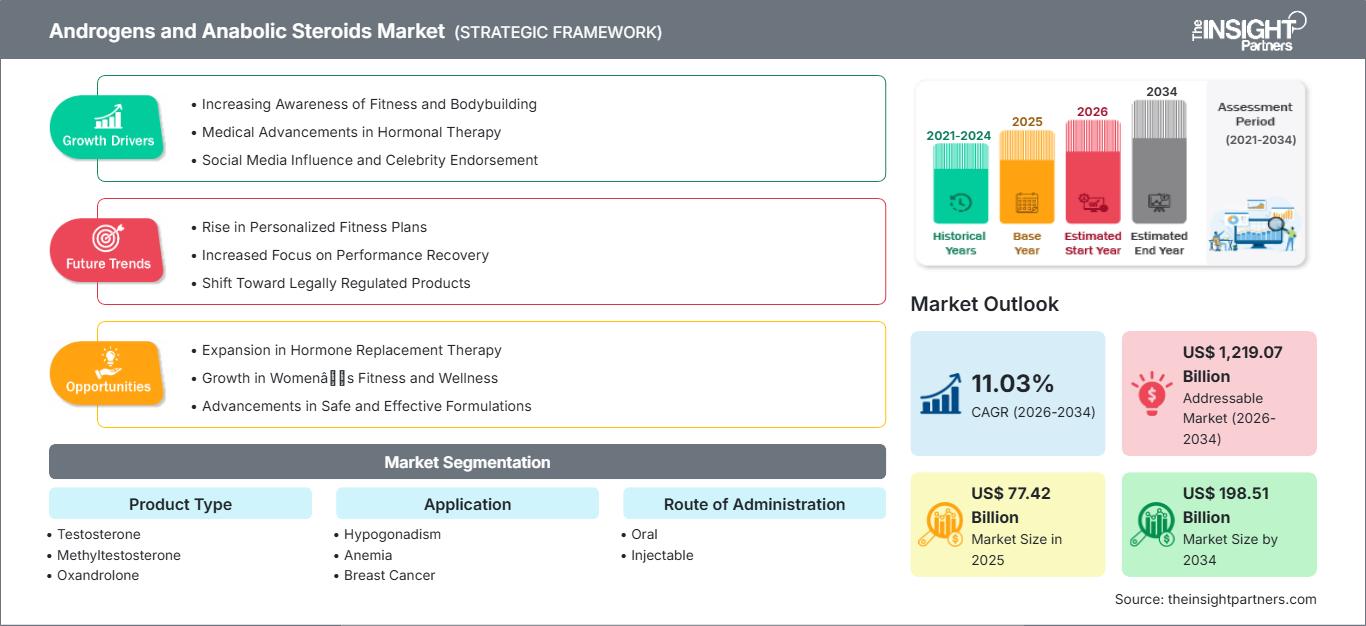
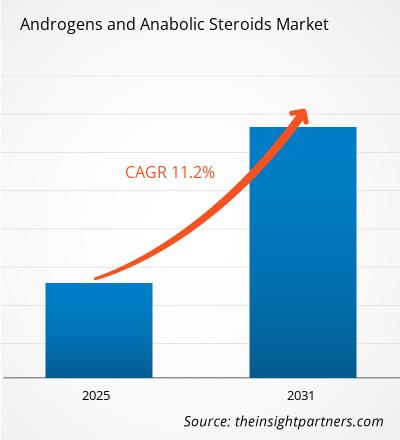
The androgens and anabolic steroids market is projected to increase from US$ 77.42 Billion in 2025 to US$ 198.51 Billion by 2034, registering a CAGR of 11.03% during 2026–2034. Demand is shaped by clinical use in hypogonadism, selected anemia cases, breast cancer management, and medically supervised hormone replacement, with growth supported by improved diagnosis, formulation innovation, and broader access through hospitals and specialty clinics.
Across North America, the androgens and anabolic steroids market size is supported by strong endocrinology access, established testosterone replacement therapy infrastructure, and increasing use of lab-confirmed diagnosis before treatment initiation. The region is expected to grow at a CAGR range of 10.1–10.8% during 2026–2034, driven by specialty clinic expansion, injectable product use, and regulatory focus on clearer labeling and patient monitoring.
Androgens and Anabolic Steroids Market Assessment and Insights
- North America held 41–44% share in 2025 and is growing at a CAGR of 10.1–10.8% between 2026–2034, supported by diagnosis rates, specialty clinics, and established testosterone therapy channels.
- US accounted for 86–89% of North America in 2025 and is growing at a CAGR of 10.2–10.9% between 2026–2034, driven by clinical testing and private specialty care.
- Europe held 24–27% share in 2025 and is growing at a CAGR of 9.3–10.0% between 2026–2034, led by Germany, the UK, France, Italy, and Spain through regulated prescribing.
- Asia Pacific held 21–24% share in 2025 and is growing at a CAGR of 12.4–13.2% between 2026–2034, with China, India, Japan, South Korea, and Australia expanding care access.
- Largest Segment testosterone held 72–76% market share in 2025 and is growing at a CAGR of 11.1–11.8% between 2026–2034 due to broad hypogonadism use.
- High Growth Segment specialty clinics held 32–36% market share in 2025 and are growing at a CAGR of 12.8–13.6% between 2026–2034 as outpatient hormone management scales.
- Key companies analyzed in detail: Pfizer Inc., AbbVie Inc., Bayer AG, Endo Pharmaceuticals LLC, Teva Pharmaceutical Industries Ltd., Viatris Inc., Sun Pharmaceutical Industries Ltd., Cipla Limited, Antares Pharma, Inc., Perrigo Company plc, Aurobindo Pharma Limited, Zydus Lifesciences Limited.
Source: The Insight Partners' analysis based on proprietary research, government publications, company annual reports, investor presentations, industry databases, and expert interviews.
Product evolution in the androgens and anabolic steroids market has moved from older oral anabolic agents toward testosterone esters, long-acting injectables, transdermal legacy products, and newer oral testosterone formulations designed for monitored replacement therapy. Production factors include controlled substances, sterilization, quality of active pharmaceutical ingredients, and dose uniformity. Supplier considerations also include regulatory considerations for labeling, cardiovascular monitoring, communication of prostate safety, and prescribing in justified patients.
The future of demand will be shaped by the creation of a clear diagnostic pathway, telehealth screening, and a specialty clinic approach where testing is followed by visits with a physician. New markets are expanding endocrinology capacity, while mature markets are tightening label and reimbursement requirements. The regulatory environment will be favorable for those companies that show safety data, availability, and patient education.
Androgens and Anabolic Steroids Market Report Scope
| Report Attribute | Details |
|---|---|
| Market size in 2025 | US$ 77.42 Billion |
| Market Size by 2034 | US$ 198.51 Billion |
| Global CAGR (2026 - 2034) | 11.03% |
| Historical Data | 2021-2024 |
| Forecast period | 2026-2034 |
Androgens and Anabolic Steroids Market Analysis
The androgens and anabolic steroids market growth is driven by rising recognition of testosterone deficiency, expanding endocrine testing, and continued clinical use in hypogonadism, anemia, and selected oncology indications. Aging population, chronic disease load, and increased male health consciousness ensure demand, while WHO data on cancers and the need for hematology care ensure specialist application. The ecosystem comprises API suppliers, finished dosage form manufacturers, hospitals, specialized clinics, pharmacies, laboratories, and prescribers.
Supply continues to be compliance-driven due to multiple products being controlled substances with strict distribution control. Injectable drugs need sterile manufacturing capabilities and clinic administration, whereas oral medications require pharmacokinetic uniformity, proper labeling, and adherence.
The androgens and anabolic steroids market analysis shows a competitive field shaped by branded testosterone products, generics, specialty delivery systems, and regional manufacturing strength. Pfizer Inc., AbbVie Inc., Bayer AG, Endo Pharmaceuticals LLC, and Antares Pharma, Inc. have sustainability through their established experience in hormones or delivery, whereas Teva Pharmaceutical Industries Ltd., Viatris Inc., Sun Pharmaceutical Industries Ltd., Cipla Limited, Aurobindo Pharma Limited, and Zydus Lifesciences Limited help with cost-effectiveness.
Perrigo Company plc engages in the market via the channels of consumer and specialty pharmaceuticals as appropriate. The positioning of products is increasingly dependent on formulation convenience, physician confidence, payers, and compliance measures. Organizations that ensure product availability based on laboratory-confirmed diagnosis and subsequent monitoring have an advantage over competing suppliers solely on price grounds.
● REPORT CUSTOMIZATION
Tailor This Report To Align With Your Specific Business Requirements
This report can be customized to align precisely with your business objectives, scope, and target markets. Customization options include tailored segmentation, geography, competitive analysis, and strategic insights to support informed decision-making.
Customize This Report →WHAT YOU CAN ADJUST
- ● Segmentations
- ● Geography
- ● Competitive Analysis
- ● Language Preferences
Androgens and Anabolic Steroids Market: Strategic Insights
Regional Insights
North America androgens and anabolic steroids market
North America held 41–44% share in 2025 and is expected to grow at a CAGR of 10.1–10.8% during 2026–2034. The region benefits from high diagnostic testing access, strong specialty pharmacy networks, and established clinic-based testosterone replacement pathways. These conditions support the androgens and anabolic steroids market share across hypogonadism care, injectable therapy, and monitored outpatient management.
The strength of demand has been augmented by endocrinology services, male health clinics, and referrals from general practitioners, who now need to have tests carried out in laboratories prior to initiating treatment. Regulation will continue to play an important role, especially in relation to labeling, cardiac risk assessment, and proper patient selection. Growth is limited by insurance considerations and the fear of recreational use.
U.S. androgens and anabolic steroids Market
The U.S. represented 86–89% of North America in 2025 and is projected to grow at a CAGR of 10.2–10.9% during 2026–2034. Demand is backed by specialty clinics, private spending on health care, and the availability of injectable and oral testosterone products. Demand is high among those suffering from hypogonadism since laboratory testing and safety monitoring are done through specialist doctors.
Companies involved in the market include Pfizer Inc., AbbVie Inc., Endo Pharmaceuticals LLC, Antares Pharma, Inc., Viatris Inc., Teva Pharmaceutical Industries Ltd., and Sun Pharmaceutical Industries Ltd. There is higher use for the indication of hypogonadism compared to anemia and breast cancer due to replacement therapy that needs repetitive usage. FDA labeling and controlled substance laws keep influencing marketing and channels.
Europe androgens and anabolic steroids Market
Europe held 24–27% share in 2025 and is expected to expand at a CAGR of 9.3–10.0% during 2026–2034, with Germany leading demand. The UK benefits from structured endocrine referral pathways and prescription controls, although health technology assessment pressure keeps usage conservative. Hospital and specialty clinics remain central for monitored therapy.
Germany shows strong adoption through endocrine expertise, regulated pharmacies, and patient access to laboratory testing. Demand is supported by medical supervision of testosterone deficiency and specialist management of rare anemia or oncology-related indications. France, Italy, and Spain show measured expansion through public healthcare systems, private clinics, and regulated dispensing. Across Europe, anti-doping policies and controlled medicine rules reinforce the importance of legitimate clinical use.
APAC androgens and anabolic steroids Market
APAC held 21–24% share in 2025 and is projected to grow at a CAGR of 12.4–13.2% during 2026–2034. China drives regional demand with hospital size, enhanced endocrinology treatment, and domestic drug production, whereas Japan and South Korea focus on prescription regulation and specialty clinic quality.
India and Australia generate momentum through generic manufacturing, private specialty clinics, and increased diagnostics. While policy encouragement for domestic manufacture makes treatments more affordable, regulatory pressure is increasing to curb abuse. Manufacturers will need to balance price competition with education and compliance.
Middle East & Africa androgens and anabolic steroids Market
The Middle East & Africa is expected to grow at a CAGR of 10.6–11.4% during 2026–2034, led by Saudi Arabia. Growth is supported by specialty hospital investment, endocrinology service expansion, and private clinic demand in Gulf countries.
The UAE shows strong premium clinic adoption, while South Africa remains important through established private healthcare and pharmacy channels. The rest of MEA demand is uneven because diagnosis, affordability, and regulated access vary widely. Energy-funded healthcare infrastructure supports higher-quality endocrine care in selected Gulf markets.
Segmentation Analysis
Product Type
The Product Type segment is expected to grow at a CAGR of 10.8–11.6% during 2026–2034. Demand is shaped by clinical indication, dosing route, pharmacokinetic profile, safety monitoring, and physician preference. The androgens and anabolic steroids market scope is widening as newer testosterone formats complement established injectables while older anabolic agents remain limited to specific medical situations.
- Testosterone is still the leading product type as it is the main treatment option for the medically diagnosed hypogonadism and comes in various formulations under the guidance of a medical practitioner.
- The use of methyltestosterone is restricted since the intake of any kind of androgen orally needs careful evaluation of the benefits, risk factors, as well as a strict prescription process.
- Oxandrolone continues to be useful for certain anabolic effects in certain cases of anemia or catabolism.
Application
The Application segment is expected to grow at a CAGR of 10.9–11.7% during 2026–2034. Hypogonadism remains the primary demand source because treatment is recurring and often requires long-term monitoring. Anemia and breast cancer applications are narrower, but they preserve specialist relevance where disease biology, hematologic status, or oncology protocols justify androgenic or anabolic intervention.
- Hypogonadism constitutes the highest clinical need due to the potential need for long-term treatment and monitoring of laboratory data, dosage adjustments, and hematological, prostatic, and cardiovascular factors.
- Anemia forms a specialty use of androgens because anabolic drugs can be used in select cases despite advances in hematology and associated safety concerns.
- Breast Cancer is a specialty indication since androgens are used selectively based on factors like tumor biology, previous treatments, and tolerance of the patient.
Route of Administration
The Route of Administration segment is expected to grow at a CAGR of 10.7–11.5% during 2026–2034. Injectable therapy remains widely used because it provides established dosing, predictable availability, and physician familiarity. Oral administration is expanding where newer testosterone formulations offer convenience, but adoption depends on safety monitoring, reimbursement, and confidence in stable exposure.
- Oral products are gaining attention because they reduce injection burden, support discrete administration, and may improve adherence for selected patients when clinical monitoring is maintained.
- Injectable therapies remain central because testosterone esters and auto-injector formats support durable dosing, prescriber familiarity, and specialty clinic administration workflows.
End User
The End User segment is expected to grow at a CAGR of 11.0–11.8% during 2026–2034. Hospitals manage complex endocrine, oncology, and hematology cases, while specialty clinics drive increasing outpatient demand for diagnosis, dosing, and long-term monitoring. End-user growth depends on physician oversight, laboratory access, patient education, and compliance with controlled medicine requirements.
- Hospital settings remain important for complex cases involving oncology, anemia, comorbid endocrine disease, or patients requiring multidisciplinary evaluation and controlled medicine governance.
- Specialty Clinics are gaining strategic importance because they combine testing, physician assessment, recurring follow-up, injectable administration, and patient retention in outpatient hormone care.
Opportunity Snapshot
| Segment Name | Revenue Contribution | Trend Tag | Adoption Stage |
| Hospital | High | Complex Care | Mature |
| Specialty Clinics | High | Hormone Monitoring | Scaling |
Androgens and Anabolic Steroids Market Growth Drivers and Impact Analysis
Expanding Diagnosis of Testosterone Deficiency
There is a growing number of patients utilizing testosterone through medical oversight because of the rise in usage of laboratory tests and knowledge about endocrine disorders. The influence is more effective in specialty clinics and referral networks from primary care when not only clinical symptoms but also biochemical tests are conducted. Such a driving force will lead to an increasing demand for follow-up prescribing and monitoring of testosterone product use. It will also raise the significance of proper patient selection because regulators and payers are still being cautious about off-label use.
Shift Toward Convenient Injectable and Oral Formats
Ease of use and convenience in administering the medications are some aspects that both the patients and the healthcare providers have begun to desire. The use of weekly injections, clinic-based depot injections, and oral administration of testosterone is more convenient compared to the earlier used gels and other forms. Some of the possible implications in the market could be better retention rates in specialty clinics, differential pricing based on the branding of the delivery technology, and better availability through the pharmacy referral approach. However, the aspect of convenience cannot do away with the issue of patient safety.
Growth of Specialty Clinics and Men’s Health Services
The definition of access will now include the use of the diagnostic test, consultation, starting treatment, and follow-ups in one facility. This will provide the means for faster access to patients compared to just the use of the hospitals, and it will give recurrence of demand for the injections and oral drugs. As far as business is concerned, such facilities will offer the means for recurrence since the follow-ups and dosages will be carried out at the facility. These facilities will affect the brand if the doctors opt for medicines that make the process easier. This is more common in North America, Gulf states, and urban APAC regions. Compliance is key since success will depend on the medical aspect and not lifestyle marketing.
Androgens and Anabolic Steroids Market Future Trends
Evidence-Based Labeling and Risk Stratification
Future market access will rely more heavily on evidence-based labeling, patient selection, and risk stratification. The androgens and anabolic steroids market trends point toward clearer use criteria, updated safety statements, and stronger monitoring protocols for cardiovascular, prostate, hematologic, and hepatic risks. Regulators are reevaluating testosterone labels as newer evidence becomes available, but approvals will still require rigorous benefit-risk assessment. Manufacturers will need to support prescribers with data that distinguishes medically indicated therapy from inappropriate use. This trend should favor companies with robust pharmacovigilance systems, transparent labeling, and strong medical education capabilities.
Digitally Supported Monitoring and Refill Continuity
Digital models of care are anticipated to assume an increasingly prominent role in the ongoing management of hormones through lab testing, refill reminders, practitioner visits, and adverse reaction assessments. Specialty clinics and telemedicine services can leverage digital technology for the enhancement of adherence while establishing clinical appropriateness. This is likely to widen access to underserved communities, but it will increase the need for stringent patient identification, controlled substance compliance, and proper licensing of prescribing providers. Those companies working with compliant platforms can ensure that patients enjoy the benefits of convenience without compromising on safety measures.
Androgens and Anabolic Steroids Market Opportunities
Compliant Specialty Clinic Partnership Models
A strong opportunity exists in partnering with specialty clinics that follow evidence-based diagnosis, laboratory confirmation, and structured monitoring. The androgens and anabolic steroids market Forecasts indicate stronger value capture where companies provide education, product training, reimbursement support, and patient follow-up tools without encouraging inappropriate use. Partnerships can improve persistence, reduce unsafe switching, and create predictable demand for branded and generic products. This opportunity is especially relevant in North America, the UAE, Saudi Arabia, Australia, and urban India. Successful execution requires transparent clinical protocols, controlled medicine compliance, and documentation that satisfies both regulators and payers.
Affordable Access in Emerging Endocrine Care Markets
Manufacturers can capitalize on emerging markets by providing quality-assured and cost-effective testosterone and selective anabolic drugs. There are efforts to increase accessibility in China, India, Southeast Asia, the Middle East, and some parts of Africa through hospital development, specialty private clinics, and improved diagnostics. Firms can make investments in local partnership development, doctors' training, safety monitoring, and supply of the injectables and oral formulations. Price is critical since patients will incur cost pressures as treatment is prolonged. Manufacturers with competitive pricing, safety education, and diversion prevention measures will be able to establish sustainable positions.
Recent Developments
- June 2026: LifeMD, Inc. and Antares Pharma, Inc. launched a direct-to-patient self-pay program for XYOSTED testosterone enanthate injection, with LifeMD serving as exclusive telehealth co-marketing partner. The program was planned to launch in July 2026 across 37 states, combining virtual evaluation, laboratory diagnosis, home delivery, and follow-up support.
- June 2026: The U.S. Department of Health and Human Services announced that FDA requested updates to testosterone replacement therapy product labels after reviewing new clinical evidence, including TRAVERSE trial data involving more than 5,200 men. The requested updates addressed limitation-of-use language and prostate-related safety information.
- November 2025: Marius Pharmaceuticals, Inc. received Health Canada approval for KYZATREX testosterone undecanoate capsules, expanding the company’s oral testosterone replacement therapy footprint beyond the U.S. market. The approval positioned the product for Canadian availability through telehealth and traditional provider channels in the first half of 2026.
Frequently Asked Questions

- Comprehensive Market Sizing and Forecast Analysis
- Detailed Segmentation Analysis
- In-Depth Market Dynamics Assessment
- Regional and Country-Level Insights
- Competitive Landscape and Company Benchmarking
- Strategic Business Intelligence
Recent Reports
Testimonials

The Insight Partners' SCADA System Market report is comprehensive, with valuable insights on current trends and future forecasts. The team was highly professional, responsive, and supportive throughout. We are very satisfied and highly recommend their services.
RAN KEDEM Partner, Reali Technologies LTDs
I requested a report on a very specific software market and the team produced the report in a few days. The information was very relevant and well presented. I then requested some changes and additions to the report. The team was again very responsive and I got the final report in less than a week.
JEAN-HERVE JENN Chairman, Future Analytica
We worked with The Insight Partners for an important market study and forecast. They gave us clear insights into opportunities and risks, which helped shape our plans. Their research was easy to use and based on solid data. It helped us make smart, confident decisions. We highly recommend them.
PIYUSH NAGPAL Sr. Vice President, High Beam Global
The Insight Partners delivered insightful, well-structured market research with strong domain expertise. Their team was professional and responsive throughout. The user-friendly website made accessing industry reports seamless. We highly recommend them for reliable, high-quality research services
YUKIHIKO ADACHI CEO, Deep Blue, LLC.
This is the first time I have purchased a market report from The Insight Partners.While I was unsure at first, I visited their web site and felt more comfortable to take the risk and purchase a market report.I am completely satisfied with the quality of the report and customer service. I had several questions and comments with the initial report, but after a couple of dialogs over email with their analyst I believe I have a report that I can use as input to our strategic planning process.Thank you so much for taking the extra time and making this a positive experience.I will definitely recommend your service to others and you will be my first call when we need further market data.
JOHN SUZUKI President and Chief Executive Officer, Board Director, BK Technologies
I wish to appreciate your support and the professionalism you displayed in the course of attending to my request for information regarding to infectious disease IVD market in Nigeria. I appreciate your patience, your guidance, and the fact that you were willing to offer a discount, which eventually made it possible for us to close a deal. I look forward to engaging The Insight Partners in the future, all thanks to the impression you have created in me as a result of this first encounter.
DR CHIJIOKE ONYIA MANAGING DIRECTOR, PineCrest Healthcare Ltd.Reason to Buy
- Informed Decision-Making
- Understanding Market Dynamics
- Competitive Analysis
- Identifying Emerging Markets
- Customer Insights
- Market Forecasts
- Risk Mitigation
- Boosting Operational Efficiency
- Strategic Planning
- Investment Justification
- Tracking Industry Innovations
- Aligning with Regulatory Trends





 Get Free Sample for