
Anemia Treatment Market Size, Trends & Demand by 2034
Anemia Treatment Market Size and Forecasts (2021 - 2034), Global and Regional Share, Trends, and Growth Opportunity Analysis Report Coverage : by Type of Anemia (Iron Deficiency Anemia, Vitamin Deficiency Anemia, Anemia Due to Chronic Diseases, Aplastic Anemia, Hemolytic Anemia, Sickle Cell Anemia); Treatment Type (Iron Supplements, Erythropoiesis-Stimulating Agents, Blood Transfusions, Vitamin and Mineral Supplements, Bone Marrow Stimulating Agents, Gene Therapy); End-User (Hospitals, Clinics, Home Care Settings, Research Institutions); and Geography (North America, Europe, Asia Pacific, and South and Central America)
- Status : Data Released
- Report Code : TIPRE00040877
- Category : Life Sciences
- No. of Pages : 150
- Available Report Formats :


- Last update date : July 31, 2026


2025 Market Size
US$ 13.62 Bn
Base year value
2034 Forecast
US$ 19.88 Bn
Projected by 2034
CAGR 2026-2034
4.29 %
Growth rate
Addressable Market
US$ 152.12 Bn
(2026-2034)
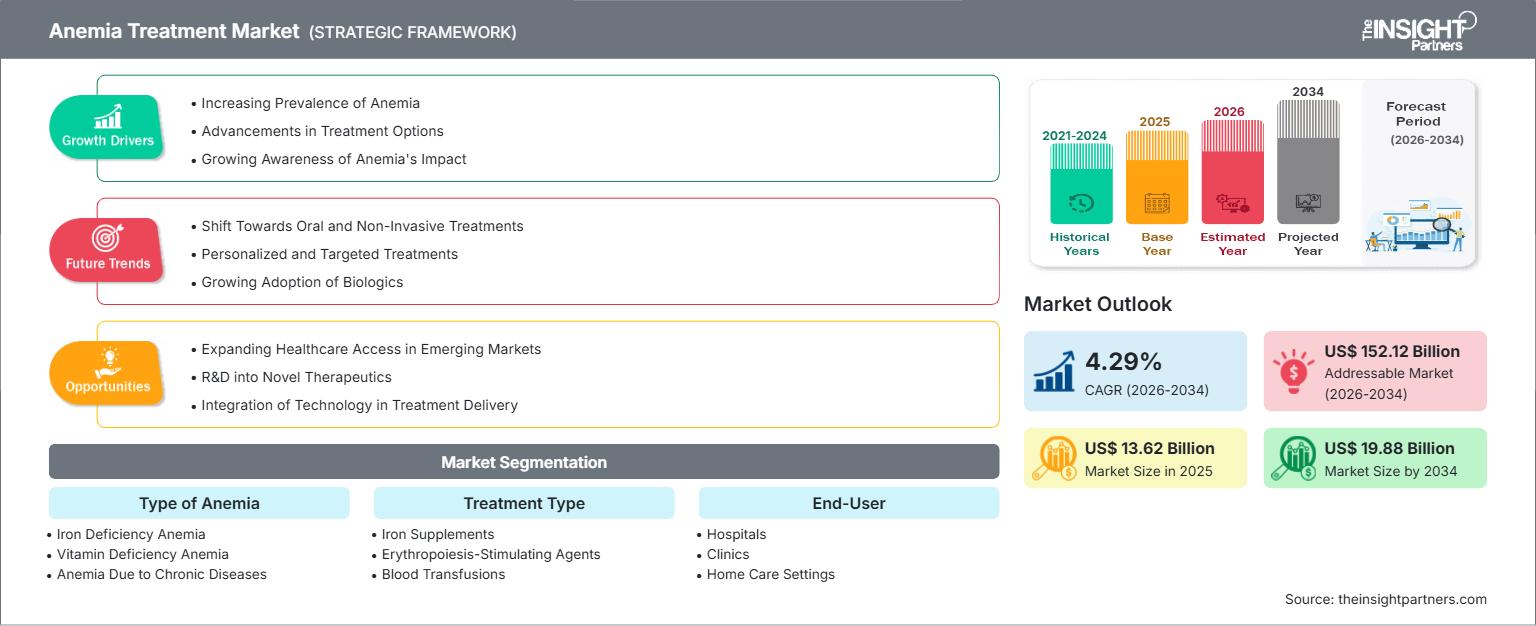
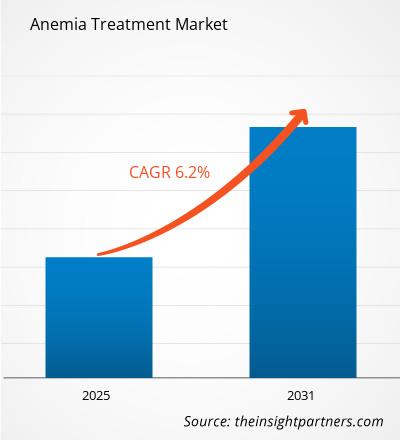
The anemia treatment market is projected to increase from US$ 13.62 Billion in 2025 to US$ 19.88 Billion by 2034, registering a CAGR of 4.29% during 2026–2034. Demand is shaped by treatment needs across iron deficiency anemia, vitamin deficiency anemia, chronic disease-related anemia, aplastic anemia, hemolytic anemia, and sickle cell anemia, with therapies spanning supplements, erythropoiesis-stimulating agents, transfusions, marrow stimulation, and gene therapy.
Across North America, the anemia treatment market size is supported by mature nephrology networks, strong hospital infusion capacity, and established hematology care for inherited and chronic disease-related anemia. The region is expected to grow at a CAGR range of 3.8–4.4% during 2026–2034, driven by chronic kidney disease management, sickle cell care modernization, and broader use of outpatient iron replacement.
Anemia Treatment Market Assessment and Insights
- North America held 36–39% share in 2025 and is growing at a CAGR of 3.8–4.4% between 2026–2034, supported by dialysis-related anemia management, specialty hematology access, and strong reimbursement for advanced therapies.
- US accounted for 84–87% of North America in 2025 and is growing at a CAGR of 3.9–4.5% between 2026–2034, driven by hospital networks and specialty pharmacy access.
- Europe held 27–30% share in 2025 and is growing at a CAGR of 3.5–4.1% between 2026–2034, led by Germany, the UK, France, Italy, and Spain.
- Asia Pacific held 23–26% share in 2025 and is growing at a CAGR of 5.2–5.9% between 2026–2034, with China, India, Japan, South Korea, and Australia expanding diagnosis.
- Largest Segment iron deficiency anemia held 41–45% market share in 2025 and is growing at a CAGR of 4.0–4.6% between 2026–2034 due to high clinical prevalence.
- High-Growth Segment gene therapy held 4–7% market share in 2025 and is growing at a CAGR of 14.5–16.2% between 2026–2034 as sickle cell innovation advances.
- Key companies analyzed in detail: Amgen Inc., Baxter International Inc., Novartis AG, Roche Holding AG, GSK plc, Hematogenix Laboratory Services, LLC, CSL Vifor, Fresenius Medical Care AG, Sanofi S.A., Teva Pharmaceutical Industries Ltd.
Source: The Insight Partners' analysis based on proprietary research, government publications, company annual reports, investor presentations, industry databases, and expert interviews.
Treatment evolution in the anemia treatment market has moved from broad supplementation and transfusion-led care toward more targeted approaches based on etiology, iron status, renal function, inflammatory burden, and genetic diagnosis. Therapeutic production varies by drug category, with oral supplements needing scale and cost-effectiveness, intravenous iron needing sterile production, ESA drugs needing biological manufacturing capabilities, and gene therapy requiring customized collection and cell manipulation.
Early adoption will be driven by increased screening, expanded use of anemia panels in chronic disease patients, and greater availability of hematology and nephrology care in developing nations. Capital will flow into individualized therapy choices, digital dialysis anemia control, and cure-based treatment options for hereditary blood disorders. Positive regulatory winds will blow in favor of reducing transfusions and maintaining hemoglobin.
Anemia Treatment Market Report Scope
| Report Attribute | Details |
|---|---|
| Market size in 2025 | US$ 13.62 Billion |
| Market Size by 2034 | US$ 19.88 Billion |
| Global CAGR (2026 - 2034) | 4.29% |
| Historical Data | 2021-2024 |
| Forecast period | 2026-2034 |
Anemia Treatment Market Analysis
The anemia treatment market growth is driven by persistent clinical need across nutritional deficiency, chronic kidney disease, oncology, autoimmune disease, hemoglobinopathies, and marrow failure disorders. WHO public health priorities, national sickle cell programs, dialysis expansion, and oncology survivorship all reinforce the relevance of diagnosis-led treatment. The ecosystem includes pharmaceutical manufacturers, blood banks, diagnostic laboratories, dialysis providers, hospitals, specialty clinics, pharmacies, and research institutions.
Supply dynamics vary by treatment category. Iron supplements and vitamins depend on high-volume distribution, while intravenous iron, ESAs, and biologics require controlled protocols, monitoring, and cold-chain or specialty handling. Blood transfusions depend on donor systems and compatibility testing, while gene therapy depends on high-complexity treatment centers and patient eligibility.
The anemia treatment market analysis shows a competitive landscape combining biologics leaders, renal care providers, iron therapy specialists, diagnostic laboratories, and generic manufacturers. Amgen Inc. remains influential in ESA therapy, while CSL Vifor supports iron deficiency and nephrology-focused treatment. Fresenius Medical Care AG shapes dialysis anemia workflows through care delivery and digital tools.
Roche Holding AG, Novartis AG, GSK plc, Sanofi S.A., Teva Pharmaceutical Industries Ltd., Baxter International Inc., and Hematogenix Laboratory Services, LLC contribute through diagnostics, hematology, hospital care, specialty therapies, or access infrastructure. Strategic positioning increasingly depends on matching treatment to cause, reducing avoidable transfusions, and providing evidence that supports payer, clinician, and institutional confidence.
● REPORT CUSTOMIZATION
Tailor This Report To Align With Your Specific Business Requirements
This report can be customized to align precisely with your business objectives, scope, and target markets. Customization options include tailored segmentation, geography, competitive analysis, and strategic insights to support informed decision-making.
Customize This Report →WHAT YOU CAN ADJUST
- ● Segmentations
- ● Geography
- ● Competitive Analysis
- ● Language Preferences
Anemia Treatment Market: Strategic Insights
Regional Insights
North America anemia treatment market
North America held 36–39% share in 2025 and is expected to grow at a CAGR of 3.8–4.4% during 2026–2034. The region benefits from established dialysis infrastructure, specialty hematology centers, transfusion services, and early adoption of advanced therapies for inherited blood disorders. These factors support the anemia treatment market share across hospital, clinic, dialysis, and home care pathways.
Demand is reinforced by chronic kidney disease anemia management, oncology-associated anemia, inflammatory disease care, and sickle cell treatment programs. Hospitals and clinics increasingly use iron studies, renal markers, and genetic testing to guide therapy selection. Growth is moderated by biological pricing, transfusion safety requirements, and eligibility constraints for curative gene therapy.
U.S. anemia treatment Market
The U.S. represented 84–87% of North America in 2025 and is projected to grow at a CAGR of 3.9–4.5% during 2026–2034. Demand for products is driven by substantial dialysis, hematology, hospital infusion centers, and specialty pharmacy networks. Treatment demand is highest for conditions such as iron deficiency, chronic kidney disease, sickle cell disease, oncology care, and bone marrow failure.
Company coverage consists of Amgen Inc., Baxter International Inc., Roche Holding AG, Novartis AG, GSK plc, CSL Vifor, Fresenius Medical Care AG, Sanofi S.A., Teva Pharmaceutical Industries Ltd., and Hematogenix Laboratory Services, LLC. Application focus areas are increasingly focusing on transfusion prevention, hemoglobin maintenance, and genetic eligibility determination. Payer requirements and facility preparedness play significant roles in the acceptance of costly drugs.
Europe anemia treatment Market
Europe held 27–30% share in 2025 and is expected to expand at a CAGR of 3.5–4.1% during 2026–2034, with Germany leading demand. There are structured anemia pathways and renal registries in the UK, although there is a health technology assessment process ensuring that the premium drugs are closely monitored. Hospital pharmacies continue to play an important role in biologics and intravenous products.
The country has high uptake due to its advanced nephrology, oncology, and hematology networks. The demand in the country is driven by hospital patient blood management, iron deficiency management, and ESA usage in line with the guidelines. Countries such as France, Italy, and Spain continue to experience growth due to improved public coverage, transfusion control, and specialist availability.
APAC anemia treatment Market
APAC held 23–26% share in 2025 and is projected to grow at a CAGR of 5.2–5.9% during 2026–2034. Regional demand is dominated by China because of hospital sizes, chronic disease, and increased renal dialysis. The main emphasis of Japan and South Korea lies on quality biologics and structured anemia management.
There has been substantial growth in India and Australia because of nutritional anemia programs, sickle cell programs, private hospitals, and generic manufacturing. There will be improvements in accessibility because of domestic manufacturing and government screening policy. There are issues regarding affordability, rural diagnosis, lack of specialists, and supplements.
Middle East & Africa anemia treatment Market
The Middle East & Africa are expected to grow at a CAGR of 4.6–5.3% during 2026–2034, led by Saudi Arabia. Factors such as investment in hospital infrastructure, hemoglobinopathy testing, dialysis, and private specialties drive growth in Gulf nations.
In the UAE, there is demand for superior hematology and infusion services, whereas South Africa is still relevant owing to hospital and transfusion services already in place. However, the Rest of MEA has varying degrees of adoption due to differences in diagnosis availability, blood availability, affordability, and specialist availability.
Segmentation Analysis
Type of Anemia
The Type of Anemia segment is expected to grow at a CAGR of 4.1–4.7% during 2026–2034. Demand is shaped by underlying cause, diagnostic capacity, chronicity, and treatment complexity. The anemia treatment market scope is broadening as providers move from hemoglobin correction alone toward cause-specific pathways covering nutritional repletion, chronic disease control, transfusion planning, and inherited disorder management.
- Iron Deficiency Anemia remains the largest type because dietary deficits, blood loss, pregnancy-related needs, and chronic disease overlap create recurring demand for oral and intravenous iron.
- Vitamin Deficiency Anemia requires accessible B12, folate, and mineral supplementation, with diagnosis especially important in the elderly, malabsorption, pregnancy, and diet-restricted populations.
- Anemia due to Chronic Diseases is clinically significant because inflammation, kidney disease, cancer, and autoimmune disorders often require coordinated treatment beyond simple nutrient replacement.
- Aplastic Anemia represents a high-complexity area where specialist evaluation, transfusion support, immunosuppression, marrow stimulation, or transplantation planning may be required.
- Hemolytic Anemia requires precise diagnosis because treatment may involve trigger removal, immunosuppression, transfusion support, or disease-specific therapy, depending on the immune or inherited cause.
- Sickle Cell Anemia is strategically important because disease-modifying drugs, transfusion protocols, and gene therapy are reshaping long-term management in eligible patients.
Treatment Type
The Treatment Type segment is expected to grow at a CAGR of 4.2–4.8% during 2026–2034. Therapy selection depends on etiology, hemoglobin level, symptoms, comorbidities, and urgency of correction. Iron and vitamin therapies support high-volume use, while ESAs, transfusions, marrow stimulation, and gene therapy address more complex hospital and specialist-managed cases.
- Iron Supplements remain foundational because oral and intravenous formulations address the most common deficiency pathway and support treatment across primary care, obstetrics, nephrology, and surgery.
- Erythropoiesis-Stimulating Agents are important in chronic kidney disease and selected oncology settings where endogenous red cell production is insufficient, and transfusion avoidance is prioritized.
- Blood Transfusions offer a quick remedy for cases of severe anemia, bleeding, bone marrow failure, or clinical instability, but are dependent on compatibility tests and blood supply regulation.
- Vitamin and Mineral Supplements help in large volume requirements where there is a deficiency in folate, B12, or other factors causing anemia, which can frequently be controlled by cost-effective repeated treatment.
- Bone Marrow Stimulating Medications help in situations where there is a need to stimulate the recovery of bone marrow and bone marrow production problems.
- Gene Therapy is a new high-value technique that can benefit from the treatment of specific genetic diseases like sickle cell anemia.
End-User
The End-User segment is expected to grow at a CAGR of 4.0–4.6% during 2026–2034. Hospitals remain essential for severe anemia, transfusions, biologics, and gene therapy preparation. Clinics manage recurring evaluation and iron therapy, while home care settings support supplementation and monitoring. Research institutions are increasingly important for inherited blood disorder innovation.
- Hospitals account for the strongest complex-care demand because severe anemia, transfusions, oncology, dialysis, marrow failure, and gene therapy require multidisciplinary infrastructure.
- Clinics support diagnosis, follow-up, iron therapy, ESA monitoring, and chronic disease management, making them important for recurring outpatient anemia care.
- Home Care Settings are gaining relevance for oral supplements, injectable support where permitted, digital monitoring, and maintenance therapy after hospital or clinic initiation.
- Research Institutions drive innovation in gene therapy, rare anemia biology, diagnostic biomarkers, and treatment protocols that later influence specialist practice.
Opportunity Snapshot
| End-User | Revenue Contribution | Trend Tag | Adoption Stage |
| Hospitals | High | Transfusion Care | Mature |
| Clinics | High | Iron Infusion | Scaling |
| Home Care Settings | Medium | Supplement Adherence | Scaling |
| Research Institutions | Medium | Gene Editing | Emerging |
Anemia Treatment Market Growth Drivers and Impact Analysis
Rising Burden of Nutritional and Chronic Disease-Linked Anemia
The high prevalence of iron deficiency, chronic kidney diseases, cancer, inflammation, and hemoglobinopathy ensures continued strong demand for anemia detection and management. It is most potent in markets where healthcare professionals are able to make proper diagnoses and prescribe proper medication in advance of clinical signs. Iron supplementation, IV iron, ESAs, transfusion and specialty products can all have a good market in the different pathways followed by different patients. Hospitals will be responsible for demand arising from acute or complicated patients, while clinics will handle follow-up and maintenance.
Expansion of Dialysis and Renal Anemia Management
The chronic nature of CKD remains a source of repeated demand since inadequate production of erythropoietin necessitates repeated treatments for anemia. Hospitals and nephrology clinics depend on iron testing, ESA treatment, and hemoglobin tracking to minimize dependency on transfusions while at the same time avoiding overtreatment. Commercial aspects involve the persistent use of ESAs, IV iron products, lab tests, and digital guidance aids. Personalized dosing is becoming more important since hemoglobin fluctuation may impact cardiovascular risks and care quality. Renal anemia companies may gain an edge through supply, monitoring, and dialysis process integration.
Advances in Curative and Disease-Modifying Therapies
Gene therapy and disease-modifying drugs are raising the bar for what is possible in inherited anemias, such as sickle cell anemia. While the applicability of these treatments today is constrained by patient eligibility criteria, treatment facility capabilities, conditioning protocols, and pricing, gene therapy and disease modification still offer a high-value growth avenue. There is more to the market opportunity than the sale of treatment drugs, since there are needs for genetic testing, counseling, cell harvesting and transplantation facilities, and post-treatment monitoring of the patients. Companies that can provide proven benefits, improve production and increase access will have an advantage.
Anemia Treatment Market Future Trends
Precision Anemia Management Based on Etiology and Risk
Future care will rely more heavily on differentiating anemia by iron status, inflammation, renal function, marrow reserve, genetic background, and transfusion history. The anemia treatment market trends indicate that clinicians will increasingly avoid one-size-fits-all correction and instead match therapy intensity to patient risk. This shift should increase demand for diagnostic panels, ferritin and transferrin saturation testing, molecular workups, and digital dosing support. Payers are likely to favor pathways that reduce unnecessary transfusions and optimize biologic use. Companies that link medicines with evidence-based monitoring will gain credibility.
Greater Integration of Home and Outpatient Care
Anemia management is likely to shift further towards outpatient and home-based care models in cases where it is related to nutritional anemia, stable kidney disease, and post-hospitalization maintenance therapy. Using oral formulations, home delivery service, digital reminders, and clinical monitoring can help enhance compliance rates while minimizing hospital workload. Administration of intravenous products and ESAs will continue to be controlled; however, the schedule will become more flexible through the use of infusion and dialysis facilities. This trend makes a company more attractive if it helps educate patients and maintain refill consistency.
Anemia Treatment Market Opportunities
Integrated Diagnostic and Treatment Pathways
A major opportunity exists in connecting laboratory assessment with treatment selection, follow-up monitoring, and adherence support. The anemia treatment market Forecasts indicate stronger value creation where providers reduce diagnostic delay and avoid ineffective therapy cycles. Companies can partner with hospitals, clinics, and laboratories to offer pathway tools for iron deficiency, chronic kidney disease, and inherited anemia. This model can improve therapy selection, reduce transfusion overuse, and support payer confidence. The strongest commercial value will come from linking affordable diagnostics with scalable products and clear escalation to specialist care.
Access Models for Gene Therapy and Sickle Cell Care
Specific access models must be developed in order to bring innovations in the field of gene therapy to clinical practice. The manufacturers, hospitals, governments, and payers can work together in order to assess centers’ eligibility, identify appropriate patients, fund treatment, and create follow-up registries. It would make sense to consider this opportunity specifically among people with sickle cell diseases because the burden from disease is very high throughout the entire life of such patients; however, the infrastructure of care is diverse. Financial feasibility, reliable manufacturing, and transparent risk-benefit discussion would be important.
Recent Developments
- July 2026: Vertex Pharmaceuticals Incorporated received FDA supplemental approval expanding Casgevy to patients aged 2 years and older with sickle cell disease with recurrent vaso-occlusive crises or transfusion-dependent beta thalassemia. The decision broadened pediatric access to CRISPR-based gene therapy and reinforced the shift toward disease-modifying anemia care.
- March 2026: Fresenius Medical Care AG published its 2025 annual report, highlighting the FME Reignite strategy, digitalization progress, and continued kidney care innovation. The company reported 8% organic revenue growth at constant currency in 2025 and emphasized operational improvements relevant to dialysis populations that commonly require anemia management.
- August 2025: India’s Ministry of Health and Family Welfare reported progress under the National Sickle Cell Anemia Elimination Mission, including more than 6 crore screenings across 17 tribal-dominated states as of July 2025. The program also approved 15 Centres of Excellence across 14 states, strengthening diagnosis and referral infrastructure.
Frequently Asked Questions

- Comprehensive Market Sizing and Forecast Analysis
- Detailed Segmentation Analysis
- In-Depth Market Dynamics Assessment
- Regional and Country-Level Insights
- Competitive Landscape and Company Benchmarking
- Strategic Business Intelligence
Recent Reports
Testimonials

The Insight Partners' SCADA System Market report is comprehensive, with valuable insights on current trends and future forecasts. The team was highly professional, responsive, and supportive throughout. We are very satisfied and highly recommend their services.
RAN KEDEM Partner, Reali Technologies LTDs
I requested a report on a very specific software market and the team produced the report in a few days. The information was very relevant and well presented. I then requested some changes and additions to the report. The team was again very responsive and I got the final report in less than a week.
JEAN-HERVE JENN Chairman, Future Analytica
We worked with The Insight Partners for an important market study and forecast. They gave us clear insights into opportunities and risks, which helped shape our plans. Their research was easy to use and based on solid data. It helped us make smart, confident decisions. We highly recommend them.
PIYUSH NAGPAL Sr. Vice President, High Beam Global
The Insight Partners delivered insightful, well-structured market research with strong domain expertise. Their team was professional and responsive throughout. The user-friendly website made accessing industry reports seamless. We highly recommend them for reliable, high-quality research services
YUKIHIKO ADACHI CEO, Deep Blue, LLC.
This is the first time I have purchased a market report from The Insight Partners.While I was unsure at first, I visited their web site and felt more comfortable to take the risk and purchase a market report.I am completely satisfied with the quality of the report and customer service. I had several questions and comments with the initial report, but after a couple of dialogs over email with their analyst I believe I have a report that I can use as input to our strategic planning process.Thank you so much for taking the extra time and making this a positive experience.I will definitely recommend your service to others and you will be my first call when we need further market data.
JOHN SUZUKI President and Chief Executive Officer, Board Director, BK Technologies
I wish to appreciate your support and the professionalism you displayed in the course of attending to my request for information regarding to infectious disease IVD market in Nigeria. I appreciate your patience, your guidance, and the fact that you were willing to offer a discount, which eventually made it possible for us to close a deal. I look forward to engaging The Insight Partners in the future, all thanks to the impression you have created in me as a result of this first encounter.
DR CHIJIOKE ONYIA MANAGING DIRECTOR, PineCrest Healthcare Ltd.Reason to Buy
- Informed Decision-Making
- Understanding Market Dynamics
- Competitive Analysis
- Identifying Emerging Markets
- Customer Insights
- Market Forecasts
- Risk Mitigation
- Boosting Operational Efficiency
- Strategic Planning
- Investment Justification
- Tracking Industry Innovations
- Aligning with Regulatory Trends





 Get Free Sample for