
Anesthetic Drugs and Pain Drugs Market Share, Growth & Forecast by 2034
Coverage: by Type (Anaesthetic Drugs, Pain Drugs); Application (Hospital, Clinic), and Geography (North America, Europe, Asia Pacific, and South and Central America)
- Status : Data Released
- Report Code : TIPRE00011955
- Category : Life Sciences
- No. of Pages : 150
- Available Report Formats :


- Last update date : August 04, 2026


2025 Market Size
US$ 19.05 Bn
Base year value
2034 Forecast
US$ 31.01 Bn
Projected by 2034
CAGR 2026-2034
6.3 %
Growth rate
Addressable Market
US$ 235.61 Bn
(2026-2034)
The anesthetic drugs and pain drugs market is projected to grow from US$ 19.05 Billion in 2025 to US$ 31.01 Billion by 2034, registering a CAGR of 6.3% during 2026–2034. Demand is supported by rising surgical procedures, chronic pain prevalence, cancer pain management needs, wider access to hospital-based anesthesia, and continued development of non-opioid, multimodal, and procedure-specific pain management therapies.
North America remains a major revenue base because of advanced hospital infrastructure, high prescription drug utilization, and structured pain management pathways. The anesthetic drugs and pain drugs market size in the region is supported by surgical volumes, specialty prescribing, chronic disease burden, and payer scrutiny around opioid use. Regional expansion is expected to remain within a 3.4–4.0% CAGR range through 2034.
Anesthetic Drugs and Pain Drugs Market Assessment and Insights
- North America: North America accounted for 39–43% share in 2025 and is projected to grow at 3.4–4.0% CAGR between 2026–2034, supported by hospital anesthesia demand, chronic pain treatment, and non-opioid innovation.
- US: The US represented 86–90% of North America in 2025 and is expected to grow at 3.3–3.9% CAGR between 2026–2034, driven by high prescription intensity and surgical care.
- Europe: Europe held 24–28% share in 2025 and is forecast to grow at 3.2–3.8% CAGR between 2026–2034, led by Germany, the UK, France, Italy, and Spain.
- Asia Pacific: Asia Pacific captured 21–25% share in 2025 and is projected to expand at 5.2–5.9% CAGR between 2026–2034, with China, India, Japan, South Korea, and Australia leading adoption.
- Largest Segment: Pain Drugs held 72–77% market share in 2025 and is expected to grow at 3.8–4.4% CAGR between 2026–2034, reflecting chronic pain and postoperative treatment demand.
- High Growth Segment: Anaesthetic Drugs accounted for 23–28% market share in 2025 and is projected to grow at 4.4–5.1% CAGR between 2026–2034, supported by procedural expansion.
- Key companies analyzed in detail: AstraZeneca PLC, Baxter International Inc., Bayer AG, Endo, Inc., Johnson & Johnson, Merck & Co., Inc., Novartis AG, Pfizer Inc., Purdue Pharma L.P., and Vertex Pharmaceuticals Incorporated.
Source: The Insight Partners' analysis based on proprietary research, government publications, company annual reports, investor presentations, industry databases, and expert interviews.
Drugs for pain management are now being developed and prescribed not just based on opioids but with the use of various modalities with different non-opioid painkillers, regional anesthesia, NSAIDs, acetaminophen, and local anesthetics, among other innovative means. The supply side is influenced by the ability to produce sterile injectables, regulations on controlled substances, generic drugs, the security of the active pharmaceutical ingredient, and formulary choices by hospitals. Suppliers are now becoming more concerned about supply certainty, delivery, and the availability of evidence for safer perioperative and chronic pain management.
Future demand will come from the aging population, surgery backlog, oncology, musculoskeletal problems, and initiatives aimed at reducing unnecessary exposure to opioids. While the Asia Pacific region will drive volumes because of increasing access to healthcare, North America and Europe will concentrate on safer prescriptions, non-opioid replacements, and formulary choices.
Anesthetic Drugs and Pain Drugs Market Report Scope
| Report Attribute | Details |
|---|---|
| Market size in 2025 | US$ 19.05 Billion |
| Market Size by 2034 | US$ 31.01 Billion |
| Global CAGR (2026 - 2034) | 6.3% |
| Historical Data | 2021-2024 |
| Forecast period | 2026-2034 |
Anesthetic Drugs and Pain Drugs Market Analysis
The anesthetic drugs and pain drugs market growth is driven by higher surgical activity, chronic pain prevalence, cancer-related pain, trauma care, and expanding ambulatory procedures. Induction, maintenance, sedation, and regional anesthesia necessitate the availability of effective anesthetics in hospitals, whereas pain medications are necessary for the treatment of postoperative, musculoskeletal, neuropathic, and other pain conditions associated with diseases. The need is repetitive since there is a necessity for continuous treatment, whether for acute or chronic illnesses.
The value chain consists of active pharmaceutical ingredients, sterile injectables, oral dosage forms, transdermal preparations, controlled-release drugs, hospital distribution, retail pharmacy distribution, pharmacovigilance, and reimbursement analysis. The supply considerations are affected by controlled substance regulations, restrictions on the production of sterile injectables, patent expirations, generic competition, and shortages.
The anesthetic drugs and pain drugs market analysis indicates a mixed competitive structure where diversified pharmaceutical companies, injectable specialists, and pain-focused innovators coexist. Pfizer Inc., Johnson & Johnson, Novartis AG, Bayer AG, AstraZeneca PLC, and Merck & Co., Inc. compete through broader therapeutic portfolios, while Baxter International Inc. remains important in hospital injectables and anesthetic support products.
Positioning has evolved with risk management of opioids redefining the space for prescribers and innovations. Endo, Inc., and Purdue Pharma L.P. work in an environment where regulatory requirements have to be adhered to strictly, whereas Vertex Pharmaceuticals Incorporated has brought in the latest non-opioid approach in acute pain. Firms with a good safety profile, hospital penetration, payer interaction, and product differentiation will fare better than companies with well-established pain medications.
● REPORT CUSTOMIZATION
Tailor This Report To Align With Your Specific Business Requirements
This report can be customized to align precisely with your business objectives, scope, and target markets. Customization options include tailored segmentation, geography, competitive analysis, and strategic insights to support informed decision-making.
Customize This Report →WHAT YOU CAN ADJUST
- ● Segmentations
- ● Geography
- ● Competitive Analysis
- ● Language Preferences
Anesthetic Drugs and Pain Drugs Market: Strategic Insights
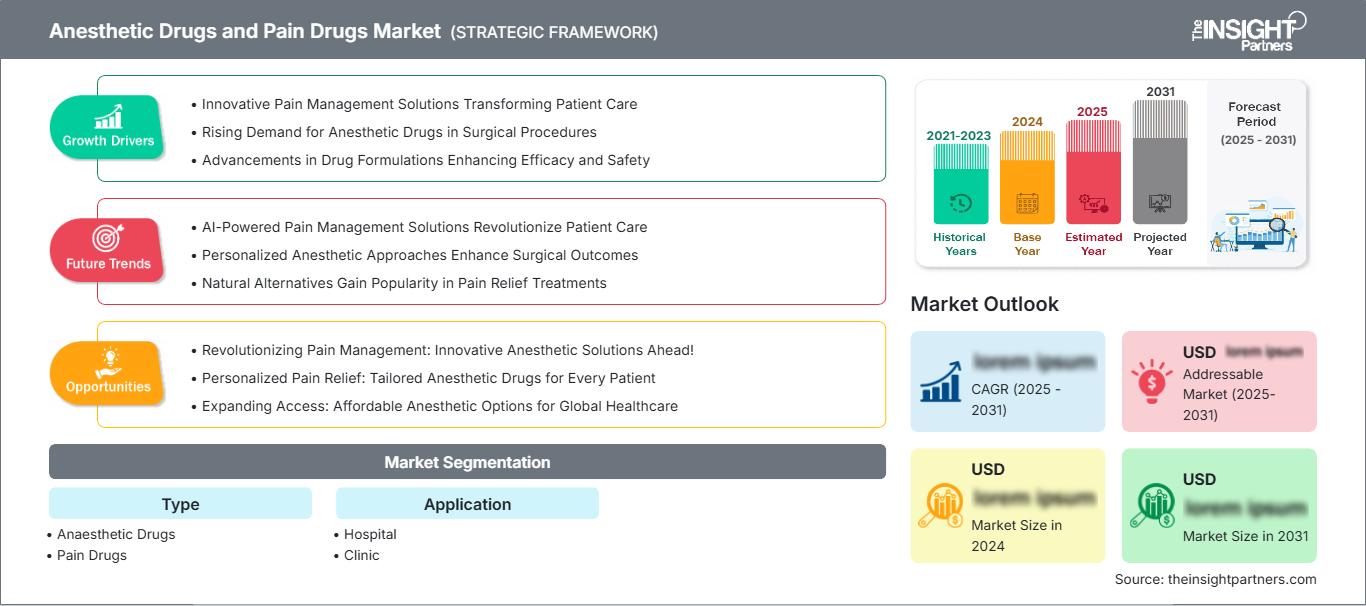
Regional Insights
North America anesthetic drugs and pain drugs market
North America accounted for 39–43% share in 2025 and is projected to grow at 3.4–4.0% CAGR during 2026–2034. Demand is supported by hospital surgeries, chronic pain treatment, cancer care, trauma services, ambulatory procedures, and high pharmaceutical spending. The region also has a strong regulatory emphasis on opioid stewardship and non-opioid pain treatment access.
The anesthetic drugs and pain drugs market share in North America is reinforced by mature reimbursement systems, extensive hospital formularies, and commercial availability of branded and generic therapies. Hospitals prioritize injectable anesthesia supply continuity, while outpatient providers require oral and topical pain options. Growth remains moderate because generic erosion offsets volume gains in several mature drug classes.
U.S. anesthetic drugs and pain drugs Market
The US represented 86–90% of North America in 2025 and is expected to grow at 3.3–3.9% CAGR during 2026–2034. The demand comes from surgical facilities, hospital systems, pain centers, oncology clinics, orthopedics, and the emergency department. The nation continues to be at the heart of innovations in non-opioid painkillers and shifts in the control of substances.
The key players in the market include Pfizer Inc., Johnson & Johnson, Baxter International Inc., Endo, Inc., Purdue Pharma L.P., and Vertex Pharmaceuticals Incorporated. US health care practitioners are increasingly using multimodal pain management plans incorporating local anesthetics, non-opioid, NSAIDs, and controlled opioid rescue therapy.
Europe anesthetic drugs and pain drugs Market
Europe held 24–28% share in 2025 and is forecast to grow at 3.2–3.8% CAGR during 2026–2034. The UK helps in stimulating demand through NHS post-operative surgery, chronic pain services, and opioid-free care pathways. The pricing control limits revenue growth; however, steady procedures ensure wide drug use.
Germany is the largest European market because of its huge hospital network, advanced perioperative treatment, and efficient drug delivery system. The hospital formulary system encourages the use of injectable anesthesia, local anesthetics, NSAIDs, and controlled analgesics based on specific prescription protocols.
France, Italy, and Spain benefit from their aged population, hospital demand, cancer pain therapy, and growing number of outpatient procedures. European buyers focus on cost-effectiveness, availability of generics, safety assessment, and prescription compliance. The national reimbursement system determines the popularity of premium brands more than in the US.
APAC anesthetic drugs and pain drugs Market
Asia Pacific accounted for 21–25% share in 2025 and is expected to grow at 5.2–5.9% CAGR during 2026–2034. China leads regional demand through hospital expansion, rising surgery volumes, and wider treatment access for cancer and chronic pain. India is growing through private hospital networks and increasing access to branded generics.
Japan and South Korea maintain advanced pain management and anesthesia practices, while Australia supports stable demand through public and private healthcare systems. Regional growth is supported by reimbursement expansion, higher diagnosis of chronic conditions, and greater procedural capacity. Local manufacturing and pricing policies strongly influence competitive access across major Asian markets.
Middle East & Africa anesthetic drugs and pain drugs Market
The Middle East & Africa is expected to grow at 4.3–5.0% CAGR during 2026–2034. Saudi Arabia and the UAE lead regional demand through hospital construction, specialty surgery centers, oncology programs, and private healthcare expansion. Demand is concentrated in urban facilities with structured formularies and modern anesthesia services.
South Africa remains the most established regional pharmaceutical market, supported by private hospitals, public procurement, and chronic disease treatment. The rest of MEA adoption is emerging through surgical access programs, essential medicines procurement, and international healthcare partnerships. Supply reliability, affordability, and regulatory registration remain critical for market access.
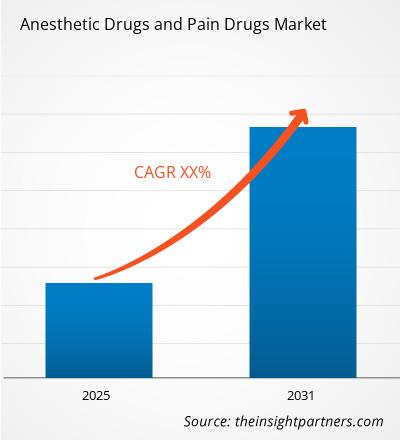
Segmentation Analysis
Type
Type is projected to grow at 3.8–4.5% CAGR during 2026–2034 as demand is shaped by the balance between procedural anesthesia and long-term pain therapy. The anesthetic drugs and pain drugs market scope by type is led by pain drugs because chronic and acute pain treatment volumes exceed surgical anesthetic use. Anaesthetic drugs grow with surgical capacity expansion and ambulatory procedures.
- Anaesthetic Drugs: Anesthetic Drugs are used for induction, maintenance, sedation, and regional anesthesia, with demand tied to operating room volume, ambulatory procedures, intensive care sedation, and specialty interventions.
- Pain Drugs: Pain Drugs dominate demand because acute postoperative pain, cancer pain, musculoskeletal disorders, neuropathic pain, and chronic inflammatory conditions require repeated therapeutic management.
Application
Application is expected to grow at 3.9–4.6% CAGR during 2026–2034 as hospitals remain the central site for anesthesia and severe pain management, while clinics expand chronic pain and minor procedure treatment. Hospital demand is linked to injectable and controlled drugs, whereas clinics rely more heavily on oral, topical, and targeted outpatient therapies.
- Hospital: Hospital applications generate the highest revenue because surgical anesthesia, inpatient pain control, trauma care, oncology pain, intensive care sedation, and postoperative protocols require broad drug availability.
- Clinic: Clinic applications are expanding through pain management centers, orthopedic clinics, dental facilities, outpatient oncology care, and chronic disease management pathways requiring accessible analgesic options.
Opportunity Snapshot
| Segment Name | Revenue Contribution | Trend Tag | Adoption Stage |
| Hospital | High | Formulary Control | Mature |
| Clinic | Medium | Chronic Pain | Scaling |
Anesthetic Drugs and Pain Drugs Market Growth Drivers and Impact Analysis
Rising Surgery Volumes and Perioperative Drug Use
There are growing numbers of surgeries taking place in orthopedic, cardiovascular, oncology, dental, obstetric, and out-patient surgery settings, resulting in an enduring demand for anesthetics and post-surgical pain relievers. Hospitals need injectable anesthetics, local anesthetics, sedatives, NSAIDs, paracetamol and rescue analgesics to help them follow multimodal perioperative approaches. The market influence is greatest in regions where there is a growing backlog of elective surgeries and an aging population. Drug companies have recurring demand through hospitals’ formularies, but will need to address issues of sterile injectable drug production and shortages.
Shift Toward Opioid-Sparing Pain Management
Healthcare systems are utilizing multimodal pain approaches, which decrease the unnecessary use of opioids but ensure sufficient pain management. This creates a focus on non-opioid analgesics, local anesthetics, NSAIDs, acetaminophen, adjuvants, and new pain signaling pathways. The effect is especially notable in North America, where opioid stewardship initiatives shape hospital procedures, payer guidelines, and prescription practices. The companies offering non-opioid products with differentiated features will enjoy success if they prove to be effective and cost-efficient. Although the existing opioid drugs still play a role in the treatment of severe pain, their commercial success is limited by monitoring and prescription requirements.
Growing Burden of Chronic Pain and Cancer Pain
Arthritis, neuropathy, cancer, traumatic, surgical, and musculoskeletal pain continue to be significant factors influencing drug consumption. An aging population implies more incidences of degenerative joint disorders and comorbidities, which makes it necessary to treat pain in hospitals and clinics continuously. Growth of cancer treatment programs is yet another factor behind increased consumption of opioid, non-opioid, and adjuvant drugs for pain relief. The significance of the market stems from the fact that pain must be treated recurrently using medications. Companies providing safer, more tolerable products and patient-friendly drug formulations will have an advantage over their competitors.
Anesthetic Drugs and Pain Drugs Market Future Trends
Non-Opioid Innovation Gains Commercial Relevance
Non-opioid innovation will be among the most important anesthetic drugs and pain drugs market trends as regulators, clinicians, and payers seek alternatives that reduce dependency risk while preserving pain relief. Sodium-channel inhibitors, peripheral pain pathway modulators, long-acting local anesthetics, and combination regimens will receive greater attention. Uptake will depend on real-world effectiveness, pricing, formulary access, and comparison with low-cost generics. This trend will not eliminate opioids from acute or cancer pain care, but it will reshape product development priorities. Companies that demonstrate clear clinical value can influence prescribing algorithms.
Personalized and Setting-Specific Pain Protocols Expand
Pain treatment will become more segmented by procedure, patient risk, comorbidity, and care setting. Hospitals will refine protocols for orthopedic, oncology, cardiac, and ambulatory procedures, while clinics will tailor chronic pain treatment based on functional outcomes and safety risks. Digital prescribing controls and electronic health record prompts will make protocol adherence easier. This trend will encourage demand for dosage flexibility, safer combinations, and products supported by guideline-aligned evidence. Manufacturers will need stronger health economic data to show how their therapies reduce complications, readmissions, or prolonged opioid exposure.
Anesthetic Drugs and Pain Drugs Market Opportunities
Hospital Formulary Optimization and Injectable Supply Reliability
Hospitals are reassessing formularies to balance anesthesia readiness, pain control, opioid stewardship, and drug shortage resilience. The anesthetic drugs and pain drugs market Forecasts indicate that suppliers with dependable sterile injectable capacity, multiple formulations, and strong distribution can gain preference in hospital contracts. Opportunities exist around local anesthetics, sedatives, perioperative analgesics, and ready-to-use products that reduce preparation burden. Manufacturers can strengthen hospital relationships through shortage mitigation plans, pharmacoeconomic evidence, and packaging that supports medication safety. Tender success will depend on reliability as much as price.
Clinic-Based Chronic Pain Management Expansion
Specialty clinics, orthopedic practices, oncology centers, and outpatient pain management facilities are expanding demand for medicines used outside inpatient settings. These clinics require accessible oral, topical, injectable, and adjuvant therapies that support long-term management while reducing safety risks. Companies can capture growth through patient support programs, payer engagement, and evidence that improves adherence or functional outcomes. The opportunity is strongest in markets where aging populations and musculoskeletal disease increase repeated care visits. Products with lower monitoring burden and clear differentiation against generics are more likely to gain clinical and commercial traction.
Recent Developments
- December 2025: Eli Lilly and Company announced positive Phase 3 TRIUMPH-4 results for retatrutide in adults with obesity or overweight and knee osteoarthritis. The study reported significant weight loss and substantial improvement in WOMAC pain scores, supporting the company’s broader interest in therapies that may address functional pain associated with metabolic and musculoskeletal disease.
- January 2025: Vertex Pharmaceuticals Incorporated announced FDA approval of JOURNAVX, also known as suzetrigine, for adults with moderate-to-severe acute pain. The FDA described it as a first-in-class non-opioid analgesic targeting sodium channels in the peripheral nervous system, creating a new treatment class for acute pain management.
- January 2025: Pfizer Inc. and Eli Lilly and Company remained associated with tanezumab-related osteoarthritis pain development discussions, reflecting continued industry interest in non-opioid mechanisms for chronic pain despite historic safety and regulatory challenges in the nerve growth factor inhibitor class. The program highlights the difficulty of balancing analgesic innovation with long-term joint safety expectations.
Frequently Asked Questions

- Comprehensive Market Sizing and Forecast Analysis
- Detailed Segmentation Analysis
- In-Depth Market Dynamics Assessment
- Regional and Country-Level Insights
- Competitive Landscape and Company Benchmarking
- Strategic Business Intelligence
Recent Reports
Testimonials

The Insight Partners' SCADA System Market report is comprehensive, with valuable insights on current trends and future forecasts. The team was highly professional, responsive, and supportive throughout. We are very satisfied and highly recommend their services.
RAN KEDEM Partner, Reali Technologies LTDs
I requested a report on a very specific software market and the team produced the report in a few days. The information was very relevant and well presented. I then requested some changes and additions to the report. The team was again very responsive and I got the final report in less than a week.
JEAN-HERVE JENN Chairman, Future Analytica
We worked with The Insight Partners for an important market study and forecast. They gave us clear insights into opportunities and risks, which helped shape our plans. Their research was easy to use and based on solid data. It helped us make smart, confident decisions. We highly recommend them.
PIYUSH NAGPAL Sr. Vice President, High Beam Global
The Insight Partners delivered insightful, well-structured market research with strong domain expertise. Their team was professional and responsive throughout. The user-friendly website made accessing industry reports seamless. We highly recommend them for reliable, high-quality research services
YUKIHIKO ADACHI CEO, Deep Blue, LLC.
This is the first time I have purchased a market report from The Insight Partners.While I was unsure at first, I visited their web site and felt more comfortable to take the risk and purchase a market report.I am completely satisfied with the quality of the report and customer service. I had several questions and comments with the initial report, but after a couple of dialogs over email with their analyst I believe I have a report that I can use as input to our strategic planning process.Thank you so much for taking the extra time and making this a positive experience.I will definitely recommend your service to others and you will be my first call when we need further market data.
JOHN SUZUKI President and Chief Executive Officer, Board Director, BK Technologies
I wish to appreciate your support and the professionalism you displayed in the course of attending to my request for information regarding to infectious disease IVD market in Nigeria. I appreciate your patience, your guidance, and the fact that you were willing to offer a discount, which eventually made it possible for us to close a deal. I look forward to engaging The Insight Partners in the future, all thanks to the impression you have created in me as a result of this first encounter.
DR CHIJIOKE ONYIA MANAGING DIRECTOR, PineCrest Healthcare Ltd.Reason to Buy
- Informed Decision-Making
- Understanding Market Dynamics
- Competitive Analysis
- Identifying Emerging Markets
- Customer Insights
- Market Forecasts
- Risk Mitigation
- Boosting Operational Efficiency
- Strategic Planning
- Investment Justification
- Tracking Industry Innovations
- Aligning with Regulatory Trends





 Get Free Sample for