
Animal Disinfectant Market Growth, Size & Forecast by 2034
Coverage: By Form (Liquid, Powder); Application (Dairy, Swine, Poultry, Equine, Others) , and Geography (North America, Europe, Asia Pacific, and South and Central America)
- Status : Data Released
- Report Code : TIPRE00026873
- Category : Chemicals and Materials
- No. of Pages : 150
- Available Report Formats :


- Last update date : October 26, 2026


2025 Market Size
US$ 4.42 Bn
Base year value
2034 Forecast
US$ 8.47 Bn
Projected by 2034
CAGR 2026-2034
7.49 %
Growth rate
Addressable Market
US$ 58.08 Bn
(2026-2034)
The animal disinfectant market was valued at US$ 4.42 Billion in 2025 and is projected to reach US$ 8.47 Billion by 2034, expanding at a CAGR of 7.49% during 2026–2034. Growth reflects increasing biosecurity requirements across livestock production, stricter farm hygiene practices, and greater emphasis on preventive animal health management. Demand is supported by recurring disinfection requirements across dairy, swine, poultry, and equine production environments.
North America is expected to remain a strategically important market, supported by intensive livestock production, disease-prevention protocols, and regulatory attention to farm biosecurity. The animal disinfectant market size in the region is also influenced by the modernization of poultry and dairy facilities, increasing adoption of automated hygiene systems, and rising demand for products with broad-spectrum efficacy and improved environmental profiles.
Animal Disinfectant Market Assessment and Insights
- North America: The region is estimated to account for a 24–28% animal disinfectant market share in 2025 and is projected to expand at a 6.9–7.3% CAGR between 2026–2034, supported by intensive farming, biosecurity protocols, and regulatory compliance.
- US: The US represents approximately 78–82% of North American demand in 2025 and is expected to grow at a 7.0–7.4% CAGR during 2026–2034, led by poultry, dairy, and swine operations.
- Europe: Europe is estimated to hold a 19–23% share in 2025 and grow at a 6.5–6.9% CAGR during 2026–2034, with Germany, France, the UK, Italy, and Spain supported by stringent livestock hygiene standards.
- Asia Pacific: Asia Pacific is estimated to command a 31–35% share in 2025 and register an 8.1–8.6% CAGR during 2026–2034, led by China, India, Japan, South Korea, and Australia.
- Largest Segment: Liquid products are estimated to hold a 61–65% market share in 2025 and grow at a 7.2–7.6% CAGR during 2026–2034, reflecting application flexibility and established farm protocols.
- High Growth Segment: Poultry is estimated to represent a 27–31% market share in 2025 and grow at an 8.0–8.5% CAGR during 2026–2034, supported by disease-control requirements and intensive production.
- Key companies analyzed in detail: NEOGEN CORPORATION, GEA Group Aktiengesellschaft, LANXESS AG, Zoetis Inc., KERSIA GROUP, CID LINES NV, Albert Kerbl GmbH, PCC SE, CEETAL Sanosil Ltd., and Kemin Industries, Inc.
Source: The Insight Partners' analysis based on proprietary research, government publications, company annual reports, investor presentations, industry databases, and expert interviews.
The animal disinfectant market is moving from traditional, one-dimensional sanitizers to new generation disinfectants that are compatible, have lower use volumes and better application technology. Liquid concentrates continue to remain relevant due to the ability of farms to customize dilution depending on local conditions whereas dry products have their own storage and transportation benefits. Formulations will also need to be more focused on organic loads, contact times, corrosion prevention and compatibility with automated foaming and spraying equipment. Companies will also develop new products for the transportation, drinking water, hatchery, milking and livestock housing segments. Such changes would enhance the importance of formulation technology, application technology and technical services.
The animal disinfectant market forecast shows that emerging economies of livestock production would invest further in farm infrastructure and disease prevention programs during the forecast period. Requirements regarding disinfectant effectiveness, residue prevention, worker safety and environment-friendly properties would play a growing role in choosing the disinfectants. The producers would tend to choose products that are fast-acting and have low environmental impact whereas distributors could promote product through training and protocols. Expansion of organized poultry and dairy farming in Asia Pacific along with biosecurity efforts in North America and Europe would create opportunities for differentiated formulations and application technology.
Animal Disinfectant Market Report Scope
| Report Attribute | Details |
|---|---|
| Market size in 2025 | US$ 4.42 Billion |
| Market Size by 2034 | US$ 8.47 Billion |
| Global CAGR (2026 - 2034) | 7.49% |
| Historical Data | 2021-2024 |
| Forecast period | 2026-2034 |
Animal Disinfectant Market Analysis
Growth of animal disinfectant market is increasing due to growing prevention needs for various diseases. Supply chain starts from active ingredients producers, formulation producers, packaging companies, distributors, veterinary suppliers, farm equipment makers, and producers. The demand is repetitive since barns, hatcheries, milk parlors, transports, equipment, and high-contact areas need disinfection repeatedly.
Supply factors include the availability and prices of quaternary ammonium compound, oxidizers, aldehydes, iodophore active ingredients, acids, surfactants, and formulations additives. More and more producers look for guaranteed availability and stable efficacy in case of hard water, organic load, and varying temperature conditions. Thus, strategic suppliers not only have to compete with chemicals but also with formulations, registration, guidance in use, and compatibility with current farm cleaning equipment.
Further, the animal disinfectant market trends reveal a competitive landscape featuring diversified animal health players, specialty chemicals makers, and specialized hygiene players. NEOGEN CORPORATION and KERSIA GROUP have enhanced their strategic importance through portfolio shifts, whereas LANXESS AG continues to hold its position in specialty biosecurity chemistry. The equipment approach into the dairy hygiene market is provided by GEA Group Aktiengesellschaft.
Zoetis Inc. and Kemin Industries, Inc. represent animal health players, while CID LINES NV, Albert Kerbl GmbH, PCC SE, and CEETAL Sanosil Ltd. are participating via specialized hygiene and disinfectants. Investment focus is now moving towards formulations, international markets, regulatory approvals, and technology support. Consequently, competitive positioning of the industry participants is being driven towards biosecurity programs rather than stand-alone products.
● REPORT CUSTOMIZATION
Tailor This Report To Align With Your Specific Business Requirements
This report can be customized to align precisely with your business objectives, scope, and target markets. Customization options include tailored segmentation, geography, competitive analysis, and strategic insights to support informed decision-making.
Customize This Report →WHAT YOU CAN ADJUST
- ● Segmentations
- ● Geography
- ● Competitive Analysis
- ● Language Preferences
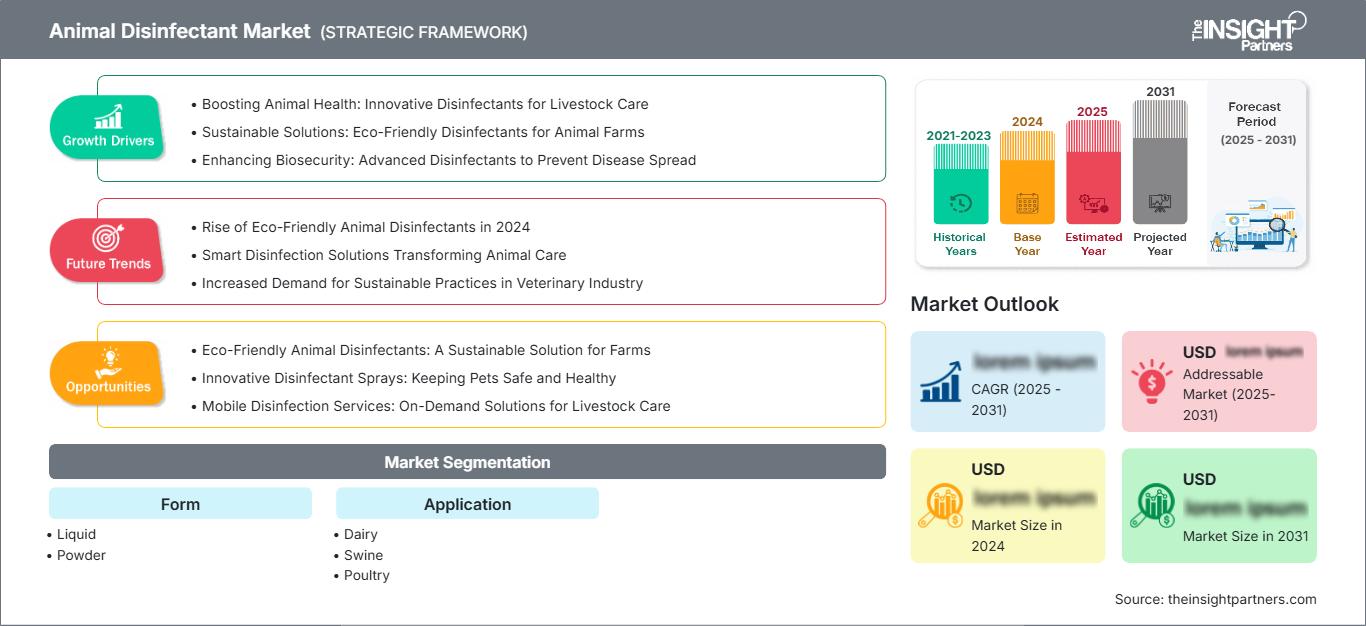
Animal Disinfectant Market: Strategic Insights
Regional Insights
North America Animal Disinfectant Market
North America is estimated to hold a 24–28% animal disinfectant market share in 2025 and expand at a 6.9–7.3% CAGR through 2034. The United States is the predominant regional consumer since poultry, dairy, and swine facilities require systematic cleaning and disinfection programs. The requirements of disease preparedness, traceability and biosecurity on the farm further ensure regular consumption.
While Canada provides dairy, poultry and livestock production contribution, Mexico contributes to the rising demand from its growing commercial poultry and swine facilities. There is a trend of producers adopting concentrated products that are suitable for foamers, automated sprayers, and vehicle disinfection. There are other considerations in regional procurement that include pathogens' coverage, contact time, organic loading, worker safety, and registration status of products.
U.S. Animal Disinfectant Market
The U.S. represents approximately 78–82% of North American demand in 2025 and is projected to grow at a 7.0–7.4% CAGR through 2034. Poultry and dairy production are important customers, while swine producers need a constant state of sanitation in the barns, vehicles and processing facilities. Biosecurity preparedness is an important criterion when purchasing products.
For commercial producers, disinfection is becoming more and more integrated into comprehensive animal health programs that include disease monitoring, vaccines, cleaning procedures and facility management. Companies such as Zoetis Inc., NEOGEN CORPORATION, GEA Group Aktiengesellschaft and Kemin Industries, Inc. can satisfy those needs using animal health, equipment or hygiene competencies.
Europe Animal Disinfectant Market
Europe is estimated to represent a 19–23% animal disinfectant market in 2025 and is projected to grow at a 6.5–6.9% CAGR through 2034. Germany is an important market due to substantial livestock farming, regulatory control, and hygienic conditions on farms. The other major contributors to the regional consumption are the UK, France, Italy, and Spain.
The UK is able to maintain the demand thanks to the well-established requirements for livestock biosecurity and disease control. Germany prioritizes hygienic conditions in poultry, swine, and dairy farming. France and Italy enjoy the advantages of well-developed networks of animal production, whereas Spain is an important producer of poultry and swine that require regular cleaning.
Asia Pacific Animal Disinfectant Market
APAC is estimated to account for a 31–35% share in 2025 and is expected to grow at an 8.1–8.6% CAGR through 2034. China remains the leading market, supported by extensive poultry and swine production. India, Japan, South Korea, and Australia provide additional demand through commercial livestock modernization and stronger biosecurity practices.
Expansion of organized farms, disease-control initiatives, and increasing producer awareness are supporting adoption. China and India offer significant volume opportunities, while Japan, South Korea, and Australia present demand for higher-value formulations with strong efficacy and regulatory compliance. Farm modernization and investments in controlled production environments should encourage greater use of concentrated liquid systems and specialized powder formulations.
Middle East and Africa Animal Disinfectant Market
Middle East and Africa is expected to expand at a 7.0–7.5% CAGR through 2034. Saudi Arabia leads regional demand, supported by commercial poultry and dairy production, while the UAE emphasizes controlled livestock production and food-security infrastructure. South Africa remains an important market because of its established poultry, dairy, and livestock sectors.
The region's climate, water constraints, and reliance on intensive production systems create demand for formulations that remain effective under challenging operating conditions. Investment in poultry facilities, dairy infrastructure, and disease-prevention programs should support consumption. Rest of Middle East and Africa presents longer-term opportunities as organized farming expands and producers increasingly adopt formal biosecurity protocols.
Segmentation Analysis
Form
Liquid products represent the leading form and are projected to grow at a 7.2–7.6% CAGR during 2026–2034. Their established use in spraying, foaming, fogging, surface cleaning, and equipment sanitation provides application flexibility. Concentrates also reduce transportation volumes and allow farms to adjust dilution according to contamination levels and facility requirements.
- Liquid: Liquid formulations dominate routine farm sanitation because they can be metered, diluted, sprayed, foamed, or incorporated into automated cleaning systems. Their flexibility supports use across barns, equipment, vehicles, hatcheries, and dairy facilities.
- Powder: Powder products provide storage and transport advantages because of their lower water content. They are particularly relevant where producers require stable concentrates, easy handling, or formulations designed for rapid preparation before farm application.
Application
Application demand is projected to expand at an 8.0–8.5% CAGR during 2026–2034, with poultry representing the fastest-growing application. Disease-control requirements, production density, frequent flock turnover, and strict sanitation routines encourage recurring use. Dairy remains strategically important because hygiene directly affects milk quality, udder health, and production efficiency.
- Dairy: Dairy operations require recurring sanitation of milking equipment, housing, floors, feeding areas, and animal-contact surfaces. Demand increasingly favors integrated hygiene programs that connect disinfectants with automated milking and cleaning systems.
- Swine: Swine production requires structured cleaning between production cycles and attention to barns, vehicles, equipment, and personnel movement. African swine fever preparedness and other infectious-disease concerns support consistent adoption of broad-spectrum products.
- Poultry: Poultry has high sanitation intensity because large flocks operate in concentrated environments with frequent movement of birds, personnel, equipment, and vehicles. Hatchery and housing hygiene remain important purchasing considerations.
- Equine: Equine facilities require disinfection of stalls, equipment, grooming areas, transport units, and veterinary spaces. Demand is more fragmented than poultry or dairy but benefits from greater awareness of pathogen transmission and animal-care hygiene.
Opportunity Snapshot
| Application | Revenue Contribution | Trend Tag | Adoption Stage |
|---|---|---|---|
| Dairy | High | Udder Hygiene | Mature |
| Swine | High | Barn Biosecurity | Mature |
| Poultry | High | Disease Control | Scaling |
| Equine | Medium | Stable Hygiene | Scaling |
Animal Disinfectant Market Growth Drivers and Impact Analysis
Increasing Disease Outbreaks and Growing Focus on Livestock Biosecurity
Disease outbreaks create an immediate economic incentive for producers to strengthen preventive hygiene programs. Avian influenza, African swine fever, foot-and-mouth disease, and other pathogens may lead to disruption in the production process, limit animal movement, cause higher mortality rates, and disrupt trade. For this reason, producers nowadays see cleaning and disinfection as an essential risk management practice instead of a sanitation cost. It results in a continuous purchase of such products for barns, hatcheries, transportation means, machinery, and entry points. This effect is especially significant when speaking about intensive poultry and pig farms due to the fast propagation of pathogens in such environments. Producers that show broad-spectrum efficiency, effectiveness under the organic load, and the ability to use their products practically have the opportunity to satisfy high-value demand.
Expansion of Intensive Livestock Production and Farm Sanitation Infrastructure
The development of intensive livestock farming leads to increased demand and difficulty in sanitizing. The larger farms have a higher density of animals, machinery, laborers and vehicles in a controlled production environment, and thus there is more possibility for pathogens to travel. Today’s farms use a range of facilities including a designated clean area, controlled access system, sanitization of vehicles, automatic spray and foam facilities, and documented sanitization procedures. These changes will lead to an increased need for industrial disinfectants, as the producers will need disinfectants that can be used with automated application systems and dosing. In addition to that, milk producers are increasingly adopting automation of the milking and cleaning processes. The manufacturers may develop products that are able to function in automatic and manual settings equally well, without causing corrosion and residues.
Strengthening Regulatory Requirements for Animal Hygiene and Disinfectant Efficacy
The increasing stringency of regulation has begun to affect purchasing decisions, through heightened concern for claims of efficacy, authorized uses, occupational exposure, persistence in the environment, and chemical handling. The growing demand for products that demonstrate performance and proper application, since either incorrect dilution or use may decrease efficacy and pose operational dangers, has placed an increasing burden on the producer. Biocidal requirements in Europe have been especially important in driving the emphasis on authorization and proof, although North American producers function in well-defined registration systems. There are parallel regulatory trends developing in the newer markets for livestock, where governments are building up their disease control systems. This will be to the advantage of those producers that have scientific data, formulation know-how, registration expertise, and distribution capability. It could also create barriers for small producers who do not have registration capacity.
Animal Disinfectant Market Future Trends
Shift Toward Sustainable and Lower-Residue Disinfectant Formulations
Sustainability considerations are expected to influence formulation development more strongly through 2034. Producers, regulators, and food companies are increasingly attentive to chemical residues, aquatic toxicity, packaging waste, and occupational exposure. Manufacturers are therefore likely to prioritize biodegradable actives, lower-use concentrations, reduced packaging, and formulations that minimize rinsing requirements without compromising pathogen control. Oxidizing chemistries and optimized blends may gain attention where they provide effective microbial control while generating fewer persistent residues. Product developers will also focus on maintaining performance under hard water and organic loads, reducing the need for repeated applications. Sustainability claims will increasingly require documented evidence rather than broad environmental positioning. Suppliers able to combine validated efficacy, lower environmental burden, and practical farm economics should gain an advantage as procurement teams incorporate environmental criteria into supplier evaluations.
Integration of Digital Technologies with Automated Farm Sanitation Systems
Digitalization will increasingly connect sanitation activities with farm-management platforms, equipment, and compliance records. Automated milking systems, robotic cleaning equipment, dosing units, and connected sensors can help producers standardize chemical concentration, application frequency, water use, and cleaning cycles. Data generated by these systems may support traceability and identify deviations from established hygiene protocols. Manufacturers can respond by developing formulations optimized for automated dosing and equipment compatibility, while equipment suppliers can strengthen their offerings through integrated hygiene programs. Digital records may also become valuable during audits, disease investigations, and quality assurance processes. Over time, the competitive proposition will move beyond chemical efficacy toward measurable sanitation performance. Companies capable of linking products with application technology, monitoring tools, and technical support can create stronger customer retention and differentiate themselves from commodity disinfectant suppliers.
Animal Disinfectant Market Opportunities
Expansion of Animal Disinfectant Adoption Across Emerging Livestock Economies
Emerging livestock economies offer attractive opportunities because commercial poultry, dairy, and swine production is expanding while farm-level biosecurity practices remain uneven. India, Southeast Asia, China, Latin America, and selected Middle Eastern markets provide opportunities for suppliers that can combine affordable formulations with technical support and localized distribution. Rather than relying solely on premium imported products, manufacturers can consider regional production, contract manufacturing, localized packaging, and distributor partnerships to improve cost competitiveness. Training programs for farm managers and veterinary professionals can further increase adoption by demonstrating correct cleaning sequences, dilution, contact times, and application methods. Suppliers should prioritize poultry and swine because these operations have high sanitation frequency and disease-control sensitivity. Strategic expansion should therefore combine product registration, local technical teams, distribution partnerships, and species-specific protocols rather than relying solely on broader geographic availability.
Development of Premium Disinfectants for Automated and High-Value Livestock Facilities
High-value dairy, automated poultry, and technologically advanced swine facilities provide opportunities for premium disinfectant formulations that deliver measurable operational benefits. Product developers can target shorter contact times, reduced foaming requirements, improved material compatibility, lower water consumption, and optimized performance in automated cleaning systems. Dairy applications offer particular potential for formulations integrated with robotic milking and udder-health routines, while poultry producers can benefit from products designed for hatcheries, transport systems, and rapid facility turnover. Manufacturers can also differentiate through technical validation under hard water, low temperatures, organic loads, and challenging surface conditions. Such products can command stronger commercial positioning when they reduce labor, downtime, chemical consumption, or equipment maintenance. Investment should focus on field validation, application engineering, and compatibility testing because purchasing decisions increasingly depend on total sanitation cost rather than product price alone.
Recent Developments
- March 27, 2026: Roam Technology launched Virox, a DEFRA-approved broad-spectrum surface disinfectant for livestock farms. The potassium peroxymonosulphate-based formulation is positioned for control of bacteria, viruses, yeasts, and fungi, with approvals covering important livestock disease-control applications including foot-and-mouth disease, swine vesicular disease, and avian influenza.
- October 28, 2025: Virox Technologies announced a partnership with Viticus Group making Rescue Disinfectants the organization's official disinfectant. The agreement covers Viticus Group's animal-health education facilities and supports standardized infection-prevention practices, demonstrating how disinfectant suppliers are expanding through institutional partnerships and veterinary education channels.
Frequently Asked Questions

- Comprehensive Market Sizing and Forecast Analysis
- Detailed Segmentation Analysis
- In-Depth Market Dynamics Assessment
- Regional and Country-Level Insights
- Competitive Landscape and Company Benchmarking
- Strategic Business Intelligence
Recent Reports
Testimonials

The Insight Partners provided valuable market intelligence that supported our global go-to-market strategy. Their team was professional, responsive, and attentive to our feedback, providing thoughtful analysis and helpful methodological clarifications throughout the project.
Junmo Kim Chief Financial Officer (CFO), Enertech Co., Ltd.
The Insight Partners' SCADA System Market report is comprehensive, with valuable insights on current trends and future forecasts. The team was highly professional, responsive, and supportive throughout. We are very satisfied and highly recommend their services.
RAN KEDEM Partner, Reali Technologies LTDs
I requested a report on a very specific software market and the team produced the report in a few days. The information was very relevant and well presented. I then requested some changes and additions to the report. The team was again very responsive and I got the final report in less than a week.
JEAN-HERVE JENN Chairman, Future Analytica
We worked with The Insight Partners for an important market study and forecast. They gave us clear insights into opportunities and risks, which helped shape our plans. Their research was easy to use and based on solid data. It helped us make smart, confident decisions. We highly recommend them.
PIYUSH NAGPAL Sr. Vice President, High Beam Global
The Insight Partners delivered insightful, well-structured market research with strong domain expertise. Their team was professional and responsive throughout. The user-friendly website made accessing industry reports seamless. We highly recommend them for reliable, high-quality research services
YUKIHIKO ADACHI CEO, Deep Blue, LLC.
This is the first time I have purchased a market report from The Insight Partners.While I was unsure at first, I visited their web site and felt more comfortable to take the risk and purchase a market report.I am completely satisfied with the quality of the report and customer service. I had several questions and comments with the initial report, but after a couple of dialogs over email with their analyst I believe I have a report that I can use as input to our strategic planning process.Thank you so much for taking the extra time and making this a positive experience.I will definitely recommend your service to others and you will be my first call when we need further market data.
JOHN SUZUKI President and Chief Executive Officer, Board Director, BK Technologies
I wish to appreciate your support and the professionalism you displayed in the course of attending to my request for information regarding to infectious disease IVD market in Nigeria. I appreciate your patience, your guidance, and the fact that you were willing to offer a discount, which eventually made it possible for us to close a deal. I look forward to engaging The Insight Partners in the future, all thanks to the impression you have created in me as a result of this first encounter.
DR CHIJIOKE ONYIA MANAGING DIRECTOR, PineCrest Healthcare Ltd.Reason to Buy
- Informed Decision-Making
- Understanding Market Dynamics
- Competitive Analysis
- Identifying Emerging Markets
- Customer Insights
- Market Forecasts
- Risk Mitigation
- Boosting Operational Efficiency
- Strategic Planning
- Investment Justification
- Tracking Industry Innovations
- Aligning with Regulatory Trends





 Get Free Sample for