
Animal Feed Micronutrients Market Demand, Share & Growth by 2034
Coverage: By Type (Boron, Iron, Zinc, Manganese, Copper, Others.); Livestock (Ruminant, Poultry, Swine, Others), and Geography (North America, Europe, Asia Pacific, and South and Central America)
- Status : Data Released
- Report Code : TIPRE00016576
- Category : Food and Beverages
- No. of Pages : 150
- Available Report Formats :


- Last update date : August 25, 2026


2025 Market Size
US$ 1.98 Bn
Base year value
2034 Forecast
US$ 2.94 Bn
Projected by 2034
CAGR 2026-2034
4.49 %
Growth rate
Addressable Market
US$ 22.34 Bn
(2026-2034)
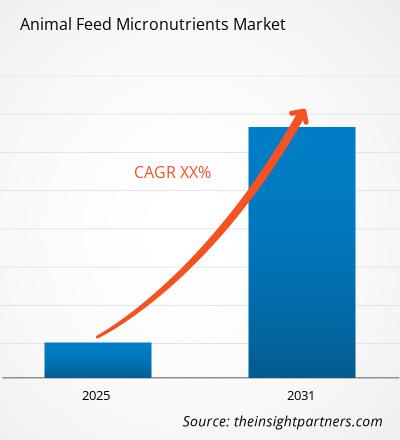
The animal feed micronutrients market was valued at US$ 1.98 Billion in 2025 and is projected to reach US$ 2.94 Billion by 2034, expanding at a CAGR of 4.49% during 2026–2034. Growth reflects increasing focus on animal productivity, nutrient efficiency, feed conversion optimization, and trace mineral supplementation across commercial livestock systems. Feed formulators are strengthening micronutrient inclusion rates to support animal health, immunity, reproductive performance, and sustainable livestock production.
Across North America, the animal feed micronutrients market size benefits from advanced feed manufacturing, strong animal protein demand, and regulatory emphasis on feed quality. The regional market is expected to expand at a CAGR of 3.8–4.4% through 2034. Rising adoption of precision nutrition programs and growing investment in performance-enhancing trace mineral nutrition across poultry and dairy operations continue to support market expansion.
Animal Feed Micronutrients Market Assessment and Insights
- North America: Share in 2025 of 32–36% and growing at a CAGR of 3.8–4.4% during 2026–2034, supported by advanced feed formulation technologies, large commercial livestock operations, and strong regulatory oversight.
- US: Accounted for 72–76% of North America in 2025 and is projected to grow at a CAGR of 3.9–4.5% during 2026–2034, aided by large-scale poultry, swine, and dairy feed consumption.
- Europe: Represented 24–28% share in 2025 and is anticipated to record a CAGR of 3.7–4.3% during 2026–2034. Germany, France, the UK, and Spain remain key consuming countries.
- Asia Pacific: Held 30–34% share in 2025 and is forecast to expand at a CAGR of 5.3–5.9% during 2026–2034, led by China, India, Japan, and Australia.
- Largest Segment: Zinc held a 28–32% market share in 2025 and is expected to grow at a CAGR of 4.4–5.0% during 2026–2034 due to its broad role in immunity and growth performance.
- High Growth Segment: Poultry accounted for 38–42% market share in 2025 and is projected to register a CAGR of 5.1–5.7% during 2026–2034, owing to intensive production systems.
- Key companies analyzed in detail: BASF SE, Novus International, Inc., Purina Animal Nutrition LLC, AG Solutions, Beachport Corporation Pty Ltd, Zinpro Corporation, Bluestar Adisseo Company, Prathista Industries Ltd, Dallas Keith Limited, Archer Daniels Midland Company.
Source: The Insight Partners' analysis based on proprietary research, government publications, company annual reports, investor presentations, industry databases, and expert interviews.
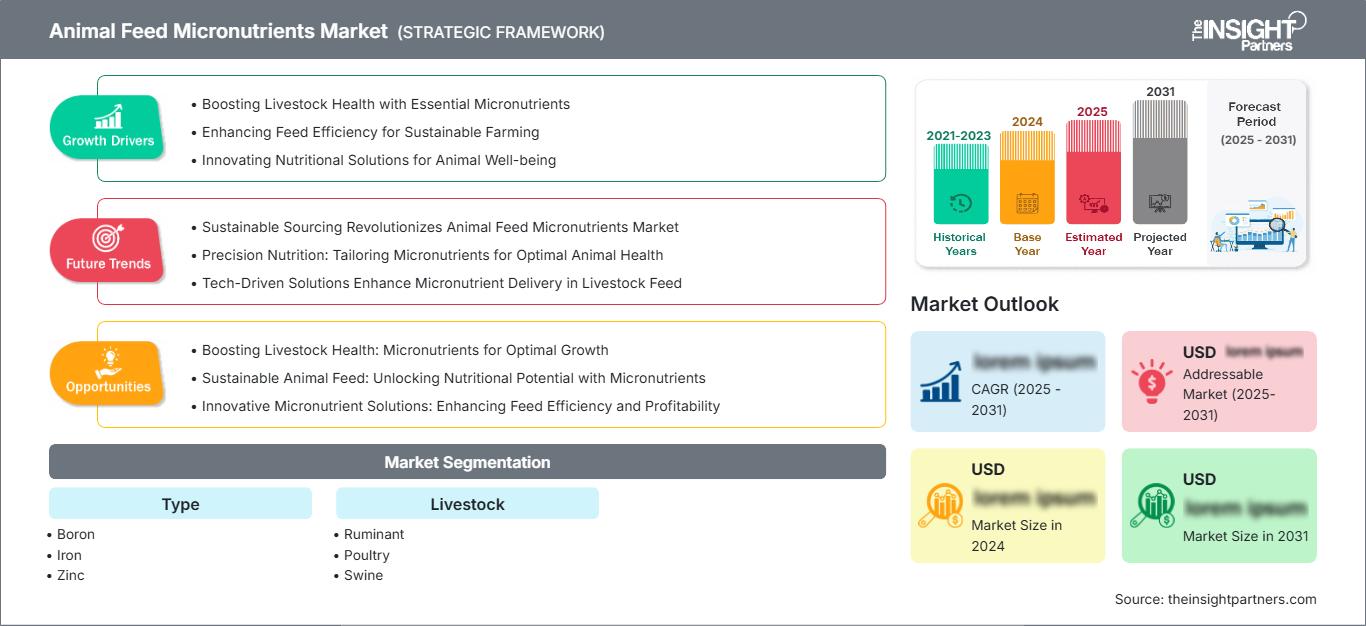
Changing trends in livestock nutrition systems have evolved the feed formulation process into something more focused and precise, such as optimizing the use of microelements in nutrition systems. Poultry, swine, and ruminant producers now heavily depend on zinc, copper, manganese, boron, and iron formulations in order to enhance animal performance without causing excess nutrient loss. With changes in chelated minerals, organic trace elements, and precision feeds, this has become easier to achieve, thus making this more cost-effective in compliance with sustainability goals.
In the future, there will be higher levels of investments in emerging livestock-producing countries, especially in Asia and some parts of the Middle East. Feed companies are establishing local manufacturing plants in order to ensure security of supply and minimize any possible logistics risks. Regulatory support for animal welfare, high demand for quality animal proteins, and the adoption of data-driven feeding systems are expected to improve the market fundamentals.
Animal Feed Micronutrients Market Report Scope
| Report Attribute | Details |
|---|---|
| Market size in 2025 | US$ 1.98 Billion |
| Market Size by 2034 | US$ 2.94 Billion |
| Global CAGR (2026 - 2034) | 4.49% |
| Historical Data | 2021-2024 |
| Forecast period | 2026-2034 |
Animal Feed Micronutrients Market Analysis
Growth in animal protein consumption remains a central catalyst for animal feed micronutrients market growth. Rising poultry, dairy, and meat production requires nutritionally balanced feed capable of enhancing feed conversion ratios and supporting disease resistance. Micronutrients play a critical role in enzymatic functions, reproductive efficiency, bone development, and immune performance. As commercial livestock production becomes increasingly intensive, demand for scientifically formulated trace mineral blends continues to expand.
The supply chains include the extraction of minerals, processing of chemicals, premix production, feed formulation, and animal feeding. There is an increasing trend among producers to look for high bioavailability materials to optimize nutrient usage and minimize losses. The integration of digital feed management systems has spurred customization of micronutrient mixes according to species, stage of production, and the environment.
Based on the market analysis, the industry is moderately concentrated, where international nutrition companies compete via innovation and technology. These firms include BASF SE, Novus International, Inc., Bluestar Adisseo Company, Archer Daniels Midland Company, and Zinpro Corporation, which maintain a competitive market position based on diverse nutrition mixes and distribution networks. There are regional players who have increased competition as well.
The emphasis of capital investments is shifting towards specialized mineral technologies, precision nutrition products, and sustainable feed additives. Collaboration between feed suppliers and livestock farmers is providing support for product customization and performance validation. Also, there have been investments in research activities involving studies on interactions between micronutrients, their bioavailability, and environmentally friendly qualities.
● REPORT CUSTOMIZATION
Tailor This Report To Align With Your Specific Business Requirements
This report can be customized to align precisely with your business objectives, scope, and target markets. Customization options include tailored segmentation, geography, competitive analysis, and strategic insights to support informed decision-making.
Customize This Report →WHAT YOU CAN ADJUST
- ● Segmentations
- ● Geography
- ● Competitive Analysis
- ● Language Preferences
Animal Feed Micronutrients Market: Strategic Insights
Regional Insights
North America animal feed micronutrients market
North America accounted for 32–36% animal feed micronutrients market share in 2025 and is expected to expand at a CAGR of 3.8–4.4% through 2034. There is high industrialization of livestock production facilities in the area, modernized feed manufacturing facilities, and extensive nutrition programs. There is extensive utilization of fortified feeds in the poultry, dairy, and beef industries to ensure constant micronutrient consumption.
The importance of trace mineral supplementation in terms of animal health and efficiency of production keeps driving the need for their use in the region. The feed manufacturers in the region are making efforts to ensure that their products contain organic and chelated micronutrients to increase nutrient uptake and minimize waste.
U.S. animal feed micronutrients Market
The United States represented 72–76% of North America in 2025 and is projected to grow at a CAGR of 3.9–4.5% through 2034. Large poultry and dairy industries provide a substantial customer base for feed premixes and micronutrient formulations. Commercial production models increasingly prioritize animal health, productivity, and feed efficiency.
Major industry participants, including Purina Animal Nutrition LLC, Archer Daniels Midland Company, BASF SE, and Novus International, Inc., maintain a strong operational presence across the country. Growing adoption of precision feeding programs and data-supported nutrition strategies is encouraging targeted use of zinc, copper, manganese, iron, and boron products. Continued investment in feed innovation supports long-term demand stability.
Europe animal feed micronutrients Market
Europe held 24–28% of the global market in 2025 and is forecast to grow at a CAGR of 3.7–4.3% during the study period. The area has developed an established feed sector with stringent quality measures and high levels of animal care considerations. The country of Germany holds the top position due to extensive livestock production and the adoption of feed technologies.
In the UK, efficient livestock nutrition and trace mineral balancing continue to receive attention in the poultry and dairy sectors. Germany has developed a high-quality feed manufacturing infrastructure, alongside extensive usage of specialty mineral premixes. Such factors have helped in maintaining market demand, along with bioavailable micronutrient solutions.
France, Italy, and Spain together generate a notable level of demand from the poultry, swine, and ruminant production sectors. Advanced micronutrient solutions are being utilized by producers in order to improve their performance while satisfying the environmental considerations regarding nutrient emissions.
APAC animal feed micronutrients Market
Asia Pacific represented 30–34% of global demand in 2025 and is anticipated to record the fastest regional growth at 5.3–5.9% CAGR. China remains the largest market, supported by large feed production volumes and the modernization of livestock farming practices.
India, Japan, South Korea, and Australia are witnessing increased use of nutrient-balanced feed formulations. Government initiatives supporting livestock productivity, rising meat consumption, and expansion of commercial farming operations encourage greater micronutrient adoption. Regional feed manufacturers continue investing in advanced premix production capabilities.
Middle East & Africa animal feed micronutrients Market
The Middle East and Africa market is expected to grow at a CAGR of 4.6–5.2% through 2034. Saudi Arabia and the UAE continue investing in livestock efficiency and food security projects, stimulating demand for premium animal nutrition products.
South Africa remains a key regional consumer owing to its established feed manufacturing infrastructure. Expanding poultry production, improving agricultural investments, and modernizing livestock management practices across the broader region are supporting the gradual adoption of micronutrient-enriched feed solutions.
Segmentation Analysis
Type
The Type segment is projected to expand at a CAGR of 4.3–4.9% during 2026–2034. The market scope within this segment continues to broaden as livestock producers seek targeted mineral supplementation to enhance immunity, growth, fertility, and feed efficiency. Product innovation increasingly focuses on improving absorption rates and reducing environmental discharge through advanced mineral delivery systems.
- Boron: Supports metabolic activity and skeletal development in livestock. Demand is increasing in specialized feed formulations where producers emphasize reproductive performance and nutrient utilization efficiency.
- Iron: Widely used to support oxygen transport and healthy growth, particularly in young animals. Consistent inclusion across commercial feed programs maintains stable demand patterns.
- Zinc: The leading micronutrient category due to broad functionality in immunity, skin integrity, enzyme activity, and growth performance. Advanced zinc formulations are gaining strong industry preference.
- Manganese: Important for bone formation, reproductive performance, and metabolic regulation. Demand remains closely associated with poultry and breeder nutrition programs.
- Copper: Utilized for immune function and growth optimization. Adoption is increasing where producers seek balanced performance improvements while maintaining regulatory compliance.
Livestock
The Livestock segment is expected to grow at a CAGR of 4.7–5.3% during 2026–2034. Demand varies according to production intensity, species-specific nutrition requirements, and commercial feed penetration rates. Rising consumption of animal protein and broader adoption of scientifically formulated diets continue to support long-term segment expansion.
- Ruminant: Accounts for significant demand, particularly in dairy and beef production. Producers increasingly utilize micronutrients to improve reproductive efficiency, milk productivity, and herd health outcomes.
- Poultry: Represents the most rapidly expanding livestock application due to intensive production systems, short production cycles, and a strong focus on feed conversion performance.
- Swine: Maintains steady demand as producers seek enhanced growth, immune response, and feed efficiency through balanced micronutrient supplementation programs.
Opportunity Snapshot
| Segment Name | Revenue Contribution | Trend Tag | Adoption Stage |
|---|---|---|---|
| Ruminant | High | Dairy Nutrition | Mature |
| Poultry | High | Precision Feeding | Scaling |
| Swine | Medium | Gut Health | Scaling |
Animal Feed Micronutrients Market Growth Drivers and Impact Analysis
Rising Global Demand for Animal Protein
Increasing demand for meat, eggs, and dairy products is driving more intense production within livestock industries. The producers need optimally formulated feeds to make their operations efficient, healthy, and consistent. Micronutrients play a key role in metabolism and productivity, which makes it possible to use feed raw materials efficiently. Middle-class population growth in Asia and other emerging markets creates more demand for animal proteins, putting even more pressure on producers to increase their efficiency. Micronutrient demand grows in parallel with the growth of livestock businesses.
Expansion of Precision Livestock Nutrition Programs
In modern times, feed manufacturers have started using digital monitoring and nutritional models specific to each species of animal to get the most out of them. Precision nutrition helps to add the right minerals based on age and the production stages of the animals. These methods increase efficiency and lower feed costs and have less of an impact on the environment. With more feed management being driven by data, the use of more complex types of organic and chelated minerals with better bioavailability is becoming common practice.
Regulatory Emphasis on Sustainable Production
The growing number of environmental rules concerning nutrient management is another factor impacting feed formulation choices. It is recommended by governments and industry groups that producers use methods that increase nutrient utilization and reduce the release of minerals into the environment. Micronutrient innovations make it possible for farmers to satisfy these conditions without negatively affecting animals. This makes manufacturers interested in developing better-absorbing and more sustainable micronutrients. These developments are most evident in areas with well-developed livestock sectors and high environmental requirements.
Animal Feed Micronutrients Market Future Trends
Growth of Organic and Chelated Mineral Solutions
The most significant among emerging animal feed micronutrients market trends is the transition toward organic and chelated minerals. These products deliver enhanced bioavailability compared with conventional inorganic alternatives and can improve nutrient retention within animals. Future adoption is expected to expand as producers seek measurable productivity gains alongside environmental performance improvements. Product developers are likely to focus on combining trace minerals with advanced carrier systems that optimize absorption. As research evidence accumulates, premium formulations may secure a larger proportion of feed budgets, particularly in commercial poultry and dairy operations seeking higher production efficiency.
Integration of Data-Driven Feed Formulation Platforms
Advanced analytics platforms are increasingly influencing livestock nutrition decisions. Future feed programs are expected to combine farm-level performance data, health indicators, environmental conditions, and nutritional requirements into adaptive formulation models. Such systems can identify micronutrient deficiencies earlier and support more precise supplementation strategies. Suppliers capable of integrating technical services with micronutrient products are likely to gain differentiation. Continued development of artificial intelligence tools and connected farm technologies is expected to strengthen the adoption of customized nutrient programs, improving productivity while optimizing resource utilization across livestock systems.
Animal Feed Micronutrients Market Opportunities
Expansion Across Emerging Livestock Economies
The strongest investment opportunity lies in countries experiencing rapid livestock commercialization and feed industry modernization. Rising incomes and changing dietary preferences are increasing demand for poultry, dairy, and meat products across developing economies. Local feed producers frequently seek partnerships with nutrition specialists to improve product quality and productivity outcomes. Animal feed micronutrients market Forecasts indicate substantial long-term potential in Asian and selected Middle Eastern countries, where industrial farming adoption remains on an upward trajectory. Companies that establish regional manufacturing, technical support centers, and distributor networks can strengthen market access while minimizing logistics costs and supply disruptions.
Development of Sustainable Premium Nutrition Portfolios
Growing interest in efficient animal production creates opportunities for differentiated micronutrient offerings. Producers increasingly value products capable of improving performance while reducing environmental impacts associated with nutrient losses. This market environment supports investment in specialty trace minerals, organic formulations, and customized premix solutions. Companies that demonstrate clear productivity improvements through field validation programs can achieve stronger customer retention and premium pricing. Collaboration with feed mills, research institutions, and livestock producers provides additional opportunities to develop application-specific products that address evolving nutritional and regulatory requirements across different production systems.
Frequently Asked Questions

- Comprehensive Market Sizing and Forecast Analysis
- Detailed Segmentation Analysis
- In-Depth Market Dynamics Assessment
- Regional and Country-Level Insights
- Competitive Landscape and Company Benchmarking
- Strategic Business Intelligence
Recent Reports
Testimonials

The Insight Partners provided valuable market intelligence that supported our global go-to-market strategy. Their team was professional, responsive, and attentive to our feedback, providing thoughtful analysis and helpful methodological clarifications throughout the project.
Junmo Kim Chief Financial Officer (CFO), Enertech Co., Ltd.
The Insight Partners' SCADA System Market report is comprehensive, with valuable insights on current trends and future forecasts. The team was highly professional, responsive, and supportive throughout. We are very satisfied and highly recommend their services.
RAN KEDEM Partner, Reali Technologies LTDs
I requested a report on a very specific software market and the team produced the report in a few days. The information was very relevant and well presented. I then requested some changes and additions to the report. The team was again very responsive and I got the final report in less than a week.
JEAN-HERVE JENN Chairman, Future Analytica
We worked with The Insight Partners for an important market study and forecast. They gave us clear insights into opportunities and risks, which helped shape our plans. Their research was easy to use and based on solid data. It helped us make smart, confident decisions. We highly recommend them.
PIYUSH NAGPAL Sr. Vice President, High Beam Global
The Insight Partners delivered insightful, well-structured market research with strong domain expertise. Their team was professional and responsive throughout. The user-friendly website made accessing industry reports seamless. We highly recommend them for reliable, high-quality research services
YUKIHIKO ADACHI CEO, Deep Blue, LLC.
This is the first time I have purchased a market report from The Insight Partners.While I was unsure at first, I visited their web site and felt more comfortable to take the risk and purchase a market report.I am completely satisfied with the quality of the report and customer service. I had several questions and comments with the initial report, but after a couple of dialogs over email with their analyst I believe I have a report that I can use as input to our strategic planning process.Thank you so much for taking the extra time and making this a positive experience.I will definitely recommend your service to others and you will be my first call when we need further market data.
JOHN SUZUKI President and Chief Executive Officer, Board Director, BK Technologies
I wish to appreciate your support and the professionalism you displayed in the course of attending to my request for information regarding to infectious disease IVD market in Nigeria. I appreciate your patience, your guidance, and the fact that you were willing to offer a discount, which eventually made it possible for us to close a deal. I look forward to engaging The Insight Partners in the future, all thanks to the impression you have created in me as a result of this first encounter.
DR CHIJIOKE ONYIA MANAGING DIRECTOR, PineCrest Healthcare Ltd.Reason to Buy
- Informed Decision-Making
- Understanding Market Dynamics
- Competitive Analysis
- Identifying Emerging Markets
- Customer Insights
- Market Forecasts
- Risk Mitigation
- Boosting Operational Efficiency
- Strategic Planning
- Investment Justification
- Tracking Industry Innovations
- Aligning with Regulatory Trends





 Get Free Sample for