
Anorexiants Market Share, Size & Demand by 2034
Coverage: By Drug Classification (Catecholamines Anorexiants, Serotonin Anorexiants); Route of Administration (Oral, Subcutaneous); Distribution Channel (Institutional sales, Hospitals and Clinics, Retail sales, Online pharmacies, Mail Order Pharmacies) , and Geography (North America, Europe, Asia Pacific, and South and Central America)
- Status : Data Released
- Report Code : TIPRE00008552
- Category : Life Sciences
- No. of Pages : 150
- Available Report Formats :


- Last update date : August 04, 2026


2025 Market Size
US$ 1,263.07 Mn
Base year value
2034 Forecast
US$ 1,911.25 Mn
Projected by 2034
CAGR 2026-2034
4.71 %
Growth rate
Addressable Market
US$ 14,410.29 Mn
(2026-2034)
The anorexiants market size for is worth US$ 1,263.07 Million in 2025, and it is expected to rise to US$ 1,911.25 Million by 2034, growing at a CAGR of 4.71% in 2026-2034. This is because the anorexiants is on an upturn since prescription appetite suppressors are still relevant in the obesity market especially with oral generics, prescribed pharmacotherapy, and regulated metabolic pathways in place.
North America is currently the most structured commercial base, and the anorexiants market size has been enabled through high obesity diagnosis rate, well-established prescription channels, and better payer scrutiny on weight management drugs. North America is estimated to have a CAGR range of 4.40-5.00% between 2026 and 2034.
Anorexiants Market Assessment and Insights
- North America is estimated to hold 41–44% share in 2025, growing at a CAGR range of 4.40–5.00% during 2026–2034, supported by obesity care programs, prescription access, and strong pharmacy networks.
- US accounts for 84–88% of North America in 2025 and is projected to grow at a CAGR range of 4.50–5.10% during 2026–2034, led by obesity clinics and retail dispensing.
- Europe holds 23–26% share in 2025, growing at a CAGR range of 3.90–4.50% during 2026–2034, with Germany, the UK, France, Italy, and Spain shaping regulated access.
- Asia Pacific represents 19–22% share in 2025 and is expected to grow at a CAGR range of 5.20–6.00% during 2026–2034, led by China, Japan, India, Australia, and South Korea.
- Largest Segment Oral holds 86–90% market share in 2025, growing at a CAGR range of 4.20–4.80% during 2026–2034, supported by generic affordability and physician familiarity.
- High Growth Segment Subcutaneous holds 10–14% market share in 2025, growing at a CAGR range of 6.20–7.20% during 2026–2034, driven by incretin-led weight-management innovation.
- Key companies analyzed in detail: Akrimax Pharmaceuticals LLC, Teva Pharmaceutical Industries Ltd., Janssen Pharmaceuticals, Inc., F. Hoffmann-La Roche Ltd, Arena Pharmaceuticals GmbH, Novo Nordisk A/S, Epic Pharma LLC, Patheon Pharmaceuticals Inc., Catalent Inc., Recordati Rare Diseases Inc., MOVA Pharmaceutical Corporation.
Source: The Insight Partners' analysis based on proprietary research, government publications, company annual reports, investor presentations, industry databases, and expert interviews.
Appetite-suppressing pharmacotherapy treatments have shifted from single-focus stimulant prescription strategies to more holistic metabolic treatment programs involving screening, risk, and monitoring. Manufacturing trends are shifting as well because of the differing compliance regimes needed for controlled substances, generic pills, injections, and outsourcing dosage forms. The anorexiants market environment continues to be affected by the conservatism of prescribers and patients alike, with an emphasis on affordability in the face of safety controls.
The future drivers of demand will be related to trends in obesity diagnosis, regulation of online pharmacies, and the physician’s preference for monitored medications. The investors’ focus is on reformulation of oral dosage forms, injectable metabolic therapies, manufacturing services, and pharmacy solutions. The positive regulatory winds blowing around obesity as a chronic disease will drive the demand for therapy, but safety issues will confine the market speculation.
Anorexiants Market Report Scope
| Report Attribute | Details |
|---|---|
| Market size in 2025 | US$ 1,263.07 Million |
| Market Size by 2034 | US$ 1,911.25 Million |
| Global CAGR (2026 - 2034) | 4.71% |
| Historical Data | 2021-2024 |
| Forecast period | 2026-2034 |
Anorexiants Market Analysis
Growth in the market for anorexiants will come from increasing diagnosis of obesity, more physician involvement in pharmacologic treatment of obesity, and demand for cheaper solutions compared to expensive injectables. Public health data indicates that obesity is a chronic condition that affects populations on a huge scale across the world, resulting in the constant need for clinically supervised treatment.
Supply of products in the market is determined by the availability of active pharmaceutical ingredients, compliance of controlled substances, stable formulations, and security during distribution. Oral drugs continue to provide commercially viable options as they are widely distributed and allow for dosing, whereas appetite modifying drugs for injection have to meet high expectations in terms of efficacy and compliance.
Product legitimacy, market reach through distribution channels, price, and clinical differences affect competitive position. According to the anorexiants market report, the leading companies Novo Nordisk A/S and F. Hoffmann-La Roche Ltd are defining the future pipeline through metabolic and incretin platform developments, while Teva Pharmaceutical Industries Ltd., Epic Pharma LLC, and Akrimax Pharmaceuticals LLC are relevant in oral and generic products.
Companies involved in contract development and manufacturing services affect supply robustness. Catalent Inc. and Patheon Pharmaceuticals Inc. cater to the needs of complex dosage forms and outsourcing production, while Recordati Rare Diseases Inc. and MOVA Pharmaceutical Corporation have additional capabilities in specialties and regions. Janssen Pharmaceuticals, Inc. and Arena Pharmaceuticals GmbH are still relevant in the obesity pharmacotherapy industry.
● REPORT CUSTOMIZATION
Tailor This Report To Align With Your Specific Business Requirements
This report can be customized to align precisely with your business objectives, scope, and target markets. Customization options include tailored segmentation, geography, competitive analysis, and strategic insights to support informed decision-making.
Customize This Report →WHAT YOU CAN ADJUST
- ● Segmentations
- ● Geography
- ● Competitive Analysis
- ● Language Preferences
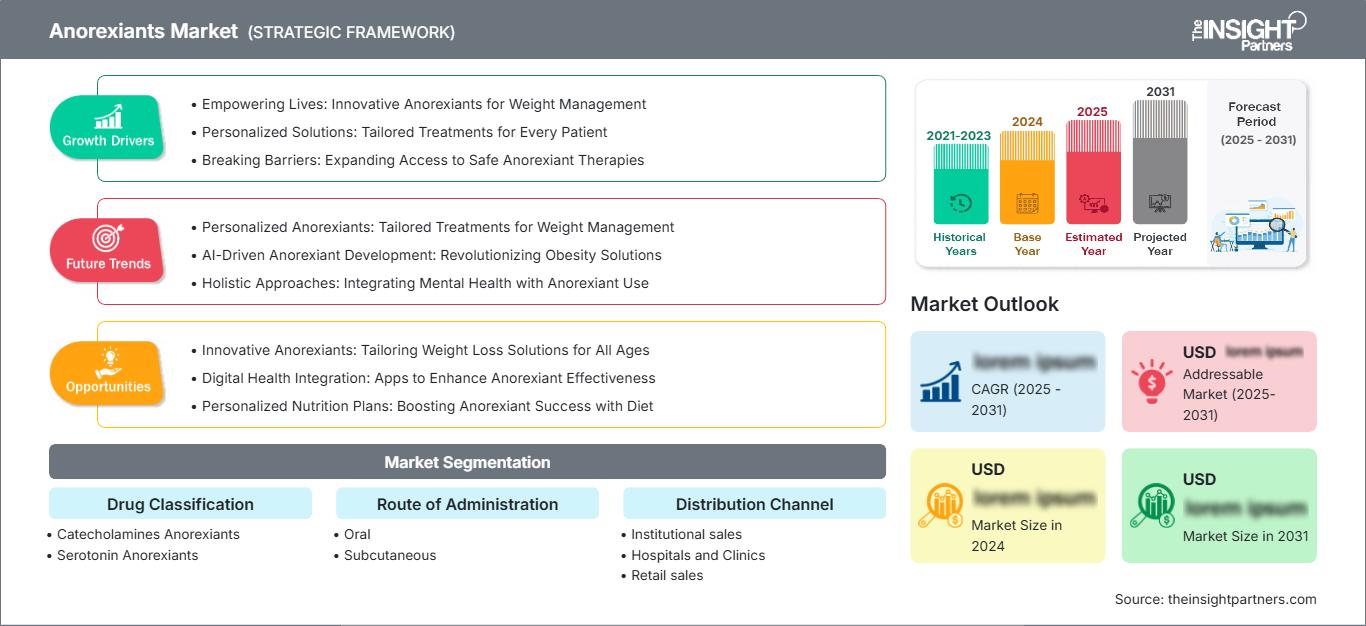
Anorexiants Market: Strategic Insights
Regional Insights
North America anorexiants market
North America is estimated to hold 41–44% share in 2025 and to grow at a CAGR range of 4.40–5.00% during 2026–2034. The anorexiants market share is supported by high obesity prevalence, organized prescribing channels, retail pharmacy density, and access to specialist obesity care. The US dominates regional revenue, while Canada contributes through regulated prescribing and pharmacy fulfillment.
The demand will be strengthened through chronic disease management approaches, corporate wellness programs, and physician education regarding the cardiometabolic risk associated with obesity. In addition, the region will have higher standards of safety regarding the use of appetite suppressants especially the stimulant-based type. Growth, therefore, will be driven by a need to show patient monitoring, regulated dispensation, telehealth adherence, and appropriate packaging.
U.S. anorexiants Market
The US represents 84-88% of North America in 2025 and is forecasted to expand at a CAGR between 4.50 and 5.10% through 2026-2034. There is strong demand at obesity centers, primary care facilities, metabolics programs associated with hospitals, retail pharmacies, and telehealth services under supervision. The large and diagnosed patient pool in the nation results in regular prescription possibilities.
The market players comprise Novo Nordisk A/S, Teva Pharmaceutical Industries Ltd., Epic Pharma LLC, Akrimax Pharmaceuticals LLC, Catalent Inc., and Patheon Pharmaceuticals Inc. The applications are being driven towards weight management on a chronic basis, adherence from pharmacists, and differentiation formularies to distinguish between oral generics and the injectables. Labeling, pregnancy, heart-related issues, and dispensing concerns form an important part of regulation within the market strategy.
Europe anorexiants Market
Europe holds 23–26% share in 2025 and is expected to grow at a CAGR range of 3.90–4.50% during 2026–2034. The UK is shaped by structured obesity services, National Health Service evaluation, and cautious prescribing of appetite-control therapies. Germany leads regionally because of larger pharmaceutical spending, strong physician oversight, and growing obesity-related metabolic care.
France uses regulated adoption through specialty prescribing and reimbursement evaluation. Italy and Spain have moderate adoption as doctors reconcile lifestyle, medication, and cost considerations. European adoption is slower than Asia Pacific as regulation and health technology assessment make rapid adoption difficult. Nevertheless, therapies with good safety profile are able to achieve long-term adoption through clinical channels.
APAC anorexiants Market
APAC represents 19–22% share in 2025 and is forecast to grow at a CAGR range of 5.20–6.00% during 2026–2034. China is the leading country, supported by rising obesity diagnosis, urban metabolic clinics, and expanding pharmaceutical access.
Japan and South Korea emphasize regulated specialty care and premium therapies, while India contributes volume through private clinics and retail pharmacy expansion. Australia supports structured prescribing and obesity-management programs. Policy focus on noncommunicable disease burden, diabetes prevention, and digital pharmacy oversight improves the region’s addressable opportunity.
Middle East & Africa anorexiants Market
The Middle East & Africa region is projected to grow at a CAGR range of 4.90–5.70% during 2026–2034. Saudi Arabia leads adoption because obesity and diabetes management are national health priorities, supported by hospital investment and urban specialist care.
The UAE supports premium private clinics, online pharmacy growth, and internationally trained prescribers. South Africa anchors regional demand through retail pharmacies and private healthcare networks. Rest of MEA adoption remains uneven, but higher chronic disease screening, expanding insurance coverage, and better medicine supply chains are improving access to regulated weight-management therapies.
Segmentation Analysis
Drug Classification
Drug Classification is projected to grow at a CAGR range of 4.30–4.90% during 2026–2034. The anorexiants market scope under this segment is defined by the balance between established catecholamine activity and serotonin-linked mechanisms. Prescribers evaluate products based on patient eligibility, contraindications, duration of therapy, monitoring burden, adverse-event profile, and compatibility with broader obesity care plans.
- Catecholamines Anorexiants remain commercially relevant because they are established, widely understood by prescribers, and often available through lower-cost oral options under supervised short-term or protocol-led use.
- Serotonin Anorexiants occupy a more selective position because past safety concerns have increased regulatory scrutiny, making clinical evidence, labeling clarity, and risk management central to adoption.
Route of Administration
Route of Administration is projected to grow at a CAGR range of 4.60–5.20% during 2026–2034. Oral products dominate because they are accessible, familiar, and compatible with retail dispensing. Subcutaneous products are growing faster as metabolic therapeutics reshape expectations for appetite regulation, weight outcomes, and chronic care engagement, although cost and reimbursement remain decisive barriers.
- Oral therapies represent the largest route because tablets and capsules support convenience, generic affordability, primary-care prescribing, and pharmacy-level distribution across developed and emerging markets.
- Subcutaneous therapies are gaining strategic attention through appetite-modulating metabolic agents that support longer treatment pathways, specialist involvement, and higher-value obesity care programs.
Distribution Channel
Distribution Channel is projected to grow at a CAGR range of 4.40–5.10% during 2026–2034. Channel performance is shaped by prescription controls, patient monitoring, payer rules, and medicine authenticity. Institutional and hospital channels support supervised initiation, while retail, online, and mail-order models improve convenience. The strongest channels will combine access with safeguards against inappropriate or unsupervised use.
- Institutional sales support structured procurement for hospitals, government programs, and large healthcare systems where formulary control, documentation, and centralized contracting influence product uptake.
- Hospitals and Clinics are important for initiation, risk assessment, and follow-up of patients with obesity-related comorbidities requiring physician-led monitoring and multidisciplinary care.
- Retail sales remain a major access channel because pharmacies provide recurring prescription fulfillment, patient counseling, and controlled dispensing infrastructure for established oral medicines.
- Online pharmacies are scaling as digital prescribing and home delivery expand, but growth depends on verification standards, prescription validation, and compliance with controlled medicine rules.
- Mail Order Pharmacies support refill continuity, chronic therapy adherence, and payer-managed distribution, especially where benefit plans encourage lower-cost fulfillment for recurring prescriptions.
Opportunity Snapshot
| Distribution Channel | Revenue Contribution | Trend Tag | Adoption Stage |
|---|---|---|---|
| Institutional sales | Medium | Formulary Access | Scaling |
| Hospitals and Clinics | High | Metabolic Care | Mature |
| Retail sales | High | Refill Control | Mature |
| Online pharmacies | Medium | Verified Access | Scaling |
| Mail Order Pharmacies | Medium | Chronic Refill | Scaling |
Anorexiants Market Growth Drivers and Impact Analysis
Rising diagnosed obesity burden in clinical care
The expanding diagnosed obesity population is the core demand driver for supervised appetite-control medicines. WHO data indicate that 2.5 billion adults were overweight in 2022, including 890 million living with obesity, while US public health data show obesity affecting more than two in five adults in recent reporting periods. These trends increase physician encounters for weight-related hypertension, diabetes, sleep apnea, and dyslipidemia. The commercial impact is steady prescription demand across primary care, obesity clinics, hospitals, and pharmacy channels. For manufacturers, the opportunity depends on demonstrating appropriate patient selection, affordability, and responsible monitoring rather than broad consumer-driven promotion.
Need for affordable alternatives to premium weight-loss therapies
Premium injectable metabolic therapies have changed obesity treatment expectations, but access remains constrained by reimbursement, supply, and out-of-pocket costs. This creates continued relevance for oral anorexiants and generic appetite-control products where physicians consider pharmacotherapy appropriate. The impact is strongest in markets where payers restrict premium brands or patients seek lower-cost supervised options. Retail pharmacies, mail-order providers, and institutional buyers can support volume if prescribing remains compliant. Manufacturers with reliable supply, clear labeling, and competitive pricing can defend share even as newer mechanisms expand. The driver also encourages differentiated positioning around access, continuity, and monitoring support.
Expansion of regulated digital and pharmacy distribution
Digital healthcare is reshaping how patients enter obesity treatment pathways but controlled and prescription-only medicines require strong safeguards. Verified online pharmacies, mail-order programs, and clinic-linked telehealth models can improve follow-up, refill continuity, and convenience when prescriptions are clinically appropriate. The market impact is a broader distribution base beyond traditional office visits, particularly in North America, Europe, and selected APAC markets. However, this driver also raises compliance expectations around identity verification, contraindication screening, adverse-event reporting, and controlled-substance handling. Suppliers that align with high-quality pharmacy networks and payer-managed refill systems are better positioned than companies relying on fragmented online access.
Anorexiants Market Future Trends
Shift toward mechanism-diverse obesity pharmacotherapy
Mechanism-diverse anorexiants market trends will be shaped by incretin, amylin, catecholamine, and other appetite-regulation pathways moving into more segmented clinical use. Prescribers are likely to differentiate therapies by weight-loss durability, tolerability, route convenience, cardiometabolic evidence, and patient affordability. Oral products will remain relevant, but subcutaneous innovation will raise expectations for outcomes and adherence management. Companies with evidence-led portfolios, combination concepts, and manufacturing capacity will gain strategic advantage. The trend will also increase pressure on older products to maintain clear clinical positioning within supervised, rather than casual, weight-management use.
Greater payer and regulator focus on appropriate use
Future market access will increasingly depend on appropriate-use documentation, treatment eligibility, and measurable outcomes. Payers are expected to request clearer evidence on response rates, persistence, safety monitoring, and comorbidity improvement before expanding coverage. Regulators will continue to scrutinize labeling, pregnancy precautions, cardiovascular risks, and digital dispensing practices. This trend favors companies investing in patient-support infrastructure, real-world evidence, and compliant prescribing tools. It also limits uncontrolled market expansion by placing stronger emphasis on physician oversight, refill discipline, and discontinuation rules when treatment goals are not achieved.
Anorexiants Market Opportunities
Evidence-backed oral products for cost-sensitive populations
Strong anorexiants market Forecasts depend partly on expanding access to affordable, evidence-backed oral therapies in cost-sensitive populations. Manufacturers can create value through reliable generic supply, adherence packaging, patient education, and clear risk-management materials for prescribers. The opportunity is relevant in the US, Europe, India, Latin America, and the Middle East, where obesity prevalence is rising but premium injectable coverage remains uneven. Companies that support responsible initiation, refill monitoring, and pharmacist engagement can capture durable demand. This approach positions oral therapies as part of structured obesity care rather than low-supervision consumer weight-loss products.
Contract manufacturing for complex obesity dosage forms
Contract manufacturing presents an attractive opportunity as obesity pharmacotherapy evolves across oral, injectable, and modified-release formats. Companies such as Catalent Inc. and Patheon Pharmaceuticals Inc. can benefit from demand for scale-up, analytical validation, sterile fill-finish, and formulation optimization. Smaller innovators may require partners to convert promising metabolic assets into commercially reliable products. The opportunity is not only capacity-based; it also depends on quality systems, regulatory documentation, and supply-chain resilience. Manufacturers that can handle controlled substances, potent compounds, and temperature-sensitive products will be better positioned as obesity pipelines become more diverse and technically demanding.
Recent Developments
- March 2026: Novo Nordisk A/S received FDA approval for a higher 7.2 mg dose of Wegovy for chronic weight management in certain adult patients. The approval added another semaglutide option for patients requiring additional weight reduction and reinforced the company’s strategy to defend its obesity care position through dose differentiation and efficacy-focused lifecycle management.
- January 2026: F. Hoffmann-La Roche Ltd announced positive Phase II results for CT-388, its once-weekly dual GLP-1/GIP receptor agonist being developed for obesity. The study reported placebo-adjusted weight loss of 22.5% at 48 weeks at the highest tested dose, supporting Roche’s plan to advance the candidate toward Phase III clinical development.
- March 2025: Roche entered an exclusive collaboration and licensing agreement with Zealand Pharma to co-develop and co-commercialize petrelintide, an amylin analog for people with overweight and obesity. The agreement strengthened Roche’s cardiovascular, renal, and metabolic pipeline and created potential combination opportunities with CT-388 in future obesity treatment strategies.
Frequently Asked Questions

- Comprehensive Market Sizing and Forecast Analysis
- Detailed Segmentation Analysis
- In-Depth Market Dynamics Assessment
- Regional and Country-Level Insights
- Competitive Landscape and Company Benchmarking
- Strategic Business Intelligence
Recent Reports
Testimonials

The Insight Partners' SCADA System Market report is comprehensive, with valuable insights on current trends and future forecasts. The team was highly professional, responsive, and supportive throughout. We are very satisfied and highly recommend their services.
RAN KEDEM Partner, Reali Technologies LTDs
I requested a report on a very specific software market and the team produced the report in a few days. The information was very relevant and well presented. I then requested some changes and additions to the report. The team was again very responsive and I got the final report in less than a week.
JEAN-HERVE JENN Chairman, Future Analytica
We worked with The Insight Partners for an important market study and forecast. They gave us clear insights into opportunities and risks, which helped shape our plans. Their research was easy to use and based on solid data. It helped us make smart, confident decisions. We highly recommend them.
PIYUSH NAGPAL Sr. Vice President, High Beam Global
The Insight Partners delivered insightful, well-structured market research with strong domain expertise. Their team was professional and responsive throughout. The user-friendly website made accessing industry reports seamless. We highly recommend them for reliable, high-quality research services
YUKIHIKO ADACHI CEO, Deep Blue, LLC.
This is the first time I have purchased a market report from The Insight Partners.While I was unsure at first, I visited their web site and felt more comfortable to take the risk and purchase a market report.I am completely satisfied with the quality of the report and customer service. I had several questions and comments with the initial report, but after a couple of dialogs over email with their analyst I believe I have a report that I can use as input to our strategic planning process.Thank you so much for taking the extra time and making this a positive experience.I will definitely recommend your service to others and you will be my first call when we need further market data.
JOHN SUZUKI President and Chief Executive Officer, Board Director, BK Technologies
I wish to appreciate your support and the professionalism you displayed in the course of attending to my request for information regarding to infectious disease IVD market in Nigeria. I appreciate your patience, your guidance, and the fact that you were willing to offer a discount, which eventually made it possible for us to close a deal. I look forward to engaging The Insight Partners in the future, all thanks to the impression you have created in me as a result of this first encounter.
DR CHIJIOKE ONYIA MANAGING DIRECTOR, PineCrest Healthcare Ltd.Reason to Buy
- Informed Decision-Making
- Understanding Market Dynamics
- Competitive Analysis
- Identifying Emerging Markets
- Customer Insights
- Market Forecasts
- Risk Mitigation
- Boosting Operational Efficiency
- Strategic Planning
- Investment Justification
- Tracking Industry Innovations
- Aligning with Regulatory Trends





 Get Free Sample for