
Anti Acne Makeup Market Size, Demand & Growth by 2034
Coverage: By Product (Mask, Emulsifiers, Cleanser, And others.); End User (Women and men); Distribution Channel (General stores, Hypermarkets/ supermarkets, Specialty stores, Departmental stores, And others.), and Geography (North America, Europe, Asia Pacific, and South and Central America)
- Status : Data Released
- Report Code : TIPRE00015479
- Category : Consumer Goods
- No. of Pages : 150
- Available Report Formats :


- Last update date : August 25, 2026


2025 Market Size
US$ 5.29 Bn
Base year value
2034 Forecast
US$ 11.65 Bn
Projected by 2034
CAGR 2026-2034
9.15 %
Growth rate
Addressable Market
US$ 75.66 Bn
(2026-2034)
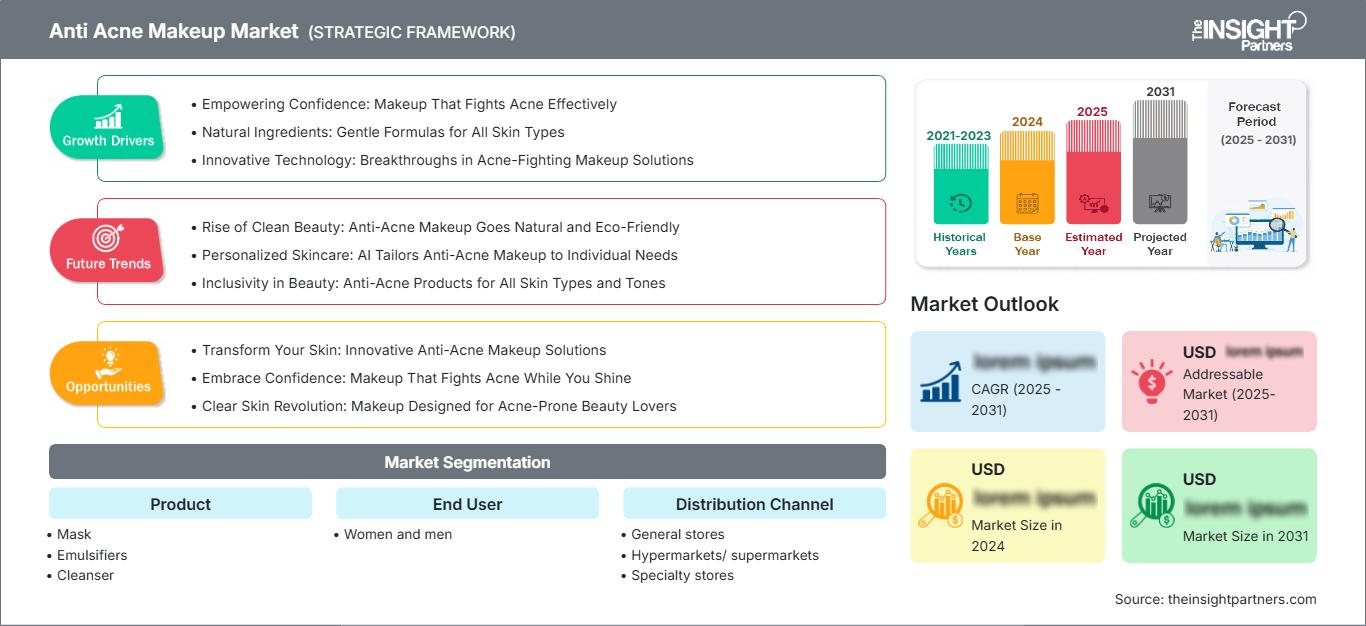
The Anti acne makeup market was valued at US$ 5.29 Billion in 2025 and is projected to reach US$ 11.65 Billion by 2034, advancing at a CAGR of 9.15% during 2026–2034. The market continues to expand as consumers increasingly seek cosmetics that combine complexion enhancement with dermatological benefits, including non-comedogenic formulations, oil control technologies, and acne-targeting active ingredients. Product innovation, digital beauty engagement, and growing awareness of skin health are supporting long-term industry development.
Across North America, manufacturers are benefiting from mature beauty retail infrastructure and widespread dermatology-backed product adoption. The anti acne makeup market size is supported by strong spending on premium skincare-makeup hybrids, while regional growth is estimated at 8.2–9.2% CAGR through 2034. Rising acne prevalence among adults and growing demand for ingredient transparency continue to strengthen category performance.
Anti Acne Makeup Market Assessment and Insights
- North America: Share in 2025 estimated at 34–38%, supported by dermatologist-recommended products and high premium cosmetics penetration. Market expected to grow at 8.2–9.2% CAGR during 2026–2034.
- US: Represents 72–76% of North American demand in 2025, driven by specialty beauty retail and digital commerce channels. Growth projected at 8.4–9.4% CAGR during 2026–2034.
- Europe: Accounted for 26–30% share in 2025, led by Germany, the UK, and France. Rising preference for dermocosmetics supports a 8.0–9.0% CAGR through 2034.
- Asia Pacific: Held 24–28% share in 2025, with China, Japan, South Korea, and India driving adoption. The region is forecast to expand at 10.2–11.2% CAGR during 2026–2034.
- Largest Segment: Women represented approximately 62–66% market share in 2025, supported by higher product awareness and premium cosmetic spending. Expected CAGR: 8.7–9.7%.
- High Growth Segment: Men accounted for 34–38% share in 2025 and is projected to advance at 10.5–11.5% CAGR, reflecting rapid growth in male grooming and skincare-conscious consumption.
- Key companies analyzed in detail: Clinique Laboratories, LLC; DoctorLi; Johnson & Johnson Consumer Inc. (Neutrogena); L'Oréal Paris; La Roche-Posay; Murad, LLC; Sephora USA, Inc.; The Mentholatum Company; The Proactiv Company, LLC; Vichy Laboratoires.
Source: The Insight Partners' analysis based on proprietary research, government publications, company annual reports, investor presentations, industry databases, and expert interviews.
Performance of the products in the marketplace has changed from simple cover-up solutions to multifunctional cosmetic products that include ingredients such as salicylic acid, niacinamide, zinc, and others, which can support the microbiome. Increasingly, the combination of dermatological treatment and cosmetic properties is allowing manufacturers to develop products that help to hide blemishes while the skin recovers.
In the future, growth potential will be realized in Asian Pacific, Latin America, and tech-enabled cities worldwide. Regulations in place emphasizing the safety of the ingredients are likely to give more advantages to large players in terms of research capacity. Ventures are becoming more interested in clinical formulations, AI-based recommendations, and omnichannel strategies.
Anti Acne Makeup Market Report Scope
| Report Attribute | Details |
|---|---|
| Market size in 2025 | US$ 5.29 Billion |
| Market Size by 2034 | US$ 11.65 Billion |
| Global CAGR (2026 - 2034) | 9.15% |
| Historical Data | 2021-2024 |
| Forecast period | 2026-2034 |
Anti Acne Makeup Market Analysis
Market growth is fueled by higher prevalence of acne in teenagers and adults, increased demand for non-comedogenic cosmetics, and growing preference for skincare cosmetics that provide both functional and cosmetic value. Skincare active ingredients are now becoming a part of foundation, concealer, and cleanser cosmetics created by beauty companies. Value chain consists not only of beauty brands, but also dermatologists, cosmetic chemists, specialty retailers, and digital beauty platforms influencing customers' purchasing behavior. Higher awareness on the part of consumers about the composition of cosmetics and skin health makes beauty companies create cosmetics that help to resolve skin blemishes while remaining cosmetic.
There are positive trends within the supply chain for the following reasons: there is an increase in the capacity for cosmetics manufacturing worldwide as well as an increase in the supply of clinically proven ingredients. The firms are creating stronger bonds with contract manufacturers and ingredient suppliers to enhance innovation and compliance with regulations. Direct sales and specialty beauty websites have improved access to cosmetic products, particularly by younger people in search of specialized skin treatments. There is also an emphasis on investing in better formulation technology that ensures the integrity of the ingredients, their suitability for the skin, and the durability of products.
Market analysis reveals that the industry is highly competitive because of brand credibility, innovation in ingredients, and the ability to reach consumers. Clinique Laboratories, LLC, La Roche-Posay, Vichy Laboratoires, Murad, LLC, and Johnson & Johnson Consumer Inc. continue to be highly competitive on account of their dermatologist-endorsed range of products as well as wide market presence. In the context of the efficacy of the products, the purchasing decision process of customers is becoming difficult for new players to enter the market. There is greater emphasis on research activities and clinical studies in this regard.
Investment trends include personalized beauty technologies, AI skin analysis devices, and multi-purpose products that can treat acne, redness, and post-inflammatory hyperpigmentation. Positioning becomes more and more clinical-focused, sustainable, and omni-channel-oriented. Premium brands develop their lines via specialist stores, whereas mass brands pay more attention to the price and availability of products to attract more customers. Furthermore, the development of diagnostic solutions for beauty and product customization allows brands to provide a more tailored customer experience. With the increasing integration of skincare and cosmetics categories, innovation will be about multifunctional products that can offer both therapeutic effects and aesthetic results.
● REPORT CUSTOMIZATION
Tailor This Report To Align With Your Specific Business Requirements
This report can be customized to align precisely with your business objectives, scope, and target markets. Customization options include tailored segmentation, geography, competitive analysis, and strategic insights to support informed decision-making.
Customize This Report →WHAT YOU CAN ADJUST
- ● Segmentations
- ● Geography
- ● Competitive Analysis
- ● Language Preferences
Anti Acne Makeup Market: Strategic Insights
Regional Insights
North America Anti Acne Makeup Market
North America accounted for approximately 34–38% of global revenue in 2025 and remains the largest regional market. Strong consumer awareness, advanced dermatology infrastructure, and high spending on skincare-enhanced cosmetics support consistent category demand. The region is projected to expand at 8.2–9.2% CAGR through 2034 as consumers increasingly prioritize products delivering visible skin benefits alongside cosmetic performance.
The region’s anti acne makeup market share benefits from strong specialty retail networks, premium brand presence, and widespread digital product discovery. Growth is supported by increasing adult acne prevalence, influencer-driven beauty purchasing patterns, and continued innovation in multifunctional formulations. Clinical ingredient transparency and dermatologist endorsements remain important consumer purchase drivers.
U.S. Anti Acne Makeup Market
The United States represented approximately 72–76% of North American demand in 2025. Consumers demonstrate strong adoption of premium and dermatologist-developed cosmetic products designed to address acne-prone skin concerns. Market growth is forecast at 8.4–9.4% CAGR through 2034, supported by expanding e-commerce penetration and product personalization initiatives.
Major companies, including Clinique Laboratories, LLC, Murad, LLC, Sephora USA, Inc., and Johnson & Johnson Consumer Inc. maintain extensive distribution across specialty beauty and department store channels. Growing demand for clean-label formulations, long-wear coverage products, and skin-improving cosmetics continues to shape innovation strategies throughout the market.
Europe Anti Acne Makeup Market
Europe held an estimated 26–30% share in 2025 and is expected to grow at 8.0–9.0% CAGR through 2034. Germany leads because of high utilization of dermocosmetics and wide pharmacy availability. The United Kingdom has an advanced beauty retail structure, along with the growing consumer trend of using scientifically proven cosmetics.
France and Italy make a significant contribution because of the premium consumption of beauty products and traditional use of skincare products, whereas Spain has been witnessing a rise in the use of treatment cosmetics among younger consumers. Growth in the region is driven by strict safety standards of cosmetics, increased sensitivity to formulations, and innovations in dermatological beauty.
APAC Anti Acne Makeup Market
Asia Pacific accounted for approximately 24–28% share in 2025 and represents the fastest expanding regional opportunity. China, Japan, South Korea, and India continue to drive demand for skincare-infused cosmetics and blemish-focused beauty products.
Regional growth is forecast at 10.2–11.2% CAGR through 2034. Strong social commerce penetration, growing beauty awareness, and consumer preference for multifunctional cosmetic products support expansion. South Korea and Japan influence formulation innovation, while China and India drive volume growth through expanding middle-class consumption.
Middle East & Africa Anti Acne Makeup Market
The Middle East & Africa market remains comparatively smaller but continues to gain momentum. Saudi Arabia and the UAE benefit from premium beauty spending and growing awareness of dermatologist-recommended cosmetic solutions.
The region is expected to expand at 7.5–8.5% CAGR through 2034. South Africa remains an important market, while infrastructure development, modern retail expansion, and increasing digital commerce adoption improve product accessibility across the broader region.
Segmentation Analysis
Product
The product segment is projected to grow at 9.0–10.0% CAGR during 2026–2034. The anti acne makeup market scope within product categories continues to widen as consumers seek formulations that simultaneously address acne management and cosmetic requirements. Manufacturers are emphasizing active ingredients, improved wear characteristics, and sensitive-skin compatibility.
- Mask: Widely adopted due to deep cleansing benefits and compatibility with acne-management routines. Consumer demand is supported by preventive skincare practices and home-based beauty regimens.
- Emulsifiers: Important for formulation stability and product performance. Manufacturers increasingly select skin-friendly emulsification systems to enhance comfort and reduce irritation potential.
- Cleanser: Strong demand driven by cleansing as a foundational step in acne management. Dermatologist recommendations and repeat purchase behavior support sustained market importance.
End User
The end-user segment is forecast to expand at 9.3–10.3% CAGR through 2034. Demand patterns continue to evolve as both women and men increasingly prioritize appearance, skin health, and multifunctional beauty products. Marketing strategies are becoming more inclusive, driving broader category engagement.
- Women: Represent the dominant consumer segment due to extensive beauty product usage, stronger brand engagement, and greater participation in premium cosmetic categories.
- Men: Experiencing rapid adoption as grooming awareness increases. Demand is supported by simplified product formats, digital education, and specialized marketing approaches.
Distribution Channel
The distribution channel segment is expected to register 8.8–9.8% CAGR during 2026–2034. Omnichannel retail strategies, product visibility, and consumer convenience remain critical factors influencing purchasing decisions and manufacturer competitiveness.
- General stores: Maintain relevance through accessibility and value-focused purchasing behavior among mass-market consumers.
- Hypermarkets/ supermarkets: Offer broad product selection and support impulse purchases through high consumer traffic levels.
- Specialty stores: Important for premium positioning, product consultation, and brand education, particularly for dermatologist-backed offerings.
- Departmental stores: Continue serving premium consumers seeking established brands and personalized beauty shopping experiences.
Opportunity Snapshot
| Segment Name | Revenue Contribution | Trend Tag | Adoption Stage |
| Women | High | Skin Fusion | Mature |
| Men | Medium | Male Grooming | Scaling |
Anti Acne Makeup Market Growth Drivers and Impact Analysis
Rising Demand for Dermatology-Inspired Cosmetics
The preference is rising on the side of goods that not only can offer beauty results but also ensure healthy skin in the long run. The dermatological suggestions, transparent components, and recognition of acne causes have led to the rise in the popularity of therapeutic cosmetics. Products containing such components as salicylic acid, niacinamide, and components responsible for the balance of the skin have become more popular. The tendency has gone beyond teenage use, as problems with acne among adults result in the need for different age-appropriate products.
Expansion of Digital Beauty Commerce Ecosystems
There is a shift in how consumers discover products, learn about products, and make purchases through digital media. Consumers get more assured of specialized products through social media influencers, virtual consultations, skin assessments by Artificial Intelligence (AI), and other technologies. Online sales also facilitate better communication between the company and the consumer regarding the clinical results and advantages of the formulations. This helps in widening the geographical area where these products can be promoted.
Growth in Multifunctional Beauty Product Adoption
Customers today have a tendency to look for products that provide an integrated routine, combining skincare and makeup in one product. This creates demand for foundations, concealers, cleansers, and masks with qualities that help manage acne. Such products are convenient and increase the perceived value of the offering. Companies that will be able to create such products will be able to differentiate themselves and charge higher prices.
Anti Acne Makeup Market Future Trends
Clinical Validation Becoming a Core Purchasing Criterion
Future product success will increasingly depend on documented efficacy, dermatologist partnerships, and transparent ingredient communication. Among emerging anti acne makeup market trends, consumers are expected to place greater weight on measurable outcomes rather than traditional marketing claims. Regulatory scrutiny, digital transparency, and ingredient literacy will encourage brands to publish clinical testing results and support claims with evidence. This transition is likely to favor established companies possessing robust research capabilities while encouraging smaller innovators to invest in validation programs and professional endorsements.
Personalized Acne-Care Beauty Solutions
The development of technology such as artificial intelligence, diagnostics, and consumer data analytics will contribute significantly to the process of personalizing products. There is an expectation that companies will be able to make recommendations based on the skin type, acne condition, climate, and even the lifestyle of the individual. Personalized beauty solutions could involve things such as subscription services, adaptive products, and skincare guidelines.
Anti Acne Makeup Market Opportunities
Expansion into Underserved Male Consumer Segments
Male-focused acne cosmetic products remain comparatively underpenetrated in several markets despite rising awareness of skin health and professional appearance. Investment in targeted formulations, simplified routines, and dedicated marketing initiatives can unlock substantial growth potential. Companies expanding product portfolios for men may benefit from lower competitive intensity and increasing acceptance of grooming products. Anti acne makeup market Forecasts indicate that manufacturers successfully addressing this demographic could achieve above-average category growth during the forecast period through differentiated brand positioning and educational engagement strategies.
Premium Dermocosmetic Innovation Platforms
Premiumization will continue to offer scope to brands that use innovative active ingredients, sustainable packaging, and proven performance benefits. There is a trend among consumers where skin care beauty products are seen as an investment in their wellness rather than just a luxury. Investments in doctor collaborations, ingredient development, and premium consumer experiences could prove to be beneficial in driving margins and creating greater brand equity. Companies that can show better efficacy and safety will have an advantage.
Frequently Asked Questions

- Comprehensive Market Sizing and Forecast Analysis
- Detailed Segmentation Analysis
- In-Depth Market Dynamics Assessment
- Regional and Country-Level Insights
- Competitive Landscape and Company Benchmarking
- Strategic Business Intelligence
Recent Reports
Testimonials

The Insight Partners provided valuable market intelligence that supported our global go-to-market strategy. Their team was professional, responsive, and attentive to our feedback, providing thoughtful analysis and helpful methodological clarifications throughout the project.
Junmo Kim Chief Financial Officer (CFO), Enertech Co., Ltd.
The Insight Partners' SCADA System Market report is comprehensive, with valuable insights on current trends and future forecasts. The team was highly professional, responsive, and supportive throughout. We are very satisfied and highly recommend their services.
RAN KEDEM Partner, Reali Technologies LTDs
I requested a report on a very specific software market and the team produced the report in a few days. The information was very relevant and well presented. I then requested some changes and additions to the report. The team was again very responsive and I got the final report in less than a week.
JEAN-HERVE JENN Chairman, Future Analytica
We worked with The Insight Partners for an important market study and forecast. They gave us clear insights into opportunities and risks, which helped shape our plans. Their research was easy to use and based on solid data. It helped us make smart, confident decisions. We highly recommend them.
PIYUSH NAGPAL Sr. Vice President, High Beam Global
The Insight Partners delivered insightful, well-structured market research with strong domain expertise. Their team was professional and responsive throughout. The user-friendly website made accessing industry reports seamless. We highly recommend them for reliable, high-quality research services
YUKIHIKO ADACHI CEO, Deep Blue, LLC.
This is the first time I have purchased a market report from The Insight Partners.While I was unsure at first, I visited their web site and felt more comfortable to take the risk and purchase a market report.I am completely satisfied with the quality of the report and customer service. I had several questions and comments with the initial report, but after a couple of dialogs over email with their analyst I believe I have a report that I can use as input to our strategic planning process.Thank you so much for taking the extra time and making this a positive experience.I will definitely recommend your service to others and you will be my first call when we need further market data.
JOHN SUZUKI President and Chief Executive Officer, Board Director, BK Technologies
I wish to appreciate your support and the professionalism you displayed in the course of attending to my request for information regarding to infectious disease IVD market in Nigeria. I appreciate your patience, your guidance, and the fact that you were willing to offer a discount, which eventually made it possible for us to close a deal. I look forward to engaging The Insight Partners in the future, all thanks to the impression you have created in me as a result of this first encounter.
DR CHIJIOKE ONYIA MANAGING DIRECTOR, PineCrest Healthcare Ltd.Reason to Buy
- Informed Decision-Making
- Understanding Market Dynamics
- Competitive Analysis
- Identifying Emerging Markets
- Customer Insights
- Market Forecasts
- Risk Mitigation
- Boosting Operational Efficiency
- Strategic Planning
- Investment Justification
- Tracking Industry Innovations
- Aligning with Regulatory Trends





 Get Free Sample for