
Anti-Fibrotic Therapy for Ocular Fibrosis Market Size, Share & Trends by 2034
Coverage: by Type (Injection, Oral); Applications (Hospital, Eye Clinic) , and Geography (North America, Europe, Asia Pacific, and South and Central America)
- Status : Data Released
- Report Code : TIPRE00008555
- Category : Life Sciences
- No. of Pages : 150
- Available Report Formats :


- Last update date : August 13, 2026


2025 Market Size
US$ 1.32 Bn
Base year value
2034 Forecast
US$ 2.79 Bn
Projected by 2034
CAGR 2026-2034
8.65 %
Growth rate
Addressable Market
US$ 18.40 Bn
(2026-2034)
The anti-fibrotic therapy for ocular fibrosis market is projected to grow from US$ 1.32 Billion in 2025 to US$ 2.79 Billion by 2034, registering a CAGR of 8.65% during 2026–2034. Growth reflects increasing clinical attention to retinal scarring, post-surgical fibrosis, diabetic eye complications, and fibrotic remodeling that can compromise long-term visual outcomes despite existing ophthalmic treatment standards.
Across North America, high retinal specialist density, advanced imaging access, and early uptake of intravitreal therapies are supporting adoption. The anti-fibrotic therapy for ocular fibrosis market size in the region is expected to expand at a CAGR of 8.0–8.6% during 2026–2034, driven by hospital-based retina services, eye clinic networks, and payer focus on preventing irreversible vision loss.
Anti-Fibrotic Therapy for Ocular Fibrosis Market Assessment and Insights
- North America held 38–41% share in 2025 and is growing at a CAGR of 8.0–8.6% between 2026–2034, supported by retina specialist access, imaging-led diagnosis, and higher use of injectable ophthalmic therapies.
- US represented 83–87% share of North America in 2025 and is growing at a CAGR of 7.9–8.4% between 2026–2034, driven by clinical trial activity and advanced retinal care.
- Europe accounted for 27–30% share in 2025 and is growing at a CAGR of 7.6–8.2% between 2026–2034, led by Germany, the UK, France, Italy, and Spain.
- Asia Pacific captured 22–25% share in 2025 and is growing at a CAGR of 9.4–10.0% between 2026–2034, led by China, Japan, India, South Korea, and Australia.
- Largest Segment injection therapies held 68–73% market share in 2025, growing at a CAGR of 8.7–9.3% between 2026–2034, due to targeted intraocular delivery.
- High Growth Segment eye clinic held 38–43% market share in 2025, growing at a CAGR of 9.0–9.7% between 2026–2034, supported by outpatient retina treatment migration.
- Key companies analyzed in detail: F. Hoffmann-La Roche Ltd, Aspen Pharmacare Holdings Limited, Baxter International Inc., Novartis AG, GSK plc, Bayer AG, Sun Pharmaceutical Industries Ltd., Cipla Limited, Hikma Pharmaceuticals PLC, and Mylan Pharmaceuticals Inc.
Source: The Insight Partners' analysis based on proprietary research, government publications, company annual reports, investor presentations, industry databases, and expert interviews.
The shift in therapeutic research has evolved from the general approach to the management of inflammatory diseases to a more targeted strategy in terms of inhibition of fibrotic pathways and signaling, deposition of extracellular matrix, and retinal pigment epithelial changes. The product development trends are focusing on intravitreal administration, sustained dosing systems, and combination therapies that enhance the efficacy of anti-VEGF drugs. The manufacturing standards are being tightened since the ophthalmic sterile injectables demand aseptic processing, particulate filtration, cold chain management, and high level of batch uniformity.
Future demand prospects will improve due to the improvement of geographic regions with respect to retina care and optical coherence tomography access. The regulatory agencies are also promoting clinically meaningful outcome measures such as anatomic stability and visual function maintenance. The investment priorities are expected to be associated with injectable biologics, antisense technologies, kinase inhibition, and orally administered drugs against fibrosis.
Anti-Fibrotic Therapy for Ocular Fibrosis Market Report Scope
| Report Attribute | Details |
|---|---|
| Market size in 2025 | US$ 1.32 Billion |
| Market Size by 2034 | US$ 2.79 Billion |
| Global CAGR (2026 - 2034) | 8.65% |
| Historical Data | 2021-2024 |
| Forecast period | 2026-2034 |
Anti-Fibrotic Therapy for Ocular Fibrosis Market Analysis
The anti-fibrotic therapy for ocular fibrosis market growth is shaped by the clinical gap left after vascular and inflammatory control. WHO reported that at least 2.2 billion people globally have vision impairment, with at least 1 billion cases preventable or yet to be addressed, emphasizing the need for wider eye-care intervention. Fibrosis in retinal disorders can cause irreversible visual decline, especially when scarring follows neovascular activity, diabetic retinal damage, or surgery. [who.int]
Value chain consists of active pharmaceutical ingredients, sterile injectables, ophthalmic excipients, delivery devices, retinal imaging, hospital pharmacies, and outpatient eye clinics. The supply will be driven by aseptic manufacturing facilities, inspection standards, and intraocular drug safety perception by clinicians. Ophthalmic drug manufacturers and clinical education will help to distinguish themselves from generic anti-inflammatory companies.
Anti-fibrotic therapy for ocular fibrosis market analysis reveals an interesting competition between companies that are either developing ophthalmology-oriented drugs or big pharmaceutical companies. F. Hoffmann-La Roche Ltd and Bayer AG will retain their significant relevance in retinal treatment due to injectable eye diseases portfolio, and Novartis AG remains engaged in ophthalmology research and digital retina examination.
GSK plc, Sun Pharmaceutical Industries Ltd., Cipla Limited, Hikma Pharmaceuticals PLC, Aspen Pharmacare Holdings Limited, Baxter International Inc., and Mylan Pharmaceuticals Inc. will provide access to a wide variety of medicines for therapeutic indications through brands, generics, injectables, and hospital channel. The market positioning will be based on evidence-based practice, dosage administration, eye clinics, and disease specificity.
● REPORT CUSTOMIZATION
Tailor This Report To Align With Your Specific Business Requirements
This report can be customized to align precisely with your business objectives, scope, and target markets. Customization options include tailored segmentation, geography, competitive analysis, and strategic insights to support informed decision-making.
Customize This Report →WHAT YOU CAN ADJUST
- ● Segmentations
- ● Geography
- ● Competitive Analysis
- ● Language Preferences
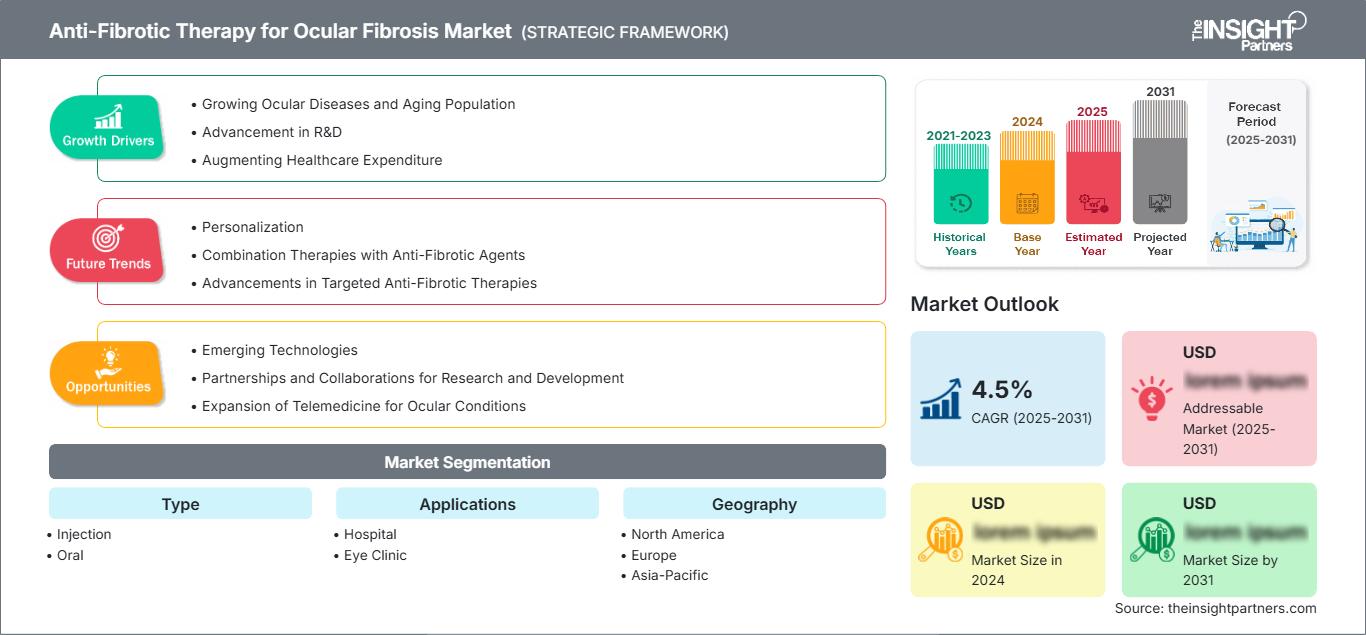
Anti-Fibrotic Therapy for Ocular Fibrosis Market: Strategic Insights
Regional Insights
North America anti-fibrotic therapy for ocular fibrosis market
North America accounted for 38–41% share in 2025, giving the region the highest anti-fibrotic therapy for ocular fibrosis market share globally. The region is growing at a CAGR of 8.0–8.6% during 2026–2034, supported by advanced retinal imaging, strong ophthalmology research funding, and established use of intravitreal treatment protocols.
The region’s advantage is concentrated in trial activity, specialist density, and access to hospital-affiliated eye institutes. US and Canadian providers increasingly monitor subretinal fibrosis risk in neovascular age-related macular degeneration, diabetic macular edema, proliferative vitreoretinopathy, and post-surgical scarring. Adoption is strongest where optical coherence tomography and standardized follow-up allow physicians to detect anatomical change before major vision loss.
U.S. anti-fibrotic therapy for ocular fibrosis Market
The US represented 83–87% of North America in 2025 and is growing at a CAGR of 7.9–8.4% during 2026–2034. Demand is driven by retina specialists, academic hospitals, ophthalmology ambulatory centers, and clinical trial sites evaluating injectable and adjunctive therapies for scarring-related vision decline.
Company presence is significant. F. Hoffmann-La Roche Ltd, Bayer AG, Novartis AG, Sun Pharmaceutical Industries Ltd., Hikma Pharmaceuticals PLC, and Mylan Pharmaceuticals Inc. operate through ophthalmic, injectable, or pharmaceutical distribution networks. Application demand is shifting toward eye clinics as repeated intravitreal procedures, imaging review, and chronic retinal monitoring become more efficiently managed in specialized outpatient settings.
Europe anti-fibrotic therapy for ocular fibrosis Market
Europe held 27–30% share in 2025 and is growing at a CAGR of 7.6–8.2% during 2026–2034. The UK shows adoption through National Health Service retina pathways, private ophthalmology centers, and structured monitoring of diabetic eye disease. Growth is supported by screening programs and referral networks that identify retinal complications earlier.
Germany is the leading country due to high specialist access, university hospital research, and strong medtech-pharma infrastructure. Buyers prioritize clinical evidence, sterile injectable quality, and reimbursement alignment. Novartis AG, Bayer AG, F. Hoffmann-La Roche Ltd, and Hikma Pharmaceuticals PLC benefit from regional regulatory experience and established hospital or specialist distribution pathways.
France, Italy, and Spain add meaningful volume through public hospitals, private eye clinics, and ageing populations. France benefits from retina-specialist expertise, Italy from regional ophthalmology centers, and Spain from outpatient care expansion. Across Europe, clinical adoption is tied to vision-preservation outcomes, injection burden, and evidence that fibrosis modulation improves long-term function.
APAC anti-fibrotic therapy for ocular fibrosis Market
APAC accounted for 22–25% share in 2025 and is expanding at a CAGR of 9.4–10.0% during 2026–2034, the fastest regional pace. China is the leading country by patient scale, while Japan and South Korea lead in advanced retina diagnostics and premium injectable adoption.
India and Australia add growth through diabetic eye disease screening, private ophthalmology chains, and tertiary hospital expansion. Policy focus on blindness prevention, domestic pharmaceutical production, and wider optical coherence tomography access are supporting demand. The anti-fibrotic therapy for ocular fibrosis market is also benefiting from Asia-based clinical research in retinal scarring pathways.
Middle East & Africa anti-fibrotic therapy for ocular fibrosis Market
Middle East & Africa is growing at a CAGR of 7.0–7.6% during 2026–2034, with Saudi Arabia as the leading country. The UAE remains a premium ophthalmology hub, supported by specialist hospitals, medical tourism, and private investment in advanced retinal care.
South Africa and the Rest of MEA show slower uptake because access to retina specialists, imaging systems, and injectable biologics remains uneven. Energy-linked healthcare infrastructure investment in Gulf markets supports hospital procurement, while broader regional growth depends on distributor reliability, ophthalmologist training, and affordability of repeated treatment cycles.
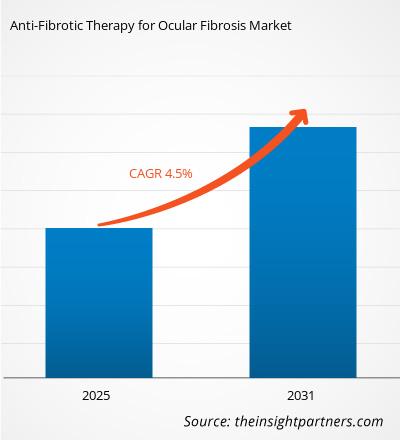
Segmentation Analysis
Type
The Type segment is growing at a CAGR of 8.4–9.0% during 2026–2034. The anti-fibrotic therapy for ocular fibrosis market scope by type is determined by disease location, target pathway, safety profile, and dosing practicality. Injections dominate because ocular fibrosis often requires localized drug exposure, while oral therapies may gain relevance as adjuncts for systemic inflammatory and fibrotic pathways.
- Injection therapies hold the strongest position because intravitreal, periocular, or procedure-linked delivery can target retinal or ocular tissues directly while limiting systemic exposure and improving physician control.
- Oral therapies remain strategically relevant where fibrosis is associated with chronic inflammation, diabetes, or systemic pathway modulation, but adoption depends on ocular bioavailability and safety evidence.
Applications
The Applications segment is growing at a CAGR of 8.6–9.2% during 2026–2034. Hospitals remain highly important for complex retinal surgery, severe trauma, proliferative vitreoretinopathy, and multidisciplinary diabetic care. Eye clinics are gaining share because recurring injections, imaging follow-up, and chronic retinal monitoring are increasingly delivered through specialized outpatient networks.
- Hospital applications are concentrated in tertiary ophthalmology departments, surgical retina units, trauma care, and patients with severe comorbidities requiring integrated diagnosis, pharmacy control, and procedure support.
- Eye Clinic demand is rising as dedicated retina practices manage repeated injections, imaging-based monitoring, patient recall systems, and earlier intervention for scarring risk outside inpatient systems.
Opportunity Snapshot
| Segment Name | Revenue Contribution | Trend Tag | Adoption Stage |
|---|---|---|---|
| Hospital | High | Surgical Retina | Mature |
| Eye Clinic | Medium | Injection Pathways | Scaling |
Anti-Fibrotic Therapy for Ocular Fibrosis Market Growth Drivers and Impact Analysis
Unmet Need in Retinal Scarring Control
Ocular fibrosis remains difficult to manage because current treatment often controls vascular leakage or inflammation without directly preventing extracellular matrix remodeling. In neovascular age-related macular degeneration, fibrosis can develop despite anti-VEGF therapy, and specialist commentary from FLOREtina 2025 highlighted that up to one-third of treated eyes may develop fibrotic scars within 1 year and nearly half by 2 years. This creates a clear clinical need for drugs that address scarring mechanisms. The real-world impact is significant because fibrotic tissue can reduce visual recovery, increase monitoring complexity, and limit the value of otherwise effective retinal therapies. Products demonstrating fibrosis-specific anatomical benefit will gain strong physician interest.
Expansion of Intravitreal Treatment Infrastructure
The growing base of retina clinics, injection rooms, imaging suites, and ambulatory ophthalmology centers is improving the practical pathway for anti-fibrotic therapy use. Intravitreal treatment is already familiar to specialists managing age-related macular degeneration, diabetic macular edema, and retinal vein occlusion. This infrastructure lowers adoption barriers for new injectable fibrosis-modifying products because clinics already manage consent, sterile preparation, imaging review, patient recall, and adverse-event monitoring. The commercial impact is especially strong in the US, Europe, Japan, South Korea, and urban China, where high procedure volumes allow rapid protocol integration. Products with extended dosing and clear safety data can fit into existing workflows.
Rising Diabetic and Age-Related Eye Disease Burden
Diabetes, longer life expectancy, and age-related retinal degeneration are expanding the patient pool at risk of fibrotic damage. Retinal fibrosis is clinically relevant in diabetic macular edema, proliferative diabetic retinopathy, neovascular age-related macular degeneration, and proliferative vitreoretinopathy. As screening improves, more patients are identified before irreversible vision loss, creating opportunities for earlier intervention. The market impact is a shift from rescue therapy toward prevention of scarring progression. Pharmaceutical companies that can connect anti-fibrotic mechanisms with measurable imaging endpoints and functional preservation will strengthen payer and physician confidence, particularly where repeated eye-care visits already support longitudinal disease tracking.
Anti-Fibrotic Therapy for Ocular Fibrosis Market Future Trends
Fibrosis-Specific Imaging Endpoints
The next stage of anti-fibrotic therapy for ocular fibrosis market trends will emphasize imaging biomarkers that quantify hyperreflective material, subretinal fibrosis, retinal thickness, and extracellular remodeling. Optical coherence tomography, angiography, and AI-assisted image review will help distinguish fluid control from true fibrosis modification. This trend will influence trial design because regulators and clinicians need endpoints that connect anatomy with functional vision. Companies able to validate reproducible fibrosis measures can accelerate studies, support differentiated labeling and improve specialist adoption. Imaging-led evidence will also help eye clinics identify which patients require anti-fibrotic intervention rather than standard monitoring alone.
Combination Therapy With Anti-VEGF Regimens
Combination treatment models are expected to become more important because fibrosis and angiogenesis often interact in retinal disease progression. Future regimens may combine anti-VEGF drugs with TGF-beta pathway inhibition, kinase inhibition, or antisense approaches to reduce scarring while preserving vascular control. This approach could protect visual outcomes in patients who respond anatomically to anti-VEGF therapy but remain at risk of fibrotic remodeling. It may also improve treatment sequencing after surgery or retinal detachment repair. Manufacturers will need to prove compatibility, injection scheduling efficiency, and additive benefit without increasing inflammation or intraocular safety risks.
Anti-Fibrotic Therapy for Ocular Fibrosis Market Opportunities
Targeted Injectable Pipeline Development
Targeted injectable development offers a strong investment pathway because retina specialists already use procedure-based care and can adopt drugs that demonstrate clear anti-scarring benefit. The anti-fibrotic therapy for ocular fibrosis market Forecasts support programs focused on TGF-beta inhibition, cellular transition pathways, matrix regulation, and sustained intraocular exposure. Developers should prioritize biomarkers, controlled safety monitoring, and trial populations with measurable fibrosis risk. Partnerships with eye hospitals, imaging technology firms, and contract sterile manufacturers can reduce execution risk. The strongest opportunity is in products that extend beyond fluid reduction and prove preservation of retinal architecture and long-term visual function.
Outpatient Retina Clinic Commercial Models
Specialized eye clinics present an actionable opportunity because they manage high volumes of repeat retinal imaging, injections, and follow-up visits. Companies can support adoption through clinic education, injection scheduling guidance, patient identification tools, and reimbursement documentation. Products that simplify dosing or integrate with existing anti-VEGF calendars can reduce operational friction. This opportunity is strongest in the US, Japan, South Korea, Western Europe, and large private ophthalmology networks in India and China. Commercial success will depend on demonstrating that anti-fibrotic intervention improves outcomes without disrupting clinic throughput or adding avoidable monitoring burden.
Recent Developments
- July 2026: Ractigen Therapeutics announced US FDA IND clearance for RAG-1C, a first-in-class small activating RNA candidate for proliferative vitreoretinopathy. The company stated that the therapy is designed for intravitreal use and targets p21 activation to inhibit abnormal cellular proliferation and myofibroblast transformation in ocular fibrosis.
- September 2025: F. Hoffmann-La Roche Ltd reported new Vabysmo data from AVONELLE-X and SALWEEN at EURETINA 2025, showing maintained disease control over 4 years in neovascular age-related macular degeneration and lesion-related benefits in polypoidal choroidal vasculopathy, including complete lesion regression in more than 60% of patients.
- May 2025: Isarna Therapeutics GmbH presented final Phase 2 BETTER trial results for ISTH0036 at ARVO 2025. The selective TGF-beta2-blocking antisense oligonucleotide showed stable or improved best-corrected visual acuity, reduced central retinal thickness, and decreased fibrosis-associated hyperreflective material in wet age-related macular degeneration eyes.
Frequently Asked Questions

- Comprehensive Market Sizing and Forecast Analysis
- Detailed Segmentation Analysis
- In-Depth Market Dynamics Assessment
- Regional and Country-Level Insights
- Competitive Landscape and Company Benchmarking
- Strategic Business Intelligence
Recent Reports
Testimonials

The Insight Partners' SCADA System Market report is comprehensive, with valuable insights on current trends and future forecasts. The team was highly professional, responsive, and supportive throughout. We are very satisfied and highly recommend their services.
RAN KEDEM Partner, Reali Technologies LTDs
I requested a report on a very specific software market and the team produced the report in a few days. The information was very relevant and well presented. I then requested some changes and additions to the report. The team was again very responsive and I got the final report in less than a week.
JEAN-HERVE JENN Chairman, Future Analytica
We worked with The Insight Partners for an important market study and forecast. They gave us clear insights into opportunities and risks, which helped shape our plans. Their research was easy to use and based on solid data. It helped us make smart, confident decisions. We highly recommend them.
PIYUSH NAGPAL Sr. Vice President, High Beam Global
The Insight Partners delivered insightful, well-structured market research with strong domain expertise. Their team was professional and responsive throughout. The user-friendly website made accessing industry reports seamless. We highly recommend them for reliable, high-quality research services
YUKIHIKO ADACHI CEO, Deep Blue, LLC.
This is the first time I have purchased a market report from The Insight Partners.While I was unsure at first, I visited their web site and felt more comfortable to take the risk and purchase a market report.I am completely satisfied with the quality of the report and customer service. I had several questions and comments with the initial report, but after a couple of dialogs over email with their analyst I believe I have a report that I can use as input to our strategic planning process.Thank you so much for taking the extra time and making this a positive experience.I will definitely recommend your service to others and you will be my first call when we need further market data.
JOHN SUZUKI President and Chief Executive Officer, Board Director, BK Technologies
I wish to appreciate your support and the professionalism you displayed in the course of attending to my request for information regarding to infectious disease IVD market in Nigeria. I appreciate your patience, your guidance, and the fact that you were willing to offer a discount, which eventually made it possible for us to close a deal. I look forward to engaging The Insight Partners in the future, all thanks to the impression you have created in me as a result of this first encounter.
DR CHIJIOKE ONYIA MANAGING DIRECTOR, PineCrest Healthcare Ltd.Reason to Buy
- Informed Decision-Making
- Understanding Market Dynamics
- Competitive Analysis
- Identifying Emerging Markets
- Customer Insights
- Market Forecasts
- Risk Mitigation
- Boosting Operational Efficiency
- Strategic Planning
- Investment Justification
- Tracking Industry Innovations
- Aligning with Regulatory Trends





 Get Free Sample for