
Anti-Neoplastic Agents Market Trends, Share & Demand by 2034
Coverage: By Type (Alkylating agents, Antimetabolites, Antitumor antibiotics, Plant alkaloids, Hormonal agents, Miscellaneous agents); End User (Hospitals, Clinics, Research institutes, Cancer rehabilitation centers, Others) , and Geography (North America, Europe, Asia Pacific, and South and Central America)
- Status : Data Released
- Report Code : TIPRE00018080
- Category : Life Sciences
- No. of Pages : 150
- Available Report Formats :


- Last update date : August 14, 2026


2025 Market Size
US$ 162.88 Bn
Base year value
2034 Forecast
US$ 449.35 Bn
Projected by 2034
CAGR 2026-2034
11.94 %
Growth rate
Addressable Market
US$ 2,687.18 Bn
(2026-2034)
The anti-neoplastic agents market was valued at US$ 162.88 Billion in 2025 and is projected to reach US$ 449.35 Billion by 2034, registering a CAGR of 11.94% during 2026–2034. Expansion is linked to rising cancer incidence, broader oncology drug access, increasing treatment-line sequencing, and continued movement from cytotoxic monotherapy toward combination regimens using chemotherapy, hormonal therapy, targeted agents, and supportive oncology protocols.
In North America, the anti - neoplastic agents market size is supported by high oncology spending, advanced cancer centers, clinical trial density, and rapid uptake of premium therapies. The region is estimated to grow at a CAGR range of 10.8–11.4% during 2026–2034, driven by biomarker-guided treatment adoption and reimbursement pathways that support both hospital-administered and outpatient oncology drugs.
Anti-Neoplastic Agents Market Assessment and Insights
- North America held 42–45% share in 2025 and is expected to grow at a CAGR between 2026–2034 of 10.8–11.4%, supported by oncology infrastructure, high therapy intensity, precision diagnostics, and specialist prescribing.
- US accounted for 84–88% of North America in 2025 and is projected to grow at a CAGR between 2026–2034 of 10.7–11.3%, led by trial access and premium drug use.
- Europe held 25–28% share in 2025 and is expected to grow at a CAGR between 2026–2034 of 9.7–10.3%, with Germany, France, the UK, Italy, and Spain leading adoption.
- Asia Pacific represented 21–24% share in 2025 and is expected to grow at a CAGR between 2026–2034 of 13.1–13.7%, led by China, Japan, India, South Korea, and Australia.
- Largest Segment Type held 68–72% market share in 2025 and is expected to grow at a CAGR range of 11.5–12.1% during 2026–2034 as multi-class regimens expand.
- High Growth Segment Cancer rehabilitation centers recorded 5–8% market share in 2025 and are projected to grow at a CAGR range of 12.8–13.4% during 2026–2034 as survivorship care scales.
- Key companies analyzed in detail: Amgen Inc., Boehringer Ingelheim International GmbH, F. Hoffmann-La Roche Ltd, Bayer AG, Aspen Pharmacare Holdings Limited, Pfizer Inc., Bristol-Myers Squibb Company, Baxter International Inc., Teva Pharmaceutical Industries Ltd., Genentech, Inc.
Source: The Insight Partners' analysis based on proprietary research, government publications, company annual reports, investor presentations, industry databases, and expert interviews.
The development of drugs to treat cancers has moved from general cytotoxic drugs to biomarker-guided drug sequencing, immunotherapy combinations, and advanced administration settings. The antineoplastics market is driven by sterile injection manufacturing, handling of potent drug substance, pharmacovigilance, and oncology pharmacy operations. Manufacturing trends currently favor resilient production of legacy generic drugs along with innovative manufacturing of biological drugs, targeted drugs, antibody drug conjugates, and oral oncology drugs.
Future demand will increasingly arise from the Asian Pacific, the Middle East, and selected Latin American countries as cancer screening and payment improve, and as private oncology networks emerge. Favorable regulatory trends include rapid review process, orphan oncology, biosimilar programs, and national cancer control programs. WHO & IARC estimates there will be 20 million new cancer cases and 9.7 million deaths due to cancer in 2022.
Anti-Neoplastic Agents Market Report Scope
| Report Attribute | Details |
|---|---|
| Market size in 2025 | US$ 162.88 Billion |
| Market Size by 2034 | US$ 449.35 Billion |
| Global CAGR (2026 - 2034) | 11.94% |
| Historical Data | 2021-2024 |
| Forecast period | 2026-2034 |
Anti-Neoplastic Agents Market Analysis
Increasing diagnosis, duration of treatment, and use of therapy lines have been instrumental in driving the market for antineoplastic drugs. High demand prevails in regions where tumor boards incorporate surgery, radiotherapy, systemic treatment, genomics, and supportive care. The supply chain consists of active ingredient suppliers, oncology drug producers, hospitals pharmacies, infusion centers, research organizations, oncology distributors, payers, diagnostic companies, and rehabilitation centers.
Supply chain challenges entail consistent investment in aseptic filling, cold chain logistics, high potency handling, and shortage prevention of injectable chemotherapies. Hospitals continue to dominate as the major administration centers, although there has been an increase in clinics and ambulatory infusion centers. Research organizations drive the market by creating knowledge on combination therapy, dosing, resistance, and indications.
The Anti - Neoplastic Agents market analysis exhibits an industry scenario which is dominated by global oncology innovations companies, generics injectable providers and biologics providers. F. Hoffmann-La Roche Ltd & Genentech, Inc. continue to exert influence on targeted and immune oncology while competitors of solid tumors and hematology include Bristol-Myers Squibb Company, Pfizer Inc., Bayer AG and Amgen Inc.
Strategic Positioning of market players in future depends increasingly on pipeline strength, companion diagnostics, real world evidence and lifecycle management. Boehringer Ingelheim International GmbH is involved in targeted oncology discovery, Baxter International Inc. in hospital injectables, Teva Pharmaceutical Industries Ltd. in generics and Aspen Pharmacare Holdings Limited in oncology provision.
● REPORT CUSTOMIZATION
Tailor This Report To Align With Your Specific Business Requirements
This report can be customized to align precisely with your business objectives, scope, and target markets. Customization options include tailored segmentation, geography, competitive analysis, and strategic insights to support informed decision-making.
Customize This Report →WHAT YOU CAN ADJUST
- ● Segmentations
- ● Geography
- ● Competitive Analysis
- ● Language Preferences
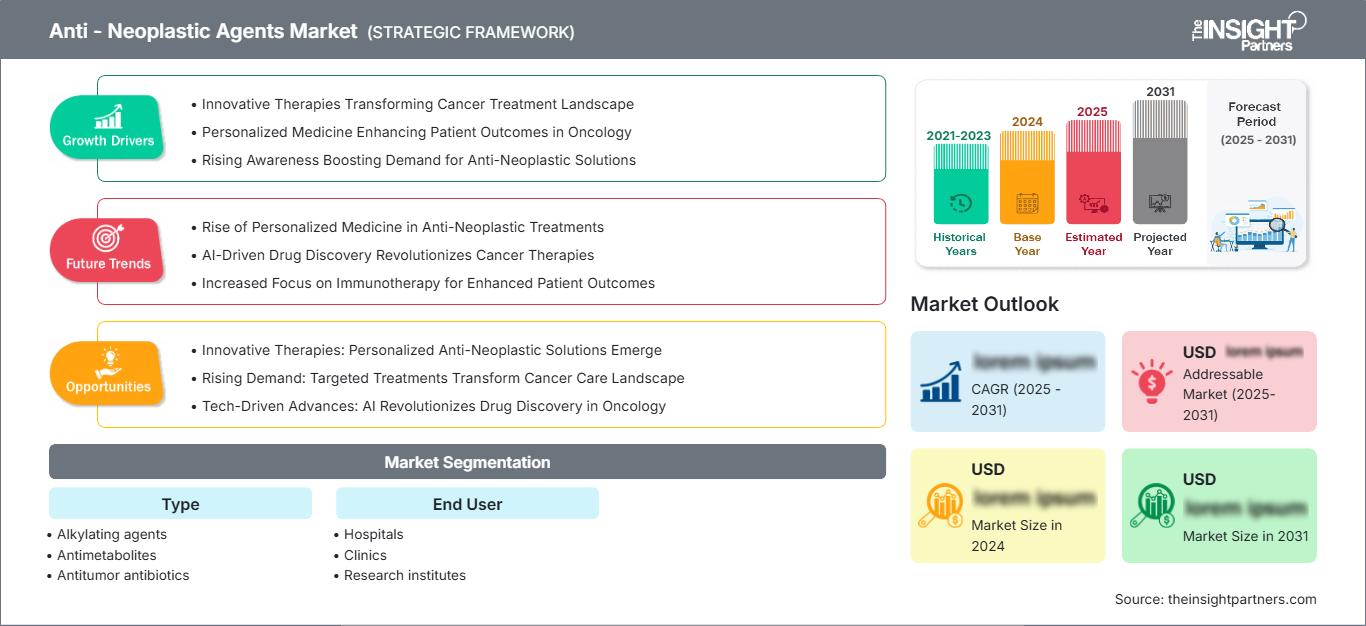
Anti-Neoplastic Agents Market: Strategic Insights
Regional Insights
North America anti - neoplastic agents market
North America held 42–45% share in 2025 and is projected to grow at a CAGR range of 10.8–11.4% during 2026–2034. The anti - neoplastic agents market share is supported by sophisticated oncology networks, broad genomic testing, early treatment switching, and substantial use of high-value branded therapies.
Large academic centers drive clinical adoption, while community oncology practices broaden drug utilization outside tertiary hospitals. Demand is supported by payer coverage for guideline-based regimens, specialty pharmacy services, and high clinical trial availability. Regional constraints include prior authorization, drug-cost scrutiny, and pressure to use biosimilars where clinically appropriate.
U.S. anti - neoplastic agents Market
The U.S. accounted for 84–88% of North America in 2025 and is projected to grow at a CAGR range of 10.7–11.3% during 2026–2034. The country’s oncology ecosystem includes research hospitals, cancer networks, ambulatory infusion clinics, specialty pharmacies, and decentralized trial sites.
Company presence is extensive, with Amgen Inc., Pfizer Inc., Bristol-Myers Squibb Company, Genentech, Inc., and Baxter International Inc. active across innovation, supply, or hospital oncology channels. Application trends include biomarker-guided prescribing, oral oncology dispensing, oncology biosimilar conversion, and increasing use of treatment sequencing based on molecular recurrence risk.
Europe anti - neoplastic agents Market
Europe held 25–28% share in 2025 and is forecast to grow at a CAGR range of 9.7–10.3% during 2026–2034. Germany leads regional value through hospital oncology capacity, strong reimbursement, and early uptake of innovative medicines. The UK contributes through national appraisal systems and organized cancer-service networks.
France, Italy, and Spain add steady demand through public oncology centers, screening programs, and biosimilar use that improves budget flexibility. Market development is shaped by European Medicines Agency approvals, country-level health technology assessment, tendering, and growing patient access programs for high-need tumor types.
APAC anti - neoplastic agents Market
APAC had a market share of 21–24% in 2025 and will have an estimated CAGR of 13.1–13.7% between 2026 and 2034. China is driving regional growth through investments in oncology hospitals, drug innovations, and inclusion in the reimbursement list. Advanced treatment uptake is promoted by Japan and South Korea, whereas India and Australia increase volume and clinical trial capacity.
Industrial drivers in APAC include biologics production, contract development, and generic oncology production. Policy initiatives are cancer screening, pricing negotiations, essential medicines availability, and clinical trials modernization.
Middle East & Africa anti - neoplastic agents Market
The Middle East & Africa is projected to grow at a CAGR range of 10.4–11.0% during 2026–2034. Saudi Arabia leads adoption through specialist cancer centers, national health investment, and expanding oncology pharmacy infrastructure. The UAE supports premium private treatment access and medical tourism-linked cancer care.
South Africa remains the key sub-Saharan contributor, with demand concentrated in urban oncology hospitals. Rest of MEA growth is limited by affordability and specialist shortages, although public-private investment is improving chemotherapy access, diagnostics, and referral pathways.
Segmentation Analysis
Type
The Type segment is projected to grow at a CAGR range of 11.5–12.1% during 2026–2034. The anti - neoplastic agents market scope by type is shaped by tumor biology, treatment line, toxicity profile, resistance pattern, and combination strategy. Conventional chemotherapy remains essential, while hormonal agents and miscellaneous targeted options grow as clinicians tailor regimens for longer disease control.
- Alkylating agents remain important in hematologic malignancies and selected solid tumors, with demand supported by established protocols, transplant conditioning, and combination regimens.
- Antimetabolites are widely used across gastrointestinal, breast, hematologic, and pancreatic cancers, making them strategically important for both branded combinations and generic supply.
- Antitumor antibiotics retain clinical relevance in breast cancer, lymphoma, sarcoma, and leukemia, although cardiotoxicity monitoring shapes dosing and patient selection.
- Plant alkaloids support demand in lung, breast, ovarian, and hematologic cancers, with usage influenced by infusion capacity, neuropathy management, and combination sequencing.
- Hormonal agents are central to breast and prostate cancer management, benefiting from chronic therapy duration, oral administration, and expanding disease-stage use.
- Miscellaneous agents include differentiated targeted and supportive categories that address resistant tumors, biomarker-selected populations, and specialized oncology protocols.
End User
The End User segment is projected to grow at a CAGR range of 12.0–12.6% during 2026–2034. Hospitals dominate advanced administration because many regimens require infusion infrastructure, toxicity monitoring, inpatient care, and multidisciplinary management. Clinics are expanding through ambulatory oncology, while research institutes and rehabilitation centers support evidence generation and survivorship pathways.
- Hospitals remain the principal users for complex chemotherapy, biologics, immunotherapy combinations, emergency toxicity management, inpatient hematology, and high-risk oncology care.
- Clinics are gaining importance as outpatient infusion, oral oncology monitoring, and community-based treatment models reduce pressure on large hospitals.
- Research institutes influence adoption through clinical trials, translational oncology, biomarker validation, and evidence generation for combination and sequencing strategies.
- Cancer rehabilitation centers are strategically relevant as survivorship care expands, supporting functional recovery, symptom control, nutrition, and therapy adherence after intensive treatment.
Opportunity Snapshot
| Segment Name | Revenue Contribution | Trend Tag | Adoption Stage |
|---|---|---|---|
| Hospitals | High | Infusion Care | Mature |
| Clinics | High | Ambulatory Oncology | Scaling |
| Research institutes | Medium | Trial Networks | Scaling |
| Cancer rehabilitation centers | Medium | Survivorship Care | Emerging |
Anti-Neoplastic Agents Market Growth Drivers and Impact Analysis
Rising global cancer burden and treatment intensity
Cancer incidence is increasing as populations age, screening improves, and risk factors such as tobacco exposure, obesity, infection, and environmental stress persist. IARC reported close to 20 million new cancer cases and 9.7 million cancer deaths in 2022, while demographic projections indicate annual cases could reach 35 million by 2050. This burden directly expands demand for systemic treatment classes used across solid tumors and hematologic malignancies. The commercial impact is visible in higher therapy-line utilization, broader hospital oncology capacity, and greater need for affordable generics plus innovative medicines that improve survival.
Expansion of precision oncology and combination regimens
Biomarker testing is moving antineoplastic prescribing from tumor-type generalization toward mutation, receptor, pathway, and resistance-based selection. This shift increases use of targeted combinations, maintenance therapy, and sequential treatment after relapse. Hospitals and clinics are investing in molecular tumor boards, companion diagnostics, and electronic decision support to improve regimen selection. Drug developers benefit when therapies demonstrate meaningful progression-free or overall survival improvements in defined populations. The real-world effect is higher revenue per treated patient, stronger differentiation for novel agents, and continued demand for conventional classes used as backbone therapy.
Growth of oncology access infrastructure in emerging systems
Emerging healthcare systems are expanding cancer centers, infusion suites, pathology labs, and reimbursement pathways. This infrastructure growth increases diagnosis rates and converts untreated demand into formal therapy utilization. China, India, the Gulf countries, and selected Southeast Asian markets are adding local manufacturing, public procurement, and private specialty care capacity. The impact is twofold: generic chemotherapy gains volume through essential treatment access, while premium agents enter through reimbursement pilots, private insurance, and hospital formularies. Companies with localization strategies, supply resilience, and tiered access programs can capture faster regional uptake.
Anti-Neoplastic Agents Market Future Trends
Biomarker-led therapy sequencing
Biomarker-led sequencing is expected to define anti - neoplastic agents market trends as clinicians use genomic, proteomic, and minimal residual disease signals to choose treatment order, escalation, or de-escalation. Future regimens will rely less on broad tumor categories and more on resistance mechanisms detected at baseline or relapse. This will increase demand for companion diagnostics, tissue and liquid biopsy integration, and adaptive prescribing. Companies that align drugs with validated biomarkers can improve trial efficiency, payer confidence, and clinical adoption in competitive tumor settings.
Shift toward outpatient and oral oncology models
Treatment delivery will continue shifting from inpatient administration to outpatient infusion centers, clinics, and specialty pharmacies where safety protocols allow. Oral therapies, subcutaneous formulations, and shorter infusion protocols reduce hospital burden and improve patient convenience. This trend will require stronger adherence monitoring, toxicity triage, and coordination between oncologists, pharmacists, and caregivers. Commercial models will increasingly bundle medicine access with patient services, digital reminders, lab monitoring, and reimbursement support to sustain outcomes outside hospital walls.
Anti-Neoplastic Agents Market Opportunities
Localized oncology manufacturing and supply security
Manufacturers can invest in regional sterile injectable capacity, high-potency containment, and resilient sourcing for essential chemotherapy to reduce shortage exposure. anti - neoplastic agents market Forecasts indicate that expanded demand will intensify pressure on supply chains, especially for low-margin but clinically indispensable products. Opportunity areas include contract manufacturing partnerships, government procurement alliances, and portfolio rationalization that protects older medicines. Companies that can guarantee continuity, quality, and regulatory compliance will gain preference in hospital tenders and national cancer programs.
Integrated survivorship and therapy-support services
Oncology stakeholders can build differentiated programs around symptom management, rehabilitation referral, adherence support, nutrition, and real-world outcome tracking. These services are commercially attractive because longer survival increases the need for chronic monitoring and supportive care. Hospitals, clinics, distributors, and pharmaceutical companies can collaborate to reduce treatment interruptions and improve persistence. The opportunity is strongest where value-based care expands, because payers increasingly evaluate not only drug response but also hospitalization, toxicity, functional recovery, and quality-of-life outcomes.
Recent Developments
- July 2026: Bristol-Myers Squibb Company announced that the U.S. Food and Drug Administration accepted its New Drug Application for mezigdomide in combination with carfilzomib and dexamethasone for relapsed or refractory multiple myeloma, based on SUCCESSOR-2 results showing a 52% reduction in disease progression or death risk versus standard care.
- June 2026: F. Hoffmann-La Roche Ltd announced positive phase III Krascendo 1 results for divarasib in previously treated KRAS G12C non-small cell lung cancer, reporting clinically meaningful and statistically significant improvements in progression-free survival and overall survival compared with approved first-generation KRAS G12C inhibitors.
- June 2026: Amgen Inc. received European Commission approval for IMDYLLTRA as monotherapy for extensive-stage small cell lung cancer after progression on or after platinum-based chemotherapy, supported by DeLLphi-304 data showing a 40% reduction in risk of death compared with chemotherapy.
Frequently Asked Questions

- Comprehensive Market Sizing and Forecast Analysis
- Detailed Segmentation Analysis
- In-Depth Market Dynamics Assessment
- Regional and Country-Level Insights
- Competitive Landscape and Company Benchmarking
- Strategic Business Intelligence
Recent Reports
Testimonials

The Insight Partners' SCADA System Market report is comprehensive, with valuable insights on current trends and future forecasts. The team was highly professional, responsive, and supportive throughout. We are very satisfied and highly recommend their services.
RAN KEDEM Partner, Reali Technologies LTDs
I requested a report on a very specific software market and the team produced the report in a few days. The information was very relevant and well presented. I then requested some changes and additions to the report. The team was again very responsive and I got the final report in less than a week.
JEAN-HERVE JENN Chairman, Future Analytica
We worked with The Insight Partners for an important market study and forecast. They gave us clear insights into opportunities and risks, which helped shape our plans. Their research was easy to use and based on solid data. It helped us make smart, confident decisions. We highly recommend them.
PIYUSH NAGPAL Sr. Vice President, High Beam Global
The Insight Partners delivered insightful, well-structured market research with strong domain expertise. Their team was professional and responsive throughout. The user-friendly website made accessing industry reports seamless. We highly recommend them for reliable, high-quality research services
YUKIHIKO ADACHI CEO, Deep Blue, LLC.
This is the first time I have purchased a market report from The Insight Partners.While I was unsure at first, I visited their web site and felt more comfortable to take the risk and purchase a market report.I am completely satisfied with the quality of the report and customer service. I had several questions and comments with the initial report, but after a couple of dialogs over email with their analyst I believe I have a report that I can use as input to our strategic planning process.Thank you so much for taking the extra time and making this a positive experience.I will definitely recommend your service to others and you will be my first call when we need further market data.
JOHN SUZUKI President and Chief Executive Officer, Board Director, BK Technologies
I wish to appreciate your support and the professionalism you displayed in the course of attending to my request for information regarding to infectious disease IVD market in Nigeria. I appreciate your patience, your guidance, and the fact that you were willing to offer a discount, which eventually made it possible for us to close a deal. I look forward to engaging The Insight Partners in the future, all thanks to the impression you have created in me as a result of this first encounter.
DR CHIJIOKE ONYIA MANAGING DIRECTOR, PineCrest Healthcare Ltd.Reason to Buy
- Informed Decision-Making
- Understanding Market Dynamics
- Competitive Analysis
- Identifying Emerging Markets
- Customer Insights
- Market Forecasts
- Risk Mitigation
- Boosting Operational Efficiency
- Strategic Planning
- Investment Justification
- Tracking Industry Innovations
- Aligning with Regulatory Trends





 Get Free Sample for