
Anti-Retroviral Drugs Market Size, Share & Demand by 2034
Anti-Retroviral Drugs Market Size and Forecasts (2021 - 2034), Global and Regional Share, Trends, and Growth Opportunity Analysis Report Coverage : by Drug Class (Nucleoside Reverse Transcriptase Inhibitors, Non-Nucleoside Reverse Transcriptase Inhibitors, Protease Inhibitors, Entry Inhibitors, Combination Drugs); Distribution Channel (Hospital Pharmacy, Retail Pharmacy, Online Channel); and Geography (North America, Europe, Asia Pacific, and South and Central America)
- Status : Data Released
- Report Code : TIPRE00040024
- Category : Life Sciences
- No. of Pages : 150
- Available Report Formats :


- Last update date : August 26, 2026


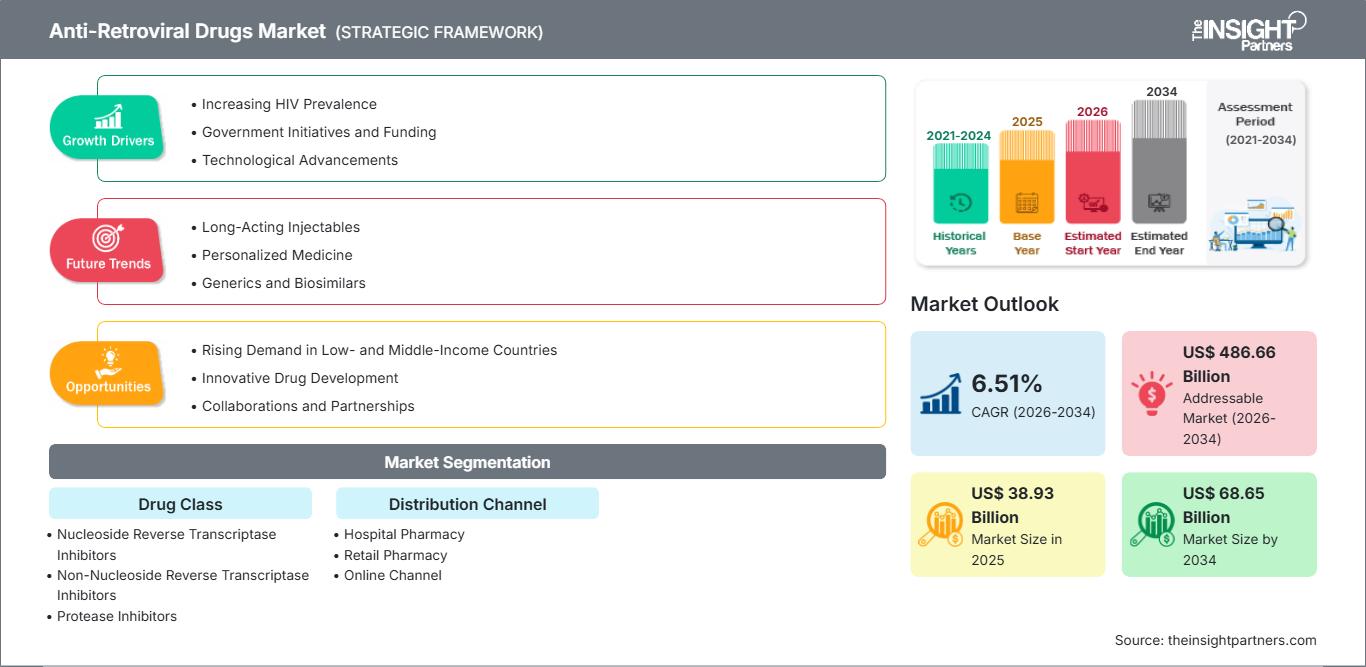
2025 Market Size
US$ 38.93 Bn
Base year value
2034 Forecast
US$ 68.65 Bn
Projected by 2034
CAGR 2026-2034
6.51 %
Growth rate
Addressable Market
US$ 486.66 Bn
(2026-2034)
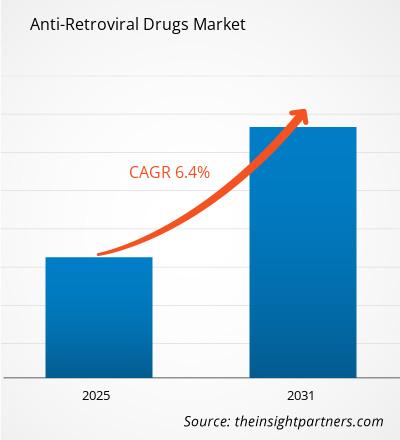
The anti-retroviral drugs market size is estimated to be US$ 38.93 Billion in 2025 and is forecasted to be US$ 68.65 Billion by 2034, growing at a CAGR of 6.51% from 2026-2034. This growth is driven by consistent treatment demands, accessibility to antiretroviral treatments, ongoing improvements in treatment regimens, and an increase in the adoption of fixed-dose and long-acting drug formulations.
The market for anti-retroviral drugs in North America is underpinned by high levels of treatment coverage, the availability of specialized facilities for HIV treatment, reimbursement schemes, and quick adoption of advanced drug formulations. The growth rate is expected to be 5.8-6.3% between 2026-2034.
Anti-Retroviral Drugs Market Assessment and Insights
- North America: The region is estimated to account for 40–44% share in 2025 and grow at a CAGR of 5.8–6.3% during 2026–2034, supported by high treatment access and premium innovative therapies.
- US: The US is estimated to represent 78–82% of North American revenue in 2025 and expand at a CAGR of 5.7–6.2% during 2026–2034, led by broad treatment coverage.
- Europe: Europe is estimated to hold 25–29% share in 2025 and grow at 5.9–6.4%, with Germany, the UK, France, Italy, and Spain supporting demand through established HIV programs.
- Asia Pacific: Asia Pacific is estimated to represent 18–22% share in 2025 and expand at 7.0–7.6%, led by China, India, Japan, and South Korea as diagnosis and treatment access improve.
- Largest Segment: Combination drugs hold an estimated 52–56% market share in 2025 and are projected to grow at 6.7–7.2%, reflecting preference for simplified complete regimens.
- High Growth Segment: Entry inhibitors account for an estimated 6–10% share in 2025 and are expected to grow at 8.5–9.5%, supported by differentiated mechanisms and long-acting innovation.
- Key companies analyzed in detail: Gilead Sciences, Inc.; Bristol-Myers Squibb Company; ViiV Healthcare Limited; AbbVie Inc.; Merck & Co., Inc.; Janssen Pharmaceutical Companies of Johnson & Johnson; Viatris Inc.; Hetero Drugs Limited; Aurobindo Pharma Limited; Teva Pharmaceutical Industries Ltd.
Source: The Insight Partners' analysis based on proprietary research, government publications, company annual reports, investor presentations, industry databases, and expert interviews.
The evolution in the treatment architecture is now from a multi-tablet, toxicity-focused combination to a simplified combination with better tolerance, resistance profile, and adherence attributes. In the meantime, manufacturing has become more diversified, with the originator companies owning differentiated assets while the generics manufacturers offering more affordable fixed-dose combinations. The long-acting technology is transforming the R&D focus, but the oral medication is still the key due to the established distribution system.
Future demand growth will be driven by the treatment coverage, early diagnosis, pediatric treatment, and differentiation rather than the incidence. Emerging markets are attractive for the volume opportunity due to the low levels of diagnosis and ART coverage in comparison to mature markets. Developed markets represent the value opportunity through the premium combination.
Anti-Retroviral Drugs Market Report Scope
| Report Attribute | Details |
|---|---|
| Market size in 2025 | US$ 38.93 Billion |
| Market Size by 2034 | US$ 68.65 Billion |
| Global CAGR (2026 - 2034) | 6.51% |
| Historical Data | 2021-2024 |
| Forecast period | 2026-2034 |
Anti-Retroviral Drugs Market Analysis
Market growth in anti-retroviral drugs is driven by a substantial patient population and the need for lifelong treatment. According to UNAIDS, 32.1 million individuals received antiretroviral therapy in 2025, compared to 7.7 million in 2010. This indicates the prolonged nature of the need for treatment. Supply chain comprises active pharmaceutical ingredient production, formulation, manufacture, regulatory clearance, tender process, distribution, pharmacies, and specialist service providers, thus generating multiple opportunities for price and availability to affect commercial value.
Guidance from WHO still focuses on optimal antiretroviral therapy, simplified care, and equitable access. This creates an environment which is favorable for those drugs that exhibit efficacy, safety, dosing convenience, and effective procurement. Competition in generic form continues to be relevant in high volume markets, whereas branded form continues to focus on differentiated mechanism, combinations, resistance management, and long-acting formulations.
Competition consists of diversified multinational portfolio players along with specialist HIV companies and major generic players. Gilead Sciences, Inc. is well positioned because of its HIV portfolio and capsid inhibitor technology, whereas ViiV Healthcare Limited is focusing entirely on treatment and long-acting formulations. Merck & Co., Inc. is developing differentiated oral combination treatments, and Janssen Pharmaceuticals of Johnson & Johnson continues to be relevant due to its rilpivirine-based treatment. Generic strength from Viatris Inc., Hetero Drugs Limited, Aurobindo Pharma Limited, and Teva Pharmaceutical Industries Ltd. is driving procurement-led markets.
Investment is becoming increasingly focused on dosing, barrier to resistance, simplification, and manufacturing partnerships. Bristol-Myers Squibb Company and AbbVie Inc. continue to be relevant because of their antiviral expertise, but the competitive differentiation is becoming increasingly important because of lifecycle and access management. Companies have to manage patent expirations, tender prices, regulatory differences, and channel economics.
● REPORT CUSTOMIZATION
Tailor This Report To Align With Your Specific Business Requirements
This report can be customized to align precisely with your business objectives, scope, and target markets. Customization options include tailored segmentation, geography, competitive analysis, and strategic insights to support informed decision-making.
Customize This Report →WHAT YOU CAN ADJUST
- ● Segmentations
- ● Geography
- ● Competitive Analysis
- ● Language Preferences
Anti-Retroviral Drugs Market: Strategic Insights
Regional Insights
North America Anti-retroviral drugs market
North America is estimated to hold 40–44% anti-retroviral drugs market share in 2025 and grow at a CAGR of 5.8–6.3% through 2034. High treatment coverage, specialist HIV clinics, reimbursement infrastructure, and access to branded therapies support regional value. The US dominates regional revenue because of its large treated population, high medicine expenditure, and rapid adoption of differentiated therapies. Canada contributes through publicly funded treatment and established provincial HIV programs.
Demand will be driven by regimen simplification, long-term therapy, resistance management, and patient preference. It also serves as a critical launch market for new formulations since the regulatory pathway and prescriber network make it easier to gain adoption. Payer discussions and pricing restrictions may limit unit price growth. Lifelong therapy and treatment coverage will help maintain low but steady growth going forward.
U.S. Anti-retroviral drugs Market
The US is estimated to account for 78–82% of North American revenue in 2025 and grow at a CAGR of 5.7–6.2% through 2034. The market benefits from extensive specialist care, private and public reimbursement, and a strong commercial pipeline. Gilead Sciences, Inc., ViiV Healthcare Limited, Merck & Co., Inc., and Janssen Pharmaceutical Companies of Johnson & Johnson maintain significant presence across established and emerging treatment approaches.
Trends in application include less frequent dosing and extended action where appropriate. Business decisions are based on formulary positioning, rebates, compliance, resistance experience, and total cost of treatment rather than list price. The hospital and specialty markets are still important for complicated drug therapy, while the retail market is used for oral chronic drug therapy. Innovation will continue to add value; however, pricing growth will be limited by payers and generic substitution in mature categories.
Europe Anti-retroviral drugs Market
Europe is expected to account for a 25-29% share in 2025 and have a CAGR of 5.9-6.4%. Countries like the UK, Germany, France, Italy, and Spain contribute to its revenue generation. Procurement procedures, universal or comprehensive healthcare coverage, and national treatment guidelines affect product choice, while generics pose an obstacle to price increase.
The UK and Germany are key contributors due to the presence of HIV services, specialist prescribing, and wide treatment availability. France, Italy, and Spain contribute to Europe's demand in terms of national HIV programs and specialist infectious disease networks. Simplification of treatment, long-acting drugs, and budget impact assessment increasingly shape Europe's adoption of HIV drugs.
APAC Anti-retroviral drugs Market
The APAC region will represent 18–22% share by 2025 with a CAGR of 7.0–7.6%. China leads the region, while India, Japan, South Korea, and Australia are key markets because of the increase in diagnosis, treatment availability, government programs, and specialists. The regional purchasing trend focuses on balancing cost and regimen quality.
China and India have a great volume opportunity, while Japan, South Korea, and Australia have high-value branded opportunity. Growth will be driven by policy developments, domestic production, generics, and better treatment adherence. There is still much growth opportunity in markets where baseline treatment is low.
Middle East & Africa Anti-retroviral drugs Market
MEA is expected to exhibit a CAGR of 6.9%-7.5% owing to higher value-based demand from Saudi Arabia and UAE and South Africa offering a substantial base for treatment volumes.
South Africa leads the pack in terms of treatment volumes, while Saudi Arabia and UAE help out through healthcare infrastructure and increasing specialization. RoMEA represents unmet need opportunity yet faces challenges in terms of affordability, logistics, and workforce. Investment in the energy sector can help boost healthcare infrastructure in the Gulf countries indirectly, while procurement by donors and governments will continue in high burden African countries.
Segmentation Analysis
Drug Class
The Drug Class segment defines an important part of the anti-retroviral drugs market scope and is expected to expand at a CAGR of 6.3–6.8% during 2026–2034. Portfolio demand is shifting toward combinations and mechanisms that improve suppression, tolerability, resistance management, and adherence. Entry-focused technologies can command strategic importance as differentiated options emerge, while established classes remain essential for combination therapy and generic procurement.
- Nucleoside Reverse Transcriptase Inhibitors: NRTIs remain foundational components of combination therapy because of extensive clinical experience, established manufacturing capacity, and broad availability. Their strategic role supports stable procurement across public and private treatment systems.
- Non-Nucleoside Reverse Transcriptase Inhibitors: NNRTIs retain relevance in selected regimens and markets, particularly where established products, affordability, or formulation familiarity influence prescribing. Lifecycle management and resistance considerations shape future utilization.
- Protease Inhibitors: Protease inhibitors remain important for specific treatment situations, including resistance management and populations requiring alternative regimens. Their demand is more clinically targeted than broad first-line use.
- Entry Inhibitors: Entry inhibitors offer differentiated mechanisms and potential value in patients requiring alternatives to established classes. Innovation in capsid and entry-related biology strengthens their strategic role.
- Combination Drugs: Combination drugs represent the core of simplified treatment strategies by reducing pill burden and supporting adherence. Fixed-dose products also streamline procurement, dispensing, and patient management.
Distribution Channel
The Distribution Channel segment is projected to grow at a CAGR of 6.0–6.5% during 2026–2034. Channel economics vary substantially by healthcare system, with hospital and public procurement channels dominating structured treatment programs while retail and online channels support decentralized access.
- Hospital Pharmacy: Hospital pharmacies remain strategically important for initiation, specialist management, complex cases, and publicly funded treatment programs. Their purchasing decisions emphasize formulary status, clinical evidence, supply reliability, and budget impact.
- Retail Pharmacy: Retail pharmacies support recurring dispensing of oral therapies and improve convenience for stable patients. Their role expands where outpatient HIV care is decentralized and reimbursement systems permit community dispensing.
- Online Channel: Online channels can improve convenience and refill access for selected patients, particularly in digitally mature markets. Regulatory controls, prescription requirements, privacy, and cold-chain considerations determine their practical scope.
Opportunity Snapshot
| Drug Class | Revenue Contribution | Trend Tag | Adoption Stage |
| Nucleoside Reverse Transcriptase Inhibitors | High | Core backbone | Mature |
| Non-Nucleoside Reverse Transcriptase Inhibitors | Medium | Resistance tailoring | Mature |
| Protease Inhibitors | Medium | Salvage therapy | Mature |
| Entry Inhibitors | Low | Novel mechanisms | Emerging |
| Combination Drugs | High | Regimen simplification | Mature |
Anti-Retroviral Drugs Market Growth Drivers and Impact Analysis
Expansion of Treatment Coverage and Continuity
The expanding treated population creates a durable demand base because antiretroviral therapy generally requires sustained use after initiation. UNAIDS reported 32.1 million people accessing therapy in 2025, while 78% of people living with HIV were receiving treatment. The remaining treatment gap creates additional volume potential when diagnosis, linkage, and retention improve. Commercial impact is strongest in countries where public procurement can convert higher diagnosis into recurring medicine demand. However, access growth is not uniform, and disruptions in testing, funding, or healthcare delivery can delay new patient starts. Manufacturers therefore benefit from products that can be supplied reliably at scale, including affordable fixed-dose combinations. The structural effect is a larger addressable treated population, while product differentiation determines how much incremental value is captured per patient.
Regimen Simplification and Long-Acting Innovation
Treatment development is increasingly focused on reducing dosing frequency and simplifying complete regimens. WHO updated HIV clinical management recommendations in December 2025, reinforcing the policy direction toward optimized therapy, while industry pipelines are advancing injectable and simplified oral approaches. Lower dosing frequency can improve convenience and potentially support persistence for appropriate patients, but it also changes the economics of administration, inventory, and clinical infrastructure. Long-acting therapies may shift expenditure from recurring pharmacy dispensing toward scheduled healthcare encounters and specialized distribution. Manufacturers that combine durable efficacy with manageable administration requirements can differentiate in premium markets. The commercial opportunity is therefore not limited to a new molecule; it extends across formulation technology, injection delivery, patient support, provider training, and supply-chain execution.
Generic Competition and Access-Oriented Procurement
Generic manufacturing continues to influence treatment affordability, especially where governments and international programs procure antiretrovirals through tenders. WHO recommendations emphasize equitable access and people-centred service delivery, while generic suppliers provide manufacturing scale for widely used regimens. Lower unit prices can expand treatment coverage but also compress revenue per patient, increasing the importance of manufacturing efficiency and reliable supply. Originator companies increasingly use voluntary licensing, differentiated access programs, and portfolio segmentation to expand reach while protecting innovation economics. For generic manufacturers, the opportunity depends on regulatory approvals, quality consistency, active pharmaceutical ingredient security, and tender competitiveness. The net market impact is a broader treatment base combined with a more segmented value pool, where premium innovation and low-cost volume coexist.
Anti-Retroviral Drugs Market Future Trends
Long-Acting Treatment Moving Toward Longer Intervals
The anti-retroviral drugs market trends are likely to favor dosing intervals extending beyond conventional daily oral administration. ViiV Healthcare Limited reported phase 1 data in February 2026 for investigational VH184 and VH499, including potential for twice-yearly dosing for selected formulations. Such development can change adherence management and reduce daily pill burden, but adoption will depend on injection logistics, clinical workflow, storage requirements, patient selection, and reimbursement. As evidence matures, competitive differentiation will increasingly include duration of effect, resistance profile, administration burden, and total cost of care. The trend also creates opportunities for partnerships between pharmaceutical developers, specialty clinics, distributors, and health systems capable of supporting scheduled administration at scale.
Greater Integration of Pediatric and Differentiated Regimens
Pediatric and differentiated formulations are likely to receive greater attention as treatment programs seek to close coverage gaps across age groups and improve adherence. WHO guidance increasingly emphasizes simplified and equitable care, while formulation development can address swallowing difficulty, dosing precision, tolerability, and regimen completeness. For manufacturers, pediatric innovation can extend product lifecycles and improve access in public programs, although development must accommodate weight-based dosing and supply requirements. Differentiated service models may also combine community delivery, digital reminders, and multi-month dispensing where regulations allow. The competitive benchmark will increasingly shift toward how effectively products fit real-world care pathways, particularly in settings with constrained clinical capacity.
Anti-Retroviral Drugs Market Opportunities
Localized Manufacturing and Regional Supply Partnerships
The anti-retroviral drugs market Forecasts indicate increasing value in regional manufacturing partnerships that reduce supply dependence and improve procurement responsiveness. India already hosts substantial generic pharmaceutical capacity, while other emerging markets are strengthening local production and regulatory capabilities. Manufacturers can pursue contract manufacturing, technology transfer, licensing, and regional packaging arrangements to reduce logistics exposure and participate in government tenders. Such strategies are particularly relevant for high-volume fixed-dose combinations where price and supply reliability determine market access. Originators can use partnerships to expand differentiated products into eligible countries, while generic manufacturers can improve resilience through diversified active pharmaceutical ingredient sourcing. Investment priorities should focus on validated manufacturing capacity, regulatory compliance, quality systems, and predictable delivery rather than capacity expansion alone.
Access Models for Long-Acting Therapies in Emerging Markets
A second opportunity lies in developing access models that make long-acting therapies commercially and operationally feasible beyond premium markets. ViiV Healthcare Limited expanded voluntary licensing for long-acting cabotegravir treatment in 2025 to enable generic development and supply in 133 countries, illustrating how licensing can connect innovation with broader access. Manufacturers can build value through tiered pricing, local production, provider training, injection networks, and public procurement partnerships. The opportunity is especially relevant where daily oral adherence is difficult or healthcare systems seek differentiated delivery models. Strategies will require coordination among patent holders, generic manufacturers, governments, procurement agencies, and care providers, with commercial terms aligned to local affordability and infrastructure.
Recent Developments
- February 2026: ViiV Healthcare Limited presented phase 1 pipeline data for VH184 and VH499, reporting potential for twice-yearly dosing and highlighting development of long-acting HIV treatment options with differentiated potency, resistance characteristics, and tolerability.
- November 2025: Merck & Co., Inc. announced positive topline Phase 3 results for the investigational doravirine/islatravir once-daily two-drug single-tablet regimen, demonstrating non-inferiority to bictegravir/emtricitabine/tenofovir alafenamide in treatment-naive adults and supporting planned regulatory submissions.
- June 2025: Gilead Sciences, Inc. announced US FDA approval of twice-yearly injectable lenacapavir as HIV pre-exposure prophylaxis and described an access strategy involving voluntary licensing and broader availability planning for low- and middle-income countries.
Frequently Asked Questions

- Comprehensive Market Sizing and Forecast Analysis
- Detailed Segmentation Analysis
- In-Depth Market Dynamics Assessment
- Regional and Country-Level Insights
- Competitive Landscape and Company Benchmarking
- Strategic Business Intelligence
Recent Reports
Testimonials

The Insight Partners provided valuable market intelligence that supported our global go-to-market strategy. Their team was professional, responsive, and attentive to our feedback, providing thoughtful analysis and helpful methodological clarifications throughout the project.
Junmo Kim Chief Financial Officer (CFO), Enertech Co., Ltd.
The Insight Partners' SCADA System Market report is comprehensive, with valuable insights on current trends and future forecasts. The team was highly professional, responsive, and supportive throughout. We are very satisfied and highly recommend their services.
RAN KEDEM Partner, Reali Technologies LTDs
I requested a report on a very specific software market and the team produced the report in a few days. The information was very relevant and well presented. I then requested some changes and additions to the report. The team was again very responsive and I got the final report in less than a week.
JEAN-HERVE JENN Chairman, Future Analytica
We worked with The Insight Partners for an important market study and forecast. They gave us clear insights into opportunities and risks, which helped shape our plans. Their research was easy to use and based on solid data. It helped us make smart, confident decisions. We highly recommend them.
PIYUSH NAGPAL Sr. Vice President, High Beam Global
The Insight Partners delivered insightful, well-structured market research with strong domain expertise. Their team was professional and responsive throughout. The user-friendly website made accessing industry reports seamless. We highly recommend them for reliable, high-quality research services
YUKIHIKO ADACHI CEO, Deep Blue, LLC.
This is the first time I have purchased a market report from The Insight Partners.While I was unsure at first, I visited their web site and felt more comfortable to take the risk and purchase a market report.I am completely satisfied with the quality of the report and customer service. I had several questions and comments with the initial report, but after a couple of dialogs over email with their analyst I believe I have a report that I can use as input to our strategic planning process.Thank you so much for taking the extra time and making this a positive experience.I will definitely recommend your service to others and you will be my first call when we need further market data.
JOHN SUZUKI President and Chief Executive Officer, Board Director, BK Technologies
I wish to appreciate your support and the professionalism you displayed in the course of attending to my request for information regarding to infectious disease IVD market in Nigeria. I appreciate your patience, your guidance, and the fact that you were willing to offer a discount, which eventually made it possible for us to close a deal. I look forward to engaging The Insight Partners in the future, all thanks to the impression you have created in me as a result of this first encounter.
DR CHIJIOKE ONYIA MANAGING DIRECTOR, PineCrest Healthcare Ltd.Reason to Buy
- Informed Decision-Making
- Understanding Market Dynamics
- Competitive Analysis
- Identifying Emerging Markets
- Customer Insights
- Market Forecasts
- Risk Mitigation
- Boosting Operational Efficiency
- Strategic Planning
- Investment Justification
- Tracking Industry Innovations
- Aligning with Regulatory Trends





 Get Free Sample for