
Anti-Tuberculosis Therapeutics Market Growth, Demand & Size by 2034
Coverage: By Drug Class (Isoniazid, Rifampin, Ethambutol, Pyrazinamide, Fluoroquinolones, Aminoglycosides, Others); End User (Hospitals & Clinics, Government Agencies, Non Profit Organizations, Others) , and Geography (North America, Europe, Asia Pacific, and South and Central America)
- Status : Data Released
- Report Code : TIPRE00008533
- Category : Life Sciences
- No. of Pages : 150
- Available Report Formats :


- Last update date : August 21, 2026


2025 Market Size
US$ 1.42 Bn
Base year value
2034 Forecast
US$ 2.38 Bn
Projected by 2034
CAGR 2026-2034
5.95 %
Growth rate
Addressable Market
US$ 17.25 Bn
(2026-2034)
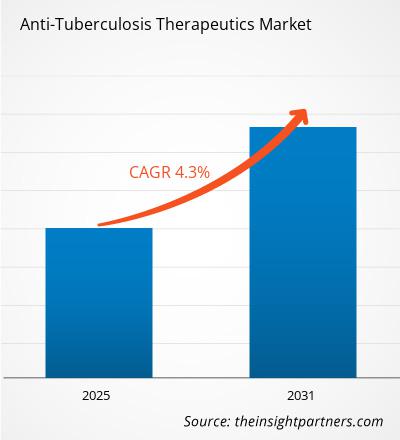
The anti-tuberculosis therapeutics market will see steady growth due to the effect of TB control program, resistance management, and treatment improvements on the pharmaceuticals' demand. The market is valued at US$ 1.42 Billion in 2025 and is forecast to grow to US$ 2.38 Billion by 2034 at a 5.95% CAGR from 2026 to 2034. Growth will be driven by the steady prevalence, diagnosis growth, increased access to the treatment, and the improvement of tolerable therapy regimens.
North America will enjoy relatively stable treatment market due to its public health monitoring, immigrant health screening, latent TB management, and advanced drug availability. Anti-tuberculosis Therapeutics Market Size in the region will grow at approximately 3.5–4.5% CAGR from 2026 to 2034, with increasing focus on drug-resistant TB, vulnerable population, and infectious diseases treatment programs.
Anti-Tuberculosis Therapeutics Market Assessment and Insights
- North America: North America is expected to represent 8–11% anti-tuberculosis therapeutics market share in 2025, with a 3.5–4.5% CAGR between 2026–2034, supported by specialized TB programs, drug-resistant disease management, and continued surveillance across the US and Canada.
- US: The US is expected to account for 75–82% of North America's 2025 market, growing at 3.5–4.5% CAGR between 2026–2034, supported by public-health treatment programs and resistant-TB management.
- Europe: Europe is estimated at 12–16% share in 2025, expanding at 4.0–5.0% CAGR between 2026–2034. Germany, the UK, France, Italy, and Spain remain important markets because of migration-linked surveillance and drug-resistant TB treatment requirements.
- Asia Pacific: Asia Pacific is expected to command 48–53% share in 2025, growing at 6.0–7.0% CAGR between 2026–2034, led by India, China, Indonesia, Japan, and South Korea amid high disease burden and government-led treatment programs.
- Largest Segment: Isoniazid is estimated to retain a 22–27% market share in 2025, with a 4.5–5.5% CAGR during 2026–2034, reflecting its continuing role in established combination regimens and preventive treatment.
- High Growth Segment: Fluoroquinolones are projected to represent 8–12% share in 2025, expanding at 6.5–7.5% CAGR during 2026–2034, supported by their importance in drug-resistant treatment strategies.
- Key companies analyzed in detail: Macleods Pharmaceuticals Ltd., Otsuka Pharmaceutical Co., Ltd., Johnson & Johnson Services, Inc., Pfizer Inc., Lupin Limited, Novartis AG, AstraZeneca PLC, Eli Lilly and Company, GlaxoSmithKline plc., and TB Alliance.
Source: The Insight Partners' analysis based on proprietary research, government publications, company annual reports, investor presentations, industry databases, and expert interviews.
Treatment has moved from long combination treatments to short all-oral treatments that are informed by resistance. Drug-susceptible standard treatment still depends on combinations of isoniazid, rifampin, ethambutol, and pyrazinamide, while drug-resistant disease has been increasingly using new drugs and combinations. This implies that production will be increasingly directed towards differentiated formulation, pediatric formulation, and quality assured generics, while procurement will be increasingly based on treatment completion, affordability, and continuous supply.
Future development is expected to focus on regimen shortening, resistance-informed treatment, pediatric formulation, and medicines that can serve more patients. High burden countries in South and Southeast Asia and Africa will continue to be the center of demand, while North American and European markets will be focusing on resistant disease and vulnerable groups. Regulator support for short all-oral regimens and better diagnostics-treatment integration will affect investment choices.
Anti-Tuberculosis Therapeutics Market Report Scope
| Report Attribute | Details |
|---|---|
| Market size in 2025 | US$ 1.42 Billion |
| Market Size by 2034 | US$ 2.38 Billion |
| Global CAGR (2026 - 2034) | 5.95% |
| Historical Data | 2021-2024 |
| Forecast period | 2026-2034 |
Anti-Tuberculosis Therapeutics Market Analysis
anti-tuberculosis therapeutics market is highly dependent on the detection, onset of treatment, treatment adherence, and procurement process. The industry consists of the manufacturers of active pharmaceutical ingredients, formulators, national TB programs, hospitals, pharmacies, laboratories, procurement agencies, and non-government organizations. According to WHO, there were 10.7 million new cases of TB in 2024, which occurred mostly in South-East Asia, Western Pacific, and Africa.
There is a high variation between the supply drivers in different categories of products. The first-line drugs are highly standardized and subject to generic competition, while the new-generation anti-TB drugs resistant to the treatment are characterized by differentiation and regulation. The volume of procurement is determined by government tenders and Global Drug Facility process. Therefore, the manufacturers compete on quality, production capacity, pediatric drugs, delivery, and pricing.
The anti-tuberculosis therapeutics market report indicates a dual-level competitive structure where generic companies like Macleods Pharmaceuticals Ltd., Lupin Limited, Pfizer Inc., and GlaxoSmithKline plc. compete within existing anti-infective product lines, whereas Otsuka Pharmaceutical Co., Ltd. and Johnson & Johnson Services, Inc. enjoy greater advantage within innovations in drug-resistant therapy. AstraZeneca PLC, Novartis AG, and Eli Lilly and Company provide wider infectious disease expertise and pharmaceutical infrastructure.
There is an increased focus on regimen innovation rather than single molecules. The pipeline of Otsuka includes delamanid and quabodepistat, where quabodepistat is at Phase III of development as a drug-resistant pulmonary TB therapy. Competitive positioning in such scenario is based on intellectual property, clinical evidence, manufacturing, governmental connections, and integration of innovative drugs into combinations.
● REPORT CUSTOMIZATION
Tailor This Report To Align With Your Specific Business Requirements
This report can be customized to align precisely with your business objectives, scope, and target markets. Customization options include tailored segmentation, geography, competitive analysis, and strategic insights to support informed decision-making.
Customize This Report →WHAT YOU CAN ADJUST
- ● Segmentations
- ● Geography
- ● Competitive Analysis
- ● Language Preferences
Anti-Tuberculosis Therapeutics Market: Strategic Insights
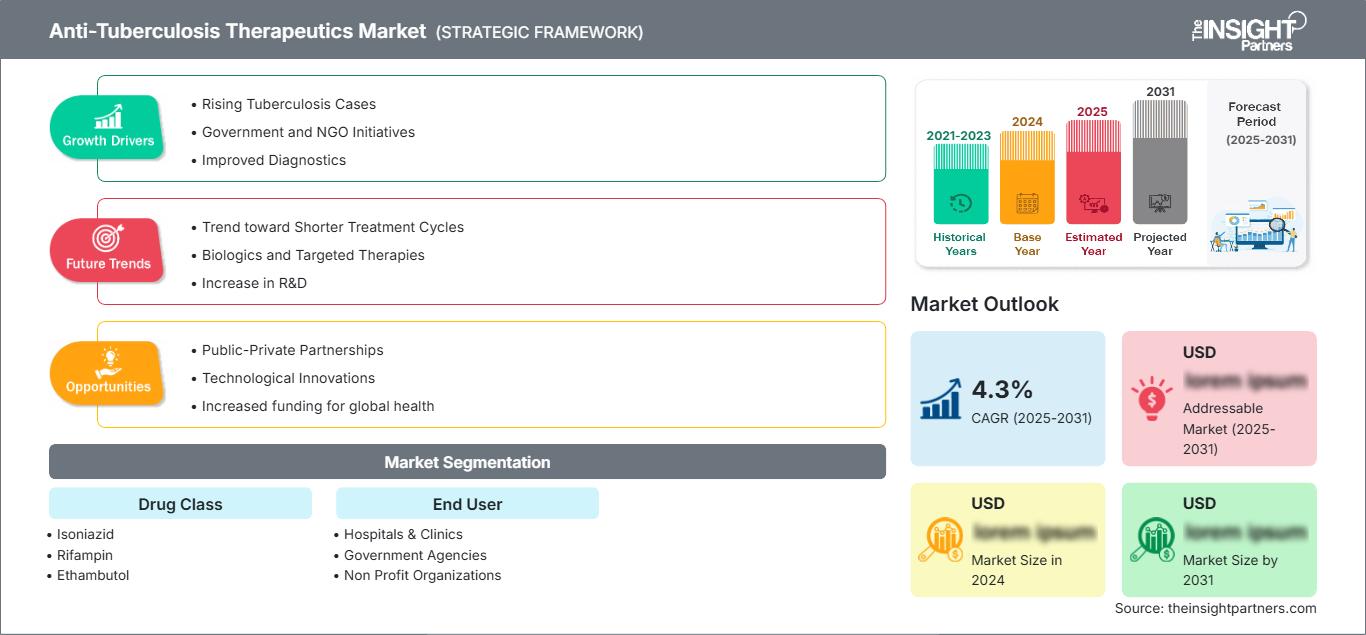
Regional Insights
North America anti-tuberculosis therapeutics market
North America will account for a share of 8–11% in 2025, with a 3.5–4.5% CAGR during 2026–2034. The regional market is relatively small as the prevalence of TB is lower compared to high-burden regions; however, treatment cost is driven by specialized care, testing for resistance, latent TB treatment, and expensive medicines. The United States is the main market, whereas Canada provides support through provincial health programs.
Treatment demand is seen among urban communities, immigrants, individuals suffering from immunocompromising diseases, and drug-resistant patients. There were 10,388 cases of TB in 2024 according to the surveillance data in the United States, which was followed by the provisionally reported 10,260 cases in 2025, indicating the need for treatment facilities despite relatively low population incidence.
U.S. anti-tuberculosis therapeutics Market
The US is estimated to contribute 75–82% of North America's 2025 market, growing at 3.5–4.5% CAGR during 2026–2034. Its market structure is shaped by state and federal TB programs, hospital infectious-disease departments, specialty pharmacies, and public procurement. Johnson & Johnson Services, Inc. has historically established a strong position in resistant-TB therapy through bedaquiline.
Application patterns are increasingly concentrated around drug-resistant disease, latent infection treatment, contact investigations, and high-risk populations. The CDC reported 10,388 cases in 2024, representing a 7.9% increase from 2023, before provisional 2025 data indicated a modest decline. These fluctuations support continued demand for surveillance-linked treatment capacity rather than broad population-wide medicine consumption.
Europe anti-tuberculosis therapeutics Market
The European market is predicted to represent 12-16% in 2025 and to increase at CAGR of 4.0-5.0% over 2026-2034. In Europe, the UK and Germany are key commercial markets, while France, Italy, and Spain drive the market via national TB programs, hospitals and migrant health programs. The problem of drug resistance is especially relevant in some regions of Eastern Europe and Central Asia.
The UK and Germany have low incidence and special needs for treatment. Germany has well-developed hospitals and infectious disease monitoring system, whereas the UK has developed systems for national TB control. France, Italy, and Spain are driven by vulnerable populations, migration and resistant disease. Resistance to drugs makes demand in the region high for advanced combination therapy.
APAC anti-tuberculosis therapeutics Market
The APAC region accounts for a 48–53% share in 2025, growing at a CAGR of 6.0–7.0% from 2026–2034. The largest market within APAC is India, followed by China, Indonesia, Japan, South Korea, and Australia. The significance of this region is based on disease burden, national programs for eradication, generic production, and diagnosis.
India and China will continue to be strategically significant due to large patient bases, whereas Japan, South Korea, and Australia will focus more on treatment quality and drug resistance. According to WHO data, in 2024, India accounted for 25% of all TB cases worldwide, whereas China contributed 6.5%.
Middle East & Africa anti-tuberculosis therapeutics Market
The Middle East and Africa have a smaller share of business opportunities but significant clinical demand, where 5.0% to 6.0% CAGR is expected for the period 2026 to 2034. Hospital-based management and testing for migrants is a priority in Saudi Arabia and UAE, while South Africa is the largest therapeutic market due to high incidence of TB and drug-resistant TB.
Demand in the rest of MEA is driven by donor-funded procurement, national programs, humanitarian health facilities, and drug availability. The World Health Organization estimates that 25% of total TB cases occurred in Africa in 2024, resulting in continued demand for affordable, quality assured drugs and reliable delivery channels. Investment in energy and infrastructure may help indirectly.
Segmentation Analysis
Drug Class
The Drug Class segment is projected to grow at 5.5–6.5% CAGR during 2026–2034. Established first-line medicines continue to generate the largest recurring volumes, while second-line and newer agents command greater strategic value because of resistance management. The segment's evolution is increasingly determined by combination therapy, treatment duration, resistance patterns, pediatric dosing, and procurement economics. The anti-tuberculosis therapeutics market scope therefore extends from high-volume generic medicines to specialized therapies for resistant disease.
- Isoniazid: Remains a foundational component of tuberculosis treatment and preventive therapy, supporting recurring demand through government programs, standardized regimens, and broad generic availability across high-burden markets.
- Rifampin: Maintains strong therapeutic importance because of its role in core combination regimens, creating consistent institutional procurement and continued manufacturing requirements.
- Ethambutol: Supports established first-line treatment combinations and remains strategically relevant where standardized treatment protocols continue to dominate national procurement.
- Pyrazinamide: Retains substantial clinical relevance within intensive-phase combination therapy, with demand closely connected to diagnosed drug-susceptible TB cases.
- Fluoroquinolones: Increasingly important for selected drug-resistant regimens, where susceptibility patterns and clinical guidelines determine utilization across specialist treatment centers.
- Aminoglycosides: Their strategic role is narrowing as all-oral regimens become preferred, but selected resistant cases continue to sustain specialized demand.
End User
The End User segment is expected to expand at 5.0–6.0% CAGR during 2026–2034. Government agencies remain central because TB treatment is predominantly financed or coordinated through public-health systems in high-burden countries. Hospitals and clinics handle diagnosis-linked treatment and complex cases, while nonprofit organizations provide procurement, community access, and treatment-support functions. This structure creates a market where institutional purchasing decisions strongly influence pharmaceutical volumes and product availability.
- Hospitals & Clinics: Remain critical for diagnosis-linked treatment, resistant cases, severe disease, pediatric management, and patients requiring clinical monitoring.
- Government Agencies: Represent the largest institutional purchasing influence through national TB programs, tenders, reimbursement mechanisms, centralized procurement, and treatment guidelines.
- Non Profit Organizations: Support access through donor-funded procurement, patient programs, community outreach, treatment adherence initiatives, and supply-chain strengthening in underserved markets.
Opportunity Snapshot
| Segment Name | Revenue Contribution | Trend Tag | Adoption Stage |
|---|---|---|---|
| Hospitals & Clinics | High | Resistant Care | Mature |
| Government Agencies | High | Tender Procurement | Mature |
| Non Profit Organizations | Medium | Access Programs | Scaling |
Anti-Tuberculosis Therapeutics Market Growth Drivers and Impact Analysis
Persistent High-Burden Disease and Treatment Coverage Expansion
The continuing concentration of TB cases in high-burden countries creates a durable therapeutic requirement despite gradual improvements in incidence. WHO estimates that 87% of people who developed TB in 2024 were concentrated in 30 high-burden countries, while 8.3 million people were newly diagnosed and accessed treatment. This combination of substantial disease burden and improving diagnosis expands the addressable treated population. For manufacturers, the commercial implication is stronger recurring demand for first-line medicines, combination products, and pediatric formulations. National treatment programs remain the principal mechanism translating disease burden into pharmaceutical purchases, making registration, tender participation, manufacturing reliability, and affordability central to market access. The resulting opportunity is particularly significant for companies capable of supplying large volumes without compromising quality.
Drug-Resistant Tuberculosis Requiring More Specialized Regimens
Drug resistance is increasing the clinical and economic importance of differentiated medicines. WHO estimates that 390,000 people developed MDR/RR-TB in 2024, while India, China, the Philippines, and the Russian Federation together accounted for more than half of these cases. Resistant disease requires specialized combinations, closer monitoring, and greater attention to tolerability and treatment duration. This shifts value toward fluoroquinolones, newer antimycobacterial agents, and combination regimens capable of reducing reliance on injectable medicines. For pharmaceutical companies, resistance creates opportunities for higher-value therapies but also increases clinical-development requirements. Products that demonstrate shorter treatment, improved safety, or broader resistance coverage can achieve strategic importance within national guidelines and procurement frameworks.
Government-Led Procurement and Generic Manufacturing Scale
Government procurement remains a major force because TB treatment is frequently delivered through national or donor-supported programs rather than conventional consumer channels. Centralized tenders reward manufacturers that can provide dependable volumes, quality documentation, competitive pricing, and continuity across multiple treatment cycles. Generic manufacturers therefore benefit from economies of scale, particularly for first-line medicines, while differentiated suppliers compete through clinical evidence and specialized formulations. The procurement model also reduces the influence of conventional retail marketing and increases the importance of regulatory registrations, WHO-aligned quality standards, and supply-chain resilience. Companies that combine low-cost manufacturing with reliable tender execution can protect volumes even when incidence declines. This dynamic is particularly relevant in India, Africa, and Southeast Asia.
Anti-Tuberculosis Therapeutics Market Future Trends
Shorter and More Flexible Treatment Regimens
The anti-tuberculosis therapeutics market trends are moving toward shorter regimens that reduce pill burden, toxicity, monitoring requirements, and treatment discontinuation. WHO now prioritizes six-month all-oral regimens for eligible MDR/RR-TB patients, while longer 18–20-month approaches are increasingly reserved for situations where shorter options cannot be used. This direction should encourage developers to evaluate combinations rather than individual products in isolation. Future competitive differentiation will increasingly depend on regimen-level evidence, resistance coverage, tolerability, and compatibility with decentralized treatment models. Pediatric formulations, simplified dosing schedules, and fixed-dose combinations could further improve usability. As shorter treatment becomes more established, companies with complementary portfolios and combination-development capabilities may gain stronger strategic positions.
Greater Integration of Resistance Data Into Therapeutic Selection
Treatment decisions are expected to become increasingly linked to rapid molecular resistance information, enabling clinicians and national programs to avoid ineffective medicines and select appropriate combinations earlier. This approach can reduce delays in resistant-TB treatment and limit unnecessary exposure to toxic or ineffective drugs. It also changes pharmaceutical demand from simple volume-based forecasting toward resistance-pattern forecasting. Manufacturers will increasingly need to understand how diagnostic coverage affects medicine utilization across specific geographies. Partnerships involving pharmaceutical companies, diagnostic providers, public-health agencies, and research organizations can therefore become more important. Over time, the market may increasingly reward medicines that fit precision treatment pathways and remain effective against evolving resistance patterns.
Anti-Tuberculosis Therapeutics Market Opportunities
Expansion of Quality-Assured Generic Supply in High-Burden Countries
The anti-tuberculosis therapeutics market Forecasts indicate that high-burden countries will remain the most important volume opportunity, particularly where treatment coverage and diagnosis continue expanding. Generic manufacturers can capture incremental demand by strengthening local registrations, improving tender participation, and developing pediatric or dispersible formulations suited to decentralized treatment. India provides an important example because of its large patient base and extensive domestic pharmaceutical manufacturing capacity. Companies can also pursue regional supply agreements that reduce dependence on individual tenders. Strategic investment should prioritize reliable API sourcing, multiple manufacturing sites, quality systems, and demand planning linked to national treatment programs. Such capabilities can protect market access when procurement cycles shift or governments seek lower treatment costs.
Investment in Next-Generation Combination Regimens
A second opportunity lies in developing combination regimens that address both treatment duration and resistance. Otsuka Pharmaceutical Co., Ltd. is advancing quabodepistat, while the broader PAN-TB development model demonstrates the value of combining complementary mechanisms into shorter regimens. Such approaches can create differentiated intellectual property and clinical positioning beyond mature generic medicines. Investors should prioritize programs with credible resistance coverage, manageable safety profiles, pediatric potential, and compatibility with global treatment guidelines. Partnerships can reduce development risk by combining pharmaceutical assets, clinical networks, nonprofit funding, and public-health expertise. The commercial opportunity is strongest where a new regimen can demonstrate meaningful reductions in treatment duration or monitoring burden while remaining feasible for high-burden health systems.
Recent Developments
- November 2025: Otsuka Pharmaceutical Co., Ltd. announced enrollment of the first participants in a Phase III clinical trial evaluating investigational quabodepistat for drug-resistant pulmonary tuberculosis. The program builds on Otsuka's development of novel TB medicines and advances quabodepistat into late-stage clinical evaluation for resistant disease. The company lists the compound as a Phase III tuberculosis program.
- September 2025: Lupin Limited highlighted continued strengthening of its anti-tuberculosis portfolio and public-health activities in India. Its FY2026 reporting stated that the company increased its anti-tuberculosis market share to 64.1% from 61.3% in FY2025, while expanding reach across Tier-2 and Tier-3 markets. The development reinforces Lupin's strategic focus on TB access and treatment infrastructure.
- July 2024: Johnson & Johnson Services, Inc. received traditional US FDA approval and European Commission approval for SIRTURO as part of combination therapy for eligible patients with pulmonary MDR-TB. The approvals converted earlier accelerated and conditional authorizations into full approvals and were supported by Phase III STREAM Stage 2 evidence for bedaquiline-containing regimens.
Frequently Asked Questions

- Comprehensive Market Sizing and Forecast Analysis
- Detailed Segmentation Analysis
- In-Depth Market Dynamics Assessment
- Regional and Country-Level Insights
- Competitive Landscape and Company Benchmarking
- Strategic Business Intelligence
Recent Reports
Testimonials

The Insight Partners' SCADA System Market report is comprehensive, with valuable insights on current trends and future forecasts. The team was highly professional, responsive, and supportive throughout. We are very satisfied and highly recommend their services.
RAN KEDEM Partner, Reali Technologies LTDs
I requested a report on a very specific software market and the team produced the report in a few days. The information was very relevant and well presented. I then requested some changes and additions to the report. The team was again very responsive and I got the final report in less than a week.
JEAN-HERVE JENN Chairman, Future Analytica
We worked with The Insight Partners for an important market study and forecast. They gave us clear insights into opportunities and risks, which helped shape our plans. Their research was easy to use and based on solid data. It helped us make smart, confident decisions. We highly recommend them.
PIYUSH NAGPAL Sr. Vice President, High Beam Global
The Insight Partners delivered insightful, well-structured market research with strong domain expertise. Their team was professional and responsive throughout. The user-friendly website made accessing industry reports seamless. We highly recommend them for reliable, high-quality research services
YUKIHIKO ADACHI CEO, Deep Blue, LLC.
This is the first time I have purchased a market report from The Insight Partners.While I was unsure at first, I visited their web site and felt more comfortable to take the risk and purchase a market report.I am completely satisfied with the quality of the report and customer service. I had several questions and comments with the initial report, but after a couple of dialogs over email with their analyst I believe I have a report that I can use as input to our strategic planning process.Thank you so much for taking the extra time and making this a positive experience.I will definitely recommend your service to others and you will be my first call when we need further market data.
JOHN SUZUKI President and Chief Executive Officer, Board Director, BK Technologies
I wish to appreciate your support and the professionalism you displayed in the course of attending to my request for information regarding to infectious disease IVD market in Nigeria. I appreciate your patience, your guidance, and the fact that you were willing to offer a discount, which eventually made it possible for us to close a deal. I look forward to engaging The Insight Partners in the future, all thanks to the impression you have created in me as a result of this first encounter.
DR CHIJIOKE ONYIA MANAGING DIRECTOR, PineCrest Healthcare Ltd.Reason to Buy
- Informed Decision-Making
- Understanding Market Dynamics
- Competitive Analysis
- Identifying Emerging Markets
- Customer Insights
- Market Forecasts
- Risk Mitigation
- Boosting Operational Efficiency
- Strategic Planning
- Investment Justification
- Tracking Industry Innovations
- Aligning with Regulatory Trends





 Get Free Sample for