
Antibody Drug Conjugate Therapeutics Market Share, Growth & Forecast by 2034
Coverage: By Drugs (Adcetris, Kadcyla); Mechanism of Action (CD30 Antibodies, HER2 Antibodies); Application (Breast Cancer, Lymphoma) , and Geography (North America, Europe, Asia Pacific, and South and Central America)
- Status : Data Released
- Report Code : TIPRE00016841
- Category : Life Sciences
- No. of Pages : 150
- Available Report Formats :


- Last update date : August 24, 2026


2025 Market Size
US$ 15.16 Bn
Base year value
2034 Forecast
US$ 34.26 Bn
Projected by 2034
CAGR 2026-2034
9.48 %
Growth rate
Addressable Market
US$ 220.51 Bn
(2026-2034)
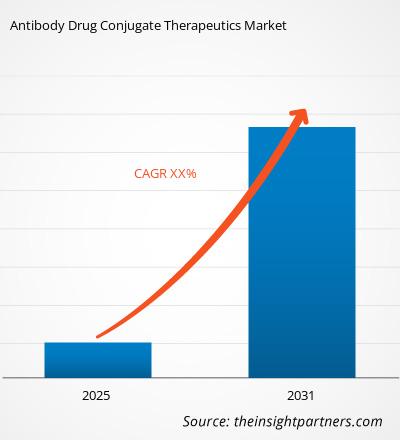
The antibody drug conjugate therapeutics market is expanding from an established oncology platform into a broader precision-treatment modality. The market is valued at US$ 15.16 Billion in 2025 and is projected to reach US$ 34.26 Billion by 2034, registering a CAGR of 9.48% during 2026–2034. Expansion is supported by increasing clinical validation of targeted payload delivery, wider use across hematological and solid tumors, and continued development of next-generation antibody, linker, and payload combinations.
North America remains a structurally important development and commercialization hub, supported by sophisticated oncology infrastructure, extensive clinical-trial activity, companion-diagnostic adoption, and strong pharmaceutical investment. The antibody drug conjugate therapeutics market size in the region is expected to expand at an estimated 9.0–9.6% CAGR during 2026–2034, with demand benefiting from new indications, lifecycle management, and increasing treatment personalization.
Antibody Drug Conjugate Therapeutics Market Assessment and Insights
- North America: The region is estimated to hold a 38–42% share in 2025 and grow at a 9.0–9.6% CAGR between 2026–2034, supported by advanced oncology centers, regulatory maturity, clinical development, and broad adoption of targeted therapies.
- US: The US accounts for 84–88% of North America's 2025 market and is expected to expand at a 9.1–9.7% CAGR during 2026–2034, led by oncology innovation and commercial access.
- Europe: Europe represents a 27–31% share in 2025 and is projected to grow at 8.7–9.3% during 2026–2034, with Germany, the UK, France, Italy, and Spain supporting demand through specialist oncology networks.
- Asia Pacific: Asia Pacific holds a 22–26% share in 2025 and is forecast to expand at 10.0–10.7% during 2026–2034, with China, Japan, South Korea, India, and Australia strengthening clinical and manufacturing capabilities.
- Largest Segment: Drugs is estimated to represent a 55–60% market share in 2025, with a 9.0–9.5% CAGR during 2026–2034 as established commercial products anchor revenues.
- High Growth Segment: Breast Cancer is estimated at a 45–50% market share in 2025 and is expected to record a 9.8–10.4% CAGR during 2026–2034.
- Key companies analyzed in detail: Genentech USA, Inc., Seattle Genetics, F. Hoffmann-La Roche Ltd., Takeda Pharmaceuticals, Pfizer, Inc., AbbVie Inc., Immunomedics, ImmunoGen, Inc., Lonza, Creative Biolabs.
Source: The Insight Partners' analysis based on proprietary research, government publications, company annual reports, investor presentations, industry databases, and expert interviews.
The antibody drug conjugate therapeutics market have been evolved with progress made in terms of antibody engineering, conjugation chemistry, D/A ratio, and cytotoxic payload activity. There are strict bioconjugation procedures used in commercialized drugs and novel targets include topoisomerase inhibitors, novel tubulin inhibitors, DNA damage inducing payloads, and site-specific conjugation. The manufacturing procedure is composed of antibody production, linker and payload production, conjugation, purification, analytics, and high containment manufacturing.
Future growth should be in applications beyond the existing HER2 and CD30 classes as drug manufacturers identify further tumor targets and alternative modalities. Increased regulatory expertise in ADCs will improve predictability in development, and specialty CDMOs have increased their capacity for high containment. Upcoming Asian manufacturing clusters, such as China and India, will be able to participate in development and manufacturing activities of global pharmaceutical companies.
Antibody Drug Conjugate Therapeutics Market Report Scope
| Report Attribute | Details |
|---|---|
| Market size in 2025 | US$ 15.16 Billion |
| Market Size by 2034 | US$ 34.26 Billion |
| Global CAGR (2026 - 2034) | 9.48% |
| Historical Data | 2021-2024 |
| Forecast period | 2026-2034 |
Antibody Drug Conjugate Therapeutics Market Analysis
The development of the antibody-drug conjugate therapeutic market is driven by rising need for treatments that can integrate targeting with effective cytotoxicity. Value chain stages include target discovery and antibody creation; payload and linker identification; conjugation; purification; testing; clinical development; regulatory approval; and commercialization. Demand will be driven by treatment protocols in oncology, biomarker testing, and indication expansion for currently marketed ADCs.
Supply issues will also be complex due to the nature of ADC manufacture involving careful manipulation of potent agents as well as the need for reproducible conjugation. Processes for drug substance and drug product manufacture require consistency in drug to antibody ratio, purity, stability, and potency. CDMOs like Lonza and Creative Biolabs play critical roles along with integrated pharma producers; outsource firms help reduce time and capital investments in development.
Competition is gradually shifting away from antibody targeting alone to molecule design. From the antibody drug conjugate therapeutics market report, it is clear that firms which offer unique linker-payload technology, targets with validation, manufacturing capability and wide clinical development will be able to develop their portfolios. For example, Genentech USA, Inc. and F. Hoffmann-La Roche Ltd. have positioned themselves with regard to HER2-targeting products, while Seattle Genetics and Takeda Pharmaceuticals have notable presence with regards to CD30-targeting therapies.
There are also increasing activities on platform licensing, acquiring platform technology and manufacturing partners. Pfizer, Inc. and AbbVie Inc. exemplify large pharmaceutical companies which have the financial ability to increase their oncology portfolios, while ImmunoGen, Inc. and Immunomedics provided the ADC technology to large commercial settings. Increasing investment is in next generation payloads, site-specific conjugation, manufacturing scalability of high potency ADCs and technologies aimed at improving therapeutic window.
● REPORT CUSTOMIZATION
Tailor This Report To Align With Your Specific Business Requirements
This report can be customized to align precisely with your business objectives, scope, and target markets. Customization options include tailored segmentation, geography, competitive analysis, and strategic insights to support informed decision-making.
Customize This Report →WHAT YOU CAN ADJUST
- ● Segmentations
- ● Geography
- ● Competitive Analysis
- ● Language Preferences
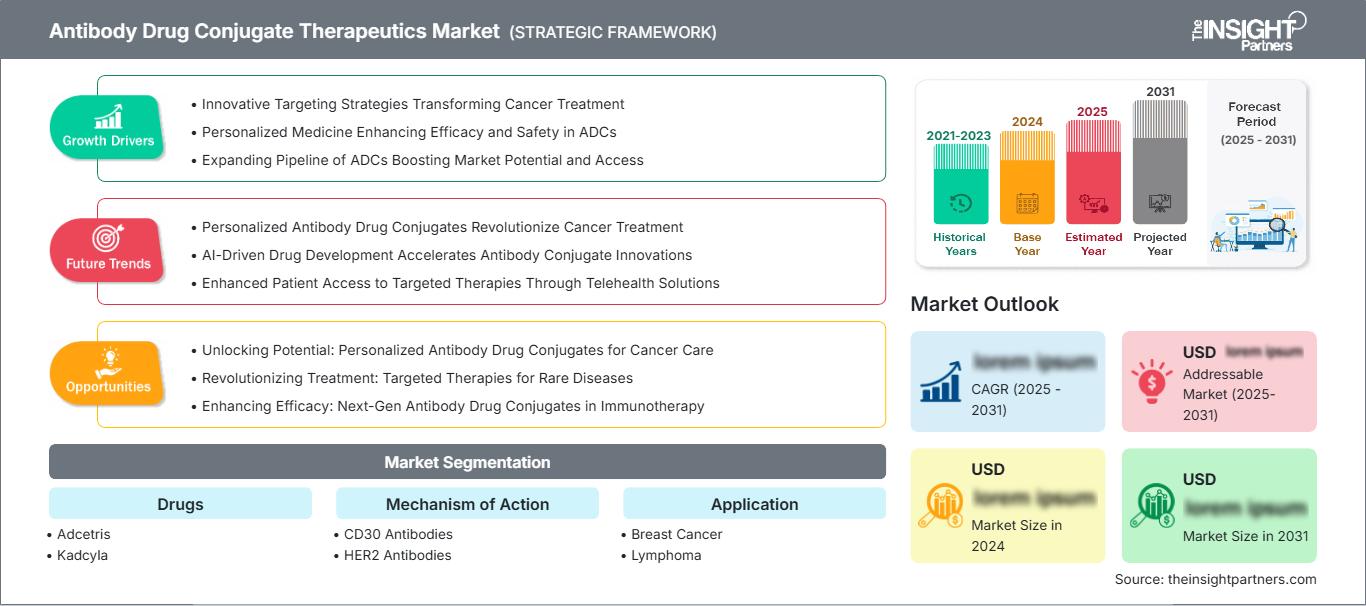
Antibody Drug Conjugate Therapeutics Market: Strategic Insights
Regional Insights
North America antibody drug conjugate therapeutics market
North America is forecasted to capture 38–42% of the antibody drug conjugate therapeutics market share by 2025 and is projected to grow at a 9.0–9.6% CAGR until 2034. This region is favored by the presence of oncology expertise, a well-established biopharmaceutical industry, clinical trial networks, and a good pipeline for companion diagnostics development. The US continues to dominate, whereas Canada complements the US with its clinical and commercial strengths.
The demand is driven by dedicated cancer centers and a high use of targeted oncology drugs. There are substantial pharmaceutical efforts in R&D, manufacturing, and licensing in North America, helping to speed up development. The use of biomarkers for drug selection is also expected to improve utilization of ADCs, especially with new agents entering early lines of treatment.
U.S. antibody drug conjugate therapeutics Market
The US is estimated to account for around 84–88% of North America's total revenue in 2025 and is expected to exhibit a CAGR of 9.1–9.7% over the period 2025–2034. The large size of the US market can be attributed to its large oncology therapy patient base, highly developed infrastructure of specialists, clinical trials, and payment pathways for innovative cancer treatments.
Genentech USA, Inc., F. Hoffmann-La Roche Ltd., Pfizer, Inc., AbbVie Inc., and others are some of the key companies having a strong strategic presence in oncology biologics. There are applications in breast cancer and lymphoma, and the continued clinical development will see the ADCs being used in the treatment of additional cancer types. Hospitals and dedicated cancer clinics will continue to be the main sites of treatment due to the need for specialized handling.
Europe antibody drug conjugate therapeutics Market
Europe is projected to account for a 27–31% share in 2025 and to witness growth at a CAGR of 8.7–9.3% from 2025 to 2034. Germany is the leading region for commercialization on account of its oncology infrastructure and pharmaceuticals expertise, while the UK, France, Italy, and Spain add demand via special care centers and precision medicine.
The UK has a well-developed clinical research setup and cancer care ecosystem which makes trial enrollment and use of innovative oncology therapeutics easier. Germany is a key region for commercialization and development owing to its significant pharmaceuticals expertise coupled with its hospital infrastructure. France, Italy, and Spain offer supplementary demand due to their cancer programs and special care centers and precision medicine.
APAC antibody drug conjugate therapeutics Market
APAC is estimated to represent 22–26% of 2025 revenue and is projected to grow at a 10.0–10.7% CAGR, making it the fastest-growing major region. China leads regional expansion, followed by Japan, South Korea, India, and Australia, supported by rising oncology investment and manufacturing capabilities.
ADC discovery and development are being advanced in China, while Japan continues with highly advanced biopharmaceutical research. In South Korea, there is expansion in the manufacturing of biologics, while in India, there are developments in high-concentration manufacturing capabilities. Australia, on the other hand, helps out with clinical research.
Middle East & Africa antibody drug conjugate therapeutics Market
The Middle East and Africa region will grow at about 8.0–8.8% CAGR up to 2034. The leading country for development in the region is Saudi Arabia with a strong backing of healthcare infrastructure transformation and development of special healthcare infrastructure for treatment. UAE will develop advanced oncology services in the region, whereas South Africa will continue to be an important access and clinical center.
Saudi Arabia and UAE are developing healthcare infrastructure in the region, while South Africa will have developed oncology capabilities. Rest of MEA is heterogeneous because of different access, reimbursements, and specialists. Energy-related investments by the government of Gulf countries will help in building high-end oncology infrastructure in the region.
Segmentation Analysis
Drugs
The Drugs segment is expected to expand at a 9.0–9.5% CAGR during 2026–2034. Established products provide the commercial foundation, while lifecycle extensions, additional indications, and treatment-line expansion can sustain revenue. Product differentiation increasingly depends on target selection, payload characteristics, dosing convenience, clinical efficacy, and safety management rather than antibody recognition alone.
- Adcetris: Established CD30-directed therapy remains strategically important in lymphoma, with clinical familiarity and treatment-line integration supporting continued utilization across eligible patients.
- Kadcyla: HER2-directed therapy maintains a strong position in breast cancer, supported by established clinical evidence, biomarker-defined patient selection, and continued use in appropriate treatment settings.
Mechanism of Action
The Mechanism of Action segment is projected to grow at an 9.2–9.9% CAGR during 2026–2034. Target biology remains central to clinical success because antigen expression, internalization, tumor heterogeneity, and payload release influence therapeutic performance. Developers are therefore prioritizing validated targets while seeking opportunities to address resistance and expand treatment into less responsive tumor populations.
- CD30 Antibodies: CD30-directed approaches provide a validated mechanism for lymphoma treatment, with continued clinical use supporting demand for targeted cytotoxic delivery and differentiated oncology regimens.
- HER2 Antibodies: HER2 targeting remains commercially significant because breast cancer treatment increasingly incorporates sophisticated biomarker stratification, enabling ADCs to address defined patient populations across disease stages.
Application
Application demand is expected to increase at a 9.3–10.1% CAGR during 2026–2034. Breast cancer represents the larger commercial opportunity because HER2-directed ADCs have established clinical use and continued development is expanding treatment options. Lymphoma remains strategically important because CD30-targeted therapy demonstrates how ADCs can achieve focused cytotoxic delivery in hematological malignancies.
- Breast Cancer: Breast cancer remains a major application because HER2-directed ADCs can integrate into biomarker-defined treatment pathways, while ongoing studies support movement toward earlier disease settings and additional patient populations.
- Lymphoma: Lymphoma provides a clinically validated setting for CD30-directed therapy, with specialized oncology centers supporting administration, monitoring, and treatment sequencing for eligible patients.
Opportunity Snapshot
| Application | Revenue Contribution | Trend Tag | Adoption Stage |
|---|---|---|---|
| Breast Cancer | High | HER2 Targeting | Mature |
| Lymphoma | Medium | CD30 Targeting | Scaling |
Antibody Drug Conjugate Therapeutics Market Growth Drivers and Impact Analysis
Expansion of Biomarker-Defined Oncology Treatment
The increasing use of biomarker-defined treatment pathways is improving patient selection for targeted oncology medicines and directly supports ADC commercialization. HER2 testing, for example, enables clinicians to identify patients more likely to benefit from HER2-directed therapies, while advances in pathology and companion diagnostics can refine treatment decisions. This dynamic increases the addressable opportunity for ADC developers because treatment can be matched more precisely to target expression. Commercial impact extends beyond drug sales to diagnostic testing, specialist treatment capacity, and clinical decision support. As oncology moves toward molecularly stratified care, companies with validated targets and companion-diagnostic strategies can reduce uncertainty around patient identification. The resulting ecosystem encourages investment in targeted payload technologies and supports broader adoption across specialized cancer centers.
Advancement of Linker and Payload Engineering
Improvements in linker chemistry and payload engineering are changing the performance profile of ADCs by enabling greater control over stability, intracellular release, potency, and bystander effects. Modern development programs increasingly evaluate the complete antibody-linker-payload architecture rather than treating the antibody as the primary source of differentiation. More stable linkers can reduce premature payload release, while carefully selected payloads can address tumors with differing sensitivity profiles. These technical advances can improve therapeutic index and create opportunities for new targets that were previously difficult to exploit. Commercially, the shift increases the strategic value of proprietary conjugation platforms and specialized analytical capabilities. It also encourages partnerships between pharmaceutical developers, biotechnology companies, and CDMOs capable of producing complex high-potency biologics at clinical and commercial scale.
Increasing Pharmaceutical Investment in Oncology Platforms
Large pharmaceutical companies continue to prioritize oncology assets with differentiated mechanisms, creating favorable conditions for ADC licensing, acquisitions, collaborations, and internal portfolio development. The strategic rationale extends beyond individual products because a successful ADC platform can generate multiple candidates against different targets using related manufacturing and conjugation capabilities. This platform economics can improve the return on research infrastructure and enable portfolio diversification. For biotechnology companies, partnerships with larger pharmaceutical organizations can provide capital, regulatory expertise, manufacturing capacity, and global commercialization capabilities. For established manufacturers, external innovation can shorten the time required to access emerging technologies. The resulting investment environment supports a broader ecosystem spanning target discovery, antibody engineering, payload synthesis, conjugation technologies, clinical development, and specialized manufacturing.
Antibody Drug Conjugate Therapeutics Market Future Trends
Next-Generation Site-Specific Conjugation
Site-specific conjugation is likely to become increasingly important as developers seek more uniform ADC products with controlled drug loading and predictable pharmacological behavior. Traditional heterogeneous conjugation can create product populations with different drug-to-antibody ratios, whereas engineered approaches can improve consistency and potentially optimize exposure. During the forecast period, platform developers are expected to combine site-specific attachment with new linkers and payloads to improve stability and therapeutic windows. The antibody drug conjugate therapeutics market trends will therefore increasingly reflect manufacturing precision alongside biological targeting. Greater process control may also simplify analytical characterization and support commercial-scale reproducibility. Companies capable of integrating antibody engineering, conjugation chemistry, and high-potency manufacturing could gain stronger positions as the industry moves toward increasingly sophisticated ADC architectures.
Broader Target and Tumor Expansion
ADC development is expected to progress toward a wider range of tumor-associated antigens and disease settings as developers seek opportunities beyond established HER2 and CD30 targets. New programs are evaluating antigens with differentiated expression patterns, including targets associated with solid tumors and difficult-to-treat cancers. The strategic objective is to identify targets that provide sufficient tumor selectivity, internalization, and sustainable clinical benefit. Future development may also combine ADCs with immunotherapies, targeted agents, or other modalities to address resistance mechanisms. Such combinations could broaden treatment utility but will require careful clinical sequencing and safety evaluation. Increasing target diversity should create a more fragmented competitive landscape in which platform flexibility, biomarker strategy, payload selection, and clinical execution become increasingly important determinants of commercial success.
Antibody Drug Conjugate Therapeutics Market Opportunities
Integrated ADC Manufacturing in Emerging Production Hubs
India and selected Asian markets present opportunities for integrated ADC manufacturing because pharmaceutical companies are seeking additional sources of specialized biologics production and high-potency handling. Investors can target facilities that combine antibody production, payload and linker synthesis, conjugation, purification, analytical testing, and fill-finish capabilities. Such integration can reduce technology-transfer complexity and improve supply-chain coordination for clinical-stage developers. The antibody drug conjugate therapeutics market Forecasts point toward increasing requirements for scalable manufacturing as more candidates progress through clinical development. CDMOs that can demonstrate containment, regulatory compliance, analytical depth, and commercial-scale reproducibility may attract multinational partnerships. Capital deployment should therefore prioritize flexible facilities capable of supporting multiple ADC architectures rather than infrastructure designed around one specific molecule or payload class.
Platform Partnerships for Novel ADC Architectures
A second opportunity lies in partnerships that combine validated antibodies with differentiated payloads, linkers, and conjugation technologies. Smaller biotechnology companies often possess specialized platforms but lack the capital and commercial infrastructure needed for late-stage development. Larger pharmaceutical companies can provide clinical development, regulatory capabilities, manufacturing resources, and market access. Investors can therefore assess opportunities according to target validation, platform scalability, intellectual-property strength, manufacturability, and clinical differentiation. The antibody drug conjugate therapeutics market Report can benefit from this partnership model because technology licensing allows companies to access innovation without duplicating every discovery capability internally. Successful collaborations are likely to focus on architectures that address known limitations such as resistance, payload toxicity, heterogeneous drug loading, or inadequate tumor penetration.
Recent Developments
- July 2026: Shilpa Biologicals commissioned an ADC GMP manufacturing facility in Dharwad, Karnataka, supporting payload synthesis, linker development, monoclonal antibody production, conjugation, purification, and drug substance manufacturing. The facility is designed around global regulatory expectations and strengthens India's capacity to provide integrated high-potency ADC development and manufacturing services.
- October 2025: Syngene International expanded its Bengaluru biologics operations with a GMP bioconjugation suite designed for end-to-end ADC services. The facility combines monoclonal antibody production, bioconjugation, analytical and bioanalytical capabilities, and existing payload and linker infrastructure, strengthening its ability to support clinical programs and commercial-scale development while reducing manufacturing handoffs.
- January 2025: Daiichi Sankyo, Inc. received US FDA approval for datopotamab deruxtecan-dlnk, marketed as Datroway, for previously treated unresectable or metastatic HR-positive, HER2-negative breast cancer. The approval expanded the commercial ADC landscape in breast cancer and reinforced the clinical importance of TROP2-directed antibody-drug conjugates alongside established HER2-focused products.
Frequently Asked Questions

- Comprehensive Market Sizing and Forecast Analysis
- Detailed Segmentation Analysis
- In-Depth Market Dynamics Assessment
- Regional and Country-Level Insights
- Competitive Landscape and Company Benchmarking
- Strategic Business Intelligence
Recent Reports
Testimonials

The Insight Partners' SCADA System Market report is comprehensive, with valuable insights on current trends and future forecasts. The team was highly professional, responsive, and supportive throughout. We are very satisfied and highly recommend their services.
RAN KEDEM Partner, Reali Technologies LTDs
I requested a report on a very specific software market and the team produced the report in a few days. The information was very relevant and well presented. I then requested some changes and additions to the report. The team was again very responsive and I got the final report in less than a week.
JEAN-HERVE JENN Chairman, Future Analytica
We worked with The Insight Partners for an important market study and forecast. They gave us clear insights into opportunities and risks, which helped shape our plans. Their research was easy to use and based on solid data. It helped us make smart, confident decisions. We highly recommend them.
PIYUSH NAGPAL Sr. Vice President, High Beam Global
The Insight Partners delivered insightful, well-structured market research with strong domain expertise. Their team was professional and responsive throughout. The user-friendly website made accessing industry reports seamless. We highly recommend them for reliable, high-quality research services
YUKIHIKO ADACHI CEO, Deep Blue, LLC.
This is the first time I have purchased a market report from The Insight Partners.While I was unsure at first, I visited their web site and felt more comfortable to take the risk and purchase a market report.I am completely satisfied with the quality of the report and customer service. I had several questions and comments with the initial report, but after a couple of dialogs over email with their analyst I believe I have a report that I can use as input to our strategic planning process.Thank you so much for taking the extra time and making this a positive experience.I will definitely recommend your service to others and you will be my first call when we need further market data.
JOHN SUZUKI President and Chief Executive Officer, Board Director, BK Technologies
I wish to appreciate your support and the professionalism you displayed in the course of attending to my request for information regarding to infectious disease IVD market in Nigeria. I appreciate your patience, your guidance, and the fact that you were willing to offer a discount, which eventually made it possible for us to close a deal. I look forward to engaging The Insight Partners in the future, all thanks to the impression you have created in me as a result of this first encounter.
DR CHIJIOKE ONYIA MANAGING DIRECTOR, PineCrest Healthcare Ltd.Reason to Buy
- Informed Decision-Making
- Understanding Market Dynamics
- Competitive Analysis
- Identifying Emerging Markets
- Customer Insights
- Market Forecasts
- Risk Mitigation
- Boosting Operational Efficiency
- Strategic Planning
- Investment Justification
- Tracking Industry Innovations
- Aligning with Regulatory Trends





 Get Free Sample for