
Antidiuretic Drugs Market Size, Growth & Demand by 2034
Coverage: By Type (Vasopressin, Desmopressin, Oxytocin, Others); Indication (Diabetes Insipidus, Hemophilia, Hypertension, Others); End Users (Hospitals, Clinics, Pharmaceutical Companies, Others) , and Geography (North America, Europe, Asia Pacific, and South and Central America)
- Status : Data Released
- Report Code : TIPRE00018088
- Category : Life Sciences
- No. of Pages : 150
- Available Report Formats :


- Last update date : August 24, 2026


2025 Market Size
US$ 419.76 Mn
Base year value
2034 Forecast
US$ 1,061.52 Mn
Projected by 2034
CAGR 2026-2034
10.86 %
Growth rate
Addressable Market
US$ 6,552.32 Mn
(2026-2034)
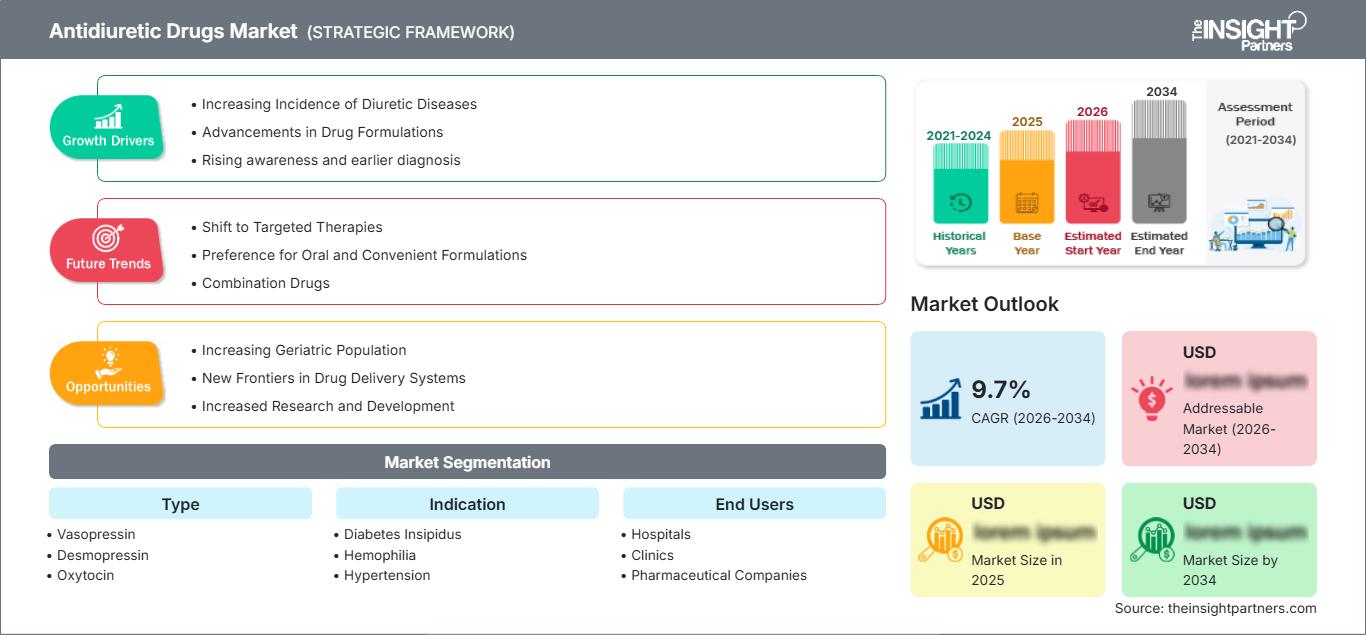
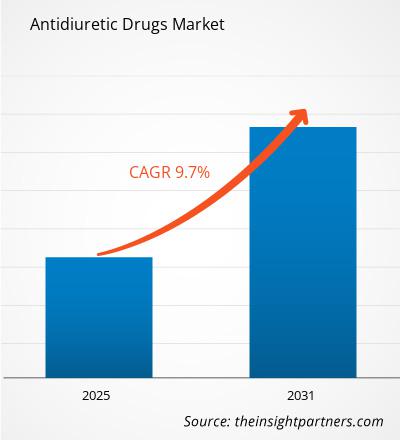
The antidiuretic drugs market size is poised for considerable growth, from US$ 419.76 Million in 2025 to US$ 1,061.52 Million by 2034. Antidiuretics market is forecasted to achieve a CAGR of 10.86% through 2026-2034. This growth is driven by the consistent demand for vasopressin analogs, increased awareness and management of diabetes insipidus, availability of desmopressin drugs, and investments in the development of specific endocrine and hemostatic medications by pharmaceutical companies.
North America will continue to dominate the global commercial dynamics of the industry with antidiuretic drugs market supported by well-established mechanisms for diagnosis, specialist prescriptions, reimbursement, and availability of different injectable and oral forms of medication. North America is forecasted to grow at a CAGR of 10.2–11.2% through 2026-2034.
Antidiuretic Drugs Market Assessment and Insights
- North America: North America is estimated to represent 43–47% antidiuretic drugs market share in 2025 and grow at a 10.2–11.2% CAGR between 2026–2034, supported by established specialty care, broad product availability, and mature reimbursement systems.
- US: The US is estimated to account for 89–93% of North America share in 2025 and expand at a 10.3–11.3% CAGR during 2026–2034, led by specialist prescribing and hospital demand.
- Europe: Europe is estimated at 24–28% share in 2025, growing at a 10.0–11.0% CAGR between 2026–2034. Germany, the UK, France, Italy, and Spain provide the principal regional demand base through established endocrine and hematology services.
- Asia Pacific: Asia Pacific is estimated at 19–23% share in 2025 and is projected to grow at an 11.5–12.5% CAGR during 2026–2034, with China, Japan, India, South Korea, and Australia driving expanding diagnosis and treatment capacity.
- Largest Segment: Desmopressin is estimated to hold a 72–76% market share in 2025 and grow at a 10.9–11.9% CAGR during 2026–2034, reflecting its broad therapeutic utilization.
- High Growth Segment: Diabetes Insipidus is estimated to represent a 38–42% market share in 2025 and expand at an 11.2–12.2% CAGR during 2026–2034, supported by long-term replacement therapy.
- Key companies analyzed in detail: Par Sterile Products, LLC, ADH Health, Azevan Pharmaceuticals, Inc., Teva Pharmaceutical Industries Ltd., Otsuka Holdings Co., Ltd., Taj Pharmaceuticals Limited, Allergan, Pfizer Inc., Novartis AG, and Ferring Pharmaceuticals.
Source: The Insight Partners' analysis based on proprietary research, government publications, company annual reports, investor presentations, industry databases, and expert interviews.
The antidiuretic drugs market revolves around synthetic hormone analogues, formulation stability, and differentiated routes of administration. Desmopressin is the key antidiuretic used in vasopressin replacement and hemostasis while injectable vasopressin continues to be utilized to fulfill the demands of acute care hospitals. The focus for manufacturing is now on sterilization, formulation consistency, package design, and regulatory compliance. There is FDA-approved record of various presentations of desmopressin by different manufacturers.
The antidiuretic drugs market trends indicate that in the future, the focus of development would include convenient dosing, differentiated formulations, and market access for emerging markets. Regulatory activity will continue to be relevant as well since known molecules will continue to receive generic approval. In 2026, there were FDA records of oral desmopressin approvals, which indicate that existing hormone analogues can be further developed through formulation differentiation.
Antidiuretic Drugs Market Report Scope
| Report Attribute | Details |
|---|---|
| Market size in 2025 | US$ 419.76 Million |
| Market Size by 2034 | US$ 1,061.52 Million |
| Global CAGR (2026 - 2034) | 10.86% |
| Historical Data | 2021-2024 |
| Forecast period | 2026-2034 |
Antidiuretic Drugs Market Analysis
Demands for these drugs are driven by underlying endocrine conditions, their uses in hospitals, and their usage in hematology. For antidiuretic agents, market growth is enabled by frequent prescribing of central diabetes insipidus and vasopressin in critical care applications. Value chain involves active pharmaceutical ingredient, processing of peptides or artificial hormones, sterile formulation, testing, packaging, approval, distribution, hospital purchasing, and specialists' prescription. Reliable supply is particularly crucial for injectables because hospitals need steady supplies.
Differences exist in manufacturing requirements for oral, nasal, and injectable formulations. Desmopressin manufacturing needs to be precise regarding potency, stability, packaging, and sterility, whereas for parenteral vasopressin the manufacturing process must involve strict sterility. Competition from generics could impact pricing levels, yet specialty formulations would remain attractive economically. FDA databases show that there are multiple manufacturers of desmopressin in oral, nasal, and injectable forms.
According to the antidiuretic drugs market report, competitive positioning entails the combination of branded portfolio capabilities, mass manufacture generic capability, specialist therapeutic capability and regulatory capability. The market analysis suggests that Ferring Pharmaceuticals has a strong desmopressin positioning, whereas Teva Pharmaceutical Industries Ltd., Pfizer Inc., Novartis AG, and Otsuka Holdings Co., Ltd. have wider pharmaceutical capability. Par Sterile Products, LLC provides specialized sterile manufacture capability, while specialists, such as ADH Health and Azevan Pharmaceuticals, Inc., bring development and commercialization capabilities to the game.
The strategic investments are being increasingly made in continuity of supply, formulations, and life cycle management and not the introduction of the whole new hormonal mechanisms. The example of the company Ferring which has a continuous focus on urological conditions and desmopressin is an example of specialist positioning, while generic players can fight with the help of efficient manufacturing and regulation.
● REPORT CUSTOMIZATION
Tailor This Report To Align With Your Specific Business Requirements
This report can be customized to align precisely with your business objectives, scope, and target markets. Customization options include tailored segmentation, geography, competitive analysis, and strategic insights to support informed decision-making.
Customize This Report →WHAT YOU CAN ADJUST
- ● Segmentations
- ● Geography
- ● Competitive Analysis
- ● Language Preferences
Antidiuretic Drugs Market: Strategic Insights
Regional Insights
North America antidiuretic drugs market
North America is estimated to account for 43–47% of global revenue in 2025 and expand at a 10.2–11.2% CAGR through 2034. The US dominates regional consumption because of established endocrine referral networks, hospital procurement systems, and access to multiple desmopressin formulations. Canada contributes through specialist urology, endocrinology, and hematology services.
There are advantages of regulation visibility and generics infrastructure in the regional market. Oral, nasal, and injectable desmopressin agents from multiple manufacturers are recorded in the FDA database, which contributes to the availability of these agents in different settings. Demand for vasopressin is limited to hospitals, while desmopressin creates repetitive demand in outpatient settings for chronic endocrine and some bleeding disorders.
U.S. antidiuretic drugs Market
US is responsible for around 89–93% of North American revenues in 2025 and will register a CAGR of 10.3–11.3% during 2025–2034. The market's dominance can be attributed to specialist diagnoses, good hospital penetration, and access to branded and generics. Players active in US markets include Ferring Pharmaceuticals, Teva Pharmaceutical Industries Ltd., Pfizer Inc., and various generics companies.
There are variations in application depending on the settings. Hospital settings use injectable vasopressin and select desmopressin formulations, while outpatient specialists handle chronic diabetes insipidus and nocturia prescriptions. The regulatory situation is also conducive to formulation competition. According to the FDA's approval database, many desmopressin products and manufacturers have been approved, and the March 2026 regulatory listing still had many desmopressin products.
Europe antidiuretic drugs Market
The region of Europe accounts for an estimate of 24% to 28% share in 2025 and is expected to expand at a 10.0%-11.0% CAGR through 2034. The dominant country is Germany, while the others include the UK, France, Italy, and Spain. Mature public healthcare, specialty prescriptions, and pharmaceutical distribution facilitate regional market penetration.
Demand from Germany and the UK is important because the specialties of endocrine, urology, and hematology have been included in existing hospital networks. Desmopressin continues to be vital for chronic replacement therapy and hemostasis. France, Italy, and Spain help because of public coverage, hospital sourcing, and specialty treatment pathways. Competition dynamics are driven by generic substitutions, national pricing regimes, and pharmaceutical quality and supply regulations.
APAC antidiuretic drugs Market
The APAC market accounts for 19–23% share in 2025 and is expected to have 11.5–12.5% CAGR until 2034. China is the dominant player among others, including Japan, South Korea, India, and Australia. Growth drivers include expansion of specialist centers and facilities for medicines production.
Investment in healthcare in China and India presents good growth prospects, whereas Japan and Australia represent well-developed infrastructure of regulations and clinical research. National programs to enhance pharmaceutical production may help in enhancing resilience of supplies. Increasing number of diagnosed cases of endocrine diseases, awareness among specialists, and increasing number of hospitals contribute to demand.
Middle East & Africa antidiuretic drugs Market
Middle East and Africa is projected to expand at a 9.0–10.0% CAGR through 2034. Saudi Arabia is the leading market, followed by the UAE and South Africa. Hospital infrastructure investments and centralized procurement support access to specialty therapies, particularly in major urban healthcare centers.
Saudi Arabia and the UAE benefit from healthcare modernization and specialist hospital expansion, while South Africa provides the region's more established pharmaceutical and clinical infrastructure. Rest of MEA remains constrained by uneven diagnosis, affordability, and distribution. However, improving hospital capacity and pharmaceutical supply networks can gradually expand access to established antidiuretic therapies.
Segmentation Analysis
Type
The Type segment is expected to grow at differentiated rates as established desmopressin products retain chronic-use demand while vasopressin serves acute hospital requirements. The antidiuretic drugs market scope increasingly reflects formulation specialization, clinical setting, and route of administration. Competitive opportunities are strongest where manufacturers can combine reliable supply with convenient dosing and regulatory compliance.
- Vasopressin: Vasopressin maintains an important hospital position because its acute-use profile supports demand from critical-care and emergency settings. Strategic importance centers on sterile injectable availability and reliable institutional supply.
- Desmopressin: Desmopressin represents the dominant therapeutic category because of established use across central diabetes insipidus and selected hemostatic indications. Oral, nasal, and injectable formats support broad treatment flexibility.
- Oxytocin: Oxytocin contributes through hospital-based hormonal applications and procurement channels. Its established clinical role creates recurring institutional demand, although its therapeutic positioning differs from conventional antidiuretic replacement.
Indication
The Indication segment is projected to expand at varying rates according to disease prevalence, diagnostic recognition, and treatment duration. Diabetes insipidus provides the strongest recurring requirement because patients may require long-term replacement therapy, while hemophilia and hypertension represent more specialized demand pools.
- Diabetes Insipidus: Diabetes Insipidus is the largest indication category, supported by chronic treatment requirements and the central role of desmopressin in vasopressin-sensitive disease. Specialist diagnosis directly influences treatment initiation and persistence.
- Hemophilia: Hemophilia represents a targeted application where desmopressin can support selected patients with responsive disease. Its strategic importance is linked to hematology protocols and individualized treatment selection.
- Hypertension: Hypertension contributes through selected vasopressin-related therapeutic applications and institutional treatment pathways. Demand is more specialized than diabetes insipidus, with utilization shaped by clinical protocols and hospital practice.
End Users
The End Users segment is expected to grow at an 11.0–12.0% CAGR for hospitals, 9.8–10.8% for clinics, and 9.0–10.0% for pharmaceutical companies. The antidiuretic drugs market analysis indicates hospitals remain central because acute injectable therapy and specialist care require institutional access.
- Hospitals: Hospitals represent the principal end-user group because they procure injectable therapies and manage complex endocrine, emergency, and hematology cases requiring supervised administration.
- Clinics: Clinics support recurring outpatient prescribing, particularly for chronic endocrine disorders and follow-up management. Their role increases as diagnosis becomes more decentralized and specialist consultation expands.
- Pharmaceutical Companies: Pharmaceutical Companies represent a strategic end-user category through clinical development, formulation testing, manufacturing, and commercial portfolio management involving hormone-based therapies.
Opportunity Snapshot
| Segment Name | Revenue Contribution | Trend Tag | Adoption Stage |
|---|---|---|---|
| Hospitals | High | Acute Care | Mature |
| Clinics | Medium | Specialist Care | Scaling |
| Pharmaceutical Companies | Low | Formulation Development | Scaling |
Antidiuretic Drugs Market Growth Drivers and Impact Analysis
Increasing Diagnosis of Central Diabetes Insipidus
Improved recognition of central diabetes insipidus is strengthening the recurring prescription base for desmopressin. Earlier diagnosis can reduce prolonged diagnostic uncertainty and enable more consistent hormone replacement, creating durable pharmaceutical demand rather than episodic treatment. The commercial effect is particularly relevant because therapy may continue for extended periods, supporting predictable refill patterns and specialist follow-up. Better differentiation between central and nephrogenic forms also improves treatment targeting. Clinical infrastructure remains decisive because diagnosis commonly requires specialist assessment, biochemical testing, and evaluation of water balance. As endocrine services expand, manufacturers with established desmopressin formulations can benefit from greater treatment initiation and retention. The impact is therefore strongest for companies combining broad distribution with reliable formulation availability.
Expansion of Hospital-Based Critical Care
Growth in intensive-care capacity supports demand for hospital-administered vasopressin products used within established acute-care protocols. Expansion is particularly relevant in emerging healthcare systems where new tertiary hospitals increase access to critical-care treatment. Unlike chronic outpatient therapies, injectable products depend heavily on institutional procurement, sterile manufacturing, and inventory continuity. Consequently, hospital expansion can create opportunities for suppliers with dependable manufacturing networks and regulatory approvals across multiple markets. Procurement organizations also increasingly evaluate supply resilience alongside price, particularly for essential injectable medicines. The resulting impact favors manufacturers capable of maintaining consistent batch quality, scalable sterile production, and geographically diversified distribution. These requirements create entry barriers that differ materially from those associated with conventional oral generic medicines.
Formulation and Delivery Innovation
Innovation in delivery formats is creating incremental opportunities around established molecules. Oral solutions, tablets, nasal formulations, and injectable presentations can address different patient populations and care settings while using established pharmacological mechanisms. The commercial value of formulation innovation lies in improving administration convenience, dose flexibility, storage requirements, and patient adherence rather than replacing established therapies. Recent regulatory activity demonstrates continued interest in reformulating desmopressin. FDA approved Desmoda, an oral desmopressin solution, in 2026 for central diabetes insipidus in adults and pediatric patients, illustrating how established molecules can generate new commercial opportunities through differentiated dosage forms.
Antidiuretic Drugs Market Future Trends
Greater Emphasis on Patient-Centric Formulations
Future development is likely to prioritize formulations that simplify administration and reduce treatment burden for chronic users. Oral solutions, orally convenient formats, and improved nasal delivery can become increasingly important where swallowing difficulty, pediatric dosing, or adherence creates barriers. Manufacturers may also pursue packaging technologies that improve stability and reduce handling requirements. Regulatory agencies are likely to evaluate such products through lifecycle pathways when established active ingredients have well-characterized safety profiles. The strategic implication is that differentiation will increasingly depend on formulation performance, usability, and supply reliability rather than novel pharmacology. Companies able to demonstrate meaningful patient convenience while maintaining bioequivalence or predictable exposure could secure stronger positions in specialist treatment channels and generate incremental value from established molecules.
Regional Manufacturing Localization
Localization of pharmaceutical production is expected to become more relevant as governments seek greater resilience for essential medicines. Antidiuretic products, particularly sterile injectables, can face significant operational consequences when manufacturing interruptions affect hospital inventories. Regional production or secondary manufacturing sites can reduce dependency on individual facilities and improve responsiveness to local procurement requirements. Asia Pacific is positioned to benefit because countries such as India and China possess established pharmaceutical manufacturing ecosystems. Localized production can also improve tender competitiveness by reducing logistics costs and shortening supply chains. Over time, manufacturers may increasingly combine global quality systems with regional production footprints, allowing established brands and generic suppliers to respond more effectively to public procurement programs, regulatory requirements, and localized demand fluctuations.
Antidiuretic Drugs Market Opportunities
Specialty Drug Expansion in Emerging Healthcare Systems
Emerging healthcare systems offer an opportunity to broaden access to established therapies through specialist education, improved diagnostic pathways, and localized distribution. Companies can prioritize countries where endocrine and hematology services are expanding but availability of specialized medicines remains uneven. A practical strategy involves partnering with regional distributors, hospital groups, and specialty pharmacies while maintaining centralized quality oversight. Product portfolios can be adapted to local procurement preferences through multiple dosage strengths and presentations. India, China, Southeast Asia, the Middle East, and selected Latin American markets provide differentiated entry opportunities because healthcare infrastructure is expanding at different rates. Companies that establish physician education, regulatory registration, and dependable supply before competitors can build durable commercial positions without relying exclusively on premium pricing or new molecular innovation.
Lifecycle Management of Established Hormone Therapies
Lifecycle management offers another attractive avenue because established molecules retain clinical familiarity and regulatory histories. Manufacturers can pursue new dosage forms, pediatric presentations, improved packaging, combination approaches, or geographic label expansion where clinically justified. Such strategies can extend product relevance while reducing the scientific uncertainty associated with entirely novel mechanisms. The antidiuretic drugs market Forecasts indicate that commercial value can increasingly emerge from incremental improvements in established therapies, particularly where patient convenience or supply reliability remains inadequate. Investment decisions should therefore evaluate formulation barriers, intellectual property positions, regulatory pathways, and manufacturing economics together. Companies with existing hormone portfolios can leverage established distribution and physician relationships to introduce differentiated presentations more efficiently than organizations entering without an established commercial infrastructure.
Recent Developments
- June 2026: Eton Pharmaceuticals, Inc. received FDA approval for Desmoda, an oral desmopressin acetate solution indicated for central diabetes insipidus in adults and pediatric patients. The approval demonstrates continued lifecycle innovation around an established vasopressin analogue and expands dosage-form choice for chronic hormone replacement.
- March 2025: Ferring Pharmaceuticals provided an updated statement concerning Minirin, Octostim, DDAVP, Stimate, and generic desmopressin nasal sprays. The company reported commissioning new machinery after identifying a primary-packaging tightness issue and indicated regulatory submissions to support manufacturing remediation and eventual market deliveries.
- March 2024: Aurobindo Pharma received FDA approval for 0.1 mg and 0.2 mg desmopressin acetate tablets. The approval expanded the US generic supply base for an established therapy used in central diabetes insipidus and other approved indications, reinforcing continued generic participation in this therapeutic category.
Frequently Asked Questions

- Comprehensive Market Sizing and Forecast Analysis
- Detailed Segmentation Analysis
- In-Depth Market Dynamics Assessment
- Regional and Country-Level Insights
- Competitive Landscape and Company Benchmarking
- Strategic Business Intelligence
Recent Reports
Testimonials

The Insight Partners provided valuable market intelligence that supported our global go-to-market strategy. Their team was professional, responsive, and attentive to our feedback, providing thoughtful analysis and helpful methodological clarifications throughout the project.
Junmo Kim Chief Financial Officer (CFO), Enertech Co., Ltd.
The Insight Partners' SCADA System Market report is comprehensive, with valuable insights on current trends and future forecasts. The team was highly professional, responsive, and supportive throughout. We are very satisfied and highly recommend their services.
RAN KEDEM Partner, Reali Technologies LTDs
I requested a report on a very specific software market and the team produced the report in a few days. The information was very relevant and well presented. I then requested some changes and additions to the report. The team was again very responsive and I got the final report in less than a week.
JEAN-HERVE JENN Chairman, Future Analytica
We worked with The Insight Partners for an important market study and forecast. They gave us clear insights into opportunities and risks, which helped shape our plans. Their research was easy to use and based on solid data. It helped us make smart, confident decisions. We highly recommend them.
PIYUSH NAGPAL Sr. Vice President, High Beam Global
The Insight Partners delivered insightful, well-structured market research with strong domain expertise. Their team was professional and responsive throughout. The user-friendly website made accessing industry reports seamless. We highly recommend them for reliable, high-quality research services
YUKIHIKO ADACHI CEO, Deep Blue, LLC.
This is the first time I have purchased a market report from The Insight Partners.While I was unsure at first, I visited their web site and felt more comfortable to take the risk and purchase a market report.I am completely satisfied with the quality of the report and customer service. I had several questions and comments with the initial report, but after a couple of dialogs over email with their analyst I believe I have a report that I can use as input to our strategic planning process.Thank you so much for taking the extra time and making this a positive experience.I will definitely recommend your service to others and you will be my first call when we need further market data.
JOHN SUZUKI President and Chief Executive Officer, Board Director, BK Technologies
I wish to appreciate your support and the professionalism you displayed in the course of attending to my request for information regarding to infectious disease IVD market in Nigeria. I appreciate your patience, your guidance, and the fact that you were willing to offer a discount, which eventually made it possible for us to close a deal. I look forward to engaging The Insight Partners in the future, all thanks to the impression you have created in me as a result of this first encounter.
DR CHIJIOKE ONYIA MANAGING DIRECTOR, PineCrest Healthcare Ltd.Reason to Buy
- Informed Decision-Making
- Understanding Market Dynamics
- Competitive Analysis
- Identifying Emerging Markets
- Customer Insights
- Market Forecasts
- Risk Mitigation
- Boosting Operational Efficiency
- Strategic Planning
- Investment Justification
- Tracking Industry Innovations
- Aligning with Regulatory Trends





 Get Free Sample for