
Aprotic Solvents Market Size, Trends & Growth by 2034
Coverage: By Type (N-Methyl-2-Pyrrolidone (NMP), Toluene, Benzene, Acetone, Others); Application (Oil and Gas, Plastics, Pharmaceutical, Electronic Equipment, Paints and Coatings, Adhesives, Others), and Geography (North America, Europe, Asia Pacific, and South and Central America)
- Status : Data Released
- Report Code : TIPRE00017971
- Category : Chemicals and Materials
- No. of Pages : 150
- Available Report Formats :


- Last update date : September 01, 2026


2025 Market Size
US$ 14.03 Bn
Base year value
2034 Forecast
US$ 19.89 Bn
Projected by 2034
CAGR 2026-2034
3.96 %
Growth rate
Addressable Market
US$ 154.10 Bn
(2026-2034)
The aprotic solvents market was valued at US$ 14.03 Billion in 2025 and is projected to reach US$ 19.89 Billion by 2034, expanding at a CAGR of 3.96% from 2026 to 2034. Demand is supported by the solvent requirements of chemical processing, pharmaceuticals, plastics, electronics, coatings, and energy-related industries. Product selection increasingly reflects solvency performance, purity, recovery economics, worker exposure requirements, and compatibility with evolving manufacturing processes across mature and emerging industrial markets.
North America represents a structurally important demand center, with the aprotic solvents market size supported by pharmaceutical manufacturing, specialty chemicals, coatings, and oil and gas processing. The regional outlook indicates a CAGR of 3.4–3.9% between 2026 and 2034, driven by domestic chemical production, advanced manufacturing investment, and continued demand for high-purity process solvents.
Aprotic Solvents Market Assessment and Insights
- North America: North America is estimated to account for a 24–28% aprotic solvents market share in 2025, growing at a 3.4–3.9% CAGR between 2026–2034, supported by pharmaceutical production, specialty chemicals, coatings, and established hydrocarbon processing infrastructure.
- US: The US represents approximately 20–22% of global demand in 2025, with a 3.4–3.8% CAGR between 2026–2034, supported by pharmaceuticals, electronics, coatings, and chemical manufacturing.
- Europe: Europe holds a 22–26% share in 2025 and is projected to grow at a 3.0–3.5% CAGR between 2026–2034, led by Germany, France, Italy, the UK, and Spain, with regulatory compliance shaping solvent selection.
- Asia Pacific: Asia Pacific accounts for 34–38% share in 2025, expanding at a 4.2–4.7% CAGR between 2026–2034, led by China, Japan, South Korea, and India through electronics, pharmaceuticals, plastics, and chemical production.
- Largest Segment: Toluene is estimated to hold a 28–32% market share in 2025, with a 3.2–3.7% CAGR between 2026–2034, reflecting broad industrial use and established supply infrastructure.
- High Growth Segment: Electronic Equipment is estimated at a 13–17% market share in 2025, expanding at a 4.8–5.4% CAGR between 2026–2034, supported by semiconductor and precision-manufacturing requirements.
- Key companies analyzed in detail: AlzChem Group AG, Ashland Inc., BASF SE, Dow Inc., Eastman Chemical Company, Gaylord Chemical Company LLC, INEOS Group Holdings S.A., Mitsubishi Chemical Group Corporation, Mitsui Chemicals, Inc., Shell Chemicals.
Source: The Insight Partners' analysis based on proprietary research, government publications, company annual reports, investor presentations, industry databases, and expert interviews.
The aprotic solvents market has shifted from traditional usage of bulk solvent towards application-specific procurement, purification, recovery, and optimization of processes. Aromatic hydrocarbons and ketones continue to be significant owing to their existing manufacturing networks, while the use of N-methyl-2-pyrrolidone is likely to come under increased scrutiny for certain applications. Purity control, supply stability, solvent recovery, and technical support will be among key differentiators for manufacturers.
In terms of future trends, investment in the aprotic solvents market will center on Asia-Pacific as well as specific North American applications wherein capacities for pharmaceuticals, semiconductors, electronics and specialty chemicals are increasing. Regulations regarding health hazards from occupational exposure, emissions, wastes, and hazardous materials would promote substitution or recovery of aprotic solvents wherever technically possible. Feedstock integration and geographic diversification will give manufacturers an edge in managing volatile feedstock prices and supply risks.
Aprotic Solvents Market Report Scope
| Report Attribute | Details |
|---|---|
| Market size in 2025 | US$ 14.03 Billion |
| Market Size by 2034 | US$ 19.89 Billion |
| Global CAGR (2026 - 2034) | 3.96% |
| Historical Data | 2021-2024 |
| Forecast period | 2026-2034 |
Aprotic Solvents Market Analysis
The aprotic solvents market growth is tightly related to chemical synthesis, polymers, formulation of pharmaceutical products, oilfield activities, coatings, and electronics manufacturing. In the supply chain, there are petrochemical and chemical feedstock supplies, solvent synthesis, purification, storage, bulk delivery, and specialized blending. The customers are now interested in evaluating delivered price alongside purity, consistency, regulatory documents, and feasibility of solvent recovery. Availability of the feedstock becomes one of the key factors influencing prices of toluene, benzene, and acetone.
Supply conditions in the aprotic solvents market are very different for each of the products. Aromatics use advantages of integrated refineries and petrochemical plants; NMP requires presence of intermediates and specialized facilities. Regional distributors give inventory buffer for small customers, but the large players from the pharmaceutical and electronics sectors are more willing to sign direct agreements based on qualification. Recovery of the solvent may also affect its effective usage.
The competitive positioning in the aprotic solvents market is characterized by scale, feedstocks integration, geographic presence, product consistency, and downstream technology capabilities. The companies BASF SE, Dow Inc., Eastman Chemical Company, INEOS Group Holdings S.A., and Shell Chemicals profit from a well-developed chemical network. Mitsubishi Chemical Group Corporation and Mitsui Chemicals, Inc. have a good Asian presence and customer network, and AlzChem Group AG, Ashland Inc., and Gaylord Chemical Company LLC are in a more specialized position.
In the current environment, the priorities of investments in the aprotic solvents market are focused on the areas of operational efficiency, solvents recycling, specialty products, and applications development. The company BASF SE offers a combination of intermediate production and formulations knowledge, and Eastman Chemical Company specializes in specialties and circularity. INEOS Group Holdings S.A. and Shell Chemicals have benefits of the upstream integration.
● REPORT CUSTOMIZATION
Tailor This Report To Align With Your Specific Business Requirements
This report can be customized to align precisely with your business objectives, scope, and target markets. Customization options include tailored segmentation, geography, competitive analysis, and strategic insights to support informed decision-making.
Customize This Report →WHAT YOU CAN ADJUST
- ● Segmentations
- ● Geography
- ● Competitive Analysis
- ● Language Preferences
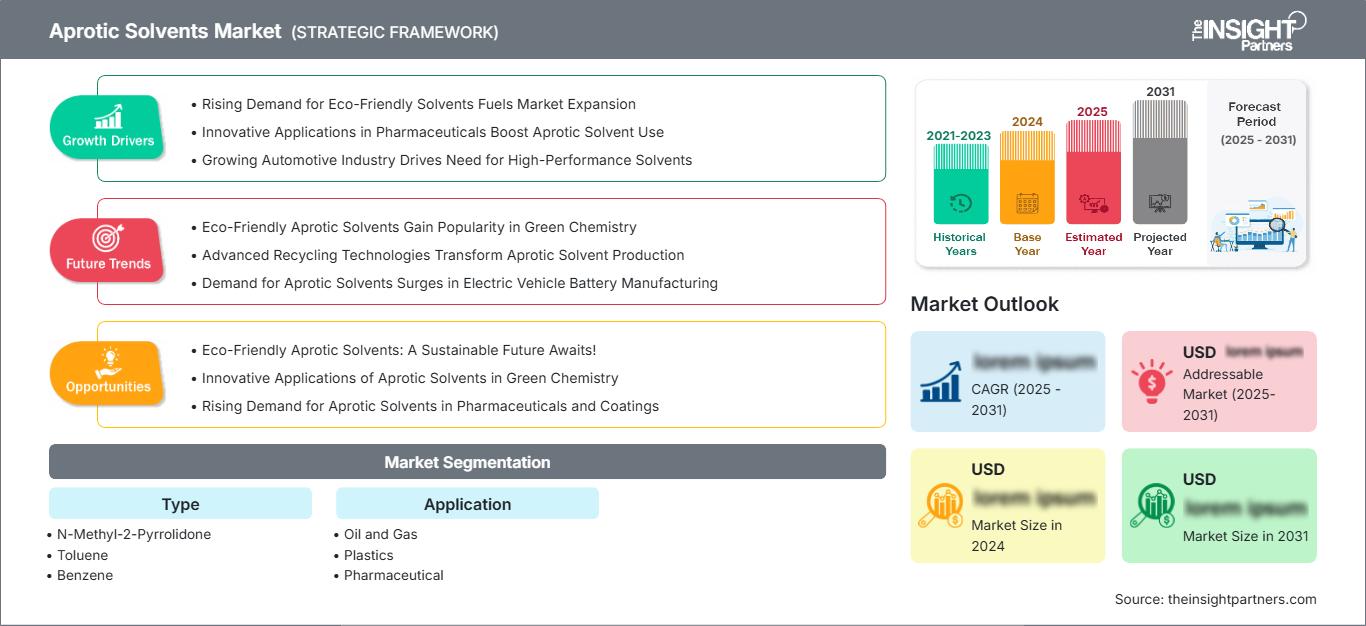
Aprotic Solvents Market: Strategic Insights
Regional Insights
North America Aprotic Solvents Market
North America is estimated to represent 24–28% of global aprotic solvents market in 2025, with a 3.4–3.9% CAGR through 2034. The presence of well-developed chemical infrastructure, active pharmaceutical manufacturing, coatings industry, as well as oil and gas processing, characterizes the region. The USA stays the key demander, and Canada is engaged due to energy and chemical needs. In the conditions of growing importance of supply security, domestic producers have to coordinate production and imports, managing their inventories.
Regulations in the aprotic solvents market also affect solvents’ choice and controls in the workplace. In the USA, strict occupational exposure guidelines for benzene are introduced, stimulating engineering controls, monitoring and containment processes. Pharmaceutical and electronics clients seek stable and pure products and supply control. This way, North American manufacturers are competing due to integrated production, logistics, services and recovery. Canada and Mexico offer downstream opportunities due to automotive, coatings and manufacturing industries.
U.S. Aprotic Solvents Market
The US accounts for approximately 78–82% of North American aprotic solvents market in 2025, equivalent to about 20–22% globally, and is projected to expand at a 3.4–3.8% CAGR through 2034. Applications for these products include pharmaceutical production, electronics, plastics, coatings, and the oil industry. BASF SE, Dow Inc., Eastman Chemical Company, and Shell Chemicals have strong market position in chemicals.
Changing trends include demand for higher purity chemicals and application-specific solvents, which may impact yield if not handled properly. Tight control on the purity of solvents is essential for electronics producers while traceability and uniformity are more important for pharmaceutical producers. Coatings and industries use aromatic and ketone solvents owing to their traditional formulations. Feedstock availability offers an edge for integrated producers, though prices are sensitive to refinery and petrochemical usage.
Europe Aprotic Solvents Market
Europe is projected to hold a 22–26% share in 2025 and expand at a 3.0–3.5% CAGR through 2034. Germany is the key market, with support coming from chemicals, pharmaceuticals, coatings, and advanced manufacturing. The UK, France, Italy, and Spain are significant markets due to their demand from pharmaceuticals, industrial, automotive, and specialty chemicals uses. Increasingly in Europe, buyers will consider the environmental impacts of solvents alongside their performance and cost.
The UK will be important as a demand market for pharmaceuticals, coatings, and industrial chemicals, whereas Germany will see high demand due to its size in terms of chemical manufacturing as well as downstream formulating industries. France will see growth as a result of pharmaceutical, aerospace coatings, and specialty chemicals demand. Demand will come from coatings, plastics, pharmaceuticals, adhesives, and industrial manufacture in Italy and Spain.
APAC Aprotic Solvents Market
APAC holds an estimated 34–38% share in 2025 and is expected to record a 4.2–4.7% CAGR through 2034, making it the leading regional growth center. China leads demand, followed by Japan, South Korea, India, and Australia. Electronics manufacturing, plastics, pharmaceuticals, and chemical processing underpin consumption.
According to the aprotic solvents market forecast, China integrates large chemical capacity along with downstream manufacturing. Japan and South Korea contribute with premium electronics and semiconductor demand, while India is focusing on pharmaceutical and specialty chemicals production. Australia contributes via chemicals and resources related uses. Industrial investment, electronics localization, pharmaceutical capacity increase and chemicals manufacturing policies help in creating regional demand. Diversification of supply chain is also prompting the multinationals to create new sourcing relationships from India and Southeast Asia.
Middle East & Africa Aprotic Solvents Market
Middle East and Africa demand is smaller but strategically relevant, with a projected 3.2–3.8% CAGR through 2034. Saudi Arabia leads regional consumption, followed by the UAE and South Africa. Petrochemical integration, oilfield activities, construction coatings, and chemical manufacturing support solvent requirements across major industrial hubs.
Integration of hydrocarbon facilities with the chemical industry is one of the strengths of Saudi Arabia, whereas UAE acts as a logistics and trading hub for the region. South Africa provides its contributions through the mining industry and coating, chemical, and manufacturing industries. Rest-of-MEA region requires scattered efforts that are highly correlated with the energy projects and infrastructure investments along with the chemical imports.
Segmentation Analysis
Type
Type remains a fundamental segmentation dimension because solvent polarity, solvency strength, volatility, purity, toxicity profile, and feedstock economics determine suitability for different industrial processes. The segment is projected to expand at a 3.7–4.2% CAGR from 2026–2034. Demand remains broad for established aromatic and ketone solvents, while NMP faces application-specific regulatory pressure and increasing interest in alternatives.
- N-Methyl-2-Pyrrolidone: NMP remains important for demanding chemical processing, coatings, electronics, and polymer-related applications. Its strong solvency and high boiling point support technically demanding processes, although regulatory considerations encourage controlled use and substitution.
- Toluene: Toluene maintains a leading position because of its broad solvency, established distribution infrastructure, and use in coatings, adhesives, plastics, and chemical manufacturing. Its extensive industrial familiarity supports stable purchasing patterns across mature manufacturing markets.
- Benzene: Benzene demand is closely associated with chemical manufacturing and hydrocarbon value chains, while direct solvent applications are constrained by health and safety requirements. Producers emphasize containment, monitoring, and controlled industrial handling.
- Acetone: Acetone benefits from rapid evaporation, strong solvency, and extensive use in coatings, plastics, pharmaceuticals, adhesives, and cleaning processes. Its established production base and broad downstream applicability support continued industrial consumption.
Application
Application is projected to expand at a 4.0–4.5% CAGR from 2026–2034, with demand increasingly shaped by high-purity manufacturing, process efficiency, formulation requirements, and regulatory compliance. Electronics and pharmaceuticals offer comparatively stronger expansion potential, while oil and gas and coatings provide substantial established consumption.
- Oil and Gas: Oil and gas remains a significant application because solvents support processing, cleaning, extraction-related operations, and chemical formulations. Regional demand is particularly relevant where hydrocarbon production and downstream infrastructure are integrated.
- Plastics: Plastics manufacturing uses aprotic solvents across processing, formulation, polymer modification, cleaning, and related chemical operations. Demand follows polymer production, conversion capacity, and requirements for controlled processing environments.
- Pharmaceutical: Pharmaceutical applications prioritize purity, reproducibility, traceability, and validated processing. Solvent selection is increasingly influenced by residual-solvent controls, worker safety, process containment, and the need to maintain consistent pharmaceutical manufacturing quality.
- Electronic Equipment: Electronic equipment represents the fastest-growing application area, supported by semiconductor, display, precision-cleaning, and component manufacturing. High-purity requirements and contamination sensitivity make supplier qualification, consistency, and packaging integrity strategically important.
- Paints and Coatings: Paints and coatings consume solvents for dissolution, viscosity control, film formation, and formulation processing. Demand remains significant across construction, automotive, industrial, and protective coatings, although lower-emission formulations increasingly influence material selection.
- Adhesives: Adhesives use aprotic solvents where controlled solvency, evaporation, and polymer compatibility are required. Demand is supported by packaging, construction, automotive, footwear, and industrial assembly, with formulation efficiency influencing solvent selection.
Opportunity Snapshot
| Application | Revenue Contribution (High/Medium/Low) | Trend Tag | Adoption Stage |
| Oil and Gas | High | Process Cleaning | Mature |
| Plastics | High | Polymer Processing | Mature |
| Pharmaceutical | Medium | High Purity | Scaling |
| Electronic Equipment | Medium | Precision Cleaning | Scaling |
| Paints and Coatings | High | Low VOC | Scaling |
| Adhesives | Medium | Formulation Efficiency | Mature |
Aprotic Solvents Market Growth Drivers and Impact Analysis
Expansion of Pharmaceutical and Specialty Chemical Manufacturing
The aprotic solvents market report shows that increases in capacities of pharmaceutical and specialty chemicals drive the demand for solvents that can deliver consistent reaction conditions, dissolution capabilities, and processing results. Multiple solvent providers are being qualified by manufacturers since any disruption to their manufacturing processes will cause disruption to batch manufacturing schedules and customer deliveries. Such development plays into the hands of solvent providers that have the ability to maintain consistency of purity and documentation in all of their plants. The situation goes beyond volumes as pharmaceutical customers buy based on certain criteria, thereby making switching more difficult than in case of industrial applications. Manufacturing expansion in India, China, North America, and selective manufacturing bases in Europe creates demand for NMP, acetone, toluene, and other solvents.
Electronics Manufacturing and High-Purity Processing Requirements
Growing trends in electronics production are placing emphasis on the quality of solvents, packing, trace metals, and contamination control. Production of semiconductors and other precision components involves process chemicals that will be behaving predictably at very specific manufacturing conditions. With growing fabrication and assembly facilities in Asia and North America, solvent companies need to meet new demands for qualification, analysis, traceability, and reliable logistics. That opens a good chance for creating differentiating features instead of just increasing production volumes. It will be possible for manufacturers to build strong relationships with their customers by providing technical assistance, specific logistics, contamination control technology, and tailored packing. Such a market influence will be particularly valuable in cases related to acetone and NMP applications requiring certain material quality in processing and formulation.
Integrated Petrochemical Infrastructure and Feedstock Availability
Integration between refineries, aromatics units, olefins facilities, and downstream chemical plants supports competitive solvent production by improving feedstock availability and reducing logistics exposure. Toluene, benzene, and acetone benefit particularly from established petrochemical networks, allowing large producers to optimize production across multiple derivative markets. However, integration also links solvent economics to refinery utilization, feedstock pricing, planned maintenance, and regional trade flows. Companies with geographically diversified assets can mitigate some disruptions by reallocating supply between markets. This advantage becomes more important during periods of transportation constraints or unplanned outages. The impact on customers is reflected in contract structures, inventory policies, and preference for suppliers with multiple production locations. Integrated producers can therefore compete on reliability as well as price.
Aprotic Solvents Market Future Trends
Closed-Loop Solvent Recovery and Resource Efficiency
The aprotic solvents market trends show that solvent recovery is expected to become increasingly integrated into manufacturing facilities as customers seek to reduce raw-material consumption, disposal expenses, and emissions. Instead of treating solvent management solely as procurement, industrial users are likely to evaluate recovery rates, purification requirements, equipment compatibility, and recovered-solvent reuse. This shift can change purchasing patterns because a customer using a closed-loop system may require smaller quantities of higher-consistency material. Suppliers can respond by providing recovery-compatible grades, technical guidance, analytical services, and process optimization. Digital monitoring may further improve recovery performance by tracking solvent composition and contamination. Over time, lifecycle economics rather than purchase price alone could become a stronger determinant of solvent selection, particularly among pharmaceutical, electronics, and specialty chemical manufacturers operating under stringent environmental and quality requirements.
Application-Specific Substitution and Safer Solvent Portfolios
Solvent portfolios are expected to become more application-specific as companies evaluate occupational exposure, environmental performance, process efficiency, and regulatory status together. Substitution will not eliminate conventional solvents uniformly because performance requirements differ by formulation and process. Instead, manufacturers are likely to maintain multiple solvent options for individual applications, using alternatives where technically feasible and retaining established products where replacement would reduce productivity or product quality. This approach creates opportunities for suppliers that can demonstrate equivalent performance, compatibility, and lifecycle economics. Technical documentation will become more important as procurement teams coordinate with environmental, health, safety, and regulatory functions. The result is likely to be a more segmented market in which specialty grades, safer alternatives, and validated process formulations coexist with established high-volume solvents.
Aprotic Solvents Market Opportunities
Regional Production and Supply-Chain Localization
Localization of chemical production creates opportunities for solvent manufacturers to establish regional inventory, blending, packaging, and distribution capabilities near high-growth industrial clusters. India, Southeast Asia, and selected North American locations are attractive because pharmaceutical, electronics, coatings, and specialty chemical production is expanding while customers seek shorter and more resilient supply chains. Local warehousing can reduce lead times and improve continuity for customers that cannot maintain large solvent inventories because of storage or safety constraints. Partnerships with distributors can extend reach without requiring immediate full-scale manufacturing investment. Producers should prioritize applications where qualification barriers and supply reliability provide stronger margins than purely commodity transactions. Regional strategies should also account for hazardous-material transportation requirements, port infrastructure, storage regulations, and customer-specific packaging specifications.
High-Purity Solvent Platforms for Electronics and Pharmaceuticals
Investment in high-purity solvent platforms offers an opportunity to capture value from applications where contamination can affect manufacturing yields or product quality. Suppliers can develop dedicated purification, filtration, analytical testing, and packaging capabilities for electronics and pharmaceutical customers. The commercial opportunity extends beyond solvent production because customers may require certificates of analysis, batch traceability, technical service, and reliable delivery schedules. Establishing qualification programs early can create longer customer relationships and reduce price-only competition. Asia Pacific provides particularly attractive opportunities because semiconductor, display, pharmaceutical, and specialty chemical investments are expanding simultaneously. North America also offers potential where advanced manufacturing capacity is being localized. Producers that align product development with customer process specifications can differentiate more effectively than suppliers competing solely on bulk capacity.
Recent Developments
- June 17, 2025: INEOS Phenol, the world's largest producer of phenol and acetone, announced today its intention to permanently stop production at their site in Gladbeck, Germany. Sky high European energy costs alongside Europe’s punitive CO2 tax policy have combined to leave Europe uncompetitive against imported Chinese production and a global oversupply.
- March 3, 2025: Ashland Inc. announced global price increases for several solvent products, including N-methyl-2-pyrrolidone (NMP), gamma-butyrolactone, and tetrahydrofuran. The NMP increase was at least US$0.40/kg and became effective March 15, 2025, subject to contractual terms. The announcement provides a direct indication of changing cost and pricing conditions affecting industrial solvent supply.
Frequently Asked Questions

- Comprehensive Market Sizing and Forecast Analysis
- Detailed Segmentation Analysis
- In-Depth Market Dynamics Assessment
- Regional and Country-Level Insights
- Competitive Landscape and Company Benchmarking
- Strategic Business Intelligence
Recent Reports
Testimonials

The Insight Partners provided valuable market intelligence that supported our global go-to-market strategy. Their team was professional, responsive, and attentive to our feedback, providing thoughtful analysis and helpful methodological clarifications throughout the project.
Junmo Kim Chief Financial Officer (CFO), Enertech Co., Ltd.
The Insight Partners' SCADA System Market report is comprehensive, with valuable insights on current trends and future forecasts. The team was highly professional, responsive, and supportive throughout. We are very satisfied and highly recommend their services.
RAN KEDEM Partner, Reali Technologies LTDs
I requested a report on a very specific software market and the team produced the report in a few days. The information was very relevant and well presented. I then requested some changes and additions to the report. The team was again very responsive and I got the final report in less than a week.
JEAN-HERVE JENN Chairman, Future Analytica
We worked with The Insight Partners for an important market study and forecast. They gave us clear insights into opportunities and risks, which helped shape our plans. Their research was easy to use and based on solid data. It helped us make smart, confident decisions. We highly recommend them.
PIYUSH NAGPAL Sr. Vice President, High Beam Global
The Insight Partners delivered insightful, well-structured market research with strong domain expertise. Their team was professional and responsive throughout. The user-friendly website made accessing industry reports seamless. We highly recommend them for reliable, high-quality research services
YUKIHIKO ADACHI CEO, Deep Blue, LLC.
This is the first time I have purchased a market report from The Insight Partners.While I was unsure at first, I visited their web site and felt more comfortable to take the risk and purchase a market report.I am completely satisfied with the quality of the report and customer service. I had several questions and comments with the initial report, but after a couple of dialogs over email with their analyst I believe I have a report that I can use as input to our strategic planning process.Thank you so much for taking the extra time and making this a positive experience.I will definitely recommend your service to others and you will be my first call when we need further market data.
JOHN SUZUKI President and Chief Executive Officer, Board Director, BK Technologies
I wish to appreciate your support and the professionalism you displayed in the course of attending to my request for information regarding to infectious disease IVD market in Nigeria. I appreciate your patience, your guidance, and the fact that you were willing to offer a discount, which eventually made it possible for us to close a deal. I look forward to engaging The Insight Partners in the future, all thanks to the impression you have created in me as a result of this first encounter.
DR CHIJIOKE ONYIA MANAGING DIRECTOR, PineCrest Healthcare Ltd.Reason to Buy
- Informed Decision-Making
- Understanding Market Dynamics
- Competitive Analysis
- Identifying Emerging Markets
- Customer Insights
- Market Forecasts
- Risk Mitigation
- Boosting Operational Efficiency
- Strategic Planning
- Investment Justification
- Tracking Industry Innovations
- Aligning with Regulatory Trends





 Get Free Sample for