
Argatroban Market Share, Demand & Growth by 2034
Coverage: By Type (Argatroban Powder, Argatroban Injection) ; Application (Heparin-induced thrombocytopenia (HIT), Percutaneous Coronary Intervention, Cerebral arterial thrombosis) , and Geography (North America, Europe, Asia Pacific, and South and Central America)
- Status : Data Released
- Report Code : TIPRE00008657
- Category : Life Sciences
- No. of Pages : 150
- Available Report Formats :


- Last update date : September 01, 2026


2025 Market Size
US$ 70.17 Mn
Base year value
2034 Forecast
US$ 97.67 Mn
Projected by 2034
CAGR 2026-2034
3.74 %
Growth rate
Addressable Market
US$ 762.21 Mn
(2026-2034)
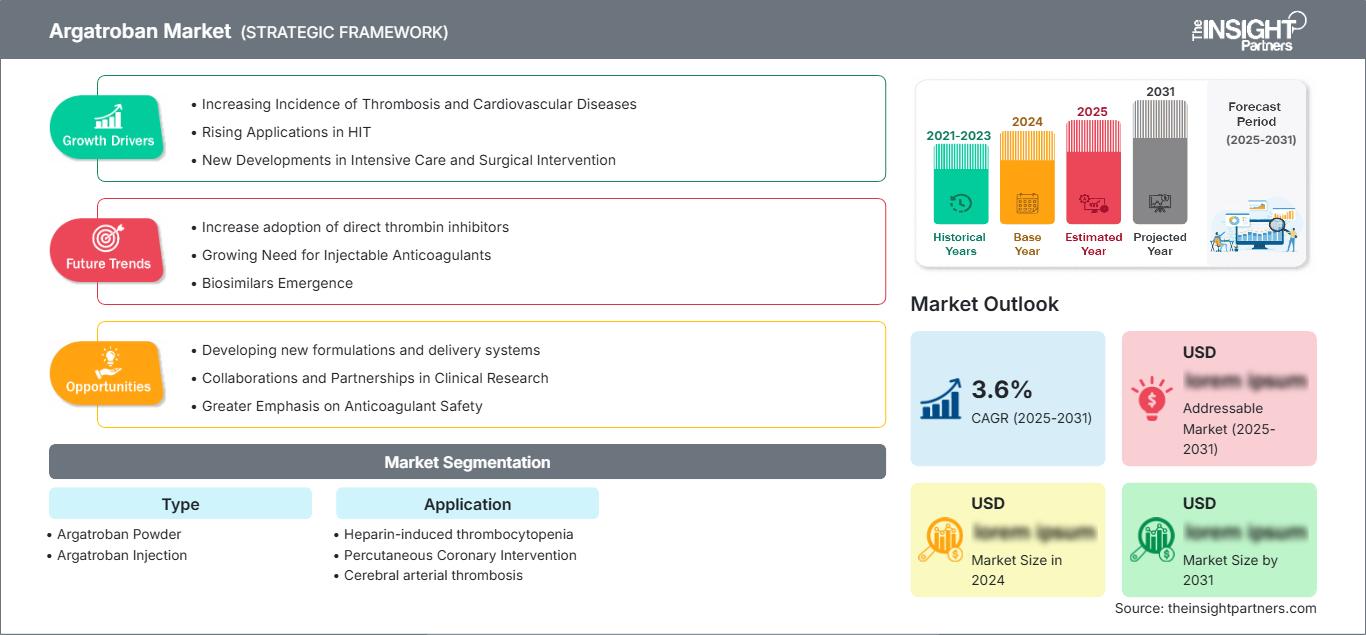
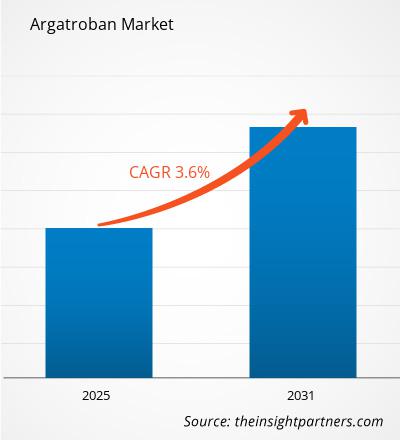
The argatroban market is positioned as a specialized anticoagulant market serving patients who require alternatives to heparin, particularly in hospital-based thrombosis management. The market is valued at US$ 70.17 Million in 2025 and is projected to reach US$ 97.67 Million by 2034, advancing at a 3.74% CAGR from 2026 to 2034. Demand is supported by continued clinical use in heparin-induced thrombocytopenia and selected interventional cardiovascular procedures.
North America remains the principal commercial base, supported by established hospital protocols, availability of injectable formulations, and strong generic pharmaceutical supply. The argatroban market size is expected to expand at an estimated 3.5–4.2% CAGR during 2026–2034, with demand influenced by HIT recognition, cardiovascular intervention volumes, and procurement emphasis on reliable sterile injectable availability.
Argatroban Market Assessment and Insights
- North America: North America is expected to represent a 38–43% argatroban market share in 2025, growing at a 3.5–4.2% CAGR between 2026–2034, supported by established HIT treatment pathways, hospital formularies, and broad availability of generic injectable products.
- US: The US accounts for approximately 32–37% share in 2025 within global demand, expanding at a 3.4–4.1% CAGR between 2026–2034, supported by hospital use and generic competition.
- Europe: Europe is estimated at a 27–32% share in 2025, growing at a 3.1–3.8% CAGR between 2026–2034, with Germany, the UK, France, Italy, and Spain representing important demand centers.
- Asia Pacific: Asia Pacific is estimated to hold an 18–23% share in 2025, advancing at a 4.1–5.0% CAGR between 2026–2034, led by Japan, China, South Korea, India, and Australia.
- Largest Segment: Argatroban Injection is the largest segment, with a 78–84% market share in 2025 and a 3.6–4.0% CAGR during 2026–2034, reflecting predominantly hospital-based intravenous use.
- High Growth Segment: Cerebral arterial thrombosis is the high-growth application segment, with a 7–11% market share in 2025 and a 4.1–5.0% CAGR during 2026–2034, supported by specialized neurological applications.
- Key companies analyzed in detail: Pfizer Inc., Sandoz Group AG, GSK plc, Fresenius Kabi AG, Eagle Pharmaceuticals, Inc., Mitsubishi Tanabe Pharma Corporation, Teva Pharmaceutical Industries Ltd., Hikma Pharmaceuticals USA Inc., and Midas Pharma GmbH.
Source: The Insight Partners' analysis based on proprietary research, government publications, company annual reports, investor presentations, industry databases, and expert interviews.
In terms of the product environment, there has been an evolution from a product-centered branded supply to a generic injectables ecosystem with various producers supplying argatroban formulations for hospital use. Ready to use preparations will help eliminate the need for preparation, but the conventional concentrated vials will continue to play an important role when there is a system of drug dilutions in the hospital pharmacy. The focus on bleeding tendency, hepatic insufficiency, dosage adjustment and testing will still be important issues raised by the labeling.
The growth during the forecast period will be gradual, rather than revolutionary, as argatroban is needed only in certain patients and is competing against other non-heparin anticoagulants. The opportunities for growth, therefore, will arise from the geographic regions where HIT is recognized better, where anticoagulation practices are developed and generic sterile drugs are produced efficiently.
Argatroban Market Report Scope
| Report Attribute | Details |
|---|---|
| Market size in 2025 | US$ 70.17 Million |
| Market Size by 2034 | US$ 97.67 Million |
| Global CAGR (2026 - 2034) | 3.74% |
| Historical Data | 2021-2024 |
| Forecast period | 2026-2034 |
Argatroban Market Analysis
Argatroban market growth is primarily associated with the need for anticoagulation without heparin use in case of suspected or confirmed HIT. According to the American Society of Hematology, the incidence of HIT depends on heparin type and patient populations, while about one-third to one-half of all HIT cases may have complications related to thrombosis. This drives the demand for safe parenteral substitutes in acute-care settings.
The argatroban market value chain starts with the production of active pharmaceutical ingredients, formulation, sterile filling, packaging, release and distribution of the product to hospitals. Economic characteristics of the supply suggest preference for manufacturers with proven sterile injectable capability as production process is more difficult than regular oral solid dosage drugs production. Hospitals prefer suppliers providing continuity, concentration, long-term shelf-life and cost-effectiveness to the company.
Argatroban market report shows a fragmented competition with established pharmaceutical firms competing against generic injectable companies regarding availability, cost, manufacturing and regulatory aspects of production. Pfizer is recognized as a branded company, while Fresenius Kabi, Hikma Pharmaceuticals USA Inc. and other generic firms provide argatroban for hospitals as part of their injectable portfolio.
Supply-related characteristics in the argatroban market dominate competitive positioning nowadays instead of clinical differentiation. Companies like Sandoz Group AG, Teva Pharmaceutical Industries Ltd., Eagle Pharmaceuticals, Inc. and Midas Pharma GmbH compete as part of pharmaceutical supply chains, while Mitsubishi Tanabe Pharma Corporation retains market position due to its anticoagulants history. Future strategies should concentrate on sterile manufacturing, maintenance of regulatory compliance, tender participation and reliable distribution.
● REPORT CUSTOMIZATION
Tailor This Report To Align With Your Specific Business Requirements
This report can be customized to align precisely with your business objectives, scope, and target markets. Customization options include tailored segmentation, geography, competitive analysis, and strategic insights to support informed decision-making.
Customize This Report →WHAT YOU CAN ADJUST
- ● Segmentations
- ● Geography
- ● Competitive Analysis
- ● Language Preferences
Argatroban Market: Strategic Insights
Regional Insights
North America argatroban market
North America is estimated to account for 38–43% of global argatroban market demand in 2025, with a 3.5–4.2% CAGR through 2034. The region features well-developed hospital anticoagulation guidelines, well-developed diagnosis approaches to HIT, and a substantial base of tertiary hospitals. The US provides the major part of regional demand, whereas Canada participates via specific hospital purchases and cardiovascular segment.
The region’s buying process includes impact of generics, GPOs, and pharmacy purchasing needs. Argatroban is especially applicable when there is a need for quick replacement of heparin. Availability of several forms of injection gives procurement more options. The clinical advice provided by hematology groups also supports the structured process of diagnosis and treatment of patients with suspected HIT, which helps to maintain institutional use of the product despite competitive products from non-heparin anticoagulants category.
U.S. argatroban market
The US represents approximately 84–88% of North American argatroban market demand in 2025 and is projected to expand at a 3.4–4.1% CAGR through 2034. The utilization of hospitals is found within HIT management and select PCI environments. Pfizer Inc. has an established brand argatroban product, whereas Hikma Pharmaceuticals USA Inc. and Fresenius Kabi USA provide generic injectables for use.
There is also the factor of demand being affected by the volume of cardiovascular procedures and hospital pharmacy economics. According to the American Heart Association, PCI is the most common cardiovascular procedure done throughout the country, and in 2022, the number was 435,895. While this figure does not reflect argatroban use, it is clear that there is a sizable environment where alternative anticoagulants would have clinical relevance.
Europe argatroban market
Europe is estimated to hold a 27–32% argatroban market share in 2025, with a 3.1–3.8% CAGR through 2034. Germany is the market leader, followed by the UK, France, Italy, and Spain. National reimbursement policies, hospital formulary programs, and generic tenders impact product choices, but the demand is limited to tertiary hospitals.
Pathways within hospitals have been established for thrombosis treatment in the UK and Germany. Anticoagulation activities in hospitals and cardiovascular intervention procedures in France, Italy, and Spain provide contributions to the European demand. Demand in Europe is thus driven more by institutional purchasing rather than retail demand. Companies that can continue to stay compliant, competitive, and able to deliver reliable sterile products are well-placed to win recurrent hospital tenders.
APAC argatroban market
APAC is estimated at an 18–23% share in 2025, expanding at a 4.1–5.0% CAGR through 2034. Japan is the largest market, which is driven by its clinical experience and familiarity with regulatory guidelines. China, South Korea, India, and Australia represent further sources of demand due to the development of their tertiary care facilities and cardiovascular services.
The clinical importance of Japan is especially high owing to the application of argatroban for the anticoagulation of patients with HIT and PCI procedures. In the emerging APAC countries, market growth is associated with the development of healthcare facilities, national production of medicines, and introduction of the anticoagulation treatment protocol.
Middle East & Africa argatroban market
MEA represents a smaller but developing demand base, with regional growth estimated at 3.0–4.0% CAGR through 2034. Saudi Arabia is the leading market, followed by the UAE and South Africa. Tertiary hospitals and cardiovascular centers account for the majority of utilization, while broader access remains uneven.
Saudi Arabia and the UAE benefit from healthcare infrastructure investment, specialized hospitals, and centralized procurement. South Africa provides the principal sub-Saharan demand center. In the rest of MEA, adoption is constrained by diagnostic capacity and limited access to specialized anticoagulation. Energy revenues and infrastructure spending in Gulf markets can indirectly support hospital modernization, improving the addressable base for specialized injectable medicines.
Segmentation Analysis
Type
The Type segment is dominated by injectable formulations because argatroban is administered intravenously in acute-care settings. The segment is expected to expand at a 3.5–4.0% CAGR from 2026–2034, with purchasing decisions increasingly influenced by ready-to-use concentrations, sterile manufacturing consistency, packaging efficiency, and hospital preparation requirements.
- Argatroban Powder: Powder presentations serve formulation and manufacturing requirements where controlled preparation is integrated into pharmaceutical or institutional processes. Their strategic importance is linked to flexibility, manufacturing economics, and specialized supply arrangements.
- Argatroban Injection: Injection is the dominant commercial form because intravenous administration enables controlled anticoagulation during acute HIT management and selected PCI procedures, making sterile availability and concentration consistency critical.
Application
Application demand is concentrated in clinically defined situations requiring an alternative to heparin. The segment is expected to record a 3.6–4.1% CAGR from 2026–2034, with growth dependent on diagnosis rates, treatment protocols, cardiovascular interventions, and specialist awareness rather than broad population-based anticoagulant use.
- Heparin-induced thrombocytopenia: HIT represents the core therapeutic indication, with demand linked to early recognition, confirmation, thrombosis prevention, and the need for non-heparin anticoagulation in hospitalized patients.
- Percutaneous Coronary Intervention: PCI represents a specialized application where argatroban can provide anticoagulation for patients with HIT or elevated HIT risk, particularly within interventional cardiology settings.
- Cerebral arterial thrombosis: Cerebral arterial thrombosis represents a narrower application, supported by specialized neurological and vascular treatment pathways where anticoagulation decisions require careful assessment of bleeding and thrombotic risk.
Opportunity Snapshot
| Application | Revenue Contribution (High/Medium/Low) | Trend Tag | Adoption Stage |
|---|---|---|---|
| Heparin-induced thrombocytopenia | High | HIT Protocols | Mature |
| Percutaneous Coronary Intervention | Medium | PCI Safety | Mature |
| Cerebral arterial thrombosis | Low | Neurovascular Use | Emerging |
Argatroban Market Growth Drivers and Impact Analysis
Increasing recognition of heparin-induced thrombocytopenia
Greater clinical emphasis on distinguishing HIT from other causes of thrombocytopenia supports appropriate use of non-heparin anticoagulants. ASH guidance recommends the 4Ts score for estimating pretest probability and recommends non-heparin anticoagulation for patients with acute HIT or HIT complicated by thrombosis. This structured approach can improve treatment consistency across hospitals and reduce inappropriate empirical use. Commercially, the impact is strongest in institutions with hematology, intensive care, cardiovascular surgery, and interventional cardiology capabilities. As hospitals strengthen anticoagulation stewardship, demand becomes increasingly protocol-driven rather than dependent on individual physician familiarity. Manufacturers can benefit from this environment by ensuring uninterrupted supply, standardized concentrations, clear labeling, and pharmacy support. The resulting demand pattern favors established injectable suppliers capable of serving institutional procurement systems reliably.
Expansion of tertiary cardiovascular and critical-care infrastructure
Growth in tertiary-care infrastructure expands the number of hospitals capable of managing complex thrombotic disorders and performing invasive cardiovascular procedures. PCI remains a high-volume procedure in the US, while cardiovascular treatment capacity continues to develop across Asia, the Middle East, and other emerging healthcare systems. Although only a fraction of these procedures involves patients requiring argatroban, larger procedural ecosystems increase the potential pool for specialized anticoagulation. This effect is especially relevant where hospitals introduce advanced catheterization laboratories and formal anticoagulation protocols. The commercial implication is a gradual broadening of institutional availability rather than rapid population-wide adoption. Suppliers with local distribution, regulatory registrations, and dependable sterile manufacturing can capture incremental demand as new tertiary hospitals enter procurement networks and specialized cardiovascular services become more accessible.
Generic sterile injectable competition and supply diversification
The availability of multiple generic suppliers is reshaping procurement dynamics by increasing alternatives to legacy branded products and reducing dependence on individual manufacturers. US regulatory databases show several active argatroban injectable presentations, demonstrating a diversified supply environment. Competition can improve purchasing flexibility, but sterile injectable manufacturing remains technically demanding and vulnerable to capacity interruptions. Hospitals therefore balance acquisition price against supplier reliability, manufacturing quality, concentration availability, and continuity commitments. This creates an advantage for pharmaceutical companies with established injectable facilities and broad distribution networks. Over time, supplier diversification can reduce the impact of individual shortages and support more consistent access to therapy. For manufacturers, the strategic priority is not simply entering the market, but sustaining validated production, regulatory compliance, inventory availability, and competitive institutional contracting.
Argatroban Market Future Trends
Greater use of ready-to-administer presentations
Ready-to-administer injectable presentations are likely to gain strategic importance as hospitals seek to reduce pharmacy preparation steps and medication-handling complexity. Current US labeling demonstrates the availability of 50 mg/50 mL presentations that do not require dilution before intravenous infusion. Over the forecast period, manufacturers may increasingly optimize container formats, concentrations, labeling, and packaging around workflow efficiency. This trend could be particularly relevant in emergency departments, intensive care units, and cardiovascular procedure suites where rapid anticoagulation decisions are required. Product differentiation will therefore shift toward administration convenience, storage efficiency, and medication safety rather than changes to the active pharmaceutical ingredient. Suppliers able to demonstrate consistent sterile production and simplified handling should be better positioned in institutional purchasing decisions.
Regionalization of sterile injectable manufacturing
The argatroban market trends Manufacturing strategies are likely to become more geographically diversified as healthcare systems place greater emphasis on essential medicine resilience. Argatroban is a relatively specialized product, making reliable production capacity important even when overall demand remains modest. Pharmaceutical companies may therefore prioritize regional filling, secondary sourcing, and inventory buffers rather than relying on a single manufacturing location. Asia is positioned to play a larger role because of established pharmaceutical manufacturing capabilities, while North America and Europe will remain important for regulatory oversight and high-value hospital markets. Procurement organizations may increasingly evaluate supplier resilience alongside price. This could encourage long-term agreements, dual sourcing, and qualification of additional manufacturing sites. The result would be a more distributed supply structure supporting continuity across mature and emerging markets.
Argatroban Market Opportunities
Expansion through emerging hospital procurement markets
The argatroban market Forecasts indicate that emerging healthcare systems can provide incremental opportunities where tertiary hospitals, cardiovascular centers, and critical-care capacity are expanding. Commercial strategies should prioritize countries with improving specialist infrastructure, centralized hospital purchasing, and regulatory pathways for generic injectable medicines. Gulf markets offer a particularly relevant opportunity because healthcare infrastructure investment is accompanied by increasing tertiary-care capacity. Selected Asian markets can also support expansion where local manufacturing partnerships reduce registration and supply barriers. Rather than pursuing broad primary-care distribution, companies should focus on specialist hospital channels, formulary inclusion, and reliable distributor relationships. Tender participation, local regulatory expertise, and supply commitments can become decisive competitive factors. This approach aligns commercial investment with the concentrated clinical profile of argatroban and avoids excessive exposure to low-volume retail channels.
API and contract manufacturing partnerships
A second opportunity lies in strengthening upstream and contract manufacturing relationships for active pharmaceutical ingredient supply and sterile injectable production. Specialized anticoagulants can face supply constraints when manufacturing economics discourage excess capacity. Partnerships with established pharmaceutical manufacturers can spread fixed costs, improve utilization, and provide access to regulated markets without requiring every company to build an integrated manufacturing footprint. API producers can also create value through consistent impurity control, documentation, and supply continuity. Contract manufacturers with validated sterile facilities may attract customers seeking regional market entry or additional capacity. Investment decisions should prioritize regulatory track record, manufacturing redundancy, technology transfer capability, and quality systems. These partnerships could support both established pharmaceutical companies and smaller suppliers seeking cost-efficient entry into selected hospital markets.
Recent Developments
- June 2026: Hikma Pharmaceuticals USA Inc. updated its US argatroban injection labelling, maintaining indications for adult HIT thrombosis prophylaxis or treatment and anticoagulation during PCI in patients with HIT or HIT risk. The revised labelling also details dosing, hepatic impairment considerations, bleeding warnings, and intravenous administration requirements, reinforcing the product's established hospital positioning.
- March 2026: Gland Pharma Limited received updated US labelling for argatroban in sodium chloride injection. The presentation is supplied as a ready-to-administer intravenous solution, reflecting continuing generic competition around simplified hospital administration and sterile injectable availability. The updated labelling confirms HIT and PCI indications and provides revised product information for US use.
- December 2024: Fresenius Kabi USA, LLC listed Argatroban Injection, 50 mg per 50 mL, as available in its US product availability information. The listing demonstrates continued commercial availability of a standardized single-dose injectable presentation and highlights the importance of dependable supply for hospital anticoagulation procurement.
Frequently Asked Questions

- Comprehensive Market Sizing and Forecast Analysis
- Detailed Segmentation Analysis
- In-Depth Market Dynamics Assessment
- Regional and Country-Level Insights
- Competitive Landscape and Company Benchmarking
- Strategic Business Intelligence
Recent Reports
Testimonials

The Insight Partners' SCADA System Market report is comprehensive, with valuable insights on current trends and future forecasts. The team was highly professional, responsive, and supportive throughout. We are very satisfied and highly recommend their services.
RAN KEDEM Partner, Reali Technologies LTDs
I requested a report on a very specific software market and the team produced the report in a few days. The information was very relevant and well presented. I then requested some changes and additions to the report. The team was again very responsive and I got the final report in less than a week.
JEAN-HERVE JENN Chairman, Future Analytica
We worked with The Insight Partners for an important market study and forecast. They gave us clear insights into opportunities and risks, which helped shape our plans. Their research was easy to use and based on solid data. It helped us make smart, confident decisions. We highly recommend them.
PIYUSH NAGPAL Sr. Vice President, High Beam Global
The Insight Partners delivered insightful, well-structured market research with strong domain expertise. Their team was professional and responsive throughout. The user-friendly website made accessing industry reports seamless. We highly recommend them for reliable, high-quality research services
YUKIHIKO ADACHI CEO, Deep Blue, LLC.
This is the first time I have purchased a market report from The Insight Partners.While I was unsure at first, I visited their web site and felt more comfortable to take the risk and purchase a market report.I am completely satisfied with the quality of the report and customer service. I had several questions and comments with the initial report, but after a couple of dialogs over email with their analyst I believe I have a report that I can use as input to our strategic planning process.Thank you so much for taking the extra time and making this a positive experience.I will definitely recommend your service to others and you will be my first call when we need further market data.
JOHN SUZUKI President and Chief Executive Officer, Board Director, BK Technologies
I wish to appreciate your support and the professionalism you displayed in the course of attending to my request for information regarding to infectious disease IVD market in Nigeria. I appreciate your patience, your guidance, and the fact that you were willing to offer a discount, which eventually made it possible for us to close a deal. I look forward to engaging The Insight Partners in the future, all thanks to the impression you have created in me as a result of this first encounter.
DR CHIJIOKE ONYIA MANAGING DIRECTOR, PineCrest Healthcare Ltd.Reason to Buy
- Informed Decision-Making
- Understanding Market Dynamics
- Competitive Analysis
- Identifying Emerging Markets
- Customer Insights
- Market Forecasts
- Risk Mitigation
- Boosting Operational Efficiency
- Strategic Planning
- Investment Justification
- Tracking Industry Innovations
- Aligning with Regulatory Trends





 Get Free Sample for