
Battery Case Market Size, Growth & Trends by 2034
Coverage: by Distribution Channel (Online Stores, Single Brand Stores, Multi Brand Stores); Price Range (Below $20, $20-$50, Above $50) , and Geography (North America, Europe, Asia Pacific, and South and Central America)
- Status : Data Released
- Report Code : TIPRE00004791
- Category : Manufacturing and Construction
- No. of Pages : 150
- Available Report Formats :


- Last update date : September 03, 2026


2025 Market Size
US$ 3.45 Bn
Base year value
2034 Forecast
US$ 5.76 Bn
Projected by 2034
CAGR 2026-2034
5.86 %
Growth rate
Addressable Market
US$ 41.73 Bn
(2026-2034)
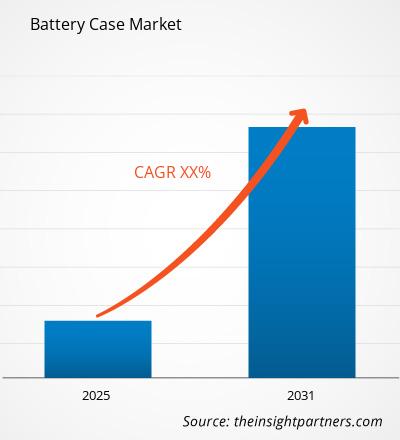
The battery case market was valued at US$ 3.45 Billion in 2025 and is projected to reach US$ 5.76 Billion by 2034, registering a CAGR of 5.86% during 2026–2034. Demand reflects the product’s dual function as a protective enclosure and supplementary energy source for smartphones, helping users maintain connectivity during travel, fieldwork, navigation, gaming, content creation, and other power-intensive activities while reducing dependence on separate cables and portable chargers.
Within North America, the battery case market size is supported by an estimated 4.8–5.4% CAGR through 2034. High premium-smartphone ownership and established direct-to-consumer accessory channels sustain replacement demand, while mobile work and frequent travel reinforce preference for integrated power and protection. Product labeling is increasingly important because current aviation guidance requires lithium-ion batteries to display watt-hour ratings and advises travelers to keep battery-powered devices in carry-on baggage rather than checked luggage.
Battery Case Market Assessment and Insights
- North America – Battery case market demand benefits from premium devices and travel-oriented usage, representing 31–34% share in 2025 and expanding at a 4.8–5.4% CAGR between 2026–2034.
- US – Broad e-commerce access and brand-led launches support 76–80% of North American revenue in 2025, with a 4.9–5.5% CAGR between 2026–2034.
- Europe – The region accounts for 24–27% in 2025 and advances at a 4.6–5.2% CAGR between 2026–2034, led by Germany, the UK, and France.
- Asia Pacific – China, Japan, South Korea, and India underpin 30–33% share in 2025 and the strongest regional 6.1–6.8% CAGR between 2026–2034.
- Largest Segment – Online Stores command 50–54% market share in 2025 and record a 6.2–6.9% CAGR between 2026–2034 through assortment breadth and comparison-led purchasing.
- High Growth Segment – $20-$50 products capture 39–43% market share in 2025 and grow at a 6.0–6.7% CAGR between 2026–2034 as buyers balance capacity, protection, and affordability.
- Key companies analyzed in detail: Apple Inc., Alpatronix, Anker Innovations Limited, Incipio, LLC, Endliss Technology Inc. (Maxboost), PhoneSuit, Samsung Electronics Co., Ltd., Zerolemon LLC, ZAGG Inc., and Otter Products, LLC.
Source: The Insight Partners' analysis based on proprietary research, government publications, company annual reports, investor presentations, industry databases, and expert interviews.
Architecture for the device has moved on from thick, connector-reliant shells to thin shells, USB-C through, improved thermal management and magnetic attachment of accessories. More coordination by producers between the sourcing of cells, injection molding of protective cases, firmware-level charging intelligence and model specific tooling in the shorter cycles of smartphone releases. The use of up to 50% post-consumer recycled plastics in the latest premium range exemplifies how material strategy is being used for differentiation. This follows the development in the battery case market from basic emergency charging to more sophisticated power provision systems balancing runtime, drop protection, ergonomics and accessory interoperability.
In 2034, investments are expected to focus on Asia-Pacific manufacturing ecosystems, localization of high volume device models and digital distribution. Tailwinds from regulation will be the European Union USB-C common charger standard, coming into force from December 2024 for handheld covered devices, and lithium battery shipping guidelines. Those suppliers that provide details of watt hour ratings, recyclability, thermal protection and charging compatibility gain more efficient access to retailers and traveling consumers whereas those emerging market growths will be best suited to a modular approach that reduces tooling costs on multiple handset variations.
Battery Case Market Report Scope
| Report Attribute | Details |
|---|---|
| Market size in 2025 | US$ 3.45 Billion |
| Market Size by 2034 | US$ 5.76 Billion |
| Global CAGR (2026 - 2034) | 5.86% |
| Historical Data | 2021-2024 |
| Forecast period | 2026-2034 |
Battery Case Market Analysis
The growth in battery case market is attributed to the increased processing load on smartphones which includes recording videos, navigation, mobile payment, gaming, and remote cooperation. The value chain includes lithium-ion cell producers, battery management semiconductors, tools providers, battery cases, laboratories for certification, branding companies, distributors, and retailer of specific device. Since the design requires matching of ports, camera, buttons, and thermal envelope, every generation of handset will generate not only demand but also risks in stock.
Economies of supply favor platforms where cells, controllers, and material are similar in several form factors except the interface of handset itself. Availability online increases the number of devices for sale even those which are not mainstream, but certification and credible capacity claims are important in this case. Aviation regulations favor proper watt hour labeling since the International Air Transport Association states that 44% of passenger have power bank with them.
According to the battery case market analysis, fragmentation is driven by the ecosystem access, refresh rate, channel reach and warranty fulfillment. Connector and magnetic interface considerations are set by Apple Inc. and Samsung Electronics Co., Ltd., while ZAGG Inc., with its brand mophie, challenges the competition by developing integrated power protection solutions. Charging capabilities belong to Anker Innovations Limited, while capacity-oriented brands are Alpatronix, Zerolemon LLC, PhoneSuit and Endliss Technology Inc. (Maxboost).
Key expenses include thermal control, recycling of plastic materials, pass-through for audio in USB-C, magnetic accessory compatibility and fast certification of new models. Incipio, LLC and Otter Products, LLC provide expertise in protective case development and marketing, even when the range of powered cases differs depending on the device lifecycle. Hence, competitive advantage no longer depends solely on cell capacity but also on proper safety certification, ergonomic weight balance, drop resistance and quick introduction alongside the release of flagship smartphones.
● REPORT CUSTOMIZATION
Tailor This Report To Align With Your Specific Business Requirements
This report can be customized to align precisely with your business objectives, scope, and target markets. Customization options include tailored segmentation, geography, competitive analysis, and strategic insights to support informed decision-making.
Customize This Report →WHAT YOU CAN ADJUST
- ● Segmentations
- ● Geography
- ● Competitive Analysis
- ● Language Preferences
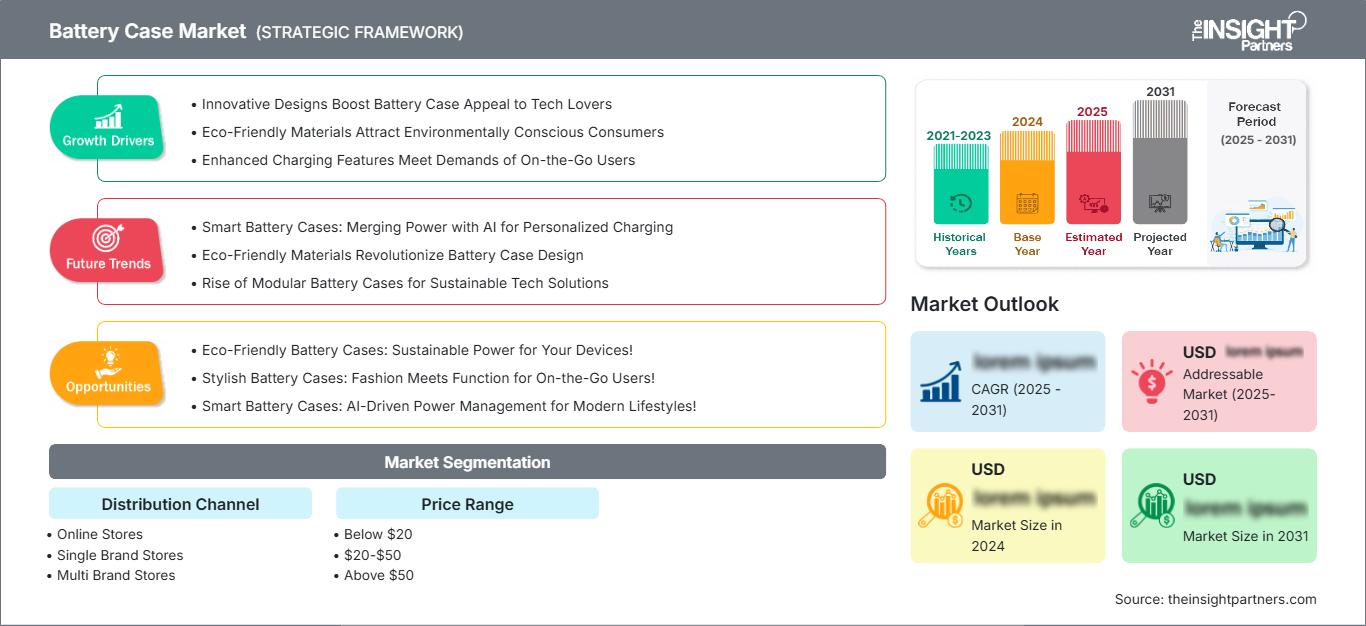
Battery Case Market: Strategic Insights
Regional Insights
North America battery case market
North America held 31–34% of global revenue in 2025 and is expected to expand at a 4.8–5.4% CAGR through 2034. Battery case market share shows premium smartphone adoption rate, mobility workstyle, traveling distances, and good direct-to-consumer fulfillment. Consumers increasingly compare additional battery life along with protection against drops, weight, wireless charging compatibility, and warranties instead of focusing exclusively on capacity alone.
Online sites and major marketplaces allow fast rollouts for new models of phones, while electronics stores help confirm fit and manage returns. Regional potential is restrained by more robust batteries inside phones and portable magnetic battery packs, but battery cases still have their place for travelers, field workers, content producers, and those looking for an all-in-one solution. Watt-hour labeling, safety features, and carry-on procedures will help boost confidence since there is increased awareness about lithium battery management at airports.
U.S. Battery Case Market
The U.S. accounted for 76–80% of North American sales in 2025 and is projected to post a 4.9–5.5% CAGR during 2026–2034. Adoption of dense flagships devices, subscription upgrade packages, and high marketplace penetration reduces the distance between device launch and accessories purchases. High demand exists for cases used in navigation, music streaming, online shopping, photography, and business communication in the absence of stationary charging points for longer periods of time.
Apple Inc., ZAGG Inc., Anker Innovations Limited, Alpatronix, Zerolemon LLC, PhoneSuit and specialists on case design offer considerable brand or retail presence. Users have a preference for device-specific USB-C ports, Priority Plus charging capabilities, magnetic wallet functionality, and eco-friendly materials. Uses in enterprise and prosumer markets comprise delivery logistics, field inspections, film and event production, as well as travel. Slim power banks compete on thickness and price, urging companies to highlight their integrated protection, controlled charging and easy single-device carrying.
Europe Battery Case Market
Europe represented 24–27% of revenue in 2025 and should progress at a 4.6–5.2% CAGR through 2034. Germany excels via high-end electronics consumption, well-organized retail and demand for proven safety and durability. The UK ranks second via its participation in e-commerce, travel applications and premium device ownership, which means that quick availability in online channels is key.
France is supported by design-savvy mid-premium buying, whereas Italy and Spain offer demand from professional users of mobile devices, tourists and usage of social media content. EU common charger legislation mandates USB-C for applicable handheld devices available on the market as of 28 December 2024 and harmonizes fast charging, thus providing an interface baseline. The vendors will be able to simplify the number of variants but will have to deal with specifics of the device, recycled materials, labeling and warranties.
APAC Battery Case Market
Asia Pacific captured 30–33% of 2025 revenue and is forecast to grow at a 6.1–6.8% CAGR, the fastest regional pace. China’s strength lies in its deep electronics manufacturing capability, diverse smartphones, and marketplace delivery efficiency. Japan and South Korea provide premium and small-sized design capabilities, while India helps expand volume through e-commerce and increasing device density.
Australia adds demands from travel and outdoor usage. The region’s policy focus on product safety, battery provenance, recycling, and standardization of charging systems improves documentation and platform engineering capabilities. Proximity of manufacturing enables rapid iteration for both the housing and electronics, allowing suppliers to capture opportunities at each new handsets launch while catering to different price points.
Middle East & Africa Battery Case Market
The Middle East & Africa market is projected to advance at a 4.2–4.9% CAGR through 2034. The UAE leads through premium-device ownership, aviation connectivity, tourism, and sophisticated electronics retail. Saudi Arabia’s digital-economy investment and event infrastructure support mobile-power demand, while South Africa anchors organized retail and professional usage.
Across the Rest of MEA, inconsistent fixed-power access, long journeys, and mobile-first services create practical use cases, though affordability and device fragmentation restrain scale. Distributors that combine multilingual packaging, safety documentation, and durable designs can address regional heat, travel, and infrastructure conditions more effectively.
Segmentation Analysis
Distribution Channel
Distribution Channel is expected to expand at a 5.2–5.8% CAGR during 2026–2034. The battery case market scope spans discovery-led e-commerce, controlled brand environments, and comparison-oriented multi-brand retail. Channel performance depends on launch timing, device-fit guidance, returns handling, authenticity, and the ability to explain capacity, charging protocol, safety labeling, and protection benefits without creating buyer confusion.
- Online Stores – Broad assortment, model filters, reviews, and direct fulfillment make this the largest route, particularly for niche handset variants and rapid release-cycle purchasing.
- Single Brand Stores – Controlled merchandising and trained staff support compatibility confidence, warranty conversion, and premium positioning, although portfolios are limited to ecosystem-approved or proprietary accessories.
- Multi Brand Stores – Side-by-side comparison helps buyers assess capacity, weight, price, and protection, preserving relevance where physical fit checks and immediate replacement matter.
Price Range
Price Range is projected to record a 5.1–5.7% CAGR during 2026–2034. Value is determined by cell capacity, thermal safeguards, impact protection, recycled materials, charging speed, pass-through functionality, and warranty credibility. Mid-range offerings gain traction by combining dependable runtime and protection without premium pricing, while lower tiers prioritize accessibility and upper tiers compete on materials, ergonomics, certification, and ecosystem compatibility.
- Below $20 – Entry products address price-sensitive and replacement buyers, but limited certification visibility, lower perceived durability, and thinner warranties can constrain trust in safety-critical charging accessories.
- $20-$50 – This range balances attainable pricing with improved protection, capacity, and charging controls, making it strategically important for mainstream online conversion and repeat purchases.
- Above $50 – Premium products target flagship devices and demanding users through refined materials, tested protection, advanced power management, pass-through features, recycled content, and stronger warranty support.
Opportunity Snapshot
| Distribution Channel | Revenue Contribution | Trend Tag | Adoption Stage |
| Online Stores | High | Model Discovery | Mature |
| Single Brand Stores | Medium | Ecosystem Fit | Scaling |
| Multi Brand Stores | Medium | Fit Comparison | Mature |
Battery Case Market Growth Drivers and Impact Analysis
Power-Intensive Mobile Use Expands Runtime Requirements
Smartphones are now commonly used as cameras, navigation devices, payment instruments, game consoles, and mobile offices, all of which use energy-intensive applications and fit within a single device. An integrated battery pack solves the issue by eliminating the need to carry a charger separately with the user. The business benefits are greatest for the traveling public, delivery personnel, event staff, field professionals, and creators whose efficiency is dependent on constant connectivity. Companies will be able to capitalize on this application by offering runtime improvements, maintaining access to buttons and the camera, and managing heat when charging the phone and battery case simultaneously.
Protection and Power Converge in One Accessory
In the combination of shock protection with power storage, there is no need for extra accessories or any complications in purchasing by someone planning on buying a protective case. The integration of these features provides a manufacturer with two performance parameters – physical strength and charging capacity. There will be options for distinct rail design, raised edges, lanyard openings, tactile buttons, and magnetic capability. In the marketplace, the integration of these components can provide a higher average sales price compared to simple cases provided that the manufacturer provides convincing evidence regarding shock resistance, battery quality, and safety measures. Retailers will have an easier time selling their use-case scenarios, whereas the brand could offer warranty support and specific fitting assistance. The biggest problem with execution is weight balance, which can hurt sales otherwise.
Digital Retail Improves Model-Specific Availability
Batteries are intrinsically model-specific, resulting in long-tail inventory that is challenging to merchandise well within limited shelf space. E-commerce addresses the difficulty in part via search capabilities for the specific device, compatibility information on dedicated pages, product reviews, and consolidated order fulfillment. In this way, smaller specialists can get to their customers without needing broad brick-and-mortar networks, and major brands can release batteries concurrently with new devices. The effect on the market will be greater selection, more rapid price competition, and better management of last-gen inventory. Yet erroneous product listings may result in a high return rate, so top merchants need precise specifications of the handset, connector, camera clearance, and wireless features.
Battery Case Market Future Trends
Smarter Thermal and Charge Orchestration
The battery case market trends will increasingly center on active temperature monitoring, adaptive current delivery, and phone-first charge sequencing. Future designs are likely to use compact controllers that respond to device state, ambient heat, and connector conditions rather than deliver fixed output. This shift can reduce thermal stress, improve usable energy transfer, and clarify remaining runtime through indicators or software integration. Manufacturers that validate these controls across multiple handset generations can reuse core electronics while changing model-specific housings. Over time, credible thermal performance may become a stronger purchasing criterion than headline milliamp-hour capacity, especially for premium users who prioritize battery health, safety, and predictable behavior during travel and intensive applications.
Circular Materials Become a Design Requirement
Recycled polymers, repair-aware construction, and clearer end-of-life instructions will move from premium differentiation toward mainstream procurement criteria. Newer powered cases already demonstrate post-consumer recycled content, establishing a practical benchmark for suppliers. Future platforms may separate battery modules from protective shells to extend material life across handset changes, although electrical safety and fit tolerances will govern adoption. Brands should prepare chain-of-custody documentation, material declarations, and take-back partnerships while preserving drop performance and surface quality. Retailers and enterprise buyers will increasingly compare environmental claims alongside warranty and certification evidence, rewarding products whose circularity benefits are measurable rather than cosmetic and whose packaging minimizes redundant charging accessories.
Battery Case Market Opportunities
Build Modular Platforms for Emerging Device Portfolios
The battery case market forecasts support investment in modular electronics that can serve several handset housings, particularly across Asia Pacific and other device-diverse markets. Suppliers can standardize cells, battery-management boards, USB-C components, and validation protocols while tailoring rails, camera openings, and button geometry. This architecture reduces tooling exposure, accelerates launch timing, and makes lower-volume models commercially viable. Partnerships with regional device distributors can improve demand visibility and bundle availability at handset purchase. Investors should prioritize companies with scalable qualification processes, traceable cells, and disciplined inventory controls, since rapid smartphone refreshes can strand obsolete stock. A modular platform also enables localized price tiers without compromising core electrical safeguards.
Develop Travel-Ready Compliance and Retail Programs
Travel-oriented consumers form an addressable niche for products designed around clear watt-hour marking, terminal protection, carry-on guidance, and durable enclosures. The International Air Transport Association’s survey finding that 44% of passengers carry a power bank indicates broad demand for portable energy, while its guidance underscores the importance of safe handling. Vendors can work with airport retailers, luggage brands, travel platforms, and corporate mobility programs to provide compact, clearly labeled products and educational packaging. An investment case is strongest where the battery remains securely integrated, documentation is multilingual, and channels can verify model compatibility. These capabilities convert regulation from a friction point into a trust and distribution advantage.
Recent Developments
- November 2025: ZAGG Inc. – Its mophie brand introduced Juice Pack battery cases for iPhone Air, iPhone 17 Pro, and iPhone 17 Pro Max. The lineup added USB-C audio pass-through, Priority Plus charging, 2,400–3,600 mAh internal batteries, and up to 50% post-consumer recycled materials, combining extended runtime with impact protection and magnetic accessory compatibility
- July 2026: The AZL Aachen consortium has launched a new Joint Partner Project focused on expanding battery case and enclosure technologies beyond passenger electric vehicles. The initiative will investigate plastic and fiber-reinforced material solutions for applications such as electric trucks, buses and off-highway vehicles
Frequently Asked Questions

- Comprehensive Market Sizing and Forecast Analysis
- Detailed Segmentation Analysis
- In-Depth Market Dynamics Assessment
- Regional and Country-Level Insights
- Competitive Landscape and Company Benchmarking
- Strategic Business Intelligence
Recent Reports
Testimonials

The Insight Partners' SCADA System Market report is comprehensive, with valuable insights on current trends and future forecasts. The team was highly professional, responsive, and supportive throughout. We are very satisfied and highly recommend their services.
RAN KEDEM Partner, Reali Technologies LTDs
I requested a report on a very specific software market and the team produced the report in a few days. The information was very relevant and well presented. I then requested some changes and additions to the report. The team was again very responsive and I got the final report in less than a week.
JEAN-HERVE JENN Chairman, Future Analytica
We worked with The Insight Partners for an important market study and forecast. They gave us clear insights into opportunities and risks, which helped shape our plans. Their research was easy to use and based on solid data. It helped us make smart, confident decisions. We highly recommend them.
PIYUSH NAGPAL Sr. Vice President, High Beam Global
The Insight Partners delivered insightful, well-structured market research with strong domain expertise. Their team was professional and responsive throughout. The user-friendly website made accessing industry reports seamless. We highly recommend them for reliable, high-quality research services
YUKIHIKO ADACHI CEO, Deep Blue, LLC.
This is the first time I have purchased a market report from The Insight Partners.While I was unsure at first, I visited their web site and felt more comfortable to take the risk and purchase a market report.I am completely satisfied with the quality of the report and customer service. I had several questions and comments with the initial report, but after a couple of dialogs over email with their analyst I believe I have a report that I can use as input to our strategic planning process.Thank you so much for taking the extra time and making this a positive experience.I will definitely recommend your service to others and you will be my first call when we need further market data.
JOHN SUZUKI President and Chief Executive Officer, Board Director, BK Technologies
I wish to appreciate your support and the professionalism you displayed in the course of attending to my request for information regarding to infectious disease IVD market in Nigeria. I appreciate your patience, your guidance, and the fact that you were willing to offer a discount, which eventually made it possible for us to close a deal. I look forward to engaging The Insight Partners in the future, all thanks to the impression you have created in me as a result of this first encounter.
DR CHIJIOKE ONYIA MANAGING DIRECTOR, PineCrest Healthcare Ltd.Reason to Buy
- Informed Decision-Making
- Understanding Market Dynamics
- Competitive Analysis
- Identifying Emerging Markets
- Customer Insights
- Market Forecasts
- Risk Mitigation
- Boosting Operational Efficiency
- Strategic Planning
- Investment Justification
- Tracking Industry Innovations
- Aligning with Regulatory Trends





 Get Free Sample for