
Blood Cancer Drugs Market Trends, Share & Demand by 2034
Coverage: By Blood Cancer Types ( Leukemia, Lymphoma, Myeloma ); Drugs ( Rituaxan/Mabthera (Rituximab), Gleevac/Glivec (Imatinib), Revlimid (Lenalidomide), Velcade (Bortezomib), Tasigna (Nilotinib), Pomalyst (Pomalidomide), Vidaza (Azacitidine), Kyprolis (Carfilzomib), Adcetris (Brentuximab Vedotin), Others ); Treatment Approaches ( Chemotherapeutic, MAbs/Targeted Therapies, Immunotherapeutic ), and Geography (North America, Europe, Asia Pacific, and South and Central America)
- Status : Data Released
- Report Code : TIPRE00019607
- Category : Life Sciences
- No. of Pages : 150
- Available Report Formats :


- Last update date : August 17, 2026


2025 Market Size
US$ 71.73 Bn
Base year value
2034 Forecast
US$ 94.24 Bn
Projected by 2034
CAGR 2026-2034
3.08 %
Growth rate
Addressable Market
US$ 753.61 Bn
(2026-2034)
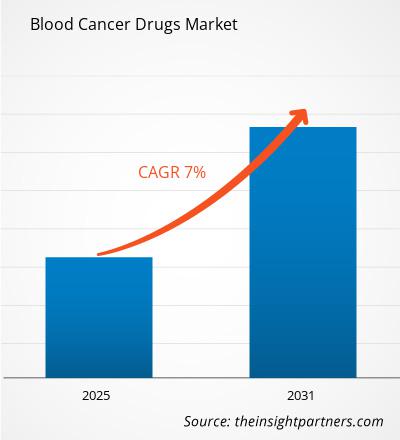
The global Blood Cancer Drugs market was valued at US$ 71.73 billion in 2025 and is expected to reach US$ 94.24 billion by 2034; it is estimated to record a CAGR of 3.08% during 2026-2034.
Blood Cancer Drugs Market Assessment and Insights
- North America: North America is expected to represent a 45–49% share in 2025 and grow at a 3.1–3.6% CAGR between 2026–2034, supported by specialty oncology infrastructure, treatment innovation, and broad access to advanced hematology medicines.
- US: The US is estimated to account for 88–91% of North America’s 2025 value and expand at a 3.0–3.5% CAGR between 2026–2034, led by advanced oncology care and reimbursement depth.
- Europe: Europe is projected to hold a 23–27% share in 2025 and register a 3.0–3.5% CAGR through 2034, with Germany, the UK, France, Italy, and Spain providing the principal demand base through established hematology networks.
- Asia Pacific: Asia Pacific is estimated at a 17–21% share in 2025 and is anticipated to grow at a 5.0–5.8% CAGR between 2026–2034, with China, Japan, India, and South Korea benefiting from expanding oncology capacity.
- Largest Segment: Lymphoma is expected to hold a 44–48% market share in 2025 and grow at a 3.2–3.7% CAGR through 2034, reflecting its broad treatment population and extensive therapeutic classes.
- High Growth Segment: Immunotherapeutic approaches are estimated at an 18–22% market share in 2025 and are projected to expand at a 6.0–7.0% CAGR through 2034, driven by novel immune-based modalities.
- Key companies analyzed in detail: Johnson & Johnson, Amgen Inc., Bayer AG, Pfizer Inc., AbbVie Inc., Roche Holding AG, Bristol Myers Squibb Company, AstraZeneca, Novartis AG, GSK plc.
Source: The Insight Partners' analysis based on proprietary research, government publications, company annual reports, investor presentations, industry databases, and expert interviews.
The current development strategy in therapy has changed from cytotoxic treatments to targeted inhibitors, monoclonal antibodies, antibody drug conjugates, bispecific antibodies, and cellular immunotherapies. Dynamics of production require specific biologics production, complicated quality control, diagnostics, and distribution systems. Such an ecosystem incorporates traditional products and innovations in mechanism, which creates competition in terms of efficiency, longevity, safety, administration, and life cycle management.
During the forecast period, emerging markets can acquire strategic importance due to the development of hematological capacity, diagnostics, and specialty drugs. Investors can pay attention to targeted mechanisms, combination approaches, and technologies that can overcome resistance to treatment. Regulated approach to innovative clinically differentiating therapies can stimulate portfolio refreshing, while healthcare systems will consider medicines from the standpoint of outcomes, time of treatment, and costs of administration.
Blood Cancer Drugs Market Report Scope
| Report Attribute | Details |
|---|---|
| Market size in 2025 | US$ 71.73 Billion |
| Market Size by 2034 | US$ 94.24 Billion |
| Global CAGR (2026 - 2034) | 3.08% |
| Historical Data | 2021-2024 |
| Forecast period | 2026-2034 |
Blood Cancer Drugs Market Analysis
Demand is shaped by persistent disease burden, aging populations, improved diagnosis, longer treatment duration, and greater identification of molecularly defined patient groups. Blood Cancer Drugs Market growth therefore extends beyond new diagnoses, because relapsed and refractory populations require sequential therapies, maintenance approaches, and combinations. The value chain spans discovery, biomarker development, clinical trials, regulatory review, specialized manufacturing, cold-chain logistics, hospital procurement, and long-term patient monitoring.
The manufacturing economics for small molecules and biologics are quite different. The established oral therapies will benefit from having a scalable and broad manufacturing capability, while monoclonal antibodies, antibody drug conjugates, and cell therapy will need a dedicated manufacturing facility and more rigorous manufacturing processes. Additionally, the supply chain will be dependent on active pharmaceutical ingredients, biologics raw materials, testing, and regulations of the region.
Competitive positioning increasingly depends on the ability to build differentiated hematology franchises rather than relying on individual products. Blood Cancer Drugs Market analysis shows a landscape where Johnson & Johnson, Amgen Inc., Pfizer Inc., AbbVie Inc., Roche Holding AG, and Novartis AG combine established commercial portfolios with pipeline investments. Bristol Myers Squibb Company, AstraZeneca, Bayer AG, and GSK plc also compete through targeted agents, immunotherapies, lifecycle expansion, and strategic development programs.
Innovation priorities have turned towards approaches that overcome resistance, add convenience, or enable treatment in earlier disease stages. Alliances, mergers, licensing deals, and in-house discovery platforms are being utilized in order to spread risks within the space of leukemia, lymphoma, and myeloma. Competitive differentiation is increasingly dependent on clinical proof, precision of biomarkers, sequence of treatment, outpatient treatment capabilities, manufacturing capabilities, and reimbursement potential.
● REPORT CUSTOMIZATION
Tailor This Report To Align With Your Specific Business Requirements
This report can be customized to align precisely with your business objectives, scope, and target markets. Customization options include tailored segmentation, geography, competitive analysis, and strategic insights to support informed decision-making.
Customize This Report →WHAT YOU CAN ADJUST
- ● Segmentations
- ● Geography
- ● Competitive Analysis
- ● Language Preferences
Blood Cancer Drugs Market: Strategic Insights

Regional Insights
North America Blood Cancer Drugs Market
North America is projected to account for 45–49% of the 2025 global Blood Cancer Drugs Market and grow at a 3.1–3.6% CAGR through 2034. The area has the advantage of having a concentration of hematology expertise, advanced diagnostic capabilities, strong clinical research, and relatively good access to specialty drugs. While the US continues to be the main source of income, Canada offers a more modest but well-established treatment pool.
The demand will be supported by high rates of use of targeted drugs, monoclonal antibodies, and combination therapies in leading cancer institutions. Negotiations and utilization management will continue to have an impact on drug adoption, especially in high-cost products. Regional development will need to stay connected to the innovation and development of new treatments.
U.S. Blood Cancer Drugs Market Market
The Blood Cancer Drugs Market report indicates that the U.S. is estimated to represent 88–91% of North America's 2025 market value and is expected to expand at a 3.0–3.5% CAGR through 2034. The positioning of the drug indicates a strong presence of specialist care infrastructure, robust research capability for medicines, and speedy launch of novel hematology drugs. Johnson & Johnson, Amgen Inc., Pfizer Inc., AbbVie Inc., and others are major companies having a significant presence in the market.
In terms of application, there is an increasing trend towards precision medicine, combined treatments, and outpatient administration wherever possible. Major cancer hospitals will continue to facilitate the use of sophisticated biologics and cell-based techniques, while community oncology practices will be increasingly involved in the management of advanced medicines based on evidence and infrastructure.
Europe Blood Cancer Drugs Market
Europe is expected to command a 23–27% share of the global Blood Cancer Drugs Market in 2025 and record a 3.0–3.5% CAGR through 2034, supporting a positive Blood Cancer Drugs Market forecast. Germany is the top national market backed by hematology expertise, an advanced healthcare system and innovative therapies. The region combines an existing diagnostic capability with the national funding model, but treatment timelines and pricing models differ greatly from one country to another.
The UK is home to a mature oncology market fueled by national treatment guidelines, specialty centers, and health technology assessments. In Germany, the wide presence of specialists and a large pharmaceutical market make a positive impact on oncology, while in France, central evaluation procedures and extensive public healthcare coverage make up for a unique situation.
APAC Blood Cancer Drugs Market
APAC is estimated to hold a 17–21% share of the global Blood Cancer Drugs Market in 2025 and grow at a 5.0–5.8% CAGR through 2034, reflecting key Blood Cancer Drugs Market trends. China remains the largest market, trailed by Japan, South Korea, India, and Australia. Market expansion will be driven by increases in oncology facilities, diagnostics capabilities, domestic development of pharmaceuticals, and specialty drug accessibility. Investment in cancer research, improvement in health care access, and increased use of targeted therapies are adding momentum to regional market expansion.
Innovative oncology drug development and manufacturing are on the rise in China, while Japan continues to maintain its advanced hematology facilities. South Korea and Australia are fostering advanced medical practices, while India combines high patient volumes with advanced specialty centers. Policy actions targeting improved cancer access, domestic manufacturing, and reimbursement coverage should support regional demand.
Middle East & Africa Blood Cancer Drugs Market Market
The Middle East and Africa demand is expected to expand at a 4.2–5.0% CAGR through 2034, with Saudi Arabia serving as a leading market. Further treatment capacity exists in the form of the UAE and South Africa, while other regions of the Middle East remain relatively disorganized in their access and infrastructure facilities.
Investments in the development of hospitals, oncology centers, labs, and drug distribution networks have resulted in increased accessibility to treatment. Countries such as Saudi Arabia and the UAE have better healthcare infrastructure and investments than the others, while South Africa acts as a major healthcare center of the Middle Eastern region. Energy revenues and overall infrastructural investments could finance healthcare expenditure.
Segmentation Analysis
Blood Cancer Types
Blood Cancer Types represent the disease-based foundation of the market and are projected to expand at a 3.3–3.8% CAGR during 2026–2034. Lymphoma, leukemia, and myeloma have distinct disease biology, treatment pathways, relapse patterns, and therapeutic needs. This segmentation enables evaluation of demand by patient population, disease stage, treatment line, and emerging therapeutic innovation.
- Leukemia: Leukemia demand is supported by long-term treatment requirements across chronic disease and intensive management of acute disease. Molecularly targeted agents increasingly complement conventional regimens and improve treatment differentiation.
- Lymphoma: Lymphoma represents the broadest disease opportunity because of diverse subtypes and extensive use of antibodies, targeted therapies, chemotherapy, and emerging immune-based approaches across treatment lines.
- Myeloma: Myeloma treatment increasingly relies on sequential combinations and maintenance strategies, creating recurring pharmaceutical demand and opportunities for differentiated mechanisms addressing resistance and treatment durability.
Drugs
Drugs are expected to expand at a 2.8–3.4% CAGR during 2026–2034 as established brands, lifecycle extensions, and newer targeted medicines compete within increasingly specialized treatment pathways. Commercial performance will depend on clinical differentiation, patent positions, combination utility, tolerability, and adoption across treatment lines.
- Rituaxan/Mabthera: This established antibody remains strategically important in B-cell malignancies, supporting combination regimens and demonstrating the commercial longevity of foundational hematology therapies.
- Gleevac/Glivec: Imatinib established the value of molecularly targeted treatment in chronic myeloid leukemia and remains an important reference point for precision hematology and lifecycle management.
- Revlimid: Lenalidomide has played a major role in myeloma treatment, with its historical commercial importance illustrating the scale achievable through combination positioning and long-term therapy.
- Velcade: Bortezomib remains a core proteasome inhibitor, supporting combination treatment strategies in myeloma and demonstrating the continuing relevance of established mechanisms.
- Tasigna: Nilotinib provides targeted kinase inhibition in CML and represents the continued evolution of treatment options around molecular disease control.
- Pomalyst: Pomalidomide supports later-line myeloma treatment and illustrates ongoing demand for therapies designed to address relapse and treatment resistance.
- Vidaza: Azacitidine remains relevant in myeloid malignancies, particularly where lower-intensity treatment approaches are prioritized for appropriate patient populations.
- Kyprolis: Carfilzomib provides another proteasome inhibition option for myeloma, supporting therapeutic sequencing and combination flexibility.
- Adcetris: Brentuximab vedotin demonstrates the increasing role of antibody-drug conjugates in hematologic malignancies by combining targeted recognition with cytotoxic payload delivery.
Treatment Approaches
Treatment Approaches are projected to grow at a 4.8–5.5% CAGR during 2026–2034 as treatment moves toward biologically defined intervention, immune modulation, and targeted combinations. Chemotherapy remains foundational, while MAbs, targeted therapies, and immunotherapeutics increasingly influence treatment sequencing, relapse management, and earlier-line strategies.
- Chemotherapeutic: Chemotherapy remains essential across several disease settings because of established clinical pathways, broad familiarity, combination compatibility, and continued relevance where rapid disease control is required.
- MAbs/Targeted Therapies: Monoclonal antibodies and targeted agents provide disease-specific intervention, enabling treatment selection based on molecular markers, cell-surface antigens, or defined signaling pathways.
- Immunotherapeutic: Immunotherapy is gaining strategic importance through immune-engaging antibodies, cellular approaches, and other mechanisms designed to produce deeper or more durable responses.
Opportunity Snapshot
| Segment Name | Revenue Contribution | Trend Tag | Adoption Stage |
|---|---|---|---|
| Leukemia | High | Precision Therapy | Mature |
| Lymphoma | High | Antibody Therapy | Mature |
| Myeloma | High | Combination Regimens | Mature |
| Chemotherapeutic | High | Cytotoxic Backbone | Mature |
| MAbs/Targeted Therapies | High | Targeted Biology | Scaling |
| Immunotherapeutic | Medium | Immune Engagers | Scaling |
Blood Cancer Drugs Market Growth Drivers and Impact Analysis
Rising prevalence and longer treatment pathways
With the rising number of people who will need treatment for hematology, there arises a sustainable market foundation for pharmaceutical intervention. Increased lifespan in some blood cancers will also mean that there will be a growing level of exposure to maintenance, recurrence, and second-line treatment. This has changed the business model of relying on new cases to sustain treatments at different stages. The registries and clinical networks have improved the identification of patient segments in order to achieve precision medicine through proper allocation of treatment. To drugmakers, the influence is strong in areas where the treatment can achieve a durable response while being useful in combinations.
Expansion of precision hematology and targeted treatment
Molecular characterization is now playing an increasing role in the management of leukemia, lymphoma, and myeloma. Targeted inhibitors, antibody therapies, and antibody drug conjugates can target specific biological pathways, thereby making treatment choices better tailored to the biology of the disease. This allows differentiated therapies to be more commercially valuable even if the size of the population is small. This would encourage pharma companies to develop companion diagnostics, combination therapy options, and extensions in the life cycle of validated targets. The significance for the clinical laboratory is that laboratories are becoming even more integral to the value chain of pharma since treatment options depend on disease characterization.
Improved access to specialty oncology infrastructure
The growth in the number of specialist hospitals, oncology networks, diagnostic laboratories, and reimbursement facilities is making advanced hematology treatments more accessible. This trend is especially evident in emerging countries, where treatment infrastructure is expanding from big cities to wider geographic regions. Improved infrastructure will result in better diagnosis and shorter referral processes. Treatment will be possible for those requiring special surveillance. Improved infrastructure also means improved distribution capability for manufacturers who want to distribute complex biological products and those that require controlled temperature. Health care systems will need to do more in terms of assessing budget impact and the value of treatment as new treatments are introduced through existing channels.
Blood Cancer Drugs Market Future Trends
Shift toward outpatient and simplified treatment models
Future directions for treatment innovation may focus on treatments that ease treatment administration, reduce the need for frequent visits to the treatment center, and minimize the burden on monitoring without jeopardizing the clinical outcome. Administration of subcutaneous treatments, finite duration treatment, oral combination therapy, and treatment using out-of-hospital biologics are some examples of such improvements that could ease the treatment process while increasing the treatment capacity. This may result in changing the way purchases are made by the hospital since it may consider the resource use and efficiency of the medications being purchased. Companies that have expertise in formulations and data supporting their low-care burden will differentiate themselves from their competitors even if their mechanisms of action offer similar clinical benefits.
Greater integration of biomarker-guided combination strategies
Future development programs are expected to combine targeted mechanisms with immune-engaging or complementary agents selected according to disease biology. Biomarker-guided combinations can address heterogeneous tumors and potentially reduce the impact of resistance mechanisms that emerge during prolonged therapy. This trend will increase the importance of diagnostic partnerships, translational research, and real-world evidence capable of identifying which patient groups derive the greatest benefit. Pharmaceutical companies may increasingly design portfolios around complementary mechanisms rather than isolated products, creating opportunities for co-development and licensing. Regulatory agencies are also likely to scrutinize combination evidence carefully, particularly where safety profiles overlap. The commercial implication is a more interconnected treatment ecosystem in which product positioning depends on sequencing, biomarker selection, durability, and compatibility with existing standards of care.
Blood Cancer Drugs Market Opportunities
Localized manufacturing and regional access platforms
Expansion of pharmaceutical manufacturing and specialty distribution in Asia Pacific, the Middle East, and selected Latin American markets presents an opportunity to improve supply resilience while broadening access. Companies can pursue regional partnerships for manufacturing, packaging, distribution, and regulatory registration, reducing dependence on a single supply geography. Localized capabilities may be particularly valuable for biologics and temperature-sensitive medicines where logistics can influence treatment continuity. Partnerships with established healthcare systems can also improve physician education and patient support while creating better visibility into local treatment patterns. Blood Cancer Drugs Market Forecasts can therefore incorporate opportunities arising from infrastructure development as well as conventional pharmaceutical demand. Strategic investments should prioritize markets where specialist oncology capacity, reimbursement coverage, diagnostic capabilities, and regulatory modernization are developing simultaneously.
Portfolio expansion through differentiated mechanisms
Investment opportunities are increasingly concentrated in therapies capable of addressing resistance, improving tolerability, reducing treatment duration, or extending efficacy into earlier lines. Companies can strengthen portfolios through licensing, acquisitions, co-development agreements, and selective internal research. Priority areas include bispecific antibodies, antibody-drug conjugates, targeted degraders, next-generation kinase inhibitors, and immune-based platforms. Strategic value can increase when a candidate has potential across multiple hematologic indications because the same platform may support broader clinical development. Investors and pharmaceutical managers should nevertheless assess competitive density, biomarker requirements, manufacturing complexity, and reimbursement prospects before committing capital. A disciplined portfolio approach can balance established cash-generating products with higher-risk innovation, while preserving flexibility as clinical evidence and treatment guidelines evolve.
Recent Developments
- June 2026: Roche Holding AG announced US FDA acceptance of a supplemental application for the subcutaneous Lunsumio VELO formulation in combination with Polivy for relapsed or refractory large B-cell lymphoma. The filing was supported by Phase III SUNMO results and targets a treatment model designed for broader outpatient use.
- June 2026: Novartis AG reported 144-week data for Scemblix in newly diagnosed chronic myeloid leukemia, showing sustained efficacy and favorable safety compared with established tyrosine kinase inhibitors. The results reinforce the company's strategy of differentiating targeted CML treatment through durable molecular responses and long-term tolerability.
- March 2026: Johnson & Johnson announced US FDA approval of TECVAYLI plus DARZALEX FASPRO for adults with relapsed or refractory multiple myeloma after at least one prior line of therapy. The approval expanded an established multiple myeloma franchise into an earlier treatment setting based on Phase III evidence demonstrating progression-free and overall survival improvements.
Frequently Asked Questions

- Comprehensive Market Sizing and Forecast Analysis
- Detailed Segmentation Analysis
- In-Depth Market Dynamics Assessment
- Regional and Country-Level Insights
- Competitive Landscape and Company Benchmarking
- Strategic Business Intelligence
Recent Reports
Testimonials

The Insight Partners provided valuable market intelligence that supported our global go-to-market strategy. Their team was professional, responsive, and attentive to our feedback, providing thoughtful analysis and helpful methodological clarifications throughout the project.
Junmo Kim Chief Financial Officer (CFO), Enertech Co., Ltd.
The Insight Partners' SCADA System Market report is comprehensive, with valuable insights on current trends and future forecasts. The team was highly professional, responsive, and supportive throughout. We are very satisfied and highly recommend their services.
RAN KEDEM Partner, Reali Technologies LTDs
I requested a report on a very specific software market and the team produced the report in a few days. The information was very relevant and well presented. I then requested some changes and additions to the report. The team was again very responsive and I got the final report in less than a week.
JEAN-HERVE JENN Chairman, Future Analytica
We worked with The Insight Partners for an important market study and forecast. They gave us clear insights into opportunities and risks, which helped shape our plans. Their research was easy to use and based on solid data. It helped us make smart, confident decisions. We highly recommend them.
PIYUSH NAGPAL Sr. Vice President, High Beam Global
The Insight Partners delivered insightful, well-structured market research with strong domain expertise. Their team was professional and responsive throughout. The user-friendly website made accessing industry reports seamless. We highly recommend them for reliable, high-quality research services
YUKIHIKO ADACHI CEO, Deep Blue, LLC.
This is the first time I have purchased a market report from The Insight Partners.While I was unsure at first, I visited their web site and felt more comfortable to take the risk and purchase a market report.I am completely satisfied with the quality of the report and customer service. I had several questions and comments with the initial report, but after a couple of dialogs over email with their analyst I believe I have a report that I can use as input to our strategic planning process.Thank you so much for taking the extra time and making this a positive experience.I will definitely recommend your service to others and you will be my first call when we need further market data.
JOHN SUZUKI President and Chief Executive Officer, Board Director, BK Technologies
I wish to appreciate your support and the professionalism you displayed in the course of attending to my request for information regarding to infectious disease IVD market in Nigeria. I appreciate your patience, your guidance, and the fact that you were willing to offer a discount, which eventually made it possible for us to close a deal. I look forward to engaging The Insight Partners in the future, all thanks to the impression you have created in me as a result of this first encounter.
DR CHIJIOKE ONYIA MANAGING DIRECTOR, PineCrest Healthcare Ltd.Reason to Buy
- Informed Decision-Making
- Understanding Market Dynamics
- Competitive Analysis
- Identifying Emerging Markets
- Customer Insights
- Market Forecasts
- Risk Mitigation
- Boosting Operational Efficiency
- Strategic Planning
- Investment Justification
- Tracking Industry Innovations
- Aligning with Regulatory Trends





 Get Free Sample for