
Blood Coagulation Factor Market Share, Demand & Growth by 2034
Coverage: By product type (Factor VII, Factor VIII, Factor IX, Factor X, Factor XIII, Von Willebrand Factor and Anti-Inhibitor Coagulant Complex); Application (Haemophilia, Von Willebrand Disorder, Surgery and others); Technology(Plasma Derived, Recombinant), and Geography (North America, Europe, Asia Pacific, and South and Central America)
- Status : Data Released
- Report Code : TIPRE00007724
- Category : Life Sciences
- No. of Pages : 151
- Available Report Formats :


- Last update date : August 17, 2026


2025 Market Size
US$ 11.32 Bn
Base year value
2034 Forecast
US$ 16.18 Bn
Projected by 2034
CAGR 2026-2034
4.05 %
Growth rate
Addressable Market
US$ 124.90 Bn
(2026-2034)
The Blood Coagulation Factor Market was valued at US$ 11.32 Billion in 2025 and is projected to reach US$ 16.18 Billion by 2034, registering a CAGR of 4.05% during 2026–2034. Expansion is supported by persistent demand for factor replacement, wider diagnosis of inherited bleeding disorders, improved prophylaxis, and continued development of recombinant and non-factor approaches. The market remains closely linked to hemophilia and von Willebrand disorder management, while surgery continues to sustain demand for perioperative bleeding control.
North America remains a structurally important market, with an estimated CAGR of 4.2–4.8% during 2026–2034. The Blood Coagulation Factor Market size in the region is supported by established hemophilia treatment centers, comparatively high diagnosis rates, specialist reimbursement pathways, and rapid adoption of newer prophylactic therapies. The US provides the principal demand base, while Canada contributes through specialized bleeding-disorder programs and centralized treatment networks.
Blood Coagulation Factor Market Assessment and Insights
- North America: North America is expected to hold a 42–46% share in 2025 and grow at a CAGR of 4.2–4.8% between 2026–2034, supported by mature treatment infrastructure, high diagnosis rates, specialist centers, and rapid uptake of advanced prophylaxis.
- US: The US is estimated to represent 88–92% of North America share in 2025 and expand at a CAGR of 4.3–4.9% during 2026–2034, driven by broad treatment access and strong specialty-care utilization.
- Europe: Europe is estimated at a 25–29% share in 2025, with a CAGR of 3.8–4.4% during 2026–2034. Germany, the UK, France, Italy, and Spain remain leading markets, supported by organized bleeding-disorder services and public healthcare procurement.
- Asia Pacific: Asia Pacific is projected to account for a 20–24% share in 2025 and register a CAGR of 5.6–6.4% through 2034. China, Japan, India, South Korea, and Australia provide the principal demand centers as diagnosis and treatment access improve.
- Largest Segment: Factor VIII is estimated to command a 42–46% market share in 2025 and expand at a CAGR of 3.8–4.4%, reflecting its central role in hemophilia A management.
- High Growth Segment: Recombinant technology is estimated to hold a 55–59% market share in 2025 and grow at a CAGR of 5.2–6.0%, supported by manufacturing consistency and reduced dependence on plasma collection.
- Key companies analyzed in detail: Pfizer Inc., Baxter International Inc., Octapharma AG, Novo Nordisk A/S, Grifols, S.A., CSL Behring, Takeda Pharmaceutical Company Limited, Biogen Inc., Kedrion Biopharma Inc., F. Hoffmann-La Roche Ltd, Amgen Inc., Novartis AG, Capricor Therapeutics, Inc., Britannia Pharmaceuticals Limited, and GSK plc.
Source: The Insight Partners' analysis based on proprietary research, government publications, company annual reports, investor presentations, industry databases, and expert interviews.
There has been development in the market from traditional plasma-derived substitutes to recombinant factors, extended half-life products, subcutaneous prophylaxis, rebalancers, and gene therapy. The process has therefore increased dependency on cell line control production, purification, viral safety, and cold chain logistics. Plasma-based medicines continue to play an important role due to their capability to provide combination factors and have been used traditionally in von Willebrand Disease and some surgical settings.
Further growth will definitely be affected by the accessibility of treatments in developing countries, diagnosis, and recognition of bleeding disorders as an aspect of public health by regulatory agencies. According to the World Health Organization, in 2026, approximately 70% of those with hemophilia are undiagnosed and urged countries to enhance diagnosis, treatment access, and referral, as well as include factor concentrates and new drugs into national essential drug programs.
Blood Coagulation Factor Market Report Scope
| Report Attribute | Details |
|---|---|
| Market size in 2025 | US$ 11.32 Billion |
| Market Size by 2034 | US$ 16.18 Billion |
| Global CAGR (2026 - 2034) | 4.05% |
| Historical Data | 2021-2024 |
| Forecast period | 2026-2034 |
Blood Coagulation Factor Market Analysis
Blood Coagulation Factor Market growth is driven by recurring prophylactic and on-demand treatment needs for hemophilia, von Willebrand disorder, and surgical bleeding. The ecosystem ranges from plasma collection or recombinant production to fractionation or bioprocessing, purification, formulation, quality testing, regulatory clearance, specialized distribution, and administration at treatment centers. The demand is thus affected not just by the number of patients but also by diagnosis rate, frequency of treatment, procurement arrangements, and availability of products. The World Federation of Hemophilia found an increase of 6% in diagnosed cases of hemophilia and an increase of 6% in diagnosed cases of von Willebrand disease in its global survey of 2024.
The supply side depends on the availability of plasma for plasma-derived products and production facilities for recombinant products. The producers need to ensure strict controls regarding potency, purity, sterility, viral safety, and consistency of batches. Concentrated purchasing by public systems can increase price pressure, while specialty products with differentiated dosing or administration profiles can support stronger value realization. Distribution reliability is particularly important because interruptions can directly affect prophylaxis continuity and perioperative readiness.
Blood Coagulation Factor Market analysis indicates a competitive structure combining established factor manufacturers with companies developing non-factor and gene-based alternatives. HYMPAVZI is being promoted by Pfizer Inc. through additional indications under regulatory approval, and denecimig from Novo Nordisk A/S for treating hemophilia A is progressing. CSL Behring, Octapharma AG, Takeda Pharmaceutical Company Limited, Grifols, S.A., and Kedrion Biopharma Inc. continue to be major players in terms of both plasma-derived and recombinant therapies. Non-factor prophylaxis and future-oriented therapies are the areas through which Roche competes.
Products with reduced dosing frequencies, inhibitor solutions, pediatric formulations, or sustained hemostasis control are the focus of investment in this industry. With the companies having the capability to integrate manufacturing and distribution, their position could be strengthened by ensuring supply reliability, whereas diversified product portfolios could lower dependence on specific types of factors.
● REPORT CUSTOMIZATION
Tailor This Report To Align With Your Specific Business Requirements
This report can be customized to align precisely with your business objectives, scope, and target markets. Customization options include tailored segmentation, geography, competitive analysis, and strategic insights to support informed decision-making.
Customize This Report →WHAT YOU CAN ADJUST
- ● Segmentations
- ● Geography
- ● Competitive Analysis
- ● Language Preferences
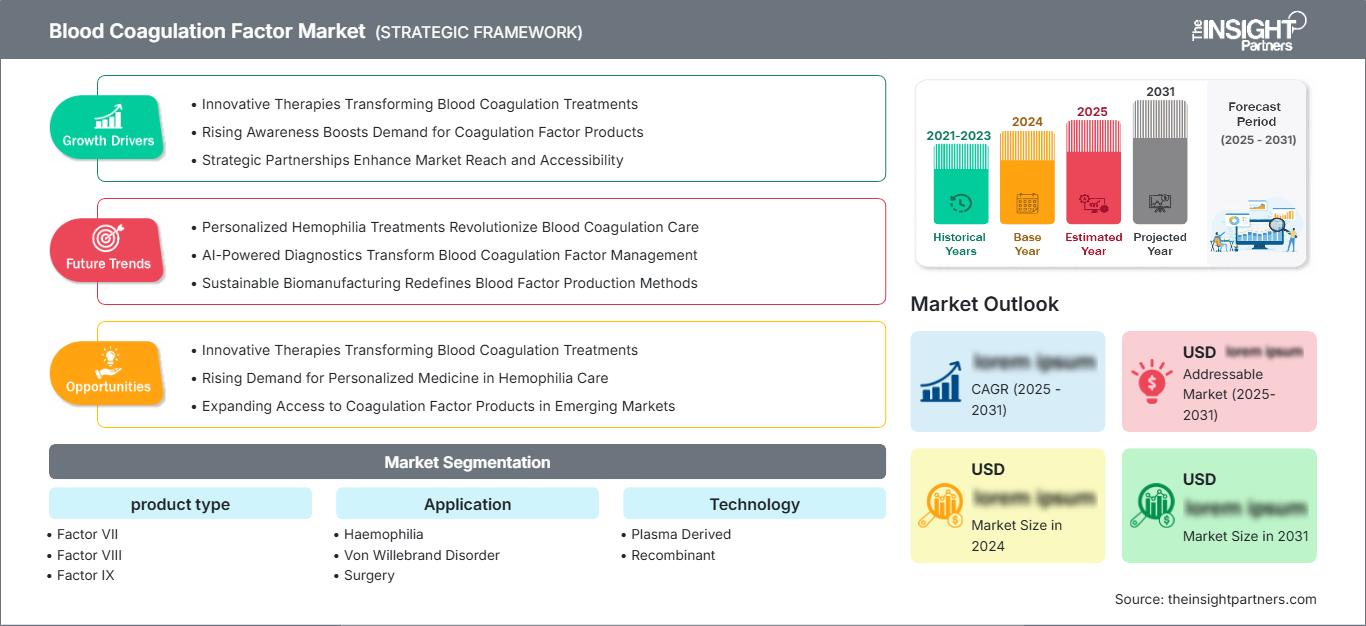
Blood Coagulation Factor Market: Strategic Insights
Regional Insights
North America Blood Coagulation Factor Market
North America is estimated to account for 42–46% of the Blood Coagulation Factor Market share in 2025 and is projected to grow at a CAGR of 4.2–4.8% through 2034. There is an advantage in having hemophilia treatment centers in place, specialist doctors, good diagnostics, reimbursement, and wide access to replacement factors. The US is a major market for demand, while Canada is contributing through their nationwide and provincial bleeding disorders programs.
Adoption in the region is also dependent on fast access to new prophylaxis methods. The FDA approved Qfitlia in March 2025 for prophylaxis in hemophilia A or B and in the case of factor inhibitors, with other FDA approvals adding non-factor prophylaxis treatment. Such developments add to the already existing competitive market, in which convenience, frequency, inhibitor management, and pediatric use affect the choice of products.
U.S. Blood Coagulation Factor Market Market
The U.S. is estimated to represent 88–92% of North America's Blood Coagulation Factor Market share in 2025 and is expected to expand at a CAGR of 4.3–4.9% through 2034. The country has specialized treatment facilities for hemophilia, advanced diagnostics, private and public insurance options, and a large patient base receiving treatment. According to CDC's estimates, there may be up to 33,000 men suffering from hemophilia in the country.
Company representation is strong, with companies such as Pfizer Inc., Baxter International Inc., CSL Behring, Octapharma AG, Takeda Pharmaceutical Company Limited, Novo Nordisk A/S, and F. Hoffmann-La Roche Ltd. The application demand is high in prophylaxis and control of bleeding, while surgery remains an important niche. Subcutaneous and extended-interval methods have emerged to compete with conventional IV factor replacement therapy.
Europe Blood Coagulation Factor Market
Europe is estimated to hold a 25–29% share of the global Blood Coagulation Factor Market in 2025 and register a CAGR of 3.8–4.4% through 2034, according to the Blood Coagulation Factor Market report. Germany remains a leading country, supported by specialized hematology networks, while the UK maintains structured national hemophilia services. France, Italy, and Spain contribute through established hospital systems, specialist centers, and public procurement mechanisms.
The UK continues to emphasize coordinated treatment through specialist centers and national service structures, while Germany combines specialist care with broad access to factor therapies. France, Italy, and Spain provide established treatment networks and growing adoption of newer prophylactic approaches. Across Europe, purchasing decisions increasingly consider clinical outcomes, administration burden, supply continuity, and health-system value, while regulatory harmonization supports broader availability of innovative products.
APAC Blood Coagulation Factor Market
The Blood Coagulation Factor Market in APAC is estimated to represent a 20–24% share in 2025 and is expected to grow at a CAGR of 5.6–6.4% through 2034. China is the leading market, followed by Japan, India, South Korea, and Australia. Expansion is supported by improving diagnosis rates, specialist-center development, biotechnology investment, and greater awareness of inherited bleeding disorders. Growing healthcare expenditure, expanding access to advanced therapies, and increasing government support for rare disease management are further contributing to regional market growth.
Industrial capacity and public-health policy are strengthening the regional outlook. Japan and Australia have mature treatment structures, while China and India provide substantial expansion potential as diagnosis and treatment access improve. Greater local manufacturing capability can also reduce dependence on imported products, although regulatory requirements and uneven reimbursement remain important considerations.
Middle East & Africa Blood Coagulation Factor Market Market
The Blood Coagulation Factor Market in the Middle East & Africa is expected to register a CAGR of 3.7–4.5% through 2034, with Saudi Arabia representing a leading market. The UAE benefits from advanced hospital infrastructure, while South Africa provides an important base for specialist care. The rest of MEA remains more dependent on public procurement, distributor networks, and treatment-center availability. Expanding healthcare investments, improving access to hemophilia treatment, and growing awareness of bleeding disorders are expected to support gradual market development across the region.
Energy revenues in several Gulf economies support healthcare infrastructure investment, including specialized hospitals and laboratory capacity. However, affordability, diagnosis, import dependence, and geographic access continue to influence demand. Regional development therefore, depends on strengthening referral pathways, reliable product distribution, national procurement, and specialist expertise.
Segmentation Analysis
Product Type
Product Type remains differentiated by factor specificity, clinical indication, manufacturing source, and inhibitor profile. Factor VIII represents the largest individual product category because hemophilia A generates sustained replacement demand. The Blood Coagulation Factor Market scope is also expanding through specialized factors and combination products used for von Willebrand disorder and complex bleeding management. The segment is projected to grow at a CAGR of 3.8–4.4% during 2026–2034.
- Factor VII: Supports treatment of selected bleeding disorders and inhibitor-related cases, with demand concentrated in specialist settings where rapid hemostatic control and individualized dosing are clinically important.
- Factor VIII: Represents the core replacement category for hemophilia A and remains strategically important across prophylaxis, on-demand treatment, and perioperative management.
- Factor IX: Serves hemophilia B patients and benefits from continued preference for longer-acting replacement options that can reduce treatment frequency and support adherence.
- Factor X: Addresses rare factor deficiency requirements and maintains a specialized demand profile centered on diagnosed patients and specialist hematology services.
- Factor XIII: Serves patients with rare congenital factor XIII deficiency, creating a specialized market where product availability and treatment continuity are particularly important.
- Von Willebrand Factor and Anti-Inhibitor Coagulant Complex: Supports VWD management and inhibitor-related bleeding, strengthening its role in complex treatment pathways and perioperative care.
Application
The Application segment of the Blood Coagulation Factor Market is concentrated in chronic inherited bleeding disorders, with hemophilia representing the principal use case. Surgical utilization provides an additional demand stream because factor products may be required for perioperative bleeding prevention and management. The application segment is projected to grow at a CAGR of 4.0–4.6% during 2026–2034. Continued improvements in diagnosis rates, broader access to treatment, and increasing adoption of prophylactic therapy are expected to support recurring demand across the Blood Coagulation Factor Market.
- Haemophilia: Remains the principal application, requiring long-term prophylaxis or on-demand treatment and generating recurring demand for factor replacement and newer hemostatic approaches.
- Von Willebrand Disorder: Creates sustained demand for VWF-containing or recombinant therapies, particularly for patients with severe disease, recurrent bleeding, and perioperative requirements.
- Surgery: Represents episodic but strategically important demand, with hospitals requiring reliable factor availability for patients with diagnosed bleeding disorders undergoing invasive procedures.
Technology
Technology increasingly differentiates products through source, safety, scalability, half-life, and manufacturing control. Plasma-derived products remain established in several indications, while recombinant technologies benefit from controlled production and reduced dependence on plasma collection. The technology segment is projected to grow at a CAGR of 4.8–5.5% during 2026–2034, with recombinant approaches expected to maintain the faster trajectory.
- Plasma Derived: Retains an established role in VWF and factor replacement, supported by long clinical experience, specialized manufacturing infrastructure, and established treatment protocols.
- Recombinant: Gains strategic importance through controlled manufacturing, scalable production, consistent quality attributes, and opportunities for extended-half-life engineering and differentiated prophylaxis.
Opportunity Snapshot
| Application | Revenue Contribution | Trend Tag | Adoption Stage |
| Haemophilia | High | Prophylaxis | Mature |
| Von Willebrand Disorder | Medium | VWF Therapy | Scaling |
| Surgery | Medium | Perioperative Care | Mature |
Blood Coagulation Factor Market Growth Drivers and Impact Analysis
Broader Diagnosis and Treatment Access
The rise in diagnoses raises both the number of treatable cases and the demand for factor therapy. As the WHO noted in 2026, roughly 70% of people suffering from hemophilia are currently still undiagnosed, but its resolutions were aimed at increasing diagnostic capabilities, referral systems, and factor therapy, as well as the inclusion of factor concentrates and new treatments in national essential medicines programs. This produces an immediate effect on the market since enhanced diagnosis transforms those who have not been previously treated into consumers of either preventive or demand-driven therapies. In particular, this effect becomes highly relevant for developing health care systems where the growth of specialized centers unlocks latent demand.
Shift Toward Convenient Prophylactic Treatment
Convenience of delivery is increasingly becoming an important driver in terms of procurement and clinical decision-making in an effort to decrease the burden of administration. Traditional factor therapy may involve multiple administrations via the intravenous route, which poses some issues of compliance as well as increases the burden of prophylaxis. Approvals of subcutaneous and extended-interval therapies are redefining the competitive benchmark. For example, the entry of HYMPAVZI from Pfizer in 2026 and other non-factor options indicate that a lower frequency of administration can play a role in positioning of therapy. Convenience therapies have implications for the market that go beyond just substitution due to their ability to increase eligibility and persistence and promote early prophylaxis in patients who find infusion burdensome.
Expansion of Specialized Bleeding-Disorder Infrastructure
Factor product commercial fundamentals have been bolstered by investment in specialty centers of treatment, laboratory testing, and hematology services coordination. According to the 2024 World Federation of Hemophilia survey, there were 135 countries participating in the survey, which noted rising numbers in hemophilia, von Willebrand disease, and other genetic bleeding disorders. Higher capacities of diagnosis and treatment make it easier for physicians to recognize patients' factor deficiency and develop tailored treatment methods and follow up on their progress. In the case of countries moving from episodic therapy to prophylactic therapy, the improvement is particularly important. Higher capacities of treatment centers make it possible to demand factor products with additional features of safety, half-life, or administration.
Blood Coagulation Factor Market Future Trends
Longer-Interval and Non-Factor Hemostatic Strategies
Blood Coagulation Factor Market trends are expected to increasingly favor therapies that reduce treatment frequency while maintaining reliable hemostatic protection. Non-factor agents, rebalancing approaches, and extended-half-life technologies are changing how prophylaxis can be delivered, particularly for patients who experience adherence challenges or inhibitors. Novo Nordisk's denecimig program illustrates the direction toward less frequent subcutaneous prophylaxis, with phase 3 data evaluating once-monthly, once-every-two-weeks, and once-weekly schedules. Roche is also advancing next-generation non-factor research. Over time, product differentiation is likely to depend increasingly on dosing convenience, durability, inhibitor applicability, and real-world quality-of-life outcomes rather than factor replacement alone.
Data-Enabled Individualization of Hemophilia Care
Future treatment strategies are likely to place greater emphasis on individualized dosing, pharmacokinetic assessment, bleeding-pattern monitoring, and integrated patient data. Digital records and specialized laboratory platforms can help clinicians evaluate treatment response and refine prophylaxis schedules according to patient characteristics. This approach could reduce unnecessary factor exposure while improving protection against breakthrough bleeding. It may also support more consistent evidence generation across treatment centers and improve comparative assessment between factor replacement and non-factor therapies. As healthcare systems increasingly evaluate outcomes alongside acquisition costs, manufacturers may need to demonstrate measurable improvements in adherence, joint health, hospitalization avoidance, and treatment burden. The resulting competitive environment will reward therapies supported by robust longitudinal evidence rather than isolated efficacy outcomes.
Blood Coagulation Factor Market Opportunities
Expansion Across Underserved Emerging Markets
Emerging markets offer substantial opportunities as diagnosis, specialist capacity, and public financing improve. The Blood Coagulation Factor Market Forecasts point toward increasing addressable demand where a large proportion of patients remain unidentified or undertreated. Companies can pursue expansion through partnerships with national health systems, local distributors, specialist hospitals, and patient organizations. Investment priorities should include reliable cold-chain infrastructure, regulatory registration, clinician education, and laboratory capacity rather than product promotion alone. Local manufacturing or regional fill-finish capabilities could further improve supply resilience and reduce import dependence. Market entrants with flexible procurement models may gain access to public programs that prioritize affordability and continuity. These strategies can build durable demand while supporting broader treatment access across countries with historically limited factor availability.
Integrated Specialty-Care Partnerships
A second opportunity lies in partnerships that connect manufacturers with hemophilia treatment centers, diagnostic laboratories, hospitals, and specialist networks. Such relationships can improve patient identification, treatment monitoring, and continuity of care while generating real-world evidence on product performance. Companies can also develop service models around pharmacokinetic testing, patient support, treatment education, and digital adherence tools. These capabilities become particularly valuable as treatment options diversify and clinicians compare factor replacement with non-factor prophylaxis and gene-based approaches. Strategic investment should prioritize measurable clinical outcomes and operational efficiency rather than isolated product availability. Partnerships with established treatment centers can accelerate adoption in complex cases, improve understanding of local treatment practices, and create evidence that supports reimbursement discussions and formulary decisions.
Recent Developments
- July 2026: Novo Nordisk A/S reported positive long-term phase 3 FRONTIER4 results for investigational denecimig in hemophilia A, covering once-weekly, once-every-two-weeks, and once-monthly dosing. The company also reported phase 3 explorer10 findings for concizumab in pediatric hemophilia with inhibitors, reinforcing its focus on less frequent prophylaxis and non-factor treatment strategies.
- July 2026: Octapharma AG received expanded US FDA approval for wilate, extending routine prophylaxis for von Willebrand disease to pediatric patients younger than 6 years. The decision expands the labeled prophylaxis population and reinforces the role of plasma-derived VWF and factor VIII products in pediatric bleeding-disorder management. The approval was supported by the international phase 3 WIL-33 study.
- June 2026: Pfizer Inc. received US FDA approval expanding HYMPAVZI to patients aged 12 years and older with hemophilia A or B and inhibitors, as well as children aged 6–11 years with or without inhibitors. The expanded indication broadens access to once-weekly subcutaneous non-factor prophylaxis across additional clinically underserved populations.
Frequently Asked Questions

- Comprehensive Market Sizing and Forecast Analysis
- Detailed Segmentation Analysis
- In-Depth Market Dynamics Assessment
- Regional and Country-Level Insights
- Competitive Landscape and Company Benchmarking
- Strategic Business Intelligence
Recent Reports
Testimonials

The Insight Partners provided valuable market intelligence that supported our global go-to-market strategy. Their team was professional, responsive, and attentive to our feedback, providing thoughtful analysis and helpful methodological clarifications throughout the project.
Junmo Kim Chief Financial Officer (CFO), Enertech Co., Ltd.
The Insight Partners' SCADA System Market report is comprehensive, with valuable insights on current trends and future forecasts. The team was highly professional, responsive, and supportive throughout. We are very satisfied and highly recommend their services.
RAN KEDEM Partner, Reali Technologies LTDs
I requested a report on a very specific software market and the team produced the report in a few days. The information was very relevant and well presented. I then requested some changes and additions to the report. The team was again very responsive and I got the final report in less than a week.
JEAN-HERVE JENN Chairman, Future Analytica
We worked with The Insight Partners for an important market study and forecast. They gave us clear insights into opportunities and risks, which helped shape our plans. Their research was easy to use and based on solid data. It helped us make smart, confident decisions. We highly recommend them.
PIYUSH NAGPAL Sr. Vice President, High Beam Global
The Insight Partners delivered insightful, well-structured market research with strong domain expertise. Their team was professional and responsive throughout. The user-friendly website made accessing industry reports seamless. We highly recommend them for reliable, high-quality research services
YUKIHIKO ADACHI CEO, Deep Blue, LLC.
This is the first time I have purchased a market report from The Insight Partners.While I was unsure at first, I visited their web site and felt more comfortable to take the risk and purchase a market report.I am completely satisfied with the quality of the report and customer service. I had several questions and comments with the initial report, but after a couple of dialogs over email with their analyst I believe I have a report that I can use as input to our strategic planning process.Thank you so much for taking the extra time and making this a positive experience.I will definitely recommend your service to others and you will be my first call when we need further market data.
JOHN SUZUKI President and Chief Executive Officer, Board Director, BK Technologies
I wish to appreciate your support and the professionalism you displayed in the course of attending to my request for information regarding to infectious disease IVD market in Nigeria. I appreciate your patience, your guidance, and the fact that you were willing to offer a discount, which eventually made it possible for us to close a deal. I look forward to engaging The Insight Partners in the future, all thanks to the impression you have created in me as a result of this first encounter.
DR CHIJIOKE ONYIA MANAGING DIRECTOR, PineCrest Healthcare Ltd.Reason to Buy
- Informed Decision-Making
- Understanding Market Dynamics
- Competitive Analysis
- Identifying Emerging Markets
- Customer Insights
- Market Forecasts
- Risk Mitigation
- Boosting Operational Efficiency
- Strategic Planning
- Investment Justification
- Tracking Industry Innovations
- Aligning with Regulatory Trends





 Get Free Sample for