
Bone Pain Treatment Market Trends, Share & Demand by 2034
Coverage: By Indication (Injury, Infection, Myalgia, Tumors, Others); Treatment (Pain Relievers, Antibiotics, Surgery), and Geography (North America, Europe, Asia Pacific, and South and Central America)
- Status : Data Released
- Report Code : TIPRE00017788
- Category : Life Sciences
- No. of Pages : 150
- Available Report Formats :


- Last update date : July 29, 2026


2025 Market Size
US$ 6.35 Bn
Base year value
2034 Forecast
US$ 11.48 Bn
Projected by 2034
CAGR 2026-2034
6.79 %
Growth rate
Addressable Market
US$ 80.52 Bn
(2026-2034)
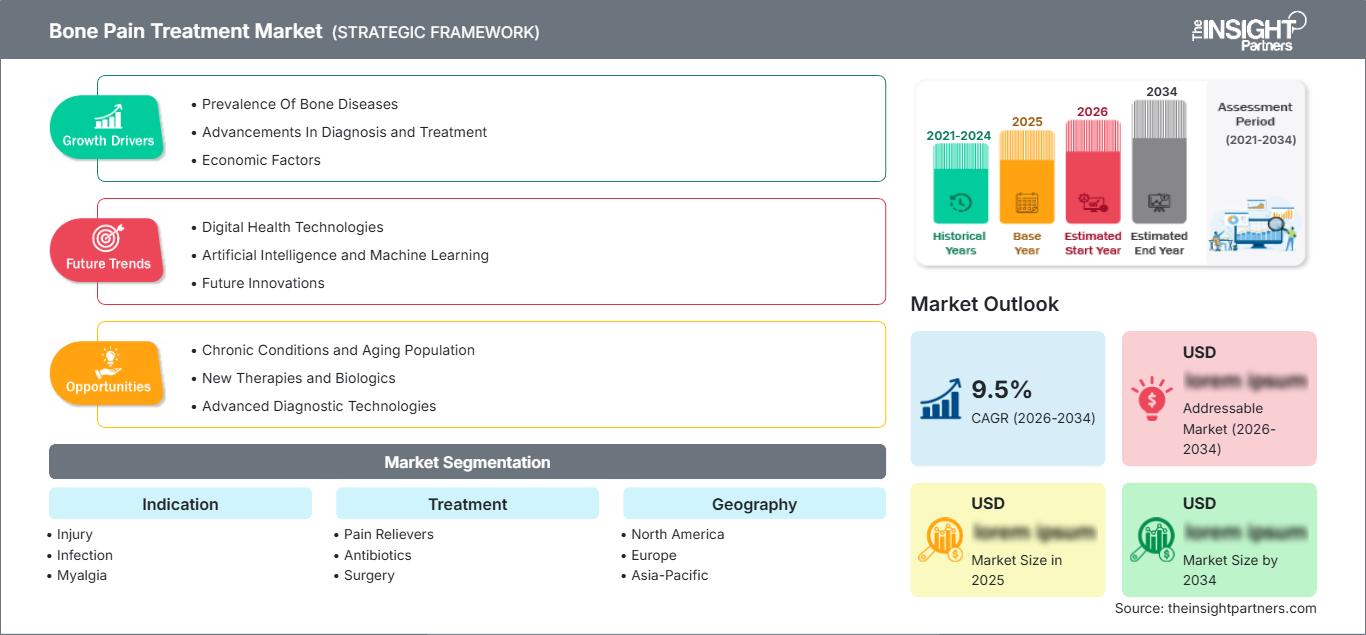
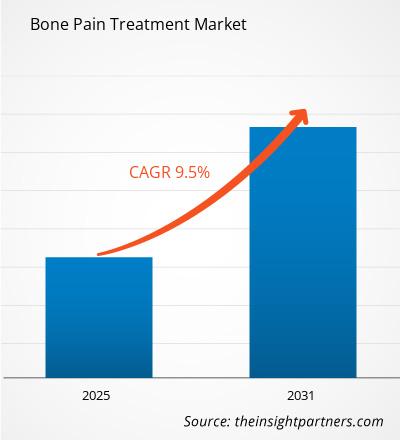
The Bone Pain Treatment Market is projected to rise from US$ 6.35 Billion in 2025 to US$ 11.48 Billion in 2034, recording a CAGR of 6.79% during 2026 to 2034. This market shows an increasing need for drug treatments, surgical treatments, and complementary treatments in pain related to injuries, infections, myalgia, and tumors.
The market in North America is aided by better diagnostics availability, high procedure rate, and widespread coverage for pain and musculoskeletal disorders treatments. The market in North America is anticipated to rise at a CAGR of 6.2–6.8% during 2026-2034, owing to the increasing use of interventional pain management procedures and non-opioid pain treatment options and integration of cancer- and trauma-related bone pain management in hospitals.
Bone Pain Treatment Market Assessment and Insights
- North America accounted for 37–41% share in 2025 and is expected to grow at a CAGR of 6.2–6.8% between 2026–2034, supported by oncology pain management, orthopedic procedures, and specialty pain clinics.
- US represented 78–82% of North America in 2025 and is projected to expand at a CAGR of 6.3–6.9% during 2026–2034, led by device-enabled and non-opioid treatment adoption.
- Europe held 24–28% share in 2025 and is expected to grow at a CAGR of 5.8–6.4% between 2026–2034, with Germany, the UK, and France leading access to advanced pain care.
- Asia Pacific captured 20–24% share in 2025 and is anticipated to record a CAGR of 7.4–8.2% during 2026–2034, led by China, Japan, India, South Korea, and Australia.
- Largest Segment: Pain Relievers held 48–52% market share in 2025 and is expected to grow at a CAGR of 6.1–6.7% between 2026–2034, supported by first-line treatment use.
- High Growth Segment: Surgery held 18–22% market share in 2025 and is projected to grow at a CAGR of 7.2–8.0% during 2026–2034, supported by minimally invasive procedures.
- Key companies analyzed in detail: Q BioMed Inc.; Bristol Myers Squibb Company; Pfizer Inc.; Amgen Inc.; Eli Lilly and Company; GSK plc; SI-BONE, Inc.; Medtronic plc; Centrexion Therapeutics Corporation; Avanos Medical, Inc.
Source: The Insight Partners' analysis based on proprietary research, government publications, company annual reports, investor presentations, industry databases, and expert interviews.
The current clinical practice trends have shifted away from indiscriminate analgesic prescription to indication-driven multi-modal approaches. Hospitals use imaging, molecular diagnostics, interventions, antibiotics, surgical treatments, and non-opioid pain management in combination to reduce recurrence and improve mobility outcomes. Biologics, radioisotope therapy, minimally invasive sacroiliac stabilization, peripheral nerve stimulation, and specific pipeline drug development are other factors affecting the market. Manufacturing trends continue to be dependent on sterile injectable production capacity, implant logistics, controlled substances legislation, and reimbursement criteria.
Future demand is forecast to grow fastest in regions where aging demographics, cancer treatment success rates, trauma service expansion, and existing orthopedic infrastructure coincide. Asia-Pacific region and select Middle-Eastern markets have been experiencing investments in specialized hospitals, availability of radiopharmacies, and rehabilitation systems. Legislative efforts to provide for safer pain relief and antimicrobial management will likely benefit differentiated products with quantifiable benefits in terms of functionality.
Bone Pain Treatment Market Report Scope
| Report Attribute | Details |
|---|---|
| Market size in 2025 | US$ 6.35 Billion |
| Market Size by 2034 | US$ 11.48 Billion |
| Global CAGR (2026 - 2034) | 6.79% |
| Historical Data | 2021-2024 |
| Forecast period | 2026-2034 |
Bone Pain Treatment Market Analysis
There is increasing demand for bone pain treatment as pain resulting from trauma, infection, myalgia, and malignancy demands distinct treatment approaches. Market growth is driven by multi-specialty treatment, wherein doctors of oncology, orthopedics, pain management, and rehabilitation choose among treatment options. Analgesics continue to form the backbone of early management, with antibiotics driving the market in the case of infection-associated demand and surgery becoming significant in cases of structural instability, abscesses, fractures, or compression of tumors.
The supply side is impacted by drug availability, sterile injectable drug preparation, implantation, hospital acquisition and distribution, and specialist training. The industry comprises branded drug companies, generic drug manufacturers, medical device manufacturers, radiopharmacy distributors, and ambulatory surgery centers. As more purchasing becomes value-based, healthcare providers are increasingly looking for ways to shorten hospital stays and reduce re-admissions and opioids.
The competition level is equally shared between diversified pharmaceutical companies and medtech-focused players. The impact on therapy availability is felt via immunology, oncology, anti-inflammatory, and supportive care product lines. Market analysis also suggests that SI-BONE, Inc., Medtronic plc, Avanos Medical, Inc., and Centrexion Therapeutics Corporation have been enhancing their procedures and non-opioids pain treatment approaches.
Trends in financing are shifting towards interventions that are evidence-based and suitable for an ambulatory setting. Q BioMed Inc. is still applicable for metastatic bone pain palliation, while Medtronic plc and Avanos Medical, Inc. contribute to device-based management of chronic pain. Presently, strategic positioning is all about reimbursement approach, physicians' training, data generation, and the ability to treat acute and chronic pain with reduced risk of safety issues.
● REPORT CUSTOMIZATION
Tailor This Report To Align With Your Specific Business Requirements
This report can be customized to align precisely with your business objectives, scope, and target markets. Customization options include tailored segmentation, geography, competitive analysis, and strategic insights to support informed decision-making.
Customize This Report →WHAT YOU CAN ADJUST
- ● Segmentations
- ● Geography
- ● Competitive Analysis
- ● Language Preferences
Bone Pain Treatment Market: Strategic Insights
Regional Insights
North America Bone Pain Treatment Market
The North American region accounted for 37–41% market share in 2025 and is projected to grow at a CAGR of 6.2–6.8% during 2026–2034. Specialty pain management networks, good oncological care, well-equipped trauma centers, and availability of imaging-guided interventions drive the Bone Pain Treatment Market share in the region.
The market is driven by the use of multimodal approaches that combine analgesics, antibiotics, surgeries, and devices. There is increasing demand from cancer centers and orthopedic clinics where bone metastasis, bone fracture, spinal disorders, and postoperative pain need structured care. Payors' initiatives towards minimizing the use of opioids offer room for therapies like specific drugs, nerve stimulation, radioactive isotopes, and fixation.
U.S. Bone Pain Treatment Market
The United States comprised 78% to 82% of North America in 2025 and will experience a CAGR of 6.3% to 6.9% between 2026 and 2034 due to high rates of diagnosis, interventional pain care practices, ambulatory surgical centers, and payers' concern regarding the long-term effect of opioids. The firm has a strong presence within the pharmaceuticals, implants, radiopharmaceuticals, and neuromodulation platforms.
The firms that have strong relevance in the United States market include Q BioMed Inc., Pfizer Inc., Amgen Inc., SI-BONE, Inc., Medtronic plc, and Avanos Medical, Inc. due to the presence of their products, procedures or pain management portfolio. The application areas that are trending include outpatient treatment of sacroiliac dysfunctions, cancer-related bone pain, and post-traumatic pain.
Europe Bone Pain Treatment Market
Europe accounted for a 24-28% share in 2025 and is estimated to grow at a CAGR of 5.8-6.4% between 2026 and 2034. Germany is the dominant market, owing to its orthopedic infrastructure, oncology networks, and specialists. The United Kingdom is developing structured pain management via national health care pathways, which focus on safer medication, rehabilitation, and earlier referrals for musculoskeletal and oncologic pain.
Germany’s demand is driven by its strong procedural proficiency, implant usage, and hospital-based multi-disciplinary pain boards. France, Italy, and Spain are making efforts in increasing access via public health systems, cancer centers, and regional orthopedic networks. Antimicrobial stewardship is followed for the use of antibiotics for infection-related bone pain, while surgery finds application in fractures, tumor decompression, and sacroiliac disorders.
APAC Bone Pain Treatment Market
APAC accounted for 20-24% market share in 2025 and is projected to grow at CAGR of 7.4-8.2% during 2026-2034. China dominates regional demands on account of growing hospitals, cancer treatments and orthopedic procedures. Japan, South Korea, India and Australia also fuel APAC’s growth with growing aging population, better diagnostics and private specialty care services.
Market expansion will be driven by policies promoting universal healthcare coverage, development of cancer facilities and supporting domestic medical device production. China and India’s industrial production facilitates better availability of generic drugs, anti-biotics, implants and surgical disposable products. The market is poised for growth with patients opting for early treatment over delayed diagnosis and pain management process.
Middle East & Africa Bone Pain Treatment Market
Middle East & Africa is projected to grow at a CAGR of 6.0–6.6% during 2026–2034, with Saudi Arabia leading regional adoption. Saudi Arabia and the UAE are investing in tertiary hospitals, oncology centers, trauma systems, and rehabilitation facilities. South Africa remains the most developed sub-Saharan market for advanced pain and orthopedic care.
Energy-linked fiscal capacity in Gulf countries supports hospital modernization, imported medical technologies, and specialist recruitment. Infrastructure gaps remain in the Rest of MEA, but public-private partnerships are improving diagnostics and surgical access. Demand is expected to rise as cancer screening, trauma care, and musculoskeletal disease management become more organized across urban centers.
Segmentation Analysis
Indication
The Indication segment is expected to register a CAGR of 6.4–7.1% during 2026–2034. The Bone Pain Treatment Market scope across indications is broad because pain origin determines clinical urgency, intervention type, and care setting. Injury-related cases dominate acute demand, while infection and tumor-related pain require diagnostic precision. Myalgia adds outpatient volume, particularly where systemic inflammation, medication effects, or rehabilitation needs are present.
- Injury remains a major demand source because fractures, sports trauma, falls, and post-operative recovery require rapid pain control, imaging, immobilization, and sometimes surgical stabilization to restore function.
- Infection creates high-acuity demand where osteomyelitis, septic arthritis, and post-surgical complications require antibiotic therapy, drainage, surgical debridement, and careful monitoring to prevent chronic disability.
- Myalgia contributes recurring outpatient demand as patients with inflammatory, metabolic, or treatment-related muscle pain need analgesics, physical therapy, diagnostics, and long-term functional assessment.
- Tumors represent a strategically important indication because primary bone cancers and skeletal metastases often require oncology coordination, radiotherapy, analgesics, surgery, and palliative pain management.
Treatment
The Treatment segment is expected to grow at a CAGR of 6.6–7.3% during 2026–2034. Treatment selection depends on pain intensity, etiology, structural risk, infection status, and patient tolerance. The Bone Pain Treatment Market is moving toward multimodal care, where pain relievers provide first-line control, antibiotics address infectious causes, and surgery resolves instability, compression, necrosis, or non-responsive disease.
- Pain Relievers maintain the largest position because non-opioid analgesics, anti-inflammatory drugs, adjuvant medicines, and carefully managed opioids remain central to acute and chronic care pathways.
- Antibiotics are strategically important in infection-associated bone pain, where timely pathogen-directed therapy can reduce complications, limit recurrence, and support better outcomes after debridement or drainage.
- Surgery is gaining importance as minimally invasive approaches, fixation systems, decompression procedures, and tumor-related interventions improve mobility, reduce pain burden, and shorten recovery pathways.
Opportunity Snapshot
| Segment Name | Revenue Contribution | Trend Tag | Adoption Stage |
| Injury | High | Trauma Care | Mature |
| Infection | Medium | Stewardship | Scaling |
| Myalgia | Medium | Outpatient Pathways | Scaling |
| Tumors | High | Palliative Oncology | Scaling |
Bone Pain Treatment Market Growth Drivers and Impact Analysis
Shift Toward Opioid-Sparing Pain Management
Health systems are prioritizing analgesic strategies that reduce prolonged opioid exposure while maintaining adequate pain control. This driver has direct commercial impact because it favors non-opioid medicines, interventional procedures, and integrated treatment protocols that document functional improvement. The Bone Pain Treatment Market benefits from this shift as providers look for alternatives in cancer pain, post-surgical pain, orthopedic trauma, and chronic musculoskeletal disorders. Companies with differentiated safety profiles, physician education programs, and payer-facing evidence are better positioned to secure formulary inclusion and procedural adoption.
Rising Burden of Cancer-Related Skeletal Pain
Improved cancer survival is increasing the number of patients living with bone metastases, treatment-related musculoskeletal pain, and skeletal complications. This creates sustained demand for analgesics, radiopharmaceutical options, surgery, and supportive care delivered through oncology centers. The market impact is significant because tumor-related pain often requires recurring treatment rather than one-time intervention. Multidisciplinary oncology pain programs are becoming important channels for adoption, particularly when therapies can reduce breakthrough pain, improve mobility, and support home-based or outpatient care.
Expansion of Minimally Invasive Orthopedic Procedures
Minimally invasive surgery is increasing treatment acceptance among patients with structural causes of bone pain, including sacroiliac dysfunction, fractures, compression, and selected tumor-related complications. Smaller incisions, shorter recovery times, and outpatient feasibility improve provider economics and patient throughput. This driver supports procedural companies and hospitals that can standardize pathways across diagnosis, imaging, intervention, and rehabilitation. The market gains from these care models because surgical intervention is increasingly positioned as a functional-restoration tool rather than a last-resort option.
Bone Pain Treatment Market Future Trends
Personalized Multimodal Pain Algorithms
The Bone Pain Treatment Market trends will increasingly center on personalized treatment algorithms that combine imaging findings, biomarker data, pain phenotype, comorbidities, and prior therapy response. This trend will shift decision-making from symptom severity alone toward structured pathways that identify the right combination of analgesics, antibiotics, surgery, stimulation, or oncology-directed care. Commercial success will depend on clinical evidence that shows mobility gains, fewer adverse events, and reduced escalation to high-risk medicines. Digital monitoring and patient-reported outcome tools will also support payer acceptance.
Outpatient and Ambulatory Pain Intervention Growth
Care delivery is expected to move further into ambulatory surgery centers, specialty clinics, and short-stay hospital units. This trend is driven by payer pressure, improved procedural technologies, and patient preference for faster recovery. Companies will need products that fit efficient workflows, require limited capital investment, and integrate with imaging-guided or minimally invasive practice models. Over the forecast period, outpatient adoption should strengthen demand for procedure-ready implants, nerve stimulation systems, injectable therapies, and standardized pain-management kits that support predictable reimbursement and clinical documentation.
Bone Pain Treatment Market Opportunities
Integrated Oncology Pain Care Pathways
Cancer centers offer a clear opportunity for companies that can support coordinated skeletal pain management from diagnosis through palliation. Bone Pain Treatment Market Forecasts indicate stronger demand for solutions that reduce emergency visits, support outpatient therapy, and improve quality of life during long treatment journeys. Investment should focus on clinician education, oncology-specific evidence, radiopharmacy partnerships, and reimbursement tools. Companies that align medicines, devices, and care protocols with oncology workflows can improve adoption in metastatic disease, therapy-related bone pain, and complex palliative cases.
Emerging Market Access and Local Partnerships
Asia Pacific, the Middle East, and parts of Latin America offer room for market expansion through hospital partnerships, local manufacturing, specialist training, and payer engagement. Demand is rising as diagnostic access improves and patients seek treatment earlier for trauma, infection, and cancer-related skeletal pain. Companies can benefit by adapting product portfolios to affordability thresholds, building evidence in local populations, and supporting multidisciplinary education. Partnerships with tertiary hospitals and rehabilitation networks can accelerate trust, improve referral pathways, and reduce barriers to advanced therapies.
Recent Developments
- July 2026: Medtronic plc completed the acquisition of SPR Therapeutics, adding SPRINT peripheral nerve stimulation technology to its pain therapy portfolio and expanding access to minimally invasive, non-opioid treatment options for chronic and acute pain. The move strengthens Medtronic’s position in interventional pain management and supports broader procedural adoption across outpatient care settings.
- February 2026: Avanos Medical, Inc. reported fourth-quarter and full-year 2025 results, including continued performance from its Pain Management and Recovery segment. The company also highlighted transformation initiatives intended to improve operating efficiency through 2026, supporting investment flexibility across its pain care portfolio and reinforcing focus on differentiated, procedure-based treatment channels.
- November 2025: SI-BONE, Inc. reported third-quarter 2025 results and raised annual guidance after strong procedure growth, higher active U.S. physician count, and expanding adoption of iFuse TORQ technologies. The company also noted reimbursement support for iFuse TORQ TNT procedures, strengthening its commercial position in minimally invasive sacropelvic disorder treatment.
Frequently Asked Questions

- Comprehensive Market Sizing and Forecast Analysis
- Detailed Segmentation Analysis
- In-Depth Market Dynamics Assessment
- Regional and Country-Level Insights
- Competitive Landscape and Company Benchmarking
- Strategic Business Intelligence
Recent Reports
Testimonials

The Insight Partners' SCADA System Market report is comprehensive, with valuable insights on current trends and future forecasts. The team was highly professional, responsive, and supportive throughout. We are very satisfied and highly recommend their services.
RAN KEDEM Partner, Reali Technologies LTDs
I requested a report on a very specific software market and the team produced the report in a few days. The information was very relevant and well presented. I then requested some changes and additions to the report. The team was again very responsive and I got the final report in less than a week.
JEAN-HERVE JENN Chairman, Future Analytica
We worked with The Insight Partners for an important market study and forecast. They gave us clear insights into opportunities and risks, which helped shape our plans. Their research was easy to use and based on solid data. It helped us make smart, confident decisions. We highly recommend them.
PIYUSH NAGPAL Sr. Vice President, High Beam Global
The Insight Partners delivered insightful, well-structured market research with strong domain expertise. Their team was professional and responsive throughout. The user-friendly website made accessing industry reports seamless. We highly recommend them for reliable, high-quality research services
YUKIHIKO ADACHI CEO, Deep Blue, LLC.
This is the first time I have purchased a market report from The Insight Partners.While I was unsure at first, I visited their web site and felt more comfortable to take the risk and purchase a market report.I am completely satisfied with the quality of the report and customer service. I had several questions and comments with the initial report, but after a couple of dialogs over email with their analyst I believe I have a report that I can use as input to our strategic planning process.Thank you so much for taking the extra time and making this a positive experience.I will definitely recommend your service to others and you will be my first call when we need further market data.
JOHN SUZUKI President and Chief Executive Officer, Board Director, BK Technologies
I wish to appreciate your support and the professionalism you displayed in the course of attending to my request for information regarding to infectious disease IVD market in Nigeria. I appreciate your patience, your guidance, and the fact that you were willing to offer a discount, which eventually made it possible for us to close a deal. I look forward to engaging The Insight Partners in the future, all thanks to the impression you have created in me as a result of this first encounter.
DR CHIJIOKE ONYIA MANAGING DIRECTOR, PineCrest Healthcare Ltd.Reason to Buy
- Informed Decision-Making
- Understanding Market Dynamics
- Competitive Analysis
- Identifying Emerging Markets
- Customer Insights
- Market Forecasts
- Risk Mitigation
- Boosting Operational Efficiency
- Strategic Planning
- Investment Justification
- Tracking Industry Innovations
- Aligning with Regulatory Trends





 Get Free Sample for