
Brugada Syndrome Market Trends, Demand & Growth by 2034
Coverage: By Diagnosis (Electrocardiogram, Electrophysiology test, Genetic testing); Treatment (Implantable Cardioverter- Defibrillator, Drug therapy); End User (Hospitals, Clinics, Diagnostic Centers), and Geography (North America, Europe, Asia Pacific, and South and Central America)
- Status : Data Released
- Report Code : TIPRE00014849
- Category : Life Sciences
- No. of Pages : 150
- Available Report Formats :


- Last update date : August 12, 2026


2025 Market Size
US$ 1.45 Bn
Base year value
2034 Forecast
US$ 2.29 Bn
Projected by 2034
CAGR 2026-2034
5.22 %
Growth rate
Addressable Market
US$ 16.98 Bn
(2026-2034)
The Brugada Syndrome Market size is forecasted to be worth US$ 1.45 Billion in 2025 and will further increase to US$ 2.29 Billion in 2034, with a CAGR of 5.22% from 2026 to 2034, as a result of increasing focus on inherited channelopathies, increasing ECG testing in arrhythmia centers and increasing use of implantable cardioverter defibrillators among patients who are at high risk of sudden cardiac death.
North America is expected to remain the leading geographical region, owing to presence of advanced infrastructure related to electrophysiology, networks of genetic counselors, and cardiac rhythm management programs. Brugada Syndrome Market in North America is anticipated to witness a growth in a CAGR of 4.9-5.5% from 2026 to 2034.
Brugada Syndrome Market Assessment and Insights
- North America accounted for 38–41% Brugada Syndrome Market share in 2025 and is growing at a CAGR range of 4.9–5.5% during 2026–2034, supported by inherited arrhythmia clinics, ICD access, genetic counseling, and high electrophysiology procedure volumes.
- US represented 82–86% of North America in 2025 and is growing at a CAGR range of 5.0–5.6% during 2026–2034, led by specialist centers and device follow-up programs.
- Europe held 27–30% share in 2025 and is growing at a CAGR range of 4.6–5.2% during 2026–2034, with Germany, France, the UK, Italy, and Spain leading clinical adoption.
- Asia Pacific captured 20–23% share in 2025 and is growing at a CAGR range of 6.0–6.8% during 2026–2034, led by Japan, China, South Korea, India, and Australia.
- Largest Segment Diagnosis held 58–62% market share in 2025 and is growing at a CAGR range of 5.1–5.7% during 2026–2034, supported by ECG screening and genetic testing.
- High Growth Segment Genetic testing held 14–18% market share in 2025 and is growing at a CAGR range of 7.0–8.2% during 2026–2034, reflecting cascade screening and familial risk evaluation.
- Key companies analyzed in detail: GeneDx, PGxHealth LLC, Abbott, Medtronic plc, GE HealthCare Technologies Inc., Boston Scientific Corporation, Pfizer Inc., GSK plc, Taj Pharmaceuticals Limited, Eli Lilly and Company, BIOTRONIK SE & Co. KG, Ambry Genetics Corporation.
Source: The Insight Partners' analysis based on proprietary research, government publications, company annual reports, investor presentations, industry databases, and expert interviews.
Brugada Syndrome Market Clinical Evolution has seen the shift from symptom-driven diagnosis to an organized risk assessment framework which includes ECG, family history, drug provocation, electrophysiological studies, and genetics. ICD lead technology, battery life span, remote monitoring, and programming technology has evolved for device manufacturers while diagnostic firms are adopting digital ECG processes along with comprehensive channelopathy panels. The manufacturing trends continue to remain niche owing to high regulatory pressures on implantable devices and laboratory developed genetic tests.
Growth from Asia Pacific, chosen Middle Eastern facilities, and private cardiology practice setups in developing nations with growing sudden cardiac death programs can be witnessed going forward. Capital is being directed at remote patient monitoring, artificial intelligence assisted ECG analysis, and testing for inherited cardiac conditions. Favorable regulation will encompass device monitoring, enhanced genetic testing reimbursement, and hospital buying policies for comprehensive cardiac rhythm management system solutions.
Brugada Syndrome Market Report Scope
| Report Attribute | Details |
|---|---|
| Market size in 2025 | US$ 1.45 Billion |
| Market Size by 2034 | US$ 2.29 Billion |
| Global CAGR (2026 - 2034) | 5.22% |
| Historical Data | 2021-2024 |
| Forecast period | 2026-2034 |
Brugada Syndrome Market Analysis
Greater awareness of unexplained syncope, agonal breathing at night, and family history of sudden deaths is increasing referrals into specialized cardiology clinics. Brugada Syndrome Market development depends on increased ECG testing, genetic testing, and device follow-up rather than screening programs. The ecosystem comprises cardiologists, electrophysiologists, genetic counselors, hospitals' procurement units, molecular laboratories, device manufacturers, and pharmaceutical firms.
Supply side is focused due to the fact that advanced ICD systems, electrophysiology systems, and clinical grade genetic testing panels must meet certain regulatory requirements and post-market surveillance. Quality parameters, complication ratio, and remote monitoring are major factors which impact the purchase decision in hospitals. Diagnostic centers add volume from ECG and genetic sample testing; however, treatment revenues are tightly linked with hospitals.
The market competition includes medtech size, diagnostic expertise, and the pharmaceutical industry. Brugada Syndrome Market analysis shows that Medtronic plc, Abbott, Boston Scientific Corporation, and BIOTRONIK SE & Co. KG compete based on the quality of defibrillator devices, leads, and connected monitoring services, whereas GeneDx and Ambry Genetics Corporation provide genetic testing for inherited arrhythmias. GE HealthCare Technologies Inc. is competing in the area of cardiologist diagnostics and workflow solutions.
The direction of investments is changing from the broad implantation of devices to precision risk stratification. Pfizer Inc., GSK plc, Eli Lilly and Company, Taj Pharmaceuticals Limited, and PGxHealth LLC belong to the wider pharma and genomics industry but not to the main competitors as far as the disease treatment is based on pharmacotherapy.
● REPORT CUSTOMIZATION
Tailor This Report To Align With Your Specific Business Requirements
This report can be customized to align precisely with your business objectives, scope, and target markets. Customization options include tailored segmentation, geography, competitive analysis, and strategic insights to support informed decision-making.
Customize This Report →WHAT YOU CAN ADJUST
- ● Segmentations
- ● Geography
- ● Competitive Analysis
- ● Language Preferences
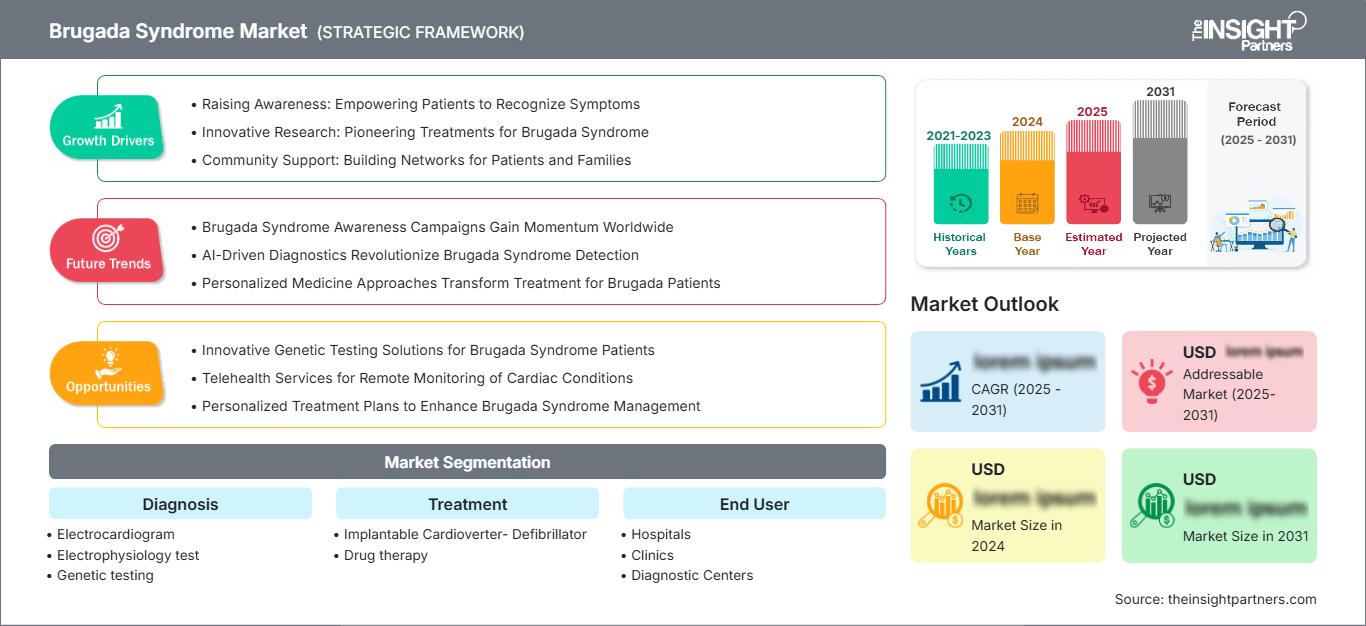
Brugada Syndrome Market: Strategic Insights
Regional Insights
North America Brugada Syndrome Market
The share of North America in 2025 is 38-41%, and the CAGR forecast for 2026 to 2034 is within 4.9-5.5%. The region can boast well-established electrophysiology laboratories, inherited arrhythmia programs, cardiac genetics clinics, and a well-structured ICD follow-up program. The market share of Brugada Syndrome will be driven by well-developed referral programs for unexplained syncope, family screening, and post-cardiac arrest evaluation.
In addition, healthcare systems in the United States and Canada are increasingly investing in remote monitoring of implantable devices, genetic counseling, and management of inherited cardiovascular diseases with multidisciplinary approach. The strength of this region in terms of Brugada Syndrome is high availability of implantable defibrillator, advanced ECG interpretation, and payers' pathways for medically necessary genetic testing.
U.S. Brugada Syndrome Market
The US represented 82–86% of North America in 2025 and is expected to grow at a CAGR range of 5.0–5.6% during 2026–2034. High procedure capacity, academic electrophysiology centers, and strong cardiac rhythm management infrastructure support diagnosis and treatment. Company presence is broad, with Medtronic plc, Abbott, Boston Scientific Corporation, GE HealthCare Technologies Inc., GeneDx, and Ambry Genetics Corporation active across devices, diagnostics, and testing.
Application trends are moving toward integrated care pathways that combine ECG review, genetic counseling, pharmacologic provocation where appropriate, and ICD decision support. Hospitals remain the primary revenue setting because implant procedures, complication management, and follow-up require specialized teams. Diagnostic centers are gaining relevance for front-end testing, but clinical escalation still depends on electrophysiologist-led interpretation.
Europe Brugada Syndrome Market
The Europe region had 27–30% market share in 2025 and is expected to exhibit a CAGR of 4.6–5.2% between 2026 and 2034, where Germany is the key country owing to the presence of electrophysiology density and hospital infrastructure. The UK provides focus on inherited cardiac disease management services, whereas Germany focuses on reimbursement, specialist centers, and devices.
In France, adoption is seen due to the presence of university hospitals and cardiovascular genetics programs, while Italy is well-known for its inheritance arrhythmia research and specialist referrals. In Spain, diagnosis is being expanded via regional cardiology network systems and sudden cardiac death risk awareness. In Europe, lead durability, remote monitoring capability, and evidence-based testing are becoming increasingly important during procurement processes.
APAC Brugada Syndrome Market
APAC accounted for 20–23% share in 2025 and is expected to grow at a CAGR range of 6.0–6.8% during 2026–2034. Japan is a leading country, supported by long-standing awareness of Brugada-pattern ECG and sudden unexplained nocturnal death risk. China, South Korea, India, and Australia are expanding electrophysiology access through tertiary hospitals.
Policy drivers include increased cardiovascular screening, hospital modernization, and broader genomic medicine investment. Industrial growth in medtech distribution, digital ECG platforms, and private diagnostic chains is improving access. However, uneven reimbursement and specialist availability continue to shape adoption across lower-tier cities.
Middle East & Africa Brugada Syndrome Market
Middle East & Africa is expected to witness a CAGR of 4.3% to 4.9% between 2026 and 2034. Saudi Arabia will lead the adoption in the region. UAE will be developing specialty centers for cardiology, whereas South Africa provides support for hospital-based electrophysiology centers, while Rest of MEA depends on referrals for diagnosis.
Energy-based investments in healthcare and diversification in infrastructure in Gulf countries have enhanced access to devices implantation, ECG testing, and tertiary cardiac care facilities. Growth in the region is hindered due to limited genetic counseling systems, inconsistent reimbursement practices, and less awareness about heritable arrhythmias outside urban hospitals.
Segmentation Analysis
Diagnosis
Diagnosis is expected to grow at a CAGR range of 5.1–5.7% during 2026–2034. The segment leads the Brugada Syndrome Market scope because definitive clinical pathways begin with ECG recognition, risk history, family evaluation, and selective molecular testing. Demand is expanding as hospitals formalize inherited arrhythmia workflows and diagnostic centers capture early referrals from syncope clinics and preventive cardiology programs.
- Electrocardiogram remains the first-line diagnostic tool, supported by affordability, availability, and clinical relevance in detecting type 1 Brugada patterns, particularly in emergency, cardiology, and family screening settings.
- Electrophysiology test is strategically important for selected risk assessment cases, especially where clinical history, ECG presentation, and arrhythmic burden require deeper evaluation by specialized electrophysiology teams.
- Genetic testing supports familial risk evaluation, cascade screening, and counseling, although interpretation remains complex because pathogenic variants are identified in only a subset of clinically diagnosed patients.
Treatment
Treatment is expected to grow at a CAGR range of 4.8–5.4% during 2026–2034. The segment is shaped by ICD implantation for high-risk patients, pharmacologic management for selected cases, and tighter post-implant follow-up. Growth is not volume-led alone, because patient selection is becoming more evidence-based, balancing sudden death prevention against device complications and inappropriate shocks.
- Implantable Cardioverter- Defibrillator is the core treatment option for patients with prior cardiac arrest or high-risk arrhythmic profiles, requiring specialist implantation, programming, and long-term monitoring infrastructure.
- Drug therapy serves an adjunctive role in selected symptomatic or recurrent arrhythmia cases, with demand influenced by physician experience, contraindication management, and limited alternatives for non-device candidates.
End User
End User is expected to grow at a CAGR range of 5.0–5.6% during 2026–2034. Hospitals dominate value creation due to ICD procedures, electrophysiology testing, emergency cardiac evaluation, and longitudinal device management. Clinics and diagnostic centers are becoming more relevant as early ECG screening, genetic sample collection, and family-based evaluation move closer to outpatient care.
- Hospitals command the strongest revenue contribution because they manage high-risk patients, device implantation, acute arrhythmic events, electrophysiology testing, and multidisciplinary follow-up across cardiology and genetics teams.
- Clinics support earlier detection through outpatient ECG review, syncope assessment, medication counseling, and referral coordination, particularly in urban cardiology networks and preventive cardiac care models.
- Diagnostic Centers contribute through ECG services, genetic sample collection, and reporting workflows, but their strategic role depends on connectivity with cardiologists and inherited arrhythmia specialists.
Opportunity Snapshot
| Segment Name | Revenue Contribution | Trend Tag | Adoption Stage |
| Hospitals | High | ICD Pathways | Mature |
| Clinics | Medium | Syncope Triage | Scaling |
| Diagnostic Centers | Medium | Genetic Screening | Scaling |
Brugada Syndrome Market Growth Drivers and Impact Analysis
Rising Recognition of Inherited Sudden Cardiac Death Risk
Improved awareness of inherited arrhythmias is increasing evaluation of patients with unexplained syncope, documented ventricular arrhythmia, or family history of sudden death. Specialty cardiology programs now more frequently apply structured ECG interpretation and referral protocols, reducing missed diagnoses among patients with intermittent or concealed patterns. The real-world impact is higher demand for ECG confirmation, genetic counseling, and selective ICD intervention. This driver also improves family-based screening, because identifying one affected individual can trigger evaluation of relatives. For hospitals, the effect is a broader patient funnel into electrophysiology and cardiovascular genetics services, with downstream revenue tied to testing, consultation, device implantation, and remote monitoring.
Expansion of ICD and Remote Monitoring Infrastructure
Implantable cardioverter-defibrillators remain central for high-risk patients, and advances in lead design, battery performance, programming algorithms, and connected monitoring are strengthening physician confidence. Remote monitoring allows clinics to track device performance, arrhythmia episodes, lead impedance, and battery status with fewer in-person visits. The market impact is especially visible in tertiary hospitals and developed cardiology networks, where long-term follow-up quality is a purchasing criterion. This driver also supports replacement cycles, software-enabled service revenue, and stronger relationships between device companies and electrophysiology teams. As safety surveillance becomes stricter, hospitals are prioritizing platforms that combine therapy delivery with actionable data and predictable maintenance.
Growing Use of Genetic Testing and Cascade Screening
Genetic testing is becoming more important as clinicians evaluate familial risk, clarify inherited channelopathy suspicion, and guide counseling for relatives. While not every clinically diagnosed patient has an identifiable pathogenic mutation, molecular testing can be valuable when used alongside ECG and clinical history. The impact is strongest in North America, Europe, Japan, Australia, and advanced urban centers in Asia, where genetic counselors and inherited cardiovascular disease clinics are available. Cascade screening can multiply testing demand from a single index case, particularly in families with sudden unexplained death. This driver supports laboratories, specialist clinics, and integrated care models that combine molecular findings with clinical risk assessment.
Brugada Syndrome Market Future Trends
AI-Assisted ECG Interpretation in Inherited Arrhythmia Workflows
AI-enabled ECG interpretation will become an important workflow tool for identifying suspicious Brugada patterns, flagging subtle right precordial changes, and prioritizing specialist review. Brugada Syndrome Market trends point toward decision-support systems rather than autonomous diagnosis, because final interpretation still requires clinical context, medication review, fever history, and family assessment. The next stage will involve integrating AI alerts into hospital ECG systems, emergency departments, and outpatient cardiology platforms. This trend could reduce diagnostic latency, especially in settings with limited electrophysiology expertise. Adoption will depend on validation quality, false-positive control, regulatory clearance, and clinician trust in explainable outputs.
Precision Risk Stratification Before Device Implantation
Future care models will place greater emphasis on distinguishing patients who need ICD protection from those best managed through surveillance, counseling, fever management, or medication avoidance. This shift reflects the need to prevent sudden death while reducing device-related complications, inappropriate shocks, and unnecessary implantation. Risk stratification will increasingly combine ECG phenotype, symptoms, family history, genetic findings, electrophysiology results, and longitudinal monitoring data. For manufacturers and providers, this creates demand for integrated analytics, evidence registries, and tailored follow-up protocols. The commercial effect may be more value-based, with fewer low-value procedures but stronger adoption in clearly defined high-risk populations.
Brugada Syndrome Market Opportunities
Integrated Inherited Arrhythmia Clinics in Emerging Cardiology Networks
Emerging hospital systems can create meaningful value by building integrated inherited arrhythmia clinics that combine ECG review, electrophysiology consultation, genetic counseling, family screening, and device follow-up. Brugada Syndrome Market Forecasts indicate that growth potential is strongest where tertiary hospitals are expanding cardiology specialization but still lack formal channelopathy pathways. Investors and providers can focus on scalable clinic models, training programs, diagnostic partnerships, and remote monitoring infrastructure. This opportunity is particularly relevant in Asia Pacific and Gulf countries, where private healthcare investment and cardiovascular modernization are progressing. Success depends on clinician education, referral development, payer engagement, and standardized care protocols.
Partnerships Between Device Makers and Genetic Testing Laboratories
Strategic partnerships between cardiac rhythm device companies and genetic testing laboratories can improve patient identification, family screening, and long-term care coordination. Such collaborations may include co-developed clinical pathways, physician education, referral support, and interoperable reporting tools that connect molecular findings with electrophysiology decisions. The opportunity is commercially attractive because Brugada diagnosis often spans multiple stakeholders and fragmented workflows. Device makers gain earlier visibility into high-risk populations, while laboratories benefit from cardiology-driven testing demand. However, partnerships must maintain clinical independence, transparent interpretation standards, and privacy safeguards. Companies that support evidence-based patient selection can strengthen trust with hospitals and payers.
Recent Developments
- March 2026: Medtronic plc received U.S. FDA approval for an expanded indication of the OmniaSecure defibrillation lead for placement in the left bundle branch area. The approval strengthened its cardiac rhythm management portfolio by supporting conduction system pacing in patients requiring defibrillator therapy, improving relevance for complex arrhythmia care pathways.
- September 2025: Boston Scientific Corporation worked with the U.S. FDA on an updated safety communication for certain ENDOTAK RELIANCE defibrillation leads with ePTFE-coated coils. The communication emphasized monitoring for rising shock impedance and reinforced the importance of remote surveillance, physician review, and risk-based replacement decisions in ICD patient management.
- August 2025: GE HealthCare Technologies Inc. introduced new cardiology workflow and imaging innovations at ESC 2025, including AI-enabled tools designed to streamline cardiac assessment and reporting. The portfolio reinforced its position in connected cardiology diagnostics, where ECG, imaging, and workflow integration support earlier identification and management of cardiovascular disease.
Frequently Asked Questions

- Comprehensive Market Sizing and Forecast Analysis
- Detailed Segmentation Analysis
- In-Depth Market Dynamics Assessment
- Regional and Country-Level Insights
- Competitive Landscape and Company Benchmarking
- Strategic Business Intelligence
Recent Reports
Testimonials

The Insight Partners provided valuable market intelligence that supported our global go-to-market strategy. Their team was professional, responsive, and attentive to our feedback, providing thoughtful analysis and helpful methodological clarifications throughout the project.
Junmo Kim Chief Financial Officer (CFO), Enertech Co., Ltd.
The Insight Partners' SCADA System Market report is comprehensive, with valuable insights on current trends and future forecasts. The team was highly professional, responsive, and supportive throughout. We are very satisfied and highly recommend their services.
RAN KEDEM Partner, Reali Technologies LTDs
I requested a report on a very specific software market and the team produced the report in a few days. The information was very relevant and well presented. I then requested some changes and additions to the report. The team was again very responsive and I got the final report in less than a week.
JEAN-HERVE JENN Chairman, Future Analytica
We worked with The Insight Partners for an important market study and forecast. They gave us clear insights into opportunities and risks, which helped shape our plans. Their research was easy to use and based on solid data. It helped us make smart, confident decisions. We highly recommend them.
PIYUSH NAGPAL Sr. Vice President, High Beam Global
The Insight Partners delivered insightful, well-structured market research with strong domain expertise. Their team was professional and responsive throughout. The user-friendly website made accessing industry reports seamless. We highly recommend them for reliable, high-quality research services
YUKIHIKO ADACHI CEO, Deep Blue, LLC.
This is the first time I have purchased a market report from The Insight Partners.While I was unsure at first, I visited their web site and felt more comfortable to take the risk and purchase a market report.I am completely satisfied with the quality of the report and customer service. I had several questions and comments with the initial report, but after a couple of dialogs over email with their analyst I believe I have a report that I can use as input to our strategic planning process.Thank you so much for taking the extra time and making this a positive experience.I will definitely recommend your service to others and you will be my first call when we need further market data.
JOHN SUZUKI President and Chief Executive Officer, Board Director, BK Technologies
I wish to appreciate your support and the professionalism you displayed in the course of attending to my request for information regarding to infectious disease IVD market in Nigeria. I appreciate your patience, your guidance, and the fact that you were willing to offer a discount, which eventually made it possible for us to close a deal. I look forward to engaging The Insight Partners in the future, all thanks to the impression you have created in me as a result of this first encounter.
DR CHIJIOKE ONYIA MANAGING DIRECTOR, PineCrest Healthcare Ltd.Reason to Buy
- Informed Decision-Making
- Understanding Market Dynamics
- Competitive Analysis
- Identifying Emerging Markets
- Customer Insights
- Market Forecasts
- Risk Mitigation
- Boosting Operational Efficiency
- Strategic Planning
- Investment Justification
- Tracking Industry Innovations
- Aligning with Regulatory Trends





 Get Free Sample for