
Cables and Leads for Medical Equipment Market Growth, Trends & Demand by 2034
Coverage: by Type (Cables, Leads); Application (Pacemaker, Defibrillator, EEG, ECG), and Geography (North America, Europe, Asia Pacific, and South and Central America)
- Status : Data Released
- Report Code : TIPRE00008209
- Category : Life Sciences
- No. of Pages : 150
- Available Report Formats :


- Last update date : August 12, 2026


2025 Market Size
US$ 5.22 Bn
Base year value
2034 Forecast
US$ 7.11 Bn
Projected by 2034
CAGR 2026-2034
3.49 %
Growth rate
Addressable Market
US$ 55.99 Bn
(2026-2034)
The Cables and Leads for Medical Equipment Market is projected to grow from US$ 5.22 billion in 2025 to US$ 7.11 billion by 2034, expanding at a CAGR of 3.49% during 2026–2034. The market is characterized by stable replacement needs for installed diagnostic and therapeutic devices, regular usage of cable assemblies, and rising adoption of patient monitoring systems that use connected devices.
The Cables and Leads for Medical Equipment Market size in North America is driven by high ECG adoption rates, cardiac rhythm management procedure volume, and procurement guidelines that require validated and biocompatible connectors with low noise generation. Growth in North America is forecasted to be in the 3.2-3.6% CAGR range until 2034.
Cables and Leads for Medical Equipment Market Assessment and Insights
- North America is estimated to hold 37–39% share in 2025 and grow at a CAGR of 3.2–3.6% between 2026–2034, supported by cardiac monitoring intensity, device replacement cycles, and strict hospital accessory standardization.
- US accounts for 82–85% of North America in 2025 and is growing at a CAGR of 3.1–3.5% between 2026 and 2034, led by electrophysiology, ICU monitoring, and chronic cardiac disease burden.
- Europe represents a 27–29% share in 2025 and is growing at a CAGR of 3.0–3.4% between 2026 and 2034, with Germany, the UK, France, Italy, and Spain leading procurement.
- Asia Pacific holds a 24–26% share in 2025 and is growing at a CAGR of 4.0–4.4% between 2026 and 2034, driven by China, Japan, South Korea, India, and Australia.
- Largest Segment: Cables hold 58–62% market share in 2025 and are growing at a CAGR of 3.2–3.6% between 2026–2034 due to broad compatibility across monitoring systems.
- High Growth Segment: Leads hold 38–42% market share in 2025 and are growing at a CAGR of 3.7–4.1% between 2026 and 2034 as precision cardiac and neurological applications expand.
- Key companies analyzed in detail: Boston Scientific Corporation, Cables Unlimited, Inc., CONMED Corporation, Flexible Wire and Cable, Inc., GE HealthCare Technologies Inc., Medtronic plc, Nihon Kohden Corporation, LivaNova PLC, Spacelabs Healthcare, Inc., Abbott Laboratories.
Source: The Insight Partners' analysis based on proprietary research, government publications, company annual reports, investor presentations, industry databases, and expert interviews.
Product development in this sector has progressed beyond simple conductive assemblies to the more advanced shielded, low impedance, and safe for the patients' interconnects. Factors for the Cables and Leads for Medical Equipment Market Growth include miniaturized connectors, transition from reusable to disposable in infection-prone conditions, and the ability to integrate with ECG, EEG, defibrillator and rhythm management implants.
Upcoming changes in the healthcare systems will cause a rise in orders due to growth in intensive care facilities, ambulances, and emergency diagnostics. From the regulatory perspective, the drivers include systems of traceability, electrical safety, and post-market surveillance, which give an edge to suppliers with qualifications, rather than to cheap assemblers. Hospitals are expected to source from the vendors, which can prove their compatibility with IEC 60601, biocompatibility and long-term supply across several platforms.
Cables and Leads for Medical Equipment Market Report Scope
| Report Attribute | Details |
|---|---|
| Market size in 2025 | US$ 5.22 Billion |
| Market Size by 2034 | US$ 7.11 Billion |
| Global CAGR (2026 - 2034) | 3.49% |
| Historical Data | 2021-2024 |
| Forecast period | 2026-2034 |
Cables and Leads for Medical Equipment Market Analysis
Demand is driven by repetitive clinical usage rather than the initial equipment purchase of capital. The cables of ECG and defibrillators will need to be replaced due to repeated stresses from bending, chemical cleaners, and wear in connectors that lead to a degradation of the quality of the signal. An estimated 19.8 million people died due to cardiovascular diseases in 2022, accounting for about 32% of all global deaths. [who.int]
The Cables and Leads for Medical Equipment Market report emphasizes a multi-tier value chain with conductor manufacturers, insulation compounding companies, connector producers, sterilization companies, medical device OEMs, and hospital distributors. Supplier factors are becoming more dependent on medical-grade copper/silver plating of conductors, molding, and lot tracking. Purchasing decisions become more focused on electrical parameters, regulatory filing, packaging, and customer service before price per unit.
The market competition is fairly high between the OEM segment companies and those that manufacture customized cables. These include Medtronic plc, Boston Scientific Corporation, Abbott Laboratories, and LivaNova PLC for the implantable and defibrillator market segments. Other players who compete in the monitoring and diagnostic accessories market include GE HealthCare Technologies Inc., Nihon Kohden Corporation, Spacelabs Healthcare, Inc., and CONMED Corporation.
Companies are positioning themselves as accessory package providers, privately-branded manufacturers and service contracts for several hospital departments. Those involved in durability tests, connector miniaturization, and lead compatibility validation have a better chance of securing margins. Purchasing specialists become increasingly interested in suppliers capable of decreasing SKUs complexity, rapid availability of replacements and regional regulatory compliance without clinical workflow disruption.
● REPORT CUSTOMIZATION
Tailor This Report To Align With Your Specific Business Requirements
This report can be customized to align precisely with your business objectives, scope, and target markets. Customization options include tailored segmentation, geography, competitive analysis, and strategic insights to support informed decision-making.
Customize This Report →WHAT YOU CAN ADJUST
- ● Segmentations
- ● Geography
- ● Competitive Analysis
- ● Language Preferences
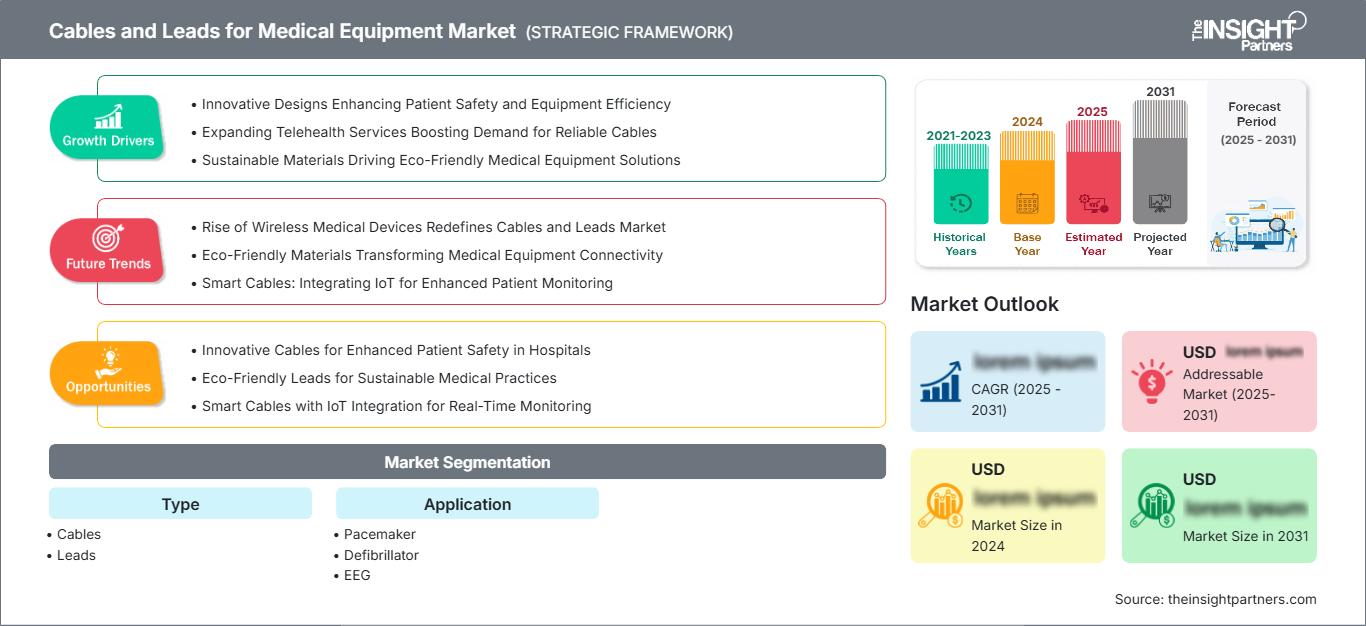
Cables and Leads for Medical Equipment Market: Strategic Insights
Regional Insights
North America Cables and Leads for Medical Equipment Market
North America is estimated to hold 37–39% of 2025 revenue and expand at a 3.2–3.6% CAGR through 2034. The Cables and Leads for Medical Equipment Market share in the region is sustained by large installed bases of ECG monitors, defibrillators, pacemaker programmers, intensive care systems, and electrophysiology platforms. U.S. cardiovascular disease prevalence and hospital digitalization keep replacement demand consistent.
The modernization of public hospitals and centralized purchasing by Canada contribute to the market along with private hospitals in Mexico, creating a demand for increased emergency care. Standards set by the FDA on quality assurance and the hospital accreditation process create a need for validated accessories over any other alternative. Suppliers in the region also gain from nearshoring talks and shorter lead times.
U.S. Cables and Leads for Medical Equipment Market
The United States makes up 82-85% of North America by 2025 and is expected to grow with a 3.1-3.5% CAGR. Cardiac care, emergency medicine, operating rooms, sleep laboratories, and neurological diagnostics represent the major areas of demand. According to the American Heart Association, there were 941,652 deaths due to cardiovascular diseases in the United States in 2022 and 127.9 million adults living with one during 2017-2020.
There is a strong presence of the company on the market with such companies as Boston Scientific Corporation, Medtronic plc, Abbott Laboratories, GE HealthCare Technologies Inc., CONMED Corporation, and Spacelabs Healthcare, Inc. participating in the provision of services in domestic care networks. Trending applications include ECG cable replacement, defibrillator lead validation, and EEG lead sets for outpatient neurodiagnostics.
Europe Cables and Leads for Medical Equipment Market
Europe will account for 27-29% market share by 2025 with a CAGR of 3.0-3.4%, with Germany being the foremost country in Europe. The United Kingdom drives demand through NHS equipment replacement and digitization of cardiac pathway. Germany enjoys the presence of advanced electrophysiology labs, engineering capabilities in hospitals, and preference for certified accessory suppliers for ECG, defibrillator, and neurological monitoring systems.
The countries France, Italy, and Spain provide constant quantities through the modernization of public hospitals, private cardiologists clinics, and regional emergency services. EU Medical Devices Regulations raise traceability and documentation requirements; hence, purchase is geared towards reliable manufacturers. The need for replacement is based on cleaning cycles and cable life span and integration into multiparameter monitoring systems.
APAC Cables and Leads for Medical Equipment Market
APAC accounts for 24%-26% of 2025 revenues and is expected to have a CAGR of 4.0%-4.4%, the highest among the regions. China leads in volume terms due to hospital constructions, domestic manufacturing of devices and growing cardiac diagnostics. Japan and South Korea focus on high-quality accessories for advanced monitoring, while India increases demand through tertiary hospitals and diagnostics chains.
Australia is contributing through replacement demand from developed hospital infrastructure. The industrial driving factors include size of electronics manufacturing industry, polymer processing and growth of regional OEMs. Health infrastructure investments and insurance penetration in several countries are resulting in increased availability of ECG, EEG and defibrillators, which indirectly boosts cable & leads demand.
Middle East & Africa Cables and Leads for Medical Equipment Market
ME&A is forecasted to have a CAGR of 3.3-3.7%, driven by growth in Saudi Arabia. The development of hospitals, heart centers, and advanced emergency facilities in Saudi Arabia and the UAE will drive the demand for monitoring accessories. South Africa will continue being significant in terms of private hospitals and distribution of equipment to neighboring countries.
Fiscal capacity from energy-related sources in Gulf healthcare systems allows spending on intensive care units and diagnostic facilities despite the sensitivity to lead times during procurement. The demand from other ME&A countries is uneven, with procurement of devices funded through donations, large cities' hospitals, and distributor-driven replacement cycles driving cable demand. The regulatory situation is gradually becoming favorable for suppliers.
Segmentation Analysis
Type
The Type segment is projected to grow at a CAGR of 3.3–3.7% during 2026–2034. The Cables and Leads for Medical Equipment Market scope under this segment reflects the technical role of interconnects in carrying clean biosignals, power, and therapeutic pulses. Demand is shaped by durability, shielding, connector compatibility, cleanability, and patient-contact safety across both reusable and semi-disposable formats.
- Cables dominate the segment because they connect monitors, programmers, defibrillators, and diagnostic systems across departments, making replacement predictable and procurement recurring for hospitals and equipment service teams.
- Leads are strategically important in ECG, EEG, pacemaker, and defibrillator use because they directly interface with patients, where signal integrity, flexibility, insulation safety, and clinical compatibility determine performance.
Application
The Application segment is projected to grow at a CAGR of 3.4–3.8% during 2026–2034. Clinical demand depends on procedure intensity, installed equipment base, and the need for reliable electrode-to-device transmission. Cardiac rhythm management and diagnostic monitoring are the largest use environments, while neurological diagnostics add specialized demand for low-noise, multi-channel lead configurations.
- Pacemaker applications require highly reliable lead interfaces and programming accessories, with demand linked to aging populations, conduction disorder diagnosis, and follow-up workflows in electrophysiology clinics.
- Defibrillator applications need robust cables and leads capable of tolerating emergency handling, high-energy therapy environments, and frequent readiness checks in hospitals, ambulances, and public safety settings.
- EEG demand is supported by neurology departments, sleep laboratories, epilepsy monitoring units, and outpatient diagnostics that require stable signal acquisition across multiple scalp electrode channels.
- ECG remains the broadest application because it is used across emergency rooms, wards, operating rooms, ambulatory clinics, and remote monitoring programs for routine and acute cardiac assessment.
Opportunity Snapshot
| Application | Revenue Contribution | Trend Tag | Adoption Stage |
| Pacemaker | High | Rhythm Care | Mature |
| Defibrillator | High | Emergency Readiness | Scaling |
| EEG | Medium | Neurodiagnostics | Scaling |
| ECG | High | Continuous Monitoring | Mature |
Cables and Leads for Medical Equipment Market Growth Drivers and Impact Analysis
Rising burden of cardiac monitoring and rhythm management
Cardiology remains the strongest clinical demand engine because ECG, defibrillator, pacemaker, and electrophysiology workflows depend on signal reliability at the patient interface. The WHO identifies cardiovascular diseases as the leading global cause of death, creating persistent screening, monitoring, and treatment needs across acute and chronic care. This driver converts clinical burden into recurring accessory demand because cables and leads degrade through bending, cleaning, storage, and repeated connection cycles. Hospitals therefore, treat these products as operational consumables rather than optional attachments. The impact is strongest in emergency departments, intensive care units, ambulatory cardiac centers, and electrophysiology labs, where signal noise or cable failure can delay diagnosis, therapy delivery, or patient throughput.
Expansion of connected monitoring infrastructure
Hospital networks are expanding connected bedside monitors, telemetry systems, transport monitors, and centralized cardiac observation platforms. Each installation increases the number of compatible patient cables, trunk cables, lead wires, and replacement accessories required to keep systems operational. FDA 510(k) pathways require manufacturers to document substantial equivalence when bringing modified devices to market, reinforcing the need for validated components and compatibility evidence. The market impact is visible in procurement behavior: biomedical engineering teams increasingly standardize accessories by device model and department, reducing cross-compatibility risk. Suppliers that provide labeled compatibility, electrically tested assemblies, and traceable lots gain preference as hospitals seek fewer equipment interruptions and lower maintenance complexity.
Infection control and accessory replacement discipline
Infection prevention protocols have made cable cleanability, material resistance, and replacement discipline more important. Reusable cables are exposed to disinfectants, mechanical wipe-downs, and frequent patient turnover, which can reduce insulation integrity and increase replacement frequency. This driver does not necessarily shift all demand to disposables, but it raises the value of medical-grade polymers, molded strain reliefs, sealed connectors, and validated cleaning guidance. The commercial impact is higher demand for accessories with documented biocompatibility, durability testing, and packaging controls. Hospitals also use scheduled replacement programs to lower failure risk, particularly in ICU, operating room, neonatal, and emergency settings where cable faults can directly affect monitoring continuity.
Cables and Leads for Medical Equipment Market Future Trends
Smart and sensor-integrated cable assemblies
The most important Cables and Leads for Medical Equipment Market trends will involve accessory-level intelligence rather than only device-level innovation. Future cable assemblies are expected to include identification chips, usage tracking, impedance monitoring, and connector authentication to help hospitals detect wear, reduce counterfeit risk, and automate inventory visibility. This direction aligns with broader connected care models, where device ecosystems require reliable peripheral data as well as core hardware. For suppliers, the shift increases engineering complexity but may improve margin resilience. For hospitals, smart accessories could reduce undetected cable degradation, support preventive maintenance, and improve compliance with equipment quality protocols.
Greater localization and resilient manufacturing networks
Supply resilience is becoming a design and sourcing priority as hospitals reduce dependence on long, single-country accessory chains. Future purchasing decisions are expected to weigh regional assembly, dual-source conductor supply, validated alternative resins, and distributor inventory depth. Localized production will not eliminate global trade, but it can shorten lead times for high-turn replacement items such as ECG lead sets and defibrillator cables. Manufacturers with flexible tooling, documented equivalency testing, and regional regulatory files can respond faster to product revisions. This trend will be especially relevant in North America, Europe, and APAC, where hospital systems increasingly require continuity planning.
Cables and Leads for Medical Equipment Market Opportunities
Validated accessories for electrophysiology and cardiac rhythm care
Electrophysiology and cardiac rhythm management create attractive investment opportunities because procedures demand precise signal transmission, durable lead pathways, and compatibility with advanced mapping, pacing, and defibrillation systems. Cables and Leads for Medical Equipment Market Forecasts indicate that suppliers able to support smaller diameter leads, low-noise connectors, and documented system compatibility will benefit from higher-value clinical workflows. Medtronic’s OmniaSecure lead approvals demonstrate continued innovation around defibrillation lead design and conduction system pacing. Opportunity exists in OEM partnerships, replacement kits, and hospital service contracts that bundle accessories with programming, monitoring, and emergency readiness requirements.
Private-label and custom-engineered hospital accessory programs
Custom-engineered and private-label programs can help mid-sized suppliers capture demand from hospitals and device OEMs seeking validated alternatives to fragmented accessory purchasing. The opportunity is strongest where legacy equipment remains in service but original cables are expensive, delayed, or operationally difficult to source. Suppliers can differentiate through electrical testing, material traceability, connector tooling, labeling compliance, and rapid prototyping. Hospitals benefit from reduced SKU complexity and better replacement availability, while manufacturers gain sticky relationships through approved vendor lists. This path is particularly relevant for Flexible Wire and Cable, Inc., Cables Unlimited, Inc., and specialized assemblers serving multi-brand environments.
Recent Developments
- March 2026: Medtronic plc received FDA approval for an expanded indication for the OmniaSecure defibrillation lead, allowing placement in the left bundle branch area for conduction system pacing. The company stated the lead is 4.7 French and connects to ICD or CRT-D systems, strengthening demand for advanced lead technologies in rhythm management.
- November 2025: GE HealthCare Technologies Inc. and Volta Medical announced the U.S. launch of an AI-driven electrophysiology solution integrating AF-Xplorer II with GE HealthCare’s CardioLab AltiX AI.i EP recording system. The launch supports more connected electrophysiology workflows where signal clarity, recording quality, and accessory reliability remain critical.
- July 2025: Boston Scientific Corporation informed clinicians about potential rising low-voltage shock impedance in certain RELIANCE defibrillation leads with ePTFE-coated shock coils. The advisory emphasized monitoring and replacement planning for affected leads, highlighting the clinical importance of long-term lead performance, surveillance, and post-market quality management.
Frequently Asked Questions

- Comprehensive Market Sizing and Forecast Analysis
- Detailed Segmentation Analysis
- In-Depth Market Dynamics Assessment
- Regional and Country-Level Insights
- Competitive Landscape and Company Benchmarking
- Strategic Business Intelligence
Recent Reports
Testimonials

The Insight Partners' SCADA System Market report is comprehensive, with valuable insights on current trends and future forecasts. The team was highly professional, responsive, and supportive throughout. We are very satisfied and highly recommend their services.
RAN KEDEM Partner, Reali Technologies LTDs
I requested a report on a very specific software market and the team produced the report in a few days. The information was very relevant and well presented. I then requested some changes and additions to the report. The team was again very responsive and I got the final report in less than a week.
JEAN-HERVE JENN Chairman, Future Analytica
We worked with The Insight Partners for an important market study and forecast. They gave us clear insights into opportunities and risks, which helped shape our plans. Their research was easy to use and based on solid data. It helped us make smart, confident decisions. We highly recommend them.
PIYUSH NAGPAL Sr. Vice President, High Beam Global
The Insight Partners delivered insightful, well-structured market research with strong domain expertise. Their team was professional and responsive throughout. The user-friendly website made accessing industry reports seamless. We highly recommend them for reliable, high-quality research services
YUKIHIKO ADACHI CEO, Deep Blue, LLC.
This is the first time I have purchased a market report from The Insight Partners.While I was unsure at first, I visited their web site and felt more comfortable to take the risk and purchase a market report.I am completely satisfied with the quality of the report and customer service. I had several questions and comments with the initial report, but after a couple of dialogs over email with their analyst I believe I have a report that I can use as input to our strategic planning process.Thank you so much for taking the extra time and making this a positive experience.I will definitely recommend your service to others and you will be my first call when we need further market data.
JOHN SUZUKI President and Chief Executive Officer, Board Director, BK Technologies
I wish to appreciate your support and the professionalism you displayed in the course of attending to my request for information regarding to infectious disease IVD market in Nigeria. I appreciate your patience, your guidance, and the fact that you were willing to offer a discount, which eventually made it possible for us to close a deal. I look forward to engaging The Insight Partners in the future, all thanks to the impression you have created in me as a result of this first encounter.
DR CHIJIOKE ONYIA MANAGING DIRECTOR, PineCrest Healthcare Ltd.Reason to Buy
- Informed Decision-Making
- Understanding Market Dynamics
- Competitive Analysis
- Identifying Emerging Markets
- Customer Insights
- Market Forecasts
- Risk Mitigation
- Boosting Operational Efficiency
- Strategic Planning
- Investment Justification
- Tracking Industry Innovations
- Aligning with Regulatory Trends





 Get Free Sample for