
Cancer Pain Market Demand, Share & Growth by 2034
Coverage: By Drug Type (Opioids, Non-Opioids, Nerve blockers); Disease Indication (Lung Cancer, Colorectal Cancer, Breast Cancer, Prostate Cancer, Blood Cancer, Others), and Geography (North America, Europe, Asia Pacific, and South and Central America)
- Status : Data Released
- Report Code : TIPRE00007742
- Category : Life Sciences
- No. of Pages : 151
- Available Report Formats :


- Last update date : August 14, 2026


2025 Market Size
US$ 5.06 Bn
Base year value
2034 Forecast
US$ 9.03 Bn
Projected by 2034
CAGR 2026-2034
6.65 %
Growth rate
Addressable Market
US$ 63.71 Bn
(2026-2034)
The Cancer Pain Market is projected to grow from US$ 5.06 Billion in 2025 to US$ 9.03 Billion by 2034, registering a CAGR of 6.65% during 2026–2034. The market is influenced by the increasing occurrence of cancer, lack of treatment needs for pain in advanced stages, and increased usage of opioids, non-opioids, and interventional approaches for managing pain among oncology and palliative care applications.
In North America, the Cancer Pain Market size will be driven by the presence of structured oncology practices, adherence to guidelines, and availability of specialty pharmacies. It is projected to witness growth at a CAGR of 6.2-6.8% between 2026 and 2034.
Cancer Pain Market Assessment and Insights
- North America accounted for 38–42% share in 2025 and is expected to grow at a CAGR of 6.2–6.8% between 2026–2034, supported by advanced oncology infrastructure, reimbursement for palliative care, and strong clinical adoption of opioid stewardship protocols.
- US represented 78–82% of North America share in 2025 and is expected to grow at a CAGR of 6.3–6.9% between 2026–2034, supported by large cancer volumes and hospital-based pain programs.
- Europe captured 27–31% share in 2025 and is projected to grow at a CAGR of 5.7–6.3% between 2026–2034, with Germany, the UK, France, Italy, and Spain leading adoption through cancer centers and palliative care networks.
- Asia Pacific represented 19–23% share in 2025 and is forecast to grow at a CAGR of 7.4–8.2% between 2026–2034, led by China, Japan, India, South Korea, and Australia as oncology access expands.
- Largest Segment Opioids held 58–62% market share in 2025 and is expected to grow at a CAGR of 5.9–6.5% during 2026–2034 due to established use in moderate-to-severe cancer pain.
- High Growth Segment Nerve blockers held 9–12% market share in 2025 and is expected to grow at a CAGR of 7.8–8.6% during 2026–2034 as interventional pain services scale.
- Key companies analyzed in detail: Aoxing Pharmaceutical Company, Inc., BioDelivery Sciences International, Inc., Daiichi Sankyo Company, Limited, Grünenthal GmbH, Hisamitsu Pharmaceutical Co., Inc., Insys Therapeutics, Inc., Mundipharma International Limited, Orexo AB, Pfizer Inc., and Teva Pharmaceutical Industries Ltd.
Source: The Insight Partners' analysis based on proprietary research, government publications, company annual reports, investor presentations, industry databases, and expert interviews.
The clinical practice of the Cancer Pain is evolving from standardized analgesic titration to individualized and multimodal pain management. More efficient screening procedures, electronic prescribing, abuse-deterrent products, transdermal routes, and additional analgesics are influencing product uptake. Manufacturing trends are also changing as pharmaceutical companies try to ensure supply security and compliance with controlled substance legislation concerning morphine, fentanyl, oxycodone, buprenorphine, transdermal patches, and neuropathic adjuvants for cancer patients.
Future growth will not only be driven by mature hospital oncology settings but also by ambulatory palliative care, home hospice care, and regional cancer centers in the Asia Pacific and Middle East regions. Favorable regulatory trends include increased pain screening requirements, palliative medicine education, and controlled substance regulation systems that encourage legal opioid usage and decrease the risk of drug abuse. New investments are going into non-opioid products and image guided nerve procedures.
Cancer Pain Market Report Scope
| Report Attribute | Details |
|---|---|
| Market size in 2025 | US$ 5.06 Billion |
| Market Size by 2034 | US$ 9.03 Billion |
| Global CAGR (2026 - 2034) | 6.65% |
| Historical Data | 2021-2024 |
| Forecast period | 2026-2034 |
Cancer Pain Market Analysis
Factors driving Cancer Pain Market growth include better survival rates among various cancer types, greater numbers of patients experiencing treatment-induced chronic pain, and early integration of supportive care in oncology practices. High demand exists among patients suffering from advanced stages of lung, breast, colorectal, prostate, and hematologic cancers, who experience complicated pain syndromes as a result of bone metastasis, neuropathy, surgery, radiotherapy, and chemotherapy. The players involved in the market include pharmaceutical companies, specialty distributors, hospital pharmacies, oncology offices, pain management practitioners, and hospices.
Unusually high supply sensitivities exist due to a significant number of essential analgesics being controlled substances. Pharmaceutical companies have to control such issues as acquisition of active pharmaceutical ingredients, quotas, tamper-resistant packaging, and pharmacovigilance requirements. At the same time, doctors need assured availability of drugs in different dosage forms such as oral tablets, buccal films, injectable rescue drugs, transdermal patches, topical products, and nerve blocks.
Portfolio diversity, regulatory stability, and specialization in pain-specific drug delivery technology influence competitive intensity in the industry. In terms of Cancer Pain Market report, Pfizer Inc. and Teva Pharmaceutical Industries Ltd. are characterized by competition through their broad portfolio of analgesics, whereas Grünenthal GmbH, Mundipharma International Limited, Orexo AB, and Hisamitsu Pharmaceutical Co., Inc. specialize in pain management capabilities. Moreover, Daiichi Sankyo Company, Limited is characterized by specialization in oncology capabilities, providing for institutional knowledge of cancer treatment protocols.
Strategic investment trends involve investments into companies that have the ability to facilitate safe prescription, patient compliance, and payer value proposition. BioDelivery Sciences International, Inc. became relevant due to transmucosal and film delivery technology, and Aoxing Pharmaceutical Company, Inc. takes part in opioids analgesic supply in regulated Asian countries. Modern positioning strategy is characterized by the use of real-world evidence, abuse deterrence technology, and controlled distribution programs.
● REPORT CUSTOMIZATION
Tailor This Report To Align With Your Specific Business Requirements
This report can be customized to align precisely with your business objectives, scope, and target markets. Customization options include tailored segmentation, geography, competitive analysis, and strategic insights to support informed decision-making.
Customize This Report →WHAT YOU CAN ADJUST
- ● Segmentations
- ● Geography
- ● Competitive Analysis
- ● Language Preferences
Cancer Pain Market: Strategic Insights
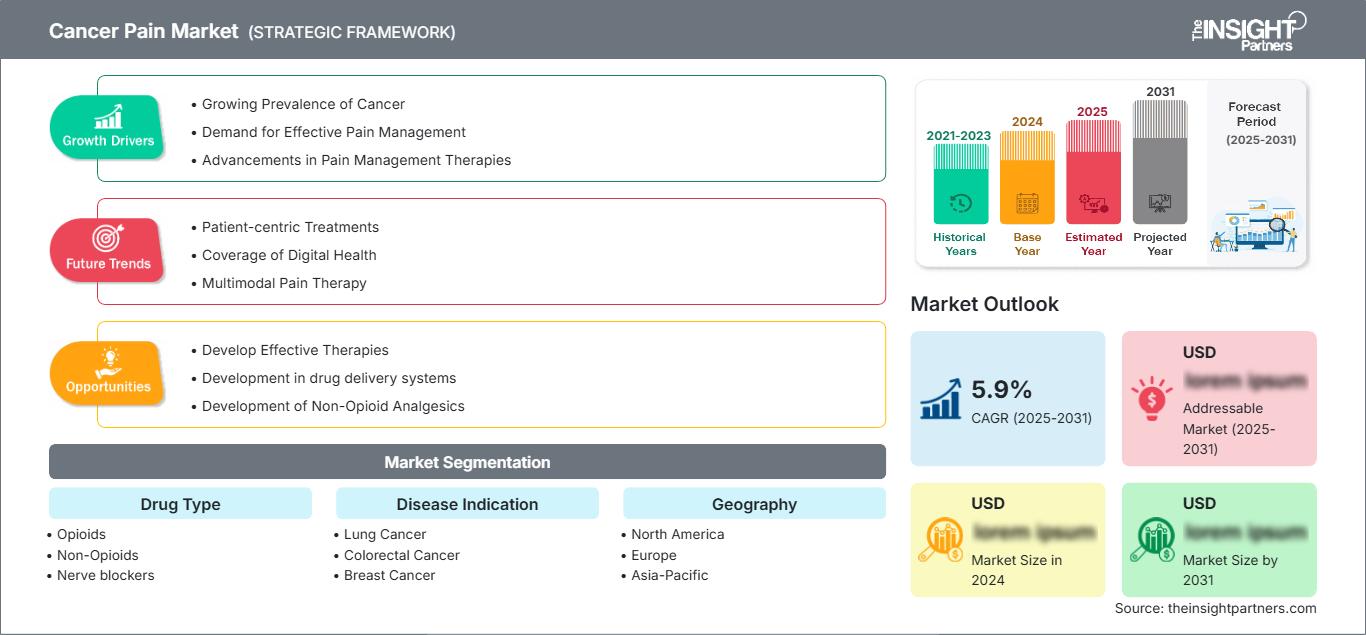
Regional Insights
North America Cancer Pain Market
In North America, the total global revenue base was 38-42% in 2025 and expected to grow with a CAGR of 6.2-6.8% during 2034. The region has huge cancer diagnosis rates, oncology referral program, and developed palliative care setup. Furthermore, the market share for Cancer Pain is augmented by availability of various pain medications and special pain management programs.
The region is driven by opioid stewardship, which restrains volume growth, however, enhances the demand for prescribing with proper documentation. The usage of risk screening, prescription monitoring, and multidisciplinary approach by hospitals and cancer centers has increased in the region. This would enhance the continuity of opioids, adoption of non-opioids, and development of interventional treatment procedures for refractory cancer pain.
U.S. Cancer Pain Market
United States had a market share of 78-82% in North America in 2025, and it is forecasted to experience a CAGR of 6.3-6.9% from 2026 to 2034. It is dominated due to high expenditure on oncology, a well-developed specialty pharmacy network and availability of comprehensive cancer centers. Presence of companies is widespread; Pfizer Inc., Teva Pharmaceutical Industries Ltd., Grünenthal GmbH, and many other companies are operating in the country through their branded, generic, or specialty pain portfolio.
Trends in applications are towards ambulatory management of pain, survivor clinics and risk evaluation for opioid therapy. With the prevalence of cancer in the country, the usage of opioids will continue for managing pain, though it is combined with other medications such as non-opioids, behavioral therapy and intervention.
Europe Cancer Pain Market
The share of Europe was 27-31% in 2025 and is expected to grow at a CAGR of 5.7-6.3% between 2025 and 2034. The leading country is Germany due to reimbursement, specialist pain clinics and palliative medicine practice. The focus of the UK is on cancer pain and end-of-life pathways, where National Health Service ensures a structured assessment and escalating process of analgesics.
Germany is the leader in terms of regional markets since the oncology centers apply a pharmacological way of pain management along with interventions and rehabilitation services. The UK market has steady growth based on hospital oncology practices, hospices and community prescriptions, but economic limitations promote generic switches.
France, Italy, and Spain have substantial volumes due to universal health care system and growing palliative care coverage. France provides high levels of clinical standardization, Italy has well-developed hospital-based cancer pain program, while Spain increases multi-disciplinary management of regional oncology centers. Opioid availability is regulated, but still supported clinically in eligible cancer patients in all countries.
APAC Cancer Pain Market
The APAC market accounted for 19-23% share in 2025 and will continue to expand at a CAGR of 7.4-8.2% during 2026-2034. China is the market leader in view of increasing volume of cancer diagnoses, hospital upgrading, and increased access to oncology medications. Japan, South Korea, India, and Australia contribute to the market through increasing aging populations and supportive care services.
Cancer control policies, hospital accreditation policies, and gradually improving palliative care training constitute policy drivers. Industrial drivers consist of local generic manufacturing, specialty distribution, and multinational partnerships. Opioid inequity in terms of availability in urban and rural areas continues to be the major limitation.
Middle East & Africa Cancer Pain Market
MEA region’s CAGR forecast is anticipated to be around 6.6–7.4% between 2026 and 2034 owing to cancer hospitals’ investments and expansion of health care facilities in Saudi Arabia. In the UAE, private oncology networks fuel demand for medications, and in South Africa, tertiary hospitals and pain specialists help maintain accessibility throughout sub-Saharan Africa.
Expenditure on healthcare, driven by energy resources in Gulf countries, helps build the capacity of cancer hospitals, nuclear medicine, and palliative care centers. Rest of MEA is held back by affordability, lack of opioids, and lack of specialist coverage. Growth drivers will include procurement initiatives, development of private hospitals, and education programs.
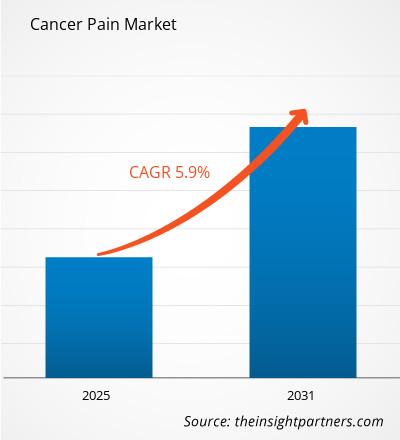
Segmentation Analysis
Drug Type
Drug Type is projected to grow at a CAGR of 6.1–6.8% during 2026–2034, reflecting balanced demand across opioid, non-opioid, and interventional therapy categories. The Cancer Pain Market scope within this segment is widening as clinicians combine systemic analgesics with adjuvant treatments and nerve-targeted procedures. Adoption is shaped by pain severity, tumor stage, functional goals, and safety monitoring requirements.
- Opioids remain the central therapy for moderate-to-severe cancer pain, especially advanced and metastatic disease. Demand is sustained by rapid analgesic effect, multiple formulations, and established clinical familiarity.
- Non-Opioids serve mild-to-moderate pain, opioid-sparing regimens, and inflammatory pain components. Their importance is increasing as survivorship care and safety-focused prescribing expand.
- Nerve blockers are strategically important for refractory, localized, or procedure-responsive pain. Use is scaling in tertiary cancer centers with interventional radiology and pain medicine capabilities.
Disease Indication
Disease Indication is expected to grow at a CAGR of 6.3–7.0% during 2026–2034 as pain burden varies by tumor biology, metastatic pattern, and treatment intensity. Lung, colorectal, breast, prostate, and blood cancers generate distinct pain needs, from bone metastasis and neuropathy to mucositis and procedure-related discomfort. Therapy selection increasingly reflects cancer type and care setting.
- Lung Cancer generates high analgesic demand due to advanced-stage diagnosis, chest wall pain, bone metastases, and treatment-related neuropathy. Severe pain often requires rapid escalation and palliative care coordination.
- Colorectal Cancer contributes demand through abdominal pain, surgery-related pain, metastatic disease, and chemotherapy-induced neuropathy. Long treatment pathways support recurring analgesic assessment and dose adjustments.
- Breast Cancer remains a major indication because bone metastases, surgery, radiation, and endocrine therapy-related musculoskeletal pain create both acute and chronic management needs.
- Prostate Cancer is strongly associated with bone metastatic pain in advanced disease. Demand often includes opioids, hormone-therapy supportive care, radiopharmaceutical-linked pain control, and palliative interventions.
- Blood Cancer creates pain needs from bone marrow involvement, mucositis, infection, procedures, and transplantation-related complications. Treatment often occurs in highly monitored hospital settings.
Opportunity Snapshot
| Disease Indication | Revenue Contribution | Trend Tag | Adoption Stage |
| Lung Cancer | High | Metastatic Pain | Mature |
| Colorectal Cancer | Medium | Neuropathy Care | Scaling |
| Breast Cancer | High | Bone Pain | Mature |
| Prostate Cancer | Medium | Skeletal Relief | Scaling |
| Blood Cancer | Medium | Mucositis Control | Scaling |
Cancer Pain Market Growth Drivers and Impact Analysis
Rising Cancer Burden and Longer Survival
Cancer prevalence is increasing as populations age and diagnosis improves, while advances in oncology are extending survival for many patients. This combination enlarges the pool of people needing pain control during active treatment, remission, recurrence, or late-stage disease. The impact on the Market is structural because pain is not limited to terminal care. Chemotherapy-induced neuropathy, post-surgical pain, radiation effects, bone metastases, and immunotherapy-related complications can require repeated assessment over months or years. Health systems are therefore expanding supportive care capacity, creating sustained demand for analgesics, non-opioid alternatives, and specialist interventions.
Integration of Palliative Care into Oncology Pathways
Earlier palliative care referral is changing how cancer pain is identified, treated, and monitored. Instead of waiting for end-of-life decisions, oncology teams increasingly screen pain at diagnosis, during each therapy cycle, and after disease progression. This improves use of appropriate opioids, adjuvant analgesics, and psychosocial support while reducing emergency visits caused by uncontrolled pain. For manufacturers, the impact is stronger demand for reliable formulations, clear titration protocols, and evidence supporting use in complex patients. Hospitals also benefit by lowering avoidable admissions and improving patient-reported outcomes.
Shift Toward Multimodal and Opioid-Sparing Care
Opioid stewardship is no longer only a restriction mechanism; it is becoming a driver of more sophisticated cancer pain management. Clinicians are combining opioids with acetaminophen, NSAIDs where appropriate, anticonvulsants, antidepressants, topical therapies, and nerve blocks to improve relief while reducing dose burden. This shift expands market participation beyond traditional strong opioids and creates room for non-opioid product development. It also supports interventional pain programs in leading cancer centers. The commercial impact is a more diversified revenue base with stronger emphasis on safety, adherence, and documented outcomes.
Cancer Pain Market Future Trends
Personalized Analgesic Pathways
Cancer Pain Market trends are expected to move toward tumor-specific and patient-specific analgesic planning. Pharmacogenetic testing, renal and hepatic function profiling, frailty assessment, and digital pain diaries may influence drug selection and dose changes. This will be most relevant for patients receiving complex oncology regimens, older adults, and survivors with persistent neuropathic pain. Personalized pathways can reduce trial-and-error prescribing, limit adverse events, and support payer acceptance of premium formulations. Companies that pair products with evidence-based decision support may gain stronger institutional access.
Expansion of Interventional Pain Services
Interventional oncology pain management is expected to gain importance as hospitals seek durable relief for refractory pain and dose-limiting opioid adverse effects. Nerve blocks, neurolytic procedures, intrathecal therapy, and image-guided interventions will increasingly complement systemic drugs in advanced cancer care. Adoption will be strongest in tertiary centers, but referral networks can extend access to regional hospitals. The trend supports demand for specialized devices, anesthetic agents, procedural consumables, and training. It also creates clinical differentiation for centers offering comprehensive cancer pain programs.
Cancer Pain Market Opportunities
Scaling Access in Emerging Oncology Networks
Cancer Pain Market Forecasts indicate strong opportunity where oncology facilities are expanding faster than specialist pain services. Investors can target China, India, Southeast Asia, Gulf countries, and selected African urban centers with compliant opioid supply, physician education, and non-opioid alternatives. Market entry should prioritize hospital formularies, pharmacy controls, and local palliative care partnerships. Companies that offer training on safe titration, breakthrough pain management, and adverse-event monitoring can overcome access barriers. This opportunity is especially relevant for manufacturers with generic analgesic depth and regional distribution strength.
Developing Safer Non-Opioid and Adjunctive Therapies
The most attractive product development opportunity lies in therapies that reduce opioid exposure without compromising pain relief. Non-opioid analgesics, topical systems, neuropathic pain agents, cannabinoid-related medicines where legally permitted, and targeted nerve pathway products can address payer and regulator concerns. Commercial success will depend on demonstrating meaningful reduction in pain scores, opioid rescue use, sedation, constipation, and hospital utilization. Partnerships with cancer centers can generate real-world evidence. Manufacturers that position adjuncts as part of multimodal cancer pain pathways can capture value beyond commodity analgesics.
Recent Developments
- March 2026: Grünenthal GmbH reported 2025 revenue of €1.8 billion and record adjusted EBITDA of €500 million, supported by growth in Qutenza and Movantik and strategic acquisitions. The company also highlighted the July 2025 early acquisition of PecFent from its Grünenthal Meds joint venture, strengthening its pain-focused specialty portfolio.
- November 2025: Daiichi Sankyo Company, Limited announced that DS3610 entered first-in-human Phase 1 clinical development in patients with advanced, metastatic, or unresectable solid tumors. Although primarily an oncology pipeline event, the trial reflects continued investment in advanced cancer care ecosystems where supportive pain management remains clinically relevant.
- October 2025: Mundipharma International Limited announced completion of patient enrolment in the global Phase III ReSPECT trial evaluating REZZAYO in adults undergoing allogeneic blood and marrow transplantation. The program is relevant to cancer care settings because transplant patients often require intensive supportive management.
Frequently Asked Questions

- Comprehensive Market Sizing and Forecast Analysis
- Detailed Segmentation Analysis
- In-Depth Market Dynamics Assessment
- Regional and Country-Level Insights
- Competitive Landscape and Company Benchmarking
- Strategic Business Intelligence
Recent Reports
Testimonials

The Insight Partners' SCADA System Market report is comprehensive, with valuable insights on current trends and future forecasts. The team was highly professional, responsive, and supportive throughout. We are very satisfied and highly recommend their services.
RAN KEDEM Partner, Reali Technologies LTDs
I requested a report on a very specific software market and the team produced the report in a few days. The information was very relevant and well presented. I then requested some changes and additions to the report. The team was again very responsive and I got the final report in less than a week.
JEAN-HERVE JENN Chairman, Future Analytica
We worked with The Insight Partners for an important market study and forecast. They gave us clear insights into opportunities and risks, which helped shape our plans. Their research was easy to use and based on solid data. It helped us make smart, confident decisions. We highly recommend them.
PIYUSH NAGPAL Sr. Vice President, High Beam Global
The Insight Partners delivered insightful, well-structured market research with strong domain expertise. Their team was professional and responsive throughout. The user-friendly website made accessing industry reports seamless. We highly recommend them for reliable, high-quality research services
YUKIHIKO ADACHI CEO, Deep Blue, LLC.
This is the first time I have purchased a market report from The Insight Partners.While I was unsure at first, I visited their web site and felt more comfortable to take the risk and purchase a market report.I am completely satisfied with the quality of the report and customer service. I had several questions and comments with the initial report, but after a couple of dialogs over email with their analyst I believe I have a report that I can use as input to our strategic planning process.Thank you so much for taking the extra time and making this a positive experience.I will definitely recommend your service to others and you will be my first call when we need further market data.
JOHN SUZUKI President and Chief Executive Officer, Board Director, BK Technologies
I wish to appreciate your support and the professionalism you displayed in the course of attending to my request for information regarding to infectious disease IVD market in Nigeria. I appreciate your patience, your guidance, and the fact that you were willing to offer a discount, which eventually made it possible for us to close a deal. I look forward to engaging The Insight Partners in the future, all thanks to the impression you have created in me as a result of this first encounter.
DR CHIJIOKE ONYIA MANAGING DIRECTOR, PineCrest Healthcare Ltd.Reason to Buy
- Informed Decision-Making
- Understanding Market Dynamics
- Competitive Analysis
- Identifying Emerging Markets
- Customer Insights
- Market Forecasts
- Risk Mitigation
- Boosting Operational Efficiency
- Strategic Planning
- Investment Justification
- Tracking Industry Innovations
- Aligning with Regulatory Trends





 Get Free Sample for